It was inevitable that the sheer size of September’s accomplishment would overshadow whatever I watched in October. After all, it was my highest-viewing month for over eight years — how long would it be before I could say that again?
Turns out: one month.
Though, actually, October 2015 isn’t my highest month for eight years — it’s my highest month ever.
(Alright, I promise to never use memes again.)

In a conversation in last month’s comment section, Tom of Digital Shortbread observed that my monthly updates had “lots and lots of stuff to take in”. As I responded, “I think I may have overloaded these monthly posts,” and I think I was right.
So this month I’ve slightly pared back, simplified, and rearranged (you can now find the Arbies right at the end, here) to focus in on what these are meant to be about: a progress report on my eponymous goal. Exorcised categories may resurface in other forms later, and things will be even more streamlined from December when my archive reposts are complete — and when I haven’t watched the most number of films ever, of course — but this is fundamentally it for the new new-look monthly updates.
The first thing I’ve done away with is the contents list, so it’s straight in to:

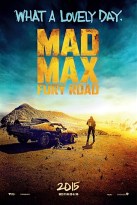 #142 Mad Max: Fury Road (2015)
#143 The Wrestler (2008)
#144 The Fifth Estate (2013)
#145 Twilight (2008)
#146 Ender’s Game (2013)
#147 sex, lies, and videotape (1989)
#148 Hyde Park on Hudson (2012)
#149 Supermen of Malegaon (2008)
#149a The Crying of Lot 49 (2007)
 #150 Parabellum (2015)
#151 Dreams of a Life (2011)
#152 A Clockwork Orange (1971)
#153 Wings (1927)
#154 Jurassic World (2015)
#155 The Decoy Bride (2011)
#156 Coherence (2013)
#157 Circle (2015)
#158 Europa Report (2013)
 #159 Turtle Power: The Definitive History of the Teenage Mutant Ninja Turtles (2014)
#160 The Grandmaster (2013), aka Yi dai zong shi
#161 Back in Time (2015)
#162 Stoker (2013)
#163 The Golem: How He Came into the World (1920), aka Der Golem, wie er in die Welt kam
#164 Birdman: or (The Unexpected Virtue of Ignorance) (2014)
 #165 Mr. Holmes (2015)
#166 Life Itself (2014)
#167 The Machine (2013)
#168 Spectre (2015)
#169 Jupiter Ascending (2015)
#170 The Babadook (2014)
#171 Blue Ruin (2013)
#172 You’re Next (2011)

- One more What Do You Mean You Haven’t Seen film this month: Stanley Kubrick’s A Clockwork Orange. I’ve got four left to get through in the next two months, now.
- As I mentioned in my review, I was going to review the entire Twilight Saga for Halloween, but a free month of Netflix (which I had to take now lest it expire (oh the hardship)) saw to that.
- Relatedly, a point about director Bill Condon: if the Twilight plan had gone ahead, he’d’ve gone from “never seen one of his films” to one of my top twenty-something most-reviewed directors in just one month. But I didn’t, so he doesn’t… for now.
- After last month’s awesomely wide decade spread, this month I watched two films from the ’20s, one each from the ’70s and ’80s, four from the 2000s… and 24 from the 2010s. Business as normal, then.
- I don’t think I watch a great many documentaries (though I have no stats to back that up), but this month I watched five. However many I watch normally, that’s certainly high for one month.
- I also watched ten sci-fi films this month. That’s less surprising, but it’s still a relatively large amount.
- Finally: thanks to all those films, the header image took me a couple of hours to put together. I mean that literally — it took the best part of two hours.

After discussing last month the uncertainty of how many films I watched in August 2007, which makes it hard to know whether it’s been surpassed or not… well, this month I soundly, definitively, unquestionably overtook it: that long, long list above adds up to 31 new feature films.
Now I just need to do it twice more and the August 2007 issue can be put to bed forever. I can tell you for nothing, it won’t happen this year (but we’ll come to that).
So what else is there to say about those 31 films? Well, obviously it maintains my ten-per-month goal, for the 17th month in a row now. It’s also the second month in a row with over 20 films, the first time that’s ever happened… which is unsurprising when you remember that before 2015 I’d only ever had one month with over 20 films. It also surpasses last October’s tally, because, obviously. That’s a full 12 consecutive months besting the previous year’s counterpart. And it goes without saying that it’s the best October ever (by 17) and the best month of 2015 (by eight).
For most of 2015 the rolling monthly average has been 15 films per month. September dragged it up to 15.67, the first time it had been closer to 16 since January was 16. October’s tally is pretty much double that, in the process single-handedly dragging the average all the way up to 17.2! It has even more of an effect on the all-time October monthly average, which goes from 10.0 to 12.6.
And all other year-to-date and entire-year records have already been smashed in previous months, so that’ll next be worth discussing after December.
So what about predictions for the remaining two months of 2015? Well, in January I laughed at the ridiculous suggestion that I could make it to 192 by the end of the year. That’s now just 20 films away, meaning I only need to watch my ‘minimum’ 10 films per month to pass it. And 192… well, that’s just a hop, skip and a jump away from 200. 200! 200! Two frickin’ hundred!
Now, let’s calm back down, because there are challenges in the way of such a bold target: later in November I’m away for most of a week, and there are a couple of time-filling TV series on the way (more on that in a bit), which will likely roll over into December, and before you know it it’ll be Christmas and all the travelling and spending time with family will hamper proceedings somewhat. Damn family.
Away from the real world and in the realm of numbers and statistics, though, we can conjure up the following array of possibilities. If I only reach my historical average viewing levels for November and December, I’ll make it to 190 — and thereby miss the aforementioned ten-per-month target, so I’ll be thoroughly upset with myself if that happens. As mentioned, achieving that target for two more months places me at 192. If I continue my other on-going streak — of surpassing the same month last year — than I’ll wind up at 202. If I manage the monthly average that I maintained for most of the year, that also puts me at 202. If I can hold up the new average of 17.2, though, I’ll get all the way to 206.
206! 206! Two hundred and frickin’ six!
Well, we’ll see.


This month’s flood of reposts takes us all the way through my recaps of 2008 to 2011, leaving the way clear for next month to be all about the year-end summary posts.
The pictures are all a bit samey, so let me guide you though them in clumps. The month began with a week-long rush through all of 2008, 2009, and the start of 2010:
Then it was on to the first ever monthly updates, which cover the bulk of 2010:
Finally, the entirety of 2011, across twelve monthly updates:
Now, 2011’s summaries are already online — you can peruse the full list and all the exciting statistics here, and learn about my top ten and bottom five here. Next month, as I mentioned, I’ll be reposting the summaries for 2007, 2008, 2009, and 2010, one year per weekend.
 The 5th Monthly Arbitrary Awards
 Favourite Film of the Month
In a month with so many films, there’s a fair chance a lot of them will be good — indeed, 15 of October’s films are on the long-list for my year-end top ten (I’m quite liberal with what goes on that list, but still). Pushing aside mind-boggling done-for-real action, hugely successful reboots of childhood favourites, atmospheric Gothic thrillers, and thoroughly terrifying horrors, is a little documentary that was shown in the middle of the night on Channel 4 about a bunch of amateur filmmakers in India. The only one of those 15 to have definitely reserved a place on my top ten is the life-enhancing Supermen of Malegaon.
Least Favourite Film of the Month
Similarly, in a month with so many films there’s a fair chance a few of them will be bad. There would indeed be a few contenders for the October wooden spoon, but they were all saved the dishonour by a rare single-star film: dull arthouse SF Parabellum.
Film You Have to Be Most Careful How You Talk About In Case Someone Thinks You’re a Paedophile or Something
One minute it’s Arya Stark having a sexual awakening about her brother, the next it’s Alice in Wonderland having an orgasm when she plays the piano. I think October’s pair of erotically-charged movies starring schoolgirls, The Falling and Stoker, can share this one.
Biggest Nostalgia Hit of the Month
It was pretty special to relive some of my childhood favourites through the documentaries Turtle Power (I had so many of the toys they showed!) and Back in Time (I really need to re-watch the BTTF trilogy), but this honour goes to the hair-raising thrill elicited when John Williams’ memorable theme swells under the unveiling of a place full of wonder in Jurassic World.
The Audience Award for Most-Viewed New Post of the Month
This crown was claimed and re-claimed several times during the month, but the final victor may not be that surprising: my moderately-speedy spoiler-free first thoughts on that always-popular topic, a new James Bond film: Spectre.

Jessica Jones comes to Netflix and The Man in the High Castle comes to Amazon Prime — on the same day, frustratingly. I won’t be reviewing either, but they’ll ultimately eat up around 23 hours of my potential film-viewing time, so let’s expect a smaller-scale month than I’ve achieved of late.
In amongst all that, hopefully I’ll finally find time to bloody well re-watch the Veronica Mars movie and bloody well get bloody 2014 bloody finished.
Also, when we meet again for one of these round-ups it’ll be December (already?!) and I’ll be launching my 2015 advent calendar, too. What larks!

 In this ‘sequel’ to Inside Out, Riley is going to hang out with a friend… who turns out to be a boy, which sends her mum and dad — and their anthropomorphised emotions — into paroxysms of worry. Is this the 12-year-old’s first date?
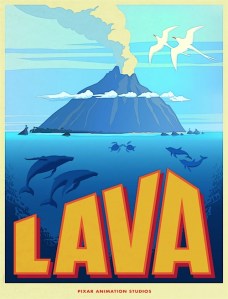 The short that accompanied Inside Out in cinemas is essentially a music video for a folksy ballad about a pair of volcanoes who are in ‘lava’ (read: love) with each other.
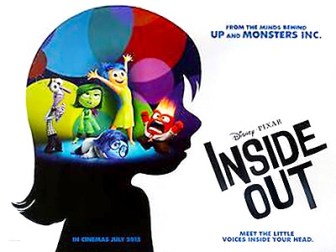 Pixar haven’t had the greatest start to the second decade of the 21st Century. After somehow managing to get lightning to strike thrice with
 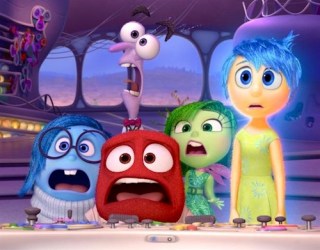 It surprises me not a jot that a Pixar film has been over-praised by critics and initial viewers. That’s pretty much my view of the their last couple of efforts before the recent doldrums, too. Those were, specifically,
 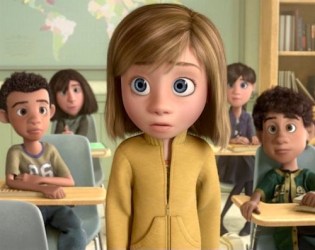 It certainly isn’t as clever or meaningful as some people have tried to make it out to be. For example, a whole internet discussion was sparked by the fact that Riley (an 11-year-old girl, remember) has emotions that are personified as a mix of male and female. When we get a glimpse inside other characters’ heads, their emotions are all of a single gender. ‘What is this saying?’, the internet wonders. Is it to do with the fact that all gender is fluid? That gender is fluid pre-puberty? As Riley is the only one with these mixed genders, are we meant to infer she’s transgender? Fertile ground for discussion. In fact, the answers are: no, no, and no. Director Pete Docter has said he just felt some emotions were more masculine (Anger in particular) and so that’s why they’re male in Riley’s head. Why the single genders in other characters? Shorthand. We only meet them briefly, after all.
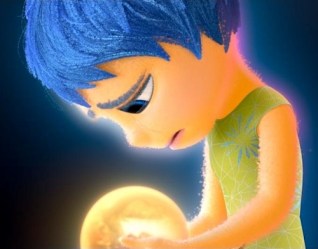 other than that the loose, floating, ‘bubbly’ edges of the emotion characters are quite neat. Apparently the effect was originally meant only for Joy and was immensely difficult to animate, but just as it was to be scrapped John Lasseter commented on how great it was and asked for it to be added to all the characters. Well done Mr Lasseter, though apparently it was an absolute headache for the technical team.
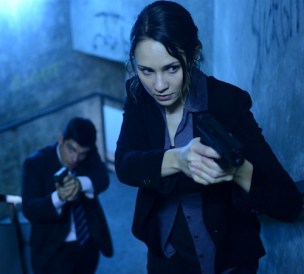
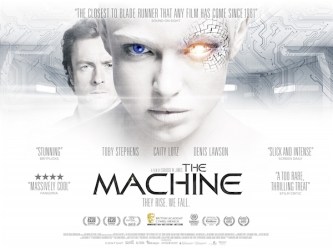 In a near future where Britain is part of a Cold War against China, a scientist (Toby Stephens) has been trying and failing to perfect artificial intelligence at a government research facility. When he hires a new associate (
 This may explain why the performances are a mixed bag. Toby Stephens can’t seem to find much to work with in his lead role, despite supposedly having a couple of emotional arcs. Lawson sleepwalks through his turn as a shady government higher-up. Lotz is unremarkable as a human, but fantastic as the AI-driven machine. Her performance as the latter is the primary reason to consider watching the film.
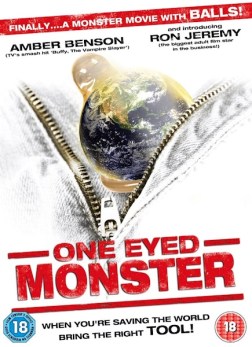 Sometimes, I swear off consciously watching any more likely-to-be-bad movies. And sometimes, I just feel like attempting something like One-Eyed Monster. And this is why: it’s actually pretty fun.
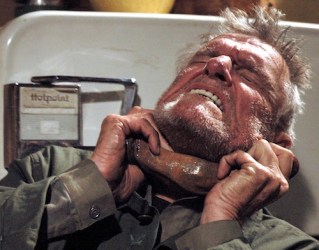 hide it behind an age barrier in the euphemistically-titled “adult” section of their website. Anyone looking for those kind of kicks is going to be disappointed, although there’s still plenty of vulgar and crude dialogue to justify its 18 certificate. In actuality, it’s mostly above using “we said a rude word!” as a ‘joke’, which is one positive it has over many more mainstream ‘comedies’.
 This informative documentary uses interviews with all the key players to tell the story of how a small indie comic, created incidentally and published almost on a whim, became a true cultural phenomenon.
 As for this documentary, it nonetheless finds an almost emotional conclusion with Eastman and Laird today talking about the chain of chance and coincidence that brought them together three decades ago to accidentally create something that transformed their lives, and which continues to endure in all kinds of media (no one liked
 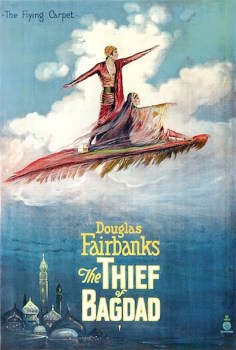 Douglas Fairbanks started out in comedies, where he was so popular he was quickly established as “the King of Hollywood”, which allowed him to attempt something different: an historical adventure film.
 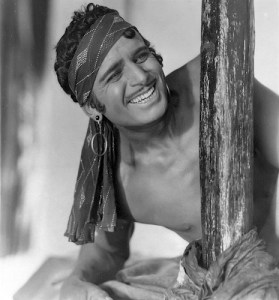 of course, which alerts the Mongol Prince to the attempted deception — though as he’s “the Governor of Wah Hoo and the Island of Wak”, he’s a fine one to talk. The thief manages to make it to see the princess anyway. She instantly falls in love with him, and he realises he loves her too, so can’t just kidnap her. His whole value system is undermined! But now he’ll have to win her hand by more honest means. Well, she already loves him, so he’s halfway there; but he’s an imposter, so there’s that to sort out yet.
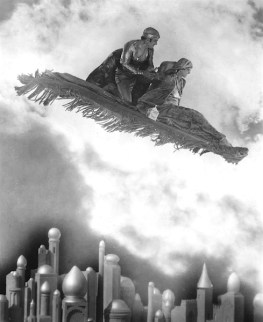 Even more impressive are the sets. The work of famed Hollywood designer William Cameron Menzies, at the time Fairbanks felt Menzies was too inexperienced to work on such a big project. Undeterred, he created a collection of detailed drawings and convinced the star/producer. No surprise that worked, because Menzies’ designs are extraordinary. His complex, detailed, unreal drawings are recreated accurately on screen (examples of this can be seen in the ‘video essay’ included on the film’s Blu-ray releases, for instance), using numerous techniques to create truly fantastical scenes: ginormous sets (they covered six-and-a-half acres), built on a reflective enamel floor (which had to be constantly re-enamelled throughout the shoot) and painted in certain ways to make them appear floaty; or glass matte paintings used to seamlessly extended or enhance shots. Reportedly 20,000 feet of film — that’s hours and hours worth — were shot just to test the lighting and painting of the sets.
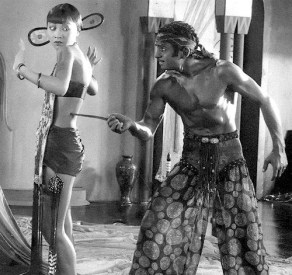 In a star-making supporting role, Anna May Wong is indeed memorable as a traitorous handmaiden. That’s more than can be said of her employer: Johnston is a bit of a non-starter as the princess, which I guess is what happens when you have to re-cast because your original choice departs part way through production. Comedian Snitz Edwards was also a mid-production replacement, drafted in to provide comic relief. It wasn’t necessary: he doesn’t add much, and Fairbanks had it covered.
 The BBC’s long-running spy thriller series
  Early seasons focused at least as much on things like the mundanity of spycraft, or how one went about having a personal life while also being a sometimes-undercover agent, as they did on the exciting action of counterespionage — as evoked in the memorable tagline “MI5 not 9 to 5”, of course. As the years rolled on, things got increasingly outlandish and grandiose, just as almost every spy series that starts out “grounded” is wont to do. In season three, an entire episode was spent on the moral dilemma of whether it was acceptable to assassinate someone; a couple of years later, assassinations would just be a halfway-through-an-episode plot development. The one constant through all this was section chief Harry Pearce (Peter Firth), the M figure to a rotating roster of “James Bond”s, including Matthew “
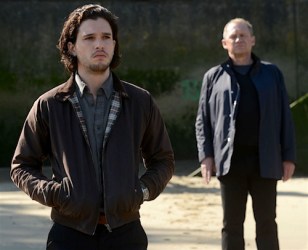
 But I’m getting ahead of myself. The story begins with Harry running an op that goes wrong, during which terrorist Adam Qasim (Elyes Gabel) is sprung from custody just before being handed over to the CIA. Cue international incident. Naturally the blame is pinned on Harry, who consequently throws himself off a bridge. Except no one buys that, so they drag in Will Holloway (Kit Harington), a disenchanted one-time protégé of Harry’s (i.e. the series’ latest “younger man who can do the running around”). He knows nothing about it (
 The trailers attempt to promise some of that kind of action, but they’re a bit of a cheat: what adrenaline the film has is mostly released in tiny bursts, scattered throughout. That strategy is fine if you’ve got the money to make each little burst a solid sequence, but when the entirety of some sequences is “jumping through a window” or “climbing a wall to get into a flat”, well… Sure, it looks good in the trailer — it promises lots of action in different places at different times — but that’s also a promise the movie can’t fulfil. The Greater Good certainly isn’t just a low-rent action movie — it’s driven by its plot — but if they’d saved up the filmmaking time, effort, and expense afforded to those single-dose action moments and poured it all into one sequence (in addition to the two or three fully-realised action sequences that the film does have), it might’ve paid dividends.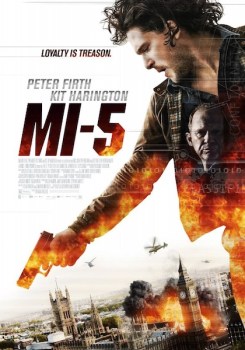
 The second release in Warner Premiere’s series of direct-to-video DC Universe Animated Original Movies (which now stretches to
 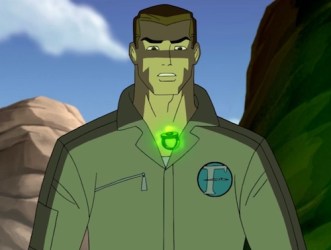 However, there are definitely bits that could’ve been sacrificed or abridged further (the Flash’s two early action sequences, for instance) to make more room to tell the story in full.
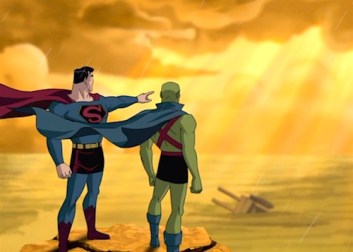 I really wanted to like The New Frontier, for all sorts of reasons. It does start well, with moments of promise sparkling here and there, but the longer it spends juggling so many balls, the fewer it can keep flying smoothly. (Do balls “fly” when juggled? Anyway, you get my point.) Considered as a whole, the overall result is fairly disappointing.
















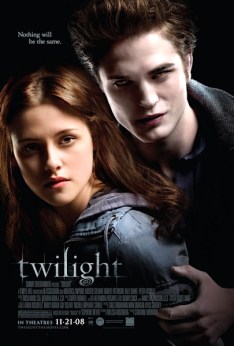 I’m not a big one for Halloween, but I’ve acknowledged the horrific holiday on a couple of occasions now. For 2015, I decided to review one of the most notorious supernatural films of recent times. A movie so horrific, it sent critics cowering behind their sofas. A film so evil, it’s perverted the minds of children — and some adults — the world over. A movie so renowned, it strikes fear into the hearts of even hardened movie lovers.
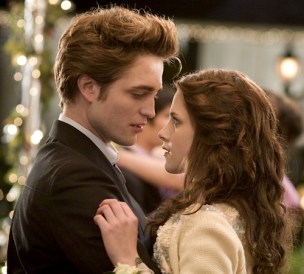
 Edward is an odd, creepy stalker — turning up in Bella’s bedroom and staring at her while she sleeps, that kind of thing — who she then finds out is a century-old man (bit of an age gap) and, literally, a predator… but she instantly unconditionally loves him. What the merry fuck? She’s given no reason to even like the guy, and plenty of reasons to run away scared of him, but no, she falls in love. What message is this sending to young girls? That the guy who follows you around everywhere just staring at you and then confesses he’s having trouble controlling his impulse to murder you (yes, he says that) is the perfect soulmate? Not to mention that he’s 100-and-something years old and dating a 17-year-old. He shouldn’t be pre-teen girls’ idol, he should be Hugh Hefner’s!
 in particular its treatment of female characters. Yet she also wrote this. Even if you allow for her being hamstrung by the novel in story terms, the dialogue is appalling, in every respect. Characters bluntly state their own and each other’s emotions at each other. We’re always being told stuff instead of shown it. Scenes heavy with exposition are shot with frenetic camerawork and underscored with driving music as if that somehow makes it filmic and exciting.
 a little light ogling of someone around my own age pales in comparison.)
 100Films.co.uk