100 Films’ 100 Favourites #8

Evil fears the knight.

Country: USA & UK
Language: English, Urdu & Mandarin
Runtime: 140 minutes
BBFC: 12A
MPAA: PG-13
Original Release: 10th June 2005 (Russia)
US Release: 15th June 2005
UK Release: 16th June 2005
First Seen: cinema, June 2005
Stars
Christian Bale (American Psycho, The Fighter)
Michael Caine (Alfie, Harry Brown)
Liam Neeson (Schindler’s List, Taken)
Katie Holmes (Go, Woman in Gold)
Gary Oldman (Léon, Tinker Tailor Soldier Spy)
Director
Christopher Nolan (Memento, Interstellar)
Screenwriters
David S. Goyer (Blade, Man of Steel)
Christopher Nolan (The Prestige, Inception)
Based on
Batman, a comic book superhero created by Bob Kane and Bill Finger. In part inspired by Batman: Year One by Frank Miller and David Mazzucchelli.
The Story
After Bruce Wayne’s philanthropic millionaire parents are murdered when he’s a kid, he dedicates his life to fighting crime, travelling the world to learn combat skills, then deciding the best way to scare the Mafia-esque scum of his home city is to dress as a bat. As you do.
Our Hero
Nana-nana-nana-nana nana-nana-nana-nana Batman! But, y’know, serious. Important crimefighting jobs include getting hold of cool gadgets your company developed, messing around in restaurant fountains with models, and perfecting a ludicrously gruff voice to use when in costume.
Our Villains
Batman really has his work cut out for him this time: there’s crime boss Carmine Falcone (Tom Wilkinson), mad scientist Dr Jonathan Crane, aka Scarecrow (Cillian Murphy), commander of a league of assassins Ra’s al Ghul (Ken Watanabe), his subordinate — and Bruce’s one-time mentor — Ducard (Liam Neeson). That’s not to mention the bloke doing something dodgy with his family company (Rutger Hauer).
Best Supporting Character
It’s a toss up between two British thesps: there’s Michael Caine as the most involved and caring version of the Waynes’ butler Alfred that we’ve yet seen, and the ever-excellent Gary Oldman as Gotham’s only honourable cop, Jim Gordon. Both are a world away from previous screen incarnations of their characters.
Memorable Quote
“Well, a guy who dresses up like a bat clearly has issues.” — Bruce Wayne
Memorable Scene
Trapped in Arkham Asylum, surrounded by police and with SWAT officers storming the building, Batman activates a device on his boot for “backup”. Moments later, hundreds of bats flood the building, allowing him to make a dramatic escape.
Technical Wizardry
Previously, the Batmobile was a sleek and desirable supercar-type vehicle. Taking inspiration from some of the comics, Begins reinvents the vehicle entirely, rendering it essentially a road-ready tank. A massive change in the very concept, but one that now seems only natural.
Letting the Side Down
Hardly a major point for the viewer, but the design of the Bat-costume meant the actor in it couldn’t turn his neck — a problem also in the previous post-’89 Bat-films. Christian Bale’s frustration with this led to it being redesigned for the sequels (and explicitly referenced on screen, too).
Making of
According to some trivia on IMDb, before shooting began Nolan treated the crew to a private screening of Blade Runner, after which he told them, “this is how we’re going to make Batman.” For more on how exactly Ridley Scott’s seminal sci-fi thriller influenced Begins, check out these interview excerpts.
Previously on…
Batman’s big-screen popularity was kicked off by Tim Burton’s 1989 Batman, but that goodwill was gradually squandered, ending with 1997’s Batman & Robin, which many regard as one of the worst films ever made. It killed a once-profitable franchise, therefore paving the way for an eventual reboot.
Next time…
The Bat-world shaped by Nolan and co reached its apotheosis in the first sequel, The Dark Knight. The trilogy-forming second sequel, The Dark Knight Rises, did that rarest of things: it gave a superhero a definitive, final ending.
Awards
1 Oscar nomination (Cinematography)
3 BAFTA nominations (Production Design, Sound, Visual Effects)
1 Razzie nomination (Worst Supporting Actress (Katie Holmes))
3 Saturn Awards (Fantasy Film, Actor (Christian Bale), Writing)
4 Saturn nominations (Supporting Actor (Liam Neeson), Supporting Actress (Katie Holmes), Director, Music, Costume, Special Effects)
Nominated for the Hugo for Best Dramatic Presentation, Long Form.
What the Critics Said
“If there is one Batman film anyone should see, this is it. It’s a superhero film with a dark tone that’s very well-written with nothing but incredible actors involved. In a world where most movies these days are usually either remakes or films that are made as quickly as possible to cash in on the latest trend in Hollywood, a reboot that is not only worthy of your time but tends to make you forget about every other version that came before it says quite a bit.” — Chris Sawin, examiner.com
What the Public Say
“One of the best things about Nolan’s Batman is that he grasps the idea of the three personas of Bruce Wayne. There’s Bruce when he’s playing the billionaire playboy, Bruce when he’s alone in the cave or with Alfred, and Bruce when he’s wearing the cowl. This movie truly delved into this in a way that no Batman movie had before it and was performed flawlessly by Christian Bale — whether you like the voice or hate it, Bale did a great job at playing three distinct personas.” — Blue Fish Comics
Elsewhere on 100 Films…
Just before the release of The Dark Knight Rises I went back over all the live-action Bat-films of the ‘modern era’, i.e. since Tim Burton’s Batman. Of Begins, I wrote that “Nolan’s first foray into Bat-world really is a stunning piece of work… The monumental achievement of The Dark Knight has come to overshadow Begins, which is now rendered as a functionary prequel to the next film’s majesty. Don’t let that reputation fool you: on its own merits, this is very much a film at the forefront of the action-adventure, blockbuster and superhero genres.”
Verdict
If there was one thing the Burton and Schumacher Batman films were collectively notorious for, it was focusing on their villains more than their hero (not least because they cast bigger name actors in the villain roles). Personally, I don’t think that’s wholly true, but there’s no doubting that Christopher Nolan’s much-needed reboot of the franchise focuses on Bruce Wayne, his reasoning and his psychology, more than ever before. In the process, Nolan and co made us believe a man might reasonably choose to fight crime and corruption by dressing up as a bat. No small feat, that.
For #9… Burton’s Bat’s back.

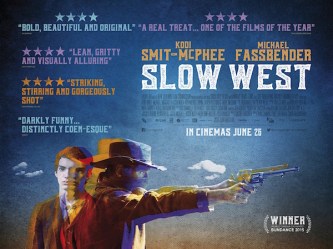 The Coens and Wes Anderson are common reference points in reviews of this slightly quirky Western, which sees Michael Fassbender’s experienced outlaw-type help wet-behind-the-ears Scotsman Kodi Smit-McPhee track the girl he loves, who emigrated for mysterious reasons, also known by the bounty hunters on their trail.
 Score:



 Mumble and his penguin pals return for another adventure, in a series the Australian film industry are reportedly inordinately proud of.

 #1
#1  #7 Super 8 (2011)





















 Favourite Film of the Month
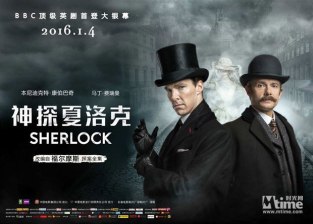 I know I’m meant to choose these awards, rather than let the Chinese public do it for me, but surely it’s worthy of note that the cinema release of Sherlock: The Abominable Bride saw it top the box office in China, as well as post strong figures in South Korea and other countries.




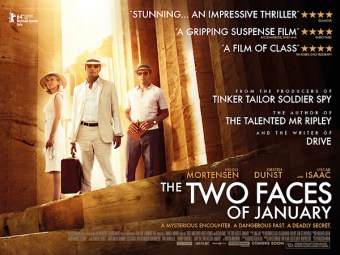 The writer of
 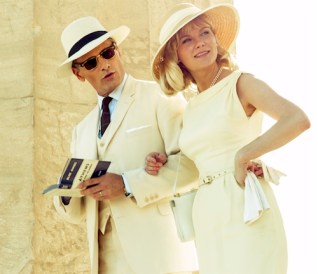 On the surface it might just seem like Colette is the dim-blonde wife, going along with her husband whatever happens and flirting with their sexy tour guide, but there’s clearly more going on under the surface. How much does she really know about Chester’s actions? Is she an innocent bystander, or is she involved? Is it harmless flirting with Rydal, or are Chester’s drunken suspicions on the money?
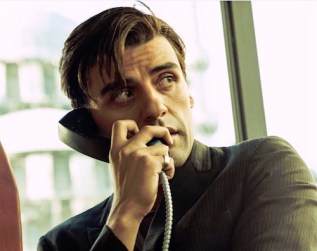 Filming this particular Highsmith novel was a long-held ambition for Amini (he first tried to acquire the rights after his big-screen writing debut,
 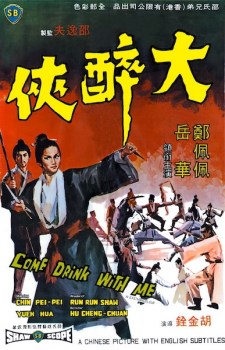 The first wuxia film directed by King Hu (King Chuan, that’s Hu! #MildlyRacistHomophoneJoke), the success of which allowed him to make his next even-more-significant movies in the genre, Come Drink with Me sees a gang kidnap the governor’s son to use him as leverage to release their leader. Instead, the governor sends his daughter, Golden Swallow (Cheng Pei-pei), to rescue her brother. She receives some help from local drunkard Fan Da-Pei (Yueh Hua), who may be more than he’s letting on…
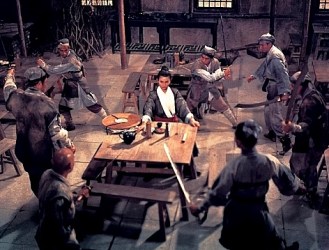 But this is a structural niggle, really. There’s so much else to enjoy — not just the action, but some amusing scenes, engaging characters, strikingly brutal villains (they not only kill a child (you wouldn’t get that in most movies) but they do it for no particular reason), and beautiful widescreen Technicolor cinematography — that it doesn’t grate too much.
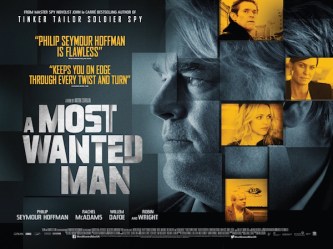 John le Carré adaptation starring Philip Seymour Hoffman as a German secret intelligence operative who must battle internal politicking while tracking a political refugee who may actually be a terrorist.

 100Films.co.uk