I’ve only got a small selection of TV viewings to offer this month (check out the “things to catch up on” section for all the big stuff I’ve missed), but at least that means it can be headlined by a series that I hope gets the attention it deserves…

Year of the Rabbit Series 1
 Ripper Street gets a comedic makeover in Channel 4’s recent comedy series, which stars Matt Berry (of Toast of London fame, and also recently seen starring in the series version of What We Do in the Shadows) as a Victorian detective by the name of Rabbit. He investigates murders and other nefarious goings-on amid the scum of the East End accompanied by a rookie posh-boy sidekick (Freddie Fox) and the force’s first female officer (Susan Wokoma).
Rabbit juggles three things at once: being a comedy, being a case-of-the-week cop show (with basic storylines that would hold up in a genuine cop show), and also a conspiracy arc plot. That it pulls all three off (just about) with only c.25 minutes per episode is impressive. In that respect it reminded me a bit of BBC Two’s wonderful The Wrong Mans, which was definitely a comedy but also definitely a crime thriller. The style and tone of the humour is very different, mind: Wrong Mans was quite grounded, whereas this is kookier and borderline surreal, as you’d expect from Berry, really. By way of example: every episode features an aside of street urchins selling a different East End delicacy, like “twigs in a bun”. It’s also quite freewheeling: running gags are quickly established and just as quickly abandoned; other things that seemed like discardable bits come back later.
The three leads are stars that ably carry the show. Berry’s talents are well documented (I guess to a lot of people he’s Toast, but I’ve never actually got round to that. I always remember him from one of his first roles, in Garth Marenghi’s Darkplace). Fox’s family legacy may suggest he could play “posh boy” in his sleep, but a stint undercover as a Cockney geezer proves his range. Wokoma more than holds her own as the young woman determined to break into the police (her dad may be the boss, but he’s no help) and prove she’s as good as the guys. The recurring supporting cast are their equal, including Paul Kaye as a rival copper out to ruin Rabbit, Keeley Hawes as a scheming feminist, and, most memorably, David Dawson as a theatrically camp Joseph ‘Elephant Man’ Merrick (under a movie-quality prosthetic — the production values are no slouch either). There’s also blink-and-you’ll-miss-it cameos from Berry’s Shadows collaborators, Taika Waititi and Jemaine Clement.
Rabbit wraps up its arc plot, but ends with a tantalising tease for a second series storyline. It’s not been recommissioned yet, but I’ve optimistically labelled this “series one” because the writers already have ideas for more and, well, I really want some more.
The Twilight Zone ‘Best Of’
 Having exhausted the top tens of both IMDb’s and ScreenCrush’s Twilight Zone episode rankings in my four previous “best of” selections, I’ve still only scratched the surface of the series: I’ve reviewed 16 episodes, which is 10% of the 156 that were produced. Now: the only reason I’ve been using ScreenCrush’s list is that I happened to see it on Twitter — it’s certainly not the only ranking of its kind. So after a bit of Googling for alternatives (which included rejecting BuzzFeed’s list because it was consistently illustrated with bloody big spoilers), I’ve decided to use Paste’s ranking to dictate which episodes I watch next. That’s partially because 50% of their top ten is episodes that weren’t in either IMDb’s or ScreenCrush’s, so that’s quite interesting. Indeed, their writer, Oktay Ege Kozak, has some very different opinions to ScreenCrush’s Matt Singer, as we’ll soon see…
First, for reference, the episodes in Paste’s top ten that I’ve already reviewed are: Eye of the Beholder (Paste’s #1, IMDb’s #3, ScreenCrush’s #11); The Monsters Are Due on Maple Street (Paste’s #2, IMDb’s #5, ScreenCrush’s #1); Time Enough at Last (Paste’s #3, IMDb’s #4, ScreenCrush’s #4); Nightmare at 20,000 Feet (Paste’s #5, IMDb’s #2, ScreenCrush’s #14); and The Hitch-Hiker (Paste’s #8, IMDb’s #21, ScreenCrush’s #6). Not a huge deal of disagreement there, but some of the gaps are about to get wild.
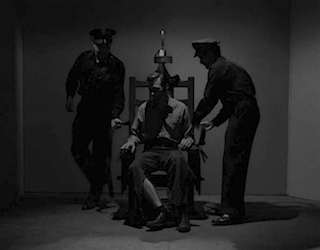
Indeed, the second-biggest difference is up first: season two’s Shadow Play is right up in 4th on Paste’s list, but a whopping 98 places lower at 102nd on ScreenCrush (it’s 22nd on IMDb). It’s the story of a man sentenced to execution, who claims that they’re all living inside his dream and if he’s executed everyone else will cease to exist. Is he trying to plead insanity… or might he just be telling the truth? Paste are on the money here: this is a great little story, with Dennis Weaver as the condemned man driven to the brink by (he claims) being executed over and over in a never-ending nightmare; and, on the other side, the DA and court reporter struggle with the idea that he might be telling the truth, meaning they’re not people at all but mere figments in someone else’s dream. It’s a horror story of a nightmare and an existential musing all in one, with a strong vein of tension about what will happen in the end. Kozak praises it for pulling all that off, but Singer counters that “the premise is too convoluted [with] two ideas that would each work more effectively on their own.” I can see where he’s coming from, but I don’t wholly agree — if you disconnect the two ideas, they’d both need something to fill the resultant gap in order to function as narratives.
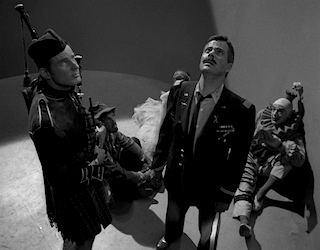 There’s closer agreement about Paste’s 6th choice, season three’s Five Characters in Search of an Exit, which ranks 14th on IMDb and 32nd on ScreenCrush. Singer writes that “if you enjoy the movie Cube you have this episode written by Serling from a story by Marvin Petal to thank,” which immediately put it high on my must-see list because I love Cube. This has a similar premise: five mismatched strangers awaken in a featureless metal cylinder, each with no memory of who they are and how they got there. The top of their de facto prison is open — if they can just climb up there, maybe they can find answers. The result is both a mystery drama about just what’s going on, and something of a character study on dealing and coping with situations you can’t explain or change. Naturally, there’s a twist ending. In fact, at one point the characters, theorising about why and how and where they are, list a bunch of options that all sound like Twilight Zone endings. It’s quite a bold move, really; almost acknowledging the show’s MO, and casually discarding a bunch of potential conclusions in the process — and if one of them was your guess, well, the show’s just laughingly dismissed you before the halfway mark! Weirdly, though, I did manage to guess the twist pretty precisely from early on. I’m not sure how, really — blind luck, I think, because there’s nothing to tip its hand. Possibly it’s just experience: as with so many Twilight Zone twists, this was probably highly innovative and/or unusual back in the ‘60s, but has been imitated and copied (deliberately or otherwise) since. Still, as a mystery thriller, the episode is as good as any of the similar works that have been produced in its wake.
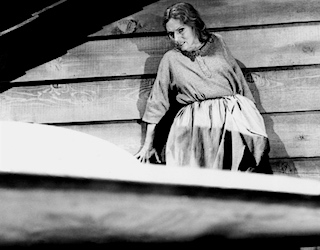 One of the series’ more famous episodes is in 7th place for Paste (IMDb #28, ScreenCrush #58): The Invaders, starring Agnes Moorehead as the lone inhabitant of a remote shack, who must suddenly deal with hostile six-inch spacemen landing their saucer on her roof. It’s a near-silent drama, as Moorehead is terrorised by the miniature monsters and struggles to fend them off. And, obviously, there’s a twist. I don’t want to sound boastful, but, yeah, I saw it coming. I’ve said this many times now, but I really do suspect the series is a victim of its own success in this regard — it’s 60 years old and highly influential, so of course all the media a modern viewer has experienced leaves us ready to guess the outcomes. Actually, I bet it’d be a great show for kids — a formative experience; and, with less media exposure, the twists might retain the appropriate level of mind-blowing-ness. Anyway, at least The Invaders has more going for it than just the final reveal, with the woman vs the mini-spacemen playing like a tense horror movie. There’s a lot of praise for Moorehead’s performance, but I thought she was overacting somewhat in compensation for her lack of dialogue. In fairness, though, this was made for 1961 TV sets — with no speech to work with, the performance needed to be ‘big’ to come over on those tiny tellies. Unfortunately, it’s another mark against the episode when watched in HD on a modern setup.
Two season one episodes round out Paste’s top ten, both of which are placed considerably higher than on ScreenCrush’s list. In 9th place is Perchance to Dream, which is ranked way down at 128th on ScreenCrush, and 87th on IMDb — both sizeable gaps, and in this case I side with the latter. It’s about a man with a weak heart who thinks his dreams are trying to kill him, only it’s somehow much more dull than that setup sounds. It doesn’t even have any great point or twist to cap it off. Kozak reckons this is a “haunting, cinematically captivating campfire story [that] never lets go of its meticulously built suspense until the wickedly unforgiving finale,” an opinion I don’t agree with a word of, sadly. Singer says that “while Conte’s character is terrified to fall asleep, the whole thing is a bit of snooze,” and that I do agree with.
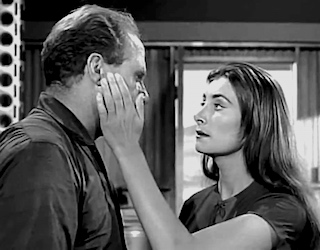 Finally for now is The Lonely, which is ranked 10th on Paste (obv.) but only 105th on ScreenCrush (IMDb is much closer at 27th). Sorry to harp on about this, but here’s another episode that may’ve been great once but recent years have seen other films and TV series tackle similar themes in much greater depth, far surpassing the mere 20-odd minutes it’s afforded here. Indeed, this is the rarest of things in my experience: a Twilight Zone episode where 25 minutes isn’t enough to explore its concept. It’s about a man imprisoned in solitary confinement. His cell? An entire asteroid (filmed on location in Death Valley, which adds a magnificent grit and desolation to the visuals). He’s visited quarterly by a supply ship, and after a few years the captain takes pity on him and brings a robot woman to be his companion. It’s as good a setup as any, but the episode simply doesn’t have the time to dig into the questions and musings it throws up — though it’s not helped by wasting most of the first half on chatter between the prisoner and the captain, establishing their relationship more fully than the one between the prisoner and his robo-woman; a relationship the episode supposedly hinges on.
So if there’s one Twilight Zone episode that begs to be remade and expanded upon, it’s this one. It’s even ripe for someone to add one of the series’ trademark ironic twists — I thought of two or three while watching, but the episode itself doesn’t have one, exactly (I mean, it kinda does, but it’s more a plot development than a final, cruel twist of the knife like the series’ best). But then again, does it need remaking when other storytellers have already taken up this episode’s theme and expounded on it better? This is a forerunner to the likes of Her and Ex Machina and Blade Runner 2049 and the Westworld TV series. You’ll note those are all very recent works (the eldest, Her, has yet to reach its 6th anniversary), which perhaps shows how far ahead of its time The Twilight Zone was. But their thoughtfulness also really shows up how little The Lonely actually has to say about its subject matter.
Also watched…
Ghosts Series 1 Episodes 5-6 — Accidentally fell behind on this and only just finished it. My review of the first half of the series is here and still applies. Happily, it’s already been recommissioned for a second series.
How to Break into the Elite — This sounds like a bit of a “get rich quick” documentary or something, but it was actually far more insightful. Basically, about how class is the last great barrier to employment in the UK; the one thing recruiters still discriminate on (even if it’s subconsciously, or they don’t say it). To some (i.e. those who’ve struggled in the system) it might all feel obvious, but there’s evidence and proof to back it up. It’s available on iPlayer (for another 11 months) if you’re interested.
University Challenge Series 49 Episodes 1-3 — An excellent show for making you feel astoundingly unknowledgeable. I kill it whenever a film- or TV-related picture round comes up, though.
Things to Catch Up On
 This month, I have mostly been missing Stranger Things season 3, which seems to have provoked controversy with some of its character decisions (I’ve been avoiding spoilers, but have seen news headlines that imply as much); and Veronica Mars season 4, which, er, seems to have provoked controversy with some of its character decisions (I’ve been avoiding spoilers, but have also seen news headlines that imply as much). As they’re only eight episodes apiece, hopefully I’ll have found time for them before next month’s column. (Veronica Mars still doesn’t have a UK broadcaster (in fact, I don’t think it has one anywhere outside of the US and Canada, I guess thanks to it being on Hulu (though other Hulu shows have international carriers, so who knows what’s going on here)), but where there’s a will there’s a way.) And if that wasn’t enough, Amazon also recently released subversive comic book adaptation The Boys, which also looks right within my wheelhouse. That’s also eight episodes, incidentally. I seem to remember reading a while ago that Netflix’s research suggested eight was the optimum number of episodes to have in a season nowadays. I guess everyone took that to heart.
Next month… see above (with crossed fingers).




 It’s the 50th Arbie Awards! In honour of that milestone, I’m… not doing anything special whatsoever. So let’s get on with this:









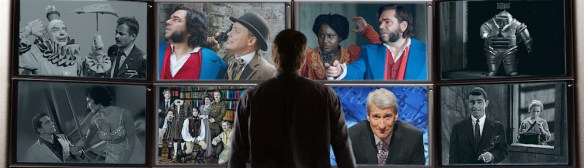



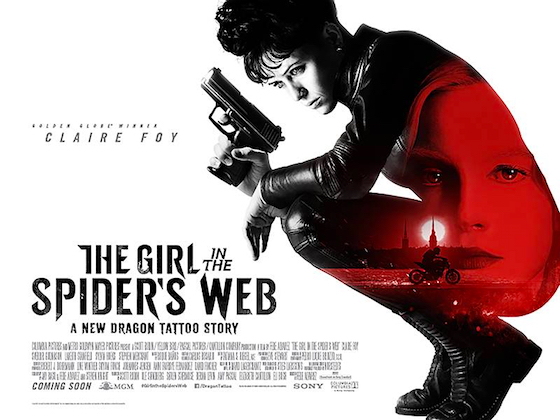


















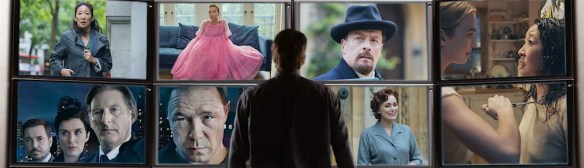
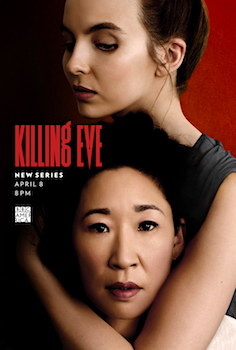 Adapted (loosely, I understand) from a series of novellas, BBC America’s Killing Eve is a spy thriller with a difference. Quite a few differences, really. That’s no doubt part of why it’s been such a success. Its US ratings aren’t huge, but it seemed to be talked about all over Twitter when it was airing there, and it went on to win some awards. When it finally made it to UK screens some five months after its US premiere, UK viewers went even bigger for it (it gets more than ten times as many viewers here as in the US, according to the figures I found), and it scooped up even more awards.
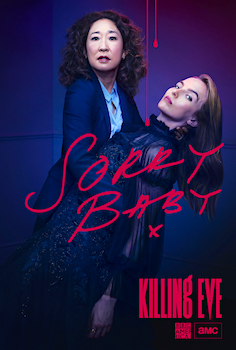 The second season is still airing in the UK (people who didn’t even notice that five-month wait for season one got ever so het up when the US got the second run two months before the UK), so no spoilers here. Season two brings with it a new showrunner, and it does seem to lack some of that special spark in the writing, although to emphasise that as a criticism would be unfair: it’s still a lot of fun, and the cast know how to get the most out of the material. With Villanelle on the back foot and Eve diverted onto another serial killer case (a subplot which peters out long before it’s been used for maximum drama, sadly), there’s a different dynamic to the early part of the season. Later on (in the episodes that’ll air next month over here) things come together in new and surprising ways, which is more rewarding. It lacks the striking freshness of the first season, but it still has its moments. And, of course, it leaves things in an intriguing place for the already-confirmed third season.
 I’m not sure there are many people like Stephen Poliakoff working in TV nowadays — people who are seemingly given free rein to author standalone miniseries exactly how they want. I’m sure it’s more complicated behind-the-scenes than it looks from the outside, but it appears like Poliakoff’s reputation is solid enough that he’s allowed to write and direct with his own particular voice for entire six-episode stories. Honestly, I’ve skipped his last few, because I haven’t always found his work wholly engaging, but this espionage-tinged series sounded more up my street. Like Killing Eve, it’s an idiosyncratic take on the spy genre; though whereas that’s quirkily comical, Summer of Rockets is more rooted in period family drama.
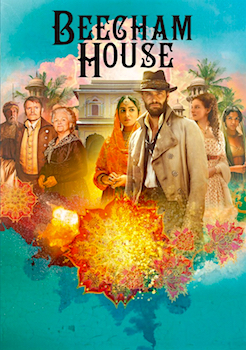 It’s been a few years since Downton Abbey ended now, so it makes sense ITV continue to search for a replica of its success. I think Victoria ticked that box for a while, until its ratings sloped off against Poldark… and so now we have Beecham House, which mixes a bit of Poldark into the familiar period soap opera mix. There’s also some pedigree behind the camera: the series is co-created, -written and -directed by Gurinder Chadha of Bend It Like Beckham fame. I think it’s meant to be vaguely educational, too, as it’s set in a period of Indian history a bit earlier than we’re familiar with from other British Raj dramas.
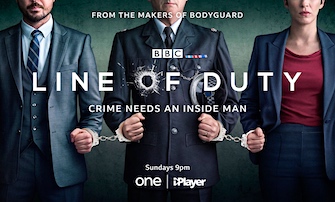 Every series Line of Duty introduces us to a new case of possible police corruption for the dedicated boys and girls of AC-12 to expose, and every series it turns out to tie into the overarching tale of deep-rooted links between organised crime and a never-ending parade of bent coppers. But could they finally be getting to nub of it all? They’ve got a solid lead… and so, it seems, does their newest case: an undercover officer who seems to have gone native, but might actually be onto the top man behind it all. The real problem is, he suspects it’s good ol’ Ted Hastings, the head of AC-12 himself. Well, who better to run police corruption than the guy in charge of investigating corruption? And it forces his underlings to ask: are his borderline-illegal actions just bold moves to get the job done, or is he trying to cover for something?
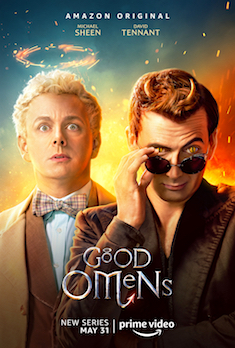 This month, I have mostly been missing stuff left, right and centre due to my house move. Sorry to bring that up again, but it’s really upended my viewing schedule. Headliners include the Amazon/BBC adaptation of Good Omens — it’s one of my favourite novels, it’s adapted by one of the original authors, and it stars some of my favourite actors, so I’ve been very much looking forward to it; but because of all that I want to be able to sit down and watch it properly, and I’ve just not found the time yet. Another is the final outing for the MCU on Netflix, Jessica Jones season 3, which is perhaps blighted by the fact it’s 13 episodes long — that wasn’t a lot once upon a time, but as things trend down to 10 or 8 or even the good old UK standard of 6, it feels like more of a commitment. Other things that have been similarly afflicted include the feature-length Game of Thrones making-of, The Last Watch; film-to-TV sitcom adaptation What We Do in the Shadows (and


 100Films.co.uk