Review Roundup: Superman Sequels

Superman: The Movie is one of the greatest superhero movies ever made, perhaps even the greatest. Its sequels… not so much.

It took three movies to get there, but through them you’ll believe a franchise can die…

Superman II
(1980)

2018 #128
Richard Lester | 127 mins | Blu-ray | 2.40:1 | USA, UK & Canada / English | PG / PG
Superman II

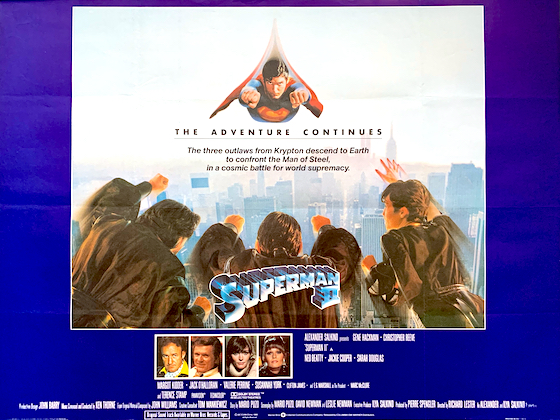
I feel like I must’ve seen Superman II as a kid — I know I saw Superman and enjoyed it, so why wouldn’t I have seen the sequel? But all the things people go on about from it (“kneel before Zod!”) I only know because other people go on about them, not from any memory of my own, so maybe I never saw it? Well, sitting down to watch it now, I didn’t remember any part of it. But that doesn’t mean I definitely didn’t see it because, frankly, I didn’t find Superman II particularly worthy of being remembered. I know some people love it — heck, James Gunn even included it in a list of “sequels that are better than the original” the other day. But James Gunn is wrong.

For me, the film breaks down into a few simple and distinct sections. First, it begins with an eight-and-a-half-minute recap of the first movie. That’s… long. And largely unnecessary. I mean, when it bothers to include the telephone booth gag but omits the turning-the-world-backwards climax of the movie, you get the impression it’s not there to get you properly up to speed on the plot.

Next, Lois and Clark spend most of the first hour titting about at Niagara Falls investigating a honeymoon hotel scam (a what now?!), while evil Kryptonian General Zod and his gang veeery slooowly make their way to somewhere significant. Then there’s half-an-hour of Lois and Clark being too self-absorbed to notice Zod take over the world. Not-so-super, Superman. Then, finally, the all-action last half-hour actually gives us some Superman stuff. Hurrah!

Who's kneeling now, bitch?

The humour quotient is waaay upped from the first movie. Based on his previous work, I guess much of that was the influence of replacement director Richard Lester. He wasn’t a good choice all round: Margot Kidder disliked working with him; Gene Hackman didn’t return (all his scenes are either footage previously shot or done with a lookalike and impersonator); John Williams walked off the film after seeing Lester’s footage. He reshot a bunch of stuff original director Richard Donner had already filmed, partly to get a sole director credit, partly because he didn’t approve of the epic visual style Donner had chosen. Instead, Lester aimed for a visually flat “comic book” style. Ugh.

25 years after Superman II’s release, Warner Bros relented and let Donner complete his original cut of the movie, released in 2006 as The Richard Donner Cut. Maybe that version’s better — I haven’t watched it yet, but it does have a much higher score on IMDb. But how anyone could genuinely love the originally-released version, I don’t understand. It’s not outright bad, it’s just mediocre, and not a patch on its predecessor.

3 out of 5

Superman III
(1983)

2018 #161
Richard Lester | 125 mins | Blu-ray | 2.40:1 | UK & USA / English | PG / PG

Superman III

If you said “imagine a Superman film by a director who won the Palme d’Or”, you wouldn’t picture Superman: The Slapstick Comedy… and yet here we are.

The director in question is Richard Lester, returning after Superman II, a movie he inherited, so I guess it’s only here that he’s really allowed to show what he thinks a comic book movie ought to be. Turns out, that’s more like Airplane or a Jacques Tati film than the David Lean influence he felt Richard Donner was aiming for on Superman: The Movie. He even lets the title card appear over the epic superhero imagery of… three phone boxes that have been knocked over dominoes-style by a hot dog cart. Wow.

Ironically, almost all of the film is humour-focused apart from the scenes starring comedian Richard Pryor (who thought the screenplay was terrible, but did like the $5 million salary). Concurrently, the technological and scientific parts of the plot make absolutely no sense. Like, a weather monitoring satellite can be accessed from a small-town wheat firm and then be reprogrammed to control the weather. And that same satellite can then use its lasers to analyse rocks millions of miles away to find out what elements make up another element, which just… Ugh. It so doesn’t make sense that it’s too much effort to explain why it doesn’t make sense.

With Gene Hackman presumably only too happy to be rid of this franchise, the villain is now Robert Vaughn, who has an entourage that feels like a blatant attempt to emulate Lex Luther & co from the previous films. There’s also an all-powerful supercomputer, which Superman defeats with what appears to be a bubbling-over pot of strawberry jam.

That's Larry Lamb on the left, would you believe

The story also involves Superman going bad — you can tell because he’s grown a five o’clock shadow, developed bags under his eyes, and started wearing a suit with a colour scheme more suited to a Zack Snyder interpretation of the character. And he begins to do really terrible things, like… straightening the leaning tower of Pisa, and… blowing out the Olympic flame. Ooh, edgy. Why does he do it? God, I don’t know. There’s no logic in this. There’s a fight between good Superman and bad Superman, which some think is brilliant; “a highlight of the series”, said one comment I read. Maybe it’s just because Evil Superman is so damn cartoonish, but I didn’t particularly care for it.

It did inspire the original title of the movie, though, which was Superman vs. Superman, and that in turn led to a bit of trivia more batshit insane than anything in the film itself: that original title was dropped after legal action was threatened by… the producers of Kramer vs. Kramer. What in the fucking what now?! I know America is famed for spurious lawsuits, but c’mon!

Of course, if you take the whole film at the face value of its tone, it doesn’t really matter — it’s just a daft comedy. But it shouldn’t be, should it? This isn’t the Superman the first film promised us.

2 out of 5

Superman IV:
The Quest for Peace

(1987)

2020 #79
Sidney J. Furie | 90 mins | Blu-ray | 2.35:1 | UK & USA / English | PG / PG

Superman IV: The Quest for Peace

At one point in this movie, a young character calls Superman “the Dude of Steel”. Yeah, we’re down with the kids now! Superman (okay, Clark Kent) even does aerobics. Hip and happening!

After Superman III tried its damnedest to turn Superman into a comedy, Superman IV swings the other way and turns it into a polemic. It’s like an 8-year-old was asked to write an anti-nuclear weapons essay and chose to do it in the form of a Superman story. It seems like a mercy that it only runs 90 minutes, although that’s part of the problem: the original final cut was 134 minutes, but the producers chopped out 45 minutes of material. No wonder it grows increasingly nonsensical as it goes on. But then so did Superman III and they had no such excuse, so there’s no saying the longer cut would’ve been better.

Indeed, on the evidence of what’s left, I think we can assume it wouldn’t have been. Gene Hackman’s Lex Luthor is back (goodness knows how they talked him into it), but his plan involves creating a physical adversary for Superman: Nuclear Man! Nuclear Man has many of Supes’ powers and strengths, but none of his brains, as he stomps around just roaring at people. He flies around the world basically just being a vandal, and Superman follows along to clean up after him, like some kind of super-powered babysitter. Then he punches Supes once and… he loses all his powers? And then Nuclear Man sees a woman on a cover of a newspaper and suddenly getting her is his only motivation; and Superman’s back, thanks to a magic crystal, and he somehow knows exactly what/who Nuclear Man is after; and so Superman defeats him by… tricking him into an elevator… which he drops off on the Moon; but not the dark side, so the sun’s rays revitalise Nuclear Man… when the sun rises. On the Moon. Jesus wept.
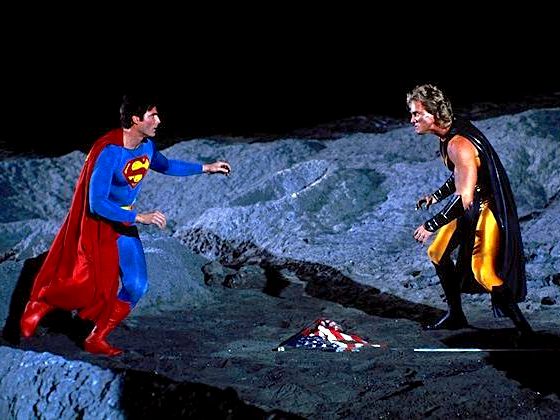
The Moon isn't made of cheese, but this film...

There are some good ideas in Superman IV. As co-writer Mark Rosenthal discusses on his audio commentary, the idea had been to explore the age-old question of “if God is all-good and all-powerful, why is there still suffering” — because, with all his powers, Superman is basically a mythological God; so why doesn’t he just get rid of all those nasty nukes? The answer, of course, is that he’s not real. And so in the fictional world of the fictional film, the fictional hero gets rid of the nukes, which is nice for the fictional people but not so much use to the rest of us.

Because Lois Lane is in love with Superman but not so much Clark Kent, they decided to give Clark a love interest, which I’m not sure quite understands the characters or their dynamic properly, but whatever. It did inspire one fun idea, though: a double date between Superman & Lois and Clark & new-lady. The idea was for a quick-paced farce of a scene, with Clark and Supes coming and going at speed, like something out of a Cary Grant screwball romantic comedy. I guess no one told the director, because the scene as filmed lacks the fast pace needed to make it work. You can have all the great ideas in the world, but if you don’t have the skills to execute them properly, it’s worthless.

Apparently it was really Christopher Reeve who fought to make the movie happen, and everyone involved had good intentions and didn’t want to let him down. Well, they did. The returning cast are the only people who emerge unscathed from this mess — Reeve is as wonderful as ever as Superman; just perfect. His chemistry with Margot Kidder is great, and Gene Hackman is still managing to have fun as Lex. But why suffer through the rest of this terrible movie for those scant bright spots when you could just watch the first Superman instead?

1 out of 5

Superman IV featured on my list of The Worst Films I Saw in 2020.

19 years later, after a couple of decades relegated to various TV incarnations, they attempted to return the Man of Steel to the silver screen in big-budget style with Superman Returns, which was conceived as a continuation of the Christopher Reeve series. My original review of that movie is here.
The 100-Week Roundup II

I had a nice little introduction written for this post when T2 3D was going to be part of it, but then that got too long and I posted it separately. So, anyway, here are three other films I watched almost two years ago but haven’t reviewed yet…

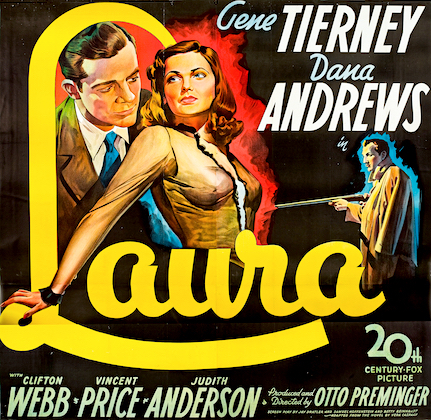
Laura
(1944)

2018 #93
Otto Preminger | 85 mins | download (HD) | 4:3 | USA / English | U

Laura

This classic film noir stars Dana Andrews as a New York detective investigating the murder of an advertising exec and society girl played by Gene Tierney, the eponymous Laura. And there’s a good twist halfway through that completely turns the film on its head, so I’ll keep this vague. (We can debate the merits or otherwise of openly discussing plot points from 75-year-old films another time. Heck, go on Twitter — I’m sure someone’ll be ranting about it from one side or the other right now.)

As a murder investigation, Laura is a decent little mystery — there aren’t a huge number of suspects, but enough to keep you guessing; though I did eventually wonder if it actually hangs together 100% as a case. But that doesn’t matter when everything else about the film plays out so well. For starters, it’s noticeably well directed by Otto Preminger, with some nice shot construction and editing. Then the screenplay (based on a novel by Vera Caspary, and penned by three credited writers and one uncredited, as per the interweb) boasts lots of great dialogue. It’s rarely show-off-ily snappy, but it is effective and sometimes witty. That’s only appropriate considering one of the characters (Clifton Webb’s Waldo Lydecker) has a rep as a wordsmith — that wouldn’t fly if he didn’t have plenty of bons mots to offer.

The rest of the cast are similarly noteworthy. Tierney is very plausible as the kind of gal everyone would fall in love with, and Andrews is equally so as the solid copper. A key supporting role is filled by a young-ish Vincent Price. (Can we call 33 “young”? As someone who was born in 1986, I’m going to go with “yes”.) It’s an accident of history how effective his casting is — not that his performance is bad in and of itself, but his later reputation brings certain expectations about how things might pan out. Is that warranted? Well, you’ll have to watch it to see…

5 out of 5

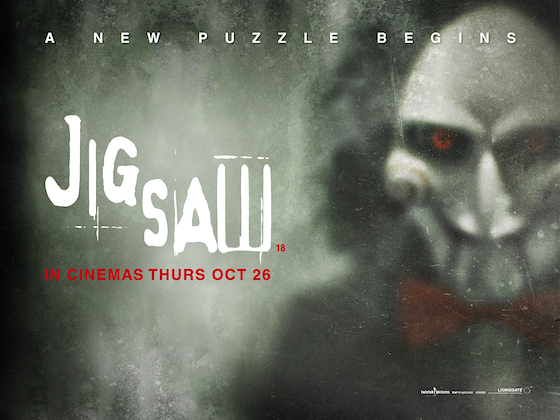
Jigsaw
(2017)

2018 #104
The Spierig Brothers | 92 mins | streaming (HD) | 2.35:1 | USA & Canada / English | 18 / R

Jigsaw

After seven films between 2004 and 2010, the Saw series seemed well and truly done. But nothing once-popular can stay dead for long in Hollywood, and so 2017 saw this revival (and this year will see another, pandemic permitting). It seemed to go down quite poorly, and I’m curious as to why. It’s a Saw film through and through — if you don’t like the series, there’s no reason you should like this — so, I mean, why would you want or expect a Saw film to not be a Saw film? Maybe it’s just people who don’t actually liking Saw films all that much but chose to watch an eighth one anyway? Well, it’s up to them how they choose to spend their time…

Anyhow, as a Saw film, I thought it was one of the better ones. Not the very best (that’s still the first), but definitely top end. I liked the final reveal, which is a big part of these films’ appeal — what twist they’re going to pull in the final moments. Sure, I’d guessed part of it well in advance, but it still had some neat aspects. (I do wonder how many people were fooled into thinking Jigsaw was still alive, somehow? He died many, many films ago; he’s not coming back.) In terms of the whole series, it does raise a load of questions — but digging into them is really getting navel-gazing about the series’ continuity. I’m not sure it’s worth worrying about.

3 out of 5

Inferno
(1953)

2018 #107
Roy Baker | 84 mins | Blu-ray (3D) | 1.37:1 | USA / English | PG

Inferno

3D and film noir aren’t things you readily associate with each other, but there are a couple of them — see here for a few. Some might count Hitchcock’s Dial M for Murder, too. Inferno here is another borderline case. The plot definitely has a whiff of noir — a husband left for dead by his wife and her lover, which cause her moral quandaries but him not so much — but the telling is more of an Adventure movie, some might even say a Western, with the husband struggling through an arid wilderness. Plus it’s all shot in brightly-lit Technicolor.

Whether you count it as noir or not, it’s most noteworthy for its 3D. It was one of the last films made in the format during the fleeting ’50s experiment, especially as its studio, Fox, were backing CinemaScope as a TV-beater instead (well, I guess they were right). It doesn’t make blatant use of its 3D — there’s no stuff poking at the camera (until the punch-up finale) — but it often brings a nice sense of depth often, including to the wide-open desert vistas. It was well received, too, with the New York Times saying it was where “3-D comes of age”, and others comparing it favourably to other movies of the era, which treated 3D as no more than a gimmick and squandered its potential. All of that said, a climactic fight does indulge in all the in-your-face aspects we associate with classic 3D movies — but it was a late addition forced on the film by studio head Darryl F. Zanuck, who wanted to see more overt 3D action. In summary up, director Roy Ward Baker commented, “the critics gave it unanimous applause, largely because it has a good story to which the process contributed greatly, as opposed to the usual stereo films which were simply exploitation stunts. However, we did include a few of the cliches, at the behest of DFZ. I guess he was right at that.”

It is a pretty good tale. Baker wanted to make a film in which “the leading character spends long periods alone on the screen, where the interest would be in what he does, rather than what he says.” Nonetheless, we’re given a voiceover narration from the hero, which gets a bit twee, albeit with an enjoyable dry wit now and then, and an interesting pragmatism about his situation. There’s some neat editing to juxtapose his situation with that of his condemners, too: when he’s starving it cuts to wifey enjoying a lavish meal; as he digs in the desperate hope of water it cuts to her lover casually fixing himself a drink. Said wifey is played by Rhonda Fleming, who apparently was known as “the Queen of Technicolor” because of her complexion and vibrant red hair. Everyone in the film is in love with her — even the cops who’ve just met her comment on it — and, yeah, I buy that. There’s an amusing bit where her lover is desperate to throw caution to the wind and visit her room that night simply because it’s “been four days”, wink wink nudge nudge. Men, eh?

4 out of 5

Terminator 2: Judgment Day 3D (1991/2017)

2018 #103
James Cameron | 137 mins | Blu-ray | 2.40:1 | USA & France / English | 15 / R

Terminator 2: Judgment Day 3D

When I’ve previously reviewed 3D versions of films I’d already seen in 2D, I haven’t given them a new number — so why did T2 3D merit one? Partly it’s a ‘feeling’ that comes from it not being the original version. Most of those other re-watches were films that had a 3D release concurrent with their 2D one, but T2’s is a years-later addition. Still, that’s a thin justification. More importantly, however, they chose to perform the 3D conversion on the film’s theatrical cut, which I’m 95% sure I’ve never seen. The extended Special Edition was first released in 1993, which is before I first saw the film, and some of the scenes that have most stuck in my memory are from the longer cut. Is it shorter enough, and therefore different enough, to warrant a new number? Not sure. But combine that with the new 3D and I thought, yeah, that’s pretty different all round.

The film itself… well, it’s an action/sci-fi classic, isn’t it? But I needed to rewatch it to remember how good it is — I left it off my 100 Favourites a couple of years ago because I decided it was on the long-list just because you’d expect it to be there; but, rewatching it, I realise I do agree with the consensus on its greatness. The most interesting ideas in T2 aren’t what it contributes to the series’ sci-fi mythology (though a liquid metal robot is pretty neat), but how it chooses to develop its characters. The T-800 now being a good guy is the obvious one, but check out the humans: sweet innocent Sarah Connor is now a hardened military-vet-type locked up in a mental institution where she rails against the system; and her son, destined to become the great leader of humanity, isn’t a hero in waiting but instead an irritating juvenile delinquent brat. It’s these extra dimensions, not just the sci-fi and the action, that make T2 such a great film.

“Get away from him, you bitch!” ...no, wait, wrong Cameron movie

That said, I think there’s an argument to be made that T1 has withstood the test of time better than T2. The original film is a grounded sci-fi thriller, its low budget working in its favour to emphasise those qualities: it’s fuelled by both big SF ideas and the grittiness of its present-day setting. T2, on the other hand, is pitched as an action-and-effects blockbuster — it was the first movie to cost more than $100 million (according to some reports, anyway) — but in that respect it’s been continuously surpassed by numerous other summer spectacles in the intervening decades. As I said, there are other reasons it endures, but I think on balance I might prefer the first movie.

And talking of preferences, I definitely prefer T2’s extended cut to the theatrical one. There are numerous nice grace notes added to the longer cut, but it really comes down to one scene: the sequence where they take the chip out of the T-800’s head and Sarah considers destroying it, which includes the famous mirror shot. For me that’s one of the most memorable scenes from the entire film. It’s both a good scene in its own right and it’s neatly mirrored in the ending, when the Terminator makes Sarah lower him into the molten steel. I’ve always found it an odd idea that it wasn’t always there, and I continue to feel that way. The film seems incomplete without it.

Now, the 3D… As you might expect from a genuine 3D advocate like Cameron, a lot of the effect is quite subtle — it’s aiming for realistic spacing, not an in-your-face exaggeration of depth. That kind of subtlety is arguably a reason a lot of people feel 3D adds little, because its benefit isn’t obvious. Heck, sometimes you don’t even notice it’s there. Ironically, that’s sometimes amongst the best 3D, but you might need a direct comparison with 2D to notice it. Put a good subtle-3D shot against its 2D counterpart and suddenly you’re aware of the natural awareness of shape and depth the extra dimension is adding. Now, T2 3D is not a prime example of this — it’s a film that was originally shot and designed for 2D, after all — but it does have moments that I think demonstrate that kind of effect. And, at other times, the 3D is much more obvious; mostly during big action set pieces, as you’d expect.

Oh, if he only knew how many times he'd be back...

The big downside is that they felt they had to apply a hefty dose of DNR before doing the 3D conversion. I’m sure there are reasons why film grain would get in the way of a conversion, but sometimes the DNR is too heavy-handed. It’s never at the level of the infamous Predator Blu-ray, where everyone looked like a slightly-melted waxwork, but there are times here when people seem to have been formed from smooth plastic rather than the natural pore-covered texture of real skin. How much this matters is a case of personal preference, but there were one or two times I did find it distracting — the meeting between Sarah and Dr Silberman, for instance, where the DNR has smoothed his skin so much that it looks like he’s been de-aged. If this was just on the 3D version then, hey-ho, that’s a side effect of the process, but I believe the same scrubbed version has been put out as the film’s official 4K restoration. That’s very disappointing.

So, this is in no way my preferred version of the movie; but it’s such a great film anyway, and this re-watch has reminded me of that, that it can be nothing but full marks.

5 out of 5

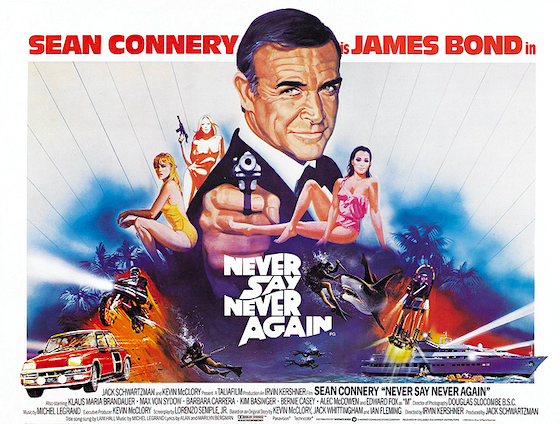
Never Say Never Again (1983)

The 100 Films Guide to…

Never Say Never Again

Sean Connery is James Bond 007

Country: UK, USA & West Germany
Language: English
Runtime: 134 minutes
BBFC: PG
MPAA: PG

Original Release: 7th October 1983 (USA)
UK Release: 15th December 1983
Budget: $36 million
Worldwide Gross: $138 million

Stars
Sean Connery (Thunderball, Highlander)
Klaus Maria Brandauer (Mephisto, Out of Africa)
Kim Basinger (Mother Lode, Batman)
Barbara Carrera (The Island of Dr. Moreau, Lone Wolf McQuade)
Max von Sydow (The Exorcist, Minority Report)

Director
Irvin Kershner (The Empire Strikes Back, RoboCop 2)

Screenwriter
Lorenzo Semple Jr. (Papillon, Flash Gordon)

Based on
An original James Bond story by Kevin McClory, Jack Whittingham and Ian Fleming, which Fleming later novelised as Thunderball.


The Story
Ageing secret agent James Bond is sent to a health spa to get back into shape, but therein stumbles upon part a plot to hijack nuclear warheads and hold the world to ransom. With the theft successful, it falls to Bond to retrieve the weapons before it’s too late.

Our Hero
Bond, James Bond, British secret agent 007. He’s played by Sean Connery — already the first and third actor to play James Bond on the big screen (in a serious movie), here he becomes the fifth too. Unlike the official Bond films, which carried on regardless as Roger Moore began to look more like an OAP than a capable secret agent, Never Say Never Again acknowledges that Bond is getting on a bit. That’s because Connery was 53 at the time, and this is from back in the days when 53 was old, especially for an action star — not like today.

Our Villains
Billionaire businessman Maximilian Largo is actually the highest-ranking agent of SPECTRE, a global criminal organisation masterminded by Ernst Stavro Blofeld. With Blofeld merely pulling the strings behind the scenes, it’s Largo and his lackeys that Bond must defeat to save the world.

Best Supporting Character
Rowan Atkinson’s cameo-sized role as inexperienced local bureaucrat Nigel Small-Fawcett is actually quite amusing, and therefore probably the best thing about the film.

Memorable Quote
Largo: “Do you lose as gracefully as you win?”
Bond: “I don’t know, I’ve never lost.”

Memorable Scene
At a charity event hosted by Largo, Bond comes face-to-face with his adversary for the first time, where he’s challenged to play Domination, a 3D computer game. It couldn’t be more ’80s if it tried.

Memorable Music
James Bond films have a very distinct musical style… but not when they’re unofficial productions they don’t. Without access to familiar themes, Never Say Never Again finds itself having to reach for something different… and fails: the title song is bland and the jazzy score is forgettable.

Letting the Side Down
Where to begin? Well, let’s pick on perhaps my least favourite bit of the whole endeavour: henchwoman Fatima Blush; and, more specifically, how the film ends up handling her. First, there’s a truly terrible sex scene between her and Bond, but it only gets worse later: the self-espoused feminist becomes monomaniacally concerned that Bond should think she’s the greatest shag he ever had, which distracts her to the point that he gets the opportunity to kill her… which he does with an explosive bullet that just leaves her smoking high heels behind. No, seriously. And for this performance Barbara Carrera received a Golden Globe nomination! If you told me she’d been nominated for an award and asked me to guess which, I’d’ve been certain it was a Razzie.

Making of
“So how did an unofficial James Bond film come about anyway?,” I hear you ask. Well, the story starts in the early ’60s, after the Bond novels had become popular but before the film series began. Creator Ian Fleming worked with independent producer Kevin McClory and screenwriter Jack Whittingham on a script for a potential Bond film titled Longitude 78 West, but this was abandoned due to costs. Fleming then adapted the screenplay into a Bond novel, Thunderball, but without credit for either McClory or Whittingham. McClory sued for breach of copyright, and the matter was settled by Fleming giving McClory all rights to the screenplay. By this time the official Bond film series was underway, and Eon Productions made a deal for McClory to coproduce their adaptation of Thunderball, an agreement which forbade him from making any further films of the novel for another decade. That lands us in the mid-’70s, when Bond was still very popular. As McClory began attempting to get a new adaptation off the ground, Eon put legal obstacles in his path, accusing his new script of breaking copyright restrictions by going beyond the confines of Thunderball. Eventually McClory and other producers managed to clear these hurdles and, after rewrites to make Connery happy (which were undertaken by British TV writers Dick Clement and Ian La Frenais, who went uncredited due to Writers Guild of America restrictions, despite much of the final script being their work), the remake finally went before the cameras — with a new title, suggested by Connery’s wife, referring to his vow that he would “never” play Bond again.

Previously on…
James Bond had starred in 13 official movies by the time this came along. It’s kind of ironic that Never Say Never Again’s unofficial status means it can’t acknowledge any of that, while also tacitly acknowledging it with Connery’s very presence in the lead role. Though if it had been able to acknowledge it, the fact this film is a straight-up remake of Thunderball might’ve led to some awkwardness.

Next time…
Early in 1984, producer Kevin McClory announced a sequel, S.P.E.C.T.R.E. It never happened. He spent most of the rest of his life trying to pursue further James Bond projects: he tried to remake the same story again in 1989 as Atomic Warfare starring Pierce Brosnan, and again in the early ’90s as Warhead 2000 AD starring Timothy Dalton. In 1997 he sold the rights to Sony, who already held the rights to Casino Royale and hoped to use that to launch its own Bond series. MGM sued and the matter was settled out of court, with Sony giving up all claims on Bond. (Perhaps this explains why Sony have been so keen on acquiring/retaining the series’ distribution rights in recent decades.) And so we’re left with just one James Bond series, which has mostly gone from strength to strength.

Awards
1 Golden Globes nomination (Supporting Actress (Barbara Carrera))
2 Saturn Award nominations (Fantasy Film, Special Effects)

Verdict

Between this and the state of the official Moore-starring films at the time, it must’ve sucked to be a Bond fan in the early- to mid-’80s. Maybe some thought Connery returning to the role he’d defined would be a boon, but it didn’t turn out that way: in just about every respect, Never Say Never Again plays like a weak imitation of a Bond film… which I suppose is exactly what it is, really.

As an unofficial production, it’s missing a bunch of the identifying features of the Bond films: the gun barrel, the title sequence, the musical stylings, and, most conspicuously, the famous theme. There’s more to Bond than these tropes, of course, and a really good Bond movie can survive without them, but their absence contributes to the feel of this being a low-rent wannabe, when it needs all the help it can get. The stuff it can include isn’t great either. The one-liners and innuendos are particularly bad. The action is rather dated (although the chase between a souped-up Q-bike and the henchwoman’s tacky little ‘80s car is more exciting than the notoriously underpowered car chase in Spectre, which says more about Spectre than Never Say Never Again). Then there’s the sex scene I mentioned above.

One critic retrospectively described the film as “successful only as a portrait of an over-the-hill superhero,” which is true… up to a point. I mean, most of the stuff about Bond being past his best seems designed to explain Connery’s grey hair and lined face — Bond is still irresistible to literally every woman he meets, and has no problem at all doing any of the action stuff. Connery’s performance isn’t bad either, although it didn’t quite feel like Bond to me. I’m not sure why. It’s not that he seems bored or like he’s only going through the motions (a sensation that definitely comes across in some of his original performances as the character), but he no longer seems to have quite the panache you expect from 007.

And yet, for all that, it’s not as irredeemably terrible as I’d remembered. For all the glaring faults, it actually ticks along with a decent level of entertainment value. So is it, in fact, unfairly maligned? It’s nowhere near the best of Bond, but it doesn’t descend into outright silliness like some of the official ones do (well, apart from those smoking shoes), and it even has a couple of pretty good bits. It would definitely be a lesser Bond — if it counted, which it doesn’t — but, as a couple of hours of off-brand Bondian fun, it could actually be a lot worse.

The 100-Week Roundup

Regular readers may be aware that for a while now I’ve been struggling with what to do about my increasingly ludicrous review backlog. It continues to grow and grow — it’s now reached a whopping 215 unreviewed films! (And to think I started that page because I was 10 reviews behind…) Realistically, there’s no way I’m ever going to catch that up just by posting normal reviews, especially given the rate I get them out nowadays. But since this blog began I’ve reviewed every new film I watched — I don’t want to break that streak.

So, I’ve come up with something of a solution — and kept it broadly within the theming of the blog, to boot.

The 100-Week Roundup will cover films I still haven’t reviewed 100 weeks after watching them. Most of the time that’ll be in the form of quick thoughts, perhaps even copy-and-pasting the notes I made while viewing, rather than ‘proper’ reviews. Today’s are a bit more review-like, but relatively light on worthwhile analytical content, which I think is another reason films might end up here. Also, the posts won’t be slavishly precise in their 100-week-ness. Instead, I’ll ensure there are at least a couple of films covered in each roundup (it wouldn’t be a “roundup” otherwise). Mainly, the point is to give me a cutoff to get a review done — if I want to avoid a film being swept up into a roundup, I’ve got 100 weeks to review it. (Lest we forget, 100 weeks is almost two years. A more-than-generous allowance.)

I think it’s going to start slow (this first edition covers everything I haven’t reviewed from April 2018, which totals just two films), but in years to come I wouldn’t be surprised if these roundups become more frequent and/or busier. But, for now, those two from almost two years ago…


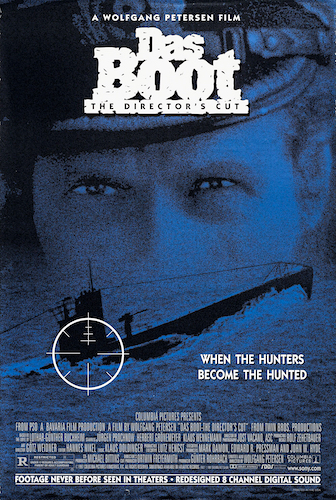
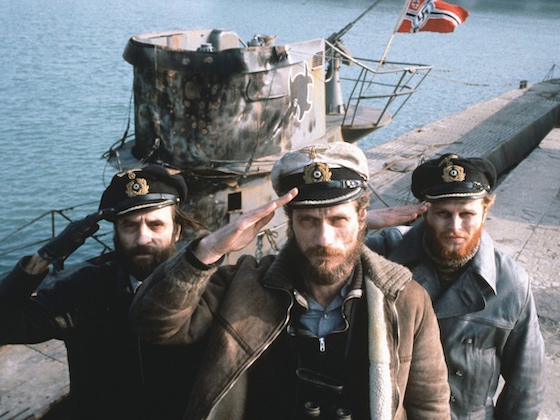
Das Boot
The Director’s Cut
(1981/1997)

2018 #69
Wolfgang Petersen | 208 mins | Blu-ray | 1.85:1 | Germany & USA / German & English | 15 / R

Das Boot: The Director's Cut

Writer-director Wolfgang Petersen’s story of a German submarine in World War 2 may have an intimate and confined setting, but in every other sense it is an epic — not least in length: The Director’s Cut version runs almost three-and-a-half hours. However, the pace is excellently managed. The length is mainly used for tension — quietly waiting to see if the enemy will get them this time. It’s also spent getting to know some of the crew, and the style of life aboard the sub. It means the film paints an all-round picture of both life and combat in that situation. The only time I felt it dragged was in an extended sequence towards the end. I guess the long, slow shots of nothing happening are meant to evoke time passing and an increasing sense of hopelessness, but I didn’t feel that, I just felt bored. Still, while I can conceive of cutting maybe 10 or 20 minutes and the film being just as effective, being a full hour shorter — as the theatrical cut is — must’ve lost a lot of great stuff.

It’s incredibly shot by DP Jost Vacano. The sets are tiny, which feels realistic and claustrophobic, but nonetheless they pull off long takes with complex camera moves. Remarkable. Even more striking is the sound design. It has one of the most powerful and convincing surround sound mixes I’ve experienced, really placing you in the boat as it creaks and drips all around you. The music by composer Klaus Doldinger is also often effective. It does sound kinda dated at times — ’80s electronica — but mostly I liked it.

Versions
Das Boot exists in quite a few different cuts, although The Director’s Cut is the only one currently available on Blu-ray in the UK. If you’re interested in all the different versions, it’s quite a minefield — there are two different TV miniseries versions (a three-part BBC one and a six-part German one), in addition to what’s been released as “The Original Uncut Version”, as well as both of the movie edits. There’s a lengthy comparison of The Director’s Cut and the German TV version here, which lists 75 minutes of major differences and a further 8 minutes of just tightening up. Plus, the TV version also has Lt. Werner’s thoughts in voiceover, which are entirely missing from The Director’s Cut. That means this version “has a lack of information and atmosphere”, according to the author of the comparison.

Das salute

As to the creation of The Director’s Cut, the Blu-ray contains a whole featurette about it called The Perfect Boat. In it, Petersen explains that he thought the TV version was too long, but that there was a good version to be had between it and the theatrical cut. It was first mooted as early as 1990, but it was when DVD began to emerge that things got moving — Columbia (the studio, not the country) was aware of the format’s potential even from its earliest days, and so it was with an eye on that market that they agreed to fund the new cut. Not only was it all re-edited, but as for that soundtrack I was so praiseful of, the audio was basically entirely re-recorded to make it more effective as a modern movie. The only thing they kept was the original dialogue… which had all been dubbed anyway, because the on-set sound was unusable.

In the end, the new cut was such a thorough re-envisioning that it took three times as long as anticipated, and led to a glitzy premiere and theatrical re-release. Petersen thinks the main difference between the theatrical and director’s cuts is the latter is more rich and has more gravitas because we spend more time with the individual characters.

5 out of 5

Das Boot: The Director’s Cut was viewed as part of my What Do You Mean You Haven’t Seen…? 2018 project.

It placed 22nd on my list of The 26 Best Films I Saw For the First Time in 2018.

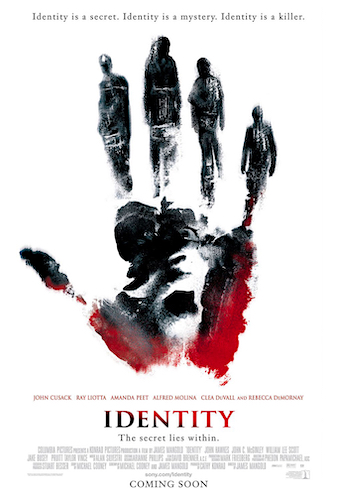
Identity
(2003)

2018 #78
James Mangold | 90 mins | streaming (HD) | 16:9 | USA / English | 15 / R

Identity

I bought Identity probably 15 or so years ago in one of those 3-for-£20 or 5-for-£30 sales that used to be all the rage at the height of DVD’s popularity, and no doubt contributed massively both to the format’s success and even regular folk having “DVD collections” (as opposed to just owning a handful of favourite films). As with dozens (ok, I’ll be honest: hundreds) of other titles that I purchased in a more-or-less similar fashion, it’s sat on a shelf gathering dust for all this time, its significance as a piece of art diminishing to the point I all but forgot I owned it.

But I did finally watch it, not spurred by anything other than the whim of thinking, “yeah, I ought to finally watch that,” which just happens for me with random old DVDs now and then. But, like so many other older films that I own on DVD, I found it was available to stream in HD, so I watched it that way instead. The number of DVDs I’ve ended up doing that with, or could if I wanted… all that wasted money… it doesn’t bear thinking about.

Whodunnit?

Anyway, the film itself. On a dark and stormy night, a series of chance encounters strand ten disparate strangers at an isolated motel, where they realise they’re being murdered one by one. So far, so slasher movie. And, indeed, that’s more or less how it progresses. But there’s a twist or two in the final act that attempts to make it more than that. Without spoiling anything, I felt like it was an interesting concept for a thriller, but at the same time that it didn’t really work. There’s an aspect to the twist that is a cliché so damnable it’s rarely actually used (unlike most other clichés, which pop up all the time), and so the film attempts a last-minute explanation of why it’s better than that, but, I dunno, I feel like a cliché is a cliché.

So maybe Identity is best considered as just a straight B-movie-ish slasher, and just overlook the final act’s attempts at being more interesting as just trying to be different. In fact, more interesting to me was the fact it was mostly shot on an enormous soundstage set, which is kinda cool given the scope of the location.

3 out of 5

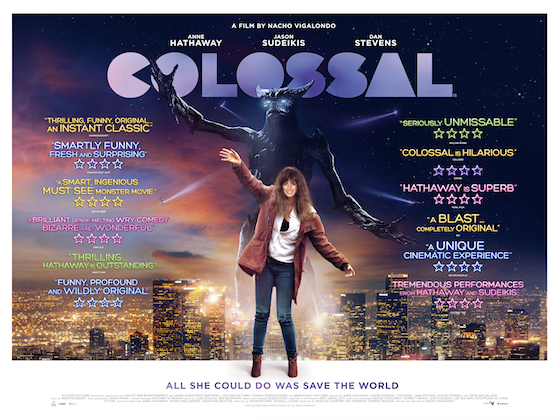
Colossal (2016)

2018 #117
Nacho Vigalondo | 109 mins | streaming (HD) | 2.35:1 | Canada, USA, Spain & South Korea / English & Korean | 15 / R

Colossal

As it begins, you’d be forgiven for thinking Colossal is just another indie rom-com. Anne Hathaway stars as Gloria, an unemployed writer whose boyfriend (Dan Stevens) kicks her out of their New York apartment, forcing her to move back to her Nowheresville hometown. There she reconnects with childhood friend Oscar (Jason Sudeikis) — romance is surely in the air, right? But Colossal has a couple of surprises up its sleeve. One is hard to miss, what with it being on all the posters (and, I presume, in the trailers): concurrent with Gloria’s return home, a giant monster begins to rampage around Seoul, and she comes to realise these two disconnected events are, in fact, connected. Meanwhile, the relationship storyline has a few twists in store too.

Unsurprisingly, given the uniqueness of the concept, the film’s marketing foregrounds the giant monster. But anyone expecting “a giant monster movie” will probably be disappointed, because this isn’t a Godzilla clone. However, anyone open to an indie comedy-drama that uses giant monsters as a giant metaphor (arguably an on-the-nose one, but it’s an effective one also) should find something of interest here. I’m being coy about the facts of that metaphor because I think one of the movie’s biggest strengths is its ability to surprise, and to wrong-foot and unnerve you with those surprises — there are some very uncomfortable scenes, deliberately so. Writer-director Nacho Vigalondo is looking to explore timely themes here, and if you were to be aware of them before viewing I think you’d be looking for signs too early, and that would undermine part of the film’s point, which lies in how events develop.

To put that aside, Colossal’s biggest weakness comes in its sci-fi/fantasy element, where the rules of the situation don’t quite hang together. I’m not saying it needs an explanation for why the ordinary-woman/giant-monster connection happens — it’s the same reason that, say, the time loop in Groundhog Day happens: it just does. The ‘why’ is immaterial to the film’s purpose. But the rules the film establishes for how it works don’t entirely add up. I could go into specifics but, again, that might spoil things. And, ultimately, my issues are no more than niggles — the way things pan out is about getting satisfaction from the storyline, not adhering to the ins and outs of how a fantasy works. That said, I feel like a couple of logic tweaks here and there would’ve made it faultless.

Who's the bigger monster?

Nonetheless, it’s worth letting those complaints slide, because there’s so much to like in spite of them. The performances, for one. Hathaway negotiates Gloria’s interesting, tricky character with aplomb. By ‘tricky’ I really mean that it’s somewhat hard to put your finger on what her arc is exactly, but I think that’s because her evolution is believably fuzzy, just like real life, rather than conforming to a slick “this is the lesson she learned and now she’s better” movie thing. Co-lead Sudeikis has, I’d wager, never been better. I’ve not seen him in much, but enough to buy other people’s opinion that he’s a bit smug, a bit try-hard, a bit… of a dick, really. But all of those qualities work here, where Oscar is a loser trying to seem cool.

With some polishing up, Colossal could’ve been nigh on perfect; though it’d likely still be a cult favourite rather than any major success. Well, it’s probably still good enough for cult status, though, as a caveat, it will most appeal to those viewers who are prepared to accept a bit of a genre/tone mashup. It’s got an indie-funny quality, but then throws the sci-fi stuff in, before unveiling a serious side too; and, although that does get very dark, it’s really effectively managed — indeed, it’s all the better for how the quirkier first part sets it up. Vigalondo has points he wants to make, and his film gets them across. Whatever else, it’s definitely original and unique, and those qualities go a long way.

4 out of 5

Colossal is available on Netflix UK as of this month.

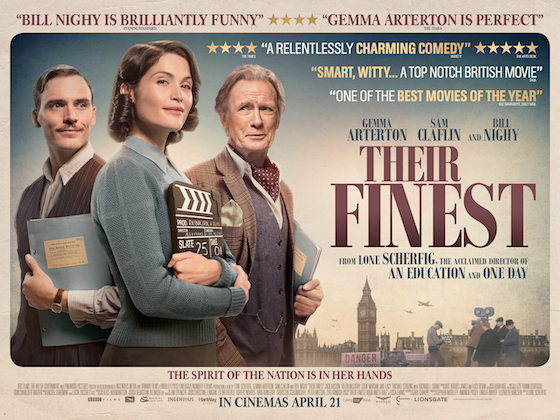
Their Finest (2016)

2018 #223
Lone Scherfig | 117 mins | streaming (HD) | 2.35:1 | UK & Sweden / English | 12 / R*

Their Finest

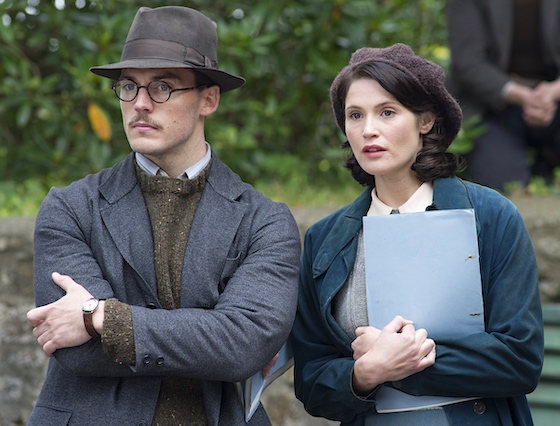
One of three Dunkirk-related movies released in 2017 (which is a bit random — it wasn’t a particular anniversary or anything), Their Finest is adapted from a novel by Lissa Evans called Their Finest Hour and a Half, which is a much better title. “Their Finest” is kinda bland and meaningless — slap it on any wartime film and it’d work just as well. The original title is a neat pun, though, mixing the famous saying (which comes from a 1940 Churchill speech, if you didn’t know) with the common running time of a movie, thereby indicating when the story is set (World War 2), what it’s about (the making of movies), and indicating a tone (it’s a pun, but not an outrageous one, suggesting lightness without going full-blown comedy). Maybe someone noticed this runs nearer two hours and didn’t want to give audiences the wrong idea…

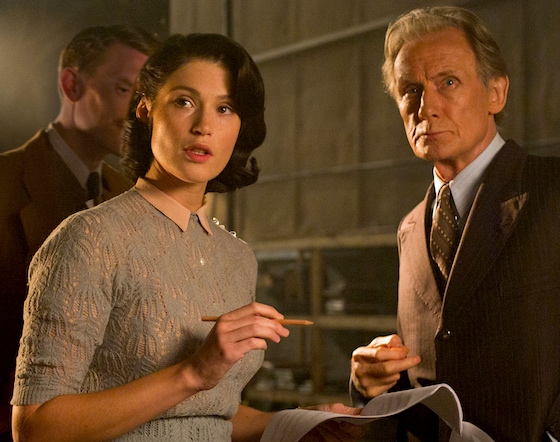
Their Finest Hour and a Half stars Gemma Arterton as Catrin Cole, a young woman in wartime London who finds work writing female characters’ dialogue in movies — “the slop”, as it’s derisively called by her combative superior, Tom Buckley (Sam Claflin). When a news story about twin sisters who took part in the evacuation of Dunkirk is fast-tracked into production, with a cast that includes fading leading man Ambrose Hilliard (Bill Nighy), Catrin and Tom wind up on location with the film, hastily rewriting to include changes mandated by the War Office. Despite Tom’s standoffish attitude and Catrin’s marriage to a good-for-nothing war artist (Jack Huston), who’s jealous of her newfound status as the breadwinner, affection begins to blossom between the two writers…

Hooray for the writers!

Yeah, much of Their Finest follows the expected shape of a story like this (the love triangle; the woman coming to be respected by her initially dubious colleagues; etc). Two things work to stop it feeling too staid: an engaging lead cast, and some weightier developments and subplots. The latter includes at least one wholly unexpected twist, which helps make this a more powerful film than the potentially-light “people go on a jolly to make a movie during the war” premise initially seems. There’s a somewhat classical balance of comedy and tragedy there, which is reminiscent of movies from the era the film’s set. Frame it in 4:3, shoot in black & white, and give everyone RP accents, and parts of it could almost be a ’40s melodrama.

Talking of accents, why oh why did they lumber Gemma Arterton with a Welsh one? It isn’t bad, exactly, but I did find it constantly distracting. Presumably it’s because the story is loosely based on the life of Diana Morgan, a Welsh screenwriter whose wartime work for Ealing Studios mostly went uncredited (though she does have one on the famous propaganda film Went the Day Well?, amongst a handful of others), but, considering it’s not actually a biopic, surely there’s no need for the accent? Well, other than to attract funding from the Welsh Government’s Media Investment Budget, I suspect… Anyway, it’s a minor complaint (as I said, her accent isn’t bad), and even with it Arterton is typically charming, generating good chemistry with Claflin, who plays a Mr Darcy-esque role as the initially-unlikeable inevitable love interest. As usual, Nighy threatens to steal the show, hamming it up just the right amount as Ambrose. He gets a significant subplot about his hard-fought transition from leading man to character actor, which also brings in Eddie Marsan and Helen McCrory — just two more high-quality actors helping round out a strong cast, which also includes Rachael Stirling, Richard E. Grant, and Jeremy Irons, among others.

She's holding a pencil, she must be a writer

Ambrose is another man who initially misreads Catrin but eventually comes round to her. I suppose the “a woman proves her worth” element is another that’s been well-worn, but it seems fitting here, given that women in the film industry are still struggling to be treated equally. In this case, it’s using the “women suddenly in the workplace” reality of WW2 to make it both feel relevant to the present while remaining era-appropriate, unlike so many period movies that project present-day values onto eras where they don’t truly fit. It’s not as heavy-handed in its moralising as others can be, either.

Indeed, I’d say the entire film is very well pitched. It straddles the comedy-drama divide skilfully, entertaining as a jolly romance set in the world of moviemaking, but with enough grit from the reality of wartime to give it an edge. Everyone involved has, I’m sure, given it their finest hour-and-a-half(-and-a-half).

4 out of 5

The UK TV premiere of Their Finest is on BBC Two tonight at 9pm.

* It’s rated R for “some language and a scene of sexuality” — there’s a couple of “fucking”s and a brief glimpse of one practically-silhouetted breast. God, the MPAA are daft. ^

Sholay (1975)

2018 #200
Ramesh Sippy | 205 mins | DVD | 4:3 | India / Hindi | PG

Sholay

For many Western readers (and the stats say most of mine are, though India is in 3rd of all countries for 2019 so far), there’s every chance you’ll’ve only heard of Sholay (if you’ve heard of it at all) as “one of those Indian films that’s on the IMDb Top 250 nowadays”. But in Indian culture it’s a much bigger deal, a huge and longstanding success; like Star Wars or something is to us, I guess, only without the reams of sequels and spinoffs and merchandise and theme parks. Instead, it’s enjoyed remarkable success of its own: it topped the Indian box office for 19 years, was the first film in India to celebrate a Silver Jubilee at over 100 cinemas, and eventually set a record of 60 Golden Jubilees across India. From a British perspective, in 2002 it topped the BFI’s “top ten Indian films of all time” poll, and in 2004 it was voted the “Greatest Indian Movie” in a Sky poll of 1 million British Indians. I first heard about it years ago in that context, and my desire to see it was only exacerbated when it made it onto IMDb’s list. All of which is why I chose it to be my second-ever #200.

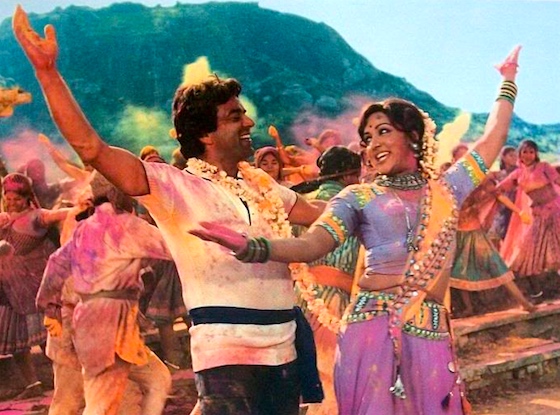
It’s a tricky film to sum up, because it offers a massive mash-up of tones and genres in a way we’re not accustomed to from Western cinema. There are whole sequences (not just fleeting moments) of broad slapstick humour, epic action, heartfelt romance, brutal violence, colourful musical numbers, intense tragedy, plus backstory that’s filled in via regular, lengthy flashbacks. It wouldn’t be a stretch to say its primary genre was Action, or Comedy, or Musical, or Western — it’s all of those things, by turn; sometimes at the same time. Apparently it’s a defining example of the “masala film”. Masala is, of course, a mix of spices in Indian cuisine, and the films that take that name blend genres together, typically (according to Wikipedia) action, comedy, romance, and melodrama, plus musical numbers.

Who doesn't enjoy a colourful sing-song?

That sounds like a recipe for disaster, but what’s perhaps most remarkable about Sholay is that it pulls them off. Thanks to engaging characters and relationships, powerful and humorous performances, quality filmmaking (there’s some strikingly effective camerawork and editing in the big scenes), it all flows. You can see why it became such a success: there’s something for everyone. And you can see why it struggles to transcend the culture it originates from, because when Western movies ever even vaguely attempt this kind of range of tones, there are trolls aplenty waiting to rip them apart for the perceived fault of being tonally inconsistent.

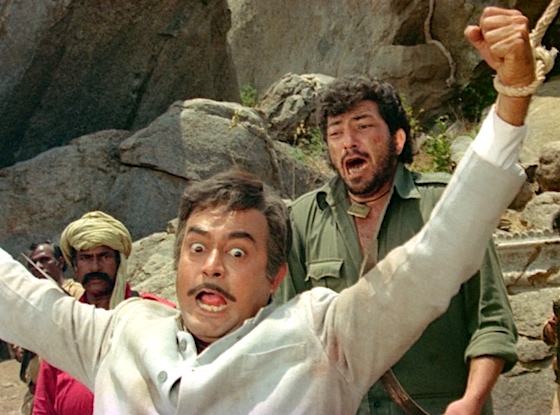
The heroes are Veeru (Dharmendra) and Jai (Amitabh Bachchan), a pair of crooks with hearts of gold, who are recruited by a retired policeman who once arrested them, Baldev Singh (Sanjeev Kumar), to capture a wanted outlaw, Gabbar (Amjad Khan), who’s terrorising Singh’s village, and who he has a personal history with. The way that storyline plays out is highly reminiscent of Spaghetti Westerns and the samurai movies that inspired some of them — anyone who’s seen the likes of A Fistful of Dollars, Seven Samurai, or Once Upon a Time in the West (or any of the other films that have riffed on / ripped from them) is going to see a lot of reflections here. I don’t mean that to be a criticism — after all, Dollars was an unendorsed remake of Yojimbo, and Seven Samurai was remade as classic Hollywood Western The Magnificent Seven, so there’s strong pedigree among these movies for reworking each other to excellent effect.

I'm not sure that's safe...

Sholay certainly adds its own stuff to the mix. I mean, those other films I’ve mentioned don’t have musical numbers or slapstick comedy (not much of it, anyway). Lest you think this plays as a spoof, Singh eventually unveils a tragic backstory (and a neat twist to his character), and Gabbar is a properly despicable, nasty villain. Plus, like most of the best bad guys, he’s not just evil for evil’s sake — he’s motivated to subjugate this particular village for a reason — but he’s still a properly nasty piece of work, excessively and inventively cruel. Rather than a spoof, then, the different genres come into play via an array of plots and asides. At times it does feel like a selection of unconnected subplots to bulk out the running time (and, as you may’ve noticed, it does have a long running time), but most of them come together in the end. Your tolerance for those that don’t (a lengthy comedic aside in a prison, for example) is another matter.

Musical numbers are another thing that put some people off. There are only five though, and they don’t actually drive the plot that much — I was kind of forced to assess their impact, because for some reason my DVD copy didn’t bother to subtitle the songs, leading me to search out translations online so I could get the gist. Still, when they fill several minutes of screen time each, it is nice to at least have an idea what’s being said sung!

In the West, Sholay has been hard to find at times (personally, it was years ago that I managed to source an out-of-print DVD by a label you’ve never heard of from an Amazon Marketplace seller), but as of this week it’s available on Amazon Prime Video in the UK (either as part of a subscription or to rent and buy individually), and in HD to boot! Based on the running time it’s the shorter widescreen theatrical version; there’s also a longer, open matte 4:3 “director’s cut”, which is what I watched. There’s info on the differences between the two cuts here, but the mostly it’s a couple of bits of violence that were censored. The biggest change, though, is the ending. No spoilers, but I think the original version is better — it included one of my favourite parts of the entire film, in fact. The revised version was at the insistence of India’s censor board, and includes a heavy-handed moral lecture — it’s not just less good in itself, it also feels overtly censor-mandated. Oh well.

Vicious villainy

On the bright side, the 4:3 version isn’t great to watch compositionally. The makers wanted to produce an epic 70mm widescreen kinda movie, but didn’t have the tech to do it properly, so they shot it in full frame 4:3 on 35mm and then had it cropped and blown up in London. Watching in 4:3, it’s obvious that it was always intended to be cropped to widescreen: there’s loads of dead space above everyone’s heads, things like that. That said, every once in a while there’s a shot that seems to be perfectly framed. Maybe they look just as nice cropped, I don’t know. To further muddy the waters about different versions, five years ago Sholay was converted to 3D. Despite the film’s enduring popularity, it didn’t come close to making its money back (the conversion cost US$3.5 million, but the 3D release only grossed US$1.4 million). In the West the studio would seek to recoup more of that with home media, but apparently Blu-ray isn’t popular or successful in India, so the chance of getting a 3D BD is basically nonexistent. But, as I said, it’s on Amazon in HD now, so at least there’s that. (Hopefully it has subtitles for the songs…)

Whichever version you watch, Sholay is best described as “an experience”. Perhaps lots of Bollywood movies are like this (after all, with huge success comes huge influence, and I’m sure many have tried to emulate it), but I’m not familiar with them so this was all new to me. That epic running time makes it feel like an event to watch, and the winding plot and variety of tones it encompasses make it feel like a whole buffet of entertainment, as opposed to the just one meal that most films offer. I guess, like any food that is foreign to an individual, it comes as an acquired taste, but it’s one I enjoyed immensely. It would also be entirely accurate and fair to roll out a somewhat clichéd sentiment: if you only watch one Bollywood film, this is the one to watch.

5 out of 5

As mentioned, Sholay is available on Amazon Prime Video now.

It placed 25th on my list of The 26 Best Films I Saw For the First Time in 2018.

Review Roundup

This small selection may at first look a little disparate, including as it does two comedies, with release dates separated by a quarter of a century, and a horror movie. The two points of connection are that I watched them all last year, and I didn’t really enjoy any of them.

In today’s roundup:

  • Phantasm (1979)
  • National Lampoon’s Vacation (1983)
  • Step Brothers (2008)


    Phantasm
    (1979)

    2018 #92
    Don Coscarelli | 89 mins | TV | 16:9 | USA / English | 15 / R

    Phantasm

    A cult classic horror that spawned a pile of sequels and numerous novelty-packaged disc releases, Phantasm is about a supernatural undertaker, the Tall Man (Angus Scrimm), who (to quote Wikipedia) “turns the dead of earth into dwarf zombies to be sent to his planet and used as slaves.” Sounds totes plausible, right?

    Well, implausibility is no sin — many great fantasy or horror movies feed off setups that are just as outlandish. No, the problem here comes from the storytelling, because what happens in Phantasm is resolutely illogical. None of it makes any sense. No one behaves plausibly. Is there a mythology? I don’t know, because it all seems random. It appears to operate on some kind of dream logic, wherein stuff… just happens. And then at the end it’s revealed that it was, in fact, all a dream! Eesh. Are either of those things ok? Telling a story with “dream logic”, maybe. But then again, why should that be ok? We can’t control dreams, so we can’t expect them to obey the rules of narrative; but films are consciously made, so surely they should aim for coherence? And as for an “it was all a dream” ending, that’s just about the most despised device in storytelling for a reason. (Of course, there’s an “or was it?!” final twist, because it’s a horror movie and that’s how they always end.)

    It doesn’t help matters that the film simply isn’t well made. No one can act. Characters turn up out of nowhere. Most of it is cheaply shot and uninterestingly edited. There are a couple of good bits of imagery, but the rest of the movie is so nonsensical that that’s all it is — imagery. There’s no meaning attached.

    And yet the Phantasm series has its fans (or, predictably, “Phans”). Perhaps, if we’re being kind, we can say it’s an acquired taste — you either get something from its strangeness or you don’t. Clearly there are people (“Phans”) who see something in it. I wasn’t one of them.

    2 out of 5

    Phantasm featured on my list of The Five Worst Films I Saw For the First Time in 2018.

    National Lampoon’s
    Vacation

    (1983)

    2018 #140
    Harold Ramis | 98 mins | streaming (HD) | 16:9 | USA / English | 15 / R

    National Lampoon's Vacation

    Written by John Hughes and directed by Harold Ramis, Vacation certainly has strong pedigree (I’m not even going to begin to list all the classic comedies attributable to their names). It also spawned three sequels and a remake, so it’s clearly popular. Unfortunately, something about it didn’t click with me.

    It’s about a family going on a summer holiday; specifically, a cross-country road trip from Chicago to California, to visit Disney Walley World. Naturally, the journey doesn’t go to plan, and a series of episodic hijinks ensure. These include such hilarious escapades as meeting some black people (who of course steal their hubcaps); falling asleep at the wheel and careening through a town; hanging out with a cousin who French kisses his own daughter; and accidentally dragging their aunt’s dog along behind the car until it dies. Good times!

    There’s also a song by Lindsey “Fleetwood Mac” Buckingham, called Holiday Road, which is played again and again throughout the film. I started out hating it, but by the end I was listening to it on loop while I updated all my post-viewing lists. It’s sort of gloriously terrible. Sadly, I didn’t have the same Stockholm syndrome reaction to the film itself.

    2 out of 5

    Step Brothers
    (2008)

    2018 #204
    Adam McKay | 98 mins | streaming (HD) | 2.35:1 | USA / English | 15 / R

    Step Brothers

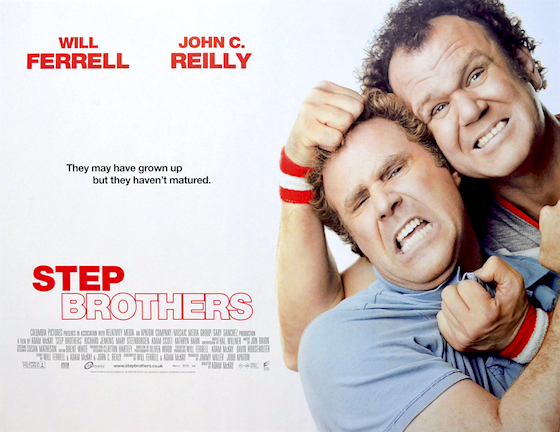
    Will Ferrell and John C. Reilly star as two developmentally-stunted man-children who are forced to live together after the former’s mom (Mary Steenburgen) and the latter’s dad (Richard Jenkins) move in together.

    The movie relies on the notion that watching two 40-year-old men behave like bratty 10-year-olds will be constantly hilarious. Spoiler alert: it isn’t. Unlike the infamous recent collaboration between Ferrell and Reilly, Holmes & Watson, this effort does at least manage some funny bits, though they generally occur when it moves away from the primary conceit for a moment. It also has the most implausible sex scene this side of The Room, which is some kind of achievement, I guess.

    2 out of 5

  • Live by Night (2016)

    2018 #113
    Ben Affleck | 124 mins | streaming (HD) | 2.35:1 | USA / English | 15 / R

    Live by Night

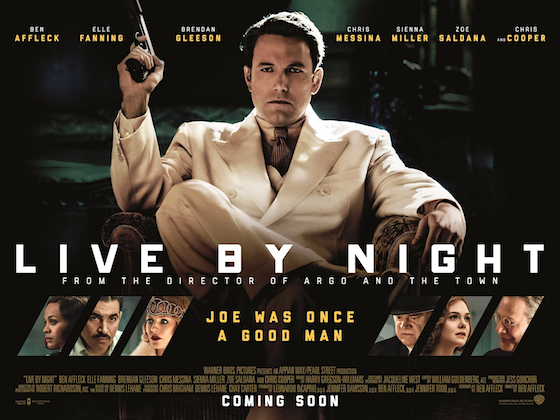
    Ben Affleck, once a bit of a laughing stock as an actor thanks to appearing in the likes of Pearl Harbor and Gigli, managed to reinvent himself somewhat as an acclaimed director, first with Gone Baby Gone and The Town, and then cementing that reputation by winning the Best Picture Oscar with Argo. This was what he chose as his next project — another adaptation of a Dennis Lehane novel (like Gone Baby Gone), another story of a Bostonian career criminal (like The Town), another period drama (like Argo… although a wholly different period, so maybe I’m stretching the comparison now). Rather, with its Prohibition-era setting, this was a gangster drama more likely to evoke classics such as The Godfather and Road to Perdition. There was, understandably, awards buzz. Then people saw it… and, it seems, just as quickly forgot it.

    I’ve mentioned a lot of other films in that opening paragraph, and you could make endless further gangster-movie comparisons, I think — and that’s a significant part of Live by Night’s problem. Almost everything about it reminds you of something you’ve seen before, often more than once. As a work in itself, it’s not remarkable enough to outshine the familiarities. Some of the plot is quite neat, with an emphasis on cause-and-effect that sees every solution turn into a new problem, and there are some very good individual scenes, though perhaps that’s easy when you’re working with quality actors Chris Cooper.

    Equally, some parts are underdeveloped. For example, Affleck gets into a relationship with Zoe Saldana that just seems like a vague sex-based aside, until he’s suddenly declaring that he’s put aside his plans for revenge, his primary motivation, because now everything is about his life with her. I need some more more joins between those dots, please. But at least it sometimes looks very pretty, though if you just want to see that then most of the visual splendour is in the trailer. There’s a surprisingly good car chase, though.

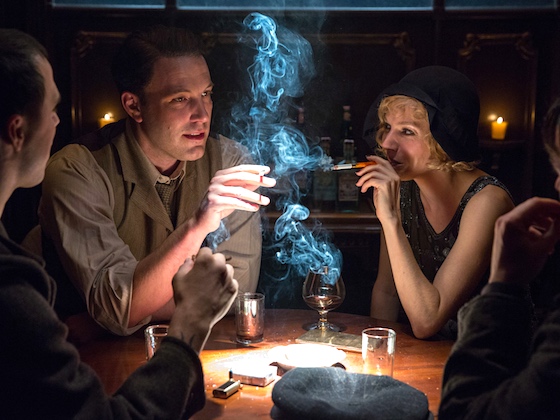
    They appear to be living, and it looks like it's nighttime. So that all checks out, then.

    Affleck is a decent director, and, actually, a quite like him as an actor too… in the right kind of roles. I’m not sure he’s got the range necessary for this part, however. His character is a conflicted, contradictory man — he genuinely has a good heart, but he’s often prepared to put it aside to do bad things; but, at other times, that moral compass gets the better of him. It’s a tricky line to tread and make believable, and Affleck’s performance is too monotone to convincingly portray it. That leaves the centre of the movie feeling empty, which is a problem however solid the stuff around him is. Apparently the film’s original cut was closer to three hours long and heavier on character stuff, so maybe the nuance disappeared in the editing — or maybe it didn’t. We’ll likely never know.

    Live by Night received an exceptionally negative response (just 35% on Rotten Tomatoes), but I can’t see why people hated it so much. It’s not fantastic, floundering somewhat in the shadow of the other gangster movies of which it’s so often reminiscent, but it’s not a bad attempt at the genre. Though, as a significant portion of the storyline takes place in “the sunshine state”, I’m not sure how good that title is. I mean, I live more of my life by night than these gangsters do. I just spend most of that time watching and writing about movies, though — maybe I should be launching a criminal empire?

    3 out of 5