Darkest Hour (2017)

2018 #182
Joe Wright | 125 mins | streaming (UHD) | 1.85:1 | UK & USA / English & French | PG / PG-13

Darkest Hour

2017 was, for no readily apparent reason, a banner year for stories about Dunkirk making it to the big screen. In April there was Their Finest, a film about people making a film about Dunkirk (how apt). In July there was Dunkirk, Christopher Nolan’s high-profile telling of the evacuation itself. Finally, in January 2018 (because, when it comes to films, January and February are part of the previous year in the UK) there was this, the story of Winston Churchill becoming Prime Minister of the UK in May 1940 and immediately having to deal with the situation in Dunkirk, alongside calls from within his own government to negotiate peace with Hitler — something Churchill was not inclined to do, despite the odds of winning the war not being in Britain’s favour.

The Dunkirk connection was certainly played up in the film’s marketing (the trailers made it look like Dunkirk 2), but while that situation does have a significant role to play (and both films climax with a recital of the same uber-famous speech), it’s only part of what this film’s actually about. Which does actually make it quite a neat companion piece to Nolan’s movie: it expands on the political backdrop surrounding Dunkirk, placing those events in a wider context. In doing that, it presents a different perspective on familiar events. Churchill is widely remembered as a great and beloved leader who saw us through the war, but here his own party treat him as something of a lame duck Prime Minister, and spend most of their time trying to convince him to take a different course of action.

In this respect, Darkest Hour seems dead set on removing the rose-tinted memory of World War 2 which says that “of course we stood up to those evil Nazis”. The film reminds us, and reminds us hard, that there were many people in positions of power who thought the best course was to acquiesce to Hitler — to give in and seek peace with him — and that, in many ways, their opinion was not irrational. Certainly, the film makes the case that it was the safer route in order to both secure the lives of our troops and hold off invasion of our shores. It’s relatively mature to both not hide from that reality and present the arguments as at least somewhat reasonable.

Never surrender

That said, the film fails to maintain the veneer of unvarnished historical reality for its entire running time. In the third act, Churchill boards a train and encounters members of the public in a sequence that is shamelessly, manipulatively, almost tweely patriotic and sentimental… and yet I kinda got suckered in by it anyway. I think that’s got something to do with these dark days we live in — wouldn’t it be nice to believe The General Public would want to stand up for what’s right in the face of overwhelming odds? Whether it’s historically accurate (maybe everyone was just better back then?) or whether it’s a nostalgic view of what people were prepared to stand for, I don’t know; but either way, it’s effectively aspirational.

A film like this is powered by it performances, and obviously Gary Oldman — subsumed in makeup to turn his slender frame into the famously rotund Churchill — is the stand-out. He thoroughly disappears into the role. Obviously the prosthetics help a good deal with that, but it’s also the voice, the gait, the mannerisms. Naturally he dominates the film, but there’s still some space for quality turns in the supporting roles. In particular, Stephen Dillane as the film’s de facto villain, Halifax, gives a performance that, in its own way, is just as mannered as Oldman’s (the lisping voice), but also just as subtly believable and well measured. Pretty much the same thing could be said about Ben Mendelsohn as King Colin Firth George VI.

But then there are other roles that are less well served. The women, mainly. Lily James’ secretary seems to be present merely to give a significant role to a female character, and to try to humanise Churchill by charting a very familiar “he’s tough to work with at first, but he’s got a heart of gold and is just super once you get to know him” arc. Similarly, Kristin Scott Thomas very nearly has an interesting part as Churchill’s wife, his long-time partner who’s been consistently overlooked in favour of his dedication to the public, but that’s an underdeveloped thread.

Supporting role

So, Darkest Hour is a strong movie in many ways — the male performances; Joe Wright’s classy direction; the way it manages to be simultaneously a more-realistic-than-most depiction of the “maybe we should surrender” debates in the early days of the war and a patriotic “we shall never surrender” entertainment — but it’s also let down by some of those lapses into cliché and sentiment. How susceptible you are to the almost-propagandist “this was our finest hour in the face of terrible odds, both at home and abroad” narrative may dictate how much you like the end result. For me, the aforementioned successes outweigh the faults on balance, but there’s no denying there are problems.

4 out of 5

Darkest Hour is available on Sky Cinema from today.
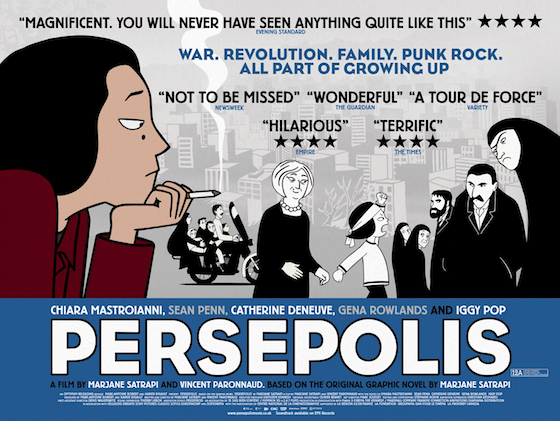
Persepolis (2007)

2018 #27
Marjane Satrapi & Vincent Paronnaud | 92 mins | streaming (HD) | 1.85:1 | France & Iran / English | 12 / PG-13

Persepolis

Adapted from co-director Marjane Satrapi’s autobiographical graphic novel, Persepolis is the story of an Iranian girl coming of age in the ’70s and ’80s, during and after the Iranian Revolution. Such a broad description is probably the only way to succinctly summarise it, because it’s kind of a sprawling film, about many different things — just like a life, I suppose. As well as being part biography, it’s also part history lesson, with a normal-family’s eye-view of the revolution and what followed.

Some of the events we’re shown are crazy-specific to her life (Satrapi has certainly lived a life!), and some of it is very specific to her background (i.e. all the Iranian Revolution stuff), but some of it is also very universal. For example, a sequence where she falls in love with a guy sees him depicted as a perfect, angelic boyfriend that she spends many magical times with… until he sleeps with someone else, then when she reflects on their relationship he’s an ugly ogre, and all those wonderful memories have a rotten mirror. Plenty of us have been through something akin to that, right?

Such subjective depictions are one of the benefits of the film being animated. Drawn in a simple, cartoonish style and mostly presented in black-and-white, the visuals are striking and sometimes very effective, but can also have something of a distancing effect — the atrocities of the revolution don’t hit home in quite the same way when, say, they’re executing a black-and-white cartoon rather than a real girl. Conversely, it was Satrapi who insisted on adapting her novel in animated form, with the goal of keeping it universal — in her opinion, “with live-action, it would have turned into a story of people living in a distant land who don’t look like us. At best, it would have been an exotic story, and at worst, a ‘Third-World’ story.” I suppose there’s some truth to that.

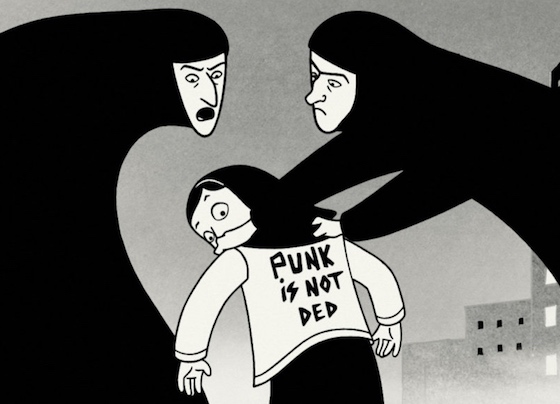
Punk is probably ded in Iran

I believe the film was produced in French, but the copy I had access to only offered the English dub. Unfortunately, this is frequently quite poor — the actors sound like they’re reading out slabs of text as quickly as they possibly can, rather than really delivering the lines. I can only presume this was necessary to fit the animation, but the end result leaves the audio feeling like a bad school presentation. I don’t hold this against the film itself, but it’s a word of warning if you have a choice of audio.

Persepolis is only an hour-and-a-half, but it’s a long one thanks to the scope of what it covers. It’s a frequently dark and bleak film too, taking in not just a violent revolution but also things like depression and attempted suicide. Frankly, it’s the kind of film which I don’t know if I’ll ever bother to watch it again, but it’s also a fascinating and informative experience that I’m unquestionably glad I’ve seen.

4 out of 5

Jurassic World: Fallen Kingdom (2018)

2018 #225
J.A. Bayona | 128 mins | Blu-ray (3D) | 2.39:1 | USA / English | 12 / PG-13

Jurassic World: Fallen Kingdom

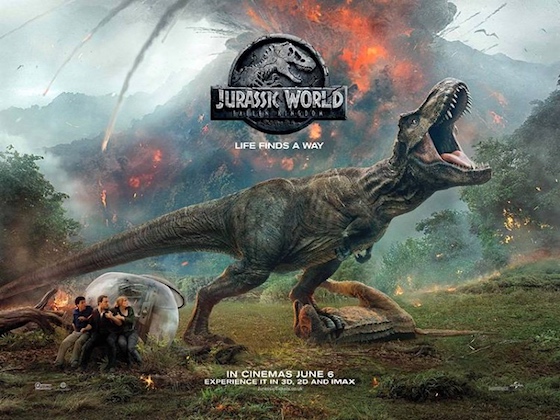
It’s three years after the events of Jurassic World and the dinosaurs who overran Isla Nublar have basically been left alone while the rest of the world goes about its business. But now there’s a problem: the island’s previously inactive volcano is about to erupt, wiping out the dinosaurs… again. Former director of the park Claire (Bryce Dallas Howard) now works for a charity struggling to convince people to save the dinos, where she’s contacted by Mills (Rafe Spall), a representative of Benjamin Lockwood (James Cromwell), the one-time business partner of park founder Hammond who helped initiate the whole bringing-dinosaurs-back-from-the-dead palaver. They’re sending people to the island to rescue as many dinosaurs as they can, but they need Claire’s help. Naturally she agrees, and so along with ex-velociraptor-wrangler Owen (Chris Pratt) and a motley crew of supporting cast members, they head back to the island… but it soon turns out Mills & co may have a nasty ulterior motive for wanting to save the dinosaurs…

Although there are shades of the first Jurassic Park sequel, The Lost World, in this setup, I think Fallen Kingdom does enough different that any similarities aren’t excessively problematic. Indeed, it’s got its own array of flaws for us to contend with first. It’s like someone assembled all the ingredients specified by a recipe, but instead of following the instructions they just bunged everything together haphazardly, and so the resulting dish seems like it should be right but is somehow just… wrong.

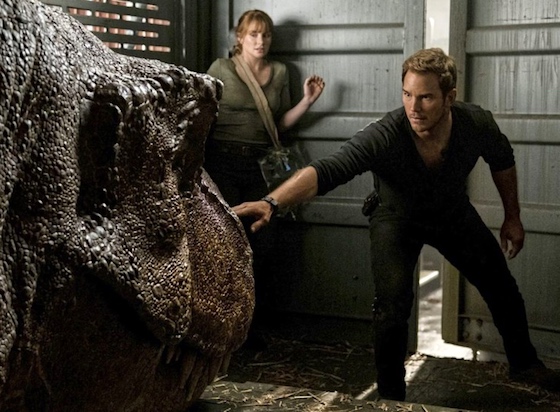
Letting sleeping T-rexes lie

To be less metaphorical, I think Fallen Kingdom is built on decent ideas and concepts, and it’s executed with some stylish direction by franchise newcomer J.A. Bayona (including a couple of particularly good sequences, like a tense oner in a sinking gyrosphere), but it’s all let down by a terrible screenplay from Jurassic World co-writers Derek Connolly and Colin Trevorrow. The story is poorly constructed — not in the sense that it’s unfollowable, but in that it’s wonkily put-together, frequently showcasing scenes that are nothing but exposition, with a pace and emphasis that feels unbalanced. Not unrelatedly, the quality of the dialogue is very weak, lacking in character or plausibility, or, failing the latter, memorableness. Sure, there’s the odd line the talented cast can make work (Howard gets a mini-monologue about the first time you saw a dinosaur that’s almost really good), but most of what comes out of their mouths is perfunctory. If they’d bothered to hire some solid writers, instead of just People Who Have Ideas, then maybe those ideas could’ve been turned into a cohesive whole that would be a worthy sequel. Heck, even getting someone in to polish up this draft could’ve helped a lot. Instead, Fallen Kingdom is a bunch of decent concepts for plots, subplots, themes, and visuals, haphazardly bunged together with half-arsed execution.

In terms of particularly egregious examples, the standout for me is the subplot with Lockwood’s granddaughter, Maisie. No spoilers, but her storyline is no more than a (too clearly telegraphed) twist and a thematic resolution, which is in need of an actual story to give it meaning and work it up to being an actual theme of the movie in the way they clearly want it to be. What could be a meaningful finale for her character is rendered moot by the fact it has no genuine build-up, not to mention they had to throw another lead character’s moral development under a bus in order to get there (for a more spoilersome discussion of this point, check out Andrew Ellard’s Tweetnotes).

Clawesome

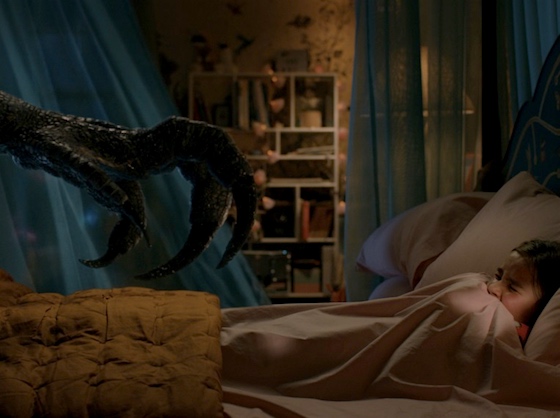
It’s not just subplots that falter: the inciting incident (volcano is going to wipe out dinos; do we have a responsibility to save what we created, or is this nature course-correcting?) is a very rich premise with potential for debate; but other than stating those two positions, the film does nothing with it. It’s just there, an excuse to go back to the island and get the dinosaurs out, ready for the next part of the plot. This is probably why many viewers seem to find the first half perfunctory, but the second half — where the film takes a sharp turn into a Gothic-ish ‘haunted’ house movie — to be something fresh. Like so many of the film’s other ideas, I think it’s a good concept bungled in execution. It coasts by on imagery alone, Bayona achieving the look he’s after, but without Connolly and Trevorrow backing it up by making the situation work as a story, or for the characters. One example from this section: the scene of Maisie hiding in bed as the the dinosaur inches closer, which was featured so widely in the trailers. It’s a great visual, combining childhood fears and notions of protection (“if I’m under the covers nothing can get me”) with genuine threat and terror… but the film has to jump through hoops to make it happen — it’s only there because someone had an idea for the visual and they shoehorned it in, not because it makes any sense in context.

On a similar level is Jeff Goldblum’s cameo as fan-favourite character Dr Ian Malcolm. He’s ostensibly contributing to that save-or-not debate I mentioned, but as that goes nowhere his appearance is equally pointless; no more than fan service — it feels like a tease; an excuse to put him in the trailer. A short featurette included on the Blu-ray gives some indication of what the filmmakers were actually trying for here (some of Malcolm’s dialogue is lifted from the writing of Michael Crichton, the goal being to link back to the franchise’s originator and reiterate his “science gone wrong” theme), but it doesn’t come off. Worst of all, I didn’t feel like Goldblum was actually playing Malcolm — it’s the same actor, obviously, but not the same character. Was he phoning it in? He was only on set for one day, after all. Or maybe it was just terribly written. I mean, on the evidence of the rest of the film…

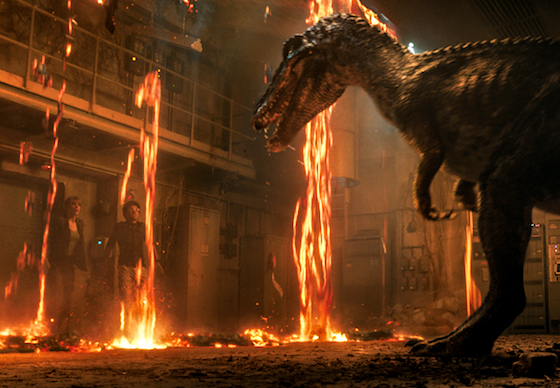
It's getting hot in there

Fallen Kingdom is not the outright disaster some have painted it as, but it could’ve been much better. There are so many things it almost gets right — for another example, it’s very much planned as Part 2 of a trilogy, but it feels like real effort has been made to make it a film that works on its own; that isn’t merely a two-hour exercise in getting us from where Part 1 ends to how they want Part 3 to begin. That’s admirable (not everyone seems to bother), but undermined by how much the film feels in need of major structural work at a screenplay level. Ultimately, I think your tolerance for “good ideas but poor execution” will dictate exactly how you feel about the finished movie.

3 out of 5

Jurassic World: Fallen Kingdom is released on DVD and Blu-ray (regular, 3D, and 4K UHD flavours) in the UK today.

Another Month Bites the Dust: The Monthly Update for October 2018

Another month gone and another month gone, another month bites the dust. Hey, I’m gonna get November too! Another month bites the dust!

(So, I didn’t actually get to see Bohemian Rhapsody this month, but I thought of this title and it was too good to miss.)


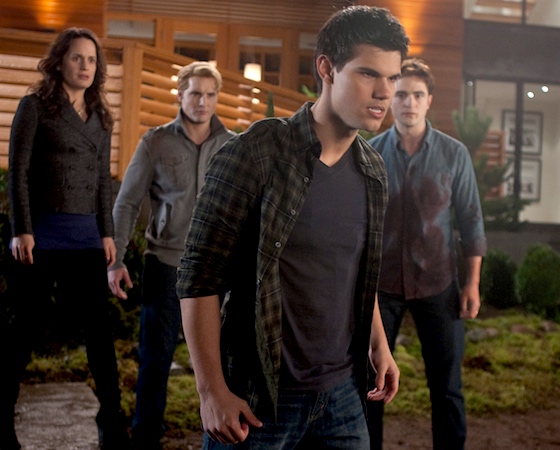
#207 The Twilight Saga: Breaking Dawn – Part 1 (2011)
#208 Prevenge (2016)
#209 Bridget Jones’s Baby (2016)
#210 TiMER (2009)
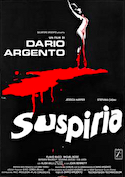
#211 Suspiria (1977)
#212 Jin-Roh: The Wolf Brigade (1999), aka Jin-Rô
#213 Matinee (1993)
#214 Zatoichi’s Pilgrimage (1966), aka Zatôichi umi o wataru
#215 The Night Comes for Us (2018)
#216 The Producers (1967)
#217 Rocky Balboa (2006)
#218 It’s Such a Beautiful Day (2012)
#219 Unsane (2018)
#220 The Lives of Others (2006), aka Das Leben der Anderen
#221 Phantom Thread (2017)
#222 Jennifer’s Body (2009)
Suspiria

Phantom Thread

.


  • This month I watched 16 new films. It’s not the best month of the year, but it’s not the worst, either.
  • It beats the October average (previously 13.8, now 14.0), but not the rolling average of the last 12 months (previously 21.0, now 20.4), nor the average for 2018 to date (previously 22.9, now 22.2).
  • One of those 16 was Rocky Balboa, which means I’ve now watched all the main Rocky films for the first time this year. That wasn’t the plan when Rocky scraped onto my WDYMYHS list in last place! But at some point I made the conscious decision to finish them (rather than let them spread out indefinitely, like many other series I’m in the middle of), and I’ve enjoyed them all (even Rocky V). With Creed II out at the end of November, I intend to get fully caught up on the entire Rocky legacy very soon.
  • This month’s Blindspot film: colourful and sonically bombastic horror in Dario Argento’s original Suspiria. I’ve been saving it all year for this month (for hopefully obvious reasons), and it didn’t disappoint.
  • This month’s WDYMYHS film: superb behind-the-Berlin-wall dramatic thriller The Lives of Others. And, as I only do ten of them, that’s the final WDYMYHS film for 2018!


The 41st Monthly Arbitrary Awards

Favourite Film of the Month
Lots of enjoyable films this month, including some high-quality Oscar winners… but it was October, aka horror month, which just tips the scales in favour of Suspiria. It was the first Dario Argento film I’ve seen, but I look forward to experiencing more.

Least Favourite Film of the Month
There’s no point beating about the bush: it was definitely The Twilight Saga: Breaking Dawn – Part 1.

Best Demonstration That Shooting On Film Is Still Better of the Month
Phantom Thread may’ve looked gorgeous in 35mm-derived UHD, but nothing reminds you of the beauty of film quite like Unsane’s fugly shot-on-iPhone visuals.

Most Gratuitous Nude Scene Without Any Nudity of the Month
Bella and Edward going skinny dipping before finally consummating their marriage was barely necessary, but at least the whole series had basically been building to the point when they finally do it. Megan Fox going for a completely unmotivated nudey dip in Jennifer’s Body, on the other hand, was… well, gratuitous.

The Audience Award for Most-Viewed New Post of the Month
For only the fifth time this year, the winner of this award is not my TV column. In fact, it’s the second most-viewed winner of this award in 2018 (behind Avengers: Infinity War’s huge tally back in April). That would be Netflix’s Indonesian actioner The Night Comes for Us.

Leaving aside new posts, my overall most-read post of the month by an absolute mile (much higher than any other post has ever managed in a single month, barring that time Cracked.com linked to me, which is mainly why I’m mentioning it) was last month’s TV review. Why? Well, it included my review of Bodyguard, which, following its phenomenal success in the UK, debuted on Netflix in the rest of the world last week. It previously won Most-Viewed New Post in September, but in October it received over six times as many hits!


My Rewatchathon continues apace…

#39 School of Rock (2003)
#40 Face/Off (1997)
#41 South Park: Bigger, Longer & Uncut (1999)

Face/Off was one of the films I put into my 100 Favourites without rewatching, but if I had… well, I’m not saying I wouldn’t’ve included it, but I wouldn’t’ve given it 5 stars. It’s sort of terrible… but it goes about its business so outrageously and so ridiculously that it’s also sort of glorious. If it didn’t star Travolta and Cage or wasn’t directed by John Woo, I think it would’ve been a disaster; but they all carry out their roles with OTT abandon, and that’s actually what makes the ludicrous material work.

The South Park movie was going to become the latest in my ongoing series of “films I’ve owned forever on a DVD that I’ve never played, but were available on a streaming service in HD so I watched there instead”. Not that South Park’s self-consciously simplistic animation is crying out for the extra detail of 1080p, but a bit of crispness never hurt. But then it turned out it was only available to stream in SD anyway (goodness knows why — an HD version definitely exists because there’s a Blu-ray available in several territories), so I decided to pop in the DVD after all. But then I couldn’t find where my DVD copy was, so I elected to just watch the streaming version after all. What a story, eh? Look out for the movie adaptation, coming soon…

Oh, and the film was pretty good. It’s nearly 20 years old and has dated somewhat, but the vulgar irreverence has its charms.


A new Coen brothers movie! A new Orson Welles movie! Chris Pine’s penis! And that’s just on Netflix…

The Twilight Saga: Breaking Dawn – Part 1 (2011)

2018 #207
Bill Condon | 113 mins | streaming (HD) | 2.35:1 | USA / English & Portuguese | 12 / PG-13

The Twilight Saga: Breaking Dawn - Part 1

And so we reach the final book in the Twilight Saga… but not the final film, because Breaking Dawn hails from the era when Young Adult adaptations routinely split their final book in two, all the better to make more money fully adapt the story. Sparked by the success of Harry Potter and the Deathly Hallows, said “era” lasted all of five years, taking in Twilight and The Hunger Games, before the two-part adaptation of the Divergent series’ finale was cancelled halfway through due to poor box office.

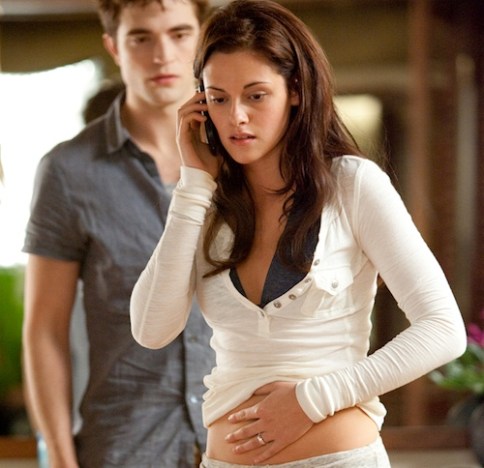
But back to Twilight. Breaking Dawn, Part 1 starts with an event promised by the end of the previous movie: the wedding of human Bella (Kristen Stewart) to vampire Edward (Robert Pattinson). Sorry, Team Jacob; but let’s be honest, he never stood a chance. The double-length running time afforded this book means the film can spend its whole first half-hour indulging in the nuptials, which I imagine is the kind of thing fans of this series would revel in, so fair enough.

Then Bella and Edward head off on a romantic honeymoon, and after spending three movies being an analogy for the wonders of chastity, the lead couple getting married means they can finally get. it. on! PG-13 style, of course (I believe some thrusting was cut to retain the teen rating in one or both of the UK and USA). Nonetheless, Edward’s so vigorous that he completely destroys the bed — well, the poor guy has been waiting for about 100 years. He also leaves Bella with some cuts and bruises, making him reluctant to go again. This leads to an extended montage where the newly wed girl desperately tries to get laid while the newly wed guy does his best to avoid it. It’s almost transgressive in its role reversal, except Twilight is too coy to present this quite explicitly enough to really nail that gag. Besides, if you’re looking for a human-vampire relationship that nails the sexual politics of teen relationships, Buffy got there over a decade earlier.

PG-13 fucking

Despite the paucity of their lovemaking, and the fact that one of the pair is technically dead, Bella winds up pregnant, with the baby growing in super-double-quick time and sucking the life out of her. Well, it is at least half vampire — that’s kinda their thing. All this means trouble for Bella’s life, but she insists on keeping the foetus — or baby, as one character forcefully points out when another refers to it as a foetus. Hm, I wonder what the conservatively-minded author might be drawing parallels with now? In fairness, it depends a certain amount on how you choose to read it. Screenwriter Melissa Rosenberg has said she is pro-choice and wouldn’t have agreed to do the film if she felt it violated her beliefs, while acknowledging she had to find a way to not offend the beliefs of “the other side”. So, almost everyone tries to dissuade Bella from sticking with the pregnancy, but they let her make her own choice… and (major spoilers!) it ends up killing her. So they were right, basically.

And that’s the entire movie, more or less. Well, it is only half the story. I think it’s the knowledge of it being only half the book that led many critics to describe the film as slow and light on content (you always see such comments about multi-film adaptations of single books), because while it’s hardly fast-paced, I didn’t think it was notably less incident-packed than previous Twilight movies. Mind you, that probably says less about the pacing of this film and more about how little actually happens in all these movies.

Angry like the wolf

However, despite choosing to adapt only half the story, it still feels like the plot is making jumps at times. For example: Jacob (Taylor Lautner) and his werewolf buddies factor into things because they want to kill Bella’s devil-kid, but there’s also the matter of a treaty between the vampires and wolves (which I can’t remember the details of, so don’t ask). The film makes a point of emphasising that the wolfpack leader doesn’t want the treaty to be broken, then later on it’s stated that in his mind the treaty is broken. Now, okay, we can connect those dots ourselves, but really it’s missing a scene where the guy undergoes this about-turn of opinion. And yet, despite such missing links, director Bill Condon finds time for numerous sequences where people do nothing while a mournful song plays.

On the bright side, Condon does manage to create a sequence that is the nearest this series has ever got to being an effective horror film (well, apart from Edward being a creepy stalker in the first film). It’s basically the ending of the movie, so, again, massive spoilers. So: Edward eats the baby out of Bella, who promptly dies, forcing Edward to flood her corpse with venom by biting her all over, which seems to do pretty awful things to her organs — that’s the scary bit, though it doesn’t sound particularly terrifying when you put it like that. Potentially more emotionally scarring is that, meanwhile, Jacob is off falling in love at first sight with Bella and Edward’s baby. That’d be their creepy CGI baby, which is roughly as convincing as a plastic one in a Clint Eastwood movie.

“Is it a boy or a girl?” “I think it's... pixels.”

Not that the acting of the humans is much more convincing. Kristen Stewart had a promising career before Twilight, and seems to have managed to reignite it as something of an arthouse darling afterwards, but here she’s just a personality vacuum. The film starts with her delivering a couple of lines of voiceover, and even from just that she manages to sound terminally bored. Later she asks, “why can’t you see how perfectly happy I am?” Probably because you’re not putting any effort into your performance, love. And yet, the less said about the rest of the cast, the better. Lautner doesn’t even get to wheel out his surprisingly-effective comedy chops this time.

But for all the terribleness, I sort of feel I can’t hate it, because the rubbish bits are too funny, and the mad bits too bonkers (for a movie that is primarily aimed at romantically-inclined teenage girls, at least). While I wouldn’t say I enjoyed it, it was entertaining to sit through — kind of like The Room, for example, only still not quite as transcendently appalling.

2 out of 5

Join me this time next year when I finally finish this thing off. Unless I decide to do it next month, because Part 2 is currently sat on Netflix going “finish meeee”…

Phantom Thread (2017)

2018 #221
Paul Thomas Anderson | 130 mins | 1.85:1 | download (UHD) | USA & UK / English & French | 15 / R

Phantom Thread

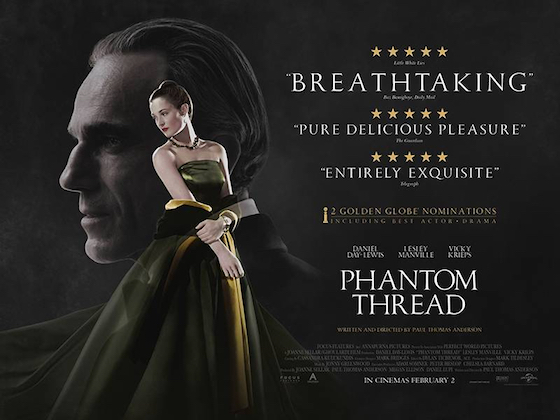
Reynolds Woodcock (Daniel Day-Lewis) is perhaps the most sought-after fashion designer in 1950s London, with a clientele that includes heiresses, countesses, and even princesses. But like many (male) geniuses, he is often prickly, exacting, tempestuous, and cold, and seemingly the only person that can withstand him for any length of time is his equally fastidious business manager — and sister — Cyril (Lesley Manville). Then Reynolds encounters guesthouse waitress Alma (Vicky Krieps) and is immediately smitten, a feeling which she reciprocates, and so she is quickly integrated into his life as his newest live-in muse/lover. Although she initially seems quiet and shy, Alma is actually headstrong and tenacious, and soon the three are locked in a love/hate battle of personalities.

If that sounds melodramatic, there is an element of that to the film; and if Reynolds and Cyril’s brother/sister relationship sounds a bit odd and Gothic, well, there’s an element of that too — and that’s without even mentioning Reynolds’ obsession with his dead mother, or what goes on with some mushrooms. But if there’s one thing writer-director Paul Thomas Anderson’s film is not, it’s histrionic. Its plot may be that of a Gothic melodrama, and if it were a novel perhaps we’d class it as one, but Anderson hasn’t taken on the skin of a Tim Burton or Guillermo del Toro here — in the quiet but forceful and precise way it plays out, Phantom Thread is as stringently produced as one of Reynolds’ gowns.

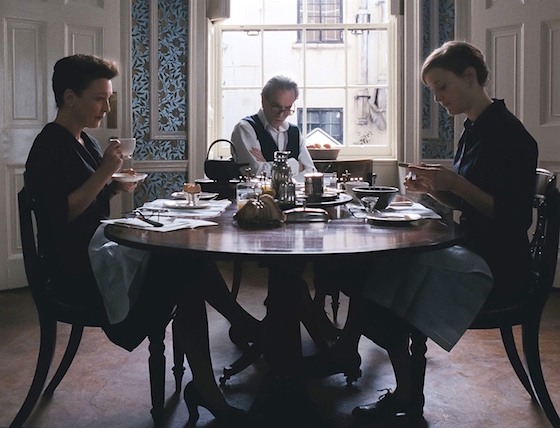
A happy household?

Similarly, at first glance the film may look as cold as its protagonist can be, taking place in the stark, plain-coloured corridors and rooms of his London home-cum-business, with central characters who seem pragmatic and aloof. It is primarily the arrival of Alma that reveals the truth, however, and while there are sometimes outbursts of emotion, a lot remains restrained, conveyed in glances or calmly-delivered threats. Although Day-Lewis received much of the attention and praise because, well, it’s Daniel Day-Lewis, this film truly derives its power from all three leads. It’s possible to point to scenes or moments where each shine, but the real effectiveness lies in how their characters are built up across the film.

Naturally, some credit for this lies with Anderson’s screenplay (which he reportedly wrote in collaboration with Day-Lewis, saying “he probably should have some kind of co-writing credit.”) There are many fantastic lines and dialogue exchanges — again, this might look like a staid, arty movie from the outside, but it’s alive and vibrant with wit and emotion, even if the former is all delivered very dryly and the latter is often simmering under the surface.

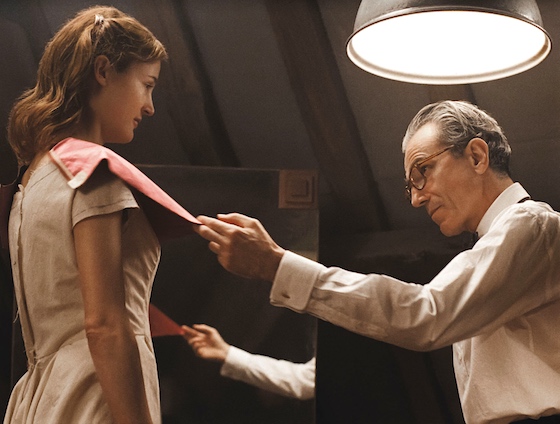
Anderson also deserves much credit for the look of the film. There’s no credited director of photography, because he didn’t hire one, but also because he didn’t claim to fulfil that role himself — according to IMDb, he stated that “he collaborated with and was advised by his camera operators and gaffers, since he does not have the technical expertise of a cinematographer.” The teamwork clearly paid off, because the photography is stunning. Not in a show-off, prettied-up kind of way (though there are still individual shots that are breathtaking, like this one), but just beautiful, crisp photography, which once again reminds us of the magnificence of shooting on 35mm (aided, no doubt, by the fact I watched it in UHD).

Dressmaking

All of that remains in service of the characters and their story. I’ve seen it said the film is a dual character study, and I think that’s true. Reynolds and Alma are two very particular individuals, the truth of whose characters is brought out in the way they eventually spark off each other. Their relationship and where it leads is certainly not typical, and may not be healthy, either — indeed, I think how you ultimately react to it may say as much about you and your attitude to relationships as it does the characters. I’ve certainly seen a spread of interpretations expressed online, and (without meaning to sound like I’m above it all) I can understand most of the different perspectives. Of course, being of two minds is a reaction in itself.

I’m more certain of my reaction to the film itself. Put simply, it’s the Paul Thomas Anderson film I’ve felt most engaged by since I saw my first, Magnolia, 15 or so years ago (a feeling which didn’t endure to a rewatch some years later, incidentally). Maybe I owe the rest of his filmography a second chance.

5 out of 5

Phantom Thread is available on Sky Cinema from today.
It placed 7th on my list of The 26 Best Films I Saw For the First Time in 2018.

Batman Ninja (2018)

2018 #146
Junpei Mizusaki | 85 mins | Blu-ray | 1.78:1 | Japan & USA / English | 12 / PG-13

Batman Ninja

“This is madness,” exclaims Batman at one point relatively early on in this anime interpretation of the DC superhero. He could be speaking on behalf of us viewers… although, at that point, he — and we — don’t even know the half of it…

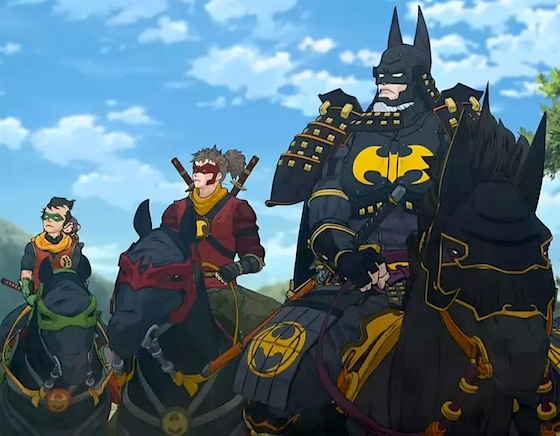
The story begins when a scientific experiment gone wrong hurtles Batman, most of the Bat-family, and Arkham Asylum’s inmates back in time to feudal Japan. Due to a quirk of the machine, the Dark Knight himself arrives years after everyone else, which has given the villains a chance to take control, each establishing their own fiefdom. Batman and his allies must find a way to send everyone back to the present day, before history is irreparably altered.

That’s just the start of the bonkers stuff that goes down in this film — never has the term “bat-shit crazy” been more appropriate. I mean, as if the basic setup wasn’t inherently barmy enough, by the time it gets to (spoilers!) a climax where the villains’ mansions morph into giant robots that then combine into a Joker-headed super-giant robot that fights against a giant monkey-samurai made up of hundreds of flute-controlled little monkeys, you’ll be wondering just how strong the filmmakers’ drugs were. And that’s not even the end of it. I don’t think there’s any rational way to assess the quality of the plot here — either you go with it and revel in the madness, or you just give up because it’s too much.

Na-na-na-na-na-na-na-na Ninja!

The sense of possibly-drug-induced unreality is only heightened by the chosen animation style. The film’s clearly been produced with 3D computer animation, but rendered in a style designed to emulate 2D cel animation. It has the frenetic hyper-real movement made possible by the former, while otherwise trying as hard as possible to look like the latter, which makes for a weird disconnect. When you marry that up to the over-detailed, sometimes grotesque character and location designs, plus an overabundance of eye-popping colour, it becomes a surreal sensory overload. Oh, and at one point it changes style completely, just because it does, into some kind of sketchy watercolour thing, but only for a little while.

Batman Ninja is a strange movie all around. I wouldn’t say I enjoyed it, but it was certainly an experience. Would our collective culture be better off if such madness was reined in, or is the world a better place for having this kind of battiness? You may have to judge for yourself, though I think only the bold or the foolish need apply.

3 out of 5

Batman Ninja is now available on Netflix UK.

Hitchcock (2012)

2018 #20
Sacha Gervasi | 92 mins | TV (HD) | 2.35:1 | USA & UK / English | 12 / PG-13

Hitchcock

Arguably the most famous film director of all time, it was inevitable that one day there’d be an Alfred Hitchcock biopic. Indeed, as is so often the case in Hollywood with an obvious idea waiting to happen, two turned up at once (the other being BBC/HBO TV movie The Girl). Rather than taking an overview of the man’s life, however, both focus in on the making of a single film — in this case, arguably the one he’s most famous for today, Psycho.

That’s half of what the film’s about, anyway. It’s a mixed success. I’ve no idea how true it is, but the setup — the acclaimed Master of Suspense who’s so established that people are judging him over the hill, determined to do a striking new project no one else believes in to prove he’s still got it — is a good’un. It’s especially effective precisely because it’s about Hitchcock and Psycho: it’s the film that defines him for many people now; so, yes, we know the ending, but that lends dramatic irony — how do we get from that starting point to the acclaimed classic we all know? However, it all feels slightly hamstrung by the filmmakers failing to get the rights to directly recreate any shots from Psycho itself, making it feel like the film is having to constantly pull punches there.

Shooting Psycho

The other half of the film is about a blip in Hitch’s marriage — a storyline which is mostly fictional, unsurprisingly. That Hitch was a pervy old letch shouldn’t really come as a surprise to anyone anymore, but the way the film decides to draw links between the director and twisted murderer Ed Gein (the inspiration for Psycho) is a bit weird. It feels like the scenes of murder, etc, have been included for mere titillation rather than actually revealing anything about the titular moviemaker.

The latter storyline leads to a reconciliatory ending that is cheese personified. By the scene just before that wraps up the Psycho storyline in a much more effective manner, with Hitchcock listening to the film’s premiere screening from the lobby, ‘conducting’ the audience’s screams during the shower scene. It’s probably the highlight of the movie; the main insight into why Hitch ever did what he did, perhaps. (Well, that and all the lust.)

In the title role, Anthony Hopkins is completely submerged as the big man, helped by a pile of prosthetics. Sometimes I think Hopkins is a distinctly overrated actor, but he’s put the effort in here. As his under-appreciated wife, screenwriter Alma Reville, Helen Mirren is superb as ever. The cast is rounded out by a bunch of decently-served small roles, performed by the likes of Jessica Biel, James D’Arcy, Danny Huston, and, in particular, Scarlett Johansson as Janet Leigh. She seems to fit the era perfectly. Inexplicably drawing the short straw is Toni Collette, in a totally nothingy role as Hitch’s assistant.

Hitchcock blondes

With a running time that barely crossing 90 minutes before the credits roll, Hitchcock feels very slight. This is a small incident in the long and storied life of the great director; and while it may touch on various themes that concerned his whole career, thereby acting as an exemplification for all of them, it still feels more like a vignette than a full-blown biopic.

3 out of 5

The Purge (2013)

2018 #5
James DeMonaco | 85 mins | streaming (HD) | 2.35:1 | USA & France / English | 15 / R

The Purge

When The Purge first came out, I ignored it because its premise was inherently daft. Then they made some sequels, which I ignored because the premise was still inherently daft. Then two things happened: one, some people who I think are worth listening to said some decent things about it; and two, Trump came to power, and suddenly that daft premise doesn’t feel so far outside the confines of what’s possible.

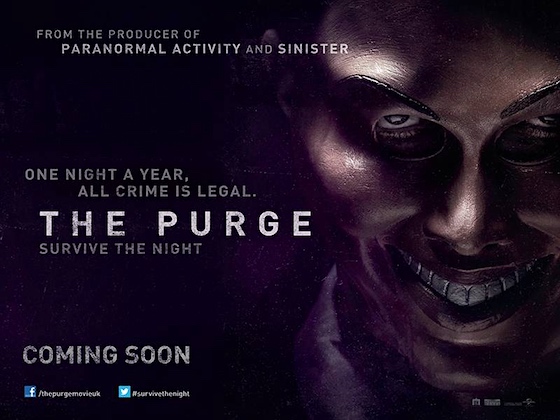
The aforementioned premise (for those that don’t know) is that, for one 12-hour period each year, all crime is legal. There’s some gumpf about how this was a policy designed to alleviate crime the rest of the year, blah, blah, blah, but really it’s just an excuse for a horror movie — a kind of home invasion action-thriller, essentially, but with twists and some effective moments. Although it has plenty of lump-headed, convenient-for-the-plot moments too, but I shan’t delve into spoiler territory here. Let’s just say some of the bigger twists are achingly predictable.

I think writer-director James DeMonaco was hoping to land some kind of political commentary, possibly even satire — I mean, it’s inherent in the concept, right? And the film leans into it, mostly in a race-related way, with a black guy on the run and antagonistic prep school kids. But it’s maybe not as clever as it’d like to be, and I’m not sure it’s actually got anything to say — again, it’s a violent thrill-ride with some window-dressing.

They're coming to get you, Ethan

The other thing about the premise is… they’ve made four of these movies now, plus a TV series, and from what I can ascertain they’ve all focused on “murder and violence is allowed” — but if all crime is legal, well, wouldn’t people be stealing company secrets, breaking NDAs, filing their tax returns…? Crimes against the government aren’t allowed or something, so I guess that’d probably cover the last one. But still, I feel like there’s potential to produce more variety than just “12-hour murder spree!” again and again.

Anyway, it is what it is. I generally liked it enough while watching it, but it certainly doesn’t stand up to post-viewing intellectual scrutiny.

3 out of 5

Mary and Max (2009)

2018 #202
Adam Elliot | 92 mins | download (HD) | 16:9 | Australia / English & Yiddish | 12

Mary and Max

I heard about Mary and Max around when it first came out. I can’t remember the context anymore, but it must’ve been positive because I’ve been meaning to watch it ever since; a desire only reiterated by its surprisingly firm placement on IMDb’s Top 250 (at time of writing, it’s ranked 176th). Nine years since said initial release (nine years?! Where does time go?!), I finally got round to, er, acquiring it, only for it to then pop up on Prime Video. C’est la vie, I guess.

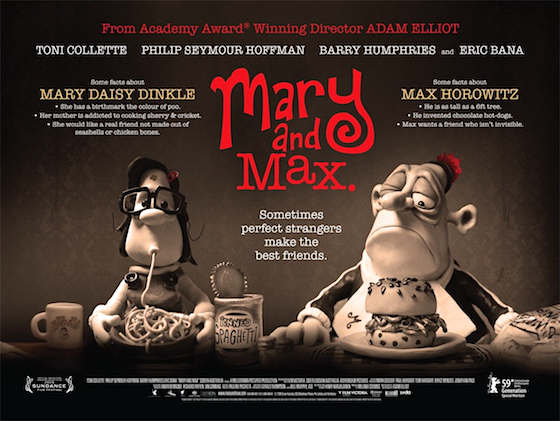
Anyway, it’s about two very different and geographically distant, but similarly lonely, individuals who come into contact by the magic of mail. Mary Daisy Dinkle (voiced initially by Bethany Whitmore and later by Toni Collette) is a little girl living in the suburbs of Melbourne, Australia, who randomly selects a name in an address book at the post office and sends that person a letter. That person turns out to be Max Horowitz (voiced by Philip Seymour Hoffman, unrecognisably, at least to me), a middle-aged obese New Yorker with mental health problems. He replies, and an unlikely, long-lasting pen-pal relationship is born.

The film labels itself as being based on a true story, but writer-director Adam Elliot has said (according to IMDb) that Max was inspired by “a pen-friend in New York who I’ve been writing to for over twenty years.” So, less “based on a true story” and more “very loosely inspired by a true story” — I mean, at least half the narrative (all the shit Mary goes through) is completely fictional. Does that matter? Maybe not… but also, kinda. While the film presents a gloomy, issue-heavy take on life, it also has a whimsical side, and that “true story” claim feels like it’s trying to justify both how grim things get and how fantastical they sometimes are, too. The fact it isn’t true — that it is, at least in part, just the product of the director’s kooky imagination — therefore feels like a bit of a con, at least to me.

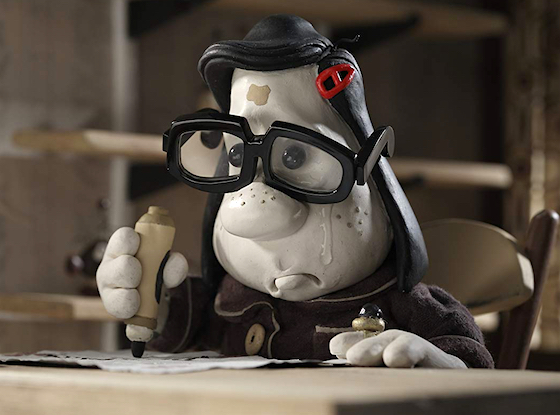
Crying on crayon

Still, that doesn’t mean Mary and Max is without merit. It has an empathy for people who are disadvantaged and troubled, and for the importance of finding some measure of happiness in life, however small or awkward, that is quite touching. The heavily stylised designs, desaturated colour scheme, and stop-motion animation method suit the material well — as I said, there’s a lot of bleakness here, as both Mary and Max are battered by life, which juxtaposes effectively with the “kids’ picture book” visual aesthetic. That also allows for some flights of fancy which just wouldn’t work if the film were live action. Plus, as with almost any stop-motion movie, it’s an impressive technical achievement (trivia time: there were 133 sets, 212 puppets, and 475 miniature props, including a fully-functional typewriter that took nine weeks to create!)

Mary and Max’s position on a viewer-rated list like the IMDb Top 250 surprises me, because it’s an oddball little film that would seem to appeal primarily to a certain kind of viewer, and probably alienate many others with its unique mix of quirkiness and spirit-crushing realism. It makes for a sometimes uncomfortable experience — perhaps deliberately so — but underneath that lies a fundamental humanity that is, in a way, quite moving.

4 out of 5

Mary and Max is available on Amazon Prime Video UK as of yesterday.