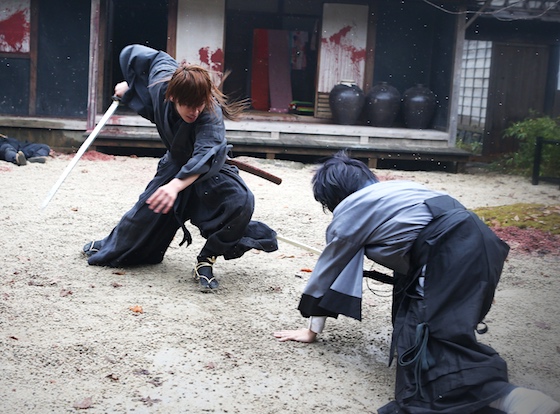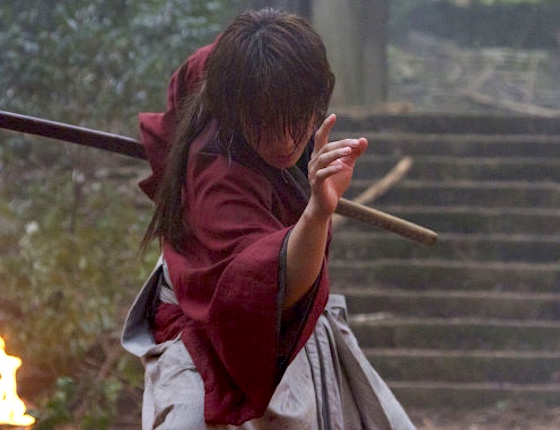
The Past Month on TV #27

A slightly earlier than normal TV review this month, to get ahead of all the Christmas telly — but there’s still plenty to discuss…

The Punisher  Season 1
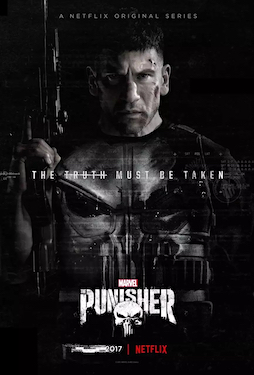
The PunisherThe fourth live-action iteration of Frank Castle, Marvel’s murderous anti-hero (and people moan about Spider-Man reboots), debuted in Daredevil season two and was greeted so positively that now he’s got his own spin-off series. And “spin-off” is not an inaccurate descriptor, because this very much launches out of the events of Frank’s storyline in Daredevil — which makes it all the more annoying that Netflix care not for “previously on”s: Daredevil season two was over 18 months ago; a little refresher would be nice.

You see, the plot revisits the Punisher’s origins: his family were killed in the crossfire of a gang shoot-out, leading him to kill the criminals responsible. He thinks that mission is complete, but the season begins (more or less) with him discovering new intel that suggests his family’s murder may not have been so random, and it links back to his actions when he was in the military. This also serves as a launchpad for the series to tackle other war-related issues, primarily the psychological wellbeing of veterans. With such serious themes it’s perhaps no surprise that there’s very little here that’s outright comic-book-y here — no superpowers, for sure; not even veiled references to the big names of the MCU movies, which we’ve had in every other Marvel Netflix show. In fact, if it weren’t for the fact the series is so obviously spun out of Daredevil and has the Marvel logo at the start, you could be forgiven for thinking it wasn’t a Marvel show at all.

Some people think this removes the Punisher’s USP. In and of himself he’s just a violent man out for revenge — action cinema is stuffed to bursting with such anti-heroes. What makes Frank unique is he’s that kind of character but in a world where super-powered and super-moral people exist. So would The Punisher have been more interesting if, instead of a very grounded military conspiracy storyline, it had something to do with Frank clashing with superpowered people? I don’t know. It certainly would’ve been a different show. As it stands, this may be a show for people who don’t typically like Marvel shows. So was Jessica Jones before it, but this is for different people who don’t like Marvel shows — people like Jason Statham, maybe.
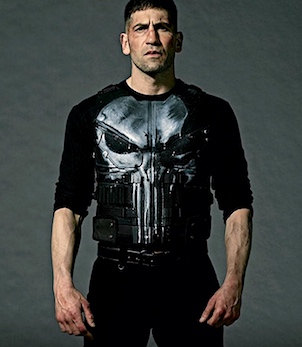
Jon BernthalIn the title role, Jon Bernthal is fantastic. You can absolutely believe him as a revenge-driven psychopath capable of killing anyone and everyone, but also as a kind-of-charming strong-but-silent type with a heart and moral code who will definitely do the right thing. I’ve seen some critics and viewers opine that now is the wrong time for a series about a hero who just murders indiscriminately. I say those people definitely haven’t watched this Punisher. Although the plot is a conspiracy thriller, the series invests a lot of time in the emotional world of Frank Castle, making him human and moral rather than just a single-minded murder-machine. Bernthal makes what could be a very one-note role into a plausible human being; one who you believe might be able to find redemption and leave someday. And maybe that makes him even more tragic — he could find it; it’s possible… but likely? There’s the rub. As it’s also trying to engage with issues facing combat veterans once they return home, it makes for a clearly different, more serious flavour for an MCU production. How successfully it explores these weighty issues is more debatable.

Many of these Marvel shows take their whole first season to fully complete the hero’s origin story, but The Punisher is stuck with the fact that Castle already became The Punisher during his Daredevil appearance. So do they just ignore that story shape? No, of course they don’t — they shift it on to the villain! Therefore any comic book fan who knows what one character will ultimately become (no spoilers here!) is constantly teased with possibilities throughout the season until, eventually, as we should’ve known from the start, the transformation occurs in the finale. Why not really surprise us: do the transformation earlier and then wrap a character up within one season, rather than leaving them dangling for a possible next time? Comic books have to leave things dangling — they will all run for ever and ever; there can be no permanent solutions — but these TV series will end — whether it’s after a single season, or two, or five, or ten, they are without exception finite. That means you’re allowed to wrap a character up and move on to others.

So, The Punisher is not an unmitigated success, but it does lend another flavour to the Marvel-Netflix landscape. I certainly hope we get to see more of Bernthal’s take on the character in the future.

Detectorists  Series 3 Episodes 2-6
Detectorists series 3The third and final series of BBC Four’s sitcom about a couple of mates whose hobby is metal detecting was every bit the equal of the first two runs, which saw the show place on my list of 10 Favourite TV Series of the Last 10 Years back in February. Its brilliance lies in how perfectly weighted it is: the characters are quirky, but also normal; their problems are grounded and realistic, without being glum and unduly serious; it’s frequently hilarious, but without slipping into gurning ‘Comedy’ territory; it’s kind and gentle, but without being dull; and it’s all very lovely and kind-hearted, without being twee or saccharine. It’s also beautifully put together by writer-director (and star) Mackenzie Crook — the storyline across the series was precisely constructed, and the photography is often a gorgeous showcase for the English countryside. A real gem that will be missed, though at least it came to a perfect conclusion.

The Good Place  Season 1 Episodes 3-13

The Good PlaceI only heard about this after its Big Twist was much-discussed online, so starting it was an exercise in knowing there was a big reveal awaiting. Fortunately, that knowledge doesn’t overshadow everything that comes before it. For those who still aren’t aware of it (especially as it’s only on Netflix on this side of the pond), it’s about a woman (Kristen Bell) who dies and goes to Heaven only due to an admin error, so she tries to better herself so that she’s deserving of her place. Other complications emerge as the season goes on, but that’s the premise. There’s a lot of plot for a sitcom — although it’s not necessarily immediately obvious, it tells a 13-episode story; this makes Netflix quite a natural home for it, actually, as it’s not your typical “every episode is fundamentally standalone” sitcom. But it’s also very funny in amongst all that, mining not only the characters and their foibles, but also the uncommon situation they’ve found themselves in. The shocker in the finale is just the icing on the cake. I hear season two has gone off the boil somewhat, but I’ll find out for myself once it’s all wrapped up.

Also watched…
  • Armchair Detectives Series 1 Episode 1 — Game show in which contestants watch a murder mystery scene by scene and attempt to guess the perpetrator. It’s a fun idea (who doesn’t ‘play along’ while watching a whodunnit?), but it’s hampered by the dirt-cheap quality of the drama. That’s to be expected on a daytime game show budget, but still…
  • Bounty Hunters Series 1 Episodes 3-6 — If you saw the James Corden comedy-thriller The Wrong Mans, this is tonally very similar to that — not quite as elegantly done perhaps, but still pretty decent. If you like comedy-thrillers and haven’t seen The Wrong Mans, watch that first.
  • The Flash Season 4 Episodes 3-6 — After complaints about it getting too grim and self-serious, they’ve endeavoured to return The Flash to the lighter tone of its first season, in the process practically turning it into a comedy. I often find these CW superhero shows kinda laughable anyway, so, a little to my surprise, that’s working for me.
  • The Musketeers Series 3 Episodes 9-10 — Sad to (finally) reach the end of this fun action drama. The third series wasn’t quite on a par with the first two (the result of new showrunners, undoubtedly) but it still had its moments. It leaves a swashbuckling void in the schedules that I doubt anyone will bother to fill.
  • Would I Lie to You? Series 11 Episodes 1-4 — Is this the best panel show on TV? Could well be. Its genius lies in the elegant simplicity of its concept, a game anyone can play (and we can play along with at home), plus the sharp and quick wits of regulars Rob Brydon, David Mitchell, and Lee Mack. Almost a dozen series in and there’s no sign of the hilarity waning.

    Things to Catch Up On
    Blue Planet IIThis month, I have been missing so much stuff. There’s been the fourth series of Peaky Blinders on BBC Two (which concludes this week, so we’ll whizz through it sometime in the new year); the second season of The Crown on Netflix (also waiting for the new year now); the same streamer’s first ever miniseries, Godless; the immensely acclaimed Blue Planet II (now available in UHD on iPlayer, too!); and I’m behind on Arrow and The Flash so haven’t reached the four-show Arrowverse crossover. And those are just the ones I can remember right now.

    Next month… is January, but sometime before that I’ll likely review some Christmas TV.
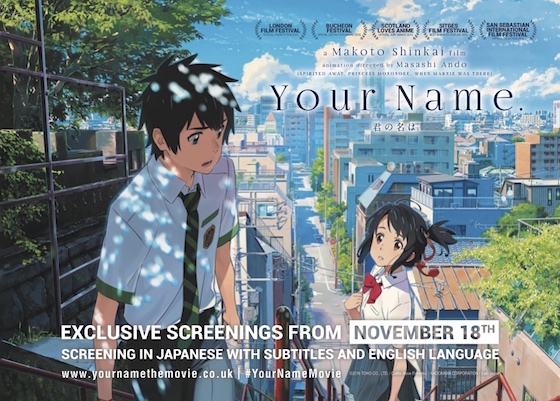
  • Your Name. (2016)

    aka Kimi no na wa.

    2017 #168
    Makoto Shinkai | 107 mins | Blu-ray | 1.78:1 | Japan / Japanese | 12 / PG

    Your Name

    If you’ve not heard about Your Name then… well, where have you been for the past year? It was a colossal hit in its native Japan during the back end of 2016, spending 12 weeks at #1 to become the fourth highest-grossing film of all time there (behind only Spirited Away, Titanic, and Frozen). It’s also the only anime not made by Studio Ghibli to gross over ¥10 billion at the Japanese box office. Critical acclaim has followed as it’s been released around the rest of the world too, hailing writer-director Makoto Shinkai as the new Miyazaki. It’s hard to imagine higher praise for an animator. The film reached UK cinemas last November, but then took a whole year to hit DVD and Blu-ray (I guess thanks to Japanese studios’ usual restrictive licensing agreements), and as of this week is available to stream for Amazon Prime members. So when I finally sat down to watch it this week it had a bit of weight on its shoulders — at this point it runs the risk of being a victim of its own hype.

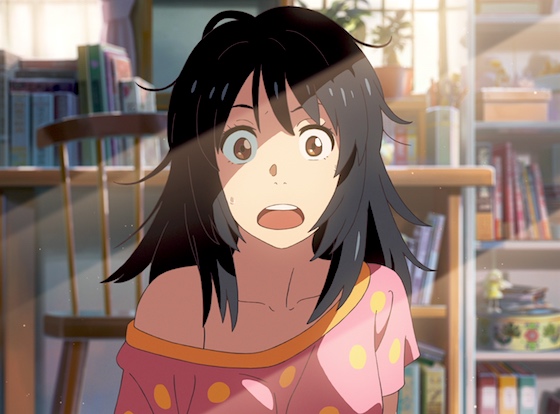
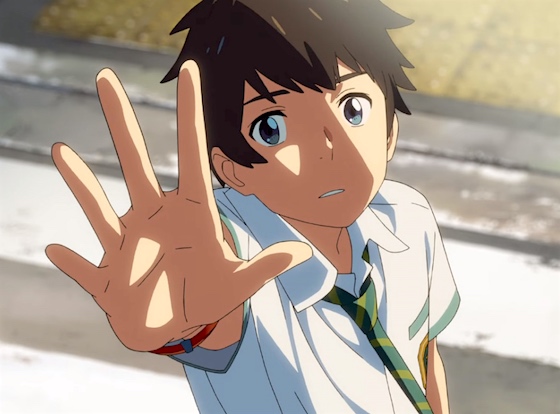
    The film introduces us to Mitsuha, a teenage girl in a sleepy country town — more a village, really (it doesn’t even have a cafe!) — who wishes for a more exciting life in the big city. Her friends tell her she was acting weird the day before, but she can’t remember any of it. Then she wakes up in the body of Taki, a teenage boy living in Tokyo. Assuming it’s a dream — a very long, very realistic dream — she stumbles through his life for a day. To cut to the obvious, Mitsuha and Taki soon realise they’re actually swapping bodies, apparently at random but for a whole day each time. (The literal translation of the film’s Japanese title is What is your name, which kinda makes more sense.) They find ways to deal with it, but a big explanation for why it’s happening is looming…

    That feeling when you wake up and realise a boy's been inside you... er, as it were

    That comes in the form of a hefty twist about halfway through the movie. I’ve read some very different reactions to that development and what follows it — criticism of it for shifting the film into something generic after a more original first half; praise for it elevating the film into something more original after the generic first half. I guess your mileage will vary. For me, it kind of glossed over some of the body-swap stuff to get to a place where there was still time to deal with what happens next. Conversely, there are plenty of intersex body-swap movies — how much do we need to go over that again? But there are generic elements to the second half too.

    That said, the way it uses Japanese folklore to bring all the threads together is a bit different, at least for us Westerners. I don’t know if it’s based on genuine beliefs or if it’s a mythology imagined for the film, but it conveys some effective and affecting ideas. It builds to an emotional climax and, ultimately, a perfectly satisfying ending. Well, unless… At times you feel there were perhaps other, more unusual directions the film could have explored. Fair enough, that clearly wasn’t the story Shinkai wanted to tell; but some viewers may think those less well-trodden paths would’ve made for a better movie. Of course, that would’ve neutered its appeal to others; but then Mark Kermode compared it to Romeo and Juliet in terms of how it might appeal to teenagers, and that certainly doesn’t have a happy ending…

    Taki reaching for Mitsuha's boobs, probably. He loves feeling her boobs.

    I’m not just talking about the finale, though. For example: while in Taki’s body, Mitsuha displays his “feminine side”, which leads to a date with a girl he’s had a crush on for ages. On the day of the date, Taki is in his own body, which leaves Mitsuha upset because she’d wanted to go on the date. Surely you can see how this is possibly building in a direction where Mitsuha realises something about herself; something she might not have noticed living in a very traditional little town. But that’s not where Your Name is going — and, as I said, fair enough — but it’s not a bad idea for a movie (is it?)

    Nonetheless, at times the story is quite complicated, with overlapping dialogue, or a density of information conveyed in images, on-screen text, and dialogue simultaneously. I mention this because watching the English dub might make for a more manageable experience, at least on first viewing. (That said, there’s one gag which only works in Japanese, and the subtitles work at a rate of knots to explain the joke while it’s happening. I watched the English dubbed version of the scene afterwards and it kind of fudges the gag away, because there’s no way to translate it into English.) That said, other bits of the story are just straight up jumbly, but trust that there’s a reason for that — you may get confused about who’s in whose body when, but the film makes enough sense in the end.

    Pretty pictures

    One thing I have no problem praising unequivocally is the imagery. The film is visually ravishing; the animation thoroughly gorgeous. Its use of colour and light is beautiful; the detail in the art and its movement is almost photo-real, without the uncanny valley effect you often get from rotoscoping. Shinkai also seems to have a live-action-esque feel for shots and editing, particularly in his use of montage, which lends a very filmic feel. At other times it benefits from animation’s freedom to be less literal, particularly in one sequence apparently created with pencils and chalk.

    I do think the hype around Your Name ended up as a problem for me. I was expecting to be blown away by its amazingness, the expectation of which got in the way of just appreciating the film for what it is. That said, I definitely liked it a lot. Despite using some building blocks familiar from other movies, it mixes them together with some fresh perspectives to create a film that is thoroughly romantic, in multiple senses of the word.

    4 out of 5

    As I mentioned, Your Name is now available on Amazon Prime Video in the UK, in both subtitled and dubbed versions.

    The Terminator (1984)

    The 100 Films Guide to…

    The Terminator

    Your future is in its hands.

    Country: USA & UK
    Language: English
    Runtime: 107 minutes
    BBFC: 18 (1984) | 15 (2000)
    MPAA: R

    Original Release: 26th October 1984 (USA)
    UK Release: 11th January 1985
    Budget: $6.4 million
    Worldwide Gross: $78.4 million

    Stars
    Arnold Schwarzenegger (Conan the Barbarian, Predator)
    Michael Biehn (Aliens, Tombstone)
    Linda Hamilton (Children of the Corn, Dante’s Peak)

    Director
    James Cameron (Piranha Part Two: The Spawning , Avatar)

    Screenwriters
    James Cameron (Rambo: First Blood Part II, Strange Days)
    Gale Anne Hurd

    Based on
    not Harlan Ellison’s The Outer Limits episode Soldier. (Ellison sued production company Orion, who settled out of court for an undisclosed sum and an acknowledgement in the film’s credits. James Cameron disagreed with this decision, and still does.)


    The Story
    Two time travellers from a future world beset by a war between ruling robots and a human resistance arrive in Los Angeles 1984 to find the mother of the future human leader, Sarah Connor — one to kill her, one to protect her.

    Our Heroes
    Sarah Connor is just an ordinary young waitress in ’80s L.A. who suddenly finds herself marked for death by an unstoppable robot from the future. Her only hope is Kyle Reese, a soldier also from the future, sent back in time by Sarah’s unborn son to protect her.

    Our Villain
    In the Year of Darkness, 2029, the rulers of this planet devised the ultimate plan. They would reshape the Future by changing the Past. The plan required something that felt no pity. No pain. No fear. Something unstoppable. They created… the Terminator.

    Best Supporting Character
    Paul Winfield is the kind, dryly humorous police lieutenant who lands the tough job of protecting Sarah Connor. He thinks Reese’s story makes him mad (who wouldn’t?), but then he comes face-to-face with the Terminator itself…

    Memorable Quote
    “Come with me if you want to live.” — Kyle Reese

    Memorable Scene
    Having learnt Sarah Connor is being held at a police station, the Terminator walks in and asks the desk sergeant if he can see her. He’s refused, but told he can wait. Sizing up the room, the Terminator informs the sergeant: “I’ll be back.” And he is — in a car.

    Memorable Music
    Composer Brad Fiedel’s main theme is surprisingly catchy, I find, as well as now being rather iconic. Some of the rest of his score has dated terribly, though.

    Truly Special Effect
    Despite being a relatively low budget production, The Terminator is stuffed with memorable effects work. The stop motion and models used to depict the future war look fantastic even when placed alongside live-action elements, but best of all must be the full-size Terminator endoskeleton from the climax. The prop weighed a ton and was hard to manoeuvre on set, but it looks fantastic.

    Letting the Side Down
    For all the brilliant effects, the model of Arnie’s head used for when his robot eye is exposed is… less than convincing. Apparently it took six months to create. Maybe during all that time they forgot what Arnie looked like…

    Next time…
    Seven years later, Cameron revisited the Terminator universe for one of the most acclaimed action movies and sequels of all time, Terminator 2: Judgment Day. Then Cameron was done, but where there’s a popular film there’s money to be made, and so twelve years later Terminator 3: Rise of the Machines turned up. It was less remarkable. Since then, there have been multiple attempts to exploit the IP: TV series Terminator: The Sarah Connor Chronicles rewrote continuity and was well regarded, but was nonetheless cancelled after two seasons; Terminator Salvation attempted to kickstart a new trilogy but didn’t go down that well (and is probably best remembered for star Christian Bale’s on-set rant); and Terminator Genisys attempted to start another trilogy by bringing back Arnie and revisiting events from the first film. It didn’t do well either. Now, Cameron is about to get the rights back… and intends to start another new trilogy. We’ll see.

    Awards
    3 Saturn Awards (Science Fiction Film, Writing, Make-Up)
    4 Saturn Award nominations (Actor (Arnold Schwarzenegger), Actress (Linda Hamilton), Director, Music)

    Verdict

    When I published the list for my 100 Favourites back in 2016, I tried to remove anything I felt was being included on autopilot — films that are such accepted greats that I wasn’t considering how much I actually liked them. Eliminated as part of that were the first two Terminator movies. I liked them a lot, but I hadn’t bothered to watch them for years — they seemed a definite case of films I thought should be there rather than ones I was really passionate about. Rewatching the original for the first time in well over a decade, I realised pretty quickly that I’d made a mistake. The more mediocre movies you see, or even just “quite good” ones, the more you realise how perfect the great ones are — and The Terminator is a great movie. It’s full of superb sci-fi ideas, well-directed action sequences, quotable dialogue, and memorable characters — not least the instantly iconic title role.

    The Darjeeling Limited (2007)

    2017 #35

    Whoa there! Hold your horses! Before The Darjeeling Limited, we need to talk about…

    Hotel Chevalier
    (2007)

    2017 #34a
    Wes Anderson | 13 mins | streaming (HD) | 2.35:1 | USA & France / English | 15 / R

    Hotel Chevalier

    The short film that exists as a kind-of-prequel, kind-of-Part-One to The Darjeeling Limited. It’s probably best remembered for its controversies — around whether or not it was attached to the feature’s theatrical release (it was, then it wasn’t, then it was); and around Natalie Portman’s ass, firstly because oh my God you get to see Natalie Portman’s ass, then later about whether or not she regretted baring it (long story short: she didn’t). The former issue annoyed fans at the time for reasons that, a decade later, are immaterial (though if you’re interested you can read about it here). The latter… well, frankly, I guess it got a lot of attention because, a) men are men, and b) what else there is to talk about from the short isn’t necessarily all that obvious.

    In it we’re introduced to Jason Schwartzman’s character from The Darjeeling Limited, one of the feature’s three leads, who here is seen lazing about in a Paris hotel room when he gets a phone call from a woman, who shortly thereafter arrives. Then they talk and stuff. All shot with director Wes Anderson’s usual style, because obviously.

    Natalie Portman's ass not pictured

    Hotel Chevalier exists in a weird in-between state, where it’s almost essential to the main film (the feature includes numerous callbacks to it; some inconsequential, others that I’m not sure make sense without seeing the short), but it also feels like the right decision to have left it out of the film. Its setting and the presence of only one of the trio of main characters mean it feels like a different entity, and if it had been in the feature itself, even as a prologue, it would’ve shifted the focus onto Schwartzman as the primary character. I don’t think that would’ve been right.

    So maybe it’s just a glorified deleted scene, then? Or maybe there was something I didn’t get and I’m doing it a disservice. The thing it most reminds me of, watching in 2017, is those Blade Runner 2049 shorts: it informs the main feature without being an essential component of it. So, while I didn’t dislike it, I don’t know how much it has to offer outside of setting up part of The Darjeeling Limited. Unless you just want to see Natalie Portman’s ass, of course.

    3 out of 5

    You can watch Hotel Chevalier on YouTube here.

    The Darjeeling Limited
    (2007)

    2017 #35
    Wes Anderson | 88 mins | streaming (HD) | 2.35:1 | USA / English | 15 / R

    The Darjeeling Limited

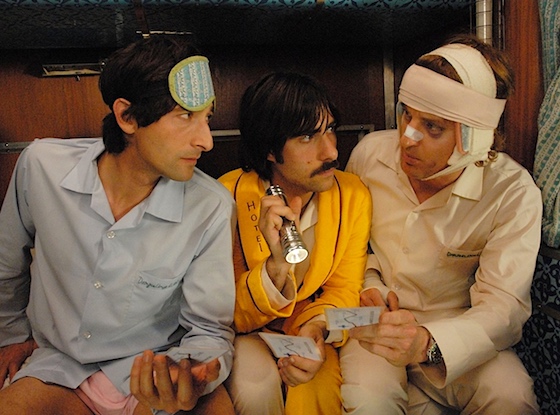
    So, the film proper. It’s the story of three estranged brothers (Adrien Brody, Owen Wilson, and Jason Schwartzman) who reunite a year after their father’s funeral. One of them has organised a train trip across India so they can reconnect, although he also has an ulterior motive…

    My impression has always been that The Darjeeling Limited is a lesser work on Wes Anderson’s CV. I don’t remember it making much of a splash when it came out — maybe I’m wrong, but “another film where Wes Anderson does what Wes Anderson does” was my impression at the time — and I don’t think I’ve seen it discussed a great deal since. As someone who still feels new to Anderson’s world and is working through his oeuvre in a roundabout fashion, I don’t necessarily disagree with this sentiment. If you want to find out what’s so great about Anderson, there are certainly other places to start.

    Brothers on a train

    That said, I did enjoy the film. Anderson’s mannered camerawork, kooky characters, and shaggy dog storylines seem to have gelled well with my own sensibilities. Conversely, finally getting round to this review nine months after I saw the film, I can’t remember many specifics. It’s a movie I’ll likely add to my Wes Anderson Blu-ray collection someday (for comparison, I can’t definitely say the same about Rushmore), and will be happy to revisit, but for the time being I’ve exhausted what little thoughts I had about it.

    4 out of 5

    Comedy Review Roundup

    Let’s have a laugh (or, perhaps, not) with…

  • Police Academy (1984)
  • Black Dynamite (2009)
  • Four Lions (2010)
  • Ferris Bueller’s Day Off (1986)


    Police Academy
    (1984)

    2017 #27
    Hugh Wilson | 92 mins | streaming (HD) | 16:9 | USA / English | 15 / R

    Police Academy

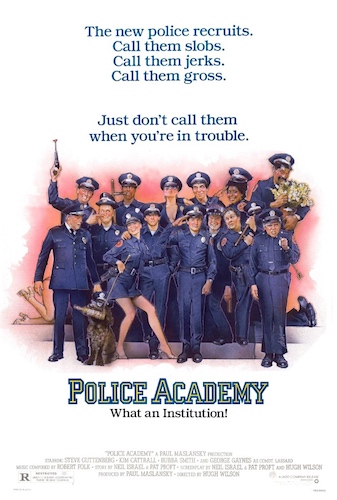
    I watched some of the Police Academy movies when I was younger — yes, plural — but I never saw the first one. It never seemed to be on TV (though the second always was), and the fact it’s rated 15 (weren’t all the later ones, like, PG?) would surely mean my parents would never have let me rent it (I’m pretty sure I never saw any of the series after I hit double-digits age-wise). So there was an element of box ticking in finally seeing the original — a film that Roger Ebert gave zero stars.

    It doesn’t start well: the opening credits incompetently cover up the onscreen action. That’s not for the sake of a joke, like in, say, Austin Powers 2 — it’s not overt or thorough like a joke — it’s just poorly done. From there… it might be generous to say that things pick up, but they’re not so bad. In fact, I passingly enjoyed it. It’s not aged particularly well, but there are some funny bits. Remember the sound effects guy? I used to love him when I was a kid. There’s surprisingly little of him here, though. I guess he got amped up for the sequels.

    Police Academy isn’t some masterpiece that’s been buried under the weight of its increasingly shite sequels, but it isn’t that bad as an hour-and-a-half of mindless comedy.

    3 out of 5

    Black Dynamite
    (2009)

    2017 #47
    Scott Sanders | 81 mins | streaming (HD) | 16:9 | USA / English | 15 / R

    Black Dynamite

    A spoof of cheap blaxploitation movies, Black Dynamite hits every nail on the head. I’ve not actually seen many films from the genre (the original Shaft may be the extent of it, unless Live and Let Die counts), but you only need a passing awareness of the ludicrousies of low-budget ’70s genre cinema (the third act sidesteps into a spoof of kung fu movies) to get the overall joke. Plus there are plenty of generally funny riffs and sequences for the layperson to laugh at, the highlight being a deduction scene that makes no sense whatsoever. At a brisk 80 minutes, it’s hard to go wrong.

    4 out of 5

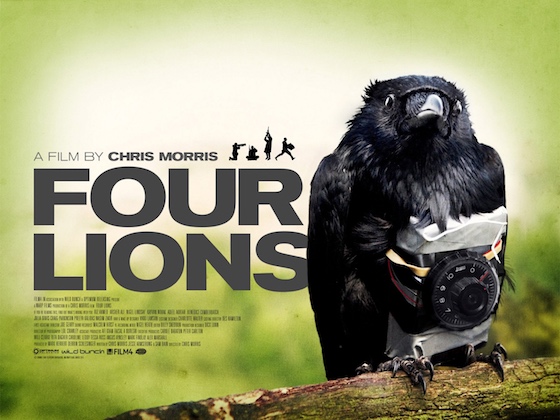
    Four Lions
    (2010)

    2017 #65
    Chris Morris | 97 mins | streaming (HD) | 1.85:1 | UK & France / English, Urdu & Arabic | 15 / R

    Four Lions

    A comedy about Muslim suicide bombers? You don’t need me to tell you all the different minefields that idea is tiptoeing into. But it’s by the guy behind Brass Eye, so it less tiptoes more bounds, and barely puts a foot wrong either.

    The most important point, of course, is that it is very, very funny. There’s a stream of good one-liners and exchanges. But it also winds up making you feel for some of these guys, which, considering their goal, is a feat unto itself. At the same time, the attempted emotional pull in the third act doesn’t quite come off — asking us to care for “the stupid one”, who’s merely been the butt of jokes until that point, comes a little out of left-field. I mean, if we’re suddenly meant to be concerned about his (mis)treatment, why have you been making us laugh at him all along?

    Anyway, if you just ignore that unwarranted about-turn, Four Lions is absolutely hilarious.

    4 out of 5

    Ferris Bueller’s Day Off
    (1986)

    2017 #50
    John Hughes | 103 mins | streaming (HD) | 2.35:1 | USA / English | 15* / PG-13

    Ferris Bueller's Day Off

    Is this or The Breakfast Club the archetypal John Hughes movie? Argue amongst yourselves — I’ve never seen The Breakfast Club. I hadn’t seen Ferris Bueller until this year either (I mean, obviously — it wouldn’t be here otherwise), though I’m not sure why. Despite it being quite well-known and referenced, it just didn’t seem to come up that often. (Incidentally, are references to it on the increase? Both Deadpool and Spider-Man: Homecoming had significant riffs on it within the past couple of years.)

    Anyway, for those as in the dark as I was, it’s the story of cool kid Ferris Bueller (Matthew Broderick) who has an elaborate plan to bunk off school for the day, which involves persuading his best mate Cameron (Alan Ruck) to ‘borrow’ his dad’s Ferrari and head off into Chicago with Ferris’ girlfriend (Mia Sara). Meanwhile, the school’s suspicious principal (Jeffrey Jones) tries to catch Ferris out.

    Going back to what I was saying a moment ago, part of why I didn’t watch it before was that I felt like I’d find it annoying. Turns out, not so much. Ferris is indeed a bit of a dick, but I’m not sure the film doesn’t know he is. Because he talks to camera and makes the viewer his confidante, the assumption might be we’re meant to admire him, but there’s an almost “unreliable narrator” aspect to him. Or maybe I’m projecting that because I didn’t like him but did enjoy his antics, who knows.

    5 out of 5

    * The film was reclassified as 12A for a 2013 theatrical re-release, but I watched it at home, where it’s still technically a 15. Ah, the oddities of the BBFC. ^

  • Life (2017)

    2017 #123
    Daniel Espinosa | 104 mins | streaming (HD) | 2.35:1 | USA / English & Japanese | 15 / R

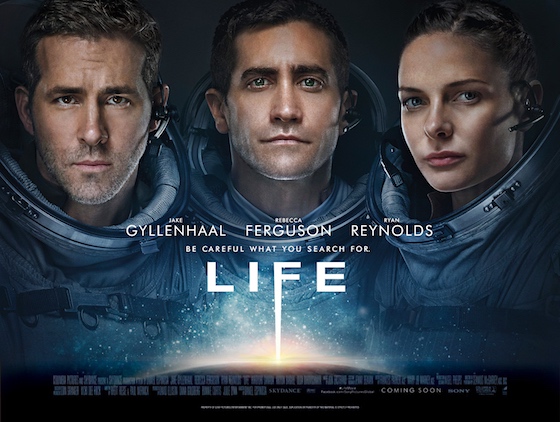
    Life

    Aboard the ISS in the near future, a team of astronauts receives a probe returning from Mars with samples from the surface. Included among them are some living cells — the first proof of extraterrestrial life. The cells begin to quickly evolve into a living organism, thrilling the scientists… until it turns nasty and begins to attack the crew. That feels like a spoiler, but this is a sci-fi horror and that development is kind of inherent in the genre.

    Playing like a cross between Gravity (a near-future thriller where space technology is almost identical to our present capabilities) and Alien (a violent alien lifeform attacks the crew of a space vessel), Life clearly aspires to be little more than a straight-up sci-fi/horror thrill ride, and on that score it’s a pretty effective piece of entertainment.

    Of course, it’s not without its niggles. It could’ve nixed some of the stupid-ass dialogue, like one of the crew commenting “it’s so cold” while they’re shivering and their breathe condenses. More fundamentally, as the organism rapidly develops none of the scientists seem all that concerned by this, sticking to their initial feelings of awe and wonder. Surely there should be some worry about its potential? Perhaps the film was supposed to be saying something about humanity’s hubris when it comes to nature — that we wouldn’t worry about such a small organism, because why would we? — but I’m not convinced that’s a theme being actively invoked. Or maybe it was: comparing his movie to that other recent first contact flick, Arrival, director Daniel Espinosa notes that Denis Villeneuve’s film “is a great, beautiful, cinematic essay about philosophy. Mine is a rollercoaster with some underpinnings of philosophy.” Well, they’re under enough that you can ignore them entirely if you like. There are certainly some even bigger ideas it could’ve chosen to tackle — see the ghost of 82’s review for some interesting thoughts on that.

    In space, no one can hear you rip off other movies

    Still, we shouldn’t really judge a film for things it wasn’t aspiring to do. As a “rollercoaster”, this is decent entertainment. It builds to a helluvan ending too, which naturally I won’t spoil. That said, spoilers follow, because there are some interesting comments by Espinosa about the ending here. Two points jump out at me. One: the alien doesn’t kill David — why not? Espinosa says David didn’t fear it; in fact, he has a connection to it. Personally, I’d say that’s not apparent in the film at all. It would certainly make the ending more interesting if it were true, but I’m not convinced it was actually set up. Two: nowadays we’re so trained to expect sequels that we don’t consider the implications of ambiguous endings anymore (certainly not on blockbuster-sized movies, anyway). We don’t think about what it might mean, we just wait for a sequel to tell us. At best, we consider the ending in terms of “what’s the next two-hour genre-friendly story here?”, which is equally as limiting. He might well have a point there.

    I have no idea if Life is getting a sequel to tell us what happens next or not. I believe the writers wanted one, but I’m not sure how well it did at the box office in the end. I’m not anxiously anticipating a follow-up, but I’d watch it. Life isn’t interesting enough to be a great movie, but it’s an entertaining thrill ride. My score is a smidge generous, but I did enjoy it overall.

    4 out of 5

    Life is available on Sky Cinema from today.

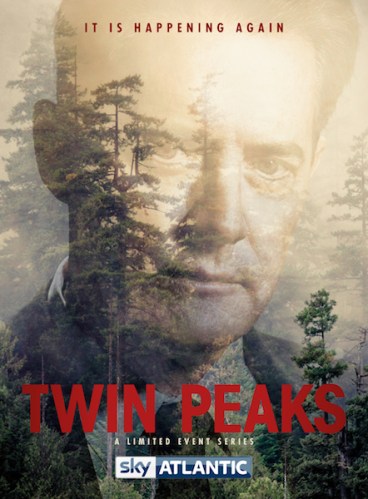
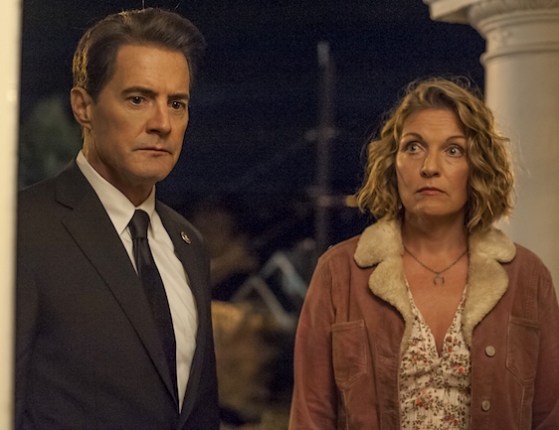
    Twin Peaks: The Return (2017)

    Twin Peaks : The Return

    ICYMI, Film Twitter has been getting itself in a bit of a tizzy over the past couple of days about David Lynch’s return to TV… film… TVfilm!TV!!FIL— you get the idea.

    So, respected British film magazine Sight & Sound went and named Twin Peaks: The Return as the second best film of 2017. Except it’s a little more complicated than that, in the sense that their list is voted for (i.e. no one person or team specifically decided to place Peaks at #2) and that voters were expressly told they could include TV series, or indeed any other form of visual art (although Peaks was the only non-film to make the top ten, Sight & Sound have since tweeted a list of music videos, computer games, and other such things, that also received votes).

    Some people seemed to find the very notion of counting Twin Peaks’ third season as a film to be personally offensive. It must’ve been like rubbing salt in the wound when respected French film magazine Cahiers du Cinéma went and ranked it 1st on their list.

    Happy times in Twin Peaks

    Many digital column inches have been spun out of this, naturally. Two of the more interesting / accurate ones I’ve read are Matt Zoller Seitz’s 25-tweet thread/rant and Vadim Rizov’s kinda rebuttal at Filmmaker Magazine. For my part, it’s nine years almost to the day (just one day short!) since I wrote this piece on the TV vs. film shebang, albeit from a slightly different tack (TV movies vs. ‘real’ movies). My main point was that it’s a kinda arbitrary distinction nowadays. That’s only become more the case in the almost-decade since.

    Similarly, I think most of the handwringing over Peaks’ inclusion in these lists has been stupid. As I said, Sight & Sound specifically okayed the inclusion of TV — The Return wasn’t singled out as “yeah, it’s TV, but it’s so good we’ll count it as a film”, a notion that’s been projected on this news by some commentators (mainly TV critics) so they can then take great offence at it. But if Sight & Sound’s voters had considered any other season of 2017 TV to be worthy of inclusion, it had just as much chance of making it in. I don’t know what Cahiers’ rules were, but I’m going to assume they were similar — and they’ve included TV before (of all things, the first season of 24 made their top ten back in 2002).

    Personally, I’m not really sure where I come down on the issue of Twin Peaks: The Return in particular. I mean, it’s definitely a TV series, isn’t it? But it’s also virtually an 18-hour movie, isn’t it? Can it be both? Why can’t it be both? As I said, I kind of err towards the broad position of “why differentiate?” As someone put it in a comment I saw somewhere else, it’s all linear non-interactive visual media. Still, I probably won’t be including it in my own year-end best-of list, but is that because I don’t think it should be on a movie best-of list or because I wasn’t wholly convinced/entertained by it as a work?

    Uncertainty

    And if you were wondering what I did think of it in more detail, here are all the posts I reviewed it in while it was airing:

    Rurouni Kenshin: The Legend Ends (2014)

    aka Rurōni Kenshin: Densetsu no Saigo-hen / Rurouni Kenshin Part III: The Legend Ends

    2017 #155
    Keishi Ōtomo | 134 mins | streaming (HD) | 2.35:1 | Japan / Japanese | 15

    Rurouni Kenshin: The Legend Ends

    Picking up where Kyoto Inferno left off, The Legend Ends is the second half of the two-part conclusion to the Rurouni Kenshin trilogy. With the villainous Shishio (Tatsuya Fujiwara) on his way to conquer Japan, Kenshin (Takeru Satoh) returns to his old master, Hiko (Masaharu Fukuyama), to learn the final tricks of his unique fighting style. All the previous film’s various characters (including ones I thought had died) have their role to play in getting Kenshin into position to battle Shishio again and, hopefully, defeat him once and for all…

    The Legend Ends is, unfortunately, not all it could be. The first hour or so essentially goes nowhere. The idea of Kenshin returning to the man who trained him to learn a final technique to defeat the big bad (aka the plot as outlined in the blurb) is a good one, but the way it plays out in practice kinda sucks: Kenshin washes up on a beach and it’s his teacher who happens to find him — what a stroke of luck! And the lesson Kenshin learns has bugger all relevance, as does that entire character in the end — even when nearly everyone who can fight shows up as part of the big finale, Hiko’s not among them.

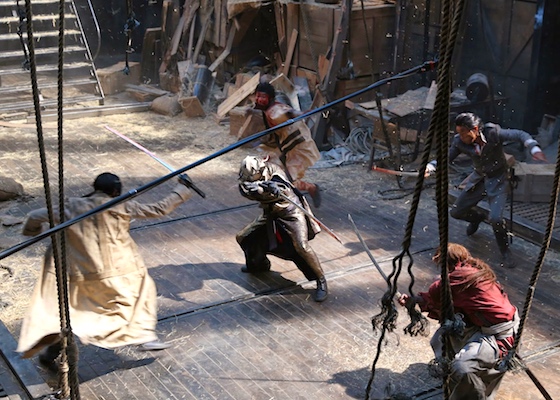
    Spot the period-accurate boom mic

    The second half is better, in particular the climax — it’s one big sword fight, of course, which is exactly how it should be in a film like this. Throughout the film the action is all excellently choreographed and staged, but the finale is the pinnacle of that. But aside from the thrilling combat scenes, the movie just doesn’t hang together as a satisfying conclusion to the trilogy. On a literal level the conflicts are resolved and characters are reunited, etc etc, but the way it goes about that business is, from a character or emotional perspective, lacking in impact. It’s a shame.

    As is a common fate among so many trilogy-closers, I thought Rurouni Kenshin 3 was sadly the series’ weak link. That said, it’s not a bad action movie — if you’re only in it for the swordplay then it satisfies with bells on; it’s the storyline around that is disappointing. Even while a significant chunk of its running time is somewhat underwhelming, at least the killer climax provides a suitable finale to the trilogy. Or it did until earlier this year, when they announced a fourth movie. Although my score errs on the harsh side, I’m still looking forward to Kenshin’s adventures continuing.

    3 out of 5

    Rurouni Kenshin: Kyoto Inferno (2014)

    aka Rurōni Kenshin: Kyôto taika-hen / Rurouni Kenshin Part II: Kyoto Inferno

    2017 #149
    Keishi Ōtomo | 139 mins | streaming (HD) | 2.35:1 | Japan / Japanese | 15

    Rurouni Kenshin: Kyoto Inferno

    The first live-action Rurouni Kenshin film was such a success that they followed it with a two-part sequel, filmed back-to-back and originally released six weeks apart over the same summer. This is the first half.

    After the events of the first film, former assassin Kenshin (Takeru Satoh) is living a peaceful life with his newfound friends, until he’s summoned by the government to take on a mission. Turns out one of Kenshin’s former assassin colleagues, the vicious Shishio (Battle Royale and Death Note’s Tatsuya Fujiwara), is amassing an army to take down the government that left him for dead. Well, less left him for dead, more killed him after they won the war because he was too nasty to let stick around. Previous efforts to stop Shishio have failed, so now they want Kenshin to sort him out. Our peace-loving hero initially turns the job down, but events conspire to convince him he must act, and so he sets off alone to once again face the demons of his past.

    Kyoto Inferno is one of those sequels that benefits from the its predecessor establishing the world of the story and the characters that inhabit it, meaning it can launch off on its own grander scale. Partly we see this in a material sense: it looks even more expensive than the first one, right from a fabulous fire-strewn opening location, and keeps up the visual impressiveness throughout. But it’s also in the scope of the story and the way it stretches the characters, both old and new. It really puts Kenshin through the ringer, testing and questioning his beliefs and principles, and his fighting skills too. As a film it finds power in that — whereas the first movie established his persona and gave it a bit of a work out, here he’s stretched to breaking point.

    Sword fights a-go-go

    Despite being only the first half of a four-and-a-half-hour epic, when compared to the original film the story here feels more streamlined, focussed, and pointed. It’s not perfect in this respect — at one point Kenshin’s mate Sanosuke sets off to help him, only to disappear from the movie until he suddenly appears during the final battle — but such lapses are few and do little to impact the overall flow. As a villain, Shishio is more of a force and a challenge for our hero, not least because he has an army of henchmen, as well as a literal army, on his side. The fights are even more accomplished, spectacular, and epically staged than in the first movie, not least the huge climax that sees a pair of armies duke it out in the streets of the titular city.

    Kyoto Inferno is unquestionably a first half — it ends on a handful of cliffhangers. That kind of thing sometimes irritates me, but it can work when done well, and I think this will turn out to be one of those good two-parters. It feels like a well-shaped movie in its own right, starting and paying off some of its own subplots rather than just leaving everything hanging. Some of these conclude in a way that is both an ending and indicates where the story will go next, which is a most deft bit of structure. The whole affair builds to a significant climax (the aforementioned battle) and a major turning point in the narrative, rather than just pausing events at the halfway point as lesser two-part movies do.

    Shishio and his hench-friends

    I enjoyed the first Rurouni Kenshin a lot, but this follow-up is even better. It expands the world of the story and deepens the characters, making for a more rounded and exciting movie. As mid-parts of trilogies (and/or first halves of two-parters) go, it’s more of a Dark Knight than a Matrix Reloaded; more of an Empire Strikes Back than a Dead Man’s Chest; more of a Two Towers than a Desolation of Smaug. Hopefully the next film can stick the landing…

    5 out of 5

    Tomorrow: the legend ends in The Legend Ends.

    Rurouni Kenshin (2012)

    aka Rurōni Kenshin / Rurouni Kenshin Part I: Origins

    2017 #143
    Keishi Ōtomo | 129 mins | streaming (HD) | 2.35:1 | Japan / Japanese | 15

    Rurouni Kenshin

    Based on a manga series that was previously adapted into an anime known in the West as Samurai X, this live-action adaptation was first brought to my attention by Total Film’s list of “50 amazing films you’ve probably never seen”, which cited its “stunning action sequences” and “beautifully choreographed sword-scraps”.

    Set in the late 19th century, the film is the story of Kenshin Himura (Takeru Satoh), who ten years ago went by the name Battosai and was a renowned fighter in the successful rebellion that brought Japan into a modern new age. Disgusted with his actions, he vowed never to kill again, becoming a wanderer (the rurouni part of the title) helping those in need, fighting with a blunted sword. When he arrives back in Tokyo, Kenshin finds that a murderer has adopted the name Battosai, whose killings are likely connected to powerful businessman Kanryu (Teruyuki Kagawa) to protect his illegal activities. Kenshin falls in with Kaoru (Emi Takei), the young owner of a fencing dojo under threat from Kanryu’s plans, and eventually teams up with acquaintances old and new to stop Kanryu and co.

    Kenshin and Kaoru

    I’ve never read or seen a version of Rurouni Kenshin before, so I don’t know how faithful this is as an adaption, but they’ve certainly crammed plenty of plot into its two hours. Viewers need to be a bit attentive to keep track of who’s who, and who’s working for who, and what their motivations are — for example, characters who initially appear to be villains, both because of their actions and our expectations of the story, are revealed to be good guys in short order. Having two characters called Battosai, one of whom has since changed his name but is primarily known by his old moniker to some characters, doesn’t help matters.

    It’s worth the small effort though, because, a few languorous patches aside, Rurouni Kenshin is a very entertaining movie. The heroes are a likeable bunch, even if Satoh looks too fresh-faced to have been a hardened warrior a decade earlier. I guess everywhere likes their pretty-boy leads. He also carries a little too great a sense of naïveté for that persona, but maybe that’s just faithful to the character as written. At least he seems to know his way around a fight scene. On the other hand, the villainous Kanryu is a delightful addition to the proud line of scenery-munching nemeses, his quirks underlined by a jaunty theme from composer Naoki Satō. He employs a couple of physically intimidating henchman too, which naturally serves to fuel the action sequences. As promised, these are excitingly staged, full of quick choreography and slick stunts. Couple their impressiveness with the large cast and varied period locations, and it gives the whole thing a glossy, big-budget feel.

    Ready for action

    In the years since it appeared on Total Film’s list with the note “worth importing”, Rurouni Kenshin has become much more widely available: in the UK it’s been available to stream and buy on disc for a couple of years now, and it even made it to the US in 2016. It still deserves more attention, I’d say, especially for anyone who likes a good bit of sword-based duelling.

    4 out of 5

    Tomorrow and Monday: reviews of the two-part sequel.