As discussed yesterday, I’m out of the country for a fair chunk of December, including when my regular monthly TV review is due. So to placate the ravenous need for my opinions about television that you will surely feel if such thirst goes unquenched for six-to-eight-weeks, here’s what I watched in the fortnight since my last TV post.

Crisis in Six Scenes
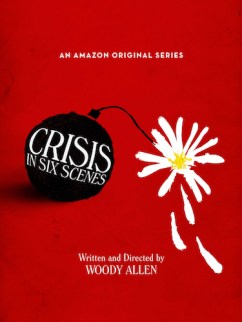 When Amazon started making a serious effort to challenge Netflix in the field of streaming original series, one of their early moves was the headline-grabbing signing of Woody Allen to create his first TV series. As has since become clear, Allen didn’t know what he was letting himself in for. To summarise his comments from various interviews (and read between the lines a little), it seems he had a view of TV that’s about 20 years out of date, and thought he’d be able to dash off something suitable between two of his annual movies. At some point he obviously realised how much more sophisticated TV has become, and coopted a movie idea he’d had on the back-burner to expand into a short TV season. Allen’s been vocal about how miserable he found this process, but I’m not sure if he’s aware that he made a rod for his own back: he essentially made three movies in two years instead of his usual two. It probably would’ve been wise to swap out one of the films for the TV series, but you get the sense that, despite having been shown TV’s burgeoned respectability, Allen’s still something of a film snob. Rather than the potential of TV coming as a revelation to him, he’s declared he won’t be making any more.
On the evidence of the single six-episode season we did get out of him, that’s neither here nor there: Crisis in Six Scenes is just a slightly-longer-than-average Woody Allen film split into instalments. The first episode is the worst offender in this regard — it doesn’t reach a climax of any description, it just stops. The rest of the episodes aren’t as blatant (episode five’s ending even feels like it’s genuinely meant to be the end of an episode!), but none of them are particularly satisfying as a discrete segment. I’m not really one for binge-watching — I get fidgety and want a change; or if a show’s too good, I want to savour it rather than race on — but I watched all of Crisis in one sitting, because at heart it’s just a chopped-up movie. Some characters or events are confined to a single episode, but you get the impression that’s almost incidental rather than a deliberate attempt to make six finite units. The main storylines flow between episodes like the boundaries are artificially imposed — which, in a medium without the constraints of broadcast time slots and where all the episodes are released at the same time, they are.
 But enough of the form — what of the content? This is not prime Allen, that’s for sure. At times it makes for uncomfortable viewing, when it’s hard to tell if it’s half improvised or if half the cast are just a bit doddery (and I suspect it’s the latter). Other bits do work, though, and while it isn’t massively rewarding it is amusing at times. Even less assured are some broadly political points that it seems like Allen is trying to tap into, or maybe it’s just incidental. He appears to be using the series’ 1960s setting as a mirror of the present: the plot concerns a twenty-something anti-government protestor, and there’s lots of talk about unnecessary wars, campus demonstrations, young people staging protests, rights for women and black people, etc, etc. At first blush these parallels are all well and good, but I’m not sure they develop into much more than wry observations. The best I can take from it is a result of the particularly farcical last episode, where it may be that he’s trying to say people in general should be more aware and active, like the young are — to walk the walk of political change rather than just talking the talk.
If he was trying to spread such a message, it’s a bit buried. Maybe he was just picking on some low hanging fruit. Considering Allen’s half-arsed attitude to the whole endeavour, I guess that’s more likely. Oh well.
The Grand Tour (Season 1 Episodes 1-2)
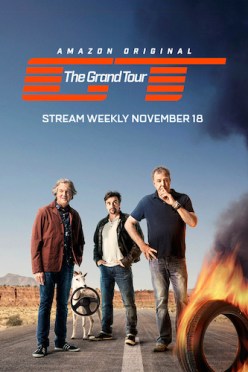 Another big gun in Amazon’s streaming mission, their £160 million “Not Top Gear, Honest” original series kicked off last month to widespread positive reviews and, apparently, big ratings (relatively speaking). I’m not really a ‘car person’, but like millions of others I wound up watching Top Gear during the height of the Clarkson / Hammond / May era for all the other hijinks. I thought it was going off the boil a bit even before their semi-enforced departure — I didn’t even get round to watching their last series. They come to Amazon after a short break (a long break for us, but it takes time to film these things, so, short break), and I think reinvigorated — possibly by the rest, possibly by the change of management, possibly by the huge budget.
There’s no denying that this is their Top Gear with just a few tweaks… unless you’re an Amazon lawyer, in which case it’s a completely different show. But the freedom from being a motoring programme on a public service broadcaster means they’re not quite so constrained by that remit. Episode 2, for instance, is half given over to them attacking a military training course in Jordan, a riff on Edge of Tomorrow in which they get to play at being action movie stars, and which features cars because action movies feature car chases, not because they’re actually reviewing how the motor performs while in a high-speed chase. There are still genuine car reviews, and they’re as dull / interesting (delete as applicable) as they always were. At least they’re excitingly shot and scored (still using cues from film music, as they always have).
Some bits are improved: the famous Star in a Reasonably Priced Car segment was always one of the weakest parts of the show (the track times were fun, but Clarkson is no interviewer), but here the need for celebrity guests is neatly pilloried. Conversely, a couple of things are weaker: their blatant attempt at a Stig replacement, The American, doesn’t really work. It’s also one of the bits that most feels “changed just enough to avoid a legal challenge”. I imagine there are only so many different ways to do a car show, so of course there are going to be similarities, but you could imagine them having done this as their next run of Genuine Top Gear (well, aside from the expense) without people thinking, “wow, they’ve completely changed the show!”
Still, it is what it is, and if you liked it before I can’t imagine you wouldn’t like it now, maybe even a little more.
Class (Series 1 Episodes 6-7)
 The Doctor Who spin-off that no one’s watching continues with two of its strongest episodes. A two-parter that isn’t, the first is a “bottle episode”, with most of the cast stuck in detention and forced to confess their secret feelings by an alien rock. Cue arguments. Not Class’ strongest instalment — it’s a good idea, but the characters haven’t amassed quite enough secrets over just five episodes to make it feel as cathartic as it should — but it’s considerably better than the weaker ones. Even better is the next episode, which shows what Quill was up to while the kids were bickering. A world-hopping quest (presumably paid for by saving so much money on episode 6), it has several good ideas that it burns through like they’re going out of fashion. It feels most like Doctor Who, too, which provokes no complaints from me.
Next time: the Shadow Kin are back, again. Ah well.
Also watched…
Castle Season 7 Episodes 16-21 — by sheer bloody coincidence, the night before flying from London to the US I watched the episode where Castle flies from the US to London and has to deal with a murderer and possible terrorist on his flight. Super timing.
The Flash Season 3 Episodes 3-5 / Arrow Season 5 Episodes 3-5 — the much-anticipated four-way crossover between The CW’s superhero shows finished last night in the US, which means it’s at least a few weeks away over here. I’ll say something about it next time, then. Or the time after.
Junior Bake Off Series 4 — the main thing I take from this is that all kids are incredibly clumsy and slapdash.
The Moonstone — the recent BBC adaptation of Wilkie Collins’ novel, which is generally regarded as the first full-length English-language detective novel. This decent miniseries version was produced for daytime, and was the kind of series certain viewers proclaimed was good enough for prime time. It wasn’t.
 Things to Catch Up On
This fortnight, I have mostly been missing Netflix’s Gilmore Girls revival, subtitled A Year in the Life. Rather than race through the four feature-length instalments between their release last Friday and our departure yesterday, we decided to save them for when we’re back, like a Christmas treat. Maybe we’ll just watch them in four days then instead, but at least we’ll feel like we have a choice.
Next time… a festive special, looking at what seasonal delights the tellybox has provided us with this year. As far as December 29th or so, anyway.

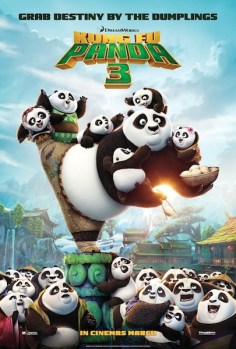 Po and co are back in a movie that bucks the sequel trend by being perhaps the best Kung Fu Panda yet.
 I hope for humanity’s sake the version on Sky Cinema retains the original voices.
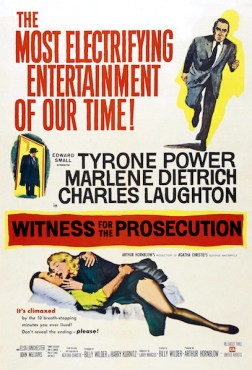 Charles Laughton and Marlene Dietrich shine in this adaptation of Agatha Christie’s play (in turn based on her short story), about a man accused of murder but who proclaims his innocence (Tyrone Power), the barrister who decides to take the case (Laughton), and the man’s wife who agrees to alibi him but seems somehow suspicious (Dietrich).
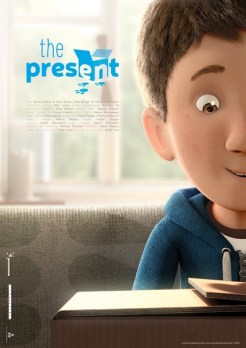 A short film about a boy and his dog, The Present was a graduation short for the Institute of Animation, Visual Effects and Digital Postproduction at the Filmakademie Baden-Wuerttemberg in Ludwigsburg, Germany (yeah, I copy & pasted that), which has since won more than 50 awards after playing at film festivals around the world. Reportedly it also single-handedly landed its animator/director a job at Disney — he went on to work on
 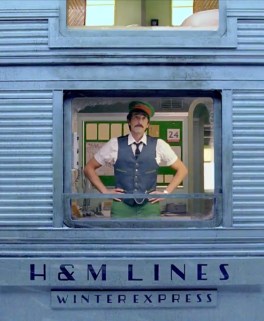 Christmas adverts are all the rage these days, thanks to the likes of John Lewis and their beautifully affecting tributes to the holiday season / twee pieces of emotionally manipulative crap (delete as appropriate). This year clothes retailer H&M got in on the act by hiring everyone’s favourite go-to example of an idiosyncratically quirky director, Wes Anderson, to helm a short film-cum-advertisement — the first part of that equation being why I’m reviewing it here.
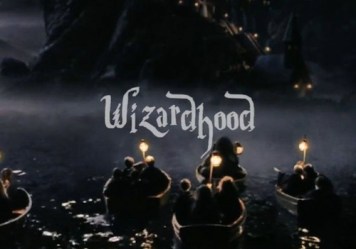 At the tail end of last month, a story did the rounds on entertainment sites about a fan edit that took the eight-film, 20-hour Harry Potter series and reduced it into a single movie that ran just 78 minutes — a reduction of over 93%. You see stories about these kind of fan edits all the time (or you do if you read certain sites, anyway), but I usually don’t get round to watching them. I mean, who has time for a dozens-of-hours supercut that puts every piece of footage from every Marvel movie (and short) into chronological order, or whatever? But as I was
 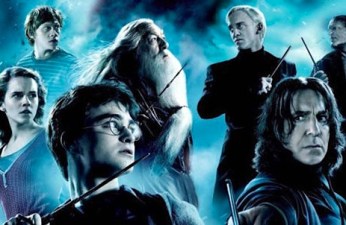 Wizardhood focuses in on the main narrative of Harry vs Voldemort, and the need to destroy the Horcruxes. In practice, that means there’s a chunk of
  The first live-action non-saga movie to take us to a long time ago in a galaxy far, far away, this initial entry in what is sure to be a never-ending series of so-called “Anthology” movies really puts the “War” into Star Wars.
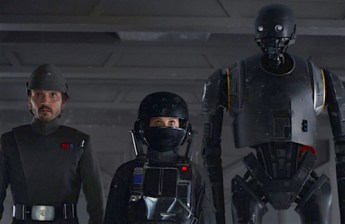 Unfortunately, the plot starts off almost as jumbled as my mixed metaphors there. “Jumbled” may be unfair, but it’s a little scrappy, initially jumping around all over the place in a way that’s tricky to follow even if you’ve read up on the film and have an idea who you’re being introduced to and why. It must be a right pain for neophyte viewers. There can be a fine line between praising a film for requiring its viewers to pay attention and do some work, and criticising it for being disarrayed and not making things clear. Personally, I thought Rogue One was sat right on that line for much of its first act, until a few big expositional infodumps come along to explain the storyline.
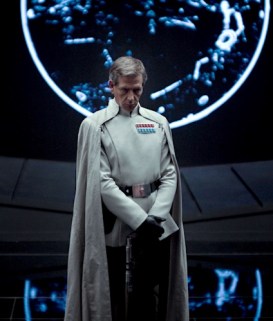 Then we come to perhaps the film’s most discussed character: Grand Moff Tarkin, played by Peter Cushing’s computer-generated face overlaid on the motion capture and voice of
 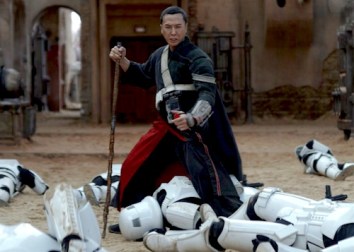 Continuing such comparison to the wider Star Wars galaxy, some have said Rogue One is the
  Much discussion of Rogue One seems to have revolved around whether it’s better than The Force Awakens. At the risk of sitting on the fence, I can see both sides. On the one hand, Edwards is a much more interesting filmmaker than J.J. Abrams. The latter is adept at aping the work of others, having now been in charge of multiple movies that are mostly derivative but nonetheless entertaining. Edwards’ career is still a little fresh and blockbuster-centric to risk describing him as an auteur, but his
 I’m not sure I’d even heard the name Jeff Nichols before Midnight Special came along, at which point most of the gushing reviews that followed seemed to mention him with cult-like reverence. He’s the writer and director, by the way, for anyone still in the dark, and unbeknownst to me (and, I rather suspect, most people outside certain cinephile circles) he’d amassed something of a following over his first three movies (
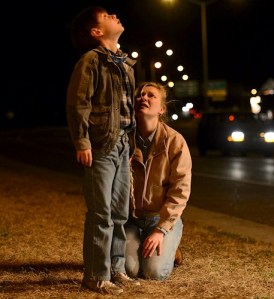 straight-up Spielberg rehashes we’ve seen over the past four decades; conversely, a strand of wilful obscurity means it may be ultimately less satisfying. Again, some people derive satisfaction explicitly from that lack of resolution or explanation, while others will find it damagingly frustrating. Even more than Spielberg, I felt the thing most evoked by this structure was
  I thought they perfectly conveyed what they were intending to convey — usually, just a kind of otherworldly light. It’s not like it’s even over-stretching its means, like so many network TV series or



 Favourite Film of the Month















 100Films.co.uk