2015 #177
Gore Verbinski | 149 mins | streaming (HD) | 2.35:1 | USA / English | 12 / PG-13
 Hated by Americans and loved (well, ok, “liked”) by everyone else (well, ok, “by lots, but by no means all, of people who reside outside America”), Disney’s attempt to pull a Pirates of the Caribbean on Western adventure IP The Lone Ranger is by no means as successful as the first instalment in their piratical franchise, but is at least the equal of its sequels — and, in some cases, their better.
The convoluted plot sees us arrive with John Reid (Armie Hammer) in the frontier town where he grew up, where his brother Dan (James Badge Dale) is now sheriff. Construction of the railroad is running by the town, spearheaded by Latham Cole (Tom Wilkinson), who letches after Dan’s wife (Ruth Wilson); but work is plagued by a band of outlaws led by Butch Cavendish (William Fichtner). Receiving information on his whereabouts, Dan rounds up a posse and heads out to tackle him, with John insisting on tagging along. Unfortunately it’s an ambush and they’re all slaughtered (oh dear)… except John just about survives, and is found and nursed back to life by a Native American, Tonto (Johnny Depp). He has his own grievances, and together they set out on a mission of revenge.
And if you’re wondering where Helena Bonham Carter is in all that: despite her prominence on many of the posters, her role is really just a cameo. That’s marketing, folks.
 I know some people complain about simplistic stories that are used to just string action sequences together, and that’s a perfectly valid thing to get annoyed about, but The Lone Ranger swings to the other extreme and uses an over-complicated story to string together its action sequences. All it actually needs is a little streamlining, because the film is allowed to swing off into too many sideplots. This makes the middle of the film a slog, and you feel every minute of its excessive two-and-a-half-hour running time.
That slog is made worthwhile by what comes before and after said middle: a pair of train-based action sequences that are each truly fantastic. The second, in particular, is arguably amongst the grandest climaxes ever put on screen (providing you don’t feel it’s tipped too far into being overblown, of course). It’s inventively choreographed, fluidly shot, and perfectly scored with just an extended barnstorming version of the Lone Ranger’s theme music (aka the William Tell Overture). It’s an adrenaline-pumping action sequence that single-handedly justifies the entire film’s existence, if you’re into that kind of thing.
With multiple trains, horses, actors, guns, stunts, and copious CGI to tie it together, that sequence must’ve cost a bomb. Notoriously, the whole film was deemed too expensive and Disney insisted the budget be slashed, resulting in delays… and it still cost a fortune. That, quite apart from the negative critical response in the US, is a big part of why it flopped at the box office — 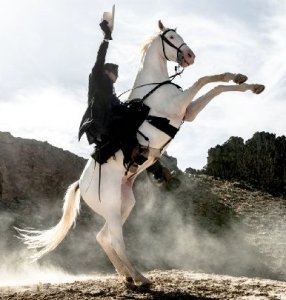 a recurring problem for Disney at the minute. To be frank, I’m not convinced anyone made a truly concerted effort to stem the overspend. When a gaggle of CG rabbits hopped on screen, all I could think was, “who allowed this?!” You’ve got a massively over-budgeted film that the studio want cut back, and one reason for that is CG bunnies that have almost no bearing on anything whatsoever! The amount of time and effort that must’ve gone into creating those fairly-realistic rabbits for such a short amount of screen time… it cost millions, surely. Millions that could’ve been saved with a simple snip during the writing stage if only someone had said, “well, those bunnies don’t add anything and they’ll be bloody expensive, so let’s lose them.”
So criticism is not unfounded, but the film doesn’t deserve the level of vitriolic scorn poured on it by the US press and, consequently, public. Discussing this, the “critical response” section on the film’s Wikipedia page is interesting, and this part pretty much nails it:
Mark Hughes of Forbes, analyzing what he felt was a “flop-hungry” press desiring to “control the narrative and render the outcome they insisted was unavoidable” for a highly expensive movie with much-publicized production troubles, found the film “about a hundred times better than you think it is … [a] well-written, well-acted, superbly directed adventure story.”
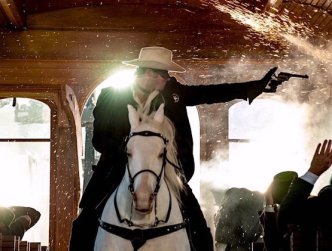 I’m not quite as effusive as Hughes, but The Lone Ranger is worth the time of anyone who enjoys an action-adventure blockbuster. It’s a three-star adventure-comedy bookended by a pair of five-star railroad action sequences, which make the trudge through the film’s middle hour-or-so feel worthwhile. There was a better movie to be made here — one that was half-an-hour shorter, more focused, and probably several tens of millions of dollars cheaper to make — but that doesn’t mean the one we got is meritless.

 Mumble and his penguin pals return for another adventure, in a series the Australian film industry are reportedly inordinately proud of.
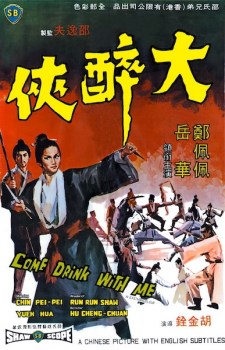 The first wuxia film directed by King Hu (King Chuan, that’s Hu! #MildlyRacistHomophoneJoke), the success of which allowed him to make his next even-more-significant movies in the genre, Come Drink with Me sees a gang kidnap the governor’s son to use him as leverage to release their leader. Instead, the governor sends his daughter, Golden Swallow (Cheng Pei-pei), to rescue her brother. She receives some help from local drunkard Fan Da-Pei (Yueh Hua), who may be more than he’s letting on…
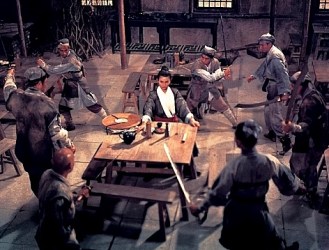 But this is a structural niggle, really. There’s so much else to enjoy — not just the action, but some amusing scenes, engaging characters, strikingly brutal villains (they not only kill a child (you wouldn’t get that in most movies) but they do it for no particular reason), and beautiful widescreen Technicolor cinematography — that it doesn’t grate too much.
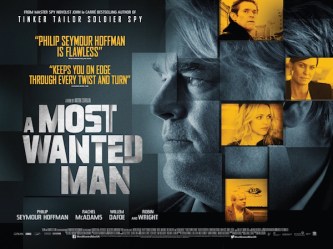 John le Carré adaptation starring Philip Seymour Hoffman as a German secret intelligence operative who must battle internal politicking while tracking a political refugee who may actually be a terrorist.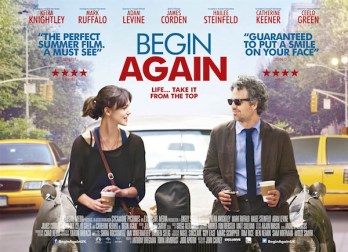
 The word “prequel” was first coined in the ’50s, arguably entered the mainstream in the ’70s, and was firmly established as a term everyone knew and used in the ’90s by the Star Wars prequel trilogy. Works that can be defined as prequels predate their naming, however, and surely one of the earliest examples in the movies must be this silent German horror.
 Regarded as one of the first horror films, The Golem is more of a moderately-dark fantasy, or a fairytale-type myth. There are clear similarities to Frankenstein, though I don’t know if either influenced the other. However, it does feature what I presume is one of first instances of that most daft of horror tropes: running upstairs to escape the monster. It goes as well here as it ever does, i.e. not very. Said monster looks a bit comical by today’s standards. Built by the rabbi to defend the Jewish people, he immediately uses the hulking chap to chop wood and run errands — he doesn’t want a defender, he wants a servant! A terrifying beast nonetheless, it’s ultimately defeated because it picks up a little girl for a cuddle and she casually removes its magic life-giving amulet.
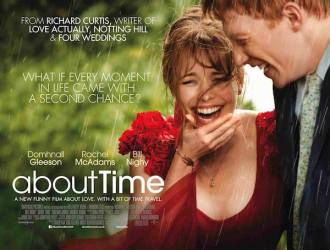 After Tim (Domhnall Gleeson) learns he can time travel back through his own life, his father (Bill Nighy) cautions him not to attempt anything too drastic — so he sets about finding love.
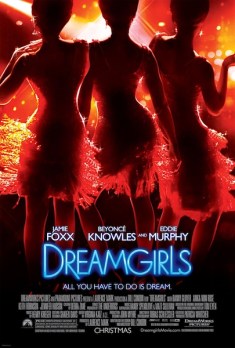 Oscar-winning adaptation of the stage musical that doesn’t tell the story of the Supremes in fictionalised form, no sir.
 Adapted from the classic young adult sci-fi novel by Orson Scott “bigoted idiot” Card, Ender’s Game is the story of Andrew “Ender” Wiggin (Asa Butterfield), who displays uncommon aptitude in a military programme to train children to fight against an alien race that attacked Earth decades earlier. Sent to a training centre in space, Ender must battle his fellow candidates to prove their worth to their hardened commander, Colonel Hyrum Graff (Harrison Ford), ready for the real battle to come.
 It tips its hat to things like drone warfare, child soldiers, and understanding our enemy, but that’s all it does: acknowledge those parallels exist, then refuse to explore them. Conversely, the music is too heavy-handed, taking on the burden of providing emotion that’s lacking from the screenplay.
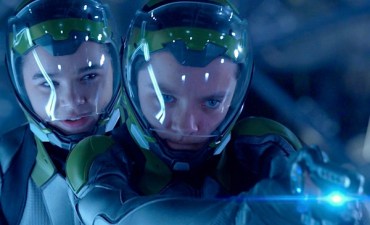 Sadly, after all that training fun, once the cadets jet off to the other side of the galaxy for a rushed third act, interest evaporates speedily. It even has to work hard to sell its own twist as a twist! (Spoilers follow in this paragraph.) In a simulation for a war, Ender does what he’d do to win that war. Then he’s told it wasn’t a simulation, it was the actual war… and he’s all cross. I mean, okay, the fella kinda has a point when he gets angry afterwards: they’ve lied to him, and maybe he would’ve behaved differently if he’d known. But the point of the training was to teach them what they needed to do to win, and it taught them that, and he did it. Maybe this twist works in the book, but in the film it felt somehow unearned.
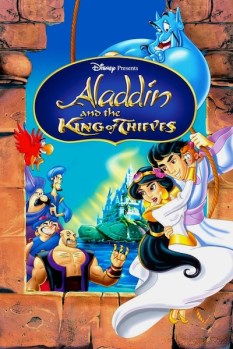 For most of the ’90s and ’00s, Disney churned out direct-to-video sequels to many of their most beloved animated classics. They have a reputation for being unremittingly awful, hence why Pixar’s John Lasseter put a stop to their production after he became Disney’s Chief Creative Officer in 2006. Despite that reputation, however, there are those who say one or two are actually quite good. One of those (and the only one I’ve previously seen) is
  are to be found with the forty thieves… I expect you can guess where that’s going. Fortunately the film gets there pretty quickly, then transitions into a story about the possible redemption (or not) of Cassim alongside the quest for the Hand of Midas, capable of turning whatever it touches into gold (natch).
 100Films.co.uk