Carol Morley | 102 mins | streaming (HD) | 1.85:1 | UK / English | 15
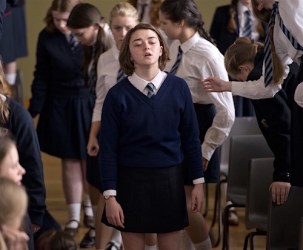
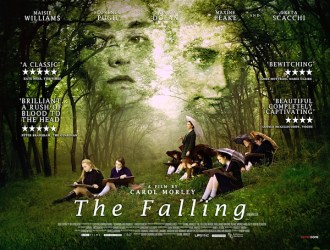 Inspired by real events, The Falling stars Game of Thrones’s Maisie Williams as Lydia, a 1960s teen with an awkward home life who is a student at a repressive girls’ school. She’s best friends with the popular and charismatic Abbie (newcomer Florence Pugh, next to be seen as the lead in Lady Macbeth (which seems to have bugger all to do with Shakespeare)). When Lydia starts fainting for no apparent reason, it leads to a fainting epidemic at the school that no one can explain. Is it caused by illness? Fakery? Something psychological? Or possibly even some kind of dark magic?
On Amazon Instant Video (where it’s available free to Prime subscribers from today), The Falling is billed as “a mesmerising psychological drama”, which isn’t too wide of the mark. However, presumably because of the prominent pentagram on the cover image there, all of the “customers also watched” recommendations are called things like The Exorcism of Molly Hartley, The Houses of Halloween, Haunt, Demonic, and Sinister House, or are other obviously-cheap-trashy-horror-looking films with less blatant names (like The Canal, Awaiting, and Robert (chilling!)). No wonder it has a low user rating if it’s a “psychological drama” being mainly watched by people who choose to pay to watch that kind of low-rent horror crap!
The Falling is certainly not low-rent horror crap. Is it a horror movie? Not really — there are no monsters, no jump scares, none of the obvious tropes; but it does have a distinctly unnerving air a lot of the time, and there are definite references to and hints about some kind of mysticism playing a role. It’s often incredibly atmospheric, with some beautiful cinematography courtesy of DP Agnès Godard and effective editing by Chris Wyatt.  Writer-director Carol Morley has kept the pace and tone slow, in an enchanting rather than ponderous fashion, but it’s a “not for everyone” pace nonetheless. For me, it only really lost its way as it moved into its final stages. Without wanting to spoil where it goes, in my opinion too much was explained, but at the same time it explained nothing.
Indeed, I feel it might’ve fared better overall if it had stuck with the magical-realist / folk horror / olde-worlde magik styles it veers towards early on. But then Lydia says she’s a rationalist, and I suspect Morley is too, and so they well know that such things as spells and lay lines have no bearing on the real world. If one wants to present the possibility of a real-world explanation for the film’s events — and, as they were inspired by actual events, I presume Morley does — leaving things at “because magik” isn’t going to cut it.
The immediately obvious explanation — certainly as far as the school’s teaching staff are concerned — is that the girls are faking for attention. One comment-review on a website asserts that “one of the central questions of the film is whether or not the girls were faking their illness,” before going on to outline how this could’ve been improved to make the film into an “entertaining thriller”. I think this is a prime example of reviewing what the reviewer expected or wanted rather than what they were given, because it didn’t seem to me that the issue of fakery was the “central question” here. Of course, that’s only my interpretation of the filmmaker’s intent, so no more or less valid than this other commenter’s; but I really don’t understand how you can watch The Falling and think it was anyone’s goal for this film to be considered an “entertaining thriller”. It’s simply not that kind of movie.
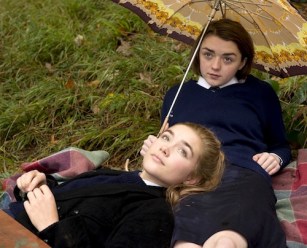 An element I do think was at the forefront of consideration is sensuality and sexuality, which plays a large and significant part in the film. Pretty much any movie bar “bawdy high school comedies starring obvious twentysomethings” seems to veer away from schoolgirl sexuality these days, wary of inevitable “OMG u a pedo” reactions, I guess. Sexuality does not equal pornography, though; and, as I alluded, here it’s played out as much through a heightened, tactile sensuality. It does probably ‘help’ that it’s a film written and directed by a woman — it would carry a very different, more Lolita-ish air if it had been written or directed by a man. What exactly it’s saying with all this is arguably as mysterious as the cause of the fainting epidemic, but then it’s all tied together: teenage years are a period of sexual awakening, of course, and if you’re in an environment where nearly everyone is of the same gender, and where such things are massively repressed… well, how is it going to manifest itself? If “sex” is somehow the cause of the fainting, it’s not because sex is bad, it’s because there’s no other appropriate outlet for it.
Or maybe that’s got nothing to do with it at all.
A lot of this has to be carried on the shoulders of a relatively young cast, but all are capable. Maisie Williams is by far the best known of the girls, though viewers of Ripper Street will recognise Anna Burnett. She was good in the Victorian detective series, but she’s even better here. Williams gives a strong performance too, afforded the ability to show some range and variety from Arya Stark (unlike her appearance in the currently-airing Doctor Who two-parter-that-isn’t, for instance). There’s also a quality adult supporting cast, including the likes of Maxine Peake (in an initially quiet but ultimately key role), Greta Scacchi, and Monica Dolan, while Peaky Blinders’ Joe Cole acquits himself well in the subtly complex role of Lydia’s brother.  Best of the lot, however, is Florence Pugh. Reportedly discovered when The Falling’s casting directors visited her school, you can see why she’s quickly been snapped up for a leading role. I wouldn’t be surprised if Hollywood come knocking looking to make her the next Kate Winslet/Keira Knightley/Gemma Arterton/etc “English rose”-type lead in some blockbuster or other.
The Falling is an odd film, really; though in many respects that shouldn’t come as a surprise. Some will love it; many will despise it. Personally, I felt a lot worked very, very well, but the bits that didn’t, well, didn’t. For what it’s worth, I ranked it 3.5, aka 7, on sites that have half-stars or are out of ten. It would’ve been a solid 4 if not for those niggles, but equally they’re not so bad to drag it down to a 3. Some viewers seem to put the niggles aside entirely and push it up into the 4.5 or even 5 margin; for others it doesn’t work at all, dragging it down much lower. Everyone’s reaction to any film is completely subjective and personal, obviously, but this is the kind of film where it’s more true than others — you can’t pigeonhole it like you can a superhero actioner, or a rom-com, or, well, most movies, to be honest. It’s part high school coming-of-age drama, part supernatural thriller, part kitchen sink drama, part arthouse tone poem. How well that uncommon mix works is entirely down to the individual viewer’s personal predilections.
 For me, it’s the kind of film that, with time and subconscious reflection, I may come to remember more fondly and be keen to see again, or all but forget. It’s the kind of film I could, without even re-watching it, re-evaluate and want on my year-end top ten, or could see on my top ten contenders long-list come January 1st and wonder, “dear God, what was I thinking?!” It’s the kind of film I’m not sure I wholly liked, but I’m glad I’ve seen.

As mentioned, The Falling is available on Amazon Prime Instant Video from today.
 This is one of those films that crops up in the daytime TV schedules now and then and I’d always paid little heed to, because no one else seemed to. Then I read
  Here, there’s a good 45 minutes or so of mystery before said reveal. Obviously, therefore, it would work better as a fresh viewing experience if you didn’t know that going in; but it’s so fundamental to the setup (despite the focus on Philippe, it’s their story) that I wonder if anyone has ever seen it without knowing? On the bright side, it doesn’t really matter: this is not a film where the ‘big twist’ is the point.
 but Philippe occasionally addresses amusing asides to God, for example. It even wisely dodges special effects… most of the time. The few occasions on which it does make motions in that direction, it demonstrates why it was wise not to attempt them more thoroughly. These days they’d slather on the CGI, but shying away from such things is not just due to a lack of technology: it’s far more magical to not be too explicit.
 That’s the kind of age when one might be liable to fall in love with it; or, at least, people of (very roughly speaking) my generation would — I suppose Kids These Days fall in love with copious CGI, be that animated or ‘live action’. Anyway, I think it deserves to be less overlooked, and if you’ve never caught it (or not for a while) it certainly merits a chance.
 After watching
  It’s probably not fair to judge The Crying of Lot 49 by normal moviemaking standards. As a high school project to summarise a novel in a few minutes of video (which it may or may not be), it’s probably alright. Otherwise, though, it’s not worth the seven minutes; not even for die-hard fans of the author and/or novel. It is, you might say, a W.A.S.T.E. of time. #injoke
 Screened at the London Film Festival earlier this month, then made available on MUBI in the UK (where you can, if you want,
  That’s the whole movie, more or less. I haven’t spoiled it for you because you’re not going to watch it because why would you? There is no discernible story or meaning; there is no characterisation; there is nothing but imagery and snippets of moments that signify nothing. It is a movie that has deliberately left out any explanations. Apparently the director has said it’s all a criticism of global capitalism, or something. Even with that extra-filmic information, it’s still difficult to ascertain much meaning. This isn’t realism — this isn’t avoiding “hello, person who is my brother” dialogue — this is obtuseness for obtuseness’ sake.
 In 2006, the body of 38-year-old Joyce Vincent was found in her London bedsit, surrounded by Christmas presents and with the TV still on. Sad, but largely unremarkable, were it not for the fact that she’d been dead for three years.
 Some people seem to view this as little more than a detective mystery, and are frustrated that Morley ‘chose’ to leave out details. I guess such critics have no understanding of things like confidentiality (when it comes to why Joyce was in a women’s refuge and what she disclosed there), rights to privacy (if the family don’t want to be interviewed, you can’t force them), the realities of investigating a real-life case (maybe some people who knew her in those final years just don’t want to be found), or human decency (Joyce led a fragmented life that came to a terribly sad end, and all you can think about is why she didn’t leave a few more clues around for you to deduce what happened and why?!)
 On the more considered side of the internet, there’s a reasonable debate to be found about the filmmakers’ right to tell the story at all. Joyce kept her life story secret even from some of her closest friends, and yet here it is being picked over in a movie for anyone to see. Is it moral to do such a thing? Should she not just be left in peace? Are the extraordinary circumstances of her death a good enough reason for this level of prying? Surely her death and how it came to occur needs to be understood, though, and surely the only way to do that fully is to examine her life. But is that not the business of inquests and the like, not films? But then, the filmmakers seem to have dug up information the inquest didn’t get close to unveiling. Perhaps the question is, when does society’s interest justifiably overtake the rights of the individual? Does it here? I’m not sure. Maybe.
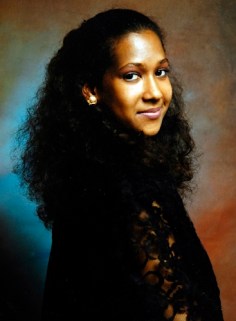 Nonetheless, these flaws can’t detract from the fundamental power of the story being told. If you come away from this thinking not about how sad it was for both Joyce and the people who knew her (especially Martin, especially in the film’s final moments), or what you should or could perhaps be doing better in your life, but instead being angry that it didn’t satiate your ghoulish need for full and frank revelations… well, I don’t know what to say about you, but it wouldn’t be very nice. Through this incident, Morley and her interviewees are really making bigger points about our society and our relationships. It’s no one’s fault, per se, that this happened to Joyce, but that it can happen is horrendous.
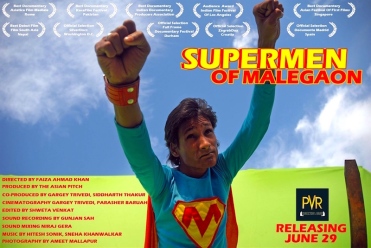 In the impoverished Indian town of Malegaon, everyone either works on the power looms and is paid a pittance, or is unemployed and so has even less; apart from the women, who are squirrelled away out of sight at home. The population is 75% Muslim, the remainder Hindu, and that leads to tension. Outside of work, there is nothing to do for entertainment… except go to the movies. And Malegaon loves the movies.
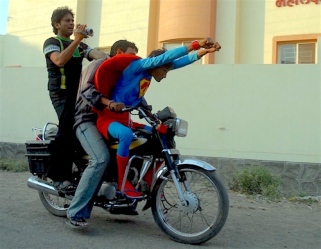
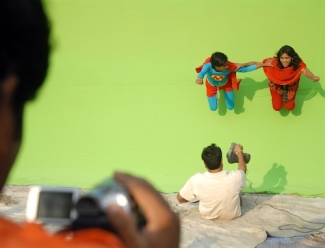 Supermen of Malegaon is the making-of story of Nasir’s most ambitious production to date. Having seen the use of greenscreen in one of those behind-the-scenes outtakes, he realised he could use the process to make a special effects movie — specifically, to make Superman fly to Malegaon. This documentary follows the trials and tribulations of Nasir and his band of hobby filmmakers through their film’s writing, planning, and its sometimes troubled shoot, until it’s completed. In the process, we meet some genuine characters, learn something of the unique lifestyle of Malegaon itself, and maybe even learn something about ourselves too.
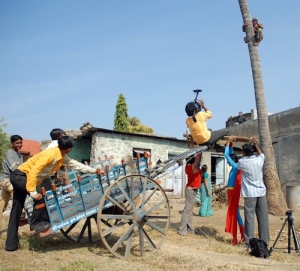 Even if it doesn’t, the situation in ‘Mollywood’ is an interesting one. This is a cottage industry: everyone involved has day jobs, funding the movies out of their own pocket, or by borrowing cash, or with favours, or by selling in-film adverts to local businesses — yes, that’s right, product placement, not that anyone involved would know that term. Women from Malegaon cannot appear in or work on the films due to local attitudes, so actresses are hired from nearby villages; the screenplay is written and shooting schedule arranged so that the actress only needs to be involved for the minimum number of days, to save money. Bicycles and motorbikes are used to create tracking shots; the director gets a piggyback for a high angle, or is raised and lowered on the arm of a cart to create a crane shot. The ingenuity and inventiveness of these literally-self-taught moviemakers is astonishing.
 which he turns down because he could make four whole films for that much money. Even that little is scraped together. Mollywood moviemaking isn’t a money spinner, it’s a hobby. Still, one of the writers wants to make it as a proper writer; wants to go to Bombay and do it as his career. This has been his aim for 15 years, he says, and Bombay is no closer.
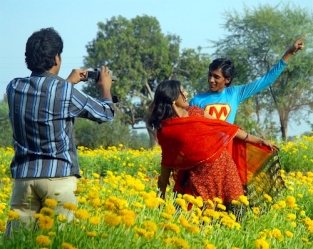 It’s an incredible, one-of-a-kind film; more powerful and life-affirming than it perhaps has any right to be. But then the filmmakers of Malegaon don’t really care about such things. They make movies because they want to, whether they ‘should’ or not; they make them better than you might expect; and it enriches their lives. Their story may do the same for you. In my opinion, it’s an essential film; a true must-see.
 After the
  Perhaps it’s just because she’s clearly struggling with an atrocious variable accent, the quality of which makes it rather distracting whenever she opens her mouth. Having used Moriarty plenty, the series finally accepts that he’s dead and moves on to his right-hand man, Col. Sebastian Moran. Considering the identity of the conniving colonel is a mystery for most of the movie, however, his involvement is perhaps no great shakes.
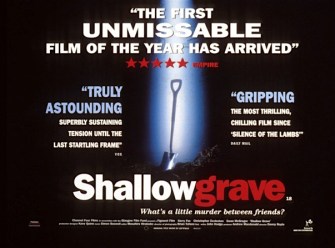 The debut feature of director Danny Boyle was hailed on release for being a British film that wasn’t another period-piece literary adaptation. Instead, it concerns three ultra-chummy flatmates in contemporary Edinburgh (Ewan McGregor, Christopher Eccleston, Kerry Fox) who take in a fourth lodger, who promptly dies, leaving behind an insane amount of cash. Rather than report it, they dispose of the corpse and keep the cash. You don’t get much further from Merchant-Ivory than that.
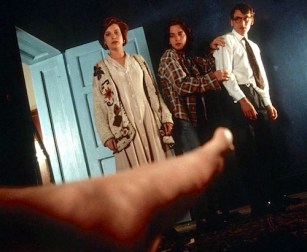 Consequently, it has that great discussion-generating feature of many a zeitgeist-y ‘watercooler’ film: what would you do?
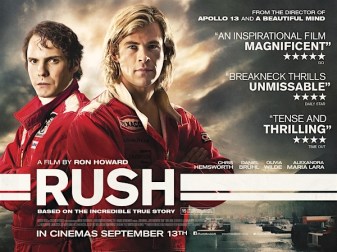 Screenwriter Peter Morgan (of
 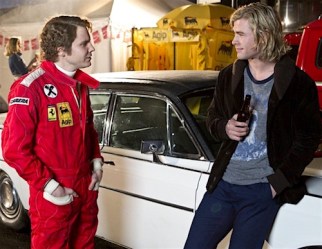 I presume the point of engaging with their personal lives away from the track was to add depth; to make sure it was a two-hander, rather than just about one or other of the drivers, and to ensure Hunt wasn’t just two-dimensional. However, without any growth on his part, or even some kind of active change, he’s just as flat, only now the star of some pointless scenes.
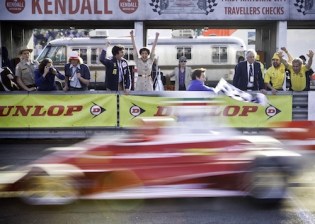 If that narrative fits snuggly into familiar plot beats, what are you meant to do? Change the truth to make it less like fiction? That’d be a first. Saying that, I’m taking it on faith (based on comments in the making-of) that the true story was so perfect you wouldn’t believe it if it had been fiction. Maybe they did streamline it. But assuming it’s real… well, it’s not the filmmakers’ fault if life imitates art.
 All in all, I’m a little surprised how well-liked Rush is. I mean, as of posting it’s at #162 on


 #119 Go (1999)
 #126
#126 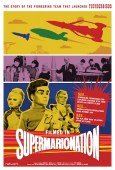 #134 Ed Wood (1994)


 Favourite Film of the Month










































 100Films.co.uk