
Chanwook Park | 115 mins | DVD | 2.35:1 | South Korea / Korean | 18 / R
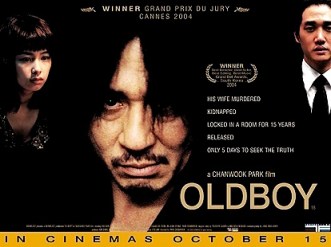 Perpetual drunkard, but also loving husband and father, Oh Dae-su (Min-sik Choi) is snatched off the street and imprisoned in a shabby bedsit without explanation. He learns that his wife has been murdered and he’s being blamed. His daughter lives, but he doesn’t know where. Then, 15 years later, and equally inexplicably, he’s released. He befriends a sushi chef, Mi-do (Hye-jung Gang), before being contacted by Woo-jin (Ji-tae Yoo) who claims to have been his captor. Dae-su is given just five days to discover why he was locked up. If he succeeds, Woo-jin will kill himself; if he fails, he will kill Mi-do. Dae-su’s investigations lead him to dark secrets, shocking revelations, and violent retribution.
It’s hard to summarise the effect of Oldboy without just watching it. As its premise hopefully conveys, it’s not wholly set in a world you can believe as our own, but nor is it an outrageous fantasy — maybe someone somewhere does run a kind of boarding house for illegal imprisonment? Stranger things have happened. It’s a film predicated on mysteries, but one that doesn’t rely on remaining mysterious — there are answers for every question, you just have to follow the strange path it leads you on and wait for the answers. Try not to get spoilered. (That said, it does have a (deliberately) ambiguous final end, but at least by then it’s answered the questions it started out with.)
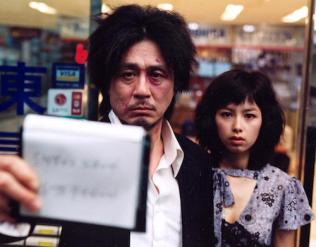 Choi is excellent in the lead role, deserving of all the praise he’s garnered. It’s a highly unusual role with a lot of different and sometimes conflicting facets, but he pulls it all off with aplomb. He maintains a sense of mystery and unknowableness throughout, whilst also being a plausible human being in an implausible situation. As his adversary, Yoo makes for an excellent villain: calm, businesslike, always with the upper hand. The final confrontation is a scene to be savoured, calling to mind everything from James Bond to David Fincher (for me, at least) in terms of the villain’s slick lair and the twisted events that unfold in it.
Director Chanwook Park has a sure handle on proceedings, guiding the viewer through a sometimes tricky narrative. There’s also a distinct visual flair, exhibited not least in the infamous corridor/hammer fight sequence. Shot in a single-take from a vantage point that emulates side-scrolling computer games, it’s justly famed. The film as a whole is frequently gorgeously shot by DP Jung Jung-hoon, though at times it’s hard to tell if the DVD encode was obscuring some visual majesty or if it was just the film’s unusual look. May be one to get on Blu-ray, then.
Having garned acclaim in the West, it was inevitable we’d see a Hollywood remake of Oldboy. Bizarrely, Steven Spielberg and Will Smith were attached for a while, but it ended up coming to fruition in 2013 under the guidance of Spike Lee and starring Josh Brolin. It seemed to pass by almost unnoticed. Without having seen it (yet), it’s a little difficult to understand how a remake might work. Some people would say that about all remakes, but personally I don’t think it’s an automatically worthless or artistically unjustified process to engage in.  In Oldboy’s case, however, so much of what makes it special, unique and exceptional lies in the direction. So do you copy that wholesale? If you do, what’s the point — just watch the original. But if you don’t, what’s the point — you’re losing a large chunk of what’s special. I guess this is why the US version didn’t go down so well — whichever path it took, it was on a hiding to nothing. I look forward to seeing it to judge for myself.
Oldboy — original flavour — is kinda crazy, kinda disturbed, but kinda brilliant for it. It’s exactly the sort of thing that would never, ever pass “what would make a good film?” focus grouping, for so many reasons, and yet the result is quite incredible.

Oldboy placed 7th on my list of The Ten Best Films I Saw For the First Time in 2014, which can be read in full here.
It was viewed as part of my What Do You Mean You Haven’t Seen…? 2014 project, which you can read more about here.
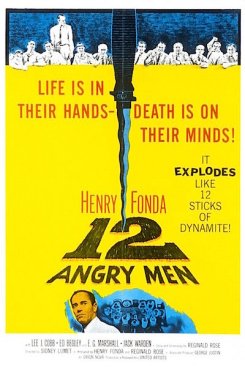 Twelve people sit around in two rooms and talk for an hour and a half in more or less real time — sounds like a recipe for dull pretension, and yet 12 Angry Men is anything but. In fact, it’s probably one of the most gripping thrillers ever made.
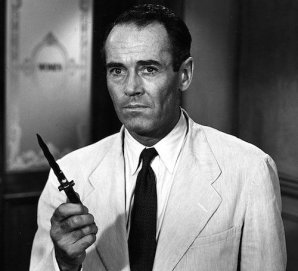 Slowly, steadily, surely, Fonda’s juror leads a recap of the evidence, analysing it, picking it apart, challenging presumptions and suppositions. Gradually, other jury members begin to be won over. This could be trite — of course our hero has to start convincing the others — but this is where the writing and cast shine again, because even men who seemed unswayable have their minds changed in a plausible fashion. Even then, the outcome rarely seems certain, each victory hard won, so that the film holds you rapt, desperate for sense and reason to prevail. There are moments of tension which may literally push you to the edge of your seat; moments of exultant success which may elicit an exclamation of approval similar to a point scored in a sports match.
 For all that 12 Angry Men seems to show justice being served in the face of adversity, what it actually shows is justice being served thanks to blind luck: if Juror Eight had been a weaker-willed man, or another who was just as prejudiced as his eleven compatriots, then the debate would never have occurred, the teenager condemned to death in the blink of an eye. What are the odds on every jury room containing a Henry Fonda? I don’t fancy them myself.
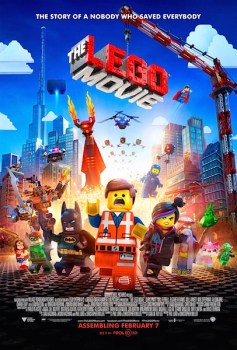 Despite looking like a 100-minute toy commercial with an irritating theme song, plus a moral message about nonconformity that seems like it’ll get bungled (but doesn’t), The Lego Movie is so much more — and better — than that.
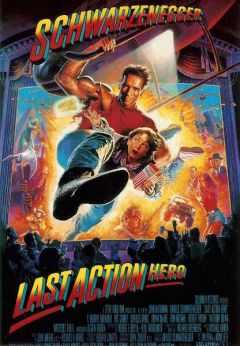 The first film to be advertised in space (
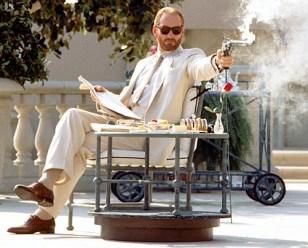 That said, it’s probably a good thing this isn’t a whole movie of “fictional characters in the real world” — you can imagine how that would play out; all the predictable “fish out of water” hijinks. However, at just over two hours, this isn’t a short film, and cutting out some of the middle wouldn’t have hurt.
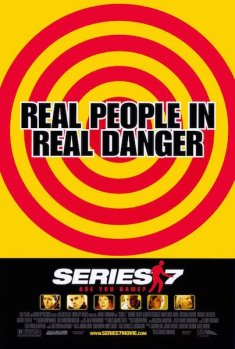 The debut of director Daniel Minahan — who’s since helmed episodes of over a dozen TV shows, including HBO hits
 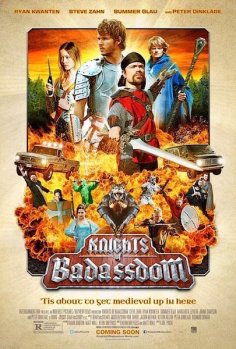 After being dumped by his long-time girlfriend, Joe (
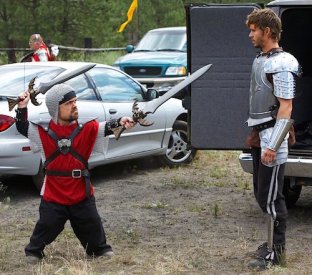 It’s a fine line to tread, and it seems to me that Knights of Badassdom manages it well. You get a sense of why people choose to do this and the fun that it can be — indeed, the final epic battle between the two factions of LARPers, complete with grand pre-fight speeches from each army’s general, and an awesome surprise, is kinda cool. Equally, the film doesn’t hold back from riffing off the sillier aspects of LARPing, including the rules of combat.
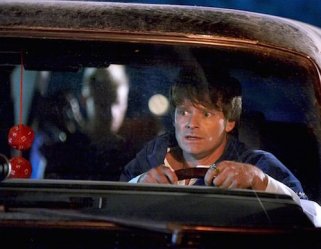 if that’s your bag, there are plenty of films to cater for it; is a comedy about role-players really the occasion? There are elements of the film that could do with tightening up — the beginning is a little slow, as well as the issues with the middle, and towards the climax it’s sporadically jumpy in a way that makes it clear something has been excised — but just adding gore is not what this film needs to improve it.
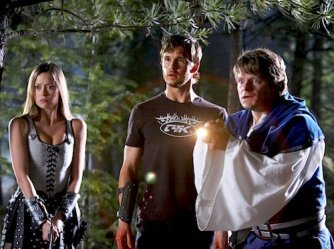 As it stands, Knights of Badassdom is an entertaining way to spend just under 90 minutes. A more restrained approach might yield a tighter movie, one that could be funnier by percentage (the trailer remains popular, and you don’t get more condensed than that), but I think it’s still well enough constructed to keep genre-minded viewers entertained.
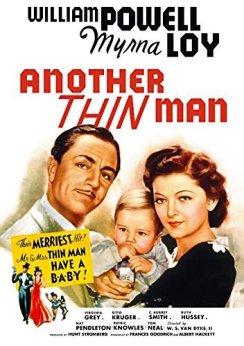 Husband-and-wife detective duo Nick and Nora Charles (William Powell and Myrna Loy) — now with a baby in tow — are once again coerced into investigating a crime when the manager of Nora’s estate fears a dismissed employee is plotting murder.
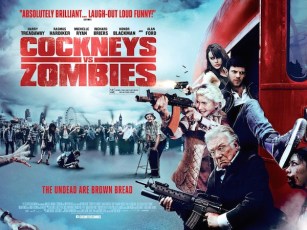 Screenwriter James Moran doesn’t like it when people compare Cockneys vs Zombies to
  And why is their imagination so stunted that they can’t accept them anyway?
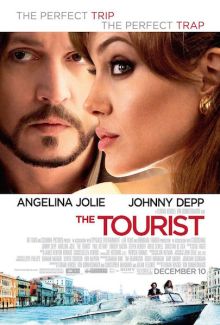 Much maligned on its release, I thought The Tourist was actually a decently entertaining light thriller.
 An unnamed woman (Martina Gedeck) goes to stay with some friends at their lodge in the Alps. The friends pop into town, leaving their dog behind with the woman. When she wakes up the next morning, they’ve not returned, and she finds an invisible wall surrounding the mountain. Exploring its boundaries, she sees people outside, paused mid-life, as if frozen. As hours turn into days turn into weeks, she begins to realise the need to fend for herself, farming the land and caring for her animals, which come to also include a cow and a cat. As weeks turn into years, she comes to accept her new life, from which it seems there may be no end…
 The Wall starts out with a compelling mysterious premise, but seems to have no interest in exploring it or answering the many questions it raises. In some respects that’s better than the kinds of rote explanation offered by lesser films — you know, “Aliens did it. Why? Because.” — but it’s a bit like a joke without a punchline. Taking the setup as a mere excuse for an exploration of the human condition, I don’t know that it’s that illuminating. Either way, it makes for a sporadically interesting but ultimately unsatisfying experience.
 100Films.co.uk