
Andrew Leman | 47 mins | DVD | 4:3 | USA / English
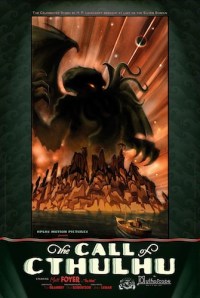 I must admit to not being at all familiar with the work of H.P. Lovecraft. I know the name, of course, and the titles of some of his stories, not to mention being aware of the array of well-known fans. Aside from that, I’ve only encountered his work through its influence — there’s some stuff in the Hellboy films, for instance, or the Lovecraft/Wodehouse mash-up in The League of Extraordinary Gentlemen: Black Dossier. This is my first experience of the undiluted thing, however.
This is an adaptation of a short story first published in 1928, which led its makers to the inspired idea of filming it as if it had been made at the time — in short, as a silent film. This lends an instant… not charm, exactly, but sort of ingenuity. There are a couple of cheats that wouldn’t have been available to 1920s filmmakers, but all are modern low-budget equivalents of something they would have achieved a different way.
And low budget it certainly is. Depending on your point of view, it’s either a fan film or a micro-budget indie. If may lack a final level of polish to qualify for the latter — it was shot on video and it shows (though less so in black & white than in colour, interestingly) — but, if the former, it’s a very slick example; much more professionally executed than Browncoats: Redemption, say.
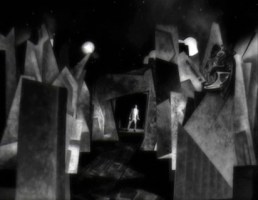 The marriage of low-budget and silent film style is one made in heaven, particularly when you add in the dedication of the makers. They built impressive props, ingenious sets, and employed model work in various inventive ways, all to execute a story that includes a cultist swamp orgy, a mysterious island, a sea battle, and a skyscraper-sized monster. Some online reviews have criticised the effects, but those people are quite frankly idiots. This isn’t meant to be slick CGI — it’s re-creating lo-fi early film techniques, and (aside from one or two rough-round-the-edges spots of greenscreen) it all looks fabulous.
I would go on, but one of my chief pleasures in the film was the surprises of the effects work, so I don’t want to spoil it for you. The making-of on the DVD is certainly worth a watch (it’s also better made than some I’ve seen on professional films), and I’ll add that a particular favourite of mine is the methods they used to create the highly atmospheric bayou sequence. The model set is incredible!
It’s easy to get distracted by the production when its makers have worked such wonders with next-to-no budget, but there’s also solid storytelling going on here. 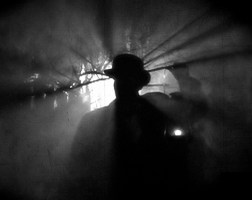 I have no idea how closely it hews to Lovecraft’s original, but there’s a layered stories-within-stories approach (I think it gets four deep at one point) that is difficult to pull off with clarity, but never falters here. Christopher Nolan would be proud. It also effectively builds a sense of uncanny mystery; not outright scares, but a kind of disquieting unease. It’s my impression that was absolutely Lovecraft’s aim too, so another job well done.
It’s fair to say The Call of Cthulhu isn’t a film for everyone, but then often the best ones aren’t. As well as Lovecraft enthusiasts, fans of silent film and creepy (as opposed to jumpy or gory) horror should definitely give it a go. It’s only 50 minutes of your life, and you might have the same reaction as me: I’m now eager to read Lovecraft’s actual work, and have just received the Blu-ray of the filmmakers’ follow-up, a ’30s-Universal-horror-styled take on another Lovecraft tale. Inspiring such a desire for more is surely always a sign of a good film.

This review is part of the 100 Films Advent Calendar 2012. Read more here.
 As
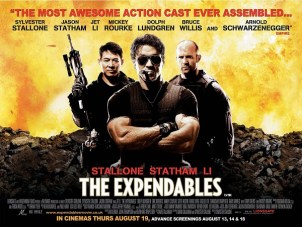
As 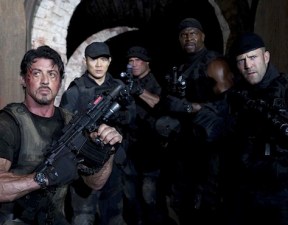 with a main cast fleshed out by ‘names’ like Randy Couture and Terry Crews. Hardly Al Pacino, or even Bourne-level Matt Damon.
 The main joy of the film is, of course, the action. There are plentiful big explosions, blood-spurting deaths, highly choreographed one-on-one punch-ups… It takes a bit of time to get going in this regard, too concerned with trying to give us a plot where we don’t need one and shadows of character development where we don’t want it, but when it kicks in it’s entertainingly bombastic. Particular stand-outs include a plane-based attack on a pier and the crazy climax, an everyone-on-everyone brawl that features a whole building exploding as just one small part.
 It’s two-and-a-half years since this was released? Never! If it didn’t say so on multiple websites, I’d never believe it. Where does the time go?!
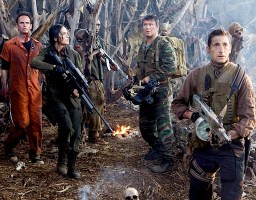 It’s a similar story elsewhere in the film. If you haven’t already accurately guessed what the ‘twist’ is with the doctor just from me even mentioning him, then I’ll be surprised. You may also be aware that Laurence Fishburne is in the film — he’s in the trailer and, naturally, one of the top-billed names. If you weren’t aware, sorry; but if you are (as, indeed, you now are), then his lack of appearance early on will likely clue you in to the circumstance under which he’ll be found. But if you’re not expecting him, that’s all fine and dandy. But now you are. Sorry.
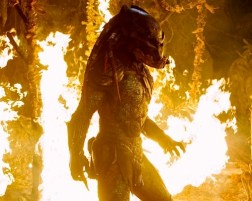
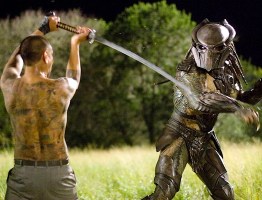 The main draw is still the action, which is suitably exciting on the whole. Best of all is a sword fight between a Yakuza and a Predator. Who’d’ve thought of engaging a Predator in a sword fight, eh? I love a sword fight, and while this is of course an atypical example, it shows the film’s level of creativeness with its inherited elements. It’s also a beautifully shot segment, making it one of the stand-out parts of the film.
 And the ending itself… is it sequel bait? It’s not as bad as
 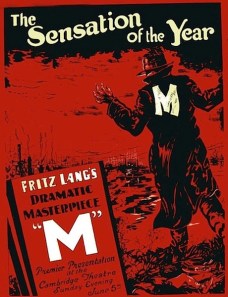 Let’s establish one thing right away: this is unquestionably an inferior version of Fritz Lang’s masterpiece,
  4) It’s mostly dubbed into English. The bits that aren’t have been re-shot. Primarily, there’s a phone call between the police commissioner and the minister, which is really quite poorly performed — watch out for an unintentionally comical bit with the wrong end of a pencil. These two actors are also edited into another scene, a large meeting which their characters attend, and it’s glaringly obvious where Lang’s work begins and ends and the basically-shot bits (flatter angles, simplistic sets) have been dropped in. The director of the English re-shoots isn’t specifically credited, but it certainly wasn’t Lang: Fischer’s examination of M’s export versions informs us that it was the localised version’s “Supervisor”, Charles Barnett.
 There’s no way anyone would reasonably recommend this variation of M over the original, but it does hold interest as a curio. It may leave one wondering how and why this practice of exporting films — where multiple versions in different languages were shot at the same time, rather than dubbing/subtitling later — died out. Cost, I imagine. Despite producing interesting asides like this, it’s probably a good thing it did.
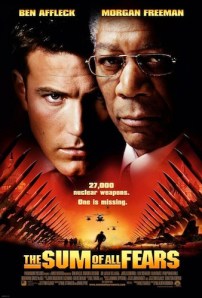 Paramount had a burgeoning franchise on their hands in the early ’90s with adaptations of Tom Clancy’s Jack Ryan novels. He first appears in
 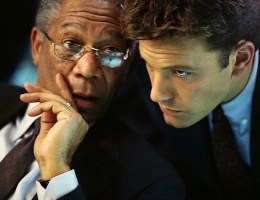 Ben Affleck is Ben Affleck, which means a lot of people won’t like him but he’s OK. Morgan Freeman brings instant gravitas to his role, though it’s not his most likeable or memorable part.
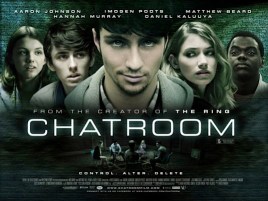 Chatroom is born of — or, at least, partly formed around — trying to find a viable way of depicting the world of online chatrooms on film. Putting on film this world it As It Really Is — people sat at a computer typing at each other — might work well enough for a single scene in
 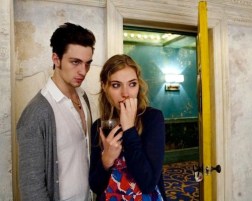 in this environment is also truthful. There have been many reviews that are completely dismissive of this facet of the film, leaving me to wonder if they were written by people who haven’t used or experienced such things. It’s a shame, then, that the film’s degeneration into a thriller hides the arguably-worthwhile potential to explain to such people what that online world can be like for people/kids using it.
 Despite a strong-ish start, perhaps the whole second half of the film is a wobbly mess; not directionless exactly, because by then it does know broadly where it’s going, but it doesn’t do much to suggest to the viewer that it has a real goal in mind. Character motivations and relationships feel as if they’ve not been fully thought out, or at least not fully brought together on screen. Some threads take inexplicable jumps; others aren’t adequately explained or justified. Occasionally it’s Nakata’s direction that overdoes things, for instance laying the soppy “this bit is emotional” music on thick when Matthew Beard’s performance could easily carry a particular sequence.
 The aforementioned Matthew Beard, perhaps the least recognisable cast member (his
 Consensus holds that the work of once-acclaimed director M. Night Shyamalan has managed a near-perfect trajectory of decreasing returns. I’m not talking about box office — I have no idea (or much interest) in how that’s gone for him — but quality, starting with supernatural chiller
 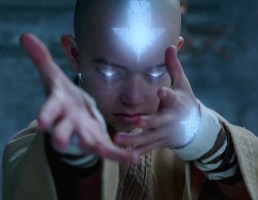 Chunks of it seem to be missing, conveyed through clunky voiceover rather than on-screen action. The first rule of screenwriting — literally, the first — is Show Don’t Tell, but Shyamalan does exactly the opposite.
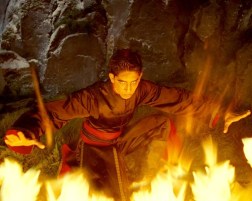 I wouldn’t call myself a Shyamalan apologist, but I think he has at times suffered harshly at the hands of critics and audiences disappointed that he’s never re-reached the heights of The Sixth Sense (though, personally, I prefer
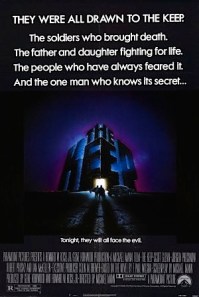 Michael Mann is arguably best known for his modern, urban, slick, intricate crime thrillers — films like
 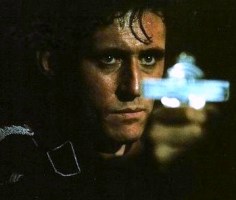 Should we long for a Director’s Cut, then? Maybe that would be an improvement, but I’m not convinced it would be good per se. You see, the film doesn’t just stick to giving us Nazis vs Whatever The Keep Contains, oh no. First the SS turn up, led by a Properly Evil Nazi, played straight by Gabriel Byrne. Escalation, great. Then there’s Ian McKellen as a professor drafted in to make sense of the keep’s mysteries. Also great — even the Good Nazi is going to have to die, right? Who better to root for than a saved-from-a-concentration-camp Jewish professor.
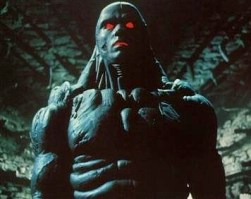 There are plus points, but they all come with a commensurate downside. The creature is well-realised at first, with some nice animated effects that are more effective than much of the over-cooked CGI spectacle we’d get today. The more we see of him, however, the less power he holds — he ends up essentially a very tall man. OK, it’s a bit better than that makes it sound, but the mysterious billowing smoke was spookier. The film on the whole is nicely shot, with some real standout moments of cinematography. But slow-mo and a smoke machine both get overused by the end, lending many of the visuals a tacky ’80s edge.
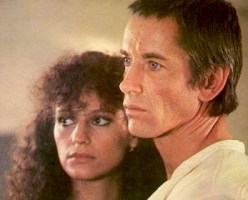 One thing the film never manages to be is remotely scary. It’s not aiming for cheap jump- or gore-based shocks (although there is a little goriness, it’s quite light; triply so by today’s standards), but it doesn’t manage any significant senses of dread or creepiness. As noted, early on it seems to be heading in the right direction — even the secluded mountain village, nestled in a harsh landscape but with greener-than-green grass and garishly painted houses, and towered over by the foreboding slab of stone that is the titular structure, is an uncanny start — but it never makes good on the promise.
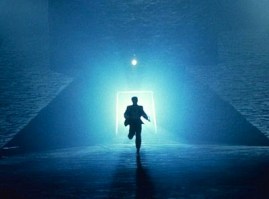 I would love to join their ranks, because there are numerous exciting ideas and moments of quality filmmaking to be found here; but I won’t be, because there’s too much muddled dross packed in around them. The result is that quite-rare thing: a decidedly mediocre film that I’m actually glad I’ve seen. But, unless someone wants to hire me for that remake, never again.
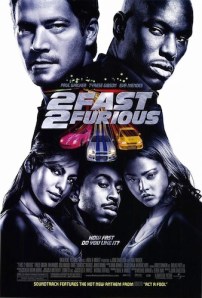 I never thought I’d watch, and certainly not enjoy, the Fast and the Furious series, but a few years ago (after the second film hit cinemas, I think — which would be almost a decade!)
 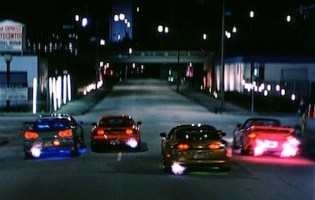 It’s worth noting it was directed by John Singleton, who started out with the acclaimed social drama
 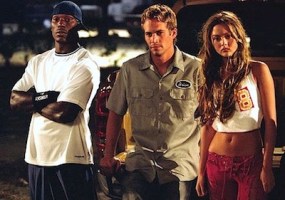 Ultimately, 2 Fast 2 Furious is like cheap fast food: you know it’s made of trash, high in fat and sugar, liable to rot something in your head — and just really bad for you fullstop… yet it’s an enjoyable guilty pleasure once in a while. If you don’t identify with that feeling then you’re a better man than me, and you’ll probably never like this film.
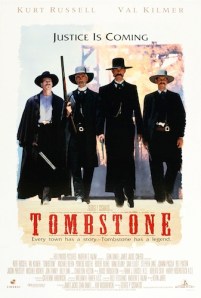 The story of the OK Corral is one I know by name only; I haven’t even seen the
  That may be down to historical accuracy. There’s a distinct feeling of veracity to proceedings, and as I understand it a concerted effort was made in that regard. The Movies perhaps shouldn’t worry about sticking too closely to fact (if you want an accurate lesson, read a textbook), but when they can manage to be both factually accurate and entertaining, it’s all the better. Cosmatos & co appear to balance this well.
 100Films.co.uk