100 Films’ 100 Favourites #98
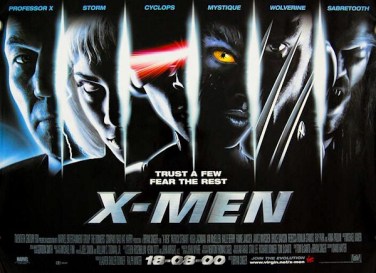
Trust a few.
Fear the rest.

Country: USA
Language: English
Runtime: 104 minutes
BBFC: 12
MPAA: PG-13
Original Release: 13th July 2000 (Australia)
US Release: 14th July 2000
UK Release: 18th August 2000
First Seen: cinema, 2000
Stars
Hugh Jackman (Oklahoma!, Les Misérables)
Patrick Stewart (Star Trek: First Contact, Green Room)
Ian McKellen (Richard III, The Lord of the Rings)
Anna Paquin (The Piano, Margaret)
Famke Janssen (GoldenEye, Taken 2)
James Marsden (Gossip, The Box)
Halle Berry (B*A*P*S*, Catwoman)
Director
Bryan Singer (The Usual Suspects, Superman Returns)
Screenwriter
David Hayter (The Scorpion King, Watchmen)
Story by
Tom DeSanto (producer of Apt Pupil & Transformers)
Bryan Singer (Public Access, Superman Returns)
Based on
The X-Men, Marvel comic book superheroes created by Stan Lee and Jack Kirby; and in particular Wolverine, a comic book superhero created by Roy Thomas, Len Wein, and John Romita, Sr.
The Story
In a near future where some humans have mutated to have extraordinary powers, and consequently are hated and feared by the general population, a runaway teen comes under the protection of a mysterious stranger. As a radical leader hunts them for his world-changing scheme, they encounter a school for mutants — and the superpowered team who teach there.
Our Heroes
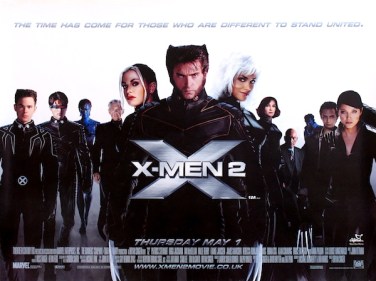
The X-Men, a team of mutants — humans who have evolved superpowers — organised by Professor Charles Xavier, a wheelchair-bound telepath. There’s team leader Scott Summers, aka Cyclops, who shoots force beams from his eyes; Dr. Jean Grey, potentially an even more powerful telepath than Professor X, who can also move things with her mind; Ororo Monroe, aka Storm, who can control the weather. We’re led into their world by teen runaway Marie, aka Rogue, who can absorb people’s energy, and her reluctant protector, Logan, aka Wolverine, who has metal claws in his hands, can heal really fast, and can’t remember most of his past.
Our Villain
Erik Lehnsherr, aka Magneto, who can manipulate metal. A one-time friend of Xavier’s, they parted ways over his beliefs that mutants and humans couldn’t coexist, which leads him to violently oppose mutant oppression.
Best Supporting Character
Mystique, one of Magneto’s gang, who runs around naked — but that’s because her skin’s blue and bumpy and stuff, so it’s OK. She can shape shift into the form of anyone she’s made contact with, which is very useful for her and very tricky for our heroes.
Memorable Quote
Magneto: “Does it ever wake you in the middle of the night, the feeling that one day they will pass that foolish law, or one just like it, and come for you and your children?”
Xavier: “It does indeed.”
Magneto: “What do you do, when you wake up to that?”
Xavier: “I feel a great swell of pity for the poor soul who comes to that school looking for trouble.”
Memorable Scene
As Magneto, Sabretooth and Toad exit a train station with a kidnapped Rogue, they’re greeted by a sea of policemen. With his powers, Magneto takes all their guns and turns them on their owners. Then Sabretooth grabs Magneto’s throat — he’s being mind-controlled by Xavier. Magneto fires all the weaponry in his control, but stops the bullets just short of their targets — unless Xavier lets him go…
Truly Special Effect
Superheroes really needed the modern era of CGI to make them possible — and, as with everything else, X-Men led the way. Probably the most memorable are Mystique’s skin-changing transformations, which involved 8,000 scales animated in different directions.
Making of
Stanley Kubrick is responsible for the casting of Wolverine. No, really. Well, sort of. Here’s how it goes: Kubrick’s famous perfectionism meant the filming of Eyes Wide Shut overran; that meant star Tom Cruise had to delay his next project, Mission: Impossible II; that sequel finishing later than scheduled meant Dougray Scott — who played the lead villain in M:I-2 and was originally cast as Wolverine — had to drop out of X-Men, which was already on an insanely tight schedule to make its release date. Hugh Jackman was cast on the recommendation of his friend Russell Crowe, who had been sought for the role, and only joined the production several weeks into filming. Apparently if you look closely you can see Jackman’s physique change in various scenes because he was working out extensively while filming continued.
Previously on…
Although this is the first X-movie, I’m sure the enduring popularity of the 1992-1997 animated series can’t’ve hurt the film’s success.
Next time…
In an immediate sense, X2. After that, multiple direct sequels, prequels, and spin-offs. Plus the entire current multitude of comic book movies owe their existence to this film being (a) good, and (b) a hit. Whether that’s a mark for or against X-Men is up to you.
Awards
6 Saturn Awards (Science Fiction Film, Actor (Hugh Jackman), Supporting Actress (Rebecca Romijn), Director, Writing, Costumes)
4 Saturn nominations (Supporting Actor (Patrick Stewart), Younger Actor (Anna Paquin), Make-Up, Special Effects)
Nominated for the Hugo for Best Dramatic Presentation
1 World Stunt Award nomination (Best Speciality Stunt for “Wolverine blown out of truck”)
What the Critics Said
“After trying for decades, Marvel Comics finally may gain the kind of pop-cultural cachet that only comes from a major leap into movies. That movie is X-Men, a fully realized translation of comics’ adolescent power fantasies to adult-level, big-screen entertainment. It’s a film X-Men fans can embrace and action fans in general can appreciate. It has emotion and a solid story to go with its mayhem, and the comics’ central themes aren’t betrayed. Director Bryan Singer gets bang for his buck. At $75 million, X-Men was a modest and rushed shoot for an action showcase, yet its computer generated imaging effects are handsome, and it gleams with polished production design.” — Bruce Westbrook, Houston Chronicle
What the Public Say
“this is a superhero movie with ideas, fully aware of the potential social commentary inherent in its source material. It paints simplistically, in broad strokes, but elegantly. It feels small-scale but full-bodied, and it takes storytelling risks. I mean, the damn thing opens on a concentration camp. The main characters being mutants, discriminated against by ‘normal’ people, gives the screenplay the opportunity to use this as a catchall allegory. Any feared or shunned group of people can find familiar themes at work in the world of the film. […] reflecting on the first X-Men solidifies its status as not just a prelude of better things to come, but as quite a strong movie in its own right. After seeing the franchise move the Golden Gate Bridge, travel decades in time, and resurrect an Egyptian god, it’s refreshing to rewind to this one humble tale of ‘the not too distant future’. The 2000 film has a great lo-fi charm to it, while at the same time being lent gravitas by McKellen and Stewart’s war of wills. It holds up not just as a curiosity, but also as a well-told story of mutants and morals.” — Paul Stanis, A Voyage through Film

Verdict
I’ve written before (several times) of my near-lifelong fandom of the X-Men. This isn’t where it started (that’d be the classic ’90s animated series), but it certainly helped cement it. Its significance to the current movie landscape is hard to underestimate: it took the superhero subgenre, which hadn’t actually produced that many major movies and had nonetheless reached a comedic nadir with Batman & Robin, and made it respectable blockbuster fodder, which leads directly to where we are today. And the reason it sparked all that is because it’s a quality entertainment in its own right, mixing superpowered action with weighty themes and top-drawer performances from a cast who are almost all better than this, elevating the material rather than besmirching themselves with it. I mean, even without the witty lines and tightly choreographed fisticuffs, anything that has Patrick Stewart and Ian McKellen verbally sparring over a game of chess is bound to bring satisfaction.

#99 will be… X-Men united.


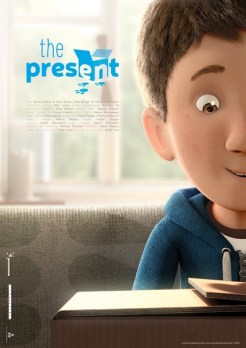 A short film about a boy and his dog, The Present was a graduation short for the Institute of Animation, Visual Effects and Digital Postproduction at the Filmakademie Baden-Wuerttemberg in Ludwigsburg, Germany (yeah, I copy & pasted that), which has since won more than 50 awards after playing at film festivals around the world. Reportedly it also single-handedly landed its animator/director a job at Disney — he went on to work on Zoo
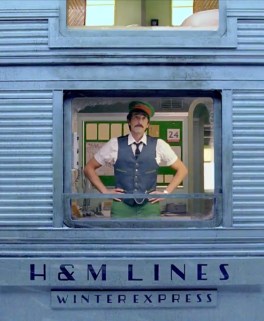 Christmas adverts are all the rage these days, thanks to the likes of John Lewis and their beautifully affecting tributes to the holiday season / twee pieces of emotionally manipulative crap (delete as appropriate). This year clothes retailer H&M got in on the act by hiring everyone’s favourite go-to example of an idiosyncratically quirky director, Wes Anderson, to helm a short film-cum-advertisement — the first part of that equation being why I’m reviewing it here.
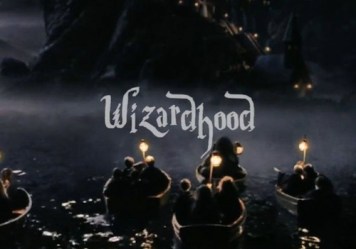 At the tail end of last month, a story did the rounds on entertainment sites about a fan edit that took the eight-film, 20-hour Harry Potter series and reduced it into a single movie that ran just 78 minutes — a reduction of over 93%. You see stories about these kind of fan edits all the time (or you do if you read certain sites, anyway), but I usually don’t get round to watching them. I mean, who has time for a dozens-of-hours supercut that puts every piece of footage from every Marvel movie (and short) into chronological order, or whatever? But as I was
 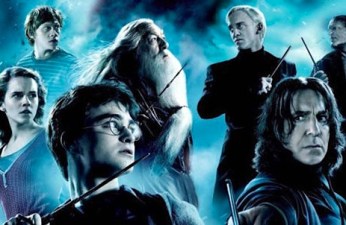 Wizardhood focuses in on the main narrative of Harry vs Voldemort, and the need to destroy the Horcruxes. In practice, that means there’s a chunk of
  The first live-action non-saga movie to take us to a long time ago in a galaxy far, far away, this initial entry in what is sure to be a never-ending series of so-called “Anthology” movies really puts the “War” into Star Wars.
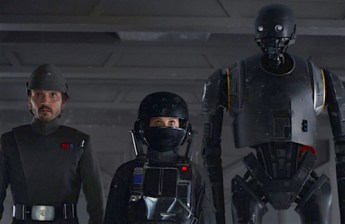 Unfortunately, the plot starts off almost as jumbled as my mixed metaphors there. “Jumbled” may be unfair, but it’s a little scrappy, initially jumping around all over the place in a way that’s tricky to follow even if you’ve read up on the film and have an idea who you’re being introduced to and why. It must be a right pain for neophyte viewers. There can be a fine line between praising a film for requiring its viewers to pay attention and do some work, and criticising it for being disarrayed and not making things clear. Personally, I thought Rogue One was sat right on that line for much of its first act, until a few big expositional infodumps come along to explain the storyline.
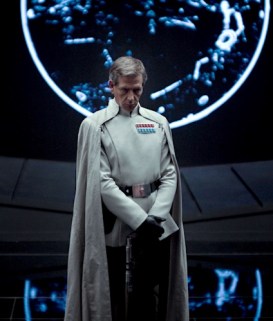 Then we come to perhaps the film’s most discussed character: Grand Moff Tarkin, played by Peter Cushing’s computer-generated face overlaid on the motion capture and voice of
 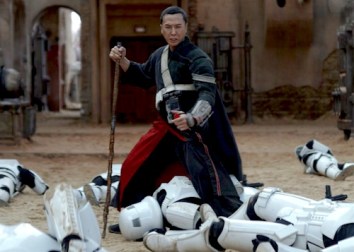 Continuing such comparison to the wider Star Wars galaxy, some have said Rogue One is the
  Much discussion of Rogue One seems to have revolved around whether it’s better than The Force Awakens. At the risk of sitting on the fence, I can see both sides. On the one hand, Edwards is a much more interesting filmmaker than J.J. Abrams. The latter is adept at aping the work of others, having now been in charge of multiple movies that are mostly derivative but nonetheless entertaining. Edwards’ career is still a little fresh and blockbuster-centric to risk describing him as an auteur, but his
 Score:







 I’m not sure I’d even heard the name Jeff Nichols before Midnight Special came along, at which point most of the gushing reviews that followed seemed to mention him with cult-like reverence. He’s the writer and director, by the way, for anyone still in the dark, and unbeknownst to me (and, I rather suspect, most people outside certain cinephile circles) he’d amassed something of a following over his first three movies (
 straight-up Spielberg rehashes we’ve seen over the past four decades; conversely, a strand of wilful obscurity means it may be ultimately less satisfying. Again, some people derive satisfaction explicitly from that lack of resolution or explanation, while others will find it damagingly frustrating. Even more than Spielberg, I felt the thing most evoked by this structure was
  I thought they perfectly conveyed what they were intending to convey — usually, just a kind of otherworldly light. It’s not like it’s even over-stretching its means, like so many network TV series or

