Unknown's avatar

About badblokebob

Aiming to watch at least 100 films in a year. Hence why I called my blog that. http://100films.co.uk

The Hum in the Drum Monthly Update for June 2017

There was so much hummable music in this month’s movies that I considered a music-related category for the Arbies then dropped it because I didn’t want to have to decide.

So I’ll leave it up to you what track you choose to listen to (I’m going with Mike Relm’s Baby Driver remix) while we reflect on the month that was…


#76 Space Jam (1996)
#77 The Muppet Movie (1979)
#78 Gran Torino (2008)
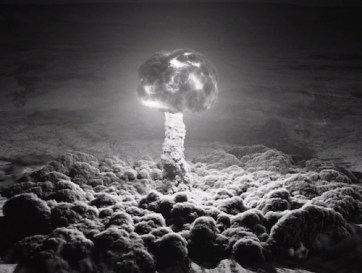
#79 Contact (1997)
#80 That’s Entertainment! (1974)
#81 Wonder Woman (2017)
#82 The Mummy (2017)
#83 Moonlight (2016)
#84 The LEGO Batman Movie 3D (2017)
#85 Moana 3D (2016)
#86 John Wick: Chapter 2 (2017)
#87 The Great Muppet Caper (1981)
#88 District 9 (2009)
#89 Baby Driver (2017)
#90 Transformers: Age of Extinction 3D (2014)
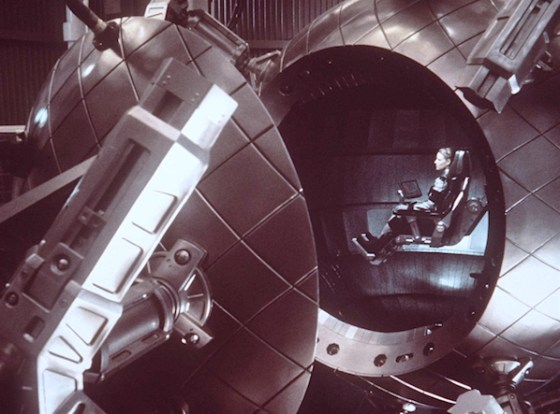
Contact

Baby Driver

.


  • I watched 15 new films this month, exceeding the rolling average of the last 12 months (previously 14.1, now 14.2) and equalling the average for 2017 to date (which was and is bang on 15).
  • At the halfway point of the year, I’ve reached #90, which suggests a final tally of 180. Of course (as I mentioned last month, actually), this time in 2015 I was also at #90 and eventually turned that into 200, while this time in 2016 I was way ahead at #115 but only turned that into 195. So… it’s basically meaningless, is what I’m saying.
  • At the risk of spoiling one of my year-end stats, The Mummy marked the most cinema trips I’ve made in a single year since 2008. And there’s half the year to go yet, with at least the same number of films again earmarked as must-sees.
  • This month’s Blindspot film: Neill Blomkamp’s Oscar-nominated allegorical sci-fi actioner, District 9, which came to Netflix UK this week, I believe for the first time, but I didn’t get round to reviewing it.
  • This month’s WDYMYHS film: Clint Eastwood’s retirement from acting (until it wasn’t) in Gran Torino, which I also haven’t reviewed yet.


The 25th Monthly Arbitrary Awards

Favourite Film of the Month
I haven’t got round to reviewing most of them yet so you wouldn’t know it, but there are a good number of favourite-able movies this month — at least five solid contenders for my year-end top ten, I’d say. But setting aside tales of alien instruction manuals, black boys looking blue, toy superheroes, and musical Polynesians (not to mention wonderful women and gun-toting boogeymen), for my favourite movie this month I have to pick Baby Driver.

Least Favourite Film of the Month
Conversely, this was easy. Several movies this month may have underwhelmed me, either in themselves or compared to the hype, but the only one I outright hated was Space Jam.

Best Serious Drama About First Contact with Aliens of the Month
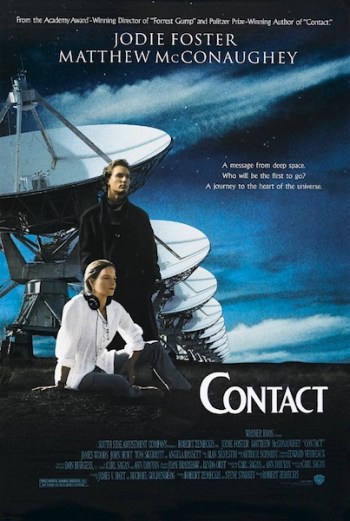
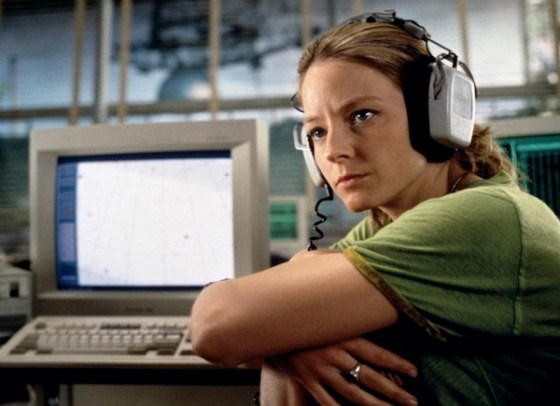
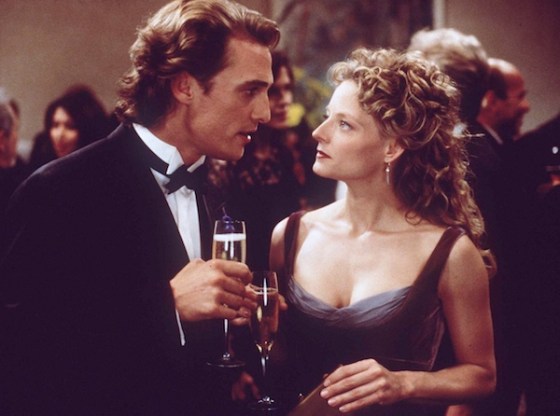
It’s taken me 20 years to see Contact and I loved it. I’m not sure if I would’ve loved it as much 20 years ago, mind, so maybe now was the right time.

The Silicon Valley Producers’ Favourite Movie of the Month
I wonder if Transformers: Age of Extinction is popular in the Silicon Valley writers’ room right now, considering it features T.J. Miller (spoiler alert!) suffering a horrible demise.

The Audience Award for Most-Viewed New Post of the Month
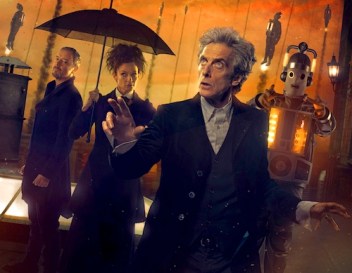
For the third time this award goes to the latest edition of The Past Month on TV, which covered the start of the new Twin Peaks, the “Monk trilogy” on Doctor Who, and more.


It was another good month for my Rewatchathon. I’m still behind where I should be (we’re halfway through the year, so that’d be at #26), but across the last two months I’ve averaged six rewatches a month — if I keep that up, all will be fine.

#16 Mamma Mia! (2008)
#17 John Wick (2014)
#18 Transformers (2007)
#19 Transformers: Revenge of the Fallen Big Screen Edition (2009)
#20 Transformers: Dark of the Moon 3D (2011)

I didn’t intend to watch Mamma Mia, but the other half put it on and, while I still only half watched it, I paid more attention than I’d expected to. It’s a very daft movie, but it’s so deliberately silly and cheesy that I can’t help but find it amusing. I re-read my nine-year-old review and it pretty much still stands.

Rewatching the Bayformers films was interesting. I wrote a little about Transformers, Revenge of the Fallen, and Dark of the Moon on Letterboxd if you’re interested, but in summary: I liked the first less than I remembered, enjoyed the second a surprising amount, and completely changed my opinion of the third. I technically watched a different cut of the second one (it’s all of 30 seconds longer), so I’ll probably include a little bit about that in a future review roundup.


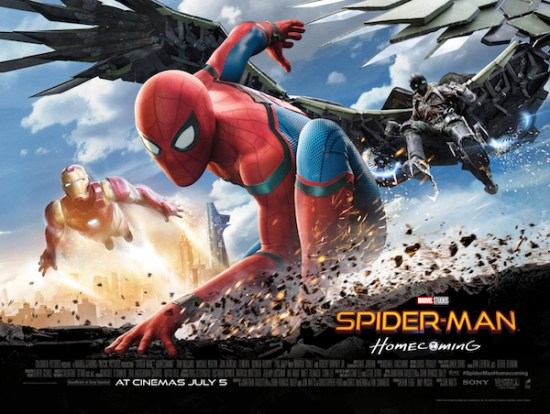
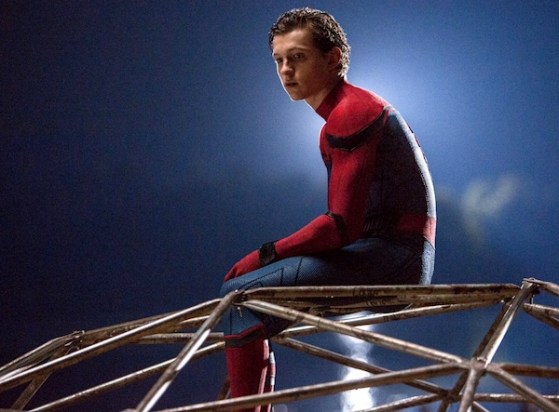
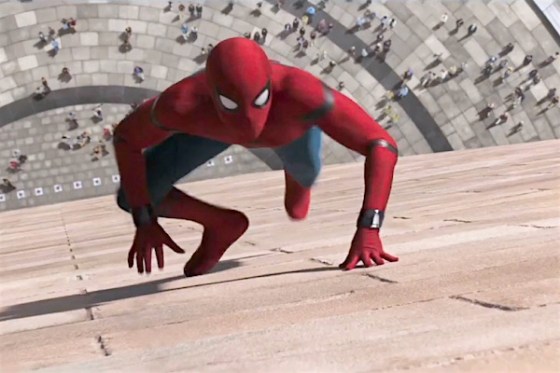
Spider-Man, Spider-Man, does whatever another Marvel Studios character can.

Baby Driver (2017)

2017 #89
Edgar Wright | 113 mins | cinema | 2.35:1 | UK & USA / English & American Sign Language | 15 / R

Baby Driver

It felt like half (at least) of the film-loving internet had somehow had a chance to see Baby Driver before its release on Wednesday, but I’m going to throw my two cents into the ring anyhow. Not that it makes a great deal of difference because, like most other folks, I bloody loved it.

Written and directed by Edgar Wright, director of the Cornetto trilogy and not of Ant-Man, the story focuses on getaway driver Baby (Ansel Elgort), a fundamentally good kid who has ended up suckered into a life of crime, working for robbery kingpin Doc (Kevin Spacey) and a rotating array of criminal compadres. An accident as a kid left Baby with “a hum in the drum” — tinnitus, if you want to get medical about it — meaning he listens to music all the time to drown it out, and also choreographs his daring drives (not to mention his walks down the street, etc) to the music he hears. One day he bumps into Debbie (Lily James) and falls in love, which happily coincides with his “one last job” for Doc. But once you’re in it’s hard to get out, and Baby again finds himself doing one more “one last job”, with a particularly volatile crew…

Baby Driver is a movie about three things: driving, music, and love. As Guillermo del Toro put it, it’s a kind of fable, or fairytale, with Baby as the prince and Debbie as the princess. In this respect it’s a change of pace for Wright, ditching the almost-spoof comedy of his previous successful movies for something more emotionally earnest. Not in a bad way, but in a kind of pure way, like a fairytale. This fairytale world isn’t all castles and dragons, of course — instead it’s full of violent criminals and fast cars; but it’s also a world where you can synchronise your getaway driving to the music on your iPod, so it’s hardly mired in gritty realism.

No little green bags here

There’s a definite edge of Wright’s buddy Quentin Tarantino to this world: a cast of crooks delivering snappy, quotable dialogue to a near-constant soundtrack of deep cuts selected from the director’s music collection (plus a few familiar tunes for good measure) — the style of QT comes to mind more than once while watching. Fortunately Baby Driver’s style is more than homage or copycatting. Although it’s not a straight-up comedy, Wright does bring his own comedic touch (there are several big laughs), and the purity of emotion — that fairytaleness again — isn’t from Tarantino’s wheelhouse either. Plus, visually it presents a brighter and more colourful space than Tarantino normally inhabits. Most of the action takes place in the golden daylight of Atlanta and is filled with popping primary colours. There’s much great work by DP Bill Pope.

Though the soundtrack may have a Tarantino feel in its construction, that’s less prevalent in its usage. Characters communicate through song — not by singing them (most of the time — Baby first notices Debbie because she’s singing “B-A-B-Y”), but by connecting through them (that singing is followed by a discussion of songs featuring her name — both of them). The songs Baby chooses for boogieing around his small apartment, or for dancing down the street on a coffee run (in a title sequence that is marvellously choreographed, with dozens of small details timed perfectly to the track), help illuminate his true character — sweet and romantic — which is hidden by the sullen silence he adopts whenever around criminals.

B-A-B-Y Baby

Some have criticised the film for a lack of character, reckoning Baby’s silence distances him from the viewer so we never build a connection and don’t root for him. Frankly, I’m not sure what film they were watching. No spoilers, but Baby first opens up with something endearing and ingratiating in scene one. Right at the start. It could barely be any closer to the studio logos (and it kinda wouldn’t work if it were). I’m not arguing he’s the most charismatic lead ever to grace the silver screen, but Elgort makes fine fist of selling Baby as both a quiet, focused driver and a sweet, likeable, cheer-on-able hero.

And if you want character in general, the rest of the cast has it in spades, with an array of supporting roles that are as colourful as the cinematography. Recognisable faces like Spacey, Jon Hamm, Jamie Foxx, and John Bernthal get to cut loose as crooks who each have their own kooks, while lesser-known names like CJ Jones (as Baby’s foster father) and Eiza González (as the Bonnie to Hamm’s Clyde) make a mark too. Lily James may be placed in a dream-figure damsel role, but that doesn’t mean she can’t hold her own at times too. She’s not Wonder Woman, but she’s not a Manic Pixie Whatever That Phrase Was either.

Mozart in a go-kart

So, the one major thing I’ve only touched on fleetingly thus far is the main thing the film has attracted attention for: the driving. Done for real by stunt drivers with not a lick of CGI, that knowledge means it packs a viscerally real punch. But it’s not just snobbery: this is genuinely breathtaking action, slickly planned, masterfully performed, magnificently shot and edited. It’s this year’s Fury Road — a kinetic action spectacle made with skill rather than hand-waiving fast-cuts. Even more impressively, it’s been choreographed to music, but not in a draw-attention-to-itself dance-routine-y way. Perhaps saying it’s been synced to the music would be more accurate. Either way, it only heightens the effect. This extends beyond the car chases, too, including one marvellously musical shootout, the gunfire serving as percussion. The sound design throughout is exemplary. This is a movie that deserves to be remembered come awards season. Perhaps, again like Fury Road, some love will extend beyond the technical categories, too. Wright seems deserving of Best Director recognition, just like George Miller was.

But such back-patting is for much later in the year. For now, just revel in the gleeful moviemaking verve of a flick that already seems destined to be remembered as one of the greatest car chase movies ever produced.

5 out of 5

Baby Driver is in cinemas many places right now, but not everywhere. It’ll be worth the wait, guys.

It placed 2nd on my list of The 17 Best Films I Saw For the First Time in 2017, which can be read in full here.
Dragon (2011)

aka Wu xia

2016 #190
Peter Ho-sun Chan | 94 mins | TV (HD) | 2.35:1 | Hong Kong & China / Mandarin | 15 / R

Dragon (Wu Xia)

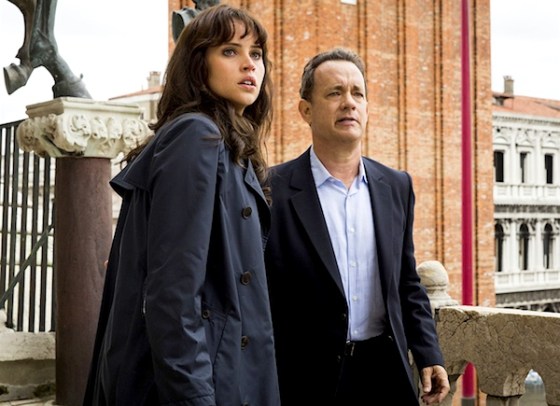
Donnie Yen is small town paper-maker Jinxi, who incidentally encounters and accidentally defeats two most-wanted criminals. While his village thanks him, detective Baijiu is suspicious — does Jinxi’s story add up? Is he hiding some dark past?

Takeshi Kaneshiro is expert detective Xu Baijiu, who adheres slavishly to the law after a past mistake cost him dearly. But is he delusional, inventing connections and powers for Jinxi that just aren’t there? Or are his delusions allowing him to see the truth?

As a Hong Kong production starring Donnie Yen, of course Dragon is an action movie, but there’s more to it than fisticuffs. It engages with themes of justice and redemption, and what it means not only to take the right action, but to have to find the right action to take. Apparently it began life as a remake of One-Armed Swordsman, and while obvious superficial resemblances remain (the Big Bad Boss Man is played by Jimmy Wang Yu, and Yen has to (spoilers!) lop off his own arm), you can definitely see familiar plot points in both films too. But it’s also certainly not a remake anymore. Funny how these things go.

Can I Baijiu a Jinxi?

Naturally, when the action does kick in, it’s fantastic. With the combat directed by Yen, these sequences are expertly and inventively choreographed dust-ups. It’s stylishly directed by Peter Chan — classy, but also thrilling, exciting, and sometimes innovative; and the whole is majestically shot by DP Lai Yiu-Fai (who also shot Infernal Affairs, which I still haven’t seen).

On the downside, at a couple of points I thought the story leapt a little bit or fudged a detail, which is a shame because I don’t think it needed to. This is possibly the effect of watching the international version, which is cut by around 17 minutes (full details here). While it’s a shame, it’s certainly not enough to ruin an excellent martial arts drama.

4 out of 5

Fantastic Beasts and Where to Find Them (2016)

2016 #182
David Yates | 133 mins | cinema | 2.35:1 | UK & USA / English | 12A / PG-13

Fantastic Beasts and Where to Find Them

When J.K. Rowling wrote the seven-book Harry Potter series, she didn’t just make it all up as she went along — it was well planned in advance. And she didn’t just envisage a seven-book story, either — she built a whole world, including a massive history that is only fleetingly referred to in Potter itself. It’s part of that history that the five-film Fantastic Beasts series is setting out to explore. (Despite sharing a title with a short tie-in book Rowling once wrote, Fantastic Beasts isn’t somehow an adaptation of that tiny tome, despite what some pithily moronic internet commenters who think they’re funny would believe.)

Set many decades before Potter, Fantastic Beasts introduces us to Newt Scamander (Eddie Redmayne), a British wizard who’s travelled to New York while researching his book on magical creatures — or “fantastic beasts”. There, he finds himself embroiled in a conflict between the local magic council and a puritanical group who want to destroy all wizards, while some creature or force is terrorising the city.

Although labelled by some as a prequel, that’s only technically true — it is set before the Potter stories, but it’s a new story in that universe rather than a tale that leads directly into the existing narrative. As such, it’s pretty newbie friendly. It reuses familiar iconography from Potter, but it does so in neat ways — there are things that are instantly recognisable to fans, but their function is not reliant on familiarity for the sake of newcomers or the less well-versed. It’s also opening up new parts of the Potterverse — or, as they want us to call it now, J.K. Rowling’s Wizarding World — primarily, taking us to the USA for the first time.

Fantastic Americans and where to find them

As a new story, it develops its own particular tone and style, distinct from that of the previous movies. That partly comes from the characters we’re following: Potter is about schoolchildren, this is about adults. It’s still a 12A/PG-13, of course, but there’s a lot of wiggle-room within that category. Perhaps this is why some have found it tonally inconsistent, but I enjoyed the mix of whimsy with darkness. The overall effect was good fun, with strong action scenes and some really good — even magical — visuals. The story is bolstered by a couple of well-constructed final act twists. I found at least one to be pretty guessable, but that doesn’t detract from it being put together neatly throughout the film.

As for the widely discussed fact that this is to be the first of five movies, that fortunately doesn’t define this opening instalment. Seeds for future films are obvious because we recognise actors and, as movie-literate viewers, know how films establish things for future use; but leaving that extra-textual knowledge aside, there’s no reason this doesn’t work as a standalone adventure. People who’ve said otherwise are talking poppycock. Even stuff that initially looks like it’s purely franchise-setup has a purpose within this individual movie.

Fantastic Beasts has been dismissed in some quarters as no more than a cash-grab attempt to extend a franchise, but I thought it was one of the most enjoyable blockbusters of 2016.

4 out of 5

Review Roundup

In today’s round-up:

  • Snoopy and Charlie Brown: The Peanuts Movie (2015)
  • 13 Hours: The Secret Soldiers of Benghazi (2016)
  • Young Frankenstein (1974)


    Snoopy and Charlie Brown:
    The Peanuts Movie

    (2015)

    aka The Peanuts Movie

    2017 #25
    Steve Martino | 84 mins | streaming (HD) | 1.85:1 | USA / English | U / G

    Snoopy and Charlie Brown: The Peanuts Movie

    Charles M. Schulz’s popular comic strip hits the big screen in this likeable but hardly Pixar-level movie. Much of it plays like a series of shorts or sketches with a connected theme rather than a feature-length narrative — kind of like binge-watching a cartoon series — but they’re pleasant enough. There are some good gags (“Leo’s Toy Store by Warren Piece”), though the saccharine ending is a bit much and the pop songs are terrible. One review described Snoopy as “Peanuts’ Tyler Durden”, which is a thought that entertained me even more than the film.

    The most notable aspect is the animation style. Schulz’s strips have a distinct 2D style, but the movie is animated in 3D, presumably because you’re not allowed to make a Western kids’ movie with 2D animation anymore. Nonetheless, most of The Peanuts Movie is composed to emulate Schulz’s original strips, i.e. quite flatly — like, you know, 2D. And yet, somehow… Well, The Telegraph’s Robbie Collin summarised it well in his review: “Written down, [the animation style] just sounds chaotic, like a four-way mash-up of South Park, The Clangers, Wallace & Gromit and a flip book. But in motion, it’s a thing of serious, faux-artisanal beauty”. That might be going a bit far, but I did end up kinda liking the visuals. It’s quite a clever style for 3D, mixing in many 2D-ish touches. It should probably be a mess, but it weirdly works.

    3 out of 5

    13 Hours:
    The Secret Soldiers of Benghazi

    (2016)

    2017 #40
    Michael Bay | 139 mins | streaming (HD) | 2.35:1 | USA / English | 15 / R

    13 Hours: The Secret Soldiers of Benghazi

    The not-at-all-controversial events in the Libyan town of Benghazi on 11th September 2012 are here dramatised by that master of subtlety and understated reality, director Michael Bay, so you know you’re going to get a considered and truthful account of events.

    Yeah, most of that opening paragraph is completely facetious. Bay takes a real-life gunfight, in which a secret mercenary security team went against orders (possibly) to defend an American diplomatic compound that was under assault, and turns it into a blazing action movie that may as well be scored with the theme from Team America: World Police. If it was Bay’s goal to convey the sheer confusion on the ground in the midst of the situation, I guess he’s done a bang-up job. The problem is, that confusion extends to bits where the characters seem to have some idea what’s going on, but we’re left half in the dark.

    Having Bay be reined in after the excess of his Transformers movies is no bad thing, but being completely constrained by reality is not his strong suit either — the heightened reality of something like The Rock is where he excels.

    If you’re interested in a longer read on the film’s adherence (or otherwise) to reality, this article at Vox is interesting.

    3 out of 5

    Young Frankenstein
    (1974)

    2017 #46
    Mel Brooks | 106 mins | streaming (HD) | 16:9 | USA / English | PG* / PG

    Young Frankenstein

    I have mixed feelings about the work of Mel Brooks. I reviewed his Hitchcock spoof, High Anxiety, back in 2009 and found it wanting. I reviewed his Robin Hood spoof, Men in Tights, earlier this year and found it uncomplicated but enjoyable. When I was a kid I liked his Star Wars spoof, Spaceballs, but on a slightly-more-adult rewatch I enjoyed it less. And as for Blazing Saddles, regarded by some as one of the pinnacles of screen comedy… no, I didn’t like it. At all. I so didn’t like it that I really must rewatch it to see if I can see what I didn’t see.

    Young Frankenstein was released the same year as Blazing Saddles, and is placed on a similar pedestal by many — slightly higher, on the whole (Frankenstein edges it by a few points on IMDb, Rotten Tomatoes, and Metacritic). It’s quite remarkable that Brooks managed to produce two such esteemed movies within the same year. At least I liked one of them.

    Young Frankenstein has many funny lines and moments, including a lot of familiar Brooksisms (“walk this way”) and, in the Puttin’ on the Ritz number, perhaps one of the funniest sequences ever committed to film. The films being spoofed (Universal’s classic monster movies) are evoked well, in particular with the potent black and white cinematography, but Brooks also lets things spiral off in their own direction when warranted. On the downside, I’d say it’s a little too long.

    Don’t take that criticism too seriously, though. I enjoyed it very much.

    4 out of 5

    * Hilariously, in 1987 the BBFC thought it should be rated 15. It wasn’t downgraded to the much more sensible PG until 2000. ^

  • 10 Cloverfield Lane (2016)

    2016 #180
    Dan Trachtenberg | 104 mins | Blu-ray | 2.40:1 | USA / English | 12 / PG-13

    10 Cloverfield Lane

    After Michelle (Mary Elizabeth Winstead) is in a car crash, she awakens in a basement chained to a wall. Her captor, Howard (John Goodman), tells her he’s saved her life: a massive attack has taken place and they, along with an acquaintance of Howard’s called Emmett (John Gallagher, Jr.), are in Howard’s self-built bunker to hide from the deadly fallout. But Michelle only has Howard’s word as evidence these attacks happened at all, or that their aftermath is lethal, and can he be trusted?

    For most of its running time, 10 Cloverfield Lane is a good psychological puzzle. Michelle has little choice but to trust her captor(s) / quarantine-mates and little chance to investigate the truth for herself, try as she might. I must say I never felt a particularly palpable sense of tension, despite the varied and regularly renewed attempts to make Goodman a threat, but it nonetheless works as a characterful mystery-driven single-location thriller. And then…

    We’ve all read reviews where a critic (or blogger!) will write something like, “it would benefit from being 10 minutes shorter”. That sounds very precise and therefore clever, but it’s really a number plucked from thin air. No one who’s written a sentence like that has actually sat down with a film, noted all the bits they’d cut, added them up, and then presented that total in their review. It is, at best, intuition (at worst, it’s random and thoughtless). However, with 10 Cloverfield Lane I can say exactly how much needs to be cut: 9 minutes and 10 seconds. To be exact, those’d be the 9 minutes and 10 seconds between a (spoilery) revelation and the credits rolling.

    Roomies

    There’s no need to go into detail here — if you’ve not seen the film it’s a massive spoiler; if you have, you surely know what I’m talking about. This climax feels wholly unnecessary and like it belongs in a totally different movie. Tonally, and in terms of the main plot points that drive the story, it has absolutely nothing to do with the movie we’ve just watched. If you cut that bit out, it wouldn’t make the rest of the film any less satisfying. And because it’s so unnecessary, I found it intensely irritating.

    The bulk of 10 Cloverfield Lane is a very solid contained psychological thriller, undoubtedly deserving a strong 4-star rating. Then the final ten minutes happens. It’s so misjudged, in my opinion, that it overshadows what’s come before, to the point that I’ve taken a whole star off my rating.

    3 out of 5

    Our Kind of Traitor (2016)

    2016 #191
    Susanna White | 108 mins | streaming (HD) | 2.35:1 | UK & France / English, Russian & French | 15 / R

    Our Kind of Traitor

    Based on a John le Carré novel, Our Kind of Traitor sees a couple of holidaying Brits, Perry and Gail MacKendrick (Ewan McGregor and Naomie Harris), befriending a Russian chap called Dima (Stellan Skarsgård), who it turns out has links to the Mafia and wants our hapless heroes to deliver an information-filled USB stick to British intelligence. As MI6 (primarily represented by Damian Lewis) seek to act on the information, the MacKendricks get drawn into the espionage game thanks to their relationship with Dima.

    Some of Traitor’s detractors have a problem with it right from the off, finding the premise to be inherently ridiculous. I disagree. In fact, I think it’s quite a good plan on Dima’s part: to use an unsuspected casual acquaintance to smuggle important documents to the authorities. The way the MacKendricks continue to be involved does wind up stretching credibility, but that’s narrative structure for you — it’d be a real trick to construct a satisfying relay of perspective characters.

    If anyone could pull that off it’s probably Le Carré, but this is not his most complicated plot — there are even less twists or double-crosses than you’re probably expecting — but as a tense thriller it satisfies often enough. However, Le Carré as author, plus screenwriter Hossein Amini and director Susanna White, seem to be more interested in the story’s real-world resonances. They’re using a thriller plot to bring up the kind of probably-genuine corruption we get in government today. On the one hand it feels a little obvious, especially to those of certain political leanings, but on the other it’s worth highlighting. An impassioned speech by Damian Lewis to some of his superiors sums it up, probably rather too neatly for some discerning critics.

    British intelligence

    Lewis is always good value, both in scenes like that and in his tentative partnership with McGregor. Although the MacKendricks are our point-of-view characters, the innocent normal people we should relate to, McGregor’s Perry is ultimately a little flat and Harris is underused. The real star is Skarsgård as the gregarious and foul-mouthed Russian banker, who is by turns unsettlingly dangerous and engagingly likeable. Or perhaps it’s the beautiful cinematography by DP Anthony Dod Mantle — the varied international locations are particularly effective at adding scale to a story that’s really about the personal interactions of four or five people.

    Our Kind of Traitor is not the very best Le Carré adaptation, especially given the increasing number we’re being treated to these days, but it’s still a reasonably engrossing thriller with something to say about contemporary geopolitics.

    4 out of 5

    Space Jam (1996)

    2017 #76
    Joe Pytka | 84 mins | TV | 16:9 | USA / English | U / PG

    Space Jam

    Space Jam is one of those movies that everyone of my generation seems to have seen, and many of them have fond childhood memories of it too. I remember when it came out. I pretty thoroughly dismissed it at the time, because I had no interest in basketball (partly because I’m British — I was baffled anyone else over here cared at all), and not much more interest in the Looney Tunes characters either, to be honest. Plus it just looked silly. And not in a good way. But, as I say, everyone else seems to have seen it, so I thought “why not?” and taped it off the telly one day. (Well, I didn’t tape it — no one uses tape anymore, do they? Recorded it. DVR’d it. TiVo’d it. Whatevs.) Then, one night when my critical faculties were feeling like they didn’t want to be challenged with anything too worthy of my time, I decided to bung it on — and learnt that I was right in the first place.

    For those who’ve managed to avoid awareness of this movie, it stars Michael Jordan as Michael Jordan, the basketball player, who ends up being recruited by Bugs Bunny and co to teach them how to play basketball so they can beat a group of aliens who want to kidnap them. I would say “it makes sense in the film”, but it doesn’t make much more sense.

    Not even Bill Murray can save this movie

    A plausible plot is not a prerequisite for an entertaining kids’ movie, but Space Jam provides nothing in its place. It is joyless. Not funny. Not clever. It’s just flat. The concept of character is nonexistent — no one has an arc. It wastes time on a subplot about a bunch of players who aren’t Michael Jordan. (I say “wastes time” — the whole thing’s a waste of time.) Bill Murray turns up for no apparent reason — did he need the money? Does he really love basketball? I don’t know. He brings some small joy just by being him. Elsewhere, there’s a grand total of one funny line.

    Even on a technical level, the animation and live-action interaction isn’t all that good. So much of it is obviously just Michael Jordan on a green screen, looking around himself at thin air which some animators filled in. It’s perhaps a little smoother around the edges than Roger Rabbit (which was released eight years earlier), but it lacks that film’s class and tactile sense that the live-action and animation are genuinely interacting, which is more important than computer-aided precision.

    You may have seen earlier this week that a list was released of “Must See Movies Before You Grow Up”, aiming to list the 50 films every child should see by the age of 11. Space Jam was on it. So was Home. Over half the list came from this millennium, a third from the past seven years. There’s lots of good stuff on there but, yeah, I think I’m going to ignore it. Like I suggest you should ignore Space Jam.

    1 out of 5

    Space Jam featured on my list of The Five Worst Films I Saw For the First Time in 2017, which can be read in full here.

    Moonlight (2016)

    2017 #83
    Barry Jenkins | 111 mins | Blu-ray | 2.39:1 | USA / English | 15 / R

    Moonlight

    Oscar statue2017 Academy Awards
    8 nominations — 3 wins

    Won: Best Picture, Best Supporting Actor, Best Adapted Screenplay.
    Nominated: Best Supporting Actress, Best Director, Best Cinematography, Best Editing, Best Score.
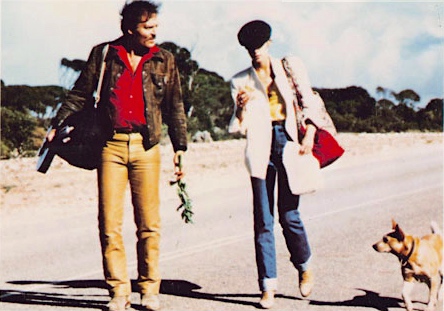
    Last year’s (eventual) Best Picture winner could pithily be described as “Boyhood with a black kid”, and I’m sure it has been plenty of times, but that does a disservice to Moonlight’s own unique qualities.

    That said, it’s not difficult to draw obvious comparisons between the two. Both follow the lives of an American boy as he grows up across a decade-and-a-bit. Whereas Boyhood was shot in real-time with the same actor, Moonlight drops in on its central character, Chiron, at ages 11 (played by Alex Hibbert), 17 (Ashton Sanders), and 25 (Trevante Rhodes). Both films see the lead trying to figure out his place in the world, while also dealing with an absent father, surrogate father figures, and a mother often preoccupied with her own problems. But whereas Boyhood frequently felt like a ramshackle collection of vignettes that together created a loose portrait of a childhood, Moonlight is a bit more focused: Chiron is both bullied and gay, and how he deals with these things gives a shape to the narrative that Boyhood seemed to lack.

    Much of the credit for creating that smooth storyline belongs… well, with writer-director Barry Jenkins, of course (and at this juncture I must shoehorn in a mention of his charming Criterion closet video — if you didn’t love the guy before, I’m sure you will after watching that). But it also belongs with the three actors playing Chiron, who not only chart his development over time, but also make him a highly relatable protagonist in a very subtle way. The connection the viewer builds with him comes from the understated power of their acting — at all ages, Chiron expresses a lot without saying much, which only serves to draw us closer to him as we feel like we understand him nonetheless.

    Boyhood

    The quality of the performances from Hibbert, Sanders, and Rhodes is only emphasised when you learn that the three actors never met, never rehearsed together, never even watched each other’s work. That makes it all the more remarkable that they share something — in their eyes, or the way they hold themselves, or the hesitancy with which they connect to other people. It’s especially apparent in Rhodes: at first his version of Chiron seems completely different to the earlier two, but then we realise that’s just a front, and the real Chiron he’s buried comes to the fore when he reconnects with an old friend. From that point, he’s so like Hibbert and Sanders that it’s almost uncanny.

    Another thing the film handles with admirable subtly is the time jumps. Numerous subplots continue across all three sections, but rather than bluntly spell out what’s changed between each, Jenkins lets us infer it; and because we’re only getting a snapshot each time, some of these arcs (in particular that of Chiron’s mother, played by Naomie Harris) are contained as much in the gaps of what we’re shown as they are in what’s actually presented on screen. That we can pick up on what’s happened off screen is as much a tribute to Jenkins and his cast as is the quality of what we do see. And although the characters may change and develop off screen, what we witness each time is almost like the inciting incident that leads (in)directly to the next part of the story — the effects of actions are magnified over time, and the jumps mean you go directly from where something begins to where it ends up.

    Boys to men

    In telling the story of a young gay black man, Moonlight is exposing a world and lifestyle that’s not seen much, or at all, in (mainstream) cinema — that is, being black and gay. Or just being gay, really. Or black, to an extent. There’s an inherent positivity in getting such untold stories out into the open. Nonetheless, there’s a certain universality to Chiron’s experience. Lest one thinks that’s just a straight white guy trying to make everything relate to him (and I’ve seen others be accused of such appropriation), Jenkins observes it too in the film’s Blu-ray extras. A film doesn’t need that element of recognisability — there’s nothing wrong with illuminating a lesser-seen facet of the world; depicting a unique life experience — but Moonlight’s shy love story speaks across boundaries of race, gender, and sexual orientation.

    5 out of 5

    Moonlight is released on DVD and Blu-ray in the UK today.

    New Tale of Zatoichi (1963)

    aka Shin Zatôichi monogatari

    2017 #75
    Tokuzô Tanaka | 92 mins | Blu-ray | 2.35:1 | Japan / Japanese

    New Tale of Zatoichi

    With studio Daiei apparently realising they had a potential long-running series on their hands, blind masseur cum roving wrong-righter Ichi (Shintarô Katsu) makes his colour debut in this third film. Despite the obvious visual change, New Tale picks up on plot threads from the previous film, concluding a trilogy of sorts that spans the series’ first three instalments.

    Two strands from Ichi’s past come forth to challenge him this time: as he’s hunted by the brother of a villain he killed in the previous film, Ichi runs into the master who trained him to be a sword fighter, Banno (Seizaburô Kawazu). Desperate for money, Banno has fallen in with a criminal gang, while also trying to marry his younger sister, Yayoi (Mikiko Tsubouchi), to a respectable samurai — but Yayoi has feelings for Ichi.

    Where the first Zatoichi sequel was faster and more action orientated, New Tale takes a slower, character-driven tone. Ichi is pulled in multiple emotional directions, most of which he keeps stoically buried, but we can still interpret them from Katsu’s nuanced performance. The most forefront theme is violence and the honour of it: Ichi vows to renounce those ways to marry Yayoi, while Banno is betraying them with his greedy actions — and naturally those two are going to come into conflict. It makes for a sombre film, that doesn’t come to a happy conclusion.

    Family dynamics

    Although this is the first colour Zatoichi, director Tokuzô Tanaka keeps the palette muted throughout, but this is particularly obvious at the end: after Ichi gives in to his old ways, the final shot is practically in black and white, like the previous two films — perhaps a visual indicator of our hero’s return to, or acceptance of, his previous position. Although this dull colour scheme means New Tale isn’t the most vibrantly exciting film visually, it’s compositionally strong, making appropriate use of the wide frame. It’s interesting to note that Tanaka was previously an assistant director on such acclaimed masterpieces as Rashomon, Ugetsu Monogatari, and Sanshô Dayû, so I guess he picked up a thing or two.

    As Ichi hits the road again at the end (I don’t think it counts as a spoiler that he doesn’t ultimately settle down), it feels a little like an origin story has been completed, setting Ichi off on a path ready for standalone adventures. That said, according to the liner notes that accompany Criterion’s Blu-ray release, audiences “became increasingly starved” for details of Ichi’s past as the series went on, so I guess some people weren’t satiated.

    I don’t think New Tale is quite the equal of the first film, which seems the purest execution of the character as yet, but its thoughtfulness in engaging with the emotional effects of a violent life mark it out as a step above the second movie.

    4 out of 5