It’s only been a fortnight since my last “monthly” update but it’s been a busy one, with the entirety of Marvel/Netflix miniseries The Defenders and two feature-length instalments of Game of Thrones to look over.
Also reviewed: the penultimate pair of Twin Peaks episodes, the first season of Designated Survivor, and the pilot of Rick and Morty.

The Defenders Season 1
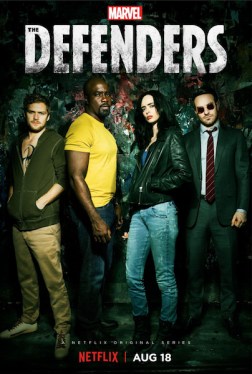 After years of build-up, and a grand total of 65 episodes of lead-in shows (yes, that many, really), we’re finally here: the culmination of Phase One in the Netflix arm of the Marvel Cinematic Universe. Like Phase One of the movie side, said culmination is a big ol’ team-up of every hero we’ve been introduced to so far, working together to stop a threat that’s been building across some of their individual series.
The Defenders is the epitome of the “it’s really an X-hour movie” style of TV making. It starts slow, confident both that it’s got 8 hours to tell its story (though it actually only takes 6½) and that the majority of its viewer base will stick it out whatever. Said viewers have been divided on its merits, but I bet most of them did stick around for all eight episodes. I mean, if you made it through Iron Fist, The Defenders is a walk in the park. (Interesting aside: apparently most Netflix subscribers have watched at least one of the four contributing series, but very few have actually watched all four.)
Episode one, The H Word, takes its time to reintroduce us to the four lead characters, showing where they’ve been and what they’ve been up to since we last saw them in their own series. Depending on your whims, the aggressive colour grading used to differentiate each thread is either a neat visual shortcut or laughably overcooked. It’s kind of impressive that each strand evokes the style of its root show, though that means the combination feels like a bit of a hodgepodge. The downside is that the way hip-hop music kicks in almost any time Luke Cage appears (there’s no similar aural affectation for any other character) feels like a parody.
In Mean Right Hook, we begin to see that the apparently-unrelated storylines of our four heroes are, shocker, actually connected — who saw that coming? But it’s not until Worst Behavior that we get them on screen together. The episode is every inch the end of act one: it’s confirmed where all the separate threads lead (the Hand), we find out what happened to Elektra, and our heroes team up for the first time. That it takes almost three whole episodes to get to this point is emblematic of the leisurely pace these streaming series take; the downside of shows being released all at once and treated as a long movie in segments. It would be better paced if the team was together by the end of episode two — dividing what was originally billed as a miniseries into four two-hour chunks seems natural to me.
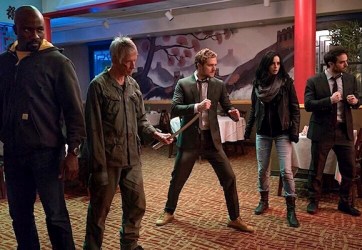 With the team introduced to one another, Royal Dragon is almost a bottle episode — the gang hole up in a Chinese restaurant to hide from the Hand and make a plan. It works neatly to let our heroes settle their differences and agree to actually team up. There’s some fun sparky dialogue in their interactions, too. For my money it’s the best instalment of the series. The downside: having said that episode three is the end of act one, episode four really feels that way, with the team finally united — but we’re halfway through the series.
So now it’s into a truncated middle. Take Shelter is a lot of business, transitioning the series into its second half — getting the supporting casts to safety, establishing where the plot is headed now they’ve teamed up. Ashes, Ashes livens things up, splitting the team into the mismatched pairings of Luke/Danny and Matt/Jessica, which keeps things lively as they put the pieces together. Cap that off with a couple of big twists at the end and it makes for a low-key great episode.
The final two episodes, Fish in the Jailhouse and The Defenders, form a suitably epic-ish conclusion — essentially, a big punch-up (with a bang), though with character moments and developments liberally scattered throughout. As to how it finally wraps it all up… well, no spoilers, but it plays a card it can’t follow through on (but at least has the good grace to admit that as a parting shot), and doesn’t conclusively end some of the things I thought it would. Maybe future seasons of Marvel/Netflix shows will decide to leave those threads dead and buried; maybe they’ll resurrect them. I hope the former, but they haven’t shut the door on the latter. Either way, I think it’d be difficult to keep watching any of the individual series without also making time for The Defenders.
 Overall, the relative brevity and speed of the story here does make it feel like an event miniseries, more than the sprawling and novelistic styles of the four contributing series. Maybe it’s just because it’s how I chose to watch it, but I reckon it plays better as four feature-length episodes than eight normal-length ones. As this is Netflix and you can watch at your own pace, maybe that doesn’t matter; but if you were watching this weekly, I think it’d be immensely frustrating that it took three whole weeks to get to the actual team-up. In a post-series interview, the showrunner talks about how they didn’t have time for certain character combinations that writers and/or fans wanted to see. Well, you could’ve made time if you’d got a move on with things in the first few episodes. The freedom streaming series are allowed is great, but some of the hoops network shows are forced to jump through do have pleasant side effects.
In the end, The Defenders is much like its big screen analogue, The Avengers: it’s fun to finally see all of these characters come together, and there are good bits scattered throughout, but ultimately it struggles to measure up to expectations, or to reach the same heights of quality as the better individual adventures. Put another way: it’s not Iron Fist, but it’s not quite Daredevil or Jessica Jones either. Somehow, I guess it makes sense that a series which combines all the other series would end up settled at the median of their quality levels.
Game of Thrones Season 7 Episodes 6-7
 Picking up where the previous episode left off, the season’s penultimate episode saw us follow Jon Snow and his band of merry men Beyond the Wall in search of evidence. What ensued was a Thrones version of the “men on a mission” narrative, with the characters sharing scenes in a variety of combinations (I think we can all agree the Hound / Tormund exchange was the highlight) before running into trouble. Surrounded and outnumbered on a frozen lake, with Gendry sprinting back to Eastwatch for help, this is where some people found massive problems with the episode.
The whole season has been called out for its apparently flexible attitude to time — in particular, how long it takes to traverse huge distances — and Beyond the Wall focused that into a microcosm. Personally, I think the season (and episode) could’ve handled this better if they gave us a few more points of reference — a line here or there about how long people had been away, a shot of them travelling, that kind of thing. It doesn’t help that things are moving at a different pace to earlier seasons. Maybe in the past there were days between individual scenes; now there are weeks. That throws off viewers’ expectations. Nonetheless, the production team’s defence — that there can be weeks between scenes — covers almost all of the complaints. Even in this one episode, we don’t know precisely how long the guys are trapped on the lake. It’s at least over night, and in the North in winter nights would be very long.
 So ignoring those somewhat facile complaints, we can get back to looking at the end of the episode as pure spectacle. Other people (people not complaining about the timelines) hailed this as the series’ most incredible visual display yet. Well, some people always do that. It was great to see the dragons in action against the army of the dead, the exploding ice indeed looked spectacular, but as a battle it wasn’t equal to what we saw in Hardhome, Battle of the Bastards, or this season’s The Spoils of War. Coming fourth(-ish) to those is still a mean feat.
As for the ending… deus ex machina gets thrown around in online discussions a lot these days. It’s almost always used incorrectly. That was the case here. Still, the whole thing with Jon Snow almost drowning and then pulling himself out was a bit silly. We know he’s got the thickest of thick plot armour — stop putting him in mortal danger and then having to jump through ridiculous hoops to save him, it just shatters the illusion.
With the proof acquired, it was on to King’s Landing for a long-awaited meet-up by most of the surviving cast members in the feature-length finale, The Dragon and the Wolf. I don’t know about anyone else, but it felt like two episodes glued together to me. The aforementioned conference took up exactly half the episode, I believe, with the second half moving on to events at Winterfell, back at Dragonstone, and between Cersei and Jaime in the wake of promises made and already broken. Of course, if you did split it in half then each episode would only run about 43 minutes, and we’ve seen how angry some fans get when episodes dare to run as short as 50 minutes.
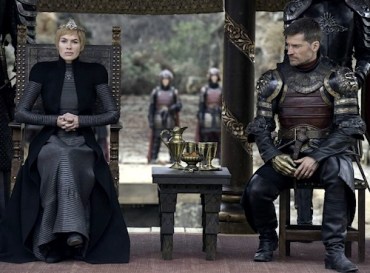 Some people were blown away by the twists and revelations in the finale. I guess it’s the fault of the internet age, but it felt like an awful lot of stuff that had just been a long time coming to me. The Night King using his dragon to melt the wall should probably have been mind-blowing, but it felt like it was just a matter of time (him actually getting a dragon the week before, however, was as effective as it was meant to be). The reveal about Jon Snow? We’ve already had enough breadcrumbs to put it together. It’s not really worth mentioning until Jon hears it for himself. On the other hand, the revelation that Bran doesn’t know everything — he has the option to see anything ever, but he has to go looking for specifics — is potentially important. How? Well, we’ll see.
On the whole, it seems to have been a divisive season of Thrones. I feel like I’ve written that sentence before. Some people thought it moved too quickly — presumably not the same people who used to moan about how slow it was. Some missed the character moments that allowed for; others revelled in the spectacle on display almost every week. I wouldn’t have minded a slightly slower pace, spreading the big events out a little more (the end of The Queen’s Justice was particularly over-stuffed with major events), but said events were hugely impressive in themselves. HBO may lavish Thrones with an insanely large budget, but it’s all on screen, looking more like a summer blockbuster than a cable TV series.
Season eight is now on its way — eventually. It feels like there’s still a lot of story left to get through. With only six episodes left, I hope they’ve given themselves enough time to wrap it up satisfactorily.
Twin Peaks Season 3 Episodes 15-16
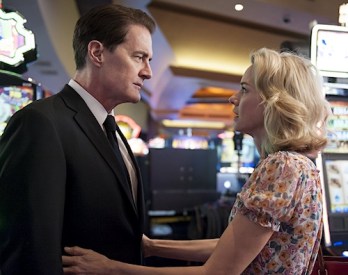 As we reach the penultimate week of the Twin Peaks revival, the one-armed man speaks for us all: “You are awake… Finally.”
Yes, it’s true: the thing most viewers have wanted since, ooh, the first bloody episode has finally happened: FBI Special Agent Dale Cooper is back in the building. The advantage to the excruciating wait for his return was that, when it came, it was joyous. I don’t think anything has given me as big a grin this year as “I am the FBI.” Well played, Mr Lynch. Now the next two hours better be bloody good to make up for that wait…
Actually, it finally feels like there’s hope it might all wrap up and come together. Of course, this is David Lynch we’re talking about — his idea of “all wrapped up” is not the same as most people’s. But pieces are moving into position, some answers have been forthcoming, and the stage is set for an ending that is satisfying on at least some level, even as it inevitably leaves numerous things open for people to ponder for decades to come. Lynch has said before that season two’s cliffhanger was not how Twin Peaks was meant to end, so I don’t think it’s too daft to presume we’ll get something a bit more conclusive this time round.
Designated Survivor Season 1
 While signed up to Netflix for The Defenders, I also started watching this Netflix “Original” (it’s on ABC in the US, but Netflix have global rights, hence it gets their “we made this, honest” branding over here). Its setup has intrigued me since it launched last year, but its traditional release model (21 episodes across nine months) didn’t fit with my “subscribe for a month now and then” usage of Netflix until after the season had finished, i.e. now.
It stars Kiefer Sutherland as President Jack Bauer— dammit! President Tom Kirkman, a man who didn’t want the job: during the State of the Union address, Kirkman is the “designated survivor” — a member of the cabinet squirrelled away somewhere secret in case disaster strikes. And strike it does, as the entirety of the US government is wiped out in a massive explosion, thrusting Kirkman from junior cabinet member about to lose his job to leader of the free world. As he copes with his newfound responsibilities — not only rebuilding the government, but retaliating against those responsible and battling forces at home who question his legitimacy — we also follow an FBI agent who unearths a conspiracy behind the attack.
The dual-pronged narrative means the series plays like 24 meets The West Wing, with a big conspiracy storyline unfolding across the season while Kirkman faces a variety of political challenges and emergencies on a week-to-week basis. It’s not quite as sophisticated-feeling as Aaron Sorkin’s classic, though maybe that’s just time speaking — the rise of prestige TV has kind of dulled the ability of network shows to feel high-quality, and I wonder if The West Wing would hold up as well today. Anyway, what Designated Survivor lacks in sophistication it makes up for with watchability: we burned through the entire season in under a fortnight. Its American patriotism may be unpalatably cheesy at times (Kirkman makes a speech in the finale, greeted with a standing ovation from Congress, that’s like eating a stuffed crust quattro formaggi with extra cheese and mozzarella sticks on the side, all dipped in fondue), but if you can stomach that it’s a decent drama. I’ll be back for season two.
Also watched…
Rick and Morty Season 1 Episode 1 — People seem to keep going on about how great this is (it’s ranked as the 7th best TV series ever on IMDb), so, despite thinking it looked singularly unappealing, I thought I should give it a go. The pilot does not bode well. It has some fantastic throwaway ideas, but the characters and tone weren’t to my taste. Apparently it gets better though, so I’ll give it a couple more chances.
Things to Catch Up On
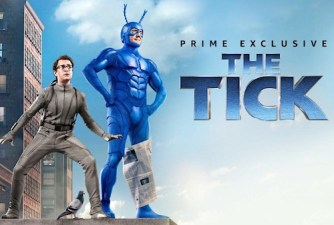 This month, I have mostly been missing Amazon’s new version of The Tick, the first half of the first season of which debuted last week, a full year after the pilot was made available. I wasn’t too impressed by that episode (my review is here), but I’ve heard episode two rights the ship somewhat, so I intend to make time for it at some point.
Next month… it has happened again: Twin Peaks reaches its conclusion.






 Favourite Film of the Month

























 The first of this month’s quartet of trips to Westeros, Stormborn, demonstrated better than
 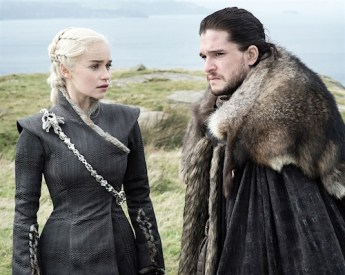 The most epic so far came in The Spoils of War. Apparently it’s been dubbed the Field of Fire — if there’s one thing Game of Thrones is consistently good at, it’s giving its big events cool monikers. (The “Field of Fire” is also an event from the series’ backstory, I believe, so maybe some of the reviews I read just got confused.) But it’s not just cool shots of fiery destruction that make this episode so satisfying: it’s the way that changes the game. Not to mention characters coming together after so long apart, both on the battlefield and not. That two girls talking in a crypt can be as thrilling as a dragon blowing shit up is… well, how character investment works, I guess. Some reckon this is the series’ best-ever episode. I wouldn’t go that far, but it is right near the top.
 Elisabeth Moss, star of both Mad Men, a series partly about the sexual politics of the ’60s workplace, and The Handmaid’s Tale, a series about the sexual politics of a world where women are baby-making slaves, returns as Det. Robin Griffin for a second run of Top of the Lake, which is now a series about the sexual politics of present-day Australia.
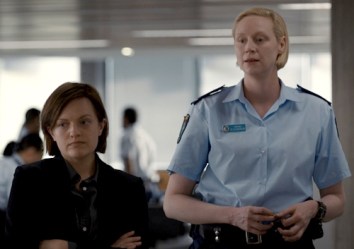 There are some great performances in there too, mainly from the female characters — no surprise, really, considering creator and co-writer/co-director Jane Campion is clearly interested in exploring women’s place in the world. Moss carries things, with Robin competent but combative at work (she needs to be, as the Australian police force seems stuck in the ’70s with its gender politics) even as her personal life is a tumultuous mess. Nicole Kidman gets to play it kooky as the adoptive mother of Robin’s child, who’s gone all spiritual and lesbian recently. The most entertaining is Gwendoline Christie as an enthusiastic constable who latches on to Robin, eager to be her protégé. She brings the bulk of the humour, with great lines and moments aplenty, but also brings emotional depth when needed.
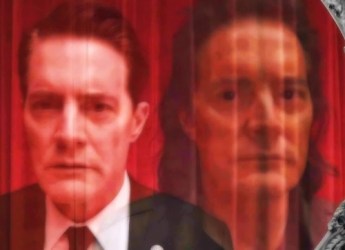 I must be honest with you, dear readers: the longer this Twin Peaks revival goes on, the less I feel I’m enjoying it. It works best when Lynch is trying to out-Lynch himself. Those episodes are crazy and borderline nonsensical and insanely challenging to what constitutes filmed entertainment, but at least they’re interesting; and if you don’t get it you can dismiss it as “it’s Lynch, innit”. It’s actually the ‘normal’ stuff — the investigations and machinations in South Dakota, Las Vegas, and Twin Peaks itself — that are beginning to get on my wick. Again, at times there are moments of clarity or inspired weirdness, but in between sits a morass of sludgy plotting and wilfully obscure characterisation. It’s starting to nudge the series from “revelatory experiment” into “noble failure” territory, for me.
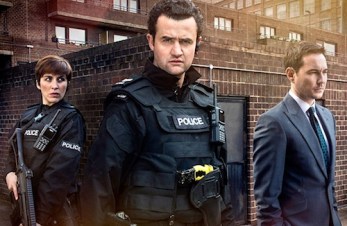 As I noted
 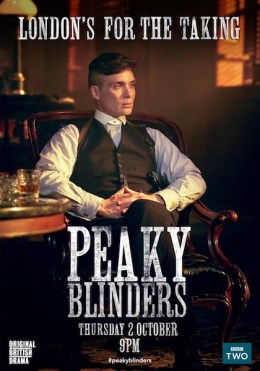 The second series of BBC Two’s period crime drama jumps forward two years to find everyone’s favourite Brummie criminals running such a successful business that they intend to expand their operations to London, by sticking their oar into a turf war between the Jews (led by Tom Hardy) and the Italians (led by Noah Taylor). Meanwhile, Sam Neill’s copper is back with a vengeance, teaming up with the Irish to blackmail Blinders kingpin Cillian Murphy into performing an off-the-books assassination for the crown.
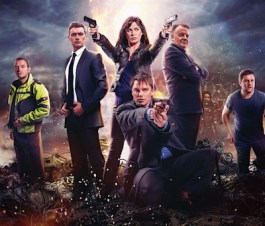 This month, I have mostly been missing Torchwood: Aliens Among Us. Although ‘just’ an audio drama from Big Finish, it’s being marketed as the series’ official fifth season, picking up after the events of 2011’s (disappointing) Miracle Day. A full 12-episode run, it’s coming out in three box sets — although part two isn’t out until October and part three until February, part one came out last week. Obviously, I’ve not listened to it yet. Hopefully next time…