

Anthony & Joe Russo | 181 mins | cinema | 2.39:1 | USA / English & Japanese | 12A / PG-13
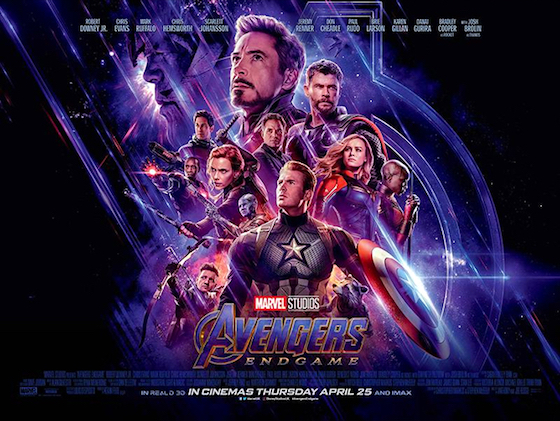
A trilogy each of Iron Mans, Captain Americas, and Thors; a pair of Ant-Mans and two volumes of Guardians of the Galaxy; an Incredible Hulk, a Doctor Strange, a Black Panther, a Spider-Man, and a Captain Marvel; plus, of course, a trio of previous Avengers — they’ve all been leading us here, the culmination of 11 years and 22 movies in the Marvel Cinematic Universe. It’s an unparalleled achievement in moviemaking; a combination of blockbuster scope with TV-esque serial storytelling that is so 21st century. Within its three hours and one minute running time, Endgame encompasses and represents almost all of the tendencies of other MCU movies — for both good and ill. This is not a perfect movie, and this will not be a 5-star review, which I’m saying upfront because massive spoilers may follow. There’s not much to discuss about the film if we limit ourselves to what’s been revealed in trailers and promos, because they’ve purposely kept almost the entire movie a secret, so I’m just going to talk freely.
If you’ve seen the movie then a plot recap is unnecessary. But in case you just don’t care and have decided to read on regardless: Endgame picks up days/weeks after the cliffhanger ending of Infinity War (maybe I missed or misunderstood something, but I swear one character said it had been 23 days then later someone said it had been two days). The surviving Avengers, plus newly-summoned addition Captain Marvel, manage to track down super-villain Thanos and set off to retrieve the Infinity Stones and use them to bring back the 50% of the universe’s population he turned to dust. Unfortunately, Thanos has destroyed the stones. All hope is lost. Cue title card: five years later.

Okay, we’ll return to the plot in a minute, because this is the first structural oddity of the film. This opening salvo — made up of a pre-Marvel logo sequence in which we learn what happened to Hawkeye and his family, a pre-titles sequence which sets up the plan to beat Thanos, and the pre-timejump action I just described — is almost a self-contained unit dealing with the hangover from the last film. It wouldn’t fit as a closing act to Infinity War — that movie ended at the perfect point in the story — but nor does it really belong at the start of Endgame, which begins properly after the “five years later” card. I have mixed feelings about it, because I like that we see both the heroes’ immediate attempts to rectify the situation, but also that they can’t, so we get to see how they’ve coped (or failed to) over the ensuing years. But, structurally, it felt a little clunky to me; a bit of business from the previous movie that has to be wrapped up before this one can start. I’m not sure what the solution is. If movies still bothered with opening credits, something as simple as separating it all off as a pre-titles sequence might’ve been the answer.
Anyway, back to the plot. It’s five years later and the world is still coming to terms with the snap. There are too many characters in too many different places to recap what everyone’s up to — that’s part of why this film has a three-hour running time, because there’s simply so much to tackle. But in many ways this is the best part of the movie, especially if you’re invested in these characters rather than just here for action or spectacle. It’s a bit grim, obviously — no one’s going to be cheery about half the world being wiped out — but it digs into the differing reactions this would provoke in ways that are character-specific and mostly plausible. I say “mostly” because, when Hulk (or whatever he is now) turns up, I didn’t quite follow the logic of why he’d turned himself into this Banner/Hulk hybrid. Still, seeing how the characters come to terms with their new reality is an effectively thoughtful way to start off.
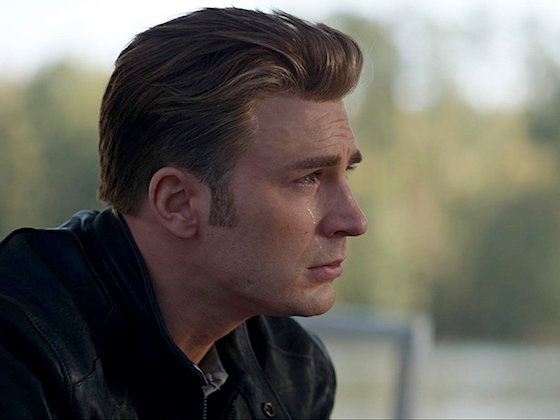
But that’s not going to fuel a superhero blockbuster, is it? Here the little mid-credit scene from Ant-Man and the Wasp comes into play. Marvel have always used their credit stings to connect up the films, but has it ever been so vital as this? They’re normally little teases, basically trailers to remind you which film is next, but what happens in that Ant-Man 2 scene is vital to the plot of Endgame. Basically, Scott has been stuck in the Quantum Realm for the past five years, but this provides them with an opportunity: it might be possible to use it for time travel, allowing them to go back in time and undo Thanos’ actions. Or something. Endgame’s relationship with time travel is… variable. Time travel movies are always complicated, and because it’s not a thing that’s really possible they get to set their own rules for how it works. The problem is, Endgame isn’t very clear what those rules are. It makes a great show of saying “it’s not like in the movies” and reeling off a slew of pop culture references (Back to the Future is mentioned more than once), but then it struggles to clearly define how it does work in this movie. And once the characters set off into the past, any explanations it did give seem to go out the window.
It’s in this long middle act that Endgame was most often problematic for me. Act one is largely committed to being solemn, and act three is largely committed to being Epic, so it’s in the middle that the film shoots for the MCU’s trademark “light and breezy” tone. Unfortunately, sometimes this is so shoehorned in that it rubs against the serious stuff, resulting in a tonal mishmash. I’ve frequently advocated for movies that mix seriousness and comedy side-by-side, because real life often does the same, but there are points where Endgame undercuts its own stakes or undermines its characters for the sake of a one-liner or a comedy bit, rather than embracing the seriousness of the situation and letting comedy evolve naturally when it’s warranted.

Conversely, some of the humour is accidental. One of the more egregious examples for me is when Black Widow and Hawkeye are faced with the Soul Stone dilemma: one of them has to die as a sacrifice for the stone to be released to the other. They both decide to sacrifice themselves, which leads to a protracted series of attempts to stop the other from committing suicide first. The constant back and forth of who had the upper hand gets almost to the point where it’s comical — I began to wonder if it was meant to be a comedy bit. But then, just as it was reaching the height of absurdity where I was about to conclude I should be laughing rather than just thinking “this is silly now”, it abruptly stops when one of them ‘wins’ and we get a Tragic Death Scene. It’s clearly meant to be a shocking, affecting moment of heroic sacrifice; instead, I found it a jumble of intentions that neutered any genuine feelings.
Another moment that’s well-meaning but fumbled comes during the big climax, when all the Lady Superheroes unite to do something. It’s a moment of such brazen, uncalled-for “feminism” that it feels like pandering, and that’s a bad thing. I’m searching for a better word to use in that last sentence, because overall feminism is a good thing, but this particular moment is so out-of-nowhere, so fundamentally meaningless (there’s no need for it to be just the women involved), that it’s egregious. When crybaby fanboy trolls scream about unnecessarily forcing political correctness onto genre movies, they’re unerringly wrong… except this time they’ll be right, because that’s exactly how this plays. There’s a broadly similar moment in Infinity War, when a couple of the female heroes defeat whichever of Thanos’ sidekicks is the female one, and I thought that worked, partly because no one made a big deal of it. Here, it’s clear they’re making a point. I’m not sure what the exact goal of it was — to say “women are as capable as men”; to say “look how many female heroes we have now”; or something else — but there are better, subtler ways to make that same point.

Where Infinity War found room for almost all of the MCU’s ongoing franchises and characters (an impressive feat), Endgame cements its finale status by re-centring us on the original lineup from the initial Avengers team-up… er, plus a couple of other characters, who are important to varying degrees for various reasons. It’s that kind of “it’s almost this… but not quite” construction of content and/or theme that belies a certain lack of focus or forethought. If this is a last hurrah for the original team, why is Ant-Man vital to the story even being possible? Why does Nebula get one of the most significant subplots, intimately connected to her character arc from Guardians Vol.1 and 2? Why is brand-new (to the movies) character Captain Marvel repeatedly required to come in and save the day?
This extends to the time travel too: when they go back, it’s into the timelines of specific movies, but why those movies were chosen isn’t always clear. Avengers Assemble? Makes sense — it was where the crazy project of the MCU proved it was working, making that film both the end of the beginning and a beginning in itself. Guardians of the Galaxy? I mean, I guess — it’s where Marvel proved they could turn even the most obscure property into a massive, popular hit; plus it’s where a lot of the Thanos storyline really got going. Thor: The Dark World? …wait, what? Seriously?! Yes, perhaps the greatest trick Marvel have ever pulled is making Thor 2 — one of their least well regarded films — a moderately essential component of this finale. You need to have seen that movie to fully understand what’s going on here, and now you can’t really skip it in your rewatches either.
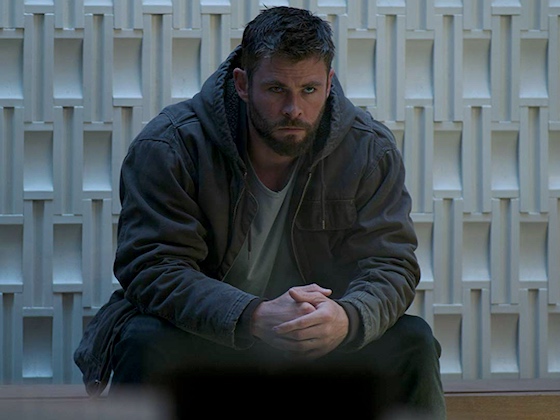
Talking of connectivity, Infinity War surprised by being a standalone movie, not just a Part 1. Okay, it was a standalone movie which ended with our heroes losing, which you could call a cliffhanger, but if you look at it from the other side — i.e. with Thanos as the main character — it’s a whole, completed, no-more-story-to-tell tale. Therefore it’s a fresh surprise (kinda) that Endgame is very much a Part 2 — and also, in fact, a Part 22 — freely nodding to and paying off stuff from previous movies on the assumption you’ll know what it’s referencing, more like the last instalment of a serial than a standalone film. Anyone who’s skipped a film or two (or three or four, etc) on the way to Endgame is likely to miss all the nuances, at the very least, and perhaps be left with more serious questions too. Newcomers definitely need not apply. But if there’s anyone who’s a fan of part of the MCU but not all of it, they’ll need to find their way into and through Endgame one way or another, because a whole bunch of stuff is wrapped up for good here; some heroes won’t be getting another standalone movie to put a button on their story.
I feel like this review has focused on the negatives and debatable drawbacks of Endgame, but that’s partly because a lot of the discussion right now seems unrelentingly praiseful. I mean, as I type this the film is ranked as the 5th best of all time on IMDb, a position it’s actually risen to over the past 24 hours (it debuted around 19th). I didn’t think it was perfect, or quite as good as that (for comparison: I thought Infinity War was more consistent and successful as a movie, and IMDb raters have currently ranked that 61st), but I did enjoy it overall. I don’t think it needed to be as long as it is (at times it meanders through scenes or comedic bits rather than getting on with things), but it doesn’t drag or bore. It’s a bit of an irreconcilable dichotomy that I think both it didn’t feel excruciatingly long and also that they should’ve tightened it up and brought the running time down.

Still, that runtime means they felt there was space for more than just action sequences. Allowing the film to focus on the emotions of the characters (at least some of the time) is suitable payoff for the investment people have in them. Indeed, as I said earlier, in many ways the first act is the film’s best stuff. This isn’t just an empty effects spectacle. But when it is a spectacle, it can be spectacular. Okay, the climax, where two sizeable armies rush at each other on a brown battlefield under a grey sky, degenerates into a massive free-for-all of whooshing pixels where it’s frequently hard to discern exactly what’s going on and who’s doing what to who (it actually reminded me of Aquaman, only with less colour. I’m sure such a comparison to a DC movie will be sacrilege to some Marvel fans, but it’s the truth). But within and around that there are still things that are a thrill, not least the big moment when the previously-dusted heroes turn up en masse in the nick of time. And when all is said and done, the end credits offer a special acknowledgement of the main Avengers who started it all, which was quite possibly my favourite bit of the whole movie.
There are no mid- or post-credit scenes, making this only the second MCU movie without them. (The first was The Incredible Hulk, which basically had its post-credit scene before the credits started. I’m sure they’d’ve placed that scene differently if they’d known it would become a trademark of the franchise.) It’s an appropriate decision: we know this isn’t the end (the next Spider-Man movie is out in a couple of months; many more officially-unannounced Marvel films are on the horizon after that), but this is supposed to serve as an ending nonetheless, and so letting it actually end, rather than attaching a tease for the future, is welcome. Though, really, how much of an ending is it? Yeah, it officially closes off the first era of MCU films, but a bunch of those characters are continuing into the future, and even some of the ones primarily associated with the first era — characters who died here — are coming back in prequels and the like.

However, the lack of credits scenes did allow me to enjoy some schadenfreude: I knew going in there were no scenes, but that there was a “meaningful sound effect” at the end of the credits. I had nowhere else to be, so I stayed to see what it was. Everyone else who stayed, however, was chattering about what the end credits scene might show. The credit roll came to an end, everyone went quiet in anticipation, that “meaningful sound effect” played, and I started getting ready to leave while all around me stared at a black screen while the cinema’s filler muzak played, thinking they were witnessing the beginning of another scene. It took them a good 30 seconds to twig. (Maybe I should’ve said something… maybe the usher stood at the front of the auditorium should’ve said something… maybe he and I are both just horrible people…)
That literally brings me to the end of Endgame. There’s much more that could be said about it, and will be said about it. For me, an interesting thing now will be to see what is its long-term reception. As I said, right now it’s riding high on a wave of audience euphoria, but it’s only just come out: most of the people who’ve seen it already are the really keen ones; the diehard fans. What will wider audiences think? What will the diehards think when they get a chance to revisit it, removed from the heat of initial emotion? Will the consensus remain that Avengers: Endgame ranks in the echelons of the very greatest movies of all time, or will cooler heads prevail?

Avengers: Endgame is in cinemas everywhere (except Russia) now.






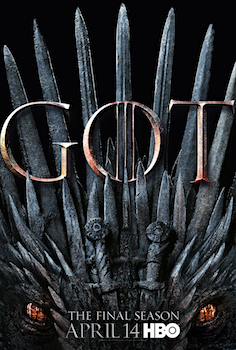 The final season of HBO’s fantasy epic began with its last two regular-length episodes (the remainder are each a feature-length 80 minutes, give or take), but they stand alongside the epics still to come as a kind of two-parter. Both episodes are set in the quiet before the storm(s) to come, with pieces being moved into place and everyone preparing themselves for what they assume is the endgame: a battle with the army of the dead. Of course, as outside observers we know the battle can’t be the end — there are whole characters and plot threads that will be left unresolved, whatever the outcome of the battle, and up to three (extra long) episodes to resolve them in. But such considerations are for future episodes; I mean, for one thing, next week’s big battle episode is likely to have a huge impact on who’s left standing, which will in itself indicate what ways forward remain possible.
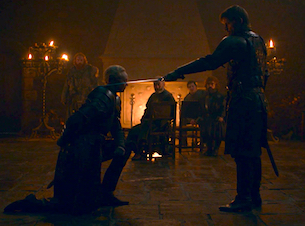 I’ve already slipped into discussing A Knight of the Seven Kingdoms, perhaps supporting my point that this is a two-parter in separate episodes’ clothing. Here we get more reunions, rehashes, and revelations. I mean, sure, Jaime arrives in Winterfell at the end of the previous episode, but it’s here that the meaning of that really plays out, with his trial-like scene before people he has wronged — and one he saved — before his one-on-one with the boy he pushed out of a tower all those years ago. In fact, if there’s one thing that does keep these two episodes distinct, it’s how much the season premiere mirrors the series premiere (i.e. season one episode one, Winter is Coming) — check out
 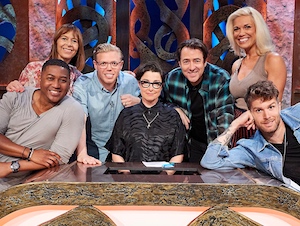 If you live outside the UK or watch Thrones via, er, other means, I guess you won’t know this: it’s UK broadcaster Sky Atlantic’s Game of Thrones aftershow — you know, one of those things where people connected to the show and sundry minor celebrities sit on a sofa and chat about the episode we’ve just seen. I’ve never watched it before because I’m normally one of those people who watches Thrones via, er, other means, and it rarely crops up on those, but I’ve had access for the first couple of episodes and, well, so far I’m not impressed. In the first episode, host Sue Perkins gamely struggled with guests seemingly dead set on chatting about anything other than what her questions asked, while the second felt like she was trying to get blood from three particularly reticent stones. The format’s not really at fault, but the guest booker might be… The Twitter reaction to these episodes suggests the show used to be better, so maybe they’ll re-find their mojo for the coming four episodes.
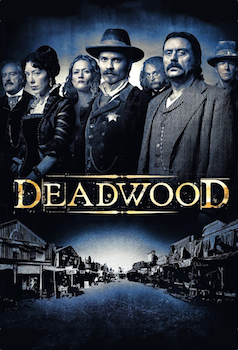 It’s quite a well-known piece of trivia that creator David Milch’s original pitch to HBO was for a series about two lawmen in the early days of Rome, thematically concerned with how we establish the rules and agreements of a society. With the series Rome already in development, HBO encouraged Milch to take the interesting theme but relocate it, and so he landed upon a frontier town in the old West butting up against the ever-widening reach of civilisation. Nowhere is this more apparent than in the show’s third season, with local elections looming and outside forces attempting to exert their influence over the town. The latter is represented by the arrival of mining magnate George Hearst (Gerald McRaney), who becomes a thorn in the side of both previously-dominant saloon owner-cum-gangster Al Swearengen (Ian McShane) and honourable but short-tempered sheriff Seth Bullock (Timothy Olyphant). Those two, once enemies, must join forces (along with most of the other regular characters) to attempt to counter Hearst’s moves. Where once Al could’ve just had the guy killed and fed to Wu’s pigs, his outside connections make that impossible — stakeholders would come looking, bringing even more attention and seeking justice. Civilisation, eh?
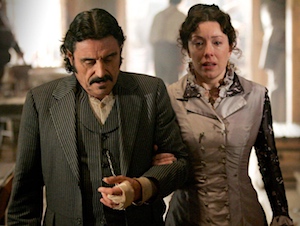 Not that the third season passes without fault, mind. By the middle of the season, episodes were being written so on the fly that they could only use standing sets and regular locations, because there wasn’t enough lead time to build anything new or travel to other locations. Later, outdoor scenes had to be cut back, as a tightening budget left no room for all the extras and horses needed to convey the town’s bustling streets. While these production issues are mostly covered for well enough, some storylines are also affected. For example, Wyatt Earp and his brother arrive in town, apparently with some big secret scheme in the offing, but in the very next episode that’s completely forgotten as they’re hastily written back out. Plus, considering the already sizeable regular and recurring cast, it’s mad that Milch decided to (a) add even more characters, and (b) devote an unwarranted amount of time to meandering subplots starring minor characters. It doesn’t ruin the show, but it means some good actors and characters go to waste as we while away time on things no one would miss if they‘d been ditched. The worst offender for me is Steve the Drunk and the never-ending kerfuffle around the livery, which starts out as an adequate and pointed subplot but eventually just drags on and on. Someone in the writers’ room must’ve loved that character and his (increasingly tiresome) verbal diarrhoea.
 Sadly, that arc was never completed. Milch knew the writing was on the wall before the season was completed, and there’s a very plausible theory that the second half of the season is actually an allegory for the conflict between Milch and the executives at HBO (you can read about that in W. Earl Brown’s comment on
 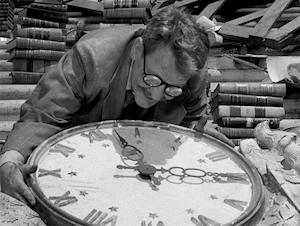 The new Jordan Peele-hosted iteration of Twilight Zone still doesn’t have a UK broadcaster, so I’m continuing
  Finally for now, two episodes that were remade in
 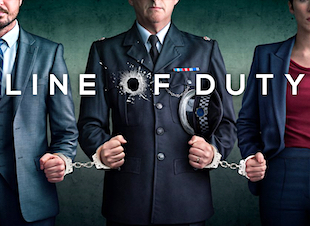 This month, I have mostly been missing the new series of Line of Duty, BBC One’s ever-twisty police corruption drama. Given that it’s been trending on Twitter every week, it’s a wonder I’ve not had it spoiled… yet. It’s now two-thirds of the way through, so I’ll watch it intensively once it’s over. I’d promise a review next month, but last month I said that about Hanna and I’ve yet to make time for that. Maybe they’ll both be here next month. Also: Ghosts, the new comedy from the cast behind Horrible Histories and Yonderland, which looks promising but, again, is a couple of episodes in and I’ve yet to start.
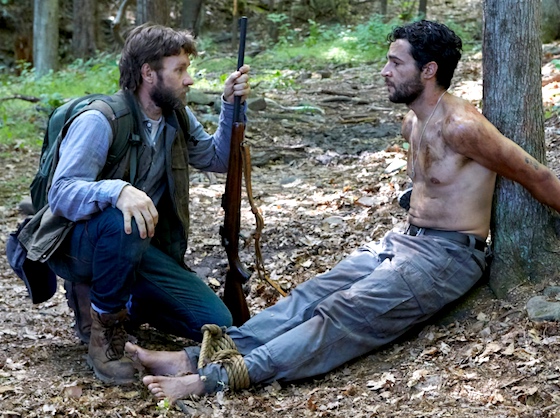

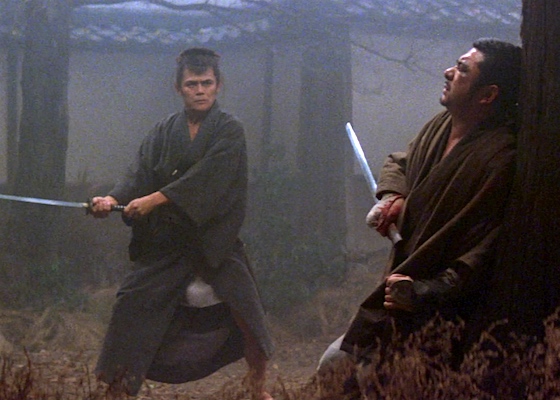









 Favourite Film of the Month
















 100Films.co.uk