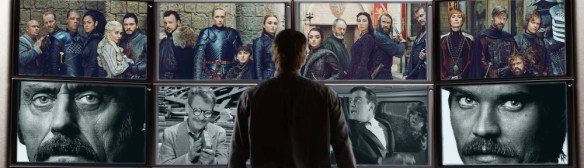
The past weekend may’ve been the hottest of the year so far (at least here in the UK), but you and I know the truth: winter is here. With any dreams of spring still a few weeks away, let’s revel in the final moments we’ll be spending with our favourite inhabitants of Westeros — the first two episodes certainly did.
Also this month: Sky Atlantic’s Thrones companion shows, the third and final season of Deadwood, and more of the best of The Twilight Zone.

Game of Thrones Season 8 Episodes 1-2
 The final season of HBO’s fantasy epic began with its last two regular-length episodes (the remainder are each a feature-length 80 minutes, give or take), but they stand alongside the epics still to come as a kind of two-parter. Both episodes are set in the quiet before the storm(s) to come, with pieces being moved into place and everyone preparing themselves for what they assume is the endgame: a battle with the army of the dead. Of course, as outside observers we know the battle can’t be the end — there are whole characters and plot threads that will be left unresolved, whatever the outcome of the battle, and up to three (extra long) episodes to resolve them in. But such considerations are for future episodes; I mean, for one thing, next week’s big battle episode is likely to have a huge impact on who’s left standing, which will in itself indicate what ways forward remain possible.
Anyway, back to the episodes we’ve already seen. The first, Winterfell, does the usual Game of Thrones season premiere thing of setting the scene: reminding us where everyone stands, and moving pieces into place ready for the season to come. But this is more than just a glorified “previously on”, with some important plot developments of its own, not to mention long-awaited reunions. In the former camp, the big’un is obviously Jon Snow finding out his true parentage. Well, to an extent: this isn’t news to the audience (even if you didn’t deduce it years ago, we were explicitly told about it last season… which aired, er, years ago), and while it clearly has an impact on Jon’s feelings about himself and his family, its effects on the plot won’t happen until more people hear about it.
More exciting were the reunions. Jon and Arya may’ve been the objective headliner, but my personal favourite was Sansa and Tyrion. With everything else that’s gone down since, I’d practically forgotten that they were once married, but the facts of their relationship and what’s happened to them since, particularly Sansa, made for an electric scene. Indeed, Sansa interacting with anyone is pretty fantastic at this point. She was such a damp squib in early seasons, and, frankly, I wasn’t convinced by Sophie Turner’s acting chops back then either, but recently she’s become a decided force to be reckoned with. Her scenes facing down with Dany are a case in point, not least their heart-to-heart in episode two. Another reunion highlight was Arya and the Hound, another unlikely but memorable pairing who get the short but sweet scene they deserve. Arya reunited with Gendry too, of course, and in the second episode she really united with him. Well, I’ll leave the furore around that to Twitter (but if you want to know what I think, this thread is pretty on the money).
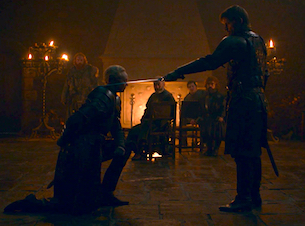 I’ve already slipped into discussing A Knight of the Seven Kingdoms, perhaps supporting my point that this is a two-parter in separate episodes’ clothing. Here we get more reunions, rehashes, and revelations. I mean, sure, Jaime arrives in Winterfell at the end of the previous episode, but it’s here that the meaning of that really plays out, with his trial-like scene before people he has wronged — and one he saved — before his one-on-one with the boy he pushed out of a tower all those years ago. In fact, if there’s one thing that does keep these two episodes distinct, it’s how much the season premiere mirrors the series premiere (i.e. season one episode one, Winter is Coming) — check out the image in this tweet for some of them.
What the second episode really represented was some kind of… not reward, exactly, but certainly benefit, or acknowledgement, for those who’ve become invested in these characters over the many years we’ve spent with them (or, if you’ve only caught up recently, many bingeing hours). It was a chance to just hang out with some favourites, and for some of them to achieve long-awaited dreams. Yes, obviously I’m talking about Jaime knighting Brienne. I guess if you’re not invested in these characters then some of these scenes feel like so much padding (“get on with the fighting!”), but for most fans this is a possibly final chance to revel in their favourites — after all, surely a significant number are for the chop when the fighting begins…
Thronecast Specials + Series 8 Episodes 1-2
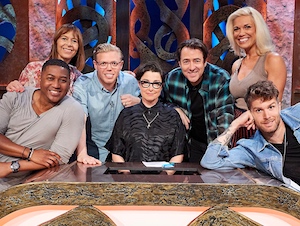 If you live outside the UK or watch Thrones via, er, other means, I guess you won’t know this: it’s UK broadcaster Sky Atlantic’s Game of Thrones aftershow — you know, one of those things where people connected to the show and sundry minor celebrities sit on a sofa and chat about the episode we’ve just seen. I’ve never watched it before because I’m normally one of those people who watches Thrones via, er, other means, and it rarely crops up on those, but I’ve had access for the first couple of episodes and, well, so far I’m not impressed. In the first episode, host Sue Perkins gamely struggled with guests seemingly dead set on chatting about anything other than what her questions asked, while the second felt like she was trying to get blood from three particularly reticent stones. The format’s not really at fault, but the guest booker might be… The Twitter reaction to these episodes suggests the show used to be better, so maybe they’ll re-find their mojo for the coming four episodes.
More successful by far were two Thronecast-related specials that aired before season eight began (and these you can track down via the aforementioned euphemistic “other means”, if you’re interested). The first, Gameshow of Thrones, saw Perkins quizzing two teams made up of former cast members and celebrity fans in a panel show format. If you’re in the middle of a Venn diagram that covers “fans of Game of Thrones” and “enjoys comedy panel shows”, it’s a convivial 90 minutes. The other, The Story So Far, managed to recap the essential points of the parent show’s first seven seasons in another 90 minutes, with a mix of clips, narration, and cast and fan interviews — all very useful when we’re heading into the concluding hours of the story, especially when it’s been a couple of years since it was last on. Certainly quicker than a 67-hour full re-watch, anyway.
Deadwood Season 3
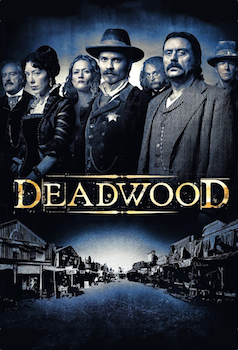 It’s quite a well-known piece of trivia that creator David Milch’s original pitch to HBO was for a series about two lawmen in the early days of Rome, thematically concerned with how we establish the rules and agreements of a society. With the series Rome already in development, HBO encouraged Milch to take the interesting theme but relocate it, and so he landed upon a frontier town in the old West butting up against the ever-widening reach of civilisation. Nowhere is this more apparent than in the show’s third season, with local elections looming and outside forces attempting to exert their influence over the town. The latter is represented by the arrival of mining magnate George Hearst (Gerald McRaney), who becomes a thorn in the side of both previously-dominant saloon owner-cum-gangster Al Swearengen (Ian McShane) and honourable but short-tempered sheriff Seth Bullock (Timothy Olyphant). Those two, once enemies, must join forces (along with most of the other regular characters) to attempt to counter Hearst’s moves. Where once Al could’ve just had the guy killed and fed to Wu’s pigs, his outside connections make that impossible — stakeholders would come looking, bringing even more attention and seeking justice. Civilisation, eh?
In my review last month, I mentioned the season two storyline that saw Al taken out by illness, as a way to reduce his influence over the rest of the characters and events. Season three does something similar, but ‘depowers’ him in a more interesting way: against Hearst, Al is at a disadvantage, certainly in terms of brawn and, possibly, in terms of scheming brainpower too. The way one particular show of strength from the businessman emasculates Al leads to some great introspection, leading the barman to doubt himself and his skills, possibly for the first time ever, certainly that we’ve seen. It serves to further deepen and strengthen the quality of an already great character. At the start of season one he’s clearly a villain, but he quickly becomes more, so that by this point he’s really an anti-hero. That’s partly because he’s the lesser of two evils next to Hearst’s ruthlessness, but also because we’ve had time to get the true measure of his character — as much as he tries to hide it, Al has a bit of a heart, and he certainly operates according to codes of honour and loyalty. It might not always be the same as that of the rest of society, but it’s strongly held. He still does despicable stuff, but there are many shades of grey there; and while Al is the marquee example, you find those shades in all the other major characters too — it’s part of why every performance is so great, because this quality cast are given such excellent material to work with. When most of the characters who’ve been regulars since the start begin to come together in the face of the threat from Hearst, it’s immensely satisfying, even as the threat they face seems insurmountable. The final few episodes are exciting, powerful stuff.
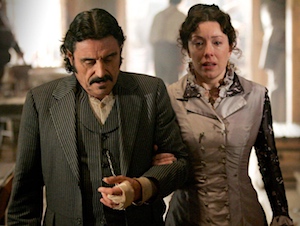 Not that the third season passes without fault, mind. By the middle of the season, episodes were being written so on the fly that they could only use standing sets and regular locations, because there wasn’t enough lead time to build anything new or travel to other locations. Later, outdoor scenes had to be cut back, as a tightening budget left no room for all the extras and horses needed to convey the town’s bustling streets. While these production issues are mostly covered for well enough, some storylines are also affected. For example, Wyatt Earp and his brother arrive in town, apparently with some big secret scheme in the offing, but in the very next episode that’s completely forgotten as they’re hastily written back out. Plus, considering the already sizeable regular and recurring cast, it’s mad that Milch decided to (a) add even more characters, and (b) devote an unwarranted amount of time to meandering subplots starring minor characters. It doesn’t ruin the show, but it means some good actors and characters go to waste as we while away time on things no one would miss if they‘d been ditched. The worst offender for me is Steve the Drunk and the never-ending kerfuffle around the livery, which starts out as an adequate and pointed subplot but eventually just drags on and on. Someone in the writers’ room must’ve loved that character and his (increasingly tiresome) verbal diarrhoea.
Similarly, many fans object to the acting troupe who turn up to establish a theatre in the town, their antics again seeming like an aside from the main thrust of the series. I have more sympathy for them, however. For starters, they’re led by the reliably excellent Brian Cox. His presence and interactions with the regulars is definitely worthwhile, especially in his position as an old friend of Swearengen’s, becoming a different kind of sounding board for Al, particularly valuable when he’s on the back foot for so much of the season. Secondly, I think it can be easy to forget that season three wasn’t meant to be the end — the theatre troupe may feel like time-wasters when we’ve got such limited time in this world, but the show was meant to carry on for several seasons after this, and their deeper merit was yet to come (plus there would’ve been plenty more time for everyone else, as well). Thirdly, Deadwood is the story of the titular town, and so the actors’ presence and effect on the town as a whole is the very point — Deadwood itself is the true main character, and its development is the primary “character arc” of the show.
 Sadly, that arc was never completed. Milch knew the writing was on the wall before the season was completed, and there’s a very plausible theory that the second half of the season is actually an allegory for the conflict between Milch and the executives at HBO (you can read about that in W. Earl Brown’s comment on this article at Uproxx), and it seems he used the little notice he had to attempt some kind of conclusion. It’s an odd old ending, though. You can see Milch knew it was going to be a de facto finale — it kinda serves as such — but, at the same time, it’s clearly not the final end he would’ve had if he could’ve. According to Milch, the final line of dialogue (which also gives the episode its title) was aimed at the audience. “Wants me to tell him something pretty” — meaning: the show’s refusal to wrap things up in a bow was not a failure to conclude; rather, it’s not a neat and tidy resolution because Milch was not just “telling us something pretty”.
The disappointment of the series being cut down before its time is compounded by the fact this early cancellation seems to have stalled the show’s reputation in the minds of some. As a commenter observed on Uproxx review’s of the finale, it’s like people go, “ah, Deadwood — shame it got cancelled after only three seasons”, and leave it at that, while shows that come to a ‘proper’ ending (like The Sopranos or The Wire or Breaking Bad or whatever) get all the focus. Maybe it’s something sharpened by the very act of ending: people sit up and notice The End of an acclaimed show, even those who’ve never even watched it, but when a show just peters off or fades away because it was cancelled prematurely, it doesn’t get that moment of focusing. Maybe Deadwood will finally earn that recognition next month, when HBO airs the long-anticipated follow-up movie. It’s a great series — imperfect, I’d argue, but at its best the equal of any other — and it’s not mentioned as often as it should be.
The Twilight Zone ‘Best Of’
 The new Jordan Peele-hosted iteration of Twilight Zone still doesn’t have a UK broadcaster, so I’m continuing last month’s theme of cherrypicking the very best episodes from the original 1959-64 series.
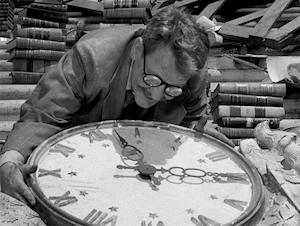
One observation I made last time was that the series seems to be a victim of its own success, in that its influence has been so widespread over the past six decades that the original episodes sometimes seem already familiar or simplistic. Season one’s Walking Distance is another where this rears its head, because it takes the lead character half the episode to begin to realise something that’s obvious to a modern viewer much sooner. It’s the unavoidable side effect of being more widely exposed to these kind of stories; of being a more experienced and savvy viewer than people would’ve had the chance to be in 1959. So, any merits have to be found beyond the basic concept and/or twist to make it worthwhile viewing today, and in this case it’s a simple but effective overall message: you can’t go home again, even though you’ll wish to, but that’s ok. It’s a theme I have great fondness for (it’s intensely melancholic, a feeling I always value), so the episode still has its rewards.
Also from season one is Time Enough at Last, one of the series’ best-known episodes, but famous entirely for its ironic ending — something else that makes you worry it’ll be a pointless viewing exercise now, as you just wait for that final moment to come along. In fact, there’s slightly more to the episode than just a note of cosmic irony. And if you’re fortunate enough not to know the twist, even better — just watch it unencumbered and enjoy it all the more. One with a twist I didn’t know was season two’s Will the Real Martian Please Stand Up? It has a little bit of the paranoia of The Monsters Are Due on Maple Street, but plays more like a murder mystery, with a group of suspects gathered in a remote location. It doesn’t seem to quite know where to go with its own story after the setup, so kind of abandons it (the police just let everyone go!), but then it does have a couple of fun twists in the tail.
 Finally for now, two episodes that were remade in the 1983 film. Season three’s It’s a Good Life suggests that the worst monster imaginable is a six-year-old boy with unlimited power. Yeah, I buy that. This inspired my least-favourite segment of the film, but the original is so much better — more genuinely terrifying, whereas Joe Dante’s remake was just freakish and bizarre. Lastly, perhaps the series’ most famous episode of all (even though it didn’t come until the final season): Nightmare at 20,000 Feet. This is the one with William Shatner as a nervous airplane passenger who thinks he sees a gremlin on the wing. It’s written by Richard Matheson and directed by Richard Donner — you don’t get much higher calibre than that. It really is a perfect half-hour of TV, precisely paced and performed, keeping you riveted for every second, and unsure about whether Bob’s mind is fractured or the whole flight is in very real danger. The realisation of the gremlin is hokey, but other than that this is superb.
To close, one general observation about all the episodes I’ve watched: Rod Serling is an absolutely fantastic host. When they’re on form (which they usually are), his opening and closing monologues are absolute magic. I don’t envy any other host the challenge of having to live up to him.
Things to Catch Up On
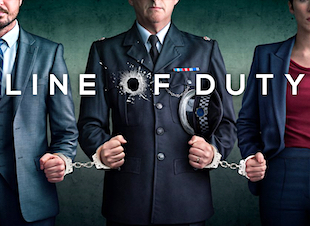 This month, I have mostly been missing the new series of Line of Duty, BBC One’s ever-twisty police corruption drama. Given that it’s been trending on Twitter every week, it’s a wonder I’ve not had it spoiled… yet. It’s now two-thirds of the way through, so I’ll watch it intensively once it’s over. I’d promise a review next month, but last month I said that about Hanna and I’ve yet to make time for that. Maybe they’ll both be here next month. Also: Ghosts, the new comedy from the cast behind Horrible Histories and Yonderland, which looks promising but, again, is a couple of episodes in and I’ve yet to start.
Next month… the Battle of Winterfell.







 Favourite Film of the Month