Unknown's avatar

About badblokebob

Aiming to watch at least 100 films in a year. Hence why I called my blog that. http://100films.co.uk

The Head Hunter (2018)

2020 #101
Jordan Downey | 72 mins | download (HD) | 1.78:1 | USA / English | 15

The Head Hunter

Originally released in 2018 but not making its UK debut (as a direct-to-DVD release) until earlier this year, The Head Hunter is a low-budget independent fantasy/horror movie. Such a description might conjure up images of fancy-dress-like costumes, plastic props, locations that venture no further than a mate’s back garden and a nearby bit of forest, cinematography with all the hallmarks of digital video, and some embarrassingly basic and boxy CGI. None of this is true of The Head Hunter, which marries some impressive production design to an understanding of its limits — its low budget shows only in its small scale, rather than uncomfortably forcing its reach to exceed its grasp.

The setting: a medieval fantasy world. It could pass for our medieval times (in Germany it was retitled Viking Vengeance), were it not for the presence of nasty monsters. The title refers to the film’s unnamed protagonist (Christopher Rygh), who lives alone in the a remote shack in the woods, where he prepares weapons and potions. Occasionally he hears a distant horn, which beckons him to ride out in full armour. When he returns, he carries a new monster’s head for his wall of trophies, and some serious injuries too. Fortunately, his potions seem to have magic-level healing properties. He once had a daughter, who now lies buried beneath a nearby tree. One day, the opportunity arises for him to hunt the monster who slew her. “This time it’s personal,” and all that. Only things don’t quite go to plan…

I have, perhaps, described altogether too much of the plot there, because there’s not much more to the film than that, narratively speaking. Not only does the film run under an hour-and-a-quarter, including credits, but it’s more about moody atmospheric shots than plot; more about the preparation for battle than the fight itself. The Head Hunter may ride out to meet various monsters during the course of the film, but we don’t get to go ride along to see him at work.

That's a nice head. I'll have that.

This is where the small budget shows. It was made for just $30,000, which would buy you under two seconds of a Hobbit film (literally — I did the maths), with a cast and crew of no more than five on set at any one time. All the more impressive that it looks as good as it does, then, from the Head Hunter’s detailed and threatening suit of armour to the remote locations that pass through a couple of seasons. It’s a film that relies on atmosphere more than thrills, and it has that in spades, with cold, misty daytime scenes and fire-lit nighttime sequences, where who-knows-what lurks in the shadows.

As impressive as it is, all things considered, it nonetheless feels a bit drawn out at feature length (even at under 70 minutes before credits). It would probably have made an incredible 30-minute short, though then it would likely have had an even harder time finding an audience than it already has. But that’s not to say it’s not worth your time. If an action-lite atmosphere-heavy fantasy/horror movie sounds appealing, this may just scratch an itch. And it should serve as a great showreel calling card for co-writer/director Jordan Downey, who hopefully will convert it into bigger — or, at least, more story-filled — things.

3 out of 5

The Head Hunter is available on Sky Cinema and Now TV from today.

The Past Month on TV #58

The flipside of watching a tonne of films during lockdown is that I haven’t watched much TV — I’ve still not even finished Picard, ffs. But I did make time for Quiz (which, as a three-parter, was basically just a movie anyway), another animated Doctor Who, a season of Archer (“a season” sounds like a lot, but it’s only 13 easily-digestible 20-minute chunks), more of the worst of the original Twilight Zone, and a few other bits and bobs — including Benedict Cumberbatch and Jonny Lee Miller in Danny Boyle’s stage production of Frankenstein, which the National Theatre made available on YouTube last week (sorry if you didn’t know; it’s gone now).

Quiz
QuizAdapted by James Graham from his own West End play and directed by Stephen Frears almost as if it were a movie (note how only the first episode has a proper title sequence), Quiz is the story of Major Charles Ingram, who in 2001 went on Who Wants to Be a Millionaire? and — allegedly — cheated his way to winning the million-pound jackpot with the help of his wife and someone in the audience coughing to indicate correct answers. But Quiz takes its remit wider than this, showing how Millionaire was born and spawned a nationwide community of quiz enthusiasts determined to game the system and make it onto the programme — and once on there, cheat in their own ways.
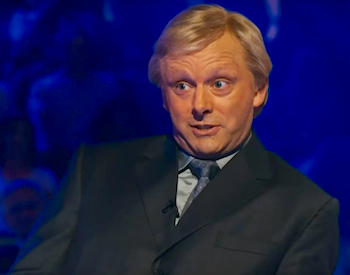
Obviously I knew the basic story of ‘the coughing major’ from all the news coverage, but I had no idea about all the stuff with the networks of dedicated fans. Quiz only touches on it as a side element in the Ingrams’ story, but it’s a fascinating aspect. The Ingrams were only passingly involved with it, but it makes you wonder: did that organisation cheat more successfully? Were the Ingrams caught and prosecuted because the programme had been driven to be hyper-vigilant but, in fact, were not cheating? They protest their innocence to this day. And while Quiz doesn’t come down on one side or the other, it throws enough doubt on the accepted narrative that you wonder how they were ever convicted.

The enthusiasts’ network; the lengths people went to get on the show; the media storm around the Ingrams… it’s all a reminder of what a phenomenon Millionaire was at the time (at its height, it was watched by a third of the UK population). The best thing about the first episode is how it digs into that, with the backstory of the show itself, the pitches and its early success. This stuff could be seen as an aside to the main story — as padding to make Quiz a three-parter — but it really isn’t: it was that very uniqueness, the specialness of the programme, that led to the ‘cheating’. It also makes for a fun drama, pillorying the behind-the-scenes world of television. Respect to ITV for commissioning a programme that takes so many potshots at ITV itself.

Chris Sheen played by Michael Tarrant… wait…Indeed, even as there are serious events (watch out for the undeserved fate of the Ingrams’ pet dog), Quiz is consistently very funny. There’s a gag in the closing seconds of episode two (punctuated by a smash cut to black) that is golden. Michael Sheen’s uncannily spot-on impersonation of Chris Tarrant will also tickle anyone familiar with the man — i.e. UK viewers, but I guess it won’t translate internationally. Matthew Macfadyen is more understated but also excellent as Charles Ingram, while Helen McCrory burns up the screen as their barrister later on. Those are the obvious standout performances, but the whole cast are on form, in particular Mark Bonnar as one of Millionaire’s exec producers. He’s consistently superb in everything I’ve seen him in (if you haven’t, you should definitely watch Unforgotten series 2), and here adds a lot of nuance to what could’ve been an inessential bit part.
Ultimately, this is a pretty excoriating examination of what went on. Very few people come out if it well — certainly not ITV, the show’s producers, the media, the police, the general public, the jury, the British legal system… Maybe only the Ingrams. Did they do it? Possibly. But the evidence of their guilt is rather thin and, in some cases, ludicrously biased. Quiz itself doesn’t come down firmly on one side or the other, but it certainly seems to have convinced a lot of viewers of their innocence.

In the UK, Quiz is available on ITV Hub for another few days. In the US, it airs on AMC from Sunday May 31st.

Frankenstein
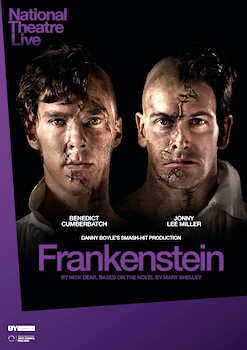
National Theatre Live: FrankensteinAs theatre goes, this is a blockbuster: directed by Danny Boyle and starring Benedict Cumberbatch and Jonny Lee Miller, with the actors alternating who played Victor Frankenstein and his Creature for each performance. One of each was filmed for the National Theatre Live cinema screenings, and for the lockdown National Theatre at Home release they also made both available.
Cumberbatch-as-the-Creature came out first and consequently attracted the most YouTube views, but the consensus seems to be that Miller-as-the-Creature is the better version, so that was the one I watched (I’m curious to see both, but watching it twice in a week isn’t really my way).

Now, frankly, I’m not the biggest fan of Frankenstein. I like the concept a lot — it endures for a reason — but I found the novel an interminable slog, and faithful adaptations fare similarly. Fortunately, this one jumps right to the birth of the creature, thereby improving things considerably by getting to the meat of the issue. It also serves to almost completely refocus the narrative away from Frankenstein and onto his creation. After a brief appearance at the start, it’s another 45 minutes before Frankenstein enters the story properly. This feels like a very modern choice — siding with the downtrodden and oppressed, making him the protagonist rather than the genius inventor. Of course, the Creature is not without his crimes, and the production plays up the mirroring of creator and creation — as if the fact they’re played by the same actors alternating roles didn’t clue you in to that theme.

It’s an impressively theatrical production (a reason why, like One Man, Two Guvnors last week, I’m not counting it as a film), with some clever and effective staging, in particular a rotating multi-level centrepiece. That said, being able to view it from different angles via camerawork does add to the production at times, in particular with one or two moments that seem to have been staged for a bird’s eye view; but then, at others we’re clearly missing something of the atmosphere created in the physical space (for example, sometimes we get to see the massive lighting rig made of hundreds of individual bulbs, but some of its uses and effect is lost by not being in the room). Also, this YouTube release has been censored at one particular moment for the sake of a wider audience, which is a shame. It’s clear enough what’s happened, and some will be pleased not to see that depicted, but unfortunately the edit is wholly unsubtle and therefore completely jarring.

Whatever its other qualities, this production will remain best known for its role-switching gimmick. Some people do think it was just a gimmick — a way to show off and stand out, but not worth much else. I’m not sure that’s fair. If you only watch it once then obviously you’ll only see the actors one way round, even the mere existence of the alternative is somewhere in your mind, informing how you view the play, the notion that these two characters can be played by the same actor in the same production. It’s a neat way to underscore the connection between the two character, which, as much as they would both like to sever it, is seemingly unbreakable.

Doctor Who  The Faceless Ones
The Faceless OnesThe most recent missing story to be animated (see last month for the history of all that) has the Second Doctor, Ben, Polly, and Jamie arrive at Gatwick airport in 1967, where there are mysterious things going on around the offices of airline Chameleon Tours, including young people flying off on holiday but never coming back…
The Faceless Ones gets off to a strong start, with suspicious alien-connected murders, disbelieving authority figures, Polly seemingly mind-wiped, and the Doctor and Jamie playing at Sherlock Holmes and Dr Watson — a bit of mystery, companions in peril, the TARDIS team on the back foot as they have to investigate while dodging the authorities. Unfortunately, this is a six-parter. There are many great Doctor Who six-parters, but there are at least as many (especially in the early days) where they seem to have commissioned six episodes by default and the writers didn’t really have enough story to fill them. The Faceless Ones is among the latter: as it heads into the second half, you can feel the plot begin to stretch itself out. There are some great cliffhangers to perk things up, at least.

Nowadays Who fans have a tendency to watch whole stories in one sitting, almost like a movie — most of them are about that length, after all. But someone once observed that a lot of overlong, awkwardly-paced serials suddenly make more sense if you watch them one episode at a time; that each part works as a 25-minute chunk of TV, and when you watch them in one go you don’t see the trees for the wood. The Faceless One is almost a case in point, because each of the earlier episodes are enjoyable in isolation, and the later ones have their moments; but, with hindsight, there is a lot of back-and-forthing, and I can well imagine that, watched all in one go, it feel long, slow, and spread thin.

The last two instalments are the worst culprits. The writing’s quality dive-bombs in the penultimate episode as other characters basically explain the plot to the Doctor and Jamie, while episode six offers a rather sedate finale, with a bit of drama early on giving way to a lot of protracted business to resolve the situation. It also features the most bored-sounding delivery of the line “you fools, how can you trust him” imaginable. To cap it off, this is Ben and Polly’s last episode, and they’re written out poorly. It’s nice that they decide it’s time to return to their own lives, rather than being forced to go or stuck with a thin romance or something (as other companions would be), but it’s terribly handled: they’ve not been in it for weeks, then suddenly realise it happens to be the same date they first joined the Doctor so, hey, why not leave now? And the Doctor’s goodbye speech: “Ben can catch his ship and become an admiral, and you, Polly… you can look after Ben.” Eesh.

As for this animated reconstruction, it looks a lot stiffer and flatter than Macra Terror, which feels like a disappointing step back. Some of the animation models are quite poor, suffering from Thunderbirds syndrome (i.e. too-big heads) or with odd posture, and sets are basic in places. I don’t know the behind-the-scenes details — maybe it was made on a reduced timescale or budget, or maybe it’s the strain of having to do 50% more episodes, or maybe they were trying to be more faithful to the live-action originals (two episodes of Faceless Ones survive, although they’ve been animated too, for consistency), or maybe it’s just that a ‘60s airport is visually duller than a far-future colony. Whatever, it does nothing to enliven the mediocre script. Still, I personally find these animated visuals better than nothing (others disagree), and I’ll happily buy every one they produce.

Archer  Season 6
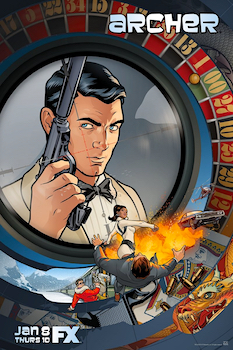
Archer season 6When I watched Archer’s fifth season (aka Archer Vice), I was picking it back up after years away and was set to continue it. That was in 2018. Although I was quite positive in that initial review, I was less positive by the end, and that was my enduring memory of it. Well, I’m happy to report I found season six to be a return to form.
I observed of Archer Vice that the change of setting from spy agency to drug dealers was immaterial because it was the characters not the situation that mattered. That’s true to an extent, but I suspect not entirely, because here they’re back to being spies and it all seems to have sparked back to life. That’s kind of ironic because, as anyone who follows the show will know, they eventually moved on from spies to rotate through a different setting/genre every season, which was because they’d run out of spy stories to tell; and yet comedic spy stories are clearly what these guys do best. So, I’m wary of where it’s going to go in seasons I’ve not yet got to, but, for the time being, I’m enjoying it again. This time I don’t think it’ll be years before I watch the next season.

The Twilight Zone  ‘Worst Of’
The Mighty CaseyIn last month’s initial selection of The Twilight Zone’s worst episodes I found one or two that weren’t wholly terrible. I’m not sure this selection fares even that well…

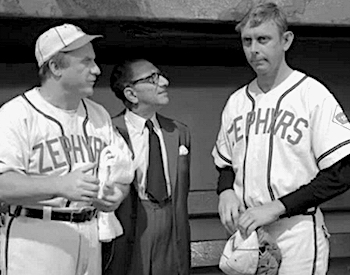
Going from worst to ‘best’, the episode placed 155th (of 156) on my consensus ranking is The Mighty Casey. It’s a very silly story about a robot baseball player, which substitutes loopy sound effects and the incredulous expressions of onlookers for its lack of special effects, and I guess also to cover for its lack of adherence to the laws of physics. The only interesting aspect of the story is the reactions — or lack thereof — from characters when they learn Casey is a robot. It appears to be set in the then-present of 1960, but no one’s like, “holy shit, you built a lifelike robot who can pass for human and play baseball!” No, they’re only concerned with whether his roboticness needs to be reported or kept secret. That dilemma ultimately leads toCasey needing to be given a heart, but once he gets one he’s too compassionate to keep playing. So the ultimate message is… you need to be heartless to be a sportsman? I mean, I don’t care for sports much myself, but even I think that’s stretching it. Maybe baseball fans would get a kick out of this episode, but for the rest of us it’s just rubbish.

Equally as daft is Black Leather Jackets, in 154th. A trio of young bikers move in next door to a nice all-American family, but there’s more to the lads than meets the eye. The kindest thing I can say about this episode is that some of it is nicely lit. Unfortunately, the script is pretty crap, with the dialogue being particularly awful. “Do you know the word… love?” Seriously. It’s like a spoof of bad ’50s sci-fi, but it’s real and it was made in 1964. ScreenCrush’s Matt Singer says it’s “arguably the most dated of The Twilight Zone’s 156 episodes” and I think he might be right. And after 20 minutes of uncomfortable ludicrousness, it comes to an entirely unearned bleak ending. Twilight Zone may be most famous for its last-minute surprise reveals, but when they were bad, they were really bad.

The Whole TruthIn 153rd is The Whole Truth, which is about a car that’s been haunted since it came off the production line — although this one’s considerably less threatening than Christine. Instead of a murderous machine, this ‘haunted’ car merely compels its owner to be completely honest at all times. Unfortunately for used car salesman Harvey Hunnicut, he only learns this fact after he’s bought it. It’s an obvious idea — forcing a used car salesman, that most dishonest of individuals, to tell the truth — but it doesn’t go anywhere particularly interesting with it, other than a totally far-fetched and implausible finale. Yes, far-fetched and implausible even by Twilight Zone standards! Singer calls it “the dumbest twist in the history of The Twilight Zone” and, again, I’m inclined to agree.

In the episode titled The Chaser, the eponymous character is a young man in love with a woman who doesn’t reciprocate his affections, but through a coincidental contact he meets a fellow who sells him a guaranteed love potion. The scene where he purchases the potion is really quite good, but on the whole it’s painfully obvious that this is going down a “be careful what you wish for” pathway, and all we can do is wait for it to play out. They’re not even nice characters to spend time with — he’s a pathetic obsessive and she’s a bitch. And after he gets what he wished for and doesn’t like it, he considers a spot of murder. It’s a bit… much. And the morals of it all are a little foggy, to say the least — as many commenters observe, it’s dated into being uncomfortably sexist. There’s an angle that could make this storyline worked (critical of the guy trying to drug a woman into loving him), but that’s not what’s played here.

The Incredible World of Horace Ford is one of The Twilight Zone’s most interesting failures thanks to its production history: the script was previously performed as an episode of a different show in 1955, and by the sounds of things it was just restaged wholesale for TZ. That’s probably why it doesn’t feel like it quite fits in properly — it’s something broadly Twilight Zone-ish that’s been recycled rather than a bespoke episode. It’s about a 37-year-old manchild toy designer who constantly reminisces about stuff he did when he was 10… and yet somehow he’s managed to find himself a caring wife, friends, and hold down a job for 15 years. Maybe we’re supposed to think he wasn’t always so stuck in the past, but the way other characters indulge him makes it seem like he was, even if he’s getting worse as the episode begins.

The Incredible World of Horace FordThe lead actor is Pat Hingle, of Commissioner Gordon in Batman ’89 fame. He gives a convincing performance… if this was about a Big-style situation of a stroppy 10-year-old boy trapped in a 37-year-old’s body, but that isn’t what’s actually happening. There’s an equally misaligned performance from Nan Martin as his wife: it constantly feels like she knows more than she’s letting on about what’s really happening, like the twist might be she’s responsible for, or at least knows, what’s going on… but she isn’t and she doesn’t. Honestly, I don’t blame the actors for struggling with how to play their roles, because it’s not like the story makes it clear for them what’s meant to be going on. At first it seems like another of the series’ “you can’t go home again” episodes about a man in love with nostalgic memories of his childhood, but then it turns out it’s some kind of time-loop thing… or… not. The resolution is maddeningly, deliberately inexplicable. And, yeah, turns out it is just another version of “you can’t rely on your memory of good times”. To compound the problem, it’s a season four episode, so of course it takes its sweet time playing out a storyline over 50 minutes when it only needs the 25 minutes of other seasons; and the time loop factor makes it literally repetitive.
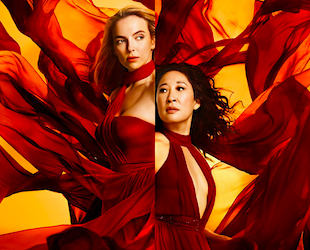
Finally for now, Four O’Clock, which is about a mentally deranged man who wears a far-too-tight waistcoat — and, more importantly, arbitrarily decides he’s going to eradicate all evil in the world at 4pm that afternoon… he just hasn’t worked out how yet. You see, he’s spent his days investigating bad people (i.e. those whose lifestyle choices he personally disagrees with) and trying to rat them out to their employers and the like, but he’s not really getting anywhere. Naturally, it comes to an appropriately ironic ending. Paste’s Oktay Ege Kozak reckons it’s “like lazy Twilight Zone fan fiction: it exploits every pattern the series had developed so far and executes it without much originality or flair”, which is a bit harsh, but also kinda fair. Aside from the predictability of the ending, the episode’s only real problem is that it’s like spending 25 minutes in the company of an internet troll. It might be an accurate portrait of a self-righteous busybody, but that doesn’t mean it’s pleasant to be around him.

Also watched…
  • The Big Night In — The UK’s two big charity telethons, Children in Need and Comic Relief, teamed up for the first time ever in aid of charities who help the most vulnerable at this difficult time. The three-hour event attracted a lot of unnecessary bile on social media. Okay, it wasn’t the greatest TV programme ever made, but it was alright (not significantly worse than these things normally are, I didn’t think), and had a few genuine highlights. The best bits were probably a new Blackadder-adjacent sketch guest starring Prince William, and Catherine Tate’s Lauren being homeschooled by her teacher, played by David Tennant (reprising the role from an old Comic Relief sketch) — “Are you or have you ever been a doctor? Are you a member of the WHO?”
  • Farewell, Sarah Jane — The tie-ins to Doctor Who Lockdown events have only become more elaborate since I wrote about them last month. This is probably the highlight, though: a new, final story for spin-off series The Sarah Jane Adventures, written by creator Russell T Davies and performed by a host of cameos, all to pay tribute to the late, great Elisabeth Sladen via her iconic character, Sarah Jane Smith. You can watch it on YouTube here.
  • Star Trek: Picard Season 1 Episode 7 — I only watched one more episode all month?! Oh dear. Three to go…

    Things to Catch Up On
    Killing Eve season 3This month, I have mostly been missing Killing Eve, the third season of which is currently airing between iPlayer and BBC One. For the first two seasons we had to wait until after it had finished in the US so they could put the whole lot up on iPlayer at once, which no one noticed during season one but drew a lot of criticism during season two (you can work out why, I’m sure). Consequently, I binged those first two seasons (indeed, I came to it late, so went straight through them both), so I wasn’t sure about watching it weekly now. Also, Devs, the latest work from Alex Garland, which frankly I wasn’t even aware existed until it popped up over here (when it had already almost finished in the US). I’ve seen very mixed reviews of it, but I still intend to watch it. But, as noted above, I still haven’t finished Picard, and I’m determined to get that done before I start anything else. Hopefully next month.

    Next month… hopefully I’ll finish Picard and get on to some of the stuff I’ve been missing. Also, I’ve got my eye on more classic Doctor Who, plus a third (and, I think, final) selection of the worst of The Twilight Zone.

  • The 100-Week Roundup III

    In this selection of films I watched back at the end of May / start of June 2018…

  • The Wild Bunch (1969)
  • The Wild Bunch: An Album in Montage (1996)
  • The Warriors (1979)
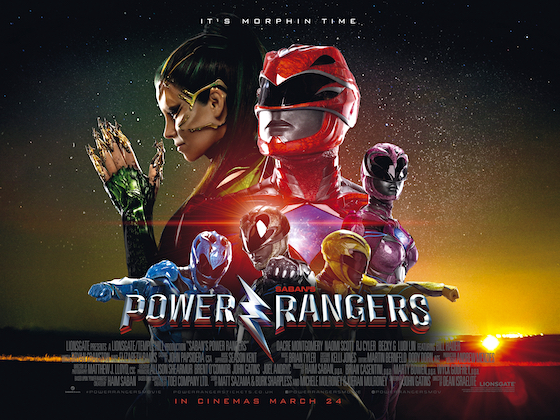
  • Power Rangers (2017)
  • Three Billboards Outside Ebbing, Missouri (2017)


    The Wild Bunch
    (1969)

    2018 #115
    Sam Peckinpah | 139 mins | streaming (HD) | 2.40:1 | USA / English | 18 / R

    The Wild Bunch

    After a gang of ageing crooks’ “one last job” goes sideways, they agree to rob a munitions train for a Mexican general, even as they’re hunted by a militia reluctantly headed by their leader’s former partner.

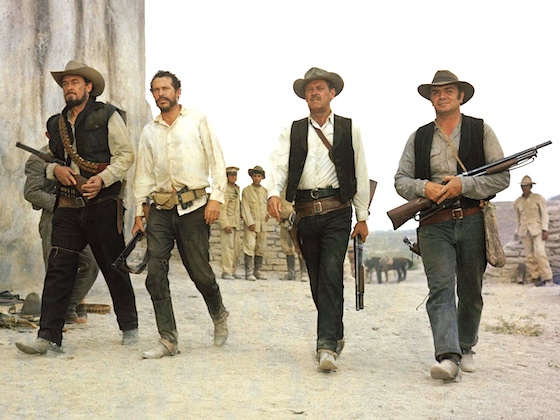
    The Wild Bunch is, of course, a Western, but it’s set in 1913 — not a time we particularly associate with “the Old West”. Well, change doesn’t happen overnight. And it certainly takes that “end of an era” thing to heart as a tale of old men, whose way of life is fading away. It’s also a ‘late Western’ in terms of when it was produced: this isn’t an old-fashioned “white hats vs black hats” kinda adventure, but one full of ultra-violence with a downbeat ending. The opening sequence gets pretty bloody, and then the climax is an absolute orgy of violence. It’s still almost shocking today, so you can see how it was controversial back in 1969.

    It’s not just the presence of violence and blood that’s remarkable, though, but how it’s presented, both in terms of filmmaking and morals. To the former, the speed of the cutting was groundbreaking at the time: reportedly it contains more cuts than any other Technicolor film, with 3,643 cuts in the original print. If that’s true, it gives it an average shot length of about 2.4 seconds. For comparison, the average in the ’60s was around 6 or 7 seconds, while even Moulin Rouge, a movie made decades later that was still notorious for its fast cutting, has an average shot length of 2.01 seconds. It’s not just speed that makes the editing so noteworthy, but its effectiveness, making juxtapositions and using shots to both tell the story and create the impression of being in the thick of it.

    Bad boys

    As for the morals, the film was all about showing these violent men as unheroic and unglamorous, setting out to “demystify the Western and the genre’s heroic and cavalier characters” (to quote IMDb). That piece goes on to say that screenwriters Sam Peckinpah and Walon Green “felt that this project required a realistic look at the characters of the Old West, whose actions on screen had rarely matched the violent and dastardly reality of the men on which they were based… Both Green and Peckinpah felt it was important to not only show that the film’s protagonists were violent men, but that they achieved their violence in unheroic and horrific ways, such as using people as human shields and killing unarmed bystanders during robberies.”

    Of course, antiheroes are ten-a-penny nowadays, so the idea that “men who commit violence are bad” doesn’t play as revolutionary anymore. Indeed, The Wild Bunch can be enjoyed as an action movie — there’s the opening and closing set pieces I’ve already mentioned, plus an excellent train robbery and ensuing chase in the middle too, and a couple of other bits. That said, the film has more on its mind than just adrenaline-generating thrills, and so (based on comments I’ve read elsewhere online) if you are watching just for action it can feel like a bit of a slog. While I wouldn’t be that critical, I did find it a bit slow at times. The original distributors must’ve felt the same, as the film was cut by ten minutes for its US release. (The version widely available today is the original 145-minute director’s cut. I watched a PAL copy, hence the 4% shorter running time.)

    4 out of 5

    The Wild Bunch was viewed as part of my Blindspot 2018 project.

    The Wild Bunch:
    An Album in Montage

    (1996)

    2018 #115a
    Paul Seydor | 33 mins | DVD | 4:3 | USA / English | 15

    Behind the scenes of The Wild Bunch

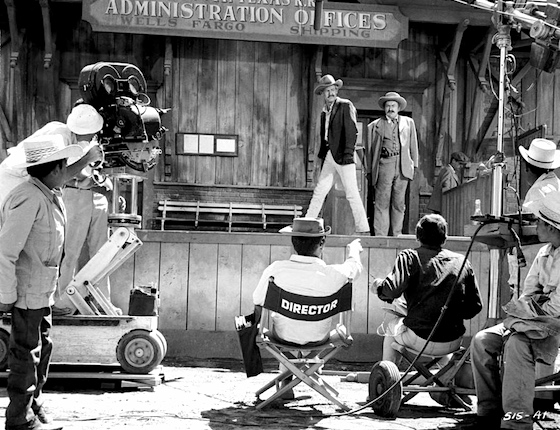
    This film came to exist because someone found 72 minutes of silent black-and-white behind-the-scenes footage shot during the filming of The Wild Bunch. No one knows why it was filmed — this was a long time before the era of EPKs and DVD special features. And, indeed, if it had been discovered just a couple of years later then a DVD special feature is exactly what it would’ve become; but, being just ahead of that, it ended up as a short film — an Oscar-nominated one at that, going up for the Best Documentary Short prize in 1997. Naturally, it has since found its rightful home as a special feature on DVD and Blu-ray releases of its subject matter.

    The silent film footage is accompanied by voice over of first-hand accounts from the people involved, either taken from recorded interviews (people like screenwriter Walon Green and actors Edmond O’Brien and Ernest Borgnine represent themselves) or actors reading out comments (Ed Harris is the voice of Sam Peckinpah, for example). From this we get not only making-of trivia and tales, but also discussion of the filmmakers’ intent and the film’s meaning. More material along the lines of the latter would’ve interested me.

    As it is, An Album in Montage feels very much at home in its current situation as a DVD extra. Fans of the film will certainly get something out of it, but I don’t think it’s insightful enough to stand independently. It’s by no means a bad little featurette, but it’s not worth seeking out outside of the context of the film itself.

    3 out of 5

    The Warriors
    (1979)

    2018 #123
    Walter Hill | 89 mins | streaming (HD) | 16:9 | USA / English | 18 / R

    The Warriors

    In the near future, a charismatic leader summons the street gangs of New York City in a bid to take it over. When he is killed, The Warriors are falsely blamed and now must fight their way home while every other gang is hunting them down.IMDb

    And that’s all you need to know, because The Warriors’ plot is really simple and straightforward, but that’s part of why it works. It doesn’t need dressing up; it’s got an almost an elegant directness, and it thrives off that. The action sequences feel unchoreographed, with a bruising realism in spite of their sometimes elaborate setups (duelling baseball bats!), and yet they carry an energy and impact that is wholly in keeping with something carefully designed and constructed. The characters are simply drawn, revealed through their actions rather than telegraphed Character Moments or heartfelt speeches. Similarly, the kind-of-romance between the Warriors’ leader and the girl they run into on the streets is so well handled — okay, there are some scenes where they almost talk about it directly, but mostly it’s just moments or lines that indicate a world of feeling. The way this character stuff is sketched in — subtly, sometimes in the background — is quite masterful, actually.

    Such skill extends throughout the film’s technical side. For all the film’s ’70s grit, there’s some beautiful stuff in the editing and shot choices, especially at the end on the beach. It’s not just beauty in an attractive sense, but meaningful, effective imagery, in a way that impresses without being slick or pretty. The music choices are bang-on too. The film intercuts to a radio station that functions like some kind of Greek chorus, linking the action and helping to create a heightened atmosphere — one that’s there in the whole film, incidentally, with its colourful gangs and detached police presence — without ever shattering the down-to-earth, gritty, almost-real feel the whole thing has.

    Gang wars

    I loved The Warriors, and I think that last point is a big part of why: it sits at an almost inexplicable point where it feels incredibly grounded, gritty and realistic, but at the same time a heightened fantasy kind of world. Here I’m trying to describe why I adored the film bu breaking it down into these constituent parts, but there’s something more to it than that — a kind of magic where it just… works.

    All of that said, it seems I was lucky to catch the original version (via Now TV / Sky Cinema), rather than the so-called Director’s Cut that seems to be the only version available on Blu-ray. Looking at the changes, they don’t seem particularly in keeping with the tone of the movie, smacking of decades-later revisionism. Apparently there’s also a TV version that includes 12 minutes of additional scenes, none of which are included on the film’s disc releases. I wish Paramount would license this out to someone like Arrow to do it properly…

    5 out of 5

    The Warriors placed 11th on my list of The 26 Best Films I Saw For the First Time in 2018.

    Power Rangers
    (2017)

    2018 #126
    Dean Israelite | 124 mins | streaming (HD) | 2.35:1 | USA, Hong Kong, Japan, Mexico, Canada & New Zealand / English & Mandarin | 12 / PG-13

    Power Rangers

    High school outcasts stumble upon an old alien ship, where they acquire superpowers and are dubbed the Power Rangers. Learning that an old enemy of the previous generation has returned to exact vengeance, the group must harness their powers and use them to work together and save the world.IMDb

    Far from the cheesy TV series of old, this Power Rangers reboot clearly wants to be a somewhat gritty, largely realistic, socially conscious take on the concept. But it’s like it was written by people behind the original, because it’s still full of clunky dialogue, earnest characters (with a thin veneer of outsider ‘cool’), and nods to serious issues without having the time or interest to actually engage with them. Like, one of the kids is the sole carer for his sick mother, or another is on the autistic spectrum, but, beyond spending a line or two to tell us these things, those issues have no bearing on the plot or the characterisation. Plus, it can’t overcome some of the fundamental cheesiness of the original. And when it tries to give in to it, like by playing the Power Rangers theme the first time the giant “dinocars” run into action, it’s too late for such shenanigans and the tones clash horrendously. It wants to escape the tackiness of the original series, but simple can’t.

    And somehow it gets worse as it goes on. The early character stuff is derivative but alright. Then you begin to realise how shallow it is. You’re waiting for the super-suits to show up and the action to start. Then you have to wait some more while it works through plot beats so stale it can’t even be bothered to play them out fully. Then, when the suits finally arrive and the action starts, turns out it’s the worst part of the movie. Almost entirely CGI, under-choreographed, a mess of nothingness with little correlation from shot to shot, no sense of rhythm or construction. When their dinocars all merge into one giant dinocar, the villain screams “how?!”, and you will feel the same.

    Bryan Cranston (yes, Bryan Cranston is in this) tries to inject some character into his role, but it’s too underwritten and his screen time too slight to let him do much with his supposed arc. Elizabeth Banks, meanwhile, is barely in it and has no arc whatsoever, but she chews scenery like a pro. She seems to be aware it’s all stupid and over the top and plays it appropriately.

    2 out of 5

    Three Billboards Outside Ebbing, Missouri
    (2017)

    2018 #127
    Martin McDonagh | 115 mins | Blu-ray | 2.39:1 | UK & USA / English | 15 / R

    Three Billboards Outside Ebbing, Missouri

    a darkly comic drama from Academy Award nominee Martin McDonagh. After months have passed without a culprit in her daughter’s murder case, Mildred Hayes (Frances McDormand) makes a bold move, painting three signs leading into her town with a controversial message directed at William Willoughby (Woody Harrelson), the town’s revered chief of police. When his second-in-command, Officer Dixon (Sam Rockwell), an immature mother’s boy with a penchant for violence, gets involved, the battle between Mildred and Ebbing’s law enforcement is only exacerbated.IMDb

    As well as being as deathly serious and sometimes horrifying as the subject matter deserves, Three Billboards is also as funny as you’d expect from the writer-director of In Bruges. Not to the extent — the subject matter is far too serious for it to be an outright comedy like that — but in subplots and interludes it’s hilarious.

    It’s got a helluva cast, and all of the performances are excellent. Frances McDormand is so fucking good that she even manages to make talking to a badly CGI’d deer incredibly emotional. Apparently some people had a massive problem with the film’s treatment of Sam Rockwell’s character, I think because he was a bad guy who got redeemed. But, really, imagine thinking people who once did bad things can never turn themselves around and be better people. What a pessimistic way to view the world. And yet I guess that’s what today’s “cancel culture” is all about.

    Two outta three ain't bad

    It’s nicely shot by DP Ben Davis (except for that deer), while Carter Burwell’s Western-esque score has some really cool bits. It really emphasises the film’s formal overtures at being a revenge Western, even if the way it goes down in the end doesn’t necessarily support such a reading.

    There was a huge backlash to the film at some point; bring it up online and you’re likely to come across people who assume everyone hates it… but it’s got 90% on Rotten Tomatoes and is still ranked the 150th best film of all time on IMDb, so I think we know where the majority stand. I’m happy to stand with them.

    5 out of 5

    Three Billboards Outside Ebbing, Missouri placed 14th on my list of The 26 Best Films I Saw For the First Time in 2018.

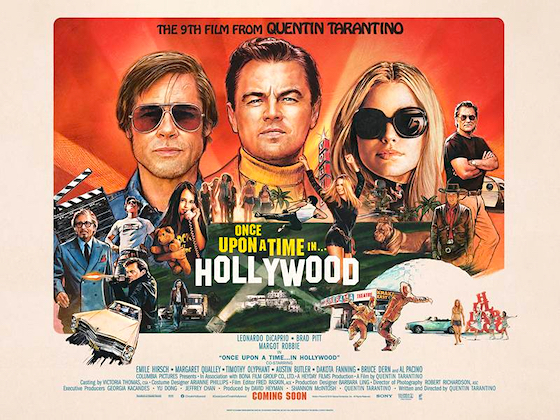
  • Once Upon a Time… in Hollywood (2019)

    2019 #120
    Quentin Tarantino | 161 mins | cinema | 2.39:1 | USA, UK & China / English | 18 / R

    Once Upon a Time in Hollywood

    The 9th film by Quentin Tarantino follows the fortunes of struggling actor Rick Dalton (Leonardo DiCaprio) and his stuntman and best mate Cliff Booth (an Oscar-winning Brad Pitt) over a couple of days in Los Angeles, 1969, when they were next-door neighbours to one Sharon Tate (Margot Robbie)…

    I haven’t reviewed Once Upon a Time until now because I didn’t have much to say about it (even my Letterboxd ‘review’ was just a comment on its variable title presentation). Even after reflecting on it, and reading other’s critical reactions, then reflecting on it some more (for over eight months at this point), I didn’t have much to contribute. Why was that? And I’ve kind of realised it’s because the film didn’t make me feel very much.

    Sure, there are moments where it did. There are plenty of scenes that are amusing, to varying degrees. The tension as Cliff explores the house of an old friend that’s been occupied by a bunch of hippies. The catharsis and humour of the ultra-violent climax, and the attendant cognitive dissonance of whether we should be revelling so in this historically-revisionist execution of real people — not to mention the factors that further complicate that (you know what they are by now).

    And overall I didn’t dislike the film. I wasn’t bored, despite the length; if anything, that helps suck you into the world of 1969. You can certainly feel Tarantino’s love for the era, his desire to recreate — and, indeed, improve — it. (It’s also clear that he really wants to make another Western. The excerpted scenes from Rick’s TV pilot go on for ages, ultimately contributing nothing to the overall story, other than getting to hang out in a ’60s TV Western.) The three main performances are all very good, DiCaprio and Pitt great both as a double act and in their own storylines, and Robbie off in her own little world in a role that arguably offers little on the page but she breathes so much life into.

    “Don’t cry, man. It’s only one blogger's opinion.”

    It’s all these successes that mean I do consider Once Upon a Time to be a very good film. But at the same time, I didn’t leave the cinema feeling moved or wowed. I expected the history-changing ending ever since the film’s plot was announced, that expectation only cemented further as I learnt of Tarantino’s love for Tate, so I certainly didn’t leave feeling surprised. It ended, and that was that, and I went home.

    Tarantino has talked in the past about how Jackie Brown is a “hangout movie”, where the point is not the story but spending time with the characters, and getting to re-spend that time when you watch the movie again, so that you enjoy it more and more with each viewing. I didn’t really get that feeling from Jackie Brown (I didn’t dislike it, but I was underwhelmed and in no rush to revisit it), but I wonder if that’s how Once Upon a Time will work best. The way it wanders through its loose narrative, before arriving at a climax that is, really, only tangentially related to everything else we’ve been watching, does suggest that’s the goal Tarantino had in mind. I can certainly believe he would like to just hang out in the world of Hollywood, 1969. I suspect that’s the driving factor behind why he even made this movie — getting to imagine an alternate history and career for his characters (I’ve seen interviews where he fills in way more backstory than is actually in the film), and using his clout to literally recreate that time and place in real-life rather than through CGI fill-ins.

    So, it’s a movie I’ll surely revisit at some point, which is more than can be said for many a film. Perhaps then I’ll have something to say about it.

    5 out of 5

    Once Upon a Time in Hollywood is available on Sky Cinema and Now TV from this weekend.

    The Locked Down Monthly Review of April 2020

    In 2002, Blue got the city on lockdown.
    In 2020, Boris Johnson got the country on lockdown.
    Your move, noughties boy bands.

    One thing this stressful time has been good for is my film viewing. After a 2019 that saw some of my lowest months in years — indeed, ever — I’m pleased to say that April 2020 is a record breaker:

    100 Films has a new Best. Month. Ever!


    #59 Rang De Basanti (2006)
    #60 The Kid (1921/1971)
    #61 The Three Caballeros (1944)
    #62 Stop Making Sense (1984)
    #63 Burning (2018), aka Beoning
    #64 The Karate Kid Part III (1989)
    #65 Aniara (2018)
    #66 The Man Who Shot Liberty Valance (1962)
    #67 The Diamond Arm (1969), aka Brilliantovaya ruka
    #68 I Am a Fugitive from a Chain Gang (1932)
    #68a The Devil’s Harmony (2019)
    #69 The Next Karate Kid (1994)
    #70 Never Too Young to Die (1986)
    #71 It Chapter Two (2019)
    #72 Andrei Rublev (1966)
    #73 Dune: The Alternative Edition Redux (1984/2012)
    #74 Rambo: Last Blood (2019)
    #75 K-19: The Widowmaker (2002)
    #76 Near Dark (1987)
    #77 The Thin Red Line (1998)
    #78 Jumanji: The Next Level (2019)
    #79 Superman IV: The Quest for Peace (1987)
    #80 6 Underground (2019)
    #81 The Secret Life of Pets 2 3D (2019)
    #82 Look, Up in the Sky! The Amazing Story of Superman (2006)
    #83 Long Day’s Journey into Night 3D (2018), aka Di Qiu Zui Hou De Ye Wan
    #84 End of the Century (2019), aka Fin de siglo
    #85 Men in Black: International (2019)
    #86 The Sheik (1921)
    #87 The Son of the Sheik (1926)
    #88 Extraction (2020)
    #89 The Wedding Guest (2018)
    #89a The Escape (2016)
    #90 Ready or Not (2019)
    #91 Bill & Ted’s Excellent Adventure (1989)
    #92 The Two Popes (2019)
    #93 Ice Age: Continental Drift 3D (2012)
    #94 The Lunchbox (2013)
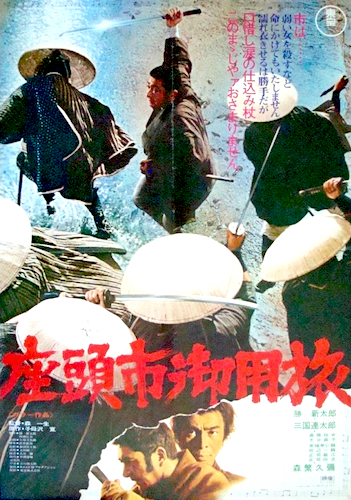
    #95 Zatoichi in Desperation (1972), aka Shin Zatôichi monogatari: Oreta tsue
    #96 Bill & Ted’s Bogus Journey (1991)
    Aniara

    I Am a Fugitive from a Chain Gang

    Dune: The Alternative Edition Redux

    Jumanji: The Next Level

    Ready or Not

    The Lunchbox

    .


    • I watched 38 new feature films in April.
    • As I said at the start, that’s my most ever in a single month, beating the previous record holder (May 2018) by four films. That’s noteworthy because May 2018 is only one film ahead of the month that’s now in 3rd, which is only two films ahead of the month now in 4th, which is only three films ahead of the months now in =5th. So, four is a pretty healthy margin.
    • Obviously, as my best month ever, April is going to smash any comparisons I care to make. So let’s start with the only thing it wasn’t guaranteed to do, but it has done nonetheless: #96 is the furthest I’ve reached by the end of April (next best is #90 in 2018).
    • Averages: it increases April’s average by two whole films, from 12.8 to 14.8; increases the rolling average of the last 12 months from 13.3 to 14.8; and increases the average for 2020 to date from 19.3 to 24.0. If I maintained that average until December, 2020 would become my biggest year ever (but things never work out like that).
    • It’s my 21st month with 20+ films, and my 4th month with 30+ films.

    Alright, now some notes on the films within those 38…

    • Back in February, I noted that I’d somehow never seen a film from 1932. That’s now changed, thanks to I Am a Fugitive from a Chain Gang. Now, since the year of the first feature films being produced in the UK and USA (1912), there are only four years from which I’ve not seen at least one feature-length film: 1912, 1914, 1915, and 1923. I have at least one title picked out from each of those years that I could use to settle this matter, so I ought to get on with them…
    • I’ve seen David Lynch’s Dune before, but it was over 20 years ago and it was the theatrical cut. The fan edit I watched adds material from a longer TV cut and deleted scenes, plus generally rearranges and rejigs stuff, so I figure it must be substantially different enough to count as new.
    • Having watched 92% of the alphabet in January, February, and March, only X and Z remained — with the latter now claimed by Zatoichi in Desperation. X will go whenever I get round to watching Dark Phoenix — I think that’s literally the only X film I have in my collection or on Netflix/Amazon/etc.
    • This month’s Blindspot films: Andrei Tarkovsky’s biopic of 15th century religious icon painter Andrei Rublev. I found it as dry as that sounds. Also, from my ‘overflow’ list, Terrence Malick’s The Thin Red Line, which I was also underwhelmed by. I knew it would be more Malickian than your typical war movie, but still, something about it didn’t connect with me.
    • From last month’s “failures” I watched Aniara, End of the Century, It Chapter Two, Rambo: Last Blood, Ready or Not, and The Secret Life of Pets 2, plus The League of Extraordinary Gentlemen (see Rewatchathon). That’s a record haul, besting the five failures I watched last April. It was driven by most of those being time-limited Amazon rentals.


    The 59th Monthly Arbitrary Awards

    Favourite Film of the Month

    How to define “favourite”? On the one hand you’ve got something like I Am a Fugitive from a Chain Gang, which is a weighty and still-pertinent condemnation of the American justice system. On the other, something such as Jumanji: The Next Level, which is just a whole lot of fun. More tickling my fancy in the former camp is Aniara, about the psychological strain of being stranded in space with little hope of ever returning home, some of which feels very pertinent to our current world situation (I know we’re all at home rather than far from it, but the cooped up with no hope of escape… yeah). And in the latter camp, Ready or Not is a deliciously gonzo horror-comedy, which didn’t quite push as many buttons as I’d hoped but is still massively entertaining. On balance, bearing in mind its unexpected timeliness, Aniara takes it.

    Least Favourite Film of the Month
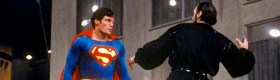
    This is a more straightforward category… although, personally, I included Andrei Rublev on my shortlist, which is a Highly Acclaimed Movie (just check out how many Greatest Ever lists it’s on), but it bored me senseless. Still, it did have some parts I admired — I’m not sure I can say the same about Superman IV: The Quest for Peace. Actually, that’s not strictly true: Christopher Reeve was always perfect as Superman; but the film definitely lets him down.

    Best Musical Discovery of the Month
    I’d never consciously listened to Talking Heads before I watched Stop Making Sense. I recognised exactly two of the songs during that concert movie, and one of those I know best from a cover version. While I wouldn’t exactly call myself a convert to their music, I liked most of it well enough, with opening number Psycho Killer my favourite. In fact, I preferred the live version in the film to the original recording. Maybe it’s just because I heard that take first, I dunno.

    Best Audition to Be James Bond of the Month
    It never even crossed my mind that the skinny kid from Slumdog Millionaire could ever be considered for Bond, and I bet it didn’t yours either. It was David Ehrlich’s Letterboxd review of The Wedding Guest that first flagged up the idea for me, and, having seen the film, I can see what he means. Dev Patel as James Bond… it’d certainly be different.

    The Audience Award for Most-Viewed New Post of the Month
    The second half of last month’s TV review sat pretty atop the chart for most of the month (the Doctor Who half, meanwhile, wasn’t even close), but then Extraction came barrelling through my stats like Tyler Rake through an overcrowded Indian apartment block. Five older TV posts topped it overall, but it was by far my most-viewed new post.


    The name’s Connery, Sean Connery.

    Yes, there’s a distinct theme to this month’s rewatches. It wasn’t deliberate… well, not at first. Once I noticed it, obviously I had to maintain it.

    #15 Diamonds Are Forever (1971)
    #16 The Avengers (1998)
    #17 The Rock (1996)
    #18 The League of Extraordinary Gentlemen (2003)

    …and, if you want to take it further, you could argue they’re all movies where Connery returned to the role of James Bond. Sure, Diamonds Are Forever is the only one where that’s literally true, but there’s long been a fan theory that Connery’s character in The Rock is Bond under a pseudonym, and in The Avengers he plays an innuendo-spewing former British secret agent turned villain. As for LXG… yeah, okay, the idea runs out there.

    When I included The Rock in my 100 Favourites, I only rated it 4 stars. Now I feel like a fool — it’s easily a 5. Some thoughts as to why on Letterboxd. Mind you, that kind of thing cuts both ways: when I finally got round to rewatching Face/Off 18 months ago, I discovered I didn’t enjoy it as much as I used to, and if I’d done that before publishing 100 Favourites then I might’ve dropped it from the list entirely. I intend to update my favourites list someday, but I think I need to do a good deal more rewatching before then.

    My rewatch of LXG was prompted by this defence of the film. While I wouldn’t call the movie a masterpiece, I do generally agree with that article — the film has its moments (many of them thanks to Dorian Gray), and it’s certainly no worse than many other ’90s/’00s Hollywood blockbusters. Quite why it provokes such vitriol from anyone but fans of the book is beyond me. (Book fans have every right to be disappointed, because the film sanitises and Hollywoodises the concept. That said, as a fan of the books myself, I’m happy to take both forms as differing executions of the same idea.)


    This may be the biggest month in 100 Films history, but there was still plenty of stuff I failed to watch. Nothing in cinemas, obviously (though Trolls World Tour did get released direct to premium streaming, and consequently looks like it might change the world), but the other avenues for film viewing offered more than enough alternatives.

    For starters, Netflix completed their Studio Ghibli lineup with Howl’s Moving Castle (the only one I’d seen), From Up on Poppy Hill (which I own on Blu-ray), Ponyo (also on Blu-ray), When Marnie Was There (also on Blu-ray, jeez!), Pom Poko, Whisper of the Heart, and The Wind Rises. On the new films front there was CG animation The Willoughbys, which looks vaguely interesting, and for (relatively) recent releases they mustered the remake of Child’s Play. They also added the second Maze Runner film, The Scorch Trials. One day the whole trilogy will be available somewhere and I’ll give them a shot.

    Amazon actually had more to offer in terms of recent acquisitions, though the quality level is dubious — I’m talking of films like Angel Has Fallen (the second sequel to the less-good “Die Hard in the White House” movie), Playmobil: The Movie (a rip-off of The LEGO Movie that wasn’t as well received), 21 Bridges (which received middling notices), and The Current War (presumably in its director’s cut form, for which the most positive comment Rotten Tomatoes can muster is “a significant improvement over previous versions”). Additions from the archive include a handful of Hong Kong actioners, led by the appropriately-titled Police Story: Lockdown (the sixth film, and second reboot, in the Jackie Chan action franchise), plus unofficial prequel The Legend is Born: Ip Man (I believe Ip Man 4 is also now available to rent over here), and Donnie Yen in Legend of the Fist (a version of the story from Bruce Lee’s Fist of Fury and Jet Li’s Fist of Legend).

    Also new to Amazon was medical disaster movie Outbreak, which was already on Netflix; and they both added Contagion, after everyone was talking about it last month. I noticed it still made it into Netflix’s UK top ten, though.

    Over on Now TV, sequel-cum-reimagining Four Kids and It caught my eye because I remember enjoying the BBC’s 1991 adaptation of the original book when I was a kid, but this new one didn’t seem to go down terribly well (though the British critics collated by Rotten Tomatoes have got it to 61%, which counts as ‘fresh’). Other recent films now on Sky include Ma and Tolkien.

    Finally, I went a bit potty in Blu-ray sales again, this time mostly at Arrow, picking up a couple of Vincent Price horrors, Tales of Terror and Tower of London; a couple of artier titles from Second Run, Valerie and Her Week of Wonders and Ikarie XB 1; Third Window’s double-bill of The Whispering Star and The Sion Sono; and some Westerns and noirs and noir-Westerns that include The Ox-Bow Incident, My Name is Julia Ross, and Terror in a Texas Town. The latter pair were directed by Joseph H. Lewis, whose So Dark the Night I enjoyed last month, so I also bought his Gun Crazy in its HMV-exclusive edition, paired with their edition of Out of the Past in their 2-for-£25 offer. Meanwhile, Eureka tempted me with new releases, namely Zu: Warriors from the Magic Mountain and Masters of Cinema titles Rio Grande, Kwaidan, and their second box set of Buster Keaton features, which includes The Navigator, Seven Chances, and Battling Butler. International travel may be closed to humans, but it isn’t to Blu-rays, as evidenced by my imports of 3-D Rarities Volume II (which includes Mexico’s only 3D film, swashbuckler El Corazón y la Espada) and A Boy and His Dog (which I look forward to rewatching in good quality, unlike the print I saw on Prime Video a few years ago). I tried to resist the UHD upgrade of The Elephant Man, but then I saw the PQ comparisons and the limited-edition pop-up packaging (damn my love of a cardboard gimmick!) and caved.

    And, inevitably, I did purchase The Rise of Skywalker, in 3D. You know, I’ve never got round to rewatching The Last Jedi. The idea of pairing them up as a double bill should be the most natural thing in the world, but instead it feels like a bold experiment in combining chalk and cheese. Still, I might try it sometime.


    Barring any unforeseen circumstances (though, at the minute, who can accurately foresee anything?), I should definitely pass #100 early next month. As for my new-goal-I-keep-half-forgetting of #120, well, that’s within reach too. And then…

    In my final monthly review of 2019, I mentioned that “it’s entirely possible [2020 will] be the year I reach #2000”. Now, it’s all but certain that it will (unforeseen circumstances, remember). If May gets to 35 films (which, before this month, would’ve been a record for biggest month ever), that’ll be 100 Films’ #2000! Is it likely I’ll achieve two such huge months in a row? Funnily enough, the last couple of times I’ve set a new “best month ever” it’s been immediately beaten by the very next month: September then October in 2015; April then May in 2018.

    No pressure, May 2020…

    The Lunchbox (2013)

    2020 #94
    Ritesh Batra | 99 mins | download (HD) | 2.35:1 | India, France, Germany & USA / Hindi & English | PG / PG

    The Lunchbox

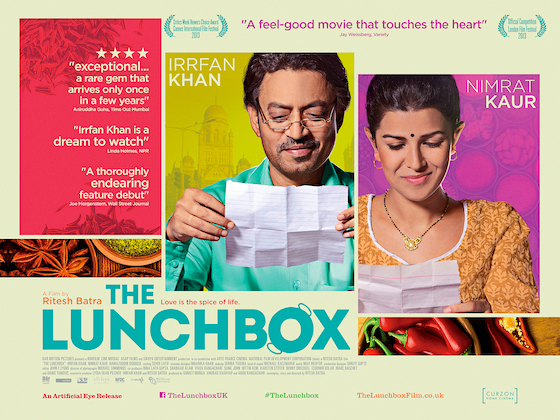
    Yesterday the world heard the sad news that the actor Irrfan Khan had passed away aged just 53. An award-winning film star in India, Khan also had a noteworthy presence as a supporting actor in Western films — the police inspector in Slumdog Millionaire; the owner of the eponymous park in Jurassic World; the adult version of the main character in Life of Pi; not to mention The Darjeeling Limited, The Amazing Spider-Man, Inferno, and more. I’d seen all of those films and noted Khan’s presence — he’s the kind of actor who turns up and elevates the film almost just by being there, bringing a depth and interest to even the smallest roles. But I’d never seen any of the many films (he has 151 acting credits on IMDb) in which he played the lead, so it seemed appropriate to turn to one of the most internationally acclaimed of his films, The Lunchbox, in tribute.

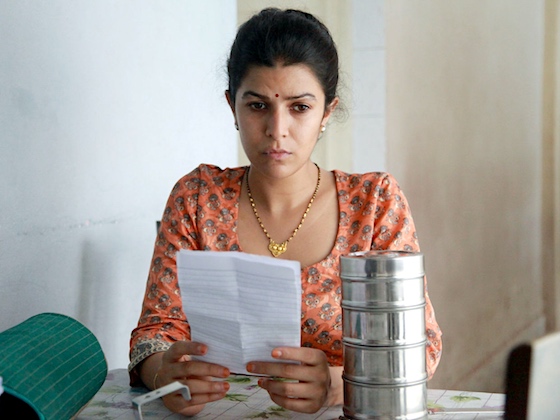
    Khan plays Saajan, an office worker who receives his lunch every day via the dabbawala service. It’s a remarkable network that delivers 200,000 lunches daily across Mumbai with unerring accuracy. Indeed, their precision is so famed that one of the major criticisms of this film in some quarters was that its premise is too far-fetched — that being that, due to a continued mixup, Saajan begins to receive the lunches Ila (Nimrat Kaur) has prepared for her husband, rather than the ones he ordered from a local restaurant. He’s so impressed with the quality of the food, when the lunchbox is returned Ila observes that it looks to have been licked clean. This is good news, because she was trying to up the quality of her lunches as a way to reignite her stagnant marriage; but when her husband returns home still disinterested, with only thin praise for something she hadn’t even included in his lunch, she realises the delivery mistake immediately. But politeness compels her to send lunch again, this time with a note explaining the mixup. After a rocky start, soon Saajan and Ila are in daily communication through short letters passed back and forth in the lunchbox.

    Saajan

    Both are characters desperately in need of that connection. Ila’s loveless marriage, and young daughter who spends most of the day at school, means her primary human contact comes in shouted conversations with her upstairs neighbour. Saajan, meanwhile, is taking early retirement, but first must train Shaikh (Nawazuddin Siddiqui), the overeager new recruit appointed to replace him. He tries to duck even this level of interaction; at home, he tells off kids for playing in the road outside his house, refusing to return their ball. We could infer Saajan is a misanthrope, and the impression is given that his colleagues do (they share a story that he once kicked a cat in front of a bus then casually walked away), but the film affords us more insight than that, primarily through Khan’s performance. It’s the underlying sadness in his eyes that first give the clue to his true loneliness, and the way his demeanour begins to brighten as the relationship with Ila brings a spark back into his life.

    Lest you think this is all somewhat dour, the way it plays is uplifting. Saajan and Ila may be miserable at the start, and continue to confront problems in their lives throughout the film, but their connection injects a measure of happiness into both their lives, the mutual support helping them through. Plus there’s a strong vein of humour, at first from the faltering beginnings of our leads’ relationship, then from the antics of Siddiqui’s junior employee. This isn’t the kind of broad comedy you might expect from a Bollywood movie, but something more grounded and closer to reality. At first Shaikh seems as irritating to us as he is to Saajan, but soon the latter’s growing empathy leads him to become a father figure to the younger man, and we too begin to see the truth underneath his cheery facade.

    Ila

    While that subplot is a bonus, the film really comes down to Saajan and Ila, and consequently the performances of Khan and Kaur. That’s particularly important because so much of the story occurs in the form of letters, and so the characters’ true reactions come across in doleful expressions, or changes in posture or behaviour; subtle, human indicators that leave us in no doubt what they’re feeling, and only strengthen our own connection to and investment in these characters. This pair of deeply-felt performances carefully steer The Lunchbox into being a heartfelt, quietly affecting film.

    5 out of 5

    Zatoichi at Large (1972)

    aka Zatôichi goyôtabi

    2019 #118
    Kazuo Mori | 88 mins | Blu-ray | 2.35:1 | Japan / Japanese | 15

    Zatoichi at Large

    I never thought doing a good deed for someone would end up making me a demon.

    The 23rd film in the Zatoichi series is also the worst according to Letterboxd users, who rate it below even the ’00s spinoff, Ichi. But as with all things in this crazy, mixed-up world of ours, there are those who disagree: The Digital Bits give it a B+, which puts it in the series’ top half (to be precise, it makes it =7th, but with seven other films). You can add me to that (very short) list. It’s not an exceptional Zatoichi film by any means, but it is a middle-of-the-range entry, and a long way from the worst the series has to offer.

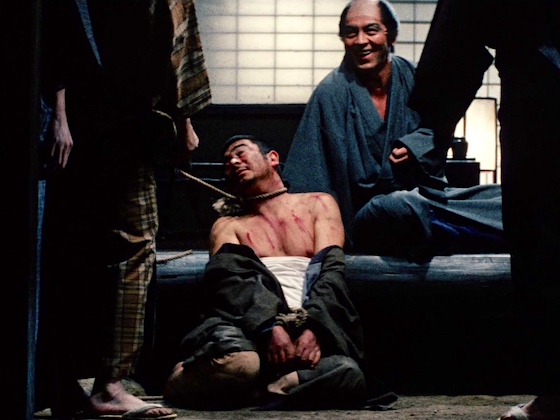
    Between how reviled it is by Letterboxd users and the cartoonish art Criterion chose for it, I assumed this was going to be another woeful attempt at comedy like Doomed Man (which is, in my opinion, by far one of the series’ worst films). It’s quite the opposite: a tragic film, where good and bad alike are faced with impossible choices, or misinterpret evidence that leads them to make rash, fatal decisions. At one point Ichi is captured, tied up, teased and beaten until he’s bruised and bloody — it’s very unpleasant. If the unpleasantness was why it was so disliked then I could see where people were coming from, but criticism seems to hinge mainly on the familiarity of the plot.

    Well, it begins with Ichi stumbling across a dying pregnant woman. He delivers her baby, and her dying wish is that he takes the child to her husband in a nearby village. Naturally, Ichi complies, followed all the way by a young boy who won’t stop throwing stones at him. With the help of the village’s old but honourable constable, Tobei, he locates the baby’s aunt, Oyae. But then the yakuza arrive, demanding taxes from local performers and threatening to force Oyae into prostitution, and once again it’s up to Ichi to save the day.

    Saving the day

    Yes, anyone familiar with Ichi’s adventures can see how that’s a pretty standard storyline. The devil is in the detail, and At Large offers a few interesting characters and subplots. For starters, there’s Tobei — a non-corrupt official is a rarity in this series, but that doesn’t make him dull. He gains depth from both how he treats Ichi (when he finds out the truth about our hero’s past, he doesn’t arrest him) and his relationship with his wayward son, who’s a conman. Their relationship is quite poignant. It’s only when his father finally hits him that the son realises he cares, which makes him happy… but then things take a turn for the worse, leading the former good-for-nothing to set out as an avenger of honour.

    As the villain, yakuza boss Tetsugoro, there’s an interesting performance by Rentarô Mikuni (who previously appeared in Zatoichi the Outlaw, and is also great in the samurai classic Harakiri). He choose to play Tetsugoro as constantly bored, or world-weary, barely interested by or caring about what’s going. For example, he’s been paying everyone 1 ryo to kill Ichi, but when someone demands 50 ryo he does no more than hand-wave his approval. All of which might sound like a criticism, but it’s a surprisingly effective portrayal of disinterested everyday evil. Nothing he does brings him pleasure; nothing that happens causes frustration or surprise — he just exists, doing the only things he knows. Well, that is until he observes Ichi being tortured — then he smiles and laughs. And when he finally kills Tobei — the most moral man around — then he laughs again. Ooh, he’s a nasty piece of work and no mistake!

    Zatoichi tortured

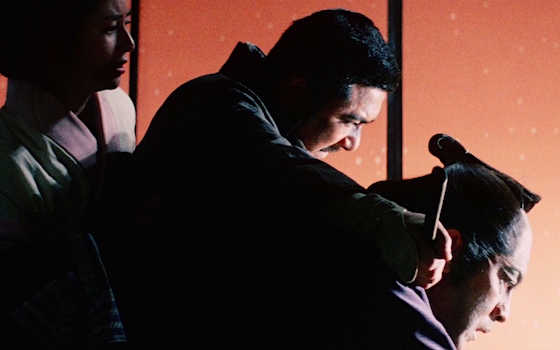
    There are various other bits and pieces that work nicely. Ichi gets to show off, as usual, but it’s always fun. The filmmaking gets a bit of ’70s verve, with a score that is at times very contemporary-pop, and supplementing the series’ normal visual style with some handheld closeup stuff. And the final one-on-one duel is not the usual big showpiece: oddly exposed, almost silent, flash-edited, and over in seconds, with a hard cut to a “the end” card. Depending on your point of view, this is either “almost comically tacked on” (DVD Talk) or “one of the most badass final thirty seconds of any film in this series” (The Digital Bits). I don’t know if I’d go as far as the latter, but it’s certainly a change of pace.

    Zatoichi at Large may just be a remix of various plot bits we’ve seen before, but they’re done with a seriousness and darkness that works. There’s a bit of comedic stuff early on that’s a nonstarter, but once that’s out the way it’s a decent, if fundamentally unoriginal, adventure for Ichi. Indeed, it’s that lack of originality that hurts it most. In itself it’s a perfectly good Zatoichi movie, but we’ve seen almost all of it before. At Large (re)does it all solidly, but it doesn’t do much to improve on previous versions. If more people watched the films out of sequence and came to this earlier, perhaps it would be better liked.

    4 out of 5

    The Elephant Man (1980)

    2018 #187
    David Lynch | 124 mins | Blu-ray | 2.35:1 | USA & UK / English | PG / PG

    The Elephant Man

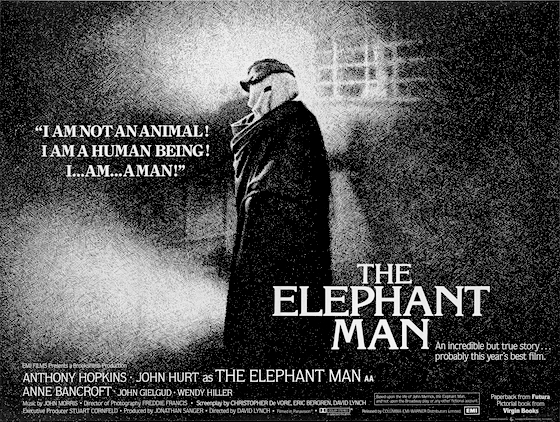
    This biopic of Joseph Merrick — better known as ‘the Elephant Man’, a Victorian circus sideshow ‘freak’ who became a star of London society during his stay at the London Hospital — is noteworthy not only for its documentation of a key figure in Victorian life, who perhaps transformed people’s views of what it meant to be human, but also because it’s a film directed by David Lynch.

    The Elephant Man is sometimes placed alongside Dune and The Straight Story as anomalies in Lynch’s filmography, which is more often characterised for its horror-inducing oddness and sometimes-incomprehensible plotting. Of course, upon proper examination, all three of these movies exhibit Lynchian touches, perhaps none more so than The Elephant Man. It’s there in the avant-garde opening; the dream sequence; the sound design, for which he’s co-credited; the focus on industrial machinery. The film can certainly be read as a Victorian melodrama, but in execution it’s far from a Merchant Ivory movie.

    It’s also a very human and humane film, perhaps more so than you might expect from Lynch. But then again, look to The Straight Story, which in my review I described as “understatedly human and kind of heartwarming”; or Fire Walk with Me, which is about exposing the tragic injustices inflicted upon Laura Palmer. He may not come at it from the most obvious angles, but I think Lynch is consistently a compassionate filmmaker. Indeed, some critics even accused the film of “excessive sentiment”, probably due to being partly based on the memoirs of Merrick’s friend and physician, Frederick Treves. I disagree because, even if it is pretty sentimental, I think it hits the sweet spot — the point is that we should care.

    Treves and Merrick

    A significant boost to our emotional connection is the absolutely superb performances from Anthony Hopkins as Treves and John Hurt as Merrick. The latter earnt a BAFTA win and an Oscar nomination (losing to Robert De Niro in Raging Bull) in what became a truly iconic performance, but it’s a wonder Hopkins wasn’t similarly recognised. One of the themes the film tackles is the dichotomy of Treves being Merrick’s friend but also, to an extent, exploiting him to further his career, and finding the truth in that balance is down to Hopkins. They also both contribute enormously to the graceful beauty found throughout the film, not least in close-ups where a single tear can convey so much complex emotion, or the understated but moving final scene.

    So too the gorgeous black-and-white photography by Freddie Francis. As Tom Huddleston writes in his essay accompanying the film’s StudioCanal Blu-ray releases, “imagine the film in colour, how fleshy and grotesque the makeup would have appeared, how gaudy and nauseating the carnival sequences.” It doesn’t bear thinking about. Instead, the monochrome visuals mix “gothic horror with documentary realism, lush drawing-room drama with mist-shrouded flights of fantasy”, to create a film that feels realist and historical, but also timeless and fantastical.

    5 out of 5

    The Elephant Man is on BBC One tonight at 10:30pm (11pm in Scotland).

    It was viewed as part of my What Do You Mean You Haven’t Seen…? 2018 project.

    Extraction (2020)

    2020 #88
    Sam Hargrave | 116 mins | streaming (UHD) | 2.35:1 | USA / English, Hindi & Bengali | 18 / R

    Extraction

    Chris “Thor” Hemsworth stars in this action-thriller masterminded by the Russo brothers (directors of Avengers: Infinity War and Endgame) and directed by Sam Hargrave, who has dozens of stunt coordinating credits to his name, including three Hunger Games, Atomic Blonde, and work on six Marvel Studios movies. But don’t take all those MCU connections to heart — this is not a Marvel-style PG-13 action-comedy. Oh no.

    We first meet mercenary Tyler Rake (Hemsworth) engaged in a gunfight on a bridge. He’s covered in wounds, spitting up blood, looks like he’s about to die. Cut to two days earlier! No, really, it’s one of those openings. They just won’t bloody die. Never mind “skip titles” or “watch credits”, Netflix needs to add a “skip pointless in media res prologue” button. It would improve almost any film/TV episode where it was featured.

    Anyway, two days earlier we’re introduced to Ovi (Rudhraksh Jaiswal). Just an ordinary, well-to-do schoolboy in India… except his dad’s an imprisoned drug kingpin, and when Ovi slips out to a club one evening he’s kidnapped by goons from the competition, run by the thoroughly ruthless Amir Asif (Priyanshu Painyuli). With daddy behind bars, it falls to Saju (Randeep Hooda) to get the kid back, for which he hires some organisation, I guess — the film is incredibly light on specifics here. Basically, it involves Nik (Golshifteh Farahani) sending in Mr Rake and a support team to extract the kid. Naturally the mission goes sideways, leaving it up to Rake alone to get Ovi and himself out of a city crawling with henchman and corrupt cops who are all out to get them.

    School's out

    Of course, Rake has issues in his backstory, and rescuing the kid becomes more than just a job, etc, etc. The “Man on Fire Lite” plot is as predictable as this sentence ending with a simile. When David Harbour turns up halfway through as an old mate of Rake’s who lives in the city and agrees to help him out, I’ll be surprised if you can’t guess what inevitably happens a couple of scenes later. Though it is amusingly bold of the film to try to make us believe David “dad bod” Harbour could hold his own in a fight against Chris “literally a Norse God” Hemsworth.

    That minor brawl aside, the action sequences are great, more than making up for the lightweight plot mechanics. Letting stunt coordinators move into full-on directing has been the saviour of the action movie genre in recent years, working wonders for the John Wick series in particular, but also several other movies that have followed suit. Hargrave is the latest to suggest he might have a bright career ahead of him on the basis of his ability to stage electrifyingly choreographed combat scenes. The action is fast and hard-hitting; not unnecessarily horror-movie gory like it was in fellow Netflix actioner 6 Underground, but certainly not PG-13 material either. Clearly Netflix don’t force the makers of their expensive movies to hit that PG-13, presumably tied to not having to worry about box office takings. One advantage of going direct to streaming.

    The highlight of the film is undoubtedly an already-much-discussed 11½-minute single-take action sequence. We’ve seen plenty of these trick shots in the past few years (Atomic Blonde and, obviously, 1917 particularly come to mind), but Extraction offers another belter. It starts as a full-blown car chase, which transitions into a game of cat-and-mouse around a warren-like apartment block, then tumbles into a mano-a-mano knife duel on a busy street, before ending in a second car chase. Obviously there are myriad hidden cuts in there, but that’s almost beside the point: it’s not physically doing it in one long shot that’s impressive, it’s the design and choreography and planning and execution to make it feel like one. It pays off handsomely.

    Street fighter

    You wonder if Netflix might look to turn Extraction into a franchise — in many non-English-speaking countries it’s been titled Tyler Rake, which might suggest that’s what they’re thinking. But then, they could’ve retitled it that in English if they wanted, so maybe not. It’s not the most sophisticated thriller ever made, and it doesn’t reach the giddy heights of John Wick in the action department, but it’s nonetheless entertaining at what it sets out to achieve. If they do decide to make more, I’ll definitely be there.

    4 out of 5

    Extraction is available on Netflix now.

    Men in Black: International (2019)

    2020 #85
    F. Gary Gray | 115 mins | Blu-ray | 2.00:1 | USA & China / English | 12 / PG-13

    Men in Black: International

    When Men in Black: International* hit cinemas last summer, many, many, many critics used a neuralyzer-related pun prominently in their review. (Someone did a Twitter thread compiling all the near-identical jokes. It reached 120 examples.**) For those unfamiliar with the MIB franchise, the neuralyzer is a small device that can wipe people’s memories, used by the MIB to keep their activities secret. The repetitive and inevitable joke was that International is so bad you’ll want to be neuralzyed afterwards. Now, I swear the film itself is trying to get in on the gag: the only photo printed on its disc is of a neuralyzer, as if the Blu-ray itself is going to wipe your memory when you take it out of your player. If only it did…

    International is essentially a spin-off from the previous trilogy of MIB movies: whereas they followed Agents J and K (Will Smith and Tommy Lee Jones) on adventures in New York, this time we follow newbie Agent M (Tessa Thompson) as she’s relocated to London and paired with hot-shot-agent-gone-off-the-boil H (Chris Hemsworth) on a globetrotting adventure to unearth a mole in MIB.

    Reinvigorating the franchise with new blood isn’t a bad idea. The third film was a marked improvement on the second, but neither recaptured the glories of the first, and K and J’s story was pretty well played out. Hemsworth and Thompson are good picks for the leads, too, given he displayed noteworthy comedic chops in the Ghostbusters reboot and the pair had clear chemistry in the well-liked Thor: Ragnarok.

    Back in black

    But clear-eyed plans alone don’t make a good movie, as Men in Black: International proves. It’s not that the movie is bad per se, it’s just mediocre; bland; uninspired. It’s devoid of wit or charm — which, considering the cast, is kind of remarkable. I mean, it’s not just Hemsworth and Thompson — two appealing, capable leads. There’s also Liam Neeson and Emma Thompson, and Rebecca Ferguson pops up (I didn’t even know she was in it ’til she did), and there’s Rafe Spall (limited by having to be a blatant red herring), and the voice of Kumail Nanjiani. Whoever’s your favourite out of that talented cast, they’re wasted. Neeson is a particular bit of miscasting. Calling the head of London branch “High T” is a perfectly adequate joke, playing on Britishness and poshness… until you cast a guy with a pronounced Northern Irish accent, which just kills the gag dead. Nanjiani fares best as the voice of a little CGI creature, who’s probably meant to be cute but errs more towards annoying, though I didn’t hate him.

    Of course I didn’t hate him — nothing in this movie is emotive enough to be hate-worthy. But by being so bland, it becomes objectionable. MIB2 wasn’t great, but at least it was kind of entertaining in its poorness. International is playing it so safe that you can’t even groan at it, or be delighted when something half-decent emerges from the mire, or be amused by it in spite of itself.

    I guess this is what happens when you hire a primarily action director to helm a movie that should primarily be a comedy. F. Gary Gray did start off his career with a comedy, Friday, but that was 25 years ago. He’s better known for the likes of The Negotiator, the Italian Job remake, Law Abiding Citizen, and The Fate of the Furious. He hasn’t turned this into a straight-up action movie — it does still try to be amusing — but it’s clear the focus is in a different place to before. It’s partly because it’s far too long and lacking in pace. It’s always stuck in my mind that the director of the previous MIBs, Barry Sonnenfeld, once said he’s the only director whose Director’s Cut would be shorter than the original film because he’s always looking to strip things back. I suspect that may be part of why the previous movies worked, and it feels like International could really benefit from the same approach.

    Cute and/or annoying CGI creature? Check

    It certainly seemed to me like it was several more drafts away from completion. The twist is so obvious you can guess it just from looking at the cast list, underscored by a prologue that fades to white before it resolves and so may as well scream “what happened next is not what you’ll think”. More vitally, why is M a rookie agent? You’d think it would give an obvious and easy character arc, but that’s not really played. Instead, there are loads of times throughout the film where she Knows Stuff, so they have to explain it with “it says it in the handbook” or something similarly hand-wavy. The fact she managed to find the MIB, rather than them choosing to recruit her, is a cute origin but then has nothing to do with anything. It would’ve been better if she was a desk jockey forced out onto her first field assignment. Sure, that’s a tired characterisation too, but at least it’d be something a bit different for the franchise, and a bit more in keeping with how the movie wants to use her.

    At one point it was mooted that this would be an MIB / Jump Street crossover movie, which was a barmy idea; but with MIB in need of a fresh start and Jump Street already being pretty immune to the fourth wall, it could’ve been great. At least it would’ve been different — even if it hadn’t’ve worked, they’d’ve tried something bold. Instead, they went for the much safer option of a straightforward soft reboot, and everything about International screams “safe”. Earlier I said it wasn’t bad, but by being so dull, well, it kinda is.

    2 out of 5

    Men in Black: International is available on Sky Cinema from today.

    * Don’t get me started on that colon in the title. I could practically write an essay just about that choice. ^
    ** Most of the critics took it well, apparently. ^