Unknown's avatar

About badblokebob

Aiming to watch at least 100 films in a year. Hence why I called my blog that. http://100films.co.uk

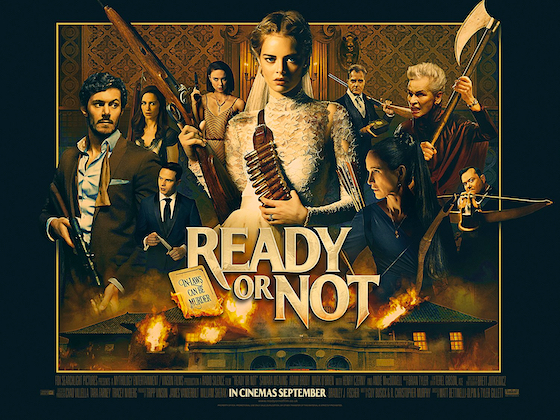
Ready or Not (2019)

2020 #90
Matt Bettinelli-Olpin & Tyler Gillett | 95 mins | streaming (HD) | 2.39:1 | USA & Canada / English | 18 / R

Ready or Not

In my review of Get Out, I took issue with the fact that some people labelled it a “comedy horror”, because it wasn’t particularly funny. I mention that because Ready or Not takes a broadly similar premise to Get Out (albeit with white people and no commentary on racial issues) but does take things in a comedic direction.

The similarity comes in that it’s about bride-to-be Grace (Samara Weaving) meeting her fiancé’s family for the first time at their wedding. On the wedding night, she’s introduced to an odd family ritual: she must select a card from a puzzle box and they play whatever game is on the card. Unfortunately for her, Grace gets “hide and seek”, which in this case is not just regular hide and seek: while she hides, the family arm themselves to hunt and kill her. Hilarity ensues.

Badass bride

Well, okay, maybe not hilarity per se, but this is definitely a comedy-horror, with more laughs than scares and an appropriate amount of gore. It obviously owes a debt to other movies, or at least has points of similarity (You’re Next particularly comes to mind), but it also has a few nice subversions and doesn’t always go the way you’d think — and when it subverts things that have already been subverted, like some kind of triple-cross of subversion, then you know it’s not as dumb a movie as some people think. Its biggest failing for me was the photography, too much of which is caked in over-graded green. The final shot is fab, though; indeed, the whole climax is an all-timer.

There were times I wanted a bit more from Ready or Not to push it over into classic status, but even without that final extra something, if you enjoy your horror-thrillers laced with laughs, it’s an exceptionally fun time.

4 out of 5

Ready or Not is available on Sky Cinema and Now TV from today.

Venom (2018)

2020 #181
Ruben Fleischer | 112 mins | Blu-ray (UHD) | 2.40:1 | USA & China / English | 15 / PG-13

Venom

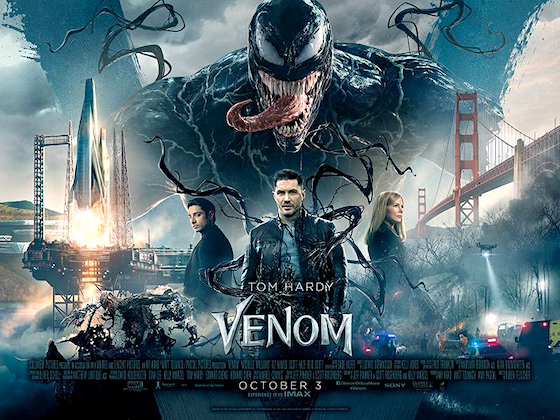
The fad for shared universes, provoked by the success of the MCU, seems to be dying off: the Dark Universe, the DC Extended Universe, Fox’s X-Men films, the MonsterVerse, sundry others most of us can’t even remember — they all either died a quick, brutal death, or circumstances have wiped them out. Even those that are ongoing have either abandoned close interconnectedness (like the DCEU) or don’t have long-term plans (the MonsterVerse, which has nothing announced beyond Godzilla vs. Kong). The MCU still seems to be going strong (although we haven’t actually had a new MCU movie in over a year now, so who knows what the future will hold?), but other than that? Everyone seems to have realised the formula is impossible (or too much hard work) to replicate.

The exception lies in Sony’s desire to launch a superhero universe out of the one character whose rights they own: Spider-Man. It started when they abandoned Spider-Man 4 to go the reboot route with The Amazing Spider-Man, the sequel to which teased all sorts of stuff to come, some of which was announced. Those movies’ failure to live up to their titles (i.e. they were not amazing, in any respect) saw such plans cancelled, but it seems Sony don’t give up so easily — even after they loaned out Spider-Man himself to the MCU, moves to form their own universe have continued.

Which is what brings us to Venom. For those not in the know, he started life as a Spider-Man villain (if you’re not a comic book reader, you’re most likely to know him from his appearance in Spider-Man 3, a move forced by the studio that contributed to the film’s relative failure), but he later became an anti-hero in his own right, which positions him quite nicely for Sony’s first actually-filmed-and-released foray into a shared Spidey universe. (A lot of the other Spider-Man characters they own the rights to are villains, though after the success of Joker I guess they’ll feel emboldened to attempt villain-centred films.) And, to the surprise of some, Venom earnt over $850 million at the global box office, making it the 7th highest grossing film of 2018. Sony’s Spider-Man-universe-without-Spider-Man is definitely underway (there’s a sequel due next year, alongside other Spidey-related films both ready for release and in active development).

Venomous

But enough about future plans, because perhaps one reason Venom has been such a success at launching a new universe is that it didn’t try too hard. Unlike The Mummy or Batman v Superman, this isn’t a film bogged down with characters and references designed to tee-up future spin-offs. It’s an entirely standalone adventure, in which struggling journalist Eddie Brock (Tom Hardy) bonds with an alien symbiote that can take over his body and do powerful things. The alien is one of several brought to Earth by the explorations of Elon Musk-esque tech billionaire Carlton Drake (Riz Ahmed). In the mould of many an overconfident movie scientist before him, Drake hasn’t bargained on the aliens having their own agenda — to invade Earth and eat the populace, i.e. us. But for some reason Brock’s alien, Venom, takes a liking to the planet and vows to protect it.

It takes the movie quite a while to get to that point, mind. Sorry if you were wary of spoilers, but, I mean, it’s hardly a surprise that (a) a race of aliens that look like Venom are going to turn out to have vicious motives, and (b) the titular character is going to turn out to be a good guy who wants to save us. There’s certainly a place for slow-burn movies that take their time to get to the point or to reveal the monster, but I’m not sure a summer superhero blockbuster is one of them. While Venom isn’t exactly boring until Venom turns up, it does feel like we’re going through motions until we get to what we’ve come for, i.e. a crazy powerful alien kicking ass and biting off heads.

It feels further unbalanced because Venom is actually quite short. You might’ve clocked the 112 minute (aka 1 hour 52 minutes) running time and thought that sounded pretty reasonable (even if nowadays most blockbusters are well over 2 hours), but the actual content of the movie runs only a little over an hour-and-a-half, topped up by a long credits scroll and a lengthy post-credit promo clip for Into the Spider-Verse. (I can see why they included that in cinemas, but leaving it in the home release feels unnecessary. Apparently it’s cut from some digital versions.) According to IMDb, Hardy has said that half-an-hour or so was cut from the film, including his favourite sequences. Why those cuts were made and what exactly went, I don’t know, but even in the released version it feels like they could’ve slimmed down the first 50 minutes and put in more of Venom himself.

Note the lack of Venom

Partly this is the plot suffering from having to be an origin story, with all the usual issues that brings: a lot of time spent on setup; a villain who’s sidelined for the bigger point of Eddie and Venom finally coming together. Once it reaches that point, it’s allowed to indulge in the barminess of the character and the situation a little. All while playing safely within a PG-13 box, of course. Venom is kind of a ’90s teenager’s idea of what it means to be edgy and dark, and by staying faithful to that the film version consequently feels quite like an early-’00s superhero movie. There’s even an Eminem theme song. It reminds you how far superhero movies have come, though. I mean, they were hardly held in the highest esteem back then (aside from breakout examples, like the first couple of X-Men and Spider-Man movies), and it’s not just time that has changed attitudes but also developments in how they present themselves. But now, that it’s a bit of a throwback is part of Venom‘s charm — or another reason to dismiss it, if there’s no nostalgia in that for you.

Certainly, the cast are all better than this. Sometimes that elevates it — Hardy is having a ball talking to himself and doing random shit like climbing in lobster tanks — but other times it feels like people are here for a payday. Riz Ahmed’s character arc is gradually whittled down to nothing, replaced by a CGI monster. And what made four-time Oscar nominee Michelle Williams decide this was a part worth her time? (Turns out the answer is “the chance to work with Tom Hardy.” But I’m sure the cheque didn’t hurt either.) Hardy has spoken a few times about how he wanted to make a movie his son could actually see. A superhero movie seems a good shout for that but I don’t know that Venom was the right pick. The film is clearly aiming for a PG-13 (there’s only one “fuck”; it’s not particularly gory), but the horror sequences and violence were enough to push it up to a 15 over here. And that’s probably fair — there are twisted and broken bodies (even if they then fix themselves), and several instances of biting off heads (it’s not shown in graphic detail, but we’re fully aware that’s what’s happening).

Real mature

All things considered, I wasn’t sure what I thought of Venom. It’s kind of fun, in a juvenile way (juvenile like teenagers who think violence and edgy dialogue is “grown up”). But it’s also kind of rubbish in places, in part because it can be so juvenile (juvenile like… yeah, same again). There’s a chance it’ll tee-up a superior sequel — with the origin stuff out of the way, hopefully we can expect a more original storyline; and, as it was such a hit, maybe that’ll allow the filmmakers leeway to go even barmier. For one thing, a brief sequel tease suggests Woody Harrelson is all ready to Woody Harrelson it up. Until then, I guess this’ll do as a crazy placeholder.

3 out of 5

Venom is available on Netflix in the UK from today.

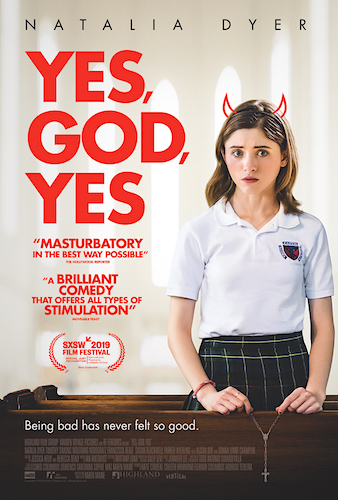
Yes, God, Yes (2019)

2020 #191
Karen Maine | 78 mins | digital (HD) | 1.85:1 | USA / English | 15 / R

Yes, God, Yes

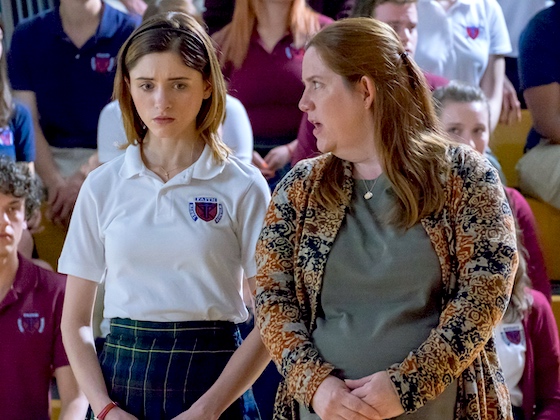
It’s the early 2000s, and Alice (Stranger Things’ Natalia Dyer) is a pupil at an ultra-Christian high school (“in America” goes without saying there, right?) But Alice is feeling conflicted. In morality class, she’s being taught about the wrongs of sex, while at home she likes to rewind the Titanic VHS to rewatch the sex scene. One day, a chat on AOL turns naughty, and Alice finds herself putting her hand down her skirt and… well… Of course, for a good indoctrinated little Christian girl, access to pleasure is not an instant revelation, and soon she’s off to her school’s weekend camp to learn to connect with Jesus, or something. Instead, she’ll learn a little something about the hypocrisy of those around her.

It would be easy to label Yes, God, Yes a “cumming of age movie” (such a pun is certainly not below my level of humour), but it would feel slightly inaccurate. Put another way, if you’ve come to see Nancy Wheeler cum, you’ll be disappointed. There is, perhaps, a whole analysis of the film to be written from the starting point that Alice doesn’t seem to reach orgasm — I mean, the film already (comically) touches on the difference between men and women in this regard; but also, Alice only needs to touch herself to feel sinful and transgressive, so how would she feel if she got ‘all the way’? But I am not necessarily best placed to write such an analysis of the depiction of female self-pleasure. It could be as simple as the fact the film has a female writer-director and didn’t want to show that moment on screen, for any number of reasons.

A touching moment

Indeed, despite it providing the plot hook and title, wanking is only one part of the film’s exposure of religious hypocrisy when it comes to sex. Alice’s desire to go to camp is as much provoked by a nasty rumour doing the rounds at school as it is by her personal discoveries. Said rumour is that, at a party, Alice “tossed the salad” of a classmate. She has no idea what this means; everyone else seems to know (if you don’t know either, don’t worry, the film has a dictionary definition at the start). Alice may go to an ultra-conservative school that teaches repressive values, but it’s clear her classmates are still learning about the wider world from elsewhere, while she believes everything she’s being taught and remains naïve. Ironically, the camp does teach her something about herself, just not what was intended. It’s the realisation of Christianity’s hypocrisy, more so than of the power of touching herself, that prompts Alice’s personal development by the end of the film.

Throughout all this personal revelation, the film leans heavily on Natalia Dyer’s ability to convey confused inner thoughts with just her face, and fortunately she’s up to the task. Indeed, it feels like overkill on the handful of occasions when it resorts to underlining a point via a kind of flashback-audio. We get what Alice is thinking when she looks at a microwave, we don’t need the soundtrack to repeat the Father’s microwave/oven analogy. Nonetheless, such moments are relatively rare, and instead we’re left to identify with the shy, wary, quiet Alice — something I’m sure a lot of us can relate to from our own adolescence. And if your own adolescence occurred around the turn of the millennium, boy does this film have you pinned down: playing Snake on a Nokia phone; AOL chatrooms… Small incidental details that very much specify the time (and place — AOL wasn’t such a thing here in the UK, but we had our alternatives).

Christian 'teaching'

I’m surprised I’ve managed to get this far in the review without calling up Saved!, a film to which Yes, God, Yes bears more than a passing resemblance. For those who’ve not seen it (why not? It was on my list of 100 Favourites over four years ago!), Saved is about a girl at an ultra-Christian high school in the early ’00s who discovers religious hypocrisy after a sex-related revelation. Both films criticise that hypocrisy through humour and satire. The main difference is that Saved is an outright comedy, whereas Yes, God, Yes is a comedy-drama, where its laughs come more from wry observations grounded in real-life rather than outright comedic bits, which is perhaps the result of it being semi-autobiographical by writer-director Karen Maine. Others have compared it to Lady Bird, another semi-autobiographical early-’00s-set coming-of-age drama about a girl at a Christian high school, including her first experiences with sex.

But let’s not lean too heavily on the fact there have been other films a bit like this, because Yes, God, Yes is still its own beast — more grounded than Saved; hornier than Lady Bird. If it seems more focused, or even niche, than some other coming-of-age movies, is that a bad thing? Part of the point about recent calls to enable more women and people of colour to make films is that we get to hear new stories and different perspectives, and Yes, God, Yes is an example of exactly that.

4 out of 5

Yes, God, Yes is available to rent and buy digitally in the UK as of yesterday.

The Man Who Laughs (1928)

2020 #189
Paul Leni | 110 mins | Blu-ray | 1.20:1 | USA / silent | PG

The Man Who Laughs

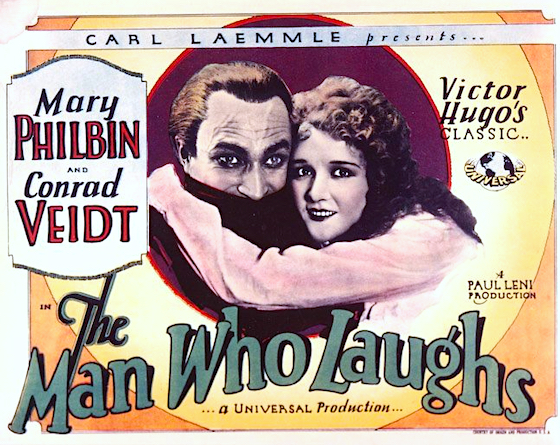
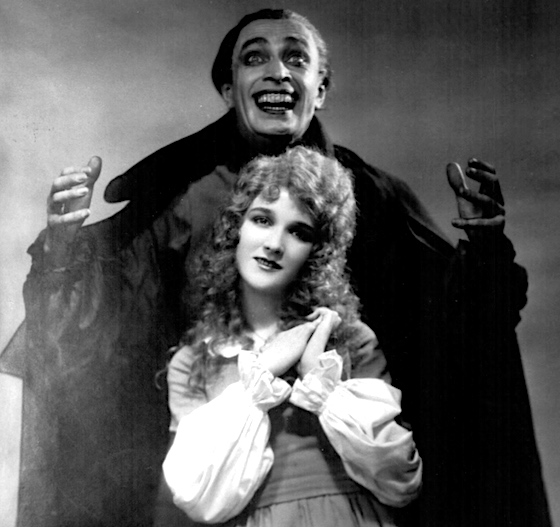
Just over 90 years ago, in the final years of the silent era, The Man Who Laughs was a “super-production” — an expensive and major release, designed to follow in the footsteps of successes like The Hunchback of Notre Dame and The Phantom of the Opera, with an acclaimed imported director (Paul Leni, Waxworks) and star (Conrad Veidt, The Cabinet of Dr Caligari), a shared leading lady from Phantom (Mary Philbin), and adapted from another novel by the author of Hunchback (Victor Hugo). It did, I believe, live up to its pedigree and expectations. But today it’s primarily remembered for one thing: being the visual inspiration behind a certain comic book supervillain…

Perhaps because of the connections to the aforementioned films, and because it inspired such a violent character, and because of the publicity stills that inspired that look, and because its production studio (Universal) would shortly become renowned for their iconic interpretations of the cornerstones of horror (Dracula, Frankenstein, et al), The Man Who Laughs has often been cited as a horror movie. It isn’t. Well, some of the first 15 minutes do play a bit like one — execution by iron maiden; mutilation and abandonment of a child; dangling corpses of hanged men — but then it jumps forward in time and becomes a romantic melodrama, with a bit of antiestablishment satire and a swashbuckling climax thrown in for good measure.

I was only Jokering

The story begins in 1690, with King James II punishing a rebellious lord by handing his son, Gwynplaine, to comprachicos (invented by Hugo for the novel; it means “child-buyers”) who mutilate the boy’s mouth into a permanent grin. And then he executes the lord in an iron maiden for good measure. When all the comprachicos are later exiled, they abandon the boy. Wandering through the snow, the kid finds a woman frozen to death, but her baby still alive in her arms. (Like I said, the first 15 minutes are pretty bleak.) He rescues the baby, who it’ll turn out is blind, and soon the pair are taken in by a wandering performer, Ursus (Cesare Gravina). Jump forward a couple of decades and Gwynplaine (Veidt) is now a popular attraction himself thanks to his laughing face, and the baby has grown into a beautiful young woman, Dea (Philbin), and the pair are in love. Let’s not think too much about the background to that relationship, eh? Gwynplaine feels unworthy of Dea’s love because he’s so hideous, but she doesn’t care because she’s literally blind.

Meanwhile, Gwynplaine’s fame and unique facial features lead to it being discovered that he’s really a noble, kicking off a bunch of courtly intrigue — I could explain it, but then we’d just be getting into the plot of the entire movie. Suffice to say, it involves a scheming courtier, Barkilphedro (Brandon Hurst), who was partly responsible for Gwynplaine’s dad’s death; a horny duchess, Josiana (Olga Baclanova), who we first meet while a peasant messenger spies on her having a bath (nothing explicit is actually seen — it cuts away just in time — but it was still too risqué for British censors, who cut away even sooner); and Queen Anne (Josphine Cromwell), best known today as “the one Olivia Colman played in The Favourite (there’s considerably less swearing, gout, lesbianism, and bunny rabbits in this version).

With the “beauty and the beast” angle to the film’s central romance, the film does withstand comparison to other variations of that story — like, um, Beauty and the Beast, but also, again, The Hunchback of Notre Dame. The difference here is in how people react to the ‘beast’. Only he himself seems to find him monstrous. The public find him inescapably hilarious, which isn’t nice for him to live with, but has made him popular and beloved rather than reviled. The love of his life is besotted with him unconditionally. Josiana comes to see his show and for some reason finds him instantly attractive (in fairness, I think she’s attracted to any man with a pulse).

Tale as old as time...

A more apt comparison is to a film made over 50 years later, David Lynch’s The Elephant Man — a parallel I spotted for myself, but also is mentioned in two essays in the booklet accompanying Eureka’s new Blu-ray release, so I’m certainly not alone in feeling this. Both concern a man who is physically disfigured and has fallen in with fairground sideshow folk, who despises himself but comes to find love and compassion from others. They even both climax with a grandstanding speech where the man in question declares his worth to the world, with the famous “I am a human being!” bit from The Elephant Man seeming like an echo of a scene here where Gwynplaine, forced to join the House of Lords by order of the Queen, eventually rejects her command, declaring his independence with the assertion that “God made me a man!” As Travis Crawford writes in the aforementioned booklet, “while sinister clowns would ultimately become an unlikely horror cliche, Gwynplaine’s gruesome disfigurement makes him a figure of pity, not menace… more Pierrot than Pennywise.” The Man Who Laughs is less concerned with examining and affirming the fundamental humanity underneath ‘freaks’ than Lynch’s film (this is a classical melodrama, after all), but it’s certainly an aspect of the story that, despite how he looks, Gwynplaine is still a human being; that, despite his fixed grin, he’s full of all the emotions of any human being.

Before I go, a quick word on the film’s soundtrack. “But it’s a silent movie.” Yes, but as you surely know, silent movies aren’t meant to be watched actually silent. The Blu-ray release (both the new UK one and an earlier US one from Flicker Alley) comes with two audio options: a new 2018 score by the Berklee Silent Film Orchestra, and the original 1928 Movietone sync track, which is not just general music backing but also includes some music clearly framed as diegetic, plus occasional sound effects, and even dialogue (in the form of background crowd noise, mostly). Now, the film was originally released as silent, then withdrawn and re-released with this accompanying soundtrack, so I guess the option of a new score isn’t wholly unmerited. Nonetheless, it still seems slightly off to me that you’d supplant an authentic original track with a modern creation. As if to underline this point, the booklet reveals that the new score is actually little more than a final-year project by a group of students! It’s lovely for them that they were able to present their work at the San Francisco Silent Film Festival and it was well received, and that it’s now included as an option on the film’s official releases… but presenting it as the primary audio option? No thanks. I suggest you choose the 1928 soundtrack.

I said it's NOT a horror movie!

It’s probably unlikely that The Man Who Laughs can escape its status as a trivia footnote for the Joker at this point (heck, Flicker Alley’s release even plays up the connection on its cover, taking the film’s most Joker-esque photo and decorating it in the character’s colours of purple and green). Certainly, no one should watch it for that reason alone — the inspiration for the Joker begins and ends with the grinning-man imagery; there’s nothing in the film itself that contributes to the character. There’s also little here to support its reputation as an influential early horror movie — those seeking horror thrills shouldn’t watch for that reason either. But for all the things The Man Who Laughs is not, what it is is a well-made and performed drama; one that deserves to stand and be appreciated on its own merits, not those that others have mistakenly conferred on it.

4 out of 5

The Man Who Laughs is released on Blu-ray in the UK today.

Jumanji: The Next Level (2019)

2020 #78
Jake Kasdan | 123 mins | digital (UHD) | 2.39:1 | USA / English | 12 / PG-13

Jumanji: The Next Level

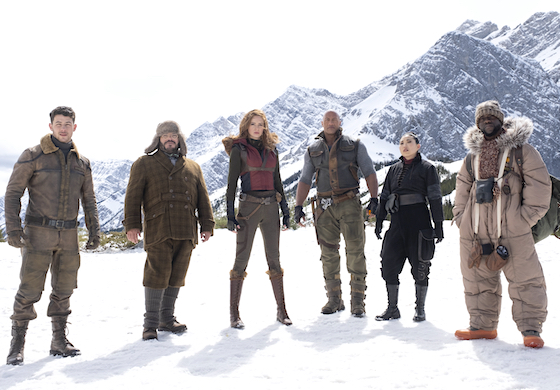
The previous Jumanji movie, Welcome to the Jungle, was officially a sequel to the 1995 original. In practice, however, that amounted to little more than a brief nod / tribute to original star Robin Williams, and maybe a few Easter eggs scattered about. The Next Level, on the other hand, is much more in the traditional “direct followup” mould.

Despite our quartet of heroes having destroyed the eponymous game at the end of the last movie, one of them rescued and repaired it, and when he goes back in (for old times’ sake or something) the others must follow to rescue him. But he’s not repaired it properly, and so his septuagenarian grandfather and his chum are sucked in too, and everyone’s inhabiting a different character. And so The Next Level plays with a lot of the same comedic ideas as its predecessor — i.e. the mismatch between real-life person and in-game persona — but mixes up who’s imitating who. Primarily, this means The Rock gets to do an impression of Danny DeVito, Kevin Hart is being Danny Glover, and Jack Black is a black American football player. Karen Gillan doesn’t immediately get to join in the fun, but the film has some tricks up its sleeve. Anyway, once in the game, they head off on an Indiana Jones-type adventure — again, much like the first movie.

For many, this repetition of ideas has been a stumbling block. “The same but slightly different” doesn’t really cut it for a sequel nowadays, when you can easily rewatch the thing it’s repeating. However, I don’t think The Next Level is actually such a slavish clone. The “mismatched identities” schtick arguably worked better the first time, when it was a shiny new gag, but the fact most of the cast get to play at being someone else keeps it at least a bit fresh. There are also several new characters in the mix, with an especially entertaining performance from Awkwafina. More importantly, the adventure itself is considerably different. In my review of Welcome to the Jungle I noted that its locales were “jungle, jungle, and jungle”. Here, we get snowy mountains, vast desert, plus towns and castles. To me, it feels like they took what worked in the first movie and polished it. It’s still fundamentally the same kind of comedy action-adventure — if you disliked the first movie, there’s no reason this should appeal to you more — but refined.

Snow wonder it's better

That said, there’s still ideas left on the table. That game malfunctioning only affects who gets zapped in and which characters they play, but what if it kept glitching throughout? It’s arguably a tricky conceit to manage — if you’re going to do it, you’ve got to integrate it; but you can’t really have our heroes winning (or losing) thanks to random mistakes. But this is why Hollywood filmmakers get paid the big bucks, right? To solve these kind of things. Do it right and the glitches could’ve added an extra zing, either to the humour or as an obstacle to winning or, ideally, both. (Also, on a slightly more personal level, I think it’s a shame they didn’t release it on 3D Blu-ray this time. It was released theatrically in 3D, so a conversion exists, but they didn’t bother to put it on disc anywhere in the world. Adventure movies like this can look great in the format, and there’s a sequence with rope bridges that could’ve been really special.)

I was surprised how much I liked Welcome to the Jungle, but I held back somewhat on the sequel because of the reactions I’d seen. As it is, I was surprised again, because I think The Next Level is an even more enjoyable adventure.

There’s now a third (aka fourth, or you could even say fifth, depending what you count) Jumanji in development, which a credit scene here teases might go off in a new direction; plus cast and crew interviews have hinted at some other intriguing additions to the mythology that spin out of this movie. There’s no guarantee it’ll be a success, of course, but, nonetheless, next time I won’t be so reticent.

4 out of 5

Jumanji: The Next Level is available on Sky Cinema and Now TV from today.

The 100-Week Roundup IX

I’ve not been doing too well with reviews lately — this is my first for over a fortnight, having missed self-imposed deadlines for the likes of Knives Out (on Amazon Prime), The Peanut Butter Falcon (on Netflix), Joker (on Sky Cinema), and Spaceship Earth (on DVD & Blu-ray). I’ve also slipped on these 100-week updates — this one should really have been at the end of July, and there should’ve already been another in August, with a third due soon. Oh dear.

So, it’s catchup time, and it begins with my final reviews from August 2018

  • The Most Unknown (2018)
  • Zorro (1975)


    The Most Unknown
    (2018)

    2018 #185
    Ian Cheney | 92 mins | digital (HD) | 2.35:1 | USA / English

    The Most Unknown

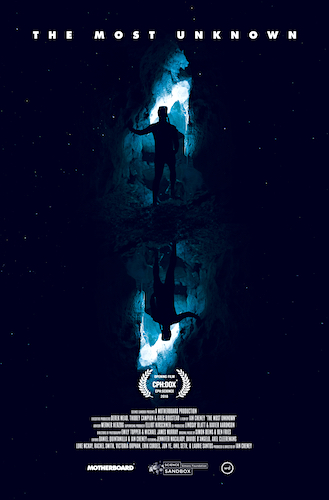
    This film is an experiment. Nine scientists meet for the first time in a chain of encounters around the world. It begins under a mountain, and ends on a monkey island.

    In this documentary, nine scientists working on some of the hardest problems across all fields (the “most unknowns”) meet each other in a daisy chain of one-on-one interviews / lab tours. It not only touches on the basics of what the unknowns they’re investigating are, but also how they go about investigating or discovering these things — the day-to-day realities of actually “doing” Science. Alongside that, it reveals the scientific mindset; what motivates them. The nine individuals are very different people working on very different problems in very different fields, but the film draws out the similarities in their natures that drive them to explore the unknown.

    If you’re concerned it might be all a bit “inside baseball” if you’re not a science geek, don’t be. These people work in vastly different fields — to us laypeople they’re all “scientists”, but to each other their specialities make them as different from one another as we are from them. This, arguably, is an insight in itself. It feels kind of obvious — of course a physicist and a microbiologist are completely different types of scientist — but I do think we have a tendency to lump all scientists together. Think of news reports: it’s not “chemists have discovered” or “psychologists have discovered”, it’s “scientists have discovered”.

    Science, innit

    It also reminds you that scientists are humans too, via little incidental details. For example, the equipment that vibrates samples to sheer out the DNA is labelled, “My name is Bond, James Bond. I like things shaken, not stirred.” Or the woman who plays Pokémon Go on her remote research island, because the lack of visitors means you find really good Pokémon there.

    You might also learn something about movies. The last scientist, a cognitive psychologist, talks about how people assess the quality of movies. Turns out, rather than considering their overall experience, they tend to focus on two points: the peak of how good it was, and how it ended. Pleasantly, this kinda confirms my long-held theory that an awful lot of movies are judged primarily on the quality of their third act. (My exception to this “rule” has always been films that lose you early on and put themselves on a hiding to nothing. Well, science can’t explain everything, I guess.)

    Plus, as a film, it’s beautifully shot. A lot of this science is taking place in extreme locations, which bring with them a beauty and wonder of their own.

    4 out of 5

    The Most Unknown is currently available on YouTube from its production company, split into nine instalments. (It used to be on Netflix, but was removed just the other day. If I’d published this review on time…)

    Zorro
    (1975)

    2018 #186
    Duccio Tessari | 118 mins | digital (HD) | 1.85:1 | Italy & France / English | PG / G

    Zorro

    This Italian-French version of the adventures of the famous masked vigilante (played by the great Alain Delon) is tonally similar to Richard Lester’s The Three Musketeers: genuine swashbuckling (including some elaborate stunt-filled sequences) mixed with plenty of humour and daftness. Plus, being set in 19th century California but filmed in Spain, it also has more than a dash of the Spaghetti Western in its DNA. The whole mix makes it a lot of fun.

    Of particular note is the final sword fight, an epic duel for the ages. It sees Zorro and chief villain Colonel Huerta pursue each other around the castle, clashing blades at every turn, at first accompanied by a crowd of spectators but, as their fight moves higher and higher, ending atop the bell tower, each with a rapier in one hand and a flaming torch in the other, thrashing their weapons at each other with all the vigour and vitriol of men who really, really want to kill each other.

    Another highlight is, arguably, the cheesy main theme. On the one hand it’s slathered all over the film inappropriately; on the other, it underlines the light, silly, comic tone. Plus it’s sung by someone called Oliver Onions. Can’t beat that.

    4 out of 5

  • Who Lives, Who Dies, Who Tells Your Monthly Review of July 2020

    Man, 2020 is non-stop!

    If you’ve come here from a tweet or email link, we’re three sentences in and had three Hamilton references already. Well, I did draft about half-a-dozen Hamilton-related titles for this review, so a few more may sneak in yet. While I devote my energies to thinking of some, let’s get on with the usual business…


    #156 The Ipcress File (1965)
    #157 Hamilton (2020)
    #158 Mr. Blandings Builds His Dream House (1948)
    #159 A Dog’s Will (2000), aka O Auto da Compadecida
    #159a David Lynch Cooks Quinoa (2007)
    #160 Make Mine Music (1946)
    #161 Chariots of Fire (1981)
    #162 The Old Guard (2020)
    #163 Palm Springs (2020)
    #164 Greyhound (2020)
    #165 The Scorpion King (2002)
    #166 Dangal (2016)
    #167 The Lighthouse (2019)
    #168 Melody Time (1948)
    #169 Fun & Fancy Free (1947)
    #170 Uncut Gems (2019)
    #171 Lady Bird (2017)
    #172 Safety Last! (1923)
    #173 Love on a Leash (2011)
    #174 The Wolf’s Call (2019), aka Le chant du loup
    #175 Hunter Killer (2018)
    #176 The Adventures of Ichabod and Mr. Toad (1949)
    #177 Le Mans ’66 (2019), aka Ford v Ferrari
    #178 Bloodshot (2020)
    #179 Der Hund von Baskerville (1914), aka The Hound of the Baskervilles
    #180 The French Connection (1971)
    #181 Venom (2018)
    #182 Spaceship Earth (2020)
    #183 Clueless (1995)
    #184 Bridge to Terabithia (2007)
    Hamilton

    Palm Springs

    Safety Last!

    Spaceship Earth

    .


    • I watched 29 new feature films in July.
    • That makes it my third best month of 2020; but, more impressively, it’s also my sixth best month ever — out of 163 months, that puts it in the top 4%.
    • It’s also my fifth month in a row with over 20 films, which is my second-longest run of 20+ months, right behind the six months from February to July 2018.
    • It also finally pulls July’s all-time average up above 10.0. I’ve been looking to get all the months’ averages up that high for years, and July has been the real hold-out (it didn’t help that in 2009 its total was 0). In fact, it’s now 11.0, meaning all months are at 11+ except for November — but having them all above 10 is fine; I’m not going to actively try to pull them up anymore.
    • In terms of other averages, it bests both the average for 2020 to date (previously 25.8, now 26.3) and the rolling average of the last 12 months (previously 17.3, now 19.3).
    • #184 is the furthest I’ve reached by the end of July, beating the next best by 11 films. In fact, compared to my worst-ever year (2009), I’m 146 ahead.
    • It also means I’ve already passed 2017’s final total, guaranteeing 2020 an all-time rank of at least third. With five months of the year left, I only need to watch 18 more films for second — that seems all but guaranteed, though never say never. For first place it’s 79 more, an average of 16 a month — at my current rate, eminently plausible; but last year I watched 48 films in that timespan, so (again) never say never.
    • Back in April, I identified the handful of years from which I’d never seen a feature film. I crossed off two more of those this month, thanks to Safety Last! for 1923 and Der Hund von Baskerville for 1914. That just leaves 1912 and 1915.
    • And talking of completing years, Lady Bird and Le Mans ’66 mean I’ve completed the Oscar Best Picture nominees from 2018 and 2020, respectively. I just need one more (Vice from 2019) to complete the last five years. I was obviously less circumspect earlier in the decade, though, because to complete back to 2011 I need a further ten films.
    • This month’s Blindspot film: an archetypal ’70s crime thriller with a noir vibe, The French Connection — and it’s as good as that sounds. Plus one from my overflow list, ’60s anti-Bond spy thriller The Ipcress File — which, sadly, I was a little underwhelmed by (primarily because I expect to adore it, though; it is very good).
    • From last month’s “failures” I watched The Lighthouse.


    The 62nd Monthly Arbitrary Awards

    Favourite Film of the Month

    Debate may have raged in some places about whether it should count as a film or not, but clearly I’m going with “does count”, and therefore I get to declare Hamilton my favourite of the month. It’s also currently the 26th best film of all time on IMDb’s top list, so I’m clearly not alone.

    Least Favourite Film of the Month
    I watched three submarine-related movies this month: Greyhound because it was new, but that gave me an itch to watch a ‘proper’ submarine movie, and French thriller The Wolf’s Call was already on my watchlist, and that was so enjoyable that I still fancied more after that, so I turned to Hunter Killer — which I shouldn’t have, because it’s awful.

    Worst Understanding of Geography of the Month
    We turn again to Hunter Killer for an entertaining bit of “American filmmakers not understanding foreign geography”. Gerard Butler’s submarine captain is picked up by helicopter while on a hunting holiday in the Scottish highlands, to take him to his sub at the naval docks in Faslane — about 80 miles away. We next see him at Faslane, where his XO asks how was his trip in from Portsmouth, another major naval port in the UK. So, if that’s right, he went from the highlands to Portsmouth and then to Faslane — a 1,000-mile round trip. I guess no one on that film bothered to look at a map…

    Best Song Not in Hamilton of the Month
    Apologies to the four Disney musicals that I watched, plus any original songs cropping up in any of the other films I watched, but not much can beat the little ditties sung by the canine hero of Love on a Leash. “King of the castle! / King of the castle that’s also a dog / And lives in a house that is green. / What is that about?” Lin-Manuel Miranda must be quaking in his boots.

    The Audience Award for Most-Viewed New Post of the Month
    One of the most widely-popular cultural phenomena of our time, finally made available to a wide audience of both die-hard fans and the curious, and my review has had almost the whole month to accumulate hits. Yes, entirely predictably (to the extent that I wrote this blurb on the 5th and haven’t touched a word of it), July’s most-viewed new post was Hamilton.

    That said, The Old Guard ended up coming pretty close; and they were both beaten by last month’s #1, my review of Netflix’s Eurovision movie, which is on track to be my most popular film review of 2020 (though who knows what the rest of the year will bring…)


    My Rewatchathon continues to be a month ahead of pace, with #33 being where I should’ve reached by the end of August.

    #31 The Princess Bride (1987)
    #32 Hamilton (2020)
    #33 The Woman in Green (1945)

    Regular readers will know I’m not a huge re-watcher (hence the Rewatchathon) — if I watch a film again within about five years I consider it “soon” — and yet here I am watching Hamilton twice in a month. Well, you put it on just to watch a bit and then you can’t stop. I wouldn’t be surprised if it turns up in 2020’s Rewatchathon again yet…

    I’ve rewatched The Princess Bride twice now without adding it to my “Guide To” series. It’s not like I haven’t got a big enough backlog anyway, right? I expect I’ll cover it someday. For now, I naturally posted some thoughts on Letterboxd after my most recent viewing.

    The Woman in Green continues my rewatch of the Basil Rathbone Sherlock Holmes series. I didn’t enjoy this one quite as much as I’d remembered — it has some great ideas and good sequences, but it somehow doesn’t gel as well as it should on this viewing. Nonetheless, there’s enough to admire that I still rate it pretty highly, including Henry Daniell as the series’ best Moriarty.


    Cinemas may still be mostly closed, and consequently there’s a shortage of new releases, but that certainly hasn’t stopped the streamers pumping out content, both new exclusives and archive titles (indeed, that’s probably why they are). Top of the pops for brand-new stuff this month was a Bollywood film, Dil Bechara, which catapulted to the top of the IMDb Top 250 chart thanks to eager fans rating it highly. The algorithm kicked in and it plummeted right back off it again, but in terms of raw numbers it’s still right up there. It’s streaming free on Hotstar if you want to see if it lives up to the fuss.

    As I said, the regular streamers piled on the content this month, more so Amazon than Netflix, with originals like How to Build a Girl and Honey Boy, the subscription debuts of theatrical films like Midway and Knives Out, and archive titles like 1947 Best Picture winner The Best Years of Our Lives and 1985 contender The Killing Fields They also briefly had the new Charlie’s Angels, for about 24 hours before someone realised the mistake — it was due on Sky Cinema / Now TV about a week later. Perhaps that means it’ll be coming to Amazon eventually; perhaps someone just pressed the wrong button. Also catching my eye was The Mask of Zorro in 4K. That came out on disc in the US back in May, but we haven’t been so lucky. I hope that changes, because it’s a great film and the new transfer looks far superior to the old Blu-ray, but until then I might just watch it on Amazon. They also have the sequel, The Legend of Zorro, also in 4K, which hasn’t been treated to a disc release anywhere, probably because of it’s poor reputation. I don’t think I’ve seen it since the cinema in 2005 (even though I own it on DVD), so it’s due a revisit.

    Amazon have also had a load more of their discounted-for-Prime-members rentals recently, so I’ve stocked up on the likes of The Assistant, Bad Boys for Life, A Beautiful Day in the Neighborhood, Color Out of Space, and Never Rarely Sometimes Always. All of those should feature in August’s viewing. I’ve also been tempted to splash the cash on plenty of Blu-rays, thanks to endless sales and offers. Barnes & Noble aren’t currently shipping to the UK, so I’ve missed out on their biannual Criterion sale, but I was so set for it that I forked out a bit more to get the titles from Amazon US (who don’t price match the sale, but get pretty close). Stock issues mean that order hasn’t even dispatched yet, so hopefully next month. Sales that have tempted me and have arrived include from Arrow (The Andromeda Strain, Aniara, Crime and Punishment, Hitchcock’s Jamaica Inn, and Zardoz), HMV’s Premium Collection (two more Hitchcocks, I Confess and The Wrong Man, plus Key Largo, The Thing from Another World, To Have and Have Not, and Wait Until Dark), and Zoom (4K upgrades for Arrival, The Revenant, and Split). And talking of things to 4K, films to rewatch, and imports, I snagged the US 4K release of Parasite. I doubt we’re going to get treated to that in the UK, and the recently-announced Criterion release won’t be 4K. I might still get it for the special features, though.

    And if that wasn’t enough, I also picked up some new releases, including Master of Cinema’s set of three Edgar Allen Poe adaptations starring Bela Lugosi, those being The Raven, Murders in the Rue Morgue, and The Black Cat, which is noteworthy for being the fifth adaptation of that short story that I own (and I haven’t watched any of them!)


    Tenet.

    Or maybe not. Who knows what state we’ll be in by the time that’s due at the end of the month?

    Split Second (1992)

    2020 #135
    Tony Maylam | 91 mins | digital (HD) | 16:9 | UK / English | 18 / R

    Split Second

    I confess, I hadn’t even heard of Split Second before a remastered Blu-ray release was announced a couple of months ago (more details about that at the end). A sci-fi/action/horror hybrid starring Rutger Hauer is the kind of thing that sounds interesting to me, but the fact I’d never come across it before seemed like a red flag. Fortunately, it’s on Prime Video, so I didn’t have to make a blind buy, and this is a recommendable course of action for anyone similarly unacquainted with the film. I did go on to purchase the Blu-ray, but I can see why others would not. Split Second isn’t exactly in “so bad it’s good” territory, but it has a distinctive quality that will not be to everyone’s taste.

    Set in the future-year 2008, when London has been flooded thanks to global warming and pollution has turned day into night, Hauer chomps cigars, chocolate, and scenery as Harley Stone, a badass rogue cop on the hunt for the serial killer who murdered his partner three years ago. Assigned to keep him in check is rookie cop Dick Durkin (Alastair Duncan), and together the pair realise their quarry may not be altogether human…

    And if you’re wondering what the film’s title has to do with any of this… yeah, bugger all. One of the working titles was Black Tide, which suits the film so much better. I mean, it’s still not wholly fitting — the global warming/pollution stuff is dystopian-future scene-setting without any true bearing on the actual plot — but at least it evokes the tone and style of the film more than “Split Second”, which sounds like a Steven Segal movie.

    Stone Dick

    It’s almost hard to describe what that tone and style is, mind. It starts out almost like budget Blade Runner — it’s the future (so we’re told); it’s night; it’s raining; a hardbitten cop visits a seedy nightclub; etc. But then we get Stone’s first line of dialogue, which comes after a guard dog barks at him. He flashes his warrant card — at the dog — and says “police, dickhead.” To the dog. It’s hilariously terrible and awesome in one fell swoop. Hauer doesn’t give it an overtly comical delivery, and so you can’t quite tell if Stone is deadpanning or genuinely offering this information… to a dog.

    This kind of almost-a-comedy-but-not-actually tone pops up increasingly as the film goes on, as if it was shot in order and the cast gradually realised how ridiculous it all was. By the time you get to the point where a deranged Durkin is demanding bigger guns, you’ll be cackling. Or you’ll be thinking “what is this godawful crap?!”, which goes back to my initial point: some people will delight in it all, while others will feel they’ve wasted their time on a low-budget no-mark that should’ve been left forgotten in the early ’90s.

    I’m the former. You couldn’t reasonably call this a great movie — parts do border on “so bad it’s good”, and there’s much joy from the cast clearly realising it’s ludicrous. Plus, there’s a sense it’s not quite sure what it wants to be. It jumps from genre to genre as it goes on, and even the final monster (designed by Stephen Norrington, who’d go on to direct Blade and The League of Extraordinary Gentlemen) looks to be a mishmash born of uncertain direction, part hell-demon, part tech nightmare (is that a motorcycle helmet?!) But good golly does that crazy mix make for some barmy fun.

    Watery London

    I tell you what, though: the underlying concept isn’t bad. This is exactly the kind of movie I think someone should actually spend the money and effort to remake: something with decent ideas and intentions, but which didn’t come off on the first go. Iron out the plot (mixing genres is fine; jumping between them feels “made up as we went along”), smooth out the tone (keep the deadpan humour, up the thrills and scares), and give it a decent budget (this one has a rough-around-the-edges feel), and you could have something special. Especially if you retitle it Black Tide.

    3 out of 5

    Split Second is released on Blu-ray by 101 Films in the UK today. A matching edition will be released in the US on August 11th. It’s also currently available on Amazon Prime Video in both the UK and the US.

    The Past Month on TV #60

    I suppose lockdown is officially over now, for good or ill, but we begin this month’s TV review by reliving those heady days…

    Staged  Series 1
    StagedThis filmed-in-lockdown comedy stars David Tennant and Michael Sheen as they attempt to rehearse a play over the internet, the goal being they’ll be ready to put it on as soon as theatres reopen. Naturally, there’s much more to it than two actors practising a play — indeed, I’m not sure they ever actually get round to any proper rehearsing. Conflicts abound, both broadly relatable (Sheen is blackmailed into helping look after his elderly neighbour, but develops genuine concern for her) and actorly (a running debate/gag about which of the pair should get top billing), and there are a couple of big-name surprise cameos along the way (no spoilers — the surprises are worth it). With all episodes in the 15- to 20-minute range, the series is hardly a big time commitment (it runs well under two hours in total), but it’s well worth it and consistently funny. Indeed, I wish there was going to be more. Well, a second lockdown isn’t out of the question yet, is it…

    Lockdown may be over, but Staged is still available on iPlayer.

    Hamilton’s America
    Hamilton's AmericaThis documentary first aired back in 2016, in the wake of Hamilton’s success on stage. I’m not sure if it’s ever been screened in the UK, but I tracked down a copy after watching Hamilton on Disney+. So, firstly, I’m glad I didn’t watch this before seeing the film — I feel like it would’ve somehow ruined, or at least tarnished, the experience of seeing the full production, because this contains extensive-but-far-from-complete clips from the show. I guess, back in 2016, when the only way to actually see Hamilton was by securing hard-to-come-by, insanely-expensive Broadway tickets, getting to see those clips was probably great for fans.

    Aside from that, the documentary is part making-of (it follows lyricist, composer, and leading man Lin-Manuel Miranda starting in 2014, when he’s writing the musical with an impending rehearsal deadline, and then continues on to cover the show’s opening and success) and part history lesson (various cast members and experts discuss the real events and visit relevant historical locations to learn more about their characters). Rather than half-arse either of these aspects, the feature-length running time allows the doc to offer genuine insights into both. For just one example, there’s a bit where they discuss the issue of the Founding Fathers being slave owners, and although it’s only a couple of minutes long, it contains more intelligent commentary than the entire bloody social media debate about it that the film’s release provoked.

    It’s a real shame this isn’t on Disney+ to accompany the film, because I think a lot of people who’ve enjoyed that would enjoy this as a chaser. It’s definitely worth a watch if you can track it down.

    Star Trek: Picard  Season 1 Episodes 9-10
    Star Trek: PicardI started this when it began in January, and have been slowly trekking through it ever since — it’s taken me six whole months to get through just ten episodes. That’s a commentary in itself as to what I thought of it, I suppose, though if you asked me I’d say it’s “not bad”.

    From what I’ve seen of other people’s reactions, Picard seems to be a real “love it or hate it” show. A lot of people I read and/or whose opinion I respect either can’t stand it or find it thoroughly mediocre, but there are definitely people out there — more than an odd handful, apparently — who think it’s fantastic. As often seems to be the case with something so divisive, I find myself somewhere in the middle. After a rocky start (the first three episodes should’ve been condensed into one feature-length opener, at most), I felt the series settled down reasonably well, with a couple of almost-standalone episodes of varying quality eventually giving way entirely to its arc plot, which from then was executed with a relative consistency of pace — a major problem with many “one long story” streaming series nowadays. The quality of the dialogue and acting remained somewhat turbulent, which perhaps belies the franchise’s roots as predating “prestige TV” — what’s acceptable for Star Trek doesn’t necessarily wash with the modern sophisticated non-die-hard-fan viewer.

    That said, for every scene or plot development that worked well, there was something truly ridiculous or implausible just around the corner, with the finale being one of the worst offenders. Some might say “it’s sci-fi — implausible is its stock in trade”, but even sci-fi has rules, and Picard seemed to merrily flout them, often in the name of fan service. And that’s why I end up somewhere in the middle, because overall I thought it was a solid-enough space adventure, undermined by frequent blips in quality and sense. I believe the writing team is undergoing some significant changes ahead of the already-commissioned second season, so maybe they’ll iron out the kinks.

    Fleabag
    Fleabag (the play)I’ve never got round to Phoebe Waller-Bridge’s much-acclaimed sitcom, but, during lockdown, Amazon offered the original one-woman-show stage version (recorded last year during a live cinema broadcast) as a charity rental, so I thought I’d see what the fuss was about. My reaction was… muted, to be honest. I can certainly see how it pushes at boundaries, both of the depiction of women in fiction and of taste in general, and for that reason it’s significant, but I only found it sporadically funny, which makes it somewhat unsatisfying as a comedy. Also, I wasn’t expecting it to get so dark — if you’re a lover of small furry animals, beware.

    James Acaster: Repertoire
    James Acaster: RepertoireAnother filmed stage comedy that left me somewhat underwhelmed. This is more straightforward stand-up, however, and as that it was more often amusing — whether you find Acaster’s “wacky” style (his word) to your taste will dictate exactly how funny. For me, he’s not the most consistently hilarious standup I’ve seen, but provoked laughs regularly enough. The real selling point here, however, is that it’s a four-parter. Ever heard of a multi-part stand-up gig before? Me either. These aren’t just four entirely independent gigs box-set-ed up either, but were conceived and shot as four connected sets.

    Despite that high-concept pitch, it turns out the four-part structure isn’t particularly clever after all. The cross-episode callbacks are sometimes good and clever, but sometimes just elicit recognition (accompanied by an “I got that reference!” laugh from the audience). It’s not anything unique to the four-part structure — plenty of other comedians structure their standalone shows in the same way. The only differences are (a) if you watch it in four sittings then some of the callback are to a different episode rather than something earlier in the same set, and (b) it’s three-and-a-half hours of material, all of which were all performed on the same day, which is a remarkable feat. Otherwise, the connectivity is basically limited to episode 4 ending in such a way as to imply it’s ‘set’ before episode 1, including a cleverly staged final shot. But, unless I missed something, the other episodes don’t line up in such a way that 2 must follow 3 and 4 must follow 3, so it doesn’t create some kind of ouroboros loop, which I guess was the kind of structural inventiveness I was looking for.

    Overall, Acaster is whimsically amusing — not my favourite standup, but solid with some excellent bits — and the sheer volume of material at a sustained quality level is impressive. But I don’t buy that this miniseries structure is innovative In any way except volume. And I can’t help but wonder if, had he condensed these 205 minutes into a normal 60- to 90-minute set, it might’ve felt like a higher density of pure gold.

    The Twilight Zone  ‘Best Of’
    After a few months spent scraping the bottom of what the original Twilight Zone has to offer, it’s back to the cream of the crop. (At this point you may be wondering “how many episodes can he reasonably class as ‘the best’?!” My final answer is: the top third. Yes, that’s quite a broad definition, but I like to be generous. For what it’s worth, today’s selection gets me to 20.5% on my consensus ranking.)

    Where is Everybody?This month’s selection begins at the very beginning: the first-ever Twilight Zone episode, Where is Everybody? The title alone is a pretty succinct pitch of the episode’s theme, and the episode is as one-note as its premise. This is an exciting story in which a bloke… gets himself coffee, and… talks to a mannequin, and… tries to phone the operator but can’t get through, and… has an ice cream, and… yeeeaaah. The twist ending isn’t much cop either, 50% “it was all a dream”, 50% a thin moral about humans’ need for companionship. It could’ve been better: Rod Serling’s original pitch for episode one was a tale about a society where people were executed when they turned 60, which I think is a better concept, but it was deemed too depressing (imagine what they would’ve made of Logan’s Run, where the executions happen at 30!) That said, “everybody’s gone” is a reasonable starting idea, but the episode needs (a) more places to go with it, and (b) a more interesting reveal. (See The Quiet Earth for essentially the same premise being more thoroughly explored.)

    Next is one of the very few Twilight Zone episodes that doesn’t have a sci-fi or fantastical element (apparently there are only four such instalments). The Silence concerns a wager between an old rich dude and a talkative guy at his club: if the latter can manage to stay silent for a whole year (while under constant observation, natch), the former will pay him $500,000 (equivalent to over $4 million in today’s money). What the episode really asks is how far would — could; should — you go to win (or keep) half-a-million dollars? Whatever your answer, the episode gives us a very dark version, primarily because of the ending — in traditional TZ fashion, there’s a twist (or two) and no one comes out of it well. Although it’s less allegorical than the series’ usual fantastical episodes, there’s no less of a lesson to be learned.

    Conversely, some Twilight Zone episodes feel like a concept without a plot, and The Odyssey of Flight 33 is one of them. It concerns a transatlantic flight that finds itself in some weird midair phenomena, and to say where it goes would be to spoil the only card this episode has up its sleeve — as Oktay Ege Kozak of Paste puts it, the episode is “a light sci-fi rollercoaster ride” without “a clear sociocultural theme or complex existential narrative”. To be less kind, it’s a nice idea but the story doesn’t have anywhere to go with it — it doesn’t even end, just sort of peters out. Conversely, Matt Singer at ScreenCrush argues the ending is “an unsolved mystery [with] total ambiguity, which makes it … that much more disturbing.” Despite that, I actually think is one of those rare episodes that would’ve worked better with season four’s extended running time. Most of the story is set in the plane’s cockpit with its crew, but we meet a couple of the passengers, only for the episode to do nothing with them. At least if their reactions had been fleshed out, maybe there would’ve been more meat here.

    Nightmare as a ChildI’ve written before that some episodes suffer from the series’ own influence, or just from an ensuing 60 years of sophistication on the part of the viewer, and Nightmare as a Child is a case in point. It has two reveals, and they’re both not so much guessable as obvious and inevitable. There’s even a bit of a coda to thoroughly explain it all again in case you didn’t get it. Maybe that was necessary back in 1960, when stories like this were breaking new ground in the audience’s minds, but today it feels like overkill. However, I wouldn’t say it’s a bad episode — indeed, the story of a woman meeting a strange little girl who seems to know an impossible amount about her life is still suitably eerie and tense in places — but it is one that plays less effectively today. That said, if you engage with it not as a mystery with a surprise but as simply a story, it has more to offer — Kozak compares it to “a tightly wound Hitchcockian thriller/murder mystery”, while Scott Beggs of Thrillist reckons it “replaces the usual slow burn of horrifying realization with tense, immediate danger” while it “confronts memory and PTSD in a fascinating way”. They’re not wrong.

    Another episode with a tricky-to-parse twist is Third from the Sun. It’s a famous one — I won’t directly spoil it here, but I feel like the title gives it away rather. But, a bit like Nightmare as a Child, the episode is saved by being rather good even without the ironic final note (indeed, Kozak reckons the twist is “unnecessary… cheap and immediately predictable”). It’s about two families who, aware that nuclear annihilation might be imminent, try to escape, but a suspicious government figure potentially stands in their way. It’s a decent little tale of Cold War paranoia, but the twist probably is a little distracting. It reshapes what we’ve already seen, and explains some of the deliberate oddities in direction and set dressing, but it sort of doubles back on itself because the characters are now heading into the situation we thought they were in in the first place…

    More successful, for my money, is And When the Sky Was Opened, about a pair of pilots of an experimental spaceship that crashed on its return to Earth — except one of the pilots maintains there used to be three of them, but no one else can remember him. A bit like Flight 33, there are no overt morals or explanations to be found here, just a lot of mystery and madness. Unlike Flight 33, I thought it had enough of that to fuel the narrative, leaning in to how the unexplainable phenomena affects the characters. It’s a neat little sci-fi tale — and, incidentally, is based on a story by Richard Matheson, making this his first credit on the series. I know in some circles Matheson is rightly exalted, but I feel like he’s not as widely known as he deserves — Serling gets much of the credit for TZ’s success, but several of the very best episodes are by Matheson.

    An Occurrence at Owl Creek BridgeHaving begun today with Twilight Zone’s first episode, we end with the last one produced — although they didn’t actually produce it. An Occurrence at Owl Creek Bridge is an award-winning French short film that Serling saw and liked so much he bought the TV rights (saving so much money on the cost of producing another episode that he brought season five in on budget). Even if Serling didn’t point out its alternate origin in his introduction, it’s immediately clear this came from somewhere else, because it doesn’t look or feel at all like a normal TZ episode. So what made Serling think it would fit the show? Why, it has an ironic last-minute twist, of course! This is regularly one of the best-regarded episodes of the series, and the short film itself has a pretty strong rep too, but I don’t get it. There’s some pretty photography and the beginning is fairly atmospheric, but it quickly starts to drag — the story is thin and slow, ending with a twist that I found inevitable from early on.

    I feel like I’ve been quite negative on this month’s selection of episodes, but that’s only because I have very high standards for The Twilight Zone. Owl Creek Bridge was the only one I truly disliked, while The Silence and And When the Sky Was Opened are definitely deserving of their higher reputation.

    Also watched…
  • Elementary Season 6 Episodes 15-21 — I guess the threat of cancellation hung over Elementary’s head as this season ended, because it very much gets to a place they could’ve left it if necessary. It’s one of those “that’ll do”-type endings, though, so I hope to find the final, foreshortened seventh run does a better job.
  • Jonathan Creek Series 2 — I didn’t remember this second series as vividly as I did the first, but it still has some very fine and baffling mysteries. Particular highlights include a man seen on two continents at the same time, and a priceless painting stolen from a closely-watched empty room.

    Things to Catch Up On
    CursedLast month, I didn’t include this section because I couldn’t think of anything to put in it. Naturally I then spent the next couple of days remembering things, like the recent re-adaptations of Alex Rider on Amazon and Snowpiercer on Netflix. Obviously, I still haven’t watched either of those. More recently, Netflix launched Cursed, a young adult (I think) take on Arthurian legend from the point of view of the Lady of the Lake. I’m not wholly convinced by the trailers or buzz, but I do love a bit of Arthurian whatnot so it’s on my radar. Also passingly of note is that Amazon just released season three of Absentia. I started out moderately enjoying the first season, but by the end was not at all impressed. I was surprised when it got a second run, so I’m even more flabbergasted to see it back for a third. I guess someone must be watching it. Each to their own.

    Next month… the second season of Netflix’s superhero show The Umbrella Academy is out soon, but as I never got round to season one, I doubt I’ll do season two next month. Elsewise, more of the best of The Twilight Zone, and I really should get round to The Mandalorian (how long’s it been now?!)

  • Searching (2018)

    2019 #51
    Aneesh Chaganty | 102 mins | digital (HD) | 16:9 | USA & Russia / English |
    12 / PG-13

    Searching

    When his 16-year-old daughter Margot goes missing, David Kim (John Cho) does the most logical thing in this day and age: he turns to her computer and social media to try to work out where she’s gone. What Searching does to really sell this concept is place us inside the tech: everything we see takes place on the screen of computers, be it searching the internet, chasing leads via video chat, or compiling evidence in spreadsheets.

    It’s a conceit that is clearly innovative, but also feels like it has the potential to grow old fast. After all, it’s inherently limiting, and if the filmmakers tried to coast on the novelty factor, you’d probably grow bored within the first half-hour. Fortunately, Searching has more to offer. Indeed, long before you’ve had a chance to become fed up with the unique storytelling method, you’re absorbed in the narrative.

    It works on two fronts. There’s a degree of commentary on modern society and parent/child relationships, as David begins to discover all the things Margot has been hiding from him, realising he didn’t know his daughter as well as he thought he did. In some respects this is nothing new — we’ve had decades of films and TV dramas where parents discover their perfect little darling isn’t who they thought — but here it’s cannily updated for the social media era.

    Searching the web

    Secondly, it’s an engrossing mystery. Director Aneesh Chaganty uses the visual concept perfectly to help craft a storyline with compelling characters that keeps us thoroughly engaged. Pleasingly, the film never breaks its own rules, instead finding new ways to use the limitations to tell the story. The only possible misstep comes in the final act, when some developments begin to succumb to Movie Logic and get a bit grandiose for the previously-grounded film. But the array of twists here actually had me on the edge of my seat, and, really, what more do you want from a thriller than that?

    Searching is the kind of film you come to thanks to its USP, your interest piqued by seeing how they can tell a story under such limitations; but what makes you stay, and want to come back, is how well it tells that story. It’s not unconventional for the sake of it, but a new and very timely way of viewing a narrative.

    5 out of 5

    Searching is available on Netflix in the UK from today.

    It placed 6th on my list of The 15 Best Films I Saw For the First Time in 2019.