Unknown's avatar

About badblokebob

Aiming to watch at least 100 films in a year. Hence why I called my blog that. http://100films.co.uk

The Man Who Killed the Monthly Review of September 2020

This month started off strong: reaching #200 (for only the third time ever); watching plenty of films; posting a lot of reviews… but then it tapered off on all fronts. Partly this is because I’ve found myself back in the employ of FilmBath Festival — yes, even in this crazy COVID world, we’re putting on a film festival. Plus an online offering that will be accessible nationwide… but shh, that’s not been officially announced yet! More details in the coming weeks.

For now, back to the last month on this blog…


#199 All Is True (2018)
#200 In the Mood for Love (2000), aka Fa yeung nin wah
#201 Anand (1971)
#202 Ikiru (1952)
#203 The Man Who Sleeps (1974), aka Un homme qui dort
#204 All About Eve (1950)
#205 A Shaun the Sheep Movie: Farmageddon (2019)
#206 Vice (2018)
#207 The 40 Year Old Virgin (2005)
#208 For the Love of Spock (2016)
#209 Guinevere (1994)
#210 Blind Fury (1989)
#211 Waking Ned (1998)
#212 Out of Africa (1985)
#213 The Hippopotamus (2017)
#214 Enola Holmes (2020)
#215 Fanny and Alexander (1982), aka Fanny och Alexander
#216 The Man Who Killed Don Quixote (2018)
#217 Lost in La Mancha (2002)
#218 He Dreams of Giants (2019)
Anand

Farmageddon

Fanny and Alexander

.


  • I watched 20 new feature films in September.
  • That makes it my 25th month with 20+ films, and my first 20+ September in five years.
  • It surpasses my September average (previously 11.9, now 12.5) and the rolling average of the last 12 months (previously 18.9, now 19.9), but falls short of 2020’s average to date (previously 24.75, now 24.2).
  • Early in the month I reached my 200th film for this year. I wrote about the history and stats of that achievement here.
  • Moving beyond #200 means 2020 is already my second biggest year ever, with three months still to go
  • #218 is the furthest I’ve reached by the end of September (my previous best was #206 in 2018), meaning a new all-time record is not impossible — but there are still 44 films to go to get there, more than double the number I watched in October-to-December last year.

As for the films themselves…

  • Back in July, I identified that Vice was the only film I needed to see to complete the last five years of Oscar Best Picture nominees (that’s 43 films). So, now I’ve done that, it’s on to the last decade of the same (which is 88 films), for which I still need to watch another ten. Let’s see how long that takes…
  • From last month’s “failures” I watched The Man Who Killed Don Quixote (see the Arbies for more about this).
  • This month I watched four Blindspot films. That makes it sound like I’m doing it very, very wrong, but allow me to explain.
  • Firstly, I needed to catch up for missing one last month — that was In the Mood for Love.
  • Then I needed to watch one for this month, of course — that was Ingmar Bergman’s magnum opus, Fanny and Alexander.
  • Then you may remember I had a list of eight ‘overflow’ films to also consider watching — this month, I watched two, Ikiru and All About Eve.
  • So, I’m now back on track for the main list and over halfway through the overflow. But I’ll still need to watch exactly one overflow film a month (in addition to a main list film) for the rest of the year if I want to finish all 20.


The 64th Monthly Arbitrary Awards

Favourite Film of the Month

Rather spoilt for choice this month, what with four Blindspot films that mostly lived up to expectations, plus several other great and/or very enjoyable movies too. Perhaps the most pleasant surprise was Fanny and Alexander — I’ve not always got on with Ingmar Bergman’s films before, so his over-three-hour magnum opus could’ve been horrific for me, but I actually thought it was fantastic.

Least Favourite Film of the Month

Un homme qui dort? More like Un homme qui t’endort.

Best Blind Swordsman of the Month
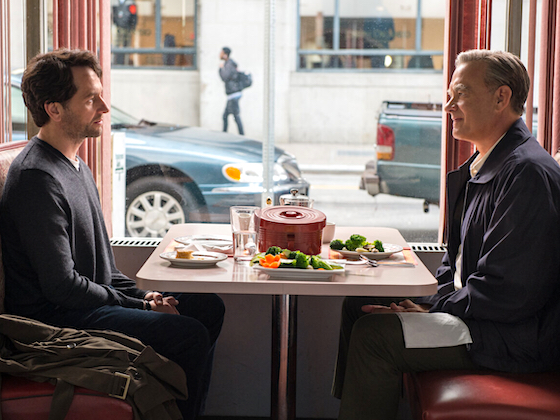
I had intended to save Blind Fury until after I’d finished the Zatoichi series (which I really should have done by now, but I’ve let various things get in the way). For those who don’t know, it’s a modern-day US-set remake of Zatoichi Challenged — a thoroughly bizarre idea, so it seemed best to leave it until I was done with the series proper. But then I noticed it was leaving Amazon Prime imminently, so I decided I’d better get on it. Such are the ways of the streaming era. It’s not as good as the real thing, but it was more fun than I expected.

Most Debatable Viewing Order of the Month
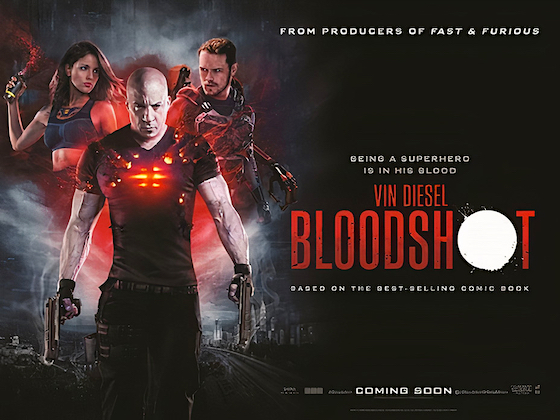
I’ve owned acclaimed (un)making-of documentary Lost in La Mancha on DVD but never got round to watching it — so long, in fact, that Terry Gilliam was finally able to actually make the film it’s about, The Man Who Killed Don Quixote, and it’s now streaming on Sky. The makers of La Mancha also documented that successful effort, in a new film called He Dreams of Giants, which I recently had access to a screener for. So the question became: which order to watch them in? I’m not sure the one I plumped for (see #216–218) was the right way to go about it, but then neither of the alternatives (La ManchaDon QuixoteGiants; or La ManchaGiantsDon Quixote) seemed perfect either, so this was as good as any. In fact, with hindsight, I think it might have been the best way — watching the docs before the resultant feature would’ve set too many unnecessary expectations.

The Audience Award for Most-Viewed New Post of the Month
For only the third time this year (there have been other years where it happened most months), my most-viewed new post was my latest TV column. (The most-viewed film post was, as befits its status as a modern masterpiece, my review of Love on a Leash.)


The Basil Rathbone Sherlock Holmes movies have made up over a third of my Rewatchathon so far this year. With them finished, there’s now a hole where they used to be as a go-to choice, meaning my pace has slipped slightly… but I’m still currently on target for 50 by the end of the year, so that’s okay (for now).

#38 Jodorowsky’s Dune (2013)
#39 Mission: Impossible II (2000)

I wrote my review of Jodorowsky’s Dune after that rewatch, so my Letterboxd log adds little more than that I enjoyed it more second time round.

M:I-2 is a different kettle of fish: you can find my latest opinion of the film itself on Letterboxd (short version: I still really like it). As for its place in the Rewatchathon, it continues my rewatch of the Mission: Impossible movies in 4K that I started back in May. Then I mentioned that it’s the first two films that feature the biggest upgrades in PQ with their 4K transfers. M:I-1 is the more strikingly good-looking film, but this one looks great most of the time too. The downsides are that the overall improvement reveals how much softness there is in some of the original photography, and skin tones look too hot in a couple of scenes (though I couldn’t quite be sure if I needed to fiddle with my TV settings, or if it was the transfer’s fault, or just the way the film was shot). Still, a resounding improvement over the old Blu-ray.


The reopening of cinemas continues with Bill & Ted Face the Music making its UK debut on the big screen only, and… that’s probably it: Tenet’s underperformance at the US box office has the studios running scared again. Bond is still on schedule for November, but will that hold? Only time will tell.

Another film that got a cinema release in some territories was Disney’s live-action remake of Mulan. Of course, it went direct to streaming everywhere that Disney+ is available, and that includes the UK, even though our cinemas are open. £20 vs a £6 cinema ticket? Hmm… Anyway, I guess that didn’t do well either, given that Disney have moved the rest of their big titles into 2021 rather than send them to Disney+ too.

Also on streaming, Netflix had a couple of big originals in the shape of Charlie Kaufman’s I’m Thinking of Ending Things and The Devil All the Time. Both set Film Twitter and Letterboxd abuzzing, but I haven’t been in the mindset for their heaviness yet. There was also the hugely controversial Cuties, which is a debate I’m not interested in reigniting, and they ended the month with a new adaptation of gay play The Boys in the Band. Also catching my eye on Netflix were a string of titles I’ve bought on Blu-ray but not got round to watching: First Man, The Handmaiden, the new Halloween… Shame on me. (They’ve also added various things I have seen and reviewed, of course, but that’s not the point of this section.)

Over on Amazon, no brand-new films that I could see, but they did have the streaming premieres of Guy Ritchie’s The Gentlemen and acclaimed crime drama Queen & Slim. They’ve also now got Crazy Rich Asians, after it ended its time on Now TV / Sky Cinema. Talking of which, after having a subscription to that for most of the year — first for the Oscars, then via a series of free and heavily discounted months — I cancelled it at the start of this month because it was going to be full price, only for them to now offer me a free month. Additions there this month include The Good Liar, Motherless Brooklyn, and Judy.

BBC iPlayer’s also had a pretty strong slate of movies recently, including recent-ish titles moving in from other streamers (Molly’s Game, I, Tonya) and HD versions of classics (Doctor Zhivago, The Life and Death of Colonel Blimp, etc). Also, Christopher Nolan’s Memento, which I’ve not seen for a very long time indeed and ought to take the chance to rewatch in HD (that feels like the kind of film that’s due a 4K release from someone like Arrow, but who holds the rights I don’t know).

Finally, my disc purchases were a lot calmer than last month’s 54 films. It’s taken five years, but I finally completed my collection of the “Top 5 Films I Hadn’t Heard of Before Watching The Story of Film But Now Really Want to See” by importing the US release of Hyenas. I managed to find a copy of Doctor Sleep with the director’s cut included (if I’d realised they really meant it when they said it was “limited edition”, I’d’ve bought it sooner! After being out of stock on HMV’s website for months, they seem to have found some additional copies, so fortunately I only paid normal price for it). Rewatching Jodorowsky’s Dune inspired me to purchase Arrow’s new Jodorowsky box set, which I fear I may regret (his films aren’t half odd looking), but there we go (knowing me, I’ll not get round to them for years / ever anyway).

I also picked up… Bullitt (primarily for one of its special features, feature documentary The Cutting Edge: The Magic of Movie Editing) … the US 4K release of anime Ghost in the Shell (though I accidentally ended up with two copies, so I need to get that on eBay) … and re-bought all three Ghostbusters films (the original pair in a new-to-the-UK 4K box set, which duplicates the discs from last year’s limited and expensive US 35th anniversary set; and the 2016 reboot in 3D, which I got brand-new for £1.50. The fact most people have given up on 3D is a boon for those of us who haven’t).


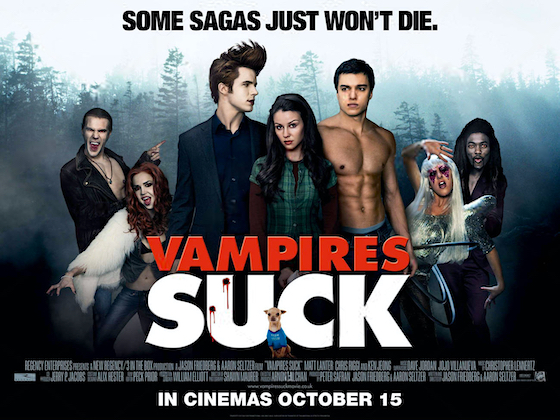
October means one thing for some people: Halloween. I doubt I’ll be so singularly focused (I never have been before — why start now?), and I’m not even sure what I’ll do for the day itself (because it is just a day, not a season, or even a month — sorry, people). Between 2015 and 2019 I spent it covering the Twilight saga, but I finished that last year (thank God) so need a new notion. Although there’s always that Twilight spoof — which, according to IMDb voters, is the 46th worst film of all time, ranking lower than any real Twilight film. Dare I brave the horror?

Enola Holmes (2020)

2020 #214
Harry Bradbeer | 123 mins | digital (UHD) | 2.35:1 | UK / English | 12 / PG-13

Enola Holmes

The latest screen incarnation of Sherlock Holmes is not really about the Great Detective at all. Instead, Enola Holmes introduces us to his eponymous young sister — not part of Sir Arthur Conan Doyle’s original canon, but a creation of author Nancy Springer, on whose series of young adult mystery novels this film is based. (Nor, I feel I should point out, was Sherlock’s Eurus drawn from canon, despite what some hardcore Sherlock fans berating Netflix’s Enola promos seem to believe.) Indeed, the film imagines a whole family for Sherlock and his elder brother Mycroft: a father who died when Enola was young; and a mother, Eudoria, who has since raised Enola to be a multi-talented, independent, forward-thinking young woman.

But when Enola (Mille Bobby Brown) wakes on her 16th birthday, she finds that Eudoria (Helena Bonham Carter) has disappeared. She summons her brothers, famous detective Sherlock (Henry Cavill) and uptight government man Mycroft (Sam Claflin), and various clues to Eudoria’s actions and intentions are unearthed — but not always shared among the siblings, because the brothers want little to do with their younger sister, resolving to send her to a finishing school to learn how to be a ‘proper’ lady. That doesn’t fit with Enola’s plans, though, so she escapes and runs away to find her mother. On her journey, she runs into similarly young Lord Tewkesbury (Louis Partridge), who is also on the run from his family, for reasons that, it will emerge, are even more sinister than Enola’s…

Enola and Sherlock

As a story set in the world of Sherlock Holmes, Enola Holmes is… well… um… Look, I’ve been fond of Henry Cavill since The Tudors, but he’s not my idea of Sherlock Holmes; and apparently Dr Watson doesn’t even exist? Sacrilege! While I can’t forgive the latter, the weird casting decision of Cavill is somewhat justified by the film itself. I’m not sure it was conceived to include a ‘traditional’ Holmes, and Cavill fits the character as he has been written: as an admirable, kindly, almost mentor-like older brother to Enola. Perhaps if they’d cast a more traditionally Holmesian actor then that person would have managed to shift it towards a traditional portrayal, but I suspect that’s not what the filmmakers wanted. Arguably that makes this a bad Holmes adaptation (if you’ve changed the style and nature of the character, is it actually an “adaptation”?), but then, it’s not really about him.

It’s about Enola — as per, y’know, the title — and in that role Mille Bobby Brown proves that her success as Eleven in Stranger Things was not a fluke. In the wrong hands, the confident, capable, and headstrong Enola could have been brattish, but Brown brings enough charm to sweep us along. She frequently turns to speak to camera, like some kind of Victorian teenage Fleabag, which, again, could have been irritating, but mostly works to bring us into her confidence and, occasionally, underscore the fun and thrill of her adventure. However, there’s more room for nuance in how the character is written. Enola is by no means perfect, but we’re rarely allowed to see deficiencies. This works when she’s putting on a brave face to a world that would underestimate her, but a little more sense that she’s new to all this and doesn’t always get it right wouldn’t go amiss.

Victorian teenage Fleabag

So, while I don’t imagine Sherlockians will be inducting this into their favourite screen iterations of the Great Detective, it works as a female-led YA mystery-adventure. Originally produced by Warner Bros for a cinematic release, but sold to Netflix after the pandemic hit, I suspect this might have actually done quite well in cinemas. It’s good fun, accessible entertainment; the kind of thing that once upon a time would have been a PG-rated family blockbuster hit (nowadays it’s rated 12/PG-13, though with their “allow children in so long as they’re with adults” rules, those certs are really the modern-day equivalent of what used to be PG). Now, it looks to have been a hit for Netflix: it seems to have been widely viewed, based on how the number of ratings on IMDb and Letterboxd shot up over the first 24 hours (and kept going), and it’s been the #1 film on Netflix UK for a whole week (and, apparently, set a record for being #1 in the most countries on its release day). I suspect this won’t be the last adventure we see for Miss Holmes…

4 out of 5

Enola Holmes is available on Netflix now.

Terminator: Dark Fate (2019)

2020 #29
Tim Miller | 128 mins | Blu-ray (UHD) | 2.35:1 | USA, China, Spain & Hungary / English & Spanish | 15 / R

Terminator: Dark Fate

“I’ll be back,” the Terminator famously said in The Terminator, and he has been proven right — again and again. And again. This may be a franchise about time travel, but it’s us who seem to be stuck in some kind of time loop, because this is now the third attempt at creating a direct sequel to Terminator 2. For those keeping score, the first was literally titled Terminator 3; then there was TV series The Sarah Connor Chronicles, which picked up from T2 (pretending T3 didn’t exist); and now this ignores them both. It also ignores the other attempts to keep the Terminator franchise alive: Salvation, which actually continued the storyline on from T3 (albeit with an entirely new cast); and Genisys, which attempted to be both a sequel and a reboot.

As well as being the third Terminator 3, Dark Fate is also the third attempt to start a new trilogy (Salvation and Genisys both arrived with such lofty plans), and is now the third to see those plans aborted after poor box office. Salvation made just $125.3 million at the US box office and $371.4 million worldwide — big numbers, but not when your movie cost $200 million. Hence starting again with Genisys — but that was an even bigger flop at the US box office, taking just $89.8 million. Worldwide, it took a respectable $440.6 million (more than Terminator 3, even), which, off a lower budget of $155 million, is pretty good. But US studios continue to struggle to see beyond their own borders, and so that trilogy was abandoned too.

Both of those movies tried something new for the franchise. Salvation took us into the Skynet-ruled future, something the previous movies had only had as a threat to be averted. Genisys played more with the idea of time travel, taking us back into the timeline of the first movie, but different. Now, Dark Fate explicitly wipes out previous continuity, beginning with a flashback that directly follows on from T2 but sets us on a new path, introducing new heroes and villains, alongside the return of the original Sarah Connor, Linda Hamilton (who was written out of T3 and recast in Chronicles and Genisys). Surely that would solve the box office problem? No: it took $62.3 million in the US and just $261.1 million worldwide, the worst yet by any measure.

She be back

Box office is not indicative of quality, of course, but audience reception of Dark Fate hasn’t been any better than previous attempts to continue Terminating: if you look at IMDb scores, Dark Fate has 6.2 to Genisys’s 6.3, while Salvation has 6.5. None of them are stellar, but all are solid; and, with hindsight, suggest the producers should’ve just stuck it out with one of the previous versions. Indeed, I think trying to sell Dark Fate as “another restart” probably just put more people off. The Terminator franchise has become such a tangle of forgettable messes, aborted plans, and “this is a sequel to X but not Y”-type ventures that, for your average cinema-goer, it’s easier to just ignore it than engage with what counts and what doesn’t.

All of which is to review the film’s box office performance rather than the movie itself. But I’m more or less with IMDb voters on this one: the behind-the-scenes story is almost more interesting than the film itself. Not that it’s a bad movie, but it’s little more than a serviceable sci-fi action-adventure flick, hobbled somewhat by a palpable sense of desperation to emulate the cultural impact and success of Terminator 2. That’s the real reason none of these continuations have been allowed to stick: because none of them equalled T2. Such a goal is a hiding to nothing; a fight you stand almost no chance of winning. T2 is regarded as a Great Movie; a seminal entry in the sci-fi and action genres; influential and beloved. Thinking you can equal that is like making a gangster movie with the view that “if this isn’t regarded as at least equal to The Godfather, I have failed.” You’re setting yourself up to lose. In Terminator’s case, they’ve had that loss three times in a row, with ever-diminishing financial returns, to the point where anyone setting out to make Terminator 7 is going to be looked on as mad. What do you do with it now? You can’t reboot it again! But nor can you reasonably make a sequel to any previous version. They have, literally, killed the franchise. (Well, they probably haven’t — someone will almost inevitably continue it someday — but it’s going to be harder than ever to persuade anyone to finance that.)

He be back

Perhaps some form of spin-off will be seen as the next thing to try, but — spoilers! — that’s basically what Dark Fate tries to kickstart. Sure, Schwarzenegger and Hamilton are here, and the events of T2 are directly referenced and continued; but Skynet is no more and there’s a new war to fight. On the bright side, with a new future, a new threat, and an apparent aim to transition from old characters to new ones, it doesn’t feel stuck on the merry-go-round like the previous sequels did. It’s at least trying to move on in a (slightly) new direction, rather than just rehash the familiar. The problem (and it has been a big problem for some fans) is that by abandoning certain key tenets of the franchise (John Connor being the ‘Chosen One’; Skynet), it doesn’t feel so much like Terminator 3 as Terminator: The Next Generation. But, hey, that worked for Star Trek! After so many sequels that tried to find new angles to rework familiar bits and bobs, isn’t it about time someone tried something new, even if it’s in a very similar mould to what came before?

Well, it’s a moot point now, because Dark Fate Part 2 ain’t happening. We can only take some small measure of solace in the fact that it isn’t as open-ended as Genisys was; and that, whatever any other filmmaker tries and fails to achieve with this franchise, we’ll always have Terminator and T2.

3 out of 5

Terminator: Dark Fate is available on Sky Cinema and Now TV from this weekend.

Bait (2019)

2020 #9
Mark Jenkin | 89 mins | Blu-ray | 1.33:1 | UK / English | 15

Bait

The past and the present — the old ways and the new — clash head-on in Mark Jenkin’s Bait, both in its storyline and its production.

The former is the tale of a fisherman without a fishing boat: Martin (Edward Rowe) is a Cornishman through-and-through, a lover of his community and resistant to change; but his brother, Steve (Giles King) has turned their boat into a tourist vehicle, and they’ve had to sell their childhood home to well-to-do city-dwellers (played by Simon Shepherd and Mary Woodvine, as the very embodiment of upper-middle-class London-types with the money for a rural second home). As the summer season arrives, and upcountry tourists descend on the small town, flashing their cash, Martin struggles to get by; and the clash between two different worlds comes to a head.

As to the latter (the production method), Jenkin has steeped his film in both older filmmaking methods and the place it was made. It was shot on 16mm black-and-white stock with a wind-up camera, with all the sound post-synced because the camera was too noisy to record on set. All 130 rolls of film were hand-developed by Jenkin in his Cornish studio, with a deliberate degree of what some might call “carelessness” to add authenticity: scratches come from washing the film under a running tap; exposure varies because the film was wound manually, therefore at an inconsistent speed; a “strange sparkle” on one bit of film was caused by leaving the studio door open and pollen blowing onto the drying film (there’s more about tall that in an interview with Jenkin by British Cinematographer). It’s a defiantly hand-crafted and old-fashioned method for making a movie; a way that’s becoming ever rarer thanks to the appealing ease of digital, both to blockbuster and low-budget productions. It’s funny that the only people ‘allowed’ to use film are either your Christopher Nolans — big-name auteurs who make tonnes of money for the studios, so they can do what they want — or your Mark Jenkins — tiny independent artists producing films for a pittance, so they can do it how they want.

Beautiful black and white

Some might consider Jenkin’s method to be unnecessarily pretentious — self-consciously Arty — but it’s actually a wonderful marriage of form and content; the earthy, hand-hewn visuals reflect the film’s themes. It’s not just an exercise in style, either. This would be a worthwhile narrative if told in a more conventional manner, but it would feel less striking and authentic with a glossy digital sheen. Of course, all filmmaking is “technology”, but there’s something about using such old cameras and film stock, developing the footage by hand, post-dubbing the sound, that all feels like The Old Ways, like it’s traditional and handmade, in a way that matches up with Martin’s desires and goals.

Some reviews have compared the end result to silent film, which doesn’t wash for me. The damaged visual quality might initially call to mind a poorly-preserved and unrestored print, which, if one has encountered such a thing at all, is likely to be from a silent film. But the actual feel is more 1950s location-shot social realism, with the themes of everyday rural working life, naturalistic acting and lighting, and post-dubbed dialogue (there’s none of that on your average silent movie, is there?)

Lest you think Jenkin is a one-note polemical storyteller, different points of view are allowed to exist: the upcountry folk aren’t all ‘evil’ (Martin may feel they’re a thorn in his side, but sometimes they’re actually on his side), and not all the locals long for the past (some are happy, or at least resigned, to fitting in and making their way with how things are). These are issues Cornwall has been dealing with for decades — it’s one of the poorest regions of the UK, thanks in part to so much property being bought as holiday homes and only occupied for a few weeks a year. But now is the right time to tell a story like that, because those problems are coming to a head: Brexit is set to be a disaster for Cornwall, because they’re going to lose a lot of EU funding. Will the British government replace it? The Cornish people, who did vote for Brexit, presumably assume so. I think they’ll be lucky.

This is a local pub for local people

Not that Jenkin is directly engaging in the Brexit debate here. In one scene we can overhear it being discussed on the radio, leaving us in no doubt when we are, but this isn’t a commentary on political upheaval. This is a story of normal people and how their lives have been altered by changing times. It may be unquestionably set now, but, as the filmmaking style underlines, the story is fairly timeless; it’s grounded and everyday.

Well, until a shocking event near the end, anyhow. No spoilers, but I have mixed feelings about that plot development. In one sense, it takes away from the feeling that this is an everyday situation that plays out across modern Cornwall; but, in another way, it’s a realisation of all the tensions that have been brewing throughout the film, like it’s almost inevitable that some tragedy would occur. Fortunately, how the film then deals with the aftermath is typically coolheaded and understated. We don’t get to see the immediate fallout (there are some characters we don’t even see again), just what ultimately happens later. In some ways that’s almost too little (for example, we’re not shown how it affects the locals’ relationship with the upcountry folk), but it also lands its overall point.

Bait has mostly been a regional success; regional not just to the UK, but to specific parts of the UK: according to figures published in Sight & Sound (and repeated in the BFI’s booklet accompanying the film’s Blu-ray), a typical movie makes 4.9% of its UK box office in the southwest, but for Bait that’s up at 35%. Hopefully time will see it break out further, because it’s a compelling story, both timely and timeless, uniquely told.

5 out of 5

The UK TV premiere of Bait is on Film4 tonight at 11:20pm.

Bait placed 5th on my list of The Best Films I Saw in 2020.

Bill & Ted’s Double-Bill

As Bill (Alex Winter) and Ted (Keanu Reeves) slightly belatedly face the music in UK cinemas, now seemed a good time to review their first excellent adventure and second bogus journey

Bill & Ted’s Excellent Adventure
(1989)

2020 #91
Stephen Herek | 90 mins | digital (HD) | 2.35:1 | USA / English | PG / PG

Bill & Ted's Excellent Adventure

I’ve written before about how my childhood film viewing involved a lot of catching up on the family-friendly blockbusters of the ’80s — Star Wars, Indiana Jones, Back to the Future, Ghostbusters, etc — but Bill & Ted was one of the ones that passed me by. Maybe if I’d seen it at the time I’d now put it on a pedestal with those others; or maybe I missed it back then because it simply isn’t as good.

The titular duo are a pair of slackers and aspiring rock musicians, but they’re struggling to complete a high school History presentation and, if they fail, they’ll be separated forever. Fortunately, help arrives in the form of Rufus (George Carlin), a time traveller from the year 2688, when mankind lives in a utopian society thanks to the music of Bill and Ted — but only if they pass this project. So he lends them his phone-booth-shaped time machine, and off they go into the past to roundup some real historical figures.

Where Back to the Future was a sci-fi/comedy that took its sci-fi relatively seriously (applying proper scientific theories of time travel’s possible effects to provide jeopardy for our hero), Bill & Ted is an outright comedy. It revels in its silliness, which makes for fun, laidback viewing, but it’s at the expense of any tension or suspense in the plot. Ostensibly they must race against the clock to get their presentation together (thanks to some half-arsed gubbins about time still progressing in the present even while they’re gadding about in a time machine), and the phone booth gets broken and stuff like that, but it never really feels like there’s a hurry, or that things might not work out. I mean, it’s a daft comedy, so of course we know they’re going to pull it off, but the film seems to use that inevitability as an excuse to not even try.

If I seem overly critical, it’s only because expectations are high. The film has a marked cult following, and the fact there’s another 1980s comedy about a time travelling high schooler is an unavoidable point of comparison. It’s not Bill & Ted’s fault that Back to the Future is a fundamentally perfect movie, whereas this is just an easygoing 90 minutes of frivolity. It’s not all it could be, but it’s likeable enough to squeak up to 4 stars.

4 out of 5

Bill & Ted’s Bogus Journey
(1991)

2020 #96
Pete Hewitt | 94 mins | digital (HD) | 1.85:1 | USA / English | PG / PG

Bill & Ted's Bogus Journey

In the run up to Face the Music, I’ve observed a trend on Twitter for people, who consider themselves connoisseurs, to declare Bogus Journey better than Excellent Adventure. Everyone’s entitled to their opinion, but that’s one I definitely disagree with. So too, I guess, would Excellent Adventure director Stephen Herek, who declined to return for this sequel because he thought it was “almost a parody of a movie that was already a parody”.

Originally titled Bill & Ted Go to Hell (until that was vetoed by typically puritanical Yanks), the plot sees Bill and Ted, um, go to Hell. They’re killed by evil robot replicas of themselves, sent back in time by a future terrorist who wants to disrupt the utopia they created. While the robot doubles set about destroying their reputations, the real Bill and Ted are stuck in the afterlife, where they must convince Death (William Sadler) to restore them to life.

Apparently the first idea for the sequel was to have our slacker heroes struggling with an English assignment, which would lead to them entering classic works of literature. That storyline appeals to me (well, I do have an English degree), but it does sound like a mere do-over of the first movie’s plot. It’s to Bogus Journey’s credit that it’s not merely a rehash, but it doesn’t feel like there was a solid concept to go in its place. Excellent Adventure had a driving idea (“use time travel to do a History project”), but Bogus Journey feels like the result of a forced search for something else to do with the same characters. Heck, it even switches genres, from sci-fi to fantasy. That kinda doesn’t matter when they’re just silly comedies, but it didn’t sit right with me.

Perhaps that’s simply because I didn’t think it worked. The whole film is much scrappier and less inspired than the first. There are good bits — Sadler is quite fun as the Grim Reaper, and some of the Hell stuff is inventive — but it’s mostly a whole load of mediocrity, lacking the spark that enlivened the original. The climax even reminded me of a Doctor Who spoof, The Curse of Fatal Death. Okay, that came eight years after this, but it did the same gag better.

Bogus Journey is definitely barmy, like they were allowed to do whatever they wanted and went crazy with it. I kind of admire that, even as I didn’t think the result was particularly entertaining. In fact, I found it annoying rather than funny.

2 out of 5

Bill & Ted Face the Music is in UK cinemas from today.

Safety Last! (1923)

2020 #172
Fred Newmeyer & Sam Taylor | 74 mins | Blu-ray | 1.37:1 | USA / silent | U

Safety Last!

I’ve seen films by Charlie Chaplin and Buster Keaton, so it’s overdue that I acquaint myself with the so-called “Third Genius” of silent comedy, Harold Lloyd. I would say that, of those three, Lloyd is considered a distant third place today: Chaplin is a name that transcends cinema to be known in the general consciousness; Keaton has accrued fame down the years for his still-impressive stunts; but Lloyd, I feel, has faded from consciousness a bit. If everyone’s heard of Chaplin, and a lot of people have heard of Keaton, I feel like only those in the know even consider Lloyd. But that wasn’t always the case. In fact, some would assert that, in their day, Lloyd was the most successful of them all — per Wikipedia, he made $15.7 million to Chaplin’s $10.5 million. (Nothing is ever as straightforward as all that, of course. Here’s a good article at Silentology all about the history of popularity of the silent comedians, which ultimately makes it quite clear that (a) Chaplin was the biggest; (b) Lloyd and Keaton were the runners-up; and (c) the pack of other comedians was far behind that trio.)

The dwindling of his reputation seems to be at least partly his own fault: according to revered film historian Kevin Brownlow (paraphrased in this article), “Lloyd was so nervous about how audiences would react to his later movies that he withheld the films from distribution, so that only some very early pictures (made before his talent blossomed around 1920) were widely available for viewing. An effort to reintroduce his work after his death in the early ’70s was also botched, adding narrations and showy music scores to movies that don’t need extra gimmicks.” Nowadays, silents are re-released with more respect to their original presentations, but, for whatever reason, I think Lloyd still awaits the reappraisal that the other two have enjoyed and/or never even needed. Indeed, if we look at their current availability on disc in the UK, Chaplin has several extensive Blu-ray sets to his name; Masters of Cinema have made a fine fist of getting Keaton onto Blu-ray, with four box sets so far; and Lloyd… has a total of two films. And one of those (this one) is only out today. (I’ve focused on the UK because that’s where I am, but it’s not a whole lot better in his native US, where a total of four of his films are on Blu-ray.)

What a way to make a living

My opinion on the three is still forming — as I said, this is the first Lloyd film I’ve seen, so it wouldn’t be fair to base an entire comparison off it. But I have now seen the majority of Chaplin’s most-acclaimed features, and a couple of Keaton’s too, so a view is beginning to coalesce. And that is that, either I’m always in the wrong mood when I watch a Chaplin film, or I just completely prefer Keaton, and now Lloyd too. Aside from The Great Dictator, I’ve found every Chaplin I’ve seen to be a bit of a slog. That’s not to say I dislike them — I can see admirable stuff aplenty, and greatly enjoyed some of the exceptionally amusing sequences — but they always feel very long to me. That’s not a sensation I’ve yet experienced during a Keaton film, nor with Safety Last. But who knows, maybe Safety Last is Harold Lloyd’s Great Dictator in terms of how my opinion pans out. Only time, and more films, can tell.

But, for now, Safety Last is why we’re here. It’s the story of a small-town boy (Lloyd) who travels to the city to find employment, planning to have his girl (Mildred Davis) follow him out just as soon as he makes his fortune. His letters home inform her of his increasing success, but in reality he works a lowly job at a department store, rushed off his feet to serve the baying mass of consumers. The ensuing century has conferred on that a degree of timelessness: working hard to appease others but getting nowhere yourself. It’s not the American Dream, but, for many low-level workers, it’s the American Reality. Replace working on the fabric counter of a department store with filling packages at an Amazon warehouse and, really, how much has changed?

This is the milieu the film plays in for the first 50-or-so minutes, more or less. There are digressions outside the workplace, the best being a fateful morning commute that sees Lloyd accidentally bundled into a van heading further and further in the wrong direction, leading to an array of tricks and stunts to head back to work on time. Keaton may be the more famed daredevil, but here Lloyd appears every bit his equal.

Climbing a building? Sounds like an impossible mission...

And never more so than in the film’s final act. A series of events leads us to the point where Lloyd has to climb the sky-scraping outside of the department store building in order to earn the big payday he’s been needing. What follows is a 20-minute climb; a phenomenal extended sequence that is both funny and tense. It was shot on location, on fake buildings built atop real buildings — not as dangerous as fully doing it for real, but not exactly health-and-safety conscious (if Lloyd had fallen, he would’ve dropped only a storey or so onto a mattress; but if he bounced off that…) It has the same kind of thrill that Tom Cruise employs today when he climbs skyscrapers or dangles off the side of planes, only with more humour. You might think that would undercut the tension, but, if anything, it exacerbates it. You can push things closer to the edge when being funny, and, boy, does Lloyd get close to the edge…

The first two-thirds of the film are a very solid 4-out-of-5 farce, but the final act mixes laughs with thrills in a perfectly executed, constantly escalating sequence that is a 6-out-of-5-level climax.

5 out of 5

The Criterion Collection edition of Safety Last! is released in the UK today.

The 100-Week Roundup XII

In the interests of catching up, this roundup combines two separate weeks.

The first contains two of the most acclaimed films of all time (both feature on numerous “greatest ever” lists, including those from IMDb, Letterboxd, TSPDT, and Empire), which happen to be my final reviews from September 2018.

The second is a pair of movies I watched back-to-back in October 2018 that share an obvious pregnancy theme — but, oh, they could hardly handle it more differently.

This week’s films are…

  • Network (1976)
  • Ran (1985)
  • Prevenge (2016)
  • Bridget Jones’s Baby (2016)


    Network
    (1976)

    2018 #201
    Sidney Lumet | 121 mins | digital (HD) | 1.85:1 | USA / English | 15 / R

    Network

    no predictor of the future — not even Orwell — has ever been as right as Chayefsky was when he wrote Network.

    So wrote Aaron Sorkin, who has cited Network’s screenwriter Paddy Chayefsky as a major inspiration on his own writing; he even cited the man when accepting his Oscar for The Social Network; and Sorkin’s TV series The Newsroom feels like it could’ve been called Network: The Series.

    Well, maybe not. The first half-hour or so of Network feels like The Newsroom (which was a series very much aimed at being realistic, to the extent that it was set in the recent past and mostly used real news stories for its plots), whereas Network spirals off into its own level of satirical craziness, far beyond what Sorkin’s series attempted.

    But whereas The Newsroom looked to the recent past and real events, Network is as indicative of the future as Sorkin said in that opening quote. The film may be 44 years old, but I’m pretty sure you could Chayefsky’s this screenplay, change only a couple of minor specific words, and film it as being set today. It forecasts the future of TV news as angry men ranting as if they were prophets (this was 20 years before Fox News launched), as well as commentating on the place of terrorism in driving TV ratings.

    It’s cynical and ultimately bleak, but, worst of all, it’s entirely accurate.

    5 out of 5

    Network placed 21st on my list of The 26 Best Films I Saw For the First Time in 2018.

    Ran
    (1985)

    2018 #203
    Akira Kurosawa | 161 mins | Blu-ray | 1.85:1 | Japan & France / Japanese | 12 / R

    Ran

    Akira Kurosawa returns to Shakespeare (after Throne of Blood quite closely adapted Macbeth and The Bad Sleep Well may or may not have been based on Hamlet) for an adaptation of King Lear, relocated to feudal Japan. At the time, it was speculated to be his final film. It wasn’t — he made three more — but this was his last large-scale work.

    The title translates roughly as “chaos”, “pandemonium”, or “turmoil” — I guess they didn’t bother retitling it for the West because the original is a nice, simple word we can understand. But the original meaning is clearly apt, because the film depicts the mayhem that ensues when a warlord abdicates and tries to divide his kingdom between his three sons.

    It’s testament to Kurosawa’s greatness that he can make a movie this magnificent and I wouldn’t even put it in his top five. That might be my failing, though — this is a longer and more complex work than, say, Throne of Blood or Sanjuro. I need to revisit all of Kurosawa’s movies, but none more so than this.

    5 out of 5

    Ran was viewed as part of What Do You Mean You Haven’t Seen…? 2018.

    Prevenge
    (2016)

    2018 #208
    Alice Lowe | 88 mins | TV (HD) | 2.35:1 | UK / English | 15

    Prevenge

    Seven-months-pregnant Ruth (played by Alice Lowe, who also writes and directs) believes she can hear the voice of her unborn baby, and it’s telling her to kill people. Why is a mystery… unless you read the Wikipedia entry, which just tells you upfront. (Don’t read the Wikipedia entry.)

    The behind-the-scenes story of Prevenge is impressive: it was made while Lowe herself was pregnant; she wrote it in just four days, and shot it in just 11. Speed is no indicator of quality, either positively nor negatively, but Prevenge is very good. The premise is obviously absurd, but it leans into that by being darkly funny. As a horror movie, it’s not scary, more kind of creepy, although not even quite that — it’s not playing on those kind of thrills.

    Perhaps this means it fails to satisfy “horror fans”, thus explaining its fairly low score on IMDb, which I think is unwarranted. But it’s also not what people have started to call “elevated horror” (i.e. horror that is acceptable as a Quality Movie too), because it’s too transgressive for that. Perhaps it is best taken as an exceptionally black comedy.

    4 out of 5

    Bridget Jones’s Baby
    (2016)

    2018 #209
    Sharon Maguire | 123 mins | digital (HD) | 2.39:1 | UK, USA, France & China / English | 15 / R

    Bridget Jones's Baby

    I first and last watched the original Bridget Jones’s Diary and its sequel, The Edge of Reason, many years ago (probably close to when they were originally released, in 2001 and 2004 respectively; certainly well before this blog existed). I didn’t dislike them, but all I can really remember about them is broad-sweep stuff, including barely anything from the second one. So I didn’t come to this belated third movie as an all-read-up fan; but, just like the first two, I didn’t dislike it… and, 100 weeks later, can barely remember any details about it. (I read the detailed plot description on Wikipedia and some of it came back to me.)

    The storyline is mostly pretty obvious — it’s a recycle of the previous films’ love triangle thing, now with the added complexity of a pregnancy — which means the over-two-hours running time feels somewhat excessive (I continue to believe all comedies should be about 90 minutes). In spite of that, it’s often pretty funny. Some of the riffs on modern media and whatnot are a bit tired (“those young people, just posting photos of their food on Instagram!”), but other gags land well enough.

    In the earlier movies, Renée Zellweger attracted praise for her ability to inhabit a British lass. It feels like she’s forgotten how to do the accent in the 12 year gap; or maybe it’s just thanks to the work she’s obviously had done on her face… At least she’s helped by a supporting cast so stuffed with quality performers from UK comedies that some literally just appear in the back of shot (presumably there were deleted scenes).

    Reasonably successful at what it sets out to do, then; enough so that there’s been talk of a fourth one.

    3 out of 5

  • Memories of Murder (2003)

    aka Salinui chueok

    2019 #15
    Bong Joon Ho | 131 mins | download (HD) | 1.85:1 | South Korea / Korean | 15

    Memories of Murder

    South Korean director Bong Joon Ho has gradually risen in prominence over the past few years, culminating in Parasite’s history-making success at this year’s Oscars (yes, that was only earlier this year). Memories of Murder wasn’t his debut work, but it was what initially garnered him some attention outside Korea. It’s been surprisingly hard to come by for a while now, but a new 4K restoration is released in the UK via Curzon today (it’s coming to US cinemas for a limited run in October, and new Blu-ray releases (including one from Criterion) will follow).

    In 1986, two women are raped and murdered in provincial South Korea. The local detective, Park Doo-man (Bong regular Song Kang-ho), has never dealt with a case of this magnitude and relies on old-fashioned methods — his main one being to have his partner, Cho (Kim Roi-ha), beat confessions out of suspects. After a modern-minded big-city ‘tec, Seo Tae-yoon (Kim Sang-kyung), volunteers to help, the old and the new clash. As more crimes are committed, more clues are gathered, and more suspects are apprehended, but then cleared. Can the police ever get close to their man?

    Loosely based on the true story of Korea’s first serial murders, and taking a procedural approach to the crime thriller genre, Memories of Murder invites comparison to David Fincher’s Zodiac for its methodical, realistic narrative style and plot that follows obsessed investigators chasing unsolved murders in the past. Zodiac is one of my favourite films (it placed 3rd in 100 Favourites II), so it’s a tall order to be pitched against it. Fortunately, Memories of Murder is strong enough to withstand the comparison.

    Investigators

    A lot of praise that applies to Zodiac could be copy-and-pasted here. In addition to the facets I’ve already mentioned, there are several fine performances (not least from Song, who’s clearly become a Bong regular for a reason); several striking set piece crimes and/or discoveries without indulging in glorification of real crimes; and a commentary on the methods and obsessions of investigators that goes beyond ‘doing the job’. It does none of this in the same way as Fincher would a couple of years later, but it’s a different perspective within the same genre headspace.

    Memories of Murder is already a well-regarded film (on top of a 91% Tomatometer score, it’s on the IMDb Top 250 and in the top 100 of Letterboxd’s version ) but, having been out of widespread circulation for a few years, and with renewed interest in Bong’s back catalogue, it’s ripe for wider (re)discovery.

    5 out of 5

    Memories of Murder is available to rent on Curzon Home Cinema from today.

    It placed 5th on my list of The Best Films I Saw in 2019, after being viewed as part of What Do You Mean You Haven’t Seen…? 2019.

    Le Mans ’66 (2019)

    aka Ford v Ferrari

    2020 #177
    James Mangold | 153 mins | Blu-ray (UHD) | 2.39:1 | USA / English & Italian |
    12 / PG-13

    Le Mans '66

    Did you know that Ford tried to buy Ferrari in the ’60s? I didn’t. As per this film, Ford were desperate to appeal to a younger market and an association with motor racing seemed the way to do that. Ferrari were the regular winners of the Le Mans 24-hour race but were struggling financially, so Ford made an offer; but Ferrari played them, merely using Ford’s interest to get a better deal from Fiat. Pissed off, Ford set about making a racing car by themselves to beat Ferrari at their own game. Enter former Le Mans-winning driver turned race-car designer Carroll Shelby (Matt Damon), a smooth-talking American who’s as adept at charming higher-ups as he is at making fast cars; and his favoured mechanic and driver, Ken Miles (Christian Bale), a quick-tempered Brit who rubs the Ford execs up the wrong way. With Ford’s money behind them, but also management watching over them, can Shelby and Miles engineer a car good enough to beat Ferrari at Le Mans?

    That the film goes by one of two different titles depending where you live might seem like an incidental point of trivia — it’s not the first time this has happened (Avengers Assemble is probably the most famous recent example), and it wasn’t an artistic decision, nor even a marketing one, apparently, but instead legal necessity (according to director James Mangold, you can’t use brand names in a title in the UK and/or Europe) — but it’s also a lens through which we can consider the film’s focus. To wit, is it more about the rivalry between Ford and Ferrari (as in the original title) or winning the 1966 Le Mans race (as in the UK title)? The consensus seems to be that the original title sounds more dynamic, but I think the international one is more accurate. The head of Ford has it in for Ferrari, but our two heroes are more interested in winning the race, rivalry or not.

    Winner!

    To some extent the story has been streamlined in that direction. The original screenplay was an ensemble about the entire team building the Le Mans car — more historically accurate, I’m sure, but I’d wager less dramatic and personal. That’s what’s gained by focusing on Shelby and Miles, the two key figures. To the film’s credit, it still doesn’t pretend they did it alone. The role attributed to other mechanics may not be as large as it was in real life, but nor does the film try to pass it off as the achievement of just two men. What it primarily adds is relatable drama. This isn’t just a movie about building and/or racing a car, but about these two particular men — what motivates them; how their ego gets in the way, especially in Miles’s case.

    The film plays to the lead actors’ strengths in this respect, with Damon turning on the easy charm and Bale, who famously stays in character throughout a shoot, embodying someone who is superb at their job but can be belligerent. The standout from a quality supporting cast is Caitriona Balfe. She may just have the typical Wife role, but she’s made to be a bit more badass than that usually allows… before getting relegated it to the sidelines for the finale, naturally.

    Said finale is the eponymous Le Mans event, of course. It’s not the only race sequence in the film, but it’s by far the longest. Nonetheless, they’re all suitably thrilling in how they’re shot and edited. One of the film’s genres on IMDb is “Action”, and though it doesn’t really conform to my idea of what an Action movie is — not least in the fact that there are only three or four of these “action sequence” race scenes throughout the two-and-a-half-hour movie — I can see where they’re coming from.

    We are golden

    That runtime is quite long, but it doesn’t drag… once it gets going, anyway. The slowest part is early on, getting the story up and running, which I feel could have been streamlined. Ford’s attempt to buy Ferrari initially seems like an aside, but obviously it comes to frame the whole rivalry; but Miles’s woes with the IRS barely have anything to do with the rest of the movie, and, other than providing an extended introduction to the man, I don’t think you’d lose much by losing them. The film was clearly trimmed a fair bit, though, because there are loads of little bits you can spot in the making-of that aren’t in the finished film. Said making-of also highlights the choices behind the cinematography. The visuals are very golden — that kind of “wasn’t the past pretty” atmosphere — but the behind-the-scenes footage shows the shooting conditions to be much duller and greyer, revealing how much the orange/gold light comes from the camerawork and grading.

    Le Mans ’66 might look like a film for car nuts, and I’m sure they’ll get a lot out of it — alongside the likes of Rush, I guess this kind of thing would be their favourite movie (both those films currently sit in the IMDb Top 250). But the rest of us are by no means left out, thanks to involving characters and exciting race scenes, even if some plot beats border on clichéd. Le Mans ’66 may not reinvent the wheel, but it works hard at refining it.

    4 out of 5

    Le Mans ’66 is available on Sky Cinema and Now TV from midnight tonight.

    Jodorowsky’s Dune (2013)

    2018 #228
    Frank Pavich | 90 mins | Blu-ray | 1.78:1 | France & USA / English, French, German & Spanish | 12A / PG-13

    Jodorowsky's Dune

    In 1974, director Alejandro Jodorowsky was hot off a pair of psychedelic projects — “acid Western” El Topo and surrealist fantasy The Holy Mountain — that had brought some cult attention and success (El Topo was the original “midnight movie”, while The Holy Mountain was apparently second only to that year’s Bond film at the Italian box office). Consequently, his French distributor, Michel Seydoux, offered to produce whatever he wanted to do next. Jodorowsky’s answer was Dune. He’d never read it, but he had a friend who said it was fantastic.

    So begins the crazy story of how a director of surrealist Mexican art-films came this close to making an epic space opera out of one of the most acclaimed science-fiction novels ever written, but, in his failure, accidentally helped give birth to Star Wars (sort of), Alien (indirectly), and possibly the entire history of screen science-fiction that did actually get made in the ensuing 40 years. Sounds like a bit of a stretch? Um, well, yeah… but that doesn’t stop some of this documentary’s contributors from asserting it, and they do kind of have evidence.

    Mind you, Jodorowsky’s Dune is full of interviewees making grand assertions, not least the eponymous filmmaker himself. He unironically describes his Dune as “the most important picture in the history of humanity”. He pitches himself as a prophet, thinks of his crew as spiritual warriors, and is convinced the film was going to be a great message for humanity; that it would literally change the world. The lack of self-awareness when he considers Douglas Trumbull to be full of his own importance is palpable. Jodorowsky’s regard for himself and the project may seem deluded, but at least he was committed. They spent two-and-a-half years developing this movie, including storyboarding every shot and getting exactly the right kind of people for the cast and crew — he pursued Dalí literally around the world to persuade him to play the Emperor; he rejected Trumbull, not because of an ego clash, but because he felt he was a technician rather than a spiritual person. He’s a bit barmy, but Jodorowsky definitely believed what he was doing was some grand transcendent enterprise.

    A Chris Foss spaceship design for Dune

    Such an attitude might get you far with arty types, but it doesn’t wash with the moneymen of Hollywood. The film had a projected budget of $15 million, and they went to the Hollywood studios seeking the last $5 million. In hand they had a giant tome containing all the storyboards, the costume and production designs, and so on. The book convinced them — it was well planned out and reasonably costed — but this barmy director — whose only previous films were weird psychedelic experiences; whose response to “make it under two hours” was, “why? If it needs be, it’ll be 12 hours, or 20!” — he didn’t fill them with confidence. And so they didn’t get the money, and the film fell through. Well, duh. Surely they could see how that was going to go? Maybe people just weren’t as savvy in the ’70s, especially these optimistic, committed artists.

    All the documentary’s interviewees act like this was a problem with Hollywood moneymen having no vision, but c’mon, it’s easy to see where they were coming from. Plus, the fact that “the book convinced them” is just the word of Seydoux. Maybe Jodorowsky’s history and attitude was just a convenient excuse, because a lot of the stuff that was designed and planned is quite out there, especially to the mind of a ’70s Hollywood suit. It brings us back to how everyone’s making grand assertions: they all act like the film was going to be an unquestionable masterpiece, but it seems to me there’s a much higher chance it would’ve been terrible. For one thing, there’s doubt over if they even could have made it. It was an insanely ambitious project, with plans to do things George Lucas wouldn’t even attempt in the prequel trilogy, never mind what he struggled to get done in 1977. But there’s a first time for everything — 2001 still holds up, after all, and that was made seven years earlier. Still, I don’t know how successful Jodorowsky’s surrealist mindset would’ve made it as a movie — it probably would’ve been even less palatable to a mainstream audience than the Lynch version.

    Dune storyboards

    That said, there seems little doubt Jodorowsky was ahead of his time here. For starters, the idea of making a 12-hour film isn’t so ludicrous anymore. In the deleted scenes (there’s a hefty 46 minutes of them on the Blu-ray), he acknowledges people wouldn’t sit through that, saying he was prepared to release it in chunks if necessary — so, just like Lord of the Rings would do to huge success 25 years later? Jump forward another 20 years, and it’s even how they’re doing Dune, in two parts! Of course, it was unprecedented in 1975; and, decades later, Rings was still seen as a gamble, but it paid off and Hollywood is now littered with franchises where instalments connect up as closely as TV series. And what of TV series, where you’re also seeing 12-hour (or longer) single narratives.

    Aside from general questions of form, when you look at some of Dune’s storyboards and plans you can see mirrors to stuff that wouldn’t be done until later. This is where the claim that Jodorowsky’s work on Dune led to Star Wars, Alien, et al, comes from, because you can see parallels between what he did and what would come after. His film was never made, but they produced 20 copies of that book I mentioned, and only two are known to exist (one with Jodorowsky, one with Seydoux). The rest were left with Hollywood studios. Were they passed around behind-the-scenes? Did the likes of Lucas and Spielberg and Ridley Scott and Mike Hodges and James Cameron really see them and pilfer ideas? Or is it just coincidence — Jodorowsky thought of them first but couldn’t execute them, then others thought of them independently and pulled it off. Pick your own side.

    However, the claim that Dune led almost directly to Alien is less dubious. After he rejected Trumbull, Jodorowsky saw John Carpenter’s Dark Star and was impressed enough to hunt down its visual effects guy, Dan O’Bannon. Concept artists he hired included Chris Foss (painter of sci-fi book covers, mainly spaceships); Moebius (French comic book artist, for costume designs and storyboards); and H.R. Giger (German artist, who designed the dark and twisted world of the film’s villains). Those who know their Alien history might recognise all of those names: after Dune fell through, O’Bannon went on to write Alien, and all three of those designers followed on to the project. Maybe Alien would have come together just as well without the lead-in from Dune, we’ll never know, but those connections are pretty striking.

    Giger at work on Dune

    Lest you feel bad for everyone just ripping Jodorowsky off, he was able to recycle some of the ideas himself. His vision for Dune was only broadly faithful (one of the better deleted scenes is about his attitude to adaptation, which it seems Frank Herbert agreed with; i.e. that it’s not about being faithful, but reimagining something as a new, different work of art), and so he had plenty of fresh ideas that, presumably, weren’t tied up in the rights to Dune. Jodorowsky and Moebius piled some of these directly into later comic book collaborations, like The Incal and The Metabarons. A good idea never dies, I guess. Well, whether they were good ideas or just good in Jodorowsky’s mind, I don’t know. It does make me interested to read those books, though.

    Jodorowsky’s Dune is an interesting “what if” in the history of science-fiction cinema, and this documentary does a good job of being a making-of for a movie that was never made. (If you think this review reads like I’ve just regurgitated the entire story, I promise, there’s a lot more in the film; not to mention the unique benefits of hearing it from the horses’ mouths, rather than my abridgement for the sake of appending my own opinions.) Some critics assert the documentary does more than just recount interesting anecdotes; that it offers some kind of transcendent viewpoint about the creation of art. Maybe if you’re of a similarly spiritual disposition to Jodorowsky himself, that’s what you’ll take from it. For me, it’s most interesting as a window into what might have been. If it had been made, would Jodorowsky’s Dune occupy the place of Star Wars in our culture? Its devotees think so. I don’t, to be honest. But it’s fun to think about.

    4 out of 5

    The trailer for Denis Villeneuve’s new adaptation of Dune will be released later today.