Unknown's avatar

About badblokebob

Aiming to watch at least 100 films in a year. Hence why I called my blog that. http://100films.co.uk

The Past Month on TV #64

Christmas TV is already underway in the UK (I believe the first things that were explicitly a “Christmas special” aired over the weekend) — so, before my usual Christmassy roundup, here’s one final regular TV column for 2020.

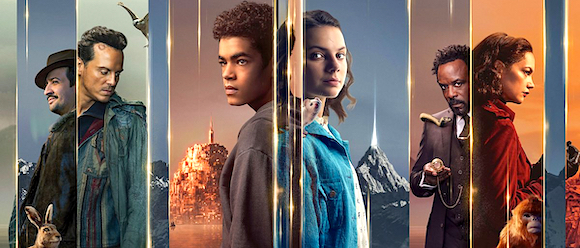
His Dark Materials  Series 2
His Dark Materials series 2

In a world where innumerable film and TV productions have been affected by Covid and its associated lockdowns, His Dark Materials got lucky: by hurrying on to produce their second series before the young cast aged too much, they’d virtually wrapped filming before the first UK lockdown hit. The only casualty: a standalone episode detailing what one character was up to during the rest of the season. That’s frustrating for fans (as I understand it, the events intended for that episode aren’t actually in the original novel, but were dreamt up afresh by the show’s writers in collaboration with original author Philip Pullman), and if you know there’s an episode missing then you can spot its absence (there are some scenes and references in the season finale that I wager would make more sense had we seen the missing episode), but the series mostly survives without it.

So, picking up from series one’s massive cliffhanger, this second run adapts the trilogy’s second novel, The Subtle Knife — a mysterious item of arguably even greater value than the Golden Compass that (sort of) lends its name to (the US version of) book one. Despite tackling a whole novel, I’ve seen some describe this season as boring, with too little incident. I guess that’s the advantage of waiting until the end and watching it all in just six days: I was suitably engrossed, and it moved, if not at a fair old lick, then certainly at a reasonable pace. But it’s not a show that’s always big on action — instead, it’s big on ideas, with underpinning concepts on the boundaries of science and fantasy that have to be explained and understood by the viewer. Nonetheless, there’s still plenty of conflict between our heroes and villains; and while it may seem clear who’s on which side, there are enough shades of grey, and emerging uncertainties about who’s really got the right motives, to keep it pleasantly complicated, engrossing, and believable.

I’m sure I once read that the original plan was to adapt the trilogy of novels over five seasons — one for book one, two each for books two and three. Now, they’ve reached the point where book two has been done in a single season, and now book three is plotted out to be completed in one more run of eight episodes too. But, shockingly, it hasn’t been commissioned yet. I bloody hope the BBC (and HBO) do the right thing, because I think overall this is an excellent show, with still-timely issues of freedom and control, that merits completion on screen. And, simply, I’m excitedly looking forward to the next (final) series already.

Update: This afternoon, while I was too busy writing this post to notice the news, the BBC and HBO officially recommissioned His Dark Materials for its third and final series. Hurrah!

The Good Place  Season 4
The Good Place season 4The Good Place ended forever ago, right? Well, the series finale originally aired back in January, so… this year, yeah, forever ago.

As with every previous season of the show, this one noodles around in a new setup for the first half-dozen-or-so episodes, before swinging into one long multi-part story through to the end of the season — and, in this case, the end of the series. In that respect, it’s always been kind of an odd show, structurally, and season four is no different. Most of the jeopardy and drama is resolved a couple of episodes before the end, leaving us to watch events play out for these characters we’ve come to love, rather than trying to keep us hooked primarily by plot, unlike pretty much every other programme ever. To be clear, this is not a criticism: it absolutely works. Rather than shooting for a series finale that has the big climax of the plot plus a bunch of rushed wrap-ups, here the more-than-double-length finale is like a coda to the entire show. It’s the series’ highest rated episode on IMDb, so I’m not alone in liking this approach.

The Good Place did, actually, start out as a show that seemed to be primarily about its plot — it’s name was mostly made off the back of one plot point in season one — but along the way it’s really developed a care for its ragtag gang of heroes, and taken us along for a once-in-an-afterlifetime ride with them, to the point where I’m actually kinda sad to see them go… but I loved watching them leave.

Baptiste  Series 1
BaptisteThe breakout star of BBC drama The Missing here gets his own spinoff series. Julien Baptiste is a retired police detective who specialises in finding missing people, which is exactly what he did across two series of The Missing (I reviewed the second here). But instead of a third series, he gets a spinoff, in which he… has to search for a missing person. Hm. But that’s just the inciting incident: before long, Julien finds himself embroiled in the affairs of an Eastern European criminal empire, with his family under threat. Okay, fair enough. Unfortunately, although Baptiste shares the same main creatives as its parent show — sibling screenwriters Harry and Jack Williams — what they’ve cooked up here just isn’t as inventive or captivating as their two seasons of The Missing, both of which were fantastic. Sure, they still conjure up plenty of unexpected twists and developments, but it lacks the same spark that was there before. But let’s not get carried away: it’s not a bad serial, just not as high-quality as the two seasons that preceded it. It’s been recommissioned, so perhaps next time they’ll recapture the magic.

Smiley’s People
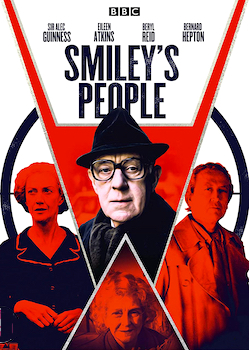
Smiley's PeopleJohn le Carré’s spy mystery Tinker Tailor Soldier Spy is one of the most acclaimed works of the genre, and the 1979 TV adaptation is justly fêted as one of the great miniseries. But Tinker Tailor is actually the first book in a loose trilogy, and in 1982 they also adapted the third book (they skipped the second because its overseas settings were deemed too expensive; as I understand it, the plot also doesn’t have that much bearing on the overall events — this isn’t “one story in three parts” like many a trilogy). Smiley’s People doesn’t enjoy quite the same reputation as its forebear, and I’m afraid I’m not going to challenge that position. Like Baptiste, it’s not bad, it just lacks that je ne sais quoi that makes its predecessor a solid-gold classic. One thing they do share is a damnably complicated plot — I struggled to follow the narrative watching it one episode per day back to back, so goodness knows how anyone kept up with it once a week over a month and a half back in the ’80s.

I watched it on the BBC’s recently-released Blu-ray, which is a tough one to recommend it. It’s clearly been mastered from the original film (where possible — some negatives were missing so they had to resort to less-good elements), but then it’s been slathered in digital noise reduction (DNR) as if in some misguided attempt to hide that it was actually shot on grainy film stock as opposed to weirdly-soft HD video. It’s so rare for things to be over-DNRed these days that you’d think we were finally past it, but obviously not. And yet, while the series never looks as good as it could, the fact it has been restored means it’s a lot better than the old DVDs, and the chances of anyone ever doing it again and getting it right are basically non-existent. Sometimes, we just have to settle for what we can get. That certainly sounds like a le Carré moral, doesn’t it?

Elementary  Season 7 Episodes 9-13
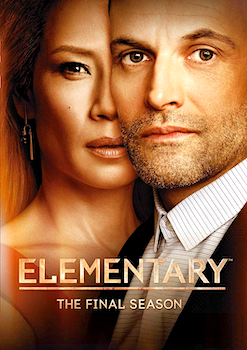
Elementary season 7The other “Sherlock Holmes in the modern day” show finally came to an end last year, though I suspect its finishing shall remain more final: whereas Sherlock always had a stop-start “we could make more anytime” production, accompanied with cast & crew chatter about wanting to sporadically do make new episodes forever, Elementary is much more traditional US network TV show — and the diminishing episode orders of the final couple of seasons and summertime broadcasts of the last couple of seasons don’t suggest an enduring hit poised for a revival.

Despite that, the finale itself left things open for more, imitating Sherlock’s “Holmes and Watson continue” final beat. This kind of open-ended ‘ending’ fits a show like Sherlock, where there’s a realistic chance it will return someday. For a show like Elementary, where the chance it might ever return is infinitesimally small, it just feels inconclusive. Like, if you want it to be a true finale, you need to give some closure; an actual ending. As it is, despite a narrative that condenses several years and major life events (Joan gets cancer then goes into remission across a single cut), the episode fails to truly answer why this is the point at which we stop following Sherlock and Joan’s adventures.

There are some people who’ll tell you Elementary is better than Sherlock. I’m not one of them. I’ve warmed to it down the years, but I’ve never thought it was a particularly good realisation of Holmes and Watson — whatever its faults, Sherlock feels like it’s an attempt to adapt Arthur Conan Doyle’s work, whereas Elementary has taken a few names and basic character points and then gone its own way. I’ll concede that there are some things Elementary has done better, although that’s an almost-inevitable side effect of having c.22 episodes a year to play with instead of Sherlock’s three TV movies every couple of years. But it’s also an almost-standard US network procedural — I can remember every single episode of Sherlock, for good or ill, whereas very few of Elementary’s 154 instalments stick in my memory.

Also watched…
  • Ghosts Series 2 — The second series of the supernatural sitcom digs more into the backstory of its various titular spooks, which seems to be a deep well for plot ideas and humour — one episode, for example, Rashomons it up by recounting one ghost’s death from the various perspectives of others who were already there to witness it. A Christmas special is imminent, and a third series is already commissioned.
  • Leverage Season 1 Episodes 1-3 — Now that I’m done with Elementary, this is my new pick for a “bung it on anytime”, “easy to watch”, US procedural. So far, it’s filling that void nicely. It’s a minor-network production from the late ‘00s, so it already feels a bit dated (it doesn’t quite have the cinematic swagger we expect from top-drawer TV now; the score, in particular, sounds like it was dropped in from a royalty-free library CD), but if you can let the production values slide, it’s good fun in a “bit of a romp” way. That’s how I like my heist movies/shows, so it ticks the right boxes for me.
  • Neil Brand’s Sound of TV — The music maestro follows up his series on the sound of movies from a few years ago (shamefully, I never got round to it) with a trio of episodes covering TV themes, advertising jingles, and TV scores. Very informative and entertaining, but you feel like the topic is so big (particularly the last one) that it could’ve withstood a few more episodes.
  • Richard Osman’s House of Games Night Series 1 — This daytime quiz show has been running for a while, but apparently became quite the success during lockdown, leading to a primetime evening spin-off — which, as I understand it, is just the exact same show but in a different time slot. It’s quite fun: there’s a good “play along at home” quality, and having the same contestants compete across the series means you end up rooting for your favourites.
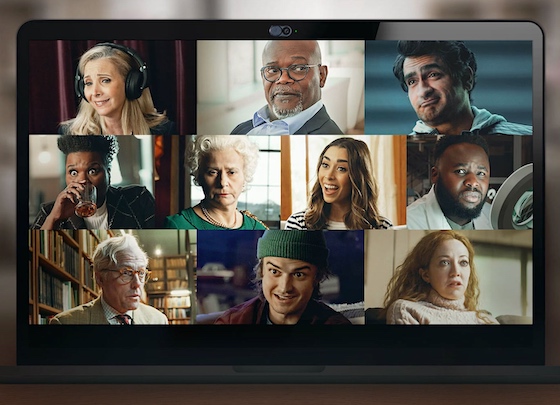
  • Staged Series 1 Extended — If you didn’t know, Netflix has an extended version of this BBC lockdown hit — there’s about 29 minutes of new material spread across the six episodes, which is a fair old chunk (equivalent to almost two whole extra episodes). And that’s why I rewatched it: because it was good and I’d like to see the extra stuff. Plus, there are new episodes coming in January, so it’s a good time to recap.
  • The Vicar of Dibley in Lockdown — The clergywoman returns for a trio of bitesize Zoom sermons, which together form a kind of comedic “review of the year” (and if you’re prepared to wait for the compilation version airing in a day or two, it’s apparently got some extra material). Many of Dibley’s supporting cast are sadly no longer with us, so I doubt we’ll ever get a proper return for the show, but this is a pleasant little sliver of nostalgia mixed with current events.

    Things to Catch Up On
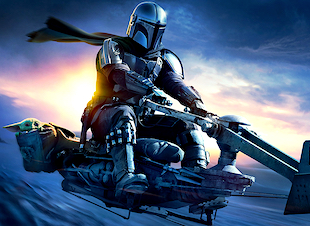
    The Mandalorian season 2This month, I have mostly been missing The Mandalorian season 2. Well, as regular readers will know, I never even got round to season 1. Naturally, it’s been basically impossible to avoid spoilers — though as those amount to “look which legacy character has turned up this week” rather than actual plot stuff, perhaps it will be okay. Or maybe the series doesn’t really have any plot to spoil, it’s just endless fan service — that would certainly seem to tally with some people’s view of the show. Others love it though, so I’ll see for myself… someday…

    Next month… will come after my regular Christmas TV roundup, which will likely include a bunch of seasonal sitcom specials, plus the New Year’s Day Doctor Who.

  • A Christmas 100-Week Roundup

    Breaking the precise order of 100-week reviews, here are a handful of Christmas films I watched back in December 2018. One of them has its UK network TV premiere today, so it seemed like a good time to share them.

  • The Christmas Chronicles (2018)
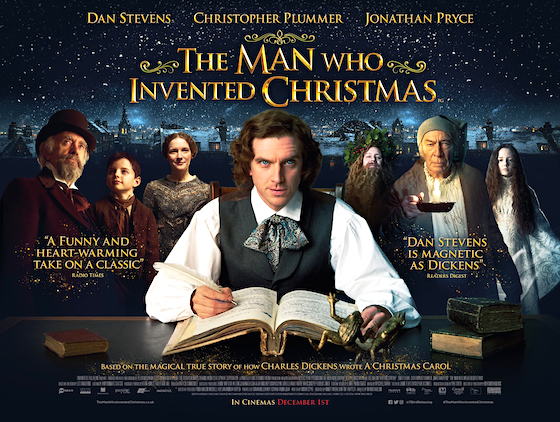
  • The Man Who Invented Christmas (2017)
  • A Christmas Carol (2018)


    The Christmas Chronicles
    (2018)

    2018 #248
    Clay Kaytis | 104 mins | digital (UHD) | 1.85:1 | USA / English | PG

    The Christmas Chronicles

    Netflix’s big-budget Christmas adventure got a sequel this year, which shows this first one must’ve been a hit (by whatever secret metric Netflix use nowadays) — and it’s well deserved, because The Christmas Chronicles is a lot of fun.

    The setup is two home-alone siblings set out to catch Santa on video (thank goodness they didn’t use that inciting incident to launch a found-footage Christmas movie), but things go awry and the pair end up having to help the man in red save Christmas.

    Like many a live-action American kids’ movie, The Christmas Chronicles is a bit cheesy to begin with, but it has an ace up its sleeve: Kurt Russell as Santa. Once he turns up, with a perfectly-pitched performances, the film really takes off — figuratively and literally, thanks to his flying sleigh. From there, the film develops a spot-on streak of irreverence. A chainsaw-wielding elf! Fist-bumping Santa! A jailhouse song performance! Santa snowboarding out of the sky! There are lots of funny little gags too — not big clever “jokes” per se, just well-played moments.

    Sure, there’s an element of comfort and cliché to the “sad kids who need to recapture Christmas spirit” stuff, but Russell’s cool Santa, and the tone he brings with him, enliven proceedings no end. The film manages to dodge the traps of being cloying or overly cheesy, without disappearing into a well of grim cynicism. It works so well that some of the final few minutes might just bring a little tear to the eye.

    Any criticisms (I had a whole paragraph about the kids’ limp family motto and its predictable use) just feel like nitpicking. This is designed to be a frothy, easy Christmas treat, and as that it would be perfectly adequate; but when you add Russell’s superb incarnation of Santa into the mix, it’s elevated to something very good indeed. A great movie? Not particularly. A great movie to watch at Christmas? Oh yes.

    4 out of 5

    (That is the UK poster I’ve used above, despite the fact it’s got the title of Harry Potter 1 wrong.)

    The Man Who Invented Christmas
    (2017)

    2018 #258
    Bharat Nalluri | 104 mins | digital (HD) | 2.35:1 | Ireland & Canada / English | PG / PG

    The Man Who Invented Christmas

    “Charles Dickens writes A Christmas Carol” is the simplified plot of this film. Well, it’s not even that simplified: it’s the plot. In this telling, various parts of Dickens’s story are inspired by characters and situations he encounters in real life — how convenient. It’s all thoroughly far-fetched, of course, but not without a certain Christmas charm and amusement for those feeling forgiving in the festive season.

    Dickens is played by the dashing Dan Stevens. It’s another thing that seems like artifice — making the author young and handsome so he can be the main character in a movie — until you learn Dickens was actually only 31 when he wrote the book. And he’d already written works including Oliver Twist and Nicholas Nickleby by this point!

    But don’t dwell on that too much, because it’s liable to make your life feel crushingly inadequate; and this is a lightweight film — a bit of festive froth — designed to brighten your days with a bit of seasonal cheer, not darken them with realisations of your own shortcomings.

    3 out of 5

    The UK network TV premiere of The Man Who Invented Christmas is on Channel 4 today at 4:55pm.

    A Christmas Carol
    (2018)

    2018 #260
    Tom Cairns | 72 mins | digital (HD) | 16:9 | UK / English | PG

    A Christmas Carol

    Simon Callow has carved out a little niche playing Charles Dickens in various settings — the highest profile is probably in a 2005 episode of Doctor Who, but he was cast in that due to already being renowned for his recreations of Dickens’s public readings. This film is, effectively, one of those: based on Dickens’s own performance adaptation of A Christmas Carol, Callow reads the story and… that’s about it.

    A couple of things make it screen worthy. Director Tom Cairns stages proceedings in inventive and enlivening ways, using different rooms, lighting, props, and practical effects, some almost magical, plus music and sound effects mixed in a suitably evocative way, to lend an appropriate atmosphere to every scene and event. A lot of it is shot in long takes, which underline the impressiveness of both the staging (it’s often modified and varied within a single shot) and Callow’s performance, which is enhanced and complemented by Cairns’s work.

    And it is a performance, not just a reading. Callow inhabits all the characters, thereby bringing a sense of life to take the words beyond mere narration; but he executes it in a subtle-enough way that his turn doesn’t descend into some overripe actorly ‘showcase’. It’s very well judged. Indeed, it feels like the kind of thing that should become a staple of Christmas Eve evenings on the BBC.

    4 out of 5

  • The 100-Week Roundup XV

    I’ve fallen terribly behind with these 100-Week Roundups — I should be on to films from 2019 by now (because 100 weeks is c.23 months), but I still have 17 reviews from 2018 to go. I considered trying to cram more into each roundup, but that just takes longer to compile, so my aim is to post a more-than-average number of roundups in the next fortnight with the goal of at least completing 2018 before 2020 ends. We’ll see how that goes.

    For now, we’re in November 2018 and looking at…

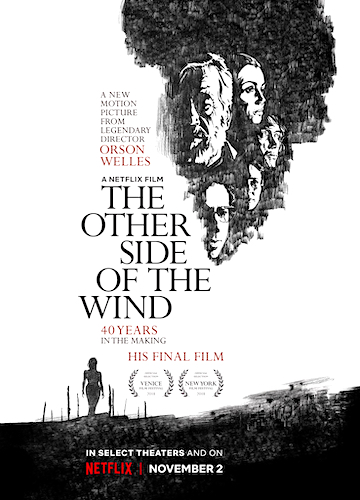
  • The Other Side of the Wind (2018)
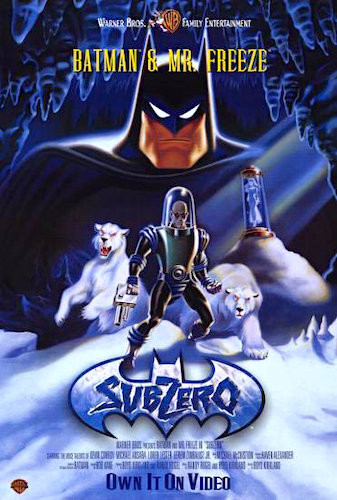
  • Batman & Mr. Freeze: SubZero (1998)
  • Paper Moon (1973)
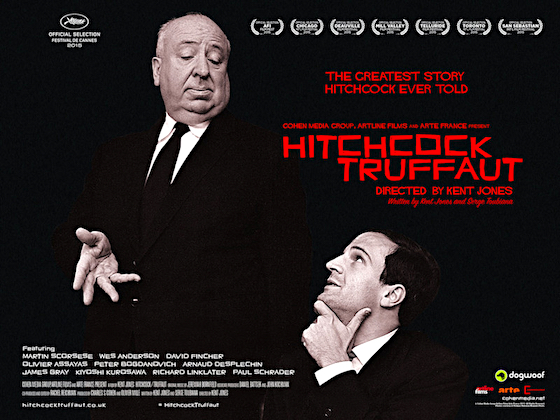
  • Hitchcock/Truffaut (2015)


    The Other Side of the Wind
    (2018)

    2018 #226
    Orson Welles | 122 mins | digital (UHD) | 1.37:1 + 1.85:1 | France, Iran & USA / English | 15 / R

    The Other Side of the Wind

    One of my draft intros for The Other Side of the Wind was to talk about how it feels like “a 2018 film” because it’s different; innovative; unique — modern. But then to note that, of course, it was all shot in the 1970s, but never completed for financial and legal reasons. That’s only partially true, though, because while it does feel modern in some ways, it still looks and feels very ’70s; and while it’s no doubt experimental and avant-garde, it’s in a very ’70s way. And the look of the film stock is very ’70s. It’s a strange, undoubtedly compromised movie — but so are many of the films Orson Welles managed to complete while he was alive, thanks to studio interference, so it’s hardly a sore thumb in that regard.

    The film tells the story of the final days of Jake Hannaford (John Huston), a film director working on his comeback movie (you’ve gotta think there’s some autobiography in here, then, right?) It’s a portrait of the man’s final hours, supposedly assembled from dozens of sources that were shooting him at the time — Welles prefiguring the ‘found footage’ genre by a decade or two. But this isn’t a horror movie… well, not in the traditional sense: in my notes I described it as “a frantically-cut display of pompous self-declared intellectuals pontificating about something and nothing in a battle of pretentiousness. That perhaps explains why, at a time when Netflix movies routinely ‘break out’, the flash of interest the film’s release provoked has not resulted in any kind of sustained wide admiration.

    Whatever your thoughts on the final film (and it’s clearly one for cineastes and completists rather than general audiences), it seems remarkable that it took so long for anyone to be willing to fund the completion of a film by The Great Orson Welles. But that’s actually a story unto itself, told in the accompanying documentary A Final Cut for Orson: 40 Years in the Making (which is hidden in the film’s “Trailers & More” section, but is definitely worth seeking out if you’re interested). Among the revelations there are that Welles shot almost 100 hours of footage, spread across 1,083 film elements, all of which had to be fully inventoried. Matching it up was a problem that would have been insurmountable even ten years ago; it’s only possible now thanks to digital techniques and algorithms — and, of course, a big chunk of change from Netflix. Welles had only cut together about 45 minutes, with the rest completed based on the style of those parts, his notes and letters, and recordings of some of his direction that was retained on the sound reels.

    Was the effort worth it? It’s certainly a fascinating project to see brought to some kind of fruition. In the end, I’m not sure what it all signified. The story is pretty straightforward, but it’s jumbled in amongst a lot of hyperactive editing, as well as a bizarre film-within-a-film. There are things here which still feel ahead of their time even now, and things that were certainly ahead of their time when shot in the early ’70s (even if other people have done them since), which is always exciting. Combine that with Welles’s status and this is unquestionably a fascinating, must-see movie for cinephiles.

    3 out of 5

    Batman & Mr. Freeze: SubZero
    (1998)

    2018 #227
    Boyd Kirkland | 67 mins | Blu-ray | 1.33:1 | USA / English | PG

    Batman & Mr. Freeze: SubZero

    It’s now so ingrained in Bat-canon that it’s easy to forget, but Batman: The Animated Series actually invented Mr Freeze’s backstory about his dead wife, etc. It was so successful that the episode (Heart of Ice) won an Emmy, the character was brought back to life in the comics (complete with this new backstory), and just a few years later it was used in Batman & Robin (which, considering how much that film was happy to ignore about other characters, e.g. Bane, just goes to show… something).

    So, with The Animated Series responsible for such a major revival of the character, it kinda makes sense they’d choose him to star in their second animated feature — although another version of events is he was chosen to tie-in with Batman & Robin, but then SubZero was pushed back after the live-action film was a critical flop. That makes sense, because while Heart of Ice is fantastic and influential, none of Freeze’s other Animated Series appearances have a great deal to offer. TV episode Deep Freeze is sci-fi B-movie gubbins featuring Freeze as a cog in the plot rather than its driving force; and, after all the effort to humanise him, in Cold Comfort he’s just a villain doing villainous things with incredibly thin motivation.

    SubZero is, at least, a step above those. It doesn’t withstand comparison to its predecessor movie, the genuine classic Mask of the Phantasm — that had entertainment value for kids, but was also a thoughtful, mature story about what drives Bruce Wayne to be Batman. SubZero, on the other hand, is just an action-adventure ride. It’s not bad for what it is (there’s a pretty great car chase halfway through, and the explosive climax aboard an abandoned oil derrick going up in flames is rather good), but no more than that. At least it finally provides a neat end to Freeze’s story… even if it is kinda hurried in a last-minute news report.

    3 out of 5

    Paper Moon
    (1973)

    2018 #235
    Peter Bogdanovich | 98 mins | TV (HD) | 1.85:1 | USA / English | PG / PG

    Paper Moon

    I do try to avoid this situation arising in a ‘review’, but I watched Paper Moon over two years ago and didn’t make any significant notes on it, so I’m afraid I can’t say much of my own opinion. What I can tell you is that I happened to spot it in the TV schedule and decided to watch it primarily to tick it off the IMDb Top 250, thinking it was a bit of an also-ran on that list (based on iCheckMovies, it’s not very widely regarded outside of IMDb; indeed, it’s not even on the Top 250 anymore). But that was serendipitous, because I wound up really enjoying it.

    Sticking with IMDb, here are some interesting points of trivia:

    “At 1 hour, 6 minutes, 58 seconds, Tatum O’Neal’s performance is the longest to ever win an Academy Award in a supporting acting category.” I guess category fraud isn’t a recent phenomena: O’Neal’s a lead — the lead, even — but I bet that supporting award was an easier win, especially as she was a child. Which also ties to this item: “some Hollywood insiders suspected that O’Neal’s performance was ‘manufactured’ by director Peter Bogdanovich. It was revealed that the director had gone to great lengths, sometimes requiring as many as 50 takes, to capture the ‘effortless’ natural quality for which Tatum was critically praised.” But I’ll add a big “hmm” to that point, because I think it’s very much a point of view thing. Every performance in a movie is “manufactured”, in the sense that multiple takes are done and the director and editor later make selections — is requiring 50 takes for a child actor to nail it any different than Kubrick or Fincher putting adult actors through 100 or more takes until they get what they want?

    On a more positive note, “Orson Welles, a close friend of Bogdanovich, did some uncredited consulting on the cinematography. It was Welles who suggested shooting black and white photography through a red filter, adding higher contrast to the images.” Good idea, Orson, because the film does look rather gorgeous.

    5 out of 5

    Hitchcock/Truffaut
    (2015)

    2018 #236
    Kent Jones | 77 mins | TV | 16:9 | France & USA / English, French & Japanese | 12 / PG-13

    Hitchcock/Truffaut

    In 1962, film directors Alfred Hitchcock and François Truffaut locked themselves away in Hollywood for a week to excavate the secrets behind the mise-en-scène in cinema. Based on the original recordings of this meeting — used to produce the mythical book Hitchcock/Truffaut — this film illustrates the greatest cinema lesson of all time… Hitchcock’s incredibly modern art is elucidated and explained by today’s leading filmmakers, who discuss how Truffaut’s book influenced their work. — adapted from IMDb

    This film version of Hitchcock/Truffaut is about so much at once. On balance, it’s mostly about analysing Hitchcock’s films; but it’s also about the interview itself; and the importance and impact of the book, both on the general critical perception of Hitchcock and how it influenced specific directors; but it’s also about how Hitchcock’s actual films have influenced those directors; and there’s also insights into directing from those directors; and also some bits on Truffaut’s films, and the differences between him and Hitchcock as filmmakers. Whew!

    It’s a funny film, really: it acknowledges the book’s influence, but doesn’t really dig into it; it analyses some of Hitch’s obsessions and films (most especially Vertigo and Psycho), but not comprehensively. Some have said it feels like a companion piece to the book; I’ve not read the book, but I can believe that — if the book were a movie, this would be a special feature on the DVD. Less kindly, you could call it a feature-length advert — certainly, I really want to get the book now. (I got it as a Christmas present not long after. I’ve not read it yet.)

    That said, here’s an iInteresting counterpoint from a Letterboxd review: “One of the things (just one) that makes the book so essential is that it’s a discussion of the craft of filmmaking from two (very different) filmmakers. In adding commentary from a wide variety of other directors, Jones highlights that element of the book while widening and updating its focus: it isn’t just a conversation between Hitchcock and Truffaut, but between those two men and David Fincher, and James Gray and Kyoshi Kurosawa and Arnaud Desplechin, etc. Rather than a mere supplement to the book, a video essay adding moving pictures to the book’s conversations, Jones’s film builds something new and on-going upon it.”

    I didn’t think Hitchcock/Truffaut (the film) was all it could be; and yet, thanks to the topics discussed and people interviewed, it’s still a must-see for any fan of Hitchcock, or just movies in general.

    4 out of 5

  • 300 Films in a Year (sort of) (again)

    I don’t really expect to ever again be in the position where I could whip out a natty ‘300 Films’ logo

    That’s me, writing in December 2018. I really ought to stop saying stuff like that because, well, here I am again!

    To clarify, it’s the same as last time: I haven’t reached 300 films according to the rules of my main count (i.e. films I’ve never seen before), but when you bundle together my ‘main list’ of new films and my Rewatchathon, I’ve reached 300.

    I actually got there on December 8th, but I didn’t twig at the time because I’ve been engulfed in FilmBath still (it had finished this time last year, but this year we’ve been delayed by lockdowns and what have you). The date matters because that’s actually one day earlier than I got there last time. It would’ve been more remarkable if it was the exact same date, but still, what’re the odds it would be so close?

    At one point this year it looked conceivable that I’d reach a ‘true’ 300 Films in a Year. That’s not going to happen (I’d have to watch 44 new films in the next 18 days — an average of 2.4 per day, every single day, for the rest of the month. Some people watch that kind of volume, but for me it’s just not feasible; doubly so when some of those days include the enforced family time of Christmas). But if the history of this blog has taught me anything, it’s to never say never — perhaps someday I’ll be telling you that I’ve reached that elusive true #300…

    The Amplified Monthly Review of November 2020

    Normally I avoid starting Christmas until at least December 1st. Shops and TV channels can begin to flood themselves with Christmas-related product throughout November (if not before), but I feel like “the day you open the first door of your advent calendar” is when Christmas can begin.

    This year’s a bit different, though. Never mind the whole “2020 has been shit” of it all — despite that, I was still aiming for December 1st — but then family wanted to watch Netflix’s Jingle Jangle in the middle of November, and that opened the door a crack, until eventually Christmas fully barged in on the final weekend of the month. Presents bought! Decorations up! Built a festive LEGO set I didn’t get round to doing last year!

    What I didn’t do is watch another Netflix original Christmas movie: Klaus. I didn’t get round to it last festive season, and as it’s (surprisingly) on the IMDb Top 250, I’ve been waiting impatiently all damn year for the time to roll around when I felt I could watch it. Well, it’s December now, so…

    But before I get stuck into Christmas properly, let’s remember the month that just was.


    #237 An American Werewolf in London (1981)
    #238 Robolove (2019)
    #239 Rose Plays Julie (2019)
    #240 Showrunners (2014), aka Showrunners: The Art of Running a TV Show
    #241 Falling (2020)
    #242 An Impossible Project (2020)
    #243 Coded Bias (2020)
    #244 Jingle Jangle: A Christmas Journey (2020)
    #245 The Lie (2018)
    #246 Mangrove (2020), aka Small Axe: Mangrove
    #247 The Mask of Fu Manchu (1932)
    #248 You Will Die at Twenty (2019)
    #249 Influence (2020)
    #250 My Mexican Bretzel (2019)
    #251 Borat Subsequent Moviefilm (2020)
    #252 Ordet (1955), aka The Word
    #253 Never Surrender (2019), aka Never Surrender: A Galaxy Quest Documentary
    #254 Millennium Actress (2001), aka Sennen joyû
    An American Werewolf in London

    An Impossible Project

    Never Surrender

    .

    Normally I include any short films I’ve watched in amongst the list of features, but this month I watched 53 short films. No, that’s not a typo. In the almost-14-year history of this blog to October 2020, I’d watched 97 shorts; now, AMPLIFY! alone has increased my count by 55%. That seemed an overwhelming amount to include in the above list, so I’ve separated them off here.

    A quick guide: #247a–e were the IMDb New Filmmaker nominees; #249a–k were in the Cornwall Film Festival South West Regional programme; #249l–s were in the Cornwall Film Festival International programme; #249t–z were in the New Voices programme; #250a–i were in the CINECITY Open programme; and #250j–v were in the FilmBath programme.

    #247a Under the Full Moon (2020)
    #247b Flush Lou (2020)
    #247c The Monkeys on Our Backs (2020)
    #247d Players (2020)
    #247e Home (2020)
    #249a Shuttlecock (2019)
    #249b Stitch (2020)
    #249c Nut Pops (2019)
    #249d Swivel (2020)
    #249e Anoraks (2020)
    #249f Frayed Edges (2020)
    #249g So Far (2020)
    #249h Man-Spider (2019)
    #249i Slow Burn (2020)
    #249j Closed Until Further Notice (2020)
    #249k Quiescent (2018), aka Anvew
    #249l Clean (2020)
    #249m Appreciation (2019)
    #249n Adnan (2020)
    #249o Sticker (2019)
    #249p Interstice (2019), aka Mellanrum
    #249q The Day of the Coyote (2020)
    #249r Chumbak (2019)
    #249s Guardians of Ua Huka (2020)
    #249t Destructors (2020)
    #249u Nelly (2020)
    #249v Life in Brighton: An Artist’s Perspective (2020)
    #249w My Life, My Voice (2020)
    #249x Embedded (2020)
    #249y One Piece of the Puzzle (2020)
    #249z Time and Tide (2020)
    #250a The Wick (2020)
    #250b We Farmed a Lot of Acres (2020)
    #250c A Spring in Endless Bloom (2020)
    #250d Booklovers (2020)
    #250e The Fruit Fix (2020)
    #250f Keratin (2020)
    #250g Blue Passport (2020)
    #250h Siren (2020)
    #250i Reconnected (2020)
    #250j The Last Video Store (2020)
    #250k Water Baby (2019)
    #250l Window (2019)
    #250m Alan, the Infinite (2020)
    #250n Our Song (2020)
    #250o Hold (2020)
    #250p Befriend to Defend (2019)
    #250q Fuel (2020)
    #250r My Dad’s Name Was Huw. He Was an Alcoholic Poet. (2019)
    #250s Quiet on Set (2020)
    #250t A Map of the World (2020)
    #250u Talia (2020)
    #250v The Starey Bampire (2019)


    • I watched 18 new feature films in November.
    • That’s the exact same tally as last month (and also February), so the same applies: it’s in the lower-middle for the year, coming =7th out of 11 months.
    • However, it’s below my average for 2020 to date (previously 23.6, now 23.1), and below the rolling average of the last 12 months — although, because I only watched 12 films last November, that still goes up slightly (from 21.1 to 21.6).
    • But it does pass the November average (previously 10.4, now 11.0).
    • Plus, #254 is the furthest I’ve ever reached by the end of November, beating #248 in 2018. It sets me up well to beat that year’s record for my highest ever final total — although victory is by no means guaranteed: I need eight more films to reach a new record, and last December I only watched five…
    • I’ve already noted above how the number of shorts I watched this month is measurable on an “entire history of the blog” scale, but, for what it’s worth, the next closest month came last November, also thanks to a film festival, when I watched… 9. Pales in comparison, doesn’t it?
    • This month’s Blindspot films: first, to catch-up for last month, a belated Halloween pick (that I therefore watched right at the start of the month), An American Werewolf in London; and second, Carl Th. Dreyer’s acclaimed meditation on religion, Ordet.
    • From last month’s “failures” I watched Borat Subsequent Moviefilm and The Lie.


    The 66th Monthly Arbitrary Awards

    Favourite Film of the Month
    Not that this was a bad month by any means, but it started on a high that was never quite equalled: An American Werewolf in London is exactly the kind of film “What Do You Mean You Haven’t Seen?” was created for (honestly, I’m surprised it’s taken this many years for it to make it onto the list), and it didn’t disappoint.

    Least Favourite Film of the Month
    Conversely, failing to live up to expectations was The Mask of Fu Manchu. I didn’t exactly expect great things of it (there’s the inherent racism, for one thing), but even as a pulpy ’30s pre-code adventure movie, it didn’t tick the right boxes for me.

    Favourite Short Film of the Month
    With so many short films watched this month, it seems only right to extend the Arbies to them; though I won’t do a “least favourite” (seems unfair when shorts struggle to gain attention enough as it is). There are lots of entertaining little numbers in the 53-strong field, but undoubtedly my personal favourite was The Last Video Store, a documentary about Bristol’s still-running independent video rental place, 20th Century Flicks. It’s all about the importance and brilliance of physical media — right up my street. It’s available free on Vimeo, so do check it out.

    Best Documentary Where the Tagline Gets Listed as Part of the Title of the Month
    I watched two behind-the-scenes-y documentaries this month, Showrunners and Never Surrender — those are the titles they use on screen, anyway, but look online and you’ll mostly find them listed as Showrunners: The Art of Running a TV Show and Never Surrender: A Galaxy Quest Documentary. Regular readers will know how much this kind of imprecision / inconsistency annoys me. Anyway, they were both interesting, but Never Surrender was really warm-hearted and lovely as well as informative — if you love Galaxy Quest (and who doesn’t?) then you must see it. It’s on Amazon Prime, at least in the UK.

    The Audience Award for Most-Viewed New Post of the Month
    A very deserving victor this month, in my opinion: my review of “missing hammer in a Belgian nudist camp” comedy-thriller (that should totally by a subgenre) Patrick.



    After being ahead of target most of the year, last month saw me slip behind slightly, and I haven’t caught it up… but I’m close enough that December could yet see me reach my goal of 50 rewatches.

    #42 Hot Fuzz (2007)
    #43 Fisherman’s Friends (2019)
    #44 Knives Out (2019)

    Considering how much I’ve always enjoyed Hot Fuzz (and how often it’s on ITV2), it’s a little remarkable that I’ve only watched it once since seeing it at the cinema in 2007; and, according to my records, that was around when it came out on DVD, in late ’07 or early ’08 — so I haven’t seen it in over 12 years. (Don’t ask me how long it’s been since Shaun of the Dead…) To think: all the mediocre movies I’ve watched in that time, and I could’ve just been rewatching this classic. Oh well.

    At the other end of the time spectrum, I only first watched Fisherman’s Friends this May, and Knives Out this March. Both were family-appeasing viewing choices — not that I dislike either (indeed, I’d been specifically wanting to rewatch Knives Out). I’ve not got round to reviewing either in full yet, but I will someday (probably).


    Cinemas may’ve been closed again thanks to Lockdown 2, but new releases continue to debut online — like Christmas lesbian romcom Happiest Season, which I’ve heard good things about; or Netflix’s The Christmas Chronicles 2, which hopefully is as likeable as the first one; or Ron Howard’s Hillbilly Elegy, which I’ve not heard anything good about. It does star Amy Adams and Glenn Close, though, so I expect it’ll be part of the awards conversation nonetheless.

    The same conditions that have kept theatrical releases to a minimum have seen the streamers all pile on new content, though little of it’s brand-new. Particularly drawing my attention on Netflix was Assassination Nation, and Spider-Man: Into the Spider-Verse, the latter because it’s reminded me I still haven’t watched the 3D Blu-ray I imported from Australia. On social media, they made a big fuss of having Spider-Verse in 4K — I believe it’s a 2K upscale, but its visual style seems made for HDR enhancement. So, basically, I need to rewatch it twice, once in 3D, once in 4K…

    iPlayer is also offering original movies at the minute — kind of — with Steve McQueen’s Small Axe series. I watched the first, but need to catch up on Lovers Rock and Red, White and Blue. They also have a speedy TV premiere for recent UK release Monsoon. Over on Amazon, the best they could offer is Military Wives — the kind of thing I might watch with my mum over Christmas. They also added Parasite, but I (a) have seen it, and (b) own it on disc.

    In fact, I own it on disc twice, thanks to picking up the US 4K release back in July (they’ve just released it on 4K here, but I think the import still cost me less), and buying the Criterion edition this month. I’m not one of those Criterion completists buying it for the sake of it being a Criterion — I want the special features, and also the black-and-white version (though that’s on Amazon Prime too, so…) It was one of many titles I imported thanks to Barnes & Noble’s biannual Criterion sale — although, as they still refuse to ship to the UK, I actually bought stuff price-matched from Amazon.com. Other titles I picked up included Ghost Dog (been waiting for that on Blu-ray for years), Christopher Nolan’s Following, Alfred Hitchcock’s The Lady Vanishes, Marriage Story, and the Three Fantastic Journeys bu Karel Zeman box set — the UK editions were still slightly cheaper, but pop-up packaging? Yes please! While I was at it, I also imported a bunch of other US stuff I’ve wanted for a while: Billy Lynn’s Long Halftime Walk (I’ve never heard great things about the film, but the US release is a 4K-HFR / 3D combo pack that entices me), Shout’s release of Creepshow (as the UK release is long out of print and it’s one of the few George Romero titles I didn’t own), the 4K restoration of Rian Johnson’s Brick, animation Long Way North, The Mask of Zorro in 4K, the 26th Zatoichi film (upgrading my Arrow DVD)… and a few others too (this list is getting plenty long enough, and I’ve not even started on my UK purchases).

    Yes, various UK sales further decimated my bank account this month. There was a UK Criterion offer, too, in which I picked up The Life Aquatic with Steve Zissou, The Life of Oharu, and Metropolitan; Indicator had a Hammer sale, from which I nabbed two of their box sets (Volumes Three and Four, if anyone’s interested); from Arrow’s Noirvember offer I snagged Dark City, Hangmen Also Die, and (after many years of never quite buying them) both the 1946 and 1964 versions of The Killers; plus random discounts on the 4K box sets of Sicario 1 and 2, and the Three Flavours Cornetto trilogy.

    Oh, and there were new releases too! The headliner has to be Second Sight’s incredible 4K box set of Dawn of the Dead, a behemoth packed with alternate cuts, special features, and books — not booklets, literal books. Amazing. Also available in multiple fancily-packaged editions was the 4K release of V for Vendetta, though I just went for the regular version in the end. There were also two new Jackie Chan titles from 88 Films (Shaolin Wooden Men and New Fist of Fury); plus another Eastern action classic from Eureka, The Bride with White Hair; and Japanese sci-fi from Eureka too, in the form of Mothra, The H-Man, and Battle in Outer Space. More noir, as well, in the form of Indicator’s Columbia Noir #1 box set — that number at the end promising I’ll be spending much money on this series in the years to come. And, finally, rounding out the month, a Train to Busan trilogy box set, meaning I finally picked up that zombie modern classic, along with the anime prequel (which I don’t much care for) and the new sequel, Peninsula.

    Christ, look at that list — anyone’d think I’d just had a Christmas present haul! And I left half-a-dozen titles out just to speed things up. But no, Christmas is still to come…


    Iiiiit’s Chriiiiiistmaaaaas! I have been waiting pretty much all year to be able to watch Klaus (can’t watch a Christmas film from January to November, no no no), so if I don’t get round to it I’ll be doing some serious self-chastising in my December review.

    The Past Month on TV #63

    There’s all sorts of stuff I thought I’d’ve got round to for this TV column — Cobra Kai season 2; more of The Twilight Zone; Netflix miniseries The Queen’s Gambit; finally starting The bloody Mandalorian — but I haven’t seen any of them. So, rather than keep pushing this post back and back, here’s what little I have watched that’s worth commenting on in the almost-two-months-now since my last TV review.

    Young Wallander  Season 1
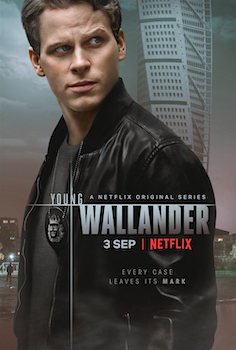
    Young WallanderI think that Swedish detective Kurt Wallander’s USP, if he has one, was that he wasn’t some young hotshot maverick genius, like so many fictional detectives, but rather a middle-aged, somewhat disillusioned, almost workaday cop who got the job done. So a series about his younger days already seems like it might be missing half the point. But it’s worked for other TV detectives (most notably Morse in the acclaimed Endeavour), so why not? After all, seeing what police work in 1970s Sweden was like might be interesting — it’s certainly a different setting, anyway.
    Well, that’s Young Wallander‘s first misstep: this isn’t about the young life of canonical Wallander, it’s a modern-day reboot. So, you’ve removed the obvious character traits and you’ve changed when it’s set — what makes this Wallander as opposed to Generic Swedish Cop? That was the question I had after watching the trailer and, sadly, I still wondered it after watching the series in full. At least the storyline is Wallander-ish, all about nationalism and refugees and how they’re treated. That may sound very timely, given what’s been going on politically over the last five to ten years, and it is; but it’s also the kind of thing Wallander’s original creator, Henning Mankell, often wrote about before that. But that makes it a mixed blessing: yes, it’s the kind of story you can imagine a ‘real’ Wallander text tackling, but it’s also such a present-day issue that that doesn’t matter; it’s the kind of plot any drama might choose to take on right now.

    The production itself is a strange international hybrid: made by Swedish production company Yellow Bird (though actually shot elsewhere in Europe, I believe), but with a British writer and mostly British cast speaking English, while thankfully not trying to emulate the accent. That’s except for Wallander himself, who’s played by a Swede, who has kind of retained his accent. In a story all about national identity, it’s kind of ironic that Wallander sounds like the only Swedish man in Sweden.

    I can see why the Wallander rights-holders would want the brand to continue, because it’s been very popular in various incarnations, in particular the Swedish series starring Krister Henriksson and the British series starring Kenneth Branagh. But between those, and the previous series of Swedish TV movies starring Rolf Lassgård, every one of Mankell’s original novels has been adapted twice, plus the invention of about 30 original-for-TV stories — so, if you want to continue the character, a new direction does feel called for. Unfortunately, this isn’t it. It’s too generic, lacking any uniqueness that makes you feel this is a story that could only be told — or even should be told — using the Wallander brand. Even leaving that aside — if you had no previous attachment to the character and so just approached this as an original cop drama — the series is less than great. It’s not outright bad, just thoroughly middling, with an underwhelming finale that leaves plot threads dangling; and it’s not clear if it’s meant to be a realistic “not everything gets tied up” ending, or if they’re hoping to pick up on them in a second season.

    The only good thing to come out of all this, for me, was that it’s reminded me I still have a bunch of adaptations starring Lassgård that I’ve never watched, so it’ll be nice to go visit those. And then revisit the Henriksson series at some point, because it was excellent; and maybe the Branagh one too, because that was also really good. But if Young Wallander manages to bag itself a recommission, I’m not sure I’ll bother with it.

    Jonathan Creek  Series 5 Episodes 2-3 + 2016 Christmas Special
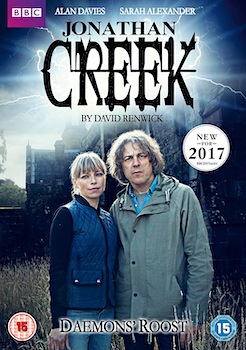
    Jonathan Creek: Daemons' RoostI noted last time that Jonathan Creek seems to be ending with a whimper rather than a bang. It was a huge hit when it first aired in the ’90s, and a revival in 2009 was a big ratings success too, but the sporadic specials made since then have seen it drift further and further from the spark that once made it special. The nadir was the premiere episode of series 5, which didn’t even function properly as an episode of the show. The remaining two instalments of that short run are better, but still nowhere near the series’ early-day highs. The third one, The Curse of the Bronze Lamp, includes an array of terrible subplots that make you wish it was considerably shorter (it’s only an hour long but feels like two), but its mystery is still the nearest these latter-day Creeks have come to its heyday.

    A saving grace comes in the last (for now) episode, 2016 Christmas special Daemons’ Roost. Is it the last-ever episode? Many online listings treat it as such, but the four years since it aired means if another episode popped up it wouldn’t be the longest gap in the series’ history. But if it is the last time we ever get to see the character, it’s actually not a bad one to go out on; in fact, thought it was a real return to form. As with many later episodes, it struggles to get Jonathan involved in the case — daft, really, because, after he had the same problem right back in series 1, writer David Renwick came up with a way to just throw Jonathan and Maddy into the case every episode… then undid that after series 4, since when we’ve once again been subjected to long-winded reasonings for Jonathan to get involved. So, once again, it takes a while to get going (Jonathan doesn’t get properly involved until 40 minutes in), but once it ramps up there are some neat mysteries and bags of Gothic atmosphere. I always feel Creek is at its best when it’s invoking that almost Hammer Horror vibe. There are also some nice nods to the series’ history, which is the main reason it feels like it could serve fittingly as a “finale” if needs must.

    Though, personally, I’d love to see Jonathan reunited with Maddy for one final case; and I’m happy to wait for a one-off special when Renwick’s got a good idea, because we’ve seen how wrong it goes when he forces it.

    Also watched…
  • Anthony Jeselnik: Thoughts and Prayers — After enjoying his Netflix special that I watched last time, I watched the other. This one starts dark… and gets darker. I loved that, but I can see he’s not for everyone.
  • Demetri Martin: The Overthinker — After enjoying his Netflix special that I watched last time, I watched the other. Unfortunately, I didn’t enjoy it as much — it was, ironically, overthought. Oh well, can’t win ’em all.
  • Small Axe Episode 1 — Just to note that I’ll be counting these as films, because that’s what they are, really, aren’t they? I suppose the counterargument is it’s an anthology miniseries because they’re premiering on TV, but nah — especially as several of them actually premiered at a film festival.
  • The Great British Bake Off Series 11 Episodes 2-4 — I’m even way behind on Bake Off! I’ve managed to avoid most spoilers, at least, so I’ll catch up soon.

    Things to Catch Up On
    His Dark Materials series 2This month, I have mostly been missing His Dark Materials, the second series of the BBC/HBO adaptation of Philip Pullman’s acclaimed trilogy. Of course, I’ve been missing lots of stuff (that was kind of the theme of my introduction, remember?), but that’s one of the most pressing to me personally. You might argue The Mandalorian, also on its second season, is even more pertinent, what with it regularly being thoroughly discussed online, but I’ve not even started that yet. His Dark Materials, on the other hand, I do expect to watch soon.

    Next month… His Dark Materials season 2, probably. What else, only time will tell.

  • Some Beasts (2019)

    aka Algunas Bestias

    2020 #225
    Jorge Riquelme Serrano | 97 mins | digital (HD) | 2.35:1 | Chile / Spanish

    Some Beasts

    Sometimes, one thing can ruin an entire movie. Depending on how harsh a critic you are, I’d say that’s quite rare. Unless it’s threaded throughout the entire film (like, say, a terrible lead performance, or a consistently poor cinematography decision), a small constituent part would have to be truly horrendous to take the entire rest of the movie down with it. Some Beasts is one of those films. The problem arrives in the final 20 minutes, which makes it a massive plot spoiler. Out of some lingering respect for storytellers, I provide this spoiler warning; others would argue content of this nature doesn’t deserve such courtesy.

    Anyway, before I get to that: the film’s first hour-or-so. It’s about a family — mum, dad, teenage son and daughter, and their maternal grandparents — travelling to a small island near Chile that the mum & dad have just bought. They want to turn its ramshackle house into a luxury hotel, and they want her rich parents to stump up some money. They’re a snobby bunch — not horrendously so, but with that creeping sense that their grumpiness isn’t just a bad day, it’s a lifelong sense of entitlement. They’re accompanied by a guide, but after he’s accused of being inappropriate towards the daughter (which he wasn’t) and he’s groped (against his protestations) by the grandmother, the family wake up the next day to find he’s disappeared, stranding them on the island.

    Some Beasts is labelled as a thriller, but there’s not much thrilling about it. By the halfway point, people are literally sat around staring into space… On the surface, it’s just a family on a bad holiday; but there are obvious interpersonal tensions, which combine with some occasionally ominous music and unusual shot choices (like a series of straight-down bird’s eye views that open the film) to lend a mildly unsettling atmosphere. As the film goes on, their behaviour gets worse, but it’s in small increments on a long sliding scale.

    Abusers

    Later, they all play a board game. And we watch. In real time. And we join it halfway through, so you’re not going to know what the game is or how it’s played. Then the tensions explode and everybody’s arguing. The whole of this unfolds in one long static take, which is either an impressive bit of staging and acting or just directorial showing off, depending how you want to take it. I tend towards the latter, given what happens next.

    The final 20 minutes suddenly throw in a very sensitive and emotive subjective, presenting it in a deliberately provocative fashion. To be clear: the grandfather gets into bed with the teenage daughter and rapes her. Like the board game, this is presented in a couple of long static wide shots, meaning we witness more-or-less the whole thing. A raft of questions are posed. Is this the first time? The daughter seems awfully accepting of it. Not that she likes it, but is resigned; she barely protests. If not, when did it start? There’s only been the vaguest hints earlier in the film about the grandfather’s feelings. Who knows about it? Because there are some cutaways that suggest some of the other characters know what’s going on. And the next morning, it seems like they all know — so when did they find out? And what happens next? Because there’s no blazing row; no calm confrontation, either. They all sit around a bit more, looking shocked… then get in a boat and go home. The end. It’s like there’s not enough screen time to deal with the subject in sufficient detail, so the film doesn’t even try. Except, of course, that it’s the filmmaker who decides the running time and the pacing. There’s no “oops, I introduced a serious issue too late in the day and now I don’t have time to examine it properly!”

    Because the film doesn’t actually explore with the topic it’s raised, that means we’re left primarily with the manner of its presentation. That seems consciously designed as an assault on our sensibilities via a brazen depiction of something morally abhorrent. Rather than any meaningful engagement with the multitude of questions and issues it raises, it pokes at us for a reaction, being about as provocative as a child saying a rude word at an inappropriate moment — the scene, and its explicit detail, exists only to say, “look how edgy I am! Look how I’m prepared to show things that shouldn’t be shown!” I’ll be the first to argue that depicting something is not necessarily to endorse it (cf. the endless stupid debates about Scorsese’s oeuvre), but when the Bad Thing goes as unexamined and unpunished as it does here, one starts to wonder about the real intent of the filmmaker.

    Abused

    The first hour or so of Some Beasts is mostly uneventful; the final 20 minutes are offensively ill-judged. I don’t think you get to throw something that serious into your film, and shoot it so provocatively, without also tackling what it means. You can’t take something that so profoundly affects people who’ve suffered it and treat it in such an off-hand manner. Taboo subjects can and should be tackled in films, but you have to engage with them in thoughtful and meaningful ways, not use them as something shocking for the sake of being shocking. The ending is so egregious, it kicks aside what value there was in the earlier portion of the film. It actually made me feel kind of angry, which is not the kind of reaction I normally feel towards a film.

    Some Beasts is well made, in its way, but it’s a bad film.

    1 out of 5

    Some Beasts is screening on AMPLIFY! until Sunday. It featured on my list of The Worst Films I Saw in 2020.

    The IMDb New Filmmaker Award 2020

    Last night on AMPLIFY!, FilmBath presented the 9th annual IMDb New Filmmaker Award, in which a trio of industry judges choose the best short film by a new filmmaker (clue’s in the name). The winner gets £1,000 cash, £1,000 in gear hire for their next project, a natty trophy, and an IMDb pin badge (normally only given to IMDb employees). If you missed the evening, never fear: the whole 90-minute event is available to rewatch for free, worldwide, here.

    Why would you watch an awards show after it’s happened? Well, in this case, you get to hear the judges’ musings on what makes a good film — and when those judges are BAFTA-nominated director Coky Giedroyc (The Virgin Queen, How to Build a Girl), Oscar-nominated and BAFTA-winning producer Amanda Posey (An Education, Brooklyn), and the CEO of IMDb, Col Needham, those are opinions worth listening to. Even better, you get to watch the five nominated shorts in full, and they’re good a bunch.

    But don’t just take my word for it: take my, er, word for it, in the form of these reviews…

    If you do intend to watch the awards, fair warning: I’m going to ‘spoil’ who won.

    Under the Full Moon

    Taking the films in the order they were shown, first up is Under the Full Moon (2020, Ziyang Liu, UK, English, 9 mins, ★★★★☆), about a guy who has his phone pickpocketed and decides to confront the mugger. The most noteworthy aspect here is the whole short is achieved in a single unbroken eight-minute take. I love stuff done in single long takes; at this point it’s a bit of a cliché to enjoy such things — a real film nerd kind of obsession — but, sod it, it’s still cool. To do a thriller storyline like that — something which requires management of tension and suspense, and of information being revealed at the right time in the right way — is even more impressive. You might say, “well, that’s what theatre is — a drama performed in ‘one take’”, but theatre doesn’t have to factor in camerawork; making sure we’re seeing the right stuff at the right time, framed in the right ways. Under the Full Moon manages every different element almost perfectly, the only real flaw coming right near the end, when the camera fails to clearly capture a phone screen with an incoming call, so the director resorts to a subtitle to make sure we get this final ironic twist. And that’s the other thing: this isn’t just a technical stunt, or an exercise in escalating suspense, but a dramatic work with some neatly-drawn character parts and a sense of dramatic irony. Really strong work.

    The winner (told you I’d spoil it) was Flush Lou (2020, Madison Leonard, USA, English, 9 mins, ★★★★★), and I entirely agree. It’s a black comedy about the reaction of three women to the death of a man: his daughter (who narrates), his wife, and his mother. It’s got a quirkiness that could be inappropriate, but the tone is juggled just right that it remains hilarious rather than at all distasteful. It’s there in the performances, the shot choices, the editing — the piece really works as a whole to hit precisely the right note. It might call to mind the work of someone like Wes Anderson, but it’s far from a rip-off; it also reminded me of certain just-off-reality American-suburbia-skewering TV shows, like The Riches or Suburgatory (I’m sure there are some more mainstream examples that are eluding my reach right now). Also, it manages to pack eight chapters into its eight minutes, without ever feeling like that’s an unnecessary affectation; if anything, it helps clarify the structure, which is exactly the kind of thing chapters are good for. A huge success all round.

    Flush Lou

    At the other end of the seriousness spectrum was the winner of the audience vote, The Monkeys on Our Backs (2020, Hunter Williams, New Zealand, English, 8 mins, ★★★★★), a documentary about the mental health of farmers in New Zealand. I think we often have a very positive view of New Zealand — they seem like nice people; their government is doing awesomely well; they make great movies; they’re good at rugby; and so on. But the country has one of the highest suicide rates in the developed world, and mental health problems disproportionately affect those living and working in isolated rural communities. This is not only a succinct explanation of the problems, with real-life examples as well as expert opinions, but also talks about the solutions, what help is out there and how it’s working. Plus it’s a beautifully shot film (some outtakes in black & white at the beginning show the fundamental quality underlying the colour photography in the rest of the film), with lovely views of countryside life, as if to help remind you that the world is a wonderful place. A wholly different film to Flush Lou, but an equally deserving winner.

    The shortest of this year’s five is Players (2020, Ava Bounds, UK, English, 3 mins, ★★★★☆), but that’s not the most noteworthy thing about it. This is: it was made by a 14-year-old. But you’d never guess, because it has a competency and, more strikingly, a surrealism that belies someone much more experienced. Heck, the sound design most reminded me of David Lynch! And the comparison goes beyond the sound work, with an ending that calls to mind some of Lynch’s work where nature and technology clash. Subtitled “a clearly confused film”, I think that was somewhat how the judges felt about its mix of retro costumes and music, computer-generated vocals, and a sci-fi sting in the tail. It’s the kind of film that clearly doesn’t work for everyone — just another way it’s a natural successor to Lynch, then. A 14-year-old making a competition-worthy short film is incredible in itself, but that it also merits so many comparisons to David fucking Lynch? Remarkable.

    The Monkeys on Our Backs

    The final film was Home (2020, Hsieh Meng Han, UK, English, 10 mins, ★★★☆☆), in which a girl living with her mother in a single room in a dingy apartment block finds the communal toilet locked, but then hears music coming from a nearby ventilation grill. Climbing through, she finds herself in a brightly-lit world of opulence, with people in elegant clothes dancing to genteel music, and an array of luscious food on offer. She even makes a friend. But then uptight officiousness arrives in the form of a stuffy manager, who refuses to let her use the toilet. It’s like a modern socially-conscious take on Alice in Wonderland, though I’m not sure what point it was ultimately making — kindness is nice and everyone deserves to be allowed to use the toilet?

    If any of that tickles your fancy, don’t forget you can still watch the whole event, free, here.

    Disclosure: I’m working for AMPLIFY! as part of FilmBath. However, all opinions are my own, and I benefit in no way (financial or otherwise) from you following the links in this post or making purchases.

    Never Rarely Sometimes Always (2020)

    2020 #193
    Eliza Hittman | 101 mins | digital (HD) | 1.85:1 | UK & USA / English | 15 / PG-13

    Never Rarely Sometimes Always

    Autumn (Sidney Flanigan) is a teenage girl from rural Pennsylvania, and she’s pregnant. She’s young, her family clearly aren’t well off, she’s not in a relationship with the father — the film explains none of this to us explicitly, but it’s all clear. So is it any wonder that Autumn decides she wants an abortion? Her local sex health clinic’s attitude is to show her a video about why it’s evil. Her conservative parents obviously wouldn’t understand; especially, you think, her dad, who is at least verbally abusive. And so with the help of her cousin, Skylar (Talia Ryder), they scrape together what little money they have, throw a simple lie in the parents’ direction, and set off for New York City, where Autumn can get the procedure without parental consent.

    Clearly, Never Rarely Sometimes Always is not impressed by the state of things in the US of A. It’s an indictment of what women have to endure to have control over their own bodies. The so-called “Land of the Free” isn’t so free for some people. All this is stuff many of us know, thanks to recent political movements and counter-campaigns to change women’s rights. But by showing us a ‘case study’, as it were, of one girl’s experience, writer-director Eliza Hittman makes the real-world effect of these political decisions so very tangible. (It’s interesting that the film is quite prominently a UK coproduction. One suspects that non-US influence and/or cash injection may’ve been necessary.)

    Lest you think the film is some kind of feminist polemic, it comments on all of this without ever saying much of it explicitly. It is, if anything, a witness statement; a factually-stated case from which we infer the unjustness of the system because we are capable of empathy. (The natural counterpoint being that, of course, if you showed it to certain groups they’d not feel the same level of care or compassion, but that’s their failing as human beings.) Despite the big issues at play, and these unavoidable conclusions, it’s a subtle and quiet film, with much left unsaid. The scene which gives the film its title is a series of questions posed to Autumn before she can have the abortion. Some are just yes/no answers; some she can’t even bring herself to respond. They’re not specific enough to tell us what exactly has happened in her life, but they indicate and hint at so much. And that’s ok — we don’t need to know the totality of her personal experience to empathise with what she’s going through now; just that she’s not coming from a loving, supportive place that might make it all a bit easier.

    Skylar and Autumn

    As Autumn, Flanigan is incredible; doubly so as it’s a debut performance (apparently she beat over 100 actresses for the role. Well done, casting director!) Like the film, she conveys so much with so little; so much bottled up emotion. Skylar is a great character, too: so supportive, but not incapable of feeling her own emotions. At one point, as the trip unexpectedly drags on over several days, it all gets a bit much and she has to go off by herself for a bit. That kind of behaviour helps accentuate the realness of events — even when you want to be supportive, sometimes you need a little break. No one’s perfect. Ryder has a couple of minor credits to her name, but both girls deserve to go on to much more on the strength of their work here.

    Some viewers will find the film’s style too slow, too wandering, aimless; but, for me, that further underlined the reality. All that time spent just getting from place to place, or just waiting around until it’s time — that’s life. Indeed, for me, it only heightened the film’s tension, which crushes in all the time, throughout. Or perhaps not tension, exactly, but worry; uncertainty; anxiety. What’s going to happen? What’s going to go wrong? How are they going to deal with this, that, and the other? Horribly, this is probably what it’s like to be a young woman a lot of the time, especially in America. That’s the film’s power: it takes a real-life experience lived by so many, and it doesn’t just show it to us, it makes us feel it.

    At one point, a professional tells Autumn that “whatever your decision is, is totally fine, as long as it’s yours.” It’s a moment of much-needed kindness, because, in Autumn’s experience, that is not how things are — but it is how they should be.

    5 out of 5

    Never Rarely Sometimes Always is available on Sky Cinema and Now TV from today. It placed 2nd on my list of The Best Films I Saw in 2020.

    Jojo Rabbit (2019)

    2019 #145
    Taika Waititi | 108 mins | cinema | 1.85:1 | USA, New Zealand & Czech Republic / English | 12A / PG-13

    Jojo Rabbit

    So much was said about Jojo Rabbit on its release (last October in the US; at the start of this year here in the UK) — and, indeed, before its release, thanks to it debuting on the festival circuit — that, coming to it now, it feels like there’s nothing fresh to add. Doubly so as it’s been through the usual cycle of backlash and backlash-to-the-backlash (rinsed and repeated several times over). That said, it does seem to have dropped out of the conversation and consciousness somewhat, which perhaps hints at its longer-term reception — in short, it’s no Parasite. (Maybe that’s an unfair comparison anyway, given Parasite is the kind of movie that’s already attracted “greatest of all time” status some places.)

    And so, faced with nothing fresh to say, I will instead just explain and/or justify my own full-marks star rating. “Justify” feels like the right word, because some people (some critics, in particular) really took against the film. Others, less vitriolic, thought it didn’t measure up to writer-director Taika Waititi’s high standard. I don’t think it’s as good as Hunt for the Wilderpeople or What We Do in the Shadows (both modern classics, more or less), but I did like it a lot. When it hit the mark with its humour, it was very, very funny; but it balances this with emotional and hard-hitting bits. The balance it strikes between the two is uncommon but well managed. On a micro level, some parts are outstanding (like the title sequence cut to the Beatles), but I also felt it was a little long in places.

    My friend Hitler

    Before it came out, some were worried about the wider reaction to a comedy where the ‘heroes’ were Nazis. But, of course, Nazis aren’t the heroes, and it’s not difficult to understand that. Indeed, I can see why some critics were saying that, despite expectations, it’s not actually a particularly hard-hitting movie, because it’s not really shocking (unless you’re easily shocked by an imaginary-friend Hitler being a comedic character; and considering that humorous screen depictions of Hitler date back to at least The Great Dictator, so it’s hardly a revolutionary idea).

    Despite some doubts, in the end I rounded my score up to a full 5 because, while it’s not perfect, it contains an awful lot that I enjoyed an awful lot. One to rewatch and reconsider, perhaps.

    5 out of 5

    Jojo Rabbit is available on Sky Cinema and Now TV from today.