Unknown's avatar

About badblokebob

Aiming to watch at least 100 films in a year. Hence why I called my blog that. http://100films.co.uk

But what is February, if not 2021 persevering?

WandaVision’s penultimate episode, and one particular quote from it, has been the talk of the town lately (or: the argument of the weekend on Twitter), but here we can set aside such concerns (I mean, I’ve got a whole post with a WandaVision review in it if you did want to get into it) and just look back at all the films I watched in February 2021…


#27 Weird Woman (1944)
#28 Coming to America (1988)
#29 The Burning Buddha Man (2013), aka Moeru butsuzô ningen
#30 High Life (2018)
#31 When the Wind Blows (1986)
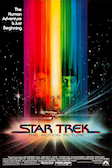
#32 Star Trek: The Motion Picture (1979)
#33 The Dig (2021)
#34 Isn’t It Romantic (2019)
#35 The Adventures of Prince Achmed (1926), aka Die Abenteuer des Prinzen Achmed
#36 Make Way for Tomorrow (1937)
#37 Tangerines (2013), aka Mandariinid
#38 The White Tiger (2021)
#39 Shakespeare in Love (1998)
#40 The Last Warning (1928)
#41 Mortal Kombat (1995)
#42 The Guilty (2018), aka Den skyldige
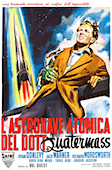
#43 The Quatermass Xperiment (1955)
#44 The House of Fear (1939)
#45 Muse: Simulation Theory (2020)
#46 News of the World (2020)
#47 The ’Burbs (1989)
#48 Xchange (2001)
#49 Vampyr (1932)
#50 Resident Evil: Extinction (2007)
#51 Zu: Warriors from the Magic Mountain (1983), aka Shu Shan – Xin Shu shan jian ke
#52 Radioactive (2019)
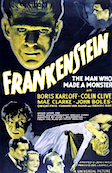
#53 Frankenstein (1931)
Star Trek: The Motion Picture

The Last Warning

The Quatermass Xperiment

Frankenstein

.


  • I watched 27 new feature films in February.
  • That puts it in the top 10 months of all time, in 10th place — the exact same feat January only just managed (so January is now pushed out to 11th, obv).
  • It’s the best February ever, topping 2014’s 24, and is far past the February average (previously 13.2, now 14.2), as well as the rolling average for the last 12 months (previously 23.2, now 23.9), and sets the average for 2021 so far at 26.5.
  • In terms of yearly milestones, I passed both #30 (the quarter-way point of my current 120-film goal) at the earliest time ever (4th February, beating 13th February in 2016), and #50 (the halfway point of my eponymous goal), also at the earliest ever (beating 2016’s 6th March). And #53 is the furthest I’ve ever reached by the end of February, surpassing #44 from (when else) 2016. (2016 wasn’t my best year ever, just a fast starter, so if I keep this up then at some point it’s going to be different year(s) that I’m passing.)
  • Last March I commented on how many letters of the alphabet I’d ticked off — seven in January, eight in February, nine in March. Of the two remaining, I never did get to X. Well, this year I’ve finished all 26 before the end of February. In fairness, that’s because I noticed how well I’d done in January — 15! — and made a point of finishing it off. But it’s also a side effect of watching so many films so much earlier. If I looked at other years up to around the 50-film mark, whenever that was reached, perhaps I’d find those too had hit most/all letters.
  • It’s not something I mention often, but as February began I was in the middle of watching or rewatching 23 film series. That’s quite a few — I certainly wasn’t looking to add any more to the list. But sometimes you just fancy watching a ’70s big-screen spin-off of a ’60s sci-fi TV series, or a big-screen remake of a ’50s British serial, or a classic Universal horror movie. And now I’m up to 26 series underway. (I track which I’m watching via the one I need to watch next on Letterboxd here, if you’re interested.)
  • This month’s Blindspot film: the classic Universal adaptation of Frankenstein. It’s only 70 minutes long, and I always try to save such shorter films on my list for later in the year, just in case for some reason I really need ones I can easily squeeze in; but sometimes you just have to accept that, although you don’t need a 70-minuter you can easily squeeze in, that’s all you want. Also, it paired quite nicely with The Last Warning, which (as I learnt from the audio commentary on the Masters of Cinema Blu-ray) was one of the films that was essentially the forebear to Universal’s famed horror cycle.
  • Talking of The Last Warning, at #44 is The House of Fear — not the Basil Rathbone Sherlock Holmes film (I reviewed that here), but a remake of The Last Warning that used the title of the original novel (that was then reused for the Holmes film — Universal were terrible for that in the ’30s and ’40s, apparently).
  • From last month’s “failures” I watched The Dig, The Guilty, High Life, Weird Woman, and The White Tiger.


The 69th Monthly Arbitrary Awards

Favourite Film of the Month
This month, I boldly went where I’ve never gone before and started the Star Trek movie series from the beginning. Star Trek: The Motion Picture has never had a particularly good rep, but you’ve gotta start at the start, right? So it was a pleasant surprise when I really enjoyed it — to the point where I gave it five stars and a heart-thing on Letterboxd. I nearly didn’t go so high, because Wrath of Khan is “the best one” and now I’ve got nowhere to go if I do like it even more; but I don’t think you can go around rating films on that basis (you’d never give anything full marks just in case there was ever anything better), so…

Least Favourite Film of the Month
This month ended on a bit of a downer, with a run of films that didn’t live up to my hopes and expectations. Nonetheless, they weren’t as outright bad as some I watched earlier in the month — like Mortal Kombat, which was supposedly a mid-’90s blockbuster but actually looked like a mid-’90s syndicated TV series, with writing, acting, and fight choreography of a similar or lesser quality.

Most Recent Best Picture Winner I Hadn’t Seen of the Month
Shakespeare in Love is the only Oscar Best Picture winner from the last 30 years that I hadn’t seen. Hurrah! Now that I’ve ticked that one off, my oldest unseen is 1988’s Rain Man, which is helpfully on this year’s Blindspot list. After that, I’ll slip back just one year further, to 1987’s The Last Emperor. Indeed, my track record with ’80s winners isn’t great: I’ve seen more from the ’50s, ’60s, and ’70s (plus, obviously, the ’90s, ’00s, and ’10s). Well, I’ll tick ’em all off someday.

Film Just Barely on the IMDb Top 250 of the Month
When I watched it, Tangerines was the 249th film on the IMDb Top 250. It’s not there now, but it might be again tomorrow — those ones near the end are very volatile; a handful of films that switch places back and forth, jumping on and off the list, on a regular basis. So why focus any viewing efforts there? After all, eventually they’re certain to drop off when something darts in higher up (even in a movie-poor year like 2020, two films made it onto the Top 250; there are eight from 2019). Well, I feel like once these movies do definitively drop off the list, they’re liable to become a bit forgotten. Not all of them, obviously — films in the “danger zone” like Three Colours Red or It Happened One Night have enough cache to keep them talked about for other reasons — but smaller, often foreign films like Tangerines are liable to just slip away. And, in theory, they’re still great films. I mean, they may disappear from the top 250, but they’re still theoretically among the top 260, or 275, or 300 (etc), greatest films ever made. But then they won’t be on a list, so I won’t think to watch them — so better to do it now, right?

The Audience Award for Most-Viewed New Post of the Month
Although it only went live early yesterday evening, my 67th TV column still managed to storm past all last month’s film reviews to by February’s most-viewed post. (A distant second, with almost exactly half as many hits, was my review of Muse: Simulation Theory — which had also been on TV. Really, TV’s the game to be in if you want those page views.)


My Rewatchathon was right on pace this month, although that means I still have to catch up for last month’s shortfall.

#3 Frozen 3D (2013)
#4 The Adventures of Prince Achmed (1926), aka Die Abenteuer des Prinzen Achmed
#5 Crocodile Dundee II (1988)
#6 Apollo 13 (1995)

In a rare (I think probably unique) feat, The Adventuress of Prince Achmed is both 2021’s #35 and Rewatchathon 2021’s #4. This isn’t just because I enjoyed it so much (although it is very good), but because the BFI Blu-ray has a choice of soundtracks: the original 1926 musical score, or an English voiceover narration, recorded in 2013 but based on director Lotte Reiniger’s own English translation of her original German text. I watched them in that order, and felt the narration added nothing of value to the experience, especially as it sounds like it comes from a preschool storybook. Just stick to the original music.

As for the others, I rewatched Frozen in readiness to finally watch Frozen II sometime soon (though I didn’t get round to it this month, did I). I hadn’t seen it in 3D before; the effect was solid but surprisingly low-key, although it took off anytime it snowed, etc. If you want some idea of when that “sometime soon” for the sequel might be, look to Crocodile Dundee II, which I’ve been meaning to watch since I enjoyed a rewatch of the first one… in March 2019. I’m sure I watched it as a kid (hence why it’s a rewatch), but I didn’t remember a second of it — probably because it’s a rather perfunctory sequel; kinda slow and lacking most of the charm of the original.

Finally, Apollo 13 completed a mini Tom Hanks kick, as I watched it immediately after News of the World and The ’Burbs. It’s a great movie — indeed, I had a little word with Letterboxd about how it’s not getting the kind of ratings it deserves.


At one point this month Twitter was all over new comedy Barb and Star Go to Vista Del Mar, but as a premium VOD release it’s £14 and I’m not paying that to rent anything, thanks. Also going straight to rental was the latest Nic Cage craziness, Willy’s Wonderland, although at a normal rental price. Mixed reviews put me off so far, though. I did rent David Byrne’s American Utopia (on offer from Amazon), so that’ll be in next month’s viewing, and I was going to fork out for the interesting-looking documentary A Glitch in the Matrix until I saw a raft of negative reactions.

The streamers continued to throw out brand-new exclusives, with Netflix’s Malcolm & Marie probably the most talked-about this month. It sounds irritating, to be honest, whereas Korean sci-fi Space Sweepers is probably more in my lane. Over on Amazon, Gerard Butler disaster flick Greenland, Rosamund Pike’s Golden Globe-winning I Care a Lot, and Bliss, starring Owen Wilson/Salma Hayek in a sci-fi romance from the writer/director of Another Earth, all made my watchlist but didn’t actually grab my viewing time. The same is true of teen time loop romcom The Map of Tiny Perfect Things, which feels a bit like a placeholder before Palm Springs‘ belated UK release in April.

Talking of stuff finally making it to the UK, Netflix added Josh Trank’s Capone this week, so that can go on my watchlist out of curiosity but never actually get got to because it’s meant to be rubbish. More in my lane, perhaps, is Cold War thriller The Catcher Was a Spy, which apparently came out in 2018, but not here in the UK, where it’s just popped up as an Amazon Original. Going even older, Netflix added a mass load of Swedish films this month, including three silents — Terje Vigen, Ingeborg Holm, and Herr Arnes Pengar — that are all in IMDb’s Top 50 for the 1910s, so that’s interesting. Meanwhile, Amazon added 2013 Jason Statham actioner Homefront, which came onto Netflix US last month and shot to #1, despite being a flop on its theatrical release. I do like a bit of Statham action now and then, and this one comes recommended, so it’s probably worth a shout at some point. Another discovery was The Grand Heist — the kind of film I only hear of when it randomly pops up on a streamer or whatever, this Korean flick appears to be a period Ocean’s 11 about stealing ice… literally, blocks of ice. Sounds like it might be fun.

My cheap MUBI subscription is still going, but even with a new title everyday they managed to add little this month that caught my interest — just Cathy Yan’s feature debut, Dead Pigs, and Ridley Scott’s Legend, which is usually on Amazon Prime anyway; plus a few titles I own on disc anyway (The African Queen, Heat, and The King of Comedy, the latter two of which I’ve seen but are long overdue a rewatch). This month’s BBC TV premiere of Stan & Ollie means that’s now on iPlayer, although it’s also still on Prime, where it’ll be in higher quality; and on All 4 I managed to miss my chance to watch Love, Simon (its spin-off series is now on Disney+ but not, apparently, the original film) and Song Kang-ho in A Taxi Driver.

Finally, my disc purchases continued unabated. There was the release of Indicator’s second Columbia Noir set — I haven’t started the first yet, so that’s 12 minor-league noirs for me to catch up on now. Other new releases included a lavish edition of Jackie Chan classic The Young Master, restored with a choice of three different cuts, and Roger Corman’s The Masque of the Red Death, with a choice of two cuts, only one restored. But it was sales and random discounts where people really got me: from Arrow’s 30th anniversary sale, I picked up The Apartment, Horror Express, and Jesus Shows You the Way to the Highway; from a BFI offer at HMV, I scooped up the original British Gaslight, Penda’s Fen, Ian McKellen’s Richard III, That Sinking Feeling, The Wages of Fear, and their four-film Hirokazu Koreeda box set; and I also got Ken Russell’s The Devils on offer on DVD from elsewhere.

Physical media fans will surely have noticed that Zoom changed hands this week. The new owners haven’t got their version fully up and running yet, so it remains to be seen if they’ll ruin one of the best Blu-ray retailers there was. Just before they shut down, I managed to get in one final Criterion gift card order — if you missed it’s existence, sorry to tell you now, but they sold a Criterion gift card for £50 that allowed you four titles (from a selected list). That works out at £12.50 each, which was a bargain, and because it’s been a while since I looked they had plenty in their selection that I wanted. So I snaffled up The Age of Innocence, Buster Keaton’s The Cameraman, The Cranes Are Flying, and Three Outlaw Samurai, but I could’ve chosen another four easily, maybe even eight — if I’d known for sure Zoom-as-we-knew-it was going away, I might’ve put up the extra £50, but hey-ho.


It’s gonna be a monstrous March with Godzilla vs. Kong. Whoever wins, we win, I reckon.

The Past Month on TV #67

This month: real-life grief in HIV/AIDS drama It’s a Sin; superhero grief in WandaVision; and “good grief, what have they done to The West Wing?” in a charity special. Plus, more classic Twilight Zone.

It’s a Sin
It's a SinThe latest series from writer Russell T Davies is a story he’s been mulling for a long time — I seem to remember it first being mentioned in his book The Writer’s Tale, which chronicles his final couple of years on Doctor Who, over a decade ago now. It’s had a bumpy ride to the screen, with the pitch being rejected by several networks, and eventually the planned eight episodes being negotiated down to just five. If this were a lesser writer then you’d assume the concept must have some fundamental flaw(s), but perhaps it was just the subject matter that scared so many commissioners: it’s about the emergence of HIV/AIDS in the 1980s, told from the perspective of a gang of mostly-gay twentysomethings who’ll see the disease rip their world to shreds. Not exactly a cheery topic, and one still affected by taboos and ignorance all these decades later. But that’s why this is a story that needed to be told, and here it’s safe in the hands of a master screenwriter.

That matters, because the series is balanced perfectly. You expect this story to be tragic and sad, and it is, but it’s also not some kind of misery-porn. It doesn’t hide from the devastating effects of the virus, but nor is it dwell on them unnecessarily. Nor does it sanctify the victims — they didn’t deserve what happened, but they’re human beings. Some of them deny its existence, even as evidence mounts. Some don’t take the proper precautions. Some are nice and sweet. Some are selfish. They’re human, and that’s the really important thing. Yes, this is a sad drama about young lives cut tragically short, and a condemnation of the cruel way some people (family, friends, colleagues, politicians) chose to handle that. But, more than that, it’s a celebration of those people whose lives were lost. The reason it’s so good, and so worthwhile, is because it never forgets that they weren’t just “people who got sick and died”, but people who lived.

WandaVision  Episodes 5–8
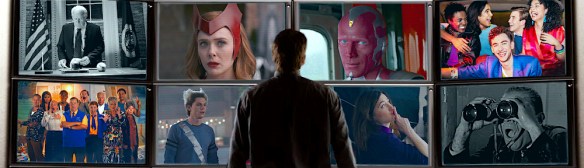
WandaVisionWandaVision had seemed to settle itself into a nice little groove in its first few episodes, each edition spoofing a different era of sitcom with an occasional hint at what was really going on, before episode four came along to blow that up with a raft of revelations about what had been happening outside Wanda’s little fantasy all this time. I was worried how the ensuing episodes would deal with that, as we’d been promised more eras of sitcom spoofery, but now the cat was kinda out of the bag. Well, thankfully it didn’t do the ’90s thing of following an arc-plot-heavy episode with a series of non-arc episodes that act almost as if the big developments didn’t happen. Instead, we got what I thought was a pretty nice balance between continued era-specific sitcom emulation and the exploration of what was actually going on. The latter meant sacrificing the mystery and some of the strangeness that helped those first few episodes feel so unlike anything the MCU has attempted before, but in its place we got the comforting familiarity of mystery box-style plotting. It’s certainly not as special, but it is engaging in its own way, and led to some nice surprises (Pietro) and unsurprising inevitable reveals (it was Agatha all along!)

Now, the stage is set for the finale. Many people have expressed surprise that the show will be able to wrap everything up in a single episode. We’ll see, but I have three thoughts on that. One, don’t discount the MCU’s ability to focus hard on plot and therefore cram an awful lot into a relatively short space of time. Two, there might be less to wrap up than we think — a lot of the pervading mystery is thanks to multitudinous fan theories, and the show has already suggested it might not be being as complex as some think. And three, we know Wanda will be a major part of Doctor Strange 2, so don’t write off the idea that this series will actually leave a lot open-ended for that movie to pick up on. It would be a shame if it did that too much, because it would render the whole series as little more than a backstory-expanding prequel to the movie, but I don’t for a second believe the finale will tie everything up in a neat bow only for Wanda to return afresh in Doctor Strange — the two will surely be connected. Only a few days until we get our first idea of how…

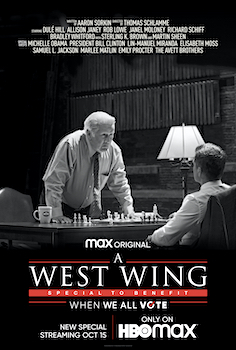
A West Wing Special  to Benefit When We All Vote
A West Wing Special to Benefit When We All VoteIt’s been a very long time since I watched any of The West Wing, and I never saw it in full, but I always meant to go back and watch the whole thing properly. I thought watching this one-off charity reunion thingy might ignite my interest in finally doing that. And, indeed, this did make me want to go back and rectify that — by, ironically, clearly not being as good as the show used to be.

I don’t know if this actually aired in the UK in the end, because it’s very much focused on getting Americans to vote in last November’s election. To achieve that, the original cast of The West Wing reunited to reenact a season three episode of the show, Hartsfield’s Landing, which is all about voting and democracy and stuff. The fact it was made in 2020 means it had to deal with COVID protocols, although that doesn’t really factor in the final result (some behind-the-scenes clips are thrown in to reassure us that they observed all the stuff they should observe) — I presume that performing it in an empty theatre with sparse props and scenery is more to do with evoking that “this is a one-off for charity” thing than a pandemic necessity.

Anyway, as for what I was alluding to in my opening paragraph, the direction and staging of this production are nicely done, but I think you can feel that the cast are no longer on well-practised form to deliver the snappy dialogue as it’s meant to be done, and some of the original episode’s B-plots struggle in this setting by being parts of arcs that were never meant to stand alone like this. Of course, the entire thing is really just an excuse on which to hang voting PSAs, which are delivered by some celeb cameos that are kinda fun… even if the entire point is (a) limited to the US, and (b) now expired. Though it does make for a surprisingly condensed and sad reminder of how the US has, despite its unwavering national self-belief, consistently failed to actually be an exemplar of how free and fair democratic elections should work.

More of  The Twilight Zone
This week has brought news that the Jordan Peele revival of Twilight Zone (the launch of which first provoked my visits to the original series back in March 2019) has been cancelled after two seasons. I haven’t started that version yet (I’ve been watching these ones!), but it seems a shame — it’s such an iconic show, you feel it should do well in any era. But we’re spoilt for choice with TV nowadays, and I don’t recall any real chatter around the release of season two, so this cancellation is hardly surprising.

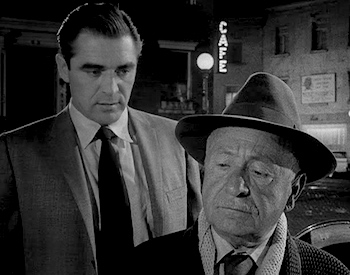
What You NeedThat news aside, let’s return our gaze to the 1959–64 iteration of the programme. Having already reviewed many of the best and worst episodes of that original run, I’m now covering episodes that happened to pique my interest. First up this month, What You Need, which jumps straight onto my list of the series’ best episodes. It’s the story of a peddler who can provide people with the one small item that will be of invaluable use to them shortly, and the punter who wants to exploit this power. The episode has a nice balance of sweet whimsy and darkness; the length is perfectly paced for the half-hour; and, although it’s not got one of Twilight Zone‘s famous massive twists, the end is fitting and in-keeping. It’s nicely directed too, particularly the scene where the punter confronts the salesman in his apartment. An excellent episode that deserves to be better regarded.

Next is an episode that some do hold in high esteem, The Night of the Meek, which is effectively a Twilight Zone Christmas special — it originally aired on 23rd December 1960, and it certainly plays up to its airdate. It’s about a drunken department store Santa, adorned in a grubby costume and matted beard, who can’t even show up for work on time, but who nonetheless has more Christmas spirit at heart than any of the sober, responsible people he encounters. It’s a little bit twee and cheesy, but also kinda charming in that “only at Christmas” way. It’s a shame it was one of the half-dozen episodes shot on videotape, because it looks absolutely terrible and that emphasises the tackiness. If it looked slicker, it might come across a bit classier, and then it might earn the “you’ll want to watch it every Christmas” accolade that I feel should be the ultimate goal of any Christmas special or movie.

Person or Persons Unknown has a good setup: a man awakens after a drunken night out to discover no one remembers him and there’s no evidence he ever existed. It’s the kind of existential psychological horror that’s the fuel for many a good TZ tale, and it does play well for a while, but writer Charles Beaumont doesn’t have a proper ending to offer us, resorting to that most clichéd of cop-outs, “it was all a dream”. It’s a shame, but not exactly a surprise: the episode offers no clues about where it might be going or why this might be happening, so you begin to think Beaumont either has something very clever hidden up his sleeve or the reveal is going to be a tacked-on disappointment. Sadly, it’s the latter.

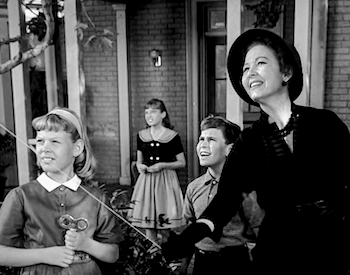
I Sing the Body ElectricFamed sci-fi writer Ray Bradbury’s only formal contribution to the series, I Sing the Body Electric, is another case of a great premise writing cheques the rest of the episode can’t cash. Here, rather than running out of steam, the places it takes us to are morally questionable and raise more questions than they answer. The plot is almost like a sci-fi twist on Mary Poppins: a widowed father is struggling to bring up his three kids, so they get a robot grandma, but one of the daughters doesn’t like her. It’s eventually revealed that the daughter’s distrust stems from the belief that her dead mother “ran away” and she thinks robot-granny will do the same — but it’s okay, because granny’s a robot and can live forever. Hurrah! Maybe your mileage will differ, but the idea that mothers who die have run away from their kids, or that this grief is best handled by giving the kid a parental figure who will never die, all seems a bit distasteful. And that’s before we get to the ending, where we learn that RoboGran’s consciousness will gather with others of her kind so they can share what they’ve learned. It’s spun as if this is somehow a good thing, but to me it sounds like a prequel to The Matrix

That good ol’ Twilight Zone staple of a man confused by his predicament arises again in Judgment Night, set aboard a passenger ship crossing the Atlantic during World War II. Maybe it’s just a coincidence of the visual style of 1960s US TV, but the way it’s shot feels very in-keeping with all those ’40s movies set on passenger ships, which helps make its setting feel authentic — if this had been made as a film in the ’40s, it would look exactly the same. Everyone aboard is concerned they’ll be sunk by a U-boat, with our protagonist particularly het up about the idea. Of course, we eventually learn why. The twist isn’t hugely surprising — it’s the kind of thing you expect from TZ and so can predict — but, like I’m finding of many episodes in this middle-ground between the series’ best and worst episodes, it’s a solid piece of work.

Also watched…
  • Dial M for Middlesbrough — The third in Gold’s annual series of comedy murder mysteries (after 2017’s Murder on the Blackpool Express and 2018’s Death on the Tyne) aired at Christmas 2019, but I’ve only just dug it out from the depths of the DVR. I thought it was the best one yet. It’s a kind of magnificent silliness, from the first murder (which involves impalement by a swing ball pole punctuated by a perfectly-chosen pop song on the soundtrack) to outlandish plot twists (a hidden Chicago hitman) to Jason Donovan chewing up all the scenery as a former love interest for one of our heroes (complete with flashbacks to 1999 that look ever so ’80s. I guess it takes pop culture a long time to make it up north…) I presume they had to sit out 2020 because of the pandemic, but I’d welcome another outing this Christmas, please.
  • For All Mankind Season 1 Episode 1 — Finally made a start on this Apple TV+ series (which is currently releasing its second season). Season 1 review next month.

    Next month… I’m gonna review For All Mankind — didja not just read that bit? Also the WandaVision finale, plus more of “More of The Twilight Zone”.

  • Creed II (2018)

    2019 #53
    Steven Caple Jr. | 130 mins | Blu-ray (UHD) | 2.40:1 | USA / English & Russian | 12 / PG-13

    Creed II

    Creed II is, as its title suggests, a sequel. But it’s even more than that — it’s like a sequel squared; perhaps even a sequel cubed. How so? Well, it is, of course, a direct continuation of Ryan Coogler’s Creed, a boxing drama which itself served as a follow-up of the Rocky films. But, as if being a sequel to a follow-up wasn’t enough, Creed II is also directly connected to the plot of Rocky IV. That makes for a funny old combination of influences: whereas Creed was arguably the most grounded and realistic Rocky movie since the first (and, with it, one of the series’ very best instalments), Rocky IV is undoubtedly the most cartoonish and ridiculous entry in the canon (although it was also the most financially successful and has a certain cheesy charm). Can Creed II reconcile the tonal disparity between its two primary forebears?

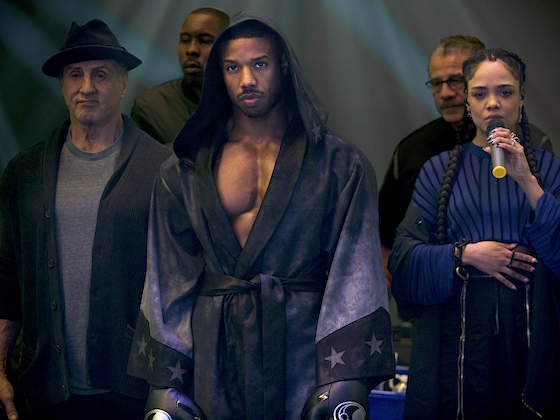
    For those not up on their Rocky continuity, Russian boxer Ivan Drago (Dolph Lundgren) killed Rocky’s mate Apollo Creed during a match in the ’80s (as seen in Rocky IV). Now, Drago’s son Viktor (Florian Munteanu) is a boxer too, and with Creed’s son Adonis (Michael B. Jordan) newly crowned as the world heavyweight champion, Drago Sr arranges for Drago Jr to challenge Creed Jr — who, against the advice of Rocky (Sylvester Stallone), accepts. But with the distraction of a pregnant fiancée (Tessa Thompson) and without Rocky to train him, is Adonis actually ready to take on a Drago?

    The film’s title is, obviously, meant to be read “Creed 2” because it’s a follow-up to “Creed 1”, but if you chose to read it as “Creed the 2nd” it wouldn’t be inappropriate to the movie’s themes. This is a movie all about parents and children, what they owe to each other, and how they live up to that — or fail to. It’s a meaty subject to chew on, and credited screenwriters Juel Taylor and Sylvester Stallone (there’s also a story credit for Sascha Penn and Cheo Hodari Coker) examine it from almost every conceivable angle. As Ivan pushes Viktor to vicariously reclaim their reputation, Adonis struggles with the legacy of a father he never knew, as well as the dilemma of becoming a father himself, to a daughter who may be born disabled (due to possibly inheriting her mother’s hearing condition). And while there’s a lot of father/son stuff — as you’d probably expect in a film about such a stereotypically-manly sport — the film doesn’t neglect the role of mothers either, with both Viktor’s and Adonis’s having key parts to play in how things unfold.

    Like father like son?

    One aspect of that is that the film does a lot to humanise the Dragos. In Rocky IV, they were just nasty foreigners — that film is, fundamentally, anti-Russian pro-US Cold War propaganda. Here, they’re presented as people who have problems and issues of their own. I remember Stallone talking before about how it’s always more interesting if the opponent isn’t just a Villain, but is a real character with their own arc (this was in the audio commentary for Rocky Balboa, for which Stallone injected some autobiographical material into the opponent’s storyline). That’s obviously something he failed to achieve in IV, but it’s reestablished here and, well, he’s right. It’s not like it confuses the drama of the fight — there’s no question that Creed is our hero and the one we want to see triumphant — but by giving depth to the Drago’s, showing why the fight really matters to them too, it rounds out the story; and, in this case, provides additional perspectives on the parent/child themes.

    It’s the way these films have something thematic to say that helps elevate them above mere punch-’em-ups. But it works as a sport/action movie too, finding some new twists within the familiar plot beats. I mean, when the Creed-Drago match comes before the film’s even reached the hour mark, you already have a fair idea how it’s gonna go. Without giving away specifics, what they’ve come up with leaves the contest as unfinished business, which is better motivation for the inevitable rematch than a simple “the hero lost the first time so he has to have a re-do so he can win”. This thinking extends to the final bout, too: it’s the first time in the series since Rocky III that the climactic fight doesn’t go all the way to the final round. It’s a nice change to dodge that predictability. Of course, these are really just variations on a theme — they’re still boxing matches; the options on the table are still “hero wins” or “hero loses” — but, as with many genre pieces, the devil is in the detail, and Creed II has good details.

    It's all about family

    Although this is primarily the second Creed film, there’s no doubt that it’s a little bit Rocky VIII, too. Stallone keeps saying he’s done with Rocky, then comes back for one more, but this really feels like it could serve as an ending. Well, so did the previous two films, but the idea of a grudge match between the sons of Apollo and Drago is an obvious one that I’m not surprised Hollywood came up with. It factors in and closes off so much of the series’ legacy that it’s difficult to see what would be of similar import to justify a second sequel. They could always do one “just because”, of course — there’s always a way; always more to a character’s life — but whereas the very existence of Creed suggested the potential for a sequel featuring Drago, now there’s no story left begging to be told. Nonetheless, Creed III has been announced. Whether Stallone is tempted back or sticks to his guns and lets the series move on without him, only time will tell.

    In the meantime, Creed II is a worthy addition to this storied franchise. If it can’t go the distance against some of the earlier entries, that’s through no fault of its own — the best Rocky/Creed films are all-timers; or, as they say in sporting circles, GOATs.

    4 out of 5

    Creed II is available on Amazon Prime Video in the UK from today.

    Zatoichi in Desperation (1972)

    aka Shin Zatôichi monogatari: Oreta tsue

    2020 #95
    Shintarô Katsu | 93 mins | Blu-ray | 2.35:1 | Japan / Japanese | 15

    Zatoichi in Desperation

    The 24th and penultimate film in the original Zatoichi series is also the first to be directed by star Shintarô Katsu. (He previously wrote the 21st film, Zatoichi Goes to the Fire Festival, and would later direct 22 episodes of the TV series and write & direct the 1989 revival movie.) Despite such fundamental creative control by the man who arguably knew the character best, Zatoichi in Desperation is widely regarded as one of the series’ worst instalments, and yet you’ll find some people full of praise for it. It’s one of the series’ darkest entries, and I suspect it’s unpopular overall because it’s so grim; but for those who do like it, they love it.

    The plot starts with Ichi accidentally causing a polite old woman to fall from a bridge and die — as I said, cheery. The woman was on her way to visit her daughter, Nishikigi (Kiwako Taichi), so Ichi seeks her out. She’s a prostitute, so, as recompense, Ichi sets about raising the funds to free her from prostitution. Meanwhile, 14-year-old Kaede (Kyoko Yoshizawa) is also employed at Nishikigi’s brothel, to earn money to care for her younger brother Shinkichi (Yasuhiro Koume); so when some out-of-town bigwig starts letching over her, well, you can guess what route she’s set to head down. Said bigwig is funding a move by gangsters to crush the local fishermen and set up some kind of modern fishing empire. Just the kind of ordinary folk vs yakuza fight that Ichi would normally find himself embroiled in…

    Except he’s busy with Nishikigi, and that doesn’t really change. This is the cornerstone of the film’s moral thesis, which seems to be that the world is a brutal and unjust place. While kind-hearted Ichi is busy helping Nikigiki out of a perhaps-misplaced sense of duty (she doesn’t seem fussed about her mum’s demise, nor with escaping the brothel), he’s missing the people who could really use his help, i.e. Kaede and Shinkichi, or the village’s oppressed fishermen.

    Kaede and Shinkichi

    And they really could use a hand, because it’s against them that the film’s brutality is fully manifested. The gangsters burn all the villagers’ boats, then murder them for complaining about it; and while Kaede’s busy preparing to have to sell her body at 14, Shinkichi provokes the gangsters and consequently gets brutally beaten to death; and when Kaede finds his body, she commits suicide — and all of that occurs without Ichi even being aware Kaede and Shinkichi exist. Makes you wonder: were events like that playing out just offscreen in every other Ichi movie? Well, not consciously, obviously, but perhaps Katsu is provoking us to wonder about all the people Ichi has failed down the years while he was distracted elsewhere. Maybe our hero is blind in more ways than one.

    Aside from the violence, this is also an uncommonly filthy film for the series. First Ichi overhears a whore talking about how taking ten men makes her wet; then he’s hiding in a room while a couple have sex; then later a bunch of yakuza round up a mentally ill kid and start wanking him off until he ejaculates on one of them, for which they give him a beating. Yep, that all happens on screen. (Nearly every review I’ve come across comments on that last scene. Well, no surprise, really — it’s rather striking.)

    Hopefully you’re beginning to understand why this movie is so divisive. But if the content wasn’t enough, Katsu seems determined to show off with form, too. His bold directorial style is evident from the off, when the old woman’s fall from the bridge is represented via an impressionistic barrage of flash-cut images. This is followed through the rest of the film by weirdly-framed close-ups and various odd angles. It doesn’t always pay off: the requisite gambling scene is a rehash of a trick from an earlier film, shot with a certain kind of dark tension (Ichi feels in genuine peril from those he swindled) that’s in-keeping with the film’s tone, but the trick itself is less entertainingly performed, the scene not as well paced and constructed. There’s also an atypical score by Kunihiko Murai, which some praise as being ’70s funk, but I thought sounded just like cheesy electronic nastiness. Sometimes his unusual choices emphasise the film’s glum tone, as in the opening credits, which play out in silence over black — not the usual mode for a Zatoichi film, and so it somewhat suggests the goal is to present this as a Serious Movie.

    Blind in more ways than one

    Certainly, many describe this as a more realistic version of Zatoichi than we’ve seen before. It’s removed from the superheroics of the other movies, instead offering a brutal portrait of real violence and how it scars, with innocents suffering unnoticed and even our hero failing to emerge unscathed. Whether that’s realist or just depressive might depend on your view of the world; although, considering the time and place these films are set, I imagine its closer to reality than all of the “Ichi saves everyone” narratives. That either/or extends to the film’s reception: everyone agrees that it’s nastier, darker, and closer to reality than the other Zatoichi films, but whether that’s merited — an interesting diversion — or a case of taking things too far — a low point for the series — is a matter of personal taste.

    Personally, then, I appreciate what it was going for, but I wonder if Katsu left it too long to go there. Coming so late in the series means we’re very familiar with the tropes it’s subverting, which is necessary — it works best as a counterpoint to what we’ve already seen rather than as a standalone piece — but it almost feels too late to go about such subversion — it’s a departure from the groove these films have worn for themselves. Maybe Katsu should’ve entrusted such a departure to a more sure-handed director; maybe it’s the roughness of his directorial voice that makes the film what it is.

    3 out of 5

    Muse: Simulation Theory (2020)

    2021 #45
    Lance Drake | 90 mins | TV (HD) | 2.39:1 | UK / English | 15

    Muse: Simulation Theory

    Often cited as one of the best live acts around, for their latest concert movie British rock band Muse have attempted something a bit different: rather than just footage of them performing songs in front of a massive audience, Simulation Theory attempts to tell a sci-fi narrative… driven by and/or interspersed with the band performing songs in front of a massive audience, natch.

    It begins with a slow track into a television set playing a news station where the presenter is talking about some kind of global events that have been traced back to the O2 Arena in London. Cut to a team of hazmat-suited scientists entering said arena, which they find deserted. Then, an arcade machine rises from the stage. One of the scientists approaches it, tries to play it, and is transported to another time/place/something, where the arena is full of screaming fans and a certain band begin their show. From there, the film cuts back and forth between Muse performances and a storyline about alternate simulated worlds, a highly infectious disease, and a few other bits and bobs. Frankly, it’s not the most coherent tale ever told.

    Combining a concert film with a sci-fi narrative is the kind of concept that immediately piques my interest, but I’m not sure how well Simulation Theory really pulls it off. Ultimately, it’s kind of just a few scenes sprinkled between the songs. Occasionally there’s a link between the music and the story, but not as often or as clearly as one might expect. This isn’t akin to, say, Jeff Wayne’s The War of the Worlds, where the music is like a soundtrack just waiting for its visual accompaniment. Indeed, despite the title and ’80s-style retro theming being taken from Muse’s 2018 album, fewer than half the songs performed come from that EP. That’s not a criticism, just an observation that the album wasn’t exactly waiting for the movie treatment. If that’s what they wanted to do, previous albums — like 2009’s The Resistance or 2015’s Drones — are concept albums more ready to be converted into a narrative.

    They didn't do this bit live on stage

    Setting aside the narrative aspirations, judged as ‘just’ a concert film, Simulation Theory is still only a mixed success. Perhaps because of the desire to connect it up with that cinematic storyline, the actual concert footage, editing, and sound mix are all a little too slick, feeling more like a big music video than a replication of the “in the room” experience. In fairness, that doesn’t seem to be the goal at all, with the film mixing up the order of the set list and even ditching half-a-dozen songs (more on that later). Eventually, it can no longer half-ignore the crowd. That doesn’t come until the ninth track played, Uprising, but suddenly you can really feel that Matt Bellamy has a connection with the audience, which then resurfaces in later songs (not least Mercy, aided by Bellamy going for a little off-stage walkabout).

    For me, Muse were at their creative peak back in the ’00s, so it was often when those songs emerged that I felt their performance was at its most enjoyable, with the likes of Supermassive Black Hole, Starlight, and the aforementioned Uprising. That said, the film gave me a new appreciation for some of their more recent songs, like Mercy, Algorithm, Dig Down, and Madness (I say “recent” — Madness is from 2012), although others primarily work thanks to the theatrical staging — Propaganda, for example, looks impressive on stage, but I still think it’s an odd track.

    As noted, the film has dropped several tracks from the live show, meaning we miss out on some of their very best material, like Plug In Baby, Hysteria, Time is Running Out, and Knights of Cydonia (actually the closing number in real life). That’s a shame — I’d rather the film had given us the full track list than spent time on the interstitial narrative. But why not both? Surely there wasn’t a restriction on the film’s running time? (And if there was, why?)

    Sci-fi singer

    Despite all these nits I’ve picked, overall I enjoyed Simulation Theory. It’s not wholly a success as a narrative, and, in my estimation, it’s a long way from being any kind of “greatest hits” gig for Muse; but the ambition is admirable, and most of the music plays well in situ. Plus, the finale involves a giant evil puppet hovering over the stage, so that’s got to be worth some bonus points.

    4 out of 5

    Muse: Simulation Theory is available on BBC iPlayer for the next 11 months.

    The 100-Week Roundup XXV

    Another week goes by, and once again I’ve only managed to put together one of these belated roundups. Hopefully new-new reviews will re-emerge sometime soon…

    In the meantime, The 100-Week Roundup covers films I still haven’t reviewed 100 weeks after watching them. Sometimes these are short ‘proper’ reviews; sometimes they’re only quick thoughts, or even just the notes I made while viewing.

    This week’s selection rattles through five more March 2019

  • The Italian Job (1969)
  • Downsizing (2017)
  • Brigsby Bear (2017)
  • Starship Troopers (1997)
  • Escape from New York (1981)


    The Italian Job
    (1969)

    2019 #40
    Peter Collinson | 95 mins | digital (HD) | 2.35:1 | UK / English & Italian | PG / G

    The Italian Job

    The Italian Job is one of those things that I think is in the consciousness of every Brit. Tricolour Minis racing around city streets, up and down stairs and through sewer tunnels… the literal cliffhanger ending… “you’re only supposed to blow the bloody doors off!”… Cultural osmosis imparts these things to all us Brits, whether we’ve seen the film or not — and, at the grand old age of 32, I had not. But it was 50 back in 2019, so when better than then? Which is why I watched it then; and, because I’m tardy, am reviewing it now.
    The awareness of the film I’d acquired down the years doesn’t quite prepare you for the actual thing, mind — the first half-hour is as much a frisky, cheeky sex romp as it is heist caper. Although, as you can infer from the classifications above, it doesn’t get too risqué. Of course, the real fun comes later, when Michael Caine and his crew of crooks execute an audacious gold robbery in Turin, causing a city-wide traffic jam that they can nip around in their Minis. This climactic chase doesn’t make much sense logically (they drive onto a roof only to drive back off it? They hide by parking in a car lot where there were precisely three spaces among similar-looking cars?), but it’s a lot of anarchic entertainment nonetheless. A bit like the whole movie, really: genuine crime isn’t like this, but this is a lot more fun.

    4 out of 5

    Downsizing
    (2017)

    2019 #41
    Alexander Payne | 130 mins | digital (HD) | 2.39:1 | USA & Norway / English, Norwegian & Spanish | 15 / R

    Downsizing

    In the future, searching for a way to solve overpopulation and global warming, a scientist invents “downsizing”, a process to shrink people to a height of five inches. People start to voluntarily be ‘downsized’, in part because being small has economic benefits. Financially-struggling couple Paul (Matt Damon) and Audrey (Kristen Wiig) decide to trade their ordinary lives for the extravagant lifestyle promised by New Mexico’s impeccable downsized community, Leisureland. But not all problems are so easily fixed, and a chance encounter with a shady entrepreneur (Christoph Waltz) and a famous Vietnamese political activist (Hong Chau) sets Paul on a path where he must choose between a sheltered life or making an impact in his own small way. — adapted from IMDb

    There are promising ideas and concepts at the heart of Downsizing — under an appropriately-minded director, this concept should’ve been a goldmine. Unfortunately, Alexander Payne doesn’t seem to be the right person for the job. It feels like he’s playing at being more of a Spike Jonze type, and not succeeding.

    The problems begin at a screenplay level. It feels like a very “and then this” narrative: things keep happening, one after another, with little to tie it all together. The final act eventually links back round to the prologue, to give a sense of the film all being a whole, but the real meat of the story — what happens to Paul in the middle — is just a series of events. Sometimes, it entirely abandons important stuff from earlier on so as to strike out on new tangents.

    That contributes to a feeling of tonal and thematic whiplash. The film ping-pongs around various themes and threads, seemingly indecisive about what it wants to comment on. Consequently, it offers nothing but the most superficial observations on topic. On top of that, it swings from broad comedy to introspective drama at whim.

    On the bright side, the visuals are pretty effective, managing to plausibly make the small world feel small even within itself. It’s just a shame the core of the movie can’t match up to the effects.

    2 out of 5

    Brigsby Bear
    (2017)

    2019 #43
    Dave McCary | 93 mins | digital (HD) | 2.35:1 | USA & China / English | 15 / PG-13

    Brigsby Bear

    Room meets Be Kind Rewind in this quirky comedy-drama. James (Kyle Mooney) is a young man who has lived all his life in an underground bunker with his parents (Mark Hamill and Jane Adams)… except they’re not really his parents: he was kidnapped as a baby and has been held captive for decades. After being freed, James learns that the TV show he was obsessed with in the bunker, Brigsby Bear Adventures, isn’t real either — it was made by his captors just for him. Unable to let Brigsby go, James sets out to finish the story by making a Brigsby Bear movie himself.

    There’s a sense in which some of Brigsby Bear is stuff we’ve seen before — the “group of friends set out to make an overambitious (home) movie” conceit has been trotted out by indie movies like Son of Rambow and Me and Earl and the Dying Girl, as well as the aforementioned Be Kind Rewind. Director Dave McCary and screenwriters Kyle Mooney & Kevin Costello give that basic material a quirky new sheen, but the real joy lies in the film’s insistent good-heartedness. It’s refreshing (if arguably unrealistic), and the joy its characters find in the shared creative experience is suitably infectious. Indeed, it reaches a point where the ending is surprisingly emotional. The raft of comparisons may suggest this isn’t the most original confection, but I loved it nonetheless.

    5 out of 5

    Brigsby Bear placed 15th on my list of The Best Films I Saw in 2019.

    Starship Troopers
    (1997)

    2019 #46
    Paul Verhoeven | 130 mins | Blu-ray | 1.85:1 | USA / English | 18 / R

    Starship Troopers

    Dismissed by many critics on its original release as cheesy sci-fi, Starship Troopers has been somewhat reclaimed in the decades since, both turned into a surprisingly enduring franchise (multiple sequels, animated series, etc) and praised as an anti-fascist satire. As I understand it, the original novel by Robert A. Heinlein is straight-up right-wing claptrap, but director Paul Verhoeven — who grew up under Nazi occupation — saw its inherent ridiculousness, and so intended to reshape it as a deconstruction of, well, itself.

    In that regard, for me, it’s a mixed success. The satire itself is a little thin. War is bad? Yep. The people in power use propaganda to keep you on their side? No shit. Put anyone in a Nazi-like uniform and we can infer they’re actually bad? Obvs. So why did many critics seem to miss it on the film’s original release? Perhaps because everything that surrounds it is cheesy third-rate stuff. When the character drama has all the depth and quality of a daytime soap, it’s easy to presume the similarly-daft in-universe commercials are also meant to be taken straight; that any humorousness was unintentional.

    And so, somewhat ironically, I thought Starship Troopers worked best as a straightforward sci-fi action/war movie. It’s a bit Full Metal Starship: first half is all pre-war/boot camp stuff, then the second half takes the characters out into the actual conflict. All the combat sequences are pretty thrilling on a visceral level, and the special effects mostly hold up to this day. Plus, it’s all bolstered by a great militaristic score from composer Basil Poledouris.

    After a couple of decades hearing “Starship Troopers is good, actually”, I found myself almost hewing closer to the original critical assessment. Perhaps it raises that old question of authorial intent: if it was meant to be satire, should we treat it as satire, even if it doesn’t actually look like satire?

    4 out of 5

    Starship Troopers was viewed as part of Blindspot 2019.

    Escape from New York
    (1981)

    2019 #47
    John Carpenter | 99 mins | Blu-ray (UHD) | 2.35:1 | USA & UK / English | 15 / R

    Escape from New York

    It’s a wonder that Escape from New York never wound up on my Blindspot list — it’s exactly the kind of film I always expected would be on there. Well, I guess the way I choose those films often errs towards “cinephile classics” rather than the kind of films I read discussed as classics in the kind of genre magazines I grew up reading. I’m sure it would have made it in eventually, if I hadn’t just straight up watched it first.

    I mention that upfront because it indicates something about how much I expected Escape from New York to be My Kind of Thing; and so there is every possibility my expectations for it were set too high. Frankly, it wasn’t as much pulpy fun as I expected it to be. It’s surprisingly slow, and very nihilistic — this isn’t a fun ride through a cool dystopia, more a glum portrait of everything having gone to shit, but in the body of an action movie.

    That said, I’m by no means arguing this is a bad movie. There is stuff here that’s good and that works, and is cool in the way it should be (it’s a pulpy premise that gets a pulpy treatment — I think “cool” is a perfectly valid thing for it to aim for). Kurt Russell does his best Clint Eastwood impression (literally) as anti-hero Snake Plissken, which is quite fun, and there’s some great music on the soundtrack, especially the main theme. Considering the lowly budget, the ruined streets of future New York are well realised too, supplemented by a tiny amount of location footage (the first film to be shot on Liberty Island!) and a stunning model of the blacked-out city.

    Despite all of that, overall it doesn’t come together and achieve the heights I expected of it. In some respects, my score below is generous — it’s a downgrade from the 5 I hoped I’d be giving the film, rather than an upgrade from a neutral 3, if that makes sense. Definitely one I need to revisit with realigned expectations.

    4 out of 5

  • The 100-Week Roundup XXIV

    The 100-Week Roundup covers films I still haven’t reviewed 100 weeks after watching them. Sometimes these are short ‘proper’ reviews; sometimes they’re only quick thoughts, or even just the notes I made while viewing.

    This week’s selection includes three films from March 2019

  • Bruce Almighty (2003)
  • Isle of Dogs (2018)
  • Life Is Beautiful (1997)


    Bruce Almighty
    (2003)

    2019 #31
    Tom Shadyac | 97 mins | digital (HD) | 16:9 | USA / English | 12 / PG-13

    Bruce Almighty

    Television reporter Bruce Nolan (Jim Carrey) doesn’t think the world is treating him fairly, but when he angrily rages against God, he actually gets a response. God (Morgan Freeman) decides to take a holiday, leaving Bruce in charge with His divine powers. As Burce puts his omnipotent powers to the test, he comes to realise that with great power comes… yeah. — liberally adapted from IMDb

    I mean, in fairness to Bruce, Spider-Man only came out the year before — maybe he just hadn’t seen it yet.

    Anyway, Bruce Almighty is almost entirely fuelled by Carrey’s antics — if you enjoy his zany style, you’ll lap it up; if you hate it, there are no redeeming qualities that haven’t been done better in other broadly-similarly-themed films (see Groundhog Day, for example). I say “almost entirely” because there are brief asides where Morgan Freeman or Steve Carrell get to steal a scene. Indeed, Freeman earned the film’s only out-loud laugh from me when he casually throws in one of Carrey’s best-known catchphrases.

    Personally, I’m in between on comedy-mode Carrey, and so that’s where I landed on Bruce Almighty. He doesn’t push his schtick so far that it becomes irritating to me, as in the Ace Ventura films (I quite liked them as a kid but feel I’d hate them now), but nor is it inspired enough to really transcend being just what it is.

    3 out of 5

    Isle of Dogs
    (2018)

    2019 #32
    Wes Anderson | 97 mins | digital (HD) | 2.35:1 | USA & Germany / English & Japanese | PG / PG-13

    Isle of Dogs

    Wes Anderson has a weird proclivity for killing dogs in his movies, so it seems almost like some kind of atonement that he’d turn around and make a movie whose title is a homophone for “I love dogs”.

    This animated adventure is set in a near-future Japan, where a canine flu is spreading through the city of Megasaki. To stop it, the mayor orders all dogs be banished to Trash Island — starting with Spots, the pet of his orphaned 12-year-old nephew, Atari. So Atari steals a plane and flies to Trash Island, where he teams up with five stray dogs to search for his exiled pal.

    Isle of Dogs attracted a certain amount of criticism when it was released for its treatment of the Japanese characters and, especially, language; primarily, that the Japanese dialogue is not subtitled, thereby ‘othering’ those characters because we’re prevented from engaging with them. When watching the film, my first thought was those complaints were being a bit daft: the dogs speak English, the humans speak Japanese, and we’re clearly being placed with the dogs — the humans are ‘other’ because they’re human, not because they’re Japanese. But then the film keeps jumping through hoops to get around this, for example with translators on TV to re-speak the Japanese in English; or an American exchange student to speak for another group with English dialogue. This is where it does tip into being problematic; where it can feel like a Western director playing around with another culture.

    All of which said, I still very much enjoyed the film. As a fellow Anglophone admirer of Japanese culture, that aspect broadly worked for me. Setting aside the controversy, it’s still amusing, in Anderson’s normal mode, with a suitably exciting and action-packed quest narrative.

    5 out of 5

    Life Is Beautiful
    (1997)

    aka La vita è bella

    2019 #33
    Roberto Benigni | 116 mins | digital (HD) | 1.85:1 | Italy / Italian, English & German | PG / PG-13

    Life is Beautiful

    In 1930s Italy, a carefree Jewish librarian named Guido starts a fairytale life by courting and marrying a woman from a nearby city. They have a son and live happily together until the occupation of Italy by German forces, when they’re separated and sent to concentration camps. Determined to shelter his son from the horrors of his surroundings, Guido pretends that their time in the camp is merely a game. — adapted from IMDb

    Every summary of Life is Beautiful concentrates on the “they end up in the Holocaust” bit — which is fair enough, it’s rather a major thing. But this is really a film of two halves. The first is a broad, sketch-like comedy, in which Guido (played by cowriter-director Roberto Benigni) bumbles around, woos his wife, and starts a lovely life. It’s the kind of comedy in which there’s a single sequence where a bunch of sketches all pay off at once, in a series of coincidences that’s somewhere between artful and ludicrous. The second half is a kind of concentration camp comedy, which is just as unwieldy as that sounds. The almost farcical humour of the first half attempts to linger on, but it buts awkwardly against the unspeakable horrors that occur.

    Eventually it comes to an ending that I was similarly divided about. It’s clearly designed to be hyper-emotional, and it pulls at some very obvious strings to get there quickly, which seems to work for many viewers, but I didn’t feel it. Why? Well, it’s based in the relationship between father and son, and I don’t think the rest of the film really is. The first half of the film is all about investing us in the relationship between Guido and his wife — we follow their relationship from the very beginning, and the film charms us and connects us to their coupling. But then the second half virtually tosses that aside to make the important relationship the one between Guido and his son. We get two or three quick scenes that incidentally suggest a good father/son bond, then it’s off to the camp, which is a whole other kettle of fish. We’re not given the time to properly buy into this father/son relationship. That’s not to say I don’t believe it, just that we’re only learning about it at the same time as we’re supposed to be affected by its endurance. Doing both at once doesn’t work, in my opinion. Now, if the first half (or even just the first act) had been about Guido and his son’s wonderful relationship before the occupation, it would have established that well and connected us to it; then, if the rest of the film unfolded as-is, I think it would have made for a much more powerful ending, because it would have had the full weight of their entire relationship behind it. Instead, as well as being a film of two halves, Life is Beautiful ends up a film of two relationships, one in each half.

    Despite the film winning awards at Cannes and the Oscars, and being in the top 10% of IMDb’s Top 250, etc, this “two halves” thing — the awkward balancing act between comedy and tragedy — has been noted by critics ever since its initial release. It makes for a wavering viewing experience. It’s kind of inappropriate, but kind of isn’t; it kind of celebrates the ingenuity of the human spirit, but kind of belittles the real tragedy in the process; it’s kind of a success, but kind of a well-meaning misguided effort. It’s this sense that the film’s heart is in the right place that sees my score err upwards.

    4 out of 5

    Life is Beautiful was viewed as part of What Do You Mean You Haven’t Seen…? 2019.

  • The Tenacious Monthly Review of January 2021

    Some people have decided that January is actually the 13th month of 2020, given how most of the woes of last year didn’t magically evaporate when our arbitrarily-appointed start-time for a “new year” rolled around. Funny that. It’s a nice idea — to think that we can write off this month by association with last year — but, the way things are going, I think if you want to carry that idea through you’re going to end up with a 2020 that has 17 or 18 or 19 months… perhaps even a full 24, who knows.

    So, back in the real world, the inevitable “second year of shittiness” that is 2021 began with January. Here’s what I watched during it…


    #1 Bill (2015)
    #2 WolfWalkers (2020)
    #3 Ernest & Celestine (2012), aka Ernest et Célestine
    #4 Happy Death Day 2U (2019)
    #5 Festen (1998), aka The Celebration
    #6 You Only Live Once (1937)
    #7 The Frighteners: Director’s Cut (1996)
    #7a Meshes of the Afternoon (1943)
    #8 Hotel Transylvania 3D (2012)
    #9 Wolf Warrior (2015), aka Zhan lang
    #10 Mission Control: The Unsung Heroes of Apollo (2017)
    #11 One Night in Miami… (2020)
    #12 Kind Hearts and Coronets (1949)
    #13 Joint Security Area (2000), aka Gongdong gyeongbi guyeok JSA
    #14 Calling Dr. Death (1943)
    #15 Under Siege (1992)
    #16 Who? (1974)
    #17 The Pinchcliffe Grand Prix (1975), aka Flåklypa Grand Prix
    #18 Blithe Spirit (2020)
    #19 Tower Heist (2011)
    #20 The Social Dilemma (2020)
    #21 3 Idiots (2009)
    #22 Who’s Afraid of Virginia Woolf? (1966)
    #23 The Secret Garden (2020)
    #24 Cats (2019)
    #25 Sansho Dayu (1954), aka Sansho the Bailiff
    #26 Psycho Goreman (2020)
    WolfWalkers

    Joint Security Area

    Who's Afraid of Virginia Woolf?

    Psycho Goreman

    .


    • As should be self-evident, I watched 26 new feature films in January.
    • I used that exact wording for my opening note last year too, which I only discovered after I wrote the above sentence and then went to look up how I’d worded it last year. I guess you could call it consistency, or style, or something like that. “Unimaginatively repetitious” would be a less kind label…
    • Anyway, that tally actually edges January 2021 into my top 10 months ever, in 10th place. With 169 months in 100 Films history, that means it’s in my top 6% of months ever.
    • There are no other Januarys in the top 10 — which is another way of saying, this is my best January ever, beating 2016’s 21.
    • Naturally, that also means it obliterated the January average (previously 11.46, now 12.50), as well as toppling the rolling average of the last 12 months (previously 22.0, now 23.2).
    • As you may also have already extrapolated, being my best-ever January means this is the furthest I’ve ever reached by the end of January. It’s also the earliest I’ve passed the quarter-way point of #25, beating 6th February in 2016. (Though these days I’m ‘officially’ aiming for 120 Films in a Year, which makes the quarter-way point #30.)
    • As we know from past experience, trying to use any month to make a prediction about the whole year is futile. But, just for fun, if I kept up this rate for the entire year, I’d make it to #312. Well, never say never…
    • Another achievement: I watched a new film on January 5th for the first time in recorded history (i.e. since 2009, at least). Regular readers will know I’ve been tracking these ‘missing dates’ and ticking them off for a few years now (since July 2017, to be precise), and now there’s just May 23rd outstanding.
    • One thing I didn’t do this month was post any reviews of the films I watched. That comes after a 2020 where I performed similarly poorly in that regard, averaging 1.6 reviews a month of films I’d watched that month (it was zero or one review in eight months of last year, with better tallies in April, June, July, and August bolstering the average). At this rate, the 100-week roundups in 2022 are going to be chocka (heck, the 2021 ones are going to be pretty busy).
    • With Calling Dr. Death (#14), the Inner Sanctum Mysteries joins the list of film series I’m in the middle of watching, which currently numbers 23. I’ve got a list of them on Letterboxd, if you’re interested.
    • This month’s Blindspot film: Kenji Mizoguchi’s gut-punching folklore drama, Sansho Dayu (aka Sansho the Bailiff).
    • From last month’s “failures” I only watched WolfWalkers.


    The 68th Monthly Arbitrary Awards

    Favourite Film of the Month
    Cartoon Saloon have produced several excellent movies, but WolfWalkers may be their best yet — gorgeously animated, an exciting adventure, with plenty of heart too. Such a shame it’s buried away on Apple TV+ where most people will never see it.

    Least Favourite Film of the Month
    Wholly predictably, it’s Cats. I mean, really, did you expect anything else?

    Worst Dinner Party of the Month
    Sure, the antics of the couple at the heart of Who’s Afraid of Virginia Woolf? may be famously uncomfortable and wild and weird, but that’s nothing on standing up at your father’s birthday meal to announce to dozens of assembled friends and family that… well, that would be a spoiler. Suffice to say, Festen’s got this one.

    Most Jingoistic Action Movie of the Month
    Joint Security Area may deconstruct and expose the futility of war and nationalism, but that’s hardly stopped other action movies indulging in it aplenty. Under Siege comes with the prerequisite praising of America’s military might, but the villains are its own agents gone rogue, so at least there’s some acknowledgement of their own (potential) flaws. Wolf Warrior, on the other hand, sometimes borders on propaganda piece… although the fact they feel the need to send basically their entire army to track down a handful of insurgent mercenaries isn’t actually the great advertisement someone might’ve thought it was…

    The Audience Award for Most-Viewed New Post of the Month
    Now, normally I’m quite strict about this category — which means that if, say, I post something on the last day of the month it basically stands no chance of making it, because it doesn’t have as much time to build up the hits. However, I published my review of Death to 2020 at 11pm on December 31st — having only a single hour to qualify for last month’s count seems a particularly unfair fate. So that’s why I’ve declared it this month’s winner, especially as it got more than four times the views of the ‘genuine winner’, my Christmas TV post. (Talking of “posts on the last day not doing well”, the TV column I posted yesterday afternoon amassed enough views in that short time to come a close-ish second/third, which just goes to show, um, something.)


    In case you missed them, I began January with my usual extensive multi-post review of the previous year…

    Now, as for actual film reviews…


    A new year means a new Rewatchathon, too. My goal of 50 rewatches means I need to average four a month, so this year isn’t off to the best start…

    #1 Happy Death Day (2017)
    #2 Crimson Tide (1995)

    I rewatched Happy Death Day immediately before its sequel (see #4 on the main list). Their shared “reliving the same day” conceit means the second film has a lot of references back to the first, so they work quite nicely as a double-bill.

    I’ve fancied rewatching Crimson Tide for a while, but it never seems to be available anywhere, so I gave in and bought it from Apple — it was only 50p dearer than renting it. Then they went and announced the Disney+ Star slate and it’s going to be on there. Oh well.


    With cinemas still shuttered here due to lockdown, it once again falls to streamers to provide the brand-new releases. Netflix are promising at least one original movie premiere every week throughout 2021 (with some 70-odd films coming in total). Once upon a time you would’ve assumed that was based on a technicality — i.e. lots of cheap made-for-TV-style filler to bolster the numbers — but, so far at least, they’ve been keeping the standard at a level of noteworthiness. For example, January’s offerings included the hard-hitting drama Pieces of a Woman, which comes with plenty of awards buzz; blockbuster-ish sci-fi action with Anthony ‘the Falcon’ Mackie in Outside the Wire; adaptations of bestselling books like The White Tiger and Penguin Bloom; and they even wheeled out that good old Brit-flick formula of quality actors + period setting in The Dig, with Carey Mulligan, Ralph Fiennes, and Lily James starring in a true story from the 1930s. Meanwhile, Amazon had Dave Franco’s directorial debut, The Rental. Not quite as high-profile a slate, eh.

    In terms of catalogue stuff, it was really the TV catch-up services that were catching my eye in January, including Korean Cold War spy thriller The Spy Gone North on iPlayer, alongside acclaimed sports doc Hoop Dreams, Beatles classic A Hard Day’s Night, and recommended gambling drama Mississippi Grind. Over on All 4, I missed some classics I’ve been meaning to see for years, like Animal Farm and Withnail & I, but still available (for a few weeks yet) are the likes of A Taxi Driver starring Song Kang-ho, and Danish crime thriller The Guilty, which is currently being remade for Netflix by Antoine Fuqua and Jake Gyllenhaal.

    Because I don’t have enough to watch as it is, this month I subscribed to MUBI. Okay, I have plenty to watch, but the offer of £1 for three months was hard to pass up — I mean, at that price, watch just one film and it was worth it. I’ve already watched a couple, but films on my watchlist for the remaining time of my cheap subscription include Bacurau, High Life, Paterson, Rocco and His Brothers, Transit, and… Showgirls. Yes, Showgirls is on MUBI.

    None of which stopped me from buying more stuff on disc, of course. In terms of brand-new releases, I’ve got The New Mutants in 4K, Arrow’s new edition of Southland Tales (including the longer Cannes cut), and the bells-and-whistles-less 4K reissue of Total Recall (the 1990 one, obviously), plus Eureka’s release of the Inner Sanctum Mysteries, which I have at least started (see #14). Watching JSA (#13) inspired me to plug some of the gaps in my Park Chan-wook collection, so I picked up I’m a Cyborg and Thirst nice and cheap; and Kind Hearts and Coronets (#12) prompted me to buy StudioCanal’s bells-and-whistles-full 4K edition of The Ladykillers. Finally, thanks to an HMV sale I continued to fill out my Ray Harryhausen collection with The Beast from 20,000 Fathoms and The Valley of Gwangi. Between those and the various Indicator box sets, I’m only a couple away from owning all his feature film work. Just need to watch some more of them now…


    Slightly belated UK releases for Promising Young Woman with Carey Mulligan, and Tom Hanks in Paul Greengrass’s News of the World. Hopefully I’ll have reviews of both.

    The Past Month on TV #66

    After it had to sit out 2020 entirely (who knows why that happened?!), the Marvel Cinematic Universe is back — but now on TV! *gasp*

    Also this month: the continuation of another film-turned-television franchise in Cobra Kai; the examination of film by television in new episodes of Mark Kermode’s Secrets of Cinema; and television that has nothing much to do with film in Staged series 2 and more classic episodes of The Twilight Zone.

    WandaVision  Episodes 1-4
    WandaVisionWandaVision isn’t the first television series set in the Marvel Cinematic Universe (in fact, it’s the thirteenth); nor is it the first to feature characters and actors from the movies (that’s been the case in at least two others, off the top of my head); but it is the first to be produced by the same division that makes the movies, so it’s set to be a lot more important (read: not totally ignored) going forward. Indeed, it’s already been reported that the events of this series tie directly into the storylines of the next Spider-Man 3 and Doctor Strange 2, at least.

    So it’s a little surprising, then, that this marks such a departure from the regular style and feel of Marvel’s films; much more so than any of their previous TV series did. The setup is that somehow Wanda Maximoff, aka Scarlet Witch, and her robot lover Vision, who died, are living in a world modelled after classic TV sitcoms, and they’re perfectly unaware that there’s anything weird about this. The show emulates these old TV formats down to a tee — it’s not simply that they’ve cropped it to 4:3 and desaturated it to black-and-white, but it’s the camera angles, the acting styles, the set and costume design, the laughter track… The whole vibe of ’60s and ’70s sitcoms is neatly evoked, and the cast are clearly having a ball playing in a different era, with stars Elisabeth Olsen and Paul Bettany particularly up to the task. Plus, the fact this is a nine-episode series, rather than another two-hour action-adventure blockbuster, also allows the show to indulge in old-fashioned standalone-episode storylines, so that each episode feels like a self-contained unit of entertainment, rather than just part of a long movie cut into nine segments

    But, of course, something fishy is going on, and when that begins to break through the show cleverly subverts its own format: when a guest starts unexpectedly choking at a dinner party, Wanda urges Vision to use his powers to save him, and the directorial choices suddenly become much more modern, briefly breaking the spell for us as much as the characters, but without doing anything obvious like switching to colour or widescreen. There are increasing flashes of this Twilight Zone-y, Twin Peaks-y, Stepford Wives-y oddness in future episodes, I guess to reassure regular MCU viewers that this is all going somewhere, rather than just being a bit of fluff.

    And then we reach episode 4 (spoilers follow). I think we all expected this — i.e. an episode set ‘outside’ that explained (some of) what was going on — to come along at some point. It had to, really. But I thought it would be teased and teased, as it was in the first three episodes, as the show gradually moved through more eras of sitcoms, until eventually we’d start getting to real answers around maybe episode 7 or 8. It’s a very fan pleasing episode — as well as some answers, there’s also a host of roles for minor characters familiar from other MCU outings — but it does slightly concern me for the next five episodes. We know the show is heading back into Wanda’s world, because they’ve promised spoofs of sitcoms from the ’80s, ’90s, and ’00s, but surely it can’t expect to go back to a “sitcom of the week” format and that be sufficient? Now that they’ve opened up the outside, they can’t expect us to just watch Wanda cosplay different eras of sitcom history while learning nothing more about the bigger situation, can they? We’ll have to tune in next week to find out…

    Staged  Series 2
    Staged series 2The David Tennant- and Michael Sheen-starring (or is that Michael Sheen- and David Tennant-starring?) filmed-over-Zoom sitcom about lockdown life was a hit during one or other of the 2020 lockdowns, so here it is again — just in time for the 2021 lockdown, as things turned out. The second series is very much a follow-up — a sequel, if you will — rather than merely “more episodes of the same”. In fact, it’s a meta-sequel: the first series exists as a fictional project in the world of the sequel. This isn’t a continuation of the storyline(s) we watched in the first series; it’s a follow-on from the fact the first series was a success. Got that? The title card sometimes calls the series Staged², and one feels that’s more than just a typographical play on Staged 2.

    That said, what we get in practice is more of the same: actors and creatives bickering about a project over video calls. But this time, rather than a play David and Michael are lined up to star in, it’s a Hollywood remake of Staged that won’t star them. Gasp! Cue a parade of famous-face guest stars as potential new cast members. No spoilers here, because the “oh look, it’s him/her” factor is part of the fun, just as it was in the first series; although, frankly, none of this series’ lot (and there are quite a lot) can pull off the same element of surprise as series one’s biggest names. However, this time the celebrity cameos dominate, with David and Michael spending most of the middle episodes meeting people who might replace them. Even bingeing the series over a couple of days, the plot feels spread thin, with very little actually happening to sustain the two hours (yes, across eight episodes it runs only two hours). The subplots that helped fill out series one (Michael’s neighbour; Georgia’s novel; in the extended cut, Lucy’s relationship; and so on) are gone, with nothing significant in their place. There is a sporadic subplot about Georgia, Anna, and Lucy prepping a charity sketch, which makes for some welcome interludes, but that’s only two or three scenes across the whole series.

    And yet, ironically, the show tends to be most fun when nothing happens at all, and we’re left with David and Michael chatting to each other. When they’re separated, having different one-on-ones, it’s enjoyable to discover the foibles of another big-name guest star, but the “huh, it’s Person X” element wears off quickly and we want to go back to our leads hanging out. Fortunately, the last two episodes ride in to save the day, first with probably the best pair of guest stars of the series, then with a quite touching finale that simply abandons all the remake schtick to just be about David and Michael’s friendship as lockdown comes to an end. It’s a sweet, touching farewell to a show that I would guess has now run its course, but was a tonic while it lasted.

    Mark Kermode’s Secrets of Cinema  Series 3
    Secrets of Cinema: Cult MoviesA trio of new editions of the critic’s explanation of cinematic genres, which play like the best Film Studies lectures you could imagine. Each explores and explains its chosen subject in depth, often spinning out into tangential and related branches of film history — see the episode on pop music movies, for example, which is primarily concerned with movies about pop stars or musicals starring pop stars, but takes a moment to explore the phenomenon of pop stars as proper actors, such as David Bowie’s secondary career. It’s like Kermode and his writers (which include the insanely knowledgeable Kim Newman) can’t help themselves: there’s so much interesting stuff to talk about, so many connections and parallels, and they’re going to squeeze as much of it in as possible. Cited examples are copious and wide-ranging — if an episode is about a subject you’re interested in, be prepared to see your watch list grow. The best of this trilogy is the third, on cult movies; a genre, as Kermode explains, that is defined not by filmmakers but by audiences. It’s also a particularly wide-ranging field, but one whose contents engender genuine love — what makes them cult movies, after all, is that someone loves them. Kermode helps us to understand why.

    Cobra Kai  Season 2
    Cobra Kai season 2The third season of this Karate Kid TV spinoff/continuation debuted at the start of the month, but I’ve been pacing myself: it’s a really good show and I didn’t want to just burn through it. While I thought season two lacked the moreishness I experienced during season one, I attribute that partly to its quality not coming as a surprise. Also, not tasked with having to set up the whole premise of the show, it can dig a little deeper into what’s already there. That includes more references to the movies. The first is remembered as an ’80s classic; the sequels as an old-fashioned case of diminishing returns — in that situation, many modern revivals choose to ignore the less-favoured follow-ups. Not so Cobra Kai, which this season explicitly references and flashes back to Karate Kid 3 on several occasions. Part of the series’ strength is fleshing out and making real some of the “kids’ movie” logic of the originals, and this season takes on a particularly tough target: the former sensei of Cobra Kai, John Kreese. He’s a bit of an “evil for evil’s sake” villain in the movies, but the series works to add some explanation for that, and even asks if it’s possible that he could be rehabilitated and redeemed, much as former bully Johnny Lawrence has been (or, you might say, is in the process of being).

    The series isn’t just stuck in the past, continuing the rivalries between the high-school-aged students of Cobra Kai and competing Miyagi-Do dojo, both on the karate, er, mat (is that what it’s really called?) and in the romantic realm. I suppose it gives the show a “something for everyone” angle, with both teen melodrama and the reflectiveness of its older characters (one of the season’s best episodes sees Johnny catch up with his old gang from school, one of whom is dying from cancer). All of which builds to a stunning climax: as the kids return to school after the summer break, the opposing factions end up in a karate battle that sprawls through the halls and stairways of the school, fellow students watching and egging them on. It takes up half the episode, including the best hallway fight oner since Daredevil — yes, such lofty comparisons are merited. But, as parents always say, “if you keep doing that, one of you’s going to get hurt”, and so of course it ends in (various kinds of) tragedy. What will happen next?! Oh, season three is already calling to me…

    The Twilight Zone
    The Twilight Zone: SteelSo far on my journey through the original 1959–64 series of The Twilight Zone, I’ve covered ten selections of the best episodes and three of the worst, as chosen by various critics. With 85 episodes still to go, I’m leaving the opinions of others behind (for the time being) to check out some episodes that caught my attention for one reason or another — not because they’re acclaimed as good or derided as bad, but something about the premise grabbed me while I was perusing all those various rankings.

    First up, The Bard, in which an enthusiastic wannabe TV writer uses a magic spell to bring Shakespeare back to life, and persuades the Bard to be his ghostwriter. Serling uses his years of experience to make this a satire of the TV industry, but it’s a pretty mild one — probably due to a mix of the era (when I guess the general public wouldn’t have had too much of an idea about the behind-the-scenes of TV) and the fact Serling still had to work in the industry. Also, it was apparently written in a hurry, and it shows: there are some good lines and moments, but various things don’t pay off or go anywhere. Plus, even the story angle is slightly misjudged: surely the gag here is that Shakespeare’s writing appraised by modern TV execs would be a flop; that TV execs would reject the “greatest writer of all time”. Well, at least we get to see Shakespeare punch a pretentious Method actor (played by a young Burt Reynolds), so there’s that.

    Based on the same Richard Matheson short story that later inspired Hugh Jackman CGI-fest Real Steel, Steel is set in the future year 1974 (remember, this was made in 1964), when boxing has been outlawed and replaced by robot boxing. The episode centres on one bout, between our heroes’ knackered old B2 robot and a more modern B7, against which the B2 doesn’t stand much chance, despite the hopes of its owner, played by Lee Marvin. I’ve not read the original story, but that’s a broadly similar plot to the film; except here things go in a more Twilight Zone direction: when the B2 breaks down entirely, Marvin decides to enter the ring pretending to be it. The ending tries to spin what occurs as some kind of moral about mankind’s tenacity and optimism, but that feels like a bit of a stretch — the remake reimagining the concept as sports/action entertainment is actually a better use of the concept.

    The Twilight Zone: The Old Man in the CaveAn altogether different vision of 1974 is presented in The Old Man in the Cave. This time, it’s a post-apocalyptic world after “the bomb” was dropped, and what’s left of humanity makes do as it can in the remnants of the old world. In particular, one town has survived by following the guidance of an old man who lives in a nearby cave, who seems to know where to plant food, what tinned goods are safe to eat, what the weather will bring, and so on. When a militia turns up (led by James Coburn) planning to bring order to the region, the townsfolk are faced with the choice of continuing to listen to the old man or side with the militia’s view that he’s actually an oppressor and they’re a lot nicer. It turns into a neat little sci-fi fable — the finale says it’s about the error of faithlessness, but I’m more inclined to say it’s about trust in experts vs selfishness and greed. The townsfolk have followed this expert’s guidance for a decade and it’s kept them alive, but that life hasn’t been easy or fun, so they’re tempted by the fantasy sold by the newcomers: that you can have whatever you want; the expert is keeping you down for no reason. Naturally, it can only pan out one way. It’s a story whose moral seems only more pertinent today.

    The Rip Van Winkle Caper also catapults us into the future, as a gang of gold thieves cryogenically freeze themselves to wake up 100 years after their crime, when their loot won’t be ‘hot’ and, as a bonus, will have benefited from 100 years of inflation. But crime doesn’t pay, even in the Twilight Zone — doubly so in this episode, where the crooks bring about their own destruction even before we reach the episode’s ironic twist. As a sci-fi lesson in where greed gets you (nowhere), it’s not the series’ greatest parable, but it’s not bad.

    The Twilight Zone: A Kind of a StopwatchThe same could be said of A Kind of a Stopwatch, which takes on a perennial “what if”: what if you could freeze time? It wasn’t an original idea even when this episode was made in 1964, with Serling once saying he received dozens of pitches a year along those lines. He didn’t think any of them had an original enough take on the concept to be worth adapting, until this one. Frankly, I’m not sure what’s so special about it. That’s not to say it’s bad — it’s a reasonably well handled version, although it falls victim to the series’ regular bad habit of having the main character take much longer than the audience to understand the rules of the situation. But the episode’s real flaw comes at the end, when the punishment doesn’t fit the crime: the main character’s fate is not an ironic twist especially suited to him. It’s that which stops Stopwatch from reaching TZ’s true heights; that leaves it a solid “good” episode when it could possibly have been a great one.

    Things to Catch Up On
    It's a SinThis month, I have mostly been missing It’s a Sin, Russell T Davies’s new drama about a group of friends coming of age amidst the emergence of AIDS in the ’80s. It’s only a couple of episodes in on Channel 4, but the whole five-part series is already available via All 4 (FYI, it’s out in the US on HBO Max in mid-February). I intend to binge the whole thing and review it next month.

    Next month… more WandaVision, more Twilight Zone, plus whatever else the TV Gods still have left in the pre-pandemic tank and/or have managed to produce during the various lockdowns.

    The 100-Week Roundup XXIII

    Regular readers will remember that I started 2021 on the back foot with these 100-week roundups, being about a month behind. Well, after some effort the past few weeks, I’m pleased to report I’ve now caught up — which, if you think about it, only means I’ve caught up to being just 100 weeks behind. Hurrah?

    Anyway, as always, this roundup covers films I still hadn’t reviewed 100 weeks after watching them. Sometimes these are short ‘proper’ reviews; sometimes they’re only quick thoughts, or even just the notes I made while viewing. This week’s collection includes the final film from February and the first from March 2019

  • Sherlock Gnomes (2018)
  • Swimming with Men (2018)


    Sherlock Gnomes
    (2018)

    2019 #22
    John Stevenson | 86 mins | digital (HD) | 2.35:1 | UK & USA / English | U / PG

    Sherlock Gnomes

    As if the idea of making a children’s animated movie based on Romeo & Juliet but starring garden gnomes and the music of Elton John wasn’t barmy enough, here we have a sequel that riffs off another classic of English literature, Sherlock Holmes.

    The plot naturally takes the form of a whodunnit, with Gnomeo (voiced by James McAvoy) and Juliet (Emily Blunt) recruiting Sherlock Gnomes (Johnny Depp, for some reason) and his assistant, Dr Gnome Watson (what creative renaming), to investigate the disappearance of their garden ornament friends. Don’t worry too much about the plot, though: I guessed the twist in the very first scene. (Fortunately, there is another twist beyond that.) Instead, treat it as a bright and breezy kids’ adventure. It’s not particularly clever or funny, but much of it is perfectly fine, with the occasional bit that’s quite good, like a Flushed Away-esque sewer scene or a hound of the Baskervilles gag, plus some creative use of animation to render things like Sherlock’s visions or Romeo’s escape plan.

    The Elton John songs are even more incongruously shoehorned in than they were last time — I know he’s a producer, or it’s made by his company or whatever, but, other than that, they have absolutely no reason to be here. Worst of all is a new number, written by Elton and regular collaborator Bernie Taupin but sung by Mary J. Blige. At least it makes the rest of the John back catalogue on the soundtrack seem less objectionable.

    3 out of 5

    Swimming with Men
    (2018)

    2019 #29
    Oliver Parker | 97 mins | digital (HD) | 2.35:1 | UK / English | 12

    Swimming with Men

    Here’s a sort of aquatic riff on The Full Monty, as a man suffering a midlife crisis (Rob Brydon) joins an all-male amateur synchronised swimming team, mostly made up of other mostly-middle-aged British character actors: Rupert Graves, Jim Carter, Daniel Mays, Adeel Akhtar, and Thomas Turgoose. It seems like your typical Britcom setup, but it’s actually based on a true story — the Swedish team it’s about play themselves in the film — which has been filmed several other times now: in Sweden as The Swimsuit Issue; in France as Sink or Swim; plus a documentary about the real team, Men Who Swim. I haven’t seen any of those to compare, but the British variant holds up pretty well by itself, with enough gentle amusement and heartwarming camaraderie to make for a pleasant watch.

    3 out of 5