

It’s June! It’s the halfway point of the calendar year! What a good time to assess a year-long task, eh?
But first…
I can now unveil a major new undertaking (for me): the complete 100 Films review database, sorted by director.
Creating this page involved taking nearly 800 reviews from their title-sorted 28 categories on the existing list, looking up the director for each film, then re-sorting them into a new list that eventually came to include 537 categories (that being one per represented director, of course). It’s taken over four months of work (on and off), but it’s finally here — and is perfectly easy to update going forward, thank goodness.
 I have no idea if this is of use to anyone. Probably not. But it’s a slightly interesting, different way of looking at my review archive. For instance, compiling it threw up some odd things, such as James Hill. Who, you may ask? Indeed it’s no surprise I hadn’t noticed I’d watched two films directed by him. More interesting was what they were: lovely family animal movie Born Free, and Hammer-esque Sherlock Holmes vs Jack the Ripper thriller A Study in Terror! He also directed Lunch Hour, part of the BFI Flipside strand, so he may one day acquire a third entry. That’s more than some incredibly well-known directors have.
Anyway, if you want to have a peruse and somehow missed the links above and the one in the menu, it’s here.
What Do You Mean You Haven’t Seen…?
Statistically speaking, my selection for WDYMYHS threw up a few interesting ratios. For instance, exactly half the films hail from the 1950s; there are 9 in black & white vs. 3 in colour; and also 9 in English vs. 3 in foreign languages (French, Japanese, Swedish); and 5 on DVD vs. 7 on Blu-ray.
Having so far watched a third of the films, it’s got to the point where I can see what needs to be done to keep these numbers roughly in proportion. So, if I wanted to do such a thing, I came to the conclusion that I needed to watch a 1950s black & white English-language film on Blu-ray. That left two options: The Night of the Hunter or Touch of Evil. And this month I watched…
Orson Welles’ Touch of Evil.
No particular reason for choosing one over the other, although during the time I was pondering this the BFI announced their exciting Gothic season, the trailer for which included a clip from Night of the Hunter, which led to the thought that I might put it off until such a time as it coincides with whatever the BFI are up to. But we’ll see.
Those familiar with Evil’s multiple versions (there are five included on Masters of Cinema’s Blu-ray release) may like to know that I watched the Reconstructed Version in 1.37:1, as recommended here.
 June’s films
#55 The Bourne Legacy (2012)
#56 The Assassination of Jesse James by the Coward Robert Ford (2007)
#57 The Hitch-Hiker (1953)
#58 Touch of Evil: Reconstructed Version (1958/1998)
I talked last month about the shape of this year’s viewing emulating most previous years, and that continues in June, a month which has never seen my viewing reach double figures. Nonetheless, this year’s four is the poorest on record (behind last year’s five).
More interesting, however, is what it might tell us about the year as a whole. It’s exactly half way, after all, giving enough time to settle down from the exuberance of the year’s first three months and paint a picture of how I’m getting on this year. At 58, I’d call it “not bad”. Clearly I’m well over the halfway mark, and ahead of this point in 2008, 2009 and 2012 to boot… though as I failed to make 100 in two of those years, and only scraped it with a mad dash in the other, such facts aren’t that comforting.
What about June as an indicator of my final tally? It’s not that hot, to be honest, showing just how erratic my viewing can be across the year. It was closest (or I was most consistent) last year, when I reached 51 by June, giving a ‘prediction’ of 102, and I made it to 97. 2010 was similarly close: 64 in June gives 128, and I made 122. But in other years it’s ranged from 18 under (2009) to 34 over (2011), so it tells us nothing. More exciting that way, eh?
With only four films to consider there’s not much more to say (50% from the ’00s and 50% from the ’50s means nothing when it’s out of four, does it), so moving swiftly on:
5 Sequels That Killed Their Franchise
There have been innumerable bad sequels, especially in these franchise-driven days of modern Hollywood movies… but which have gone down so badly they’ve actually killed off their series? Not just been the final film, but actively led to the series’ demise. (This was inspired by The Bourne Legacy — although #5 is reportedly in development, if they don’t have a serious rethink then I expect Legacy will wind up a member of this club.)
- Batman & Robin
 Obvious, I know, but it really is the archetype. Burton delivered two Bat-films that were critical and commercial successes; Schumacher delivered one that didn’t go down so well but turned a healthy profit… and then this. A critical disaster, a box office flop, the series went down with it. It took others to revive the superhero genre, a seven-year gap, and a ground-up reboot to save the series.
- The X-Files: I Want to Believe
 Six years after the TV series ended (was that all?), ’90s favourites Mulder and Scully returned. Hopes for a third film dealing with the series’ cliffhanger-ish ending were dashed by this low-key supernatural fable, released in a glaringly inappropriate summer slot, with none of the aliens casual viewers expected and too many incidental ties to the series. Some still whisper about a third movie, but 2012 was the perfect time and that’s long gone.
- Terminator Salvation
 The first three Terminators all recycle the same plot to some degree, but with Salvation they finally pushed forward. Unfortunately bad word of mouth before release plus constant rumours about final-act twists did the film no favours. It was meant to launch a new trilogy, but instead killed the company who held the rights. A fifth film is in development now, but it sounds like it’ll go back to aping the first.
- Blade: Trinity
 The first Blade was something of a breakout hit in the late ’90s, leading to a Guillermo del Toro-helmed sequel that helped put him on the mainstream map. This third entry was designed to launch a spin-off movie for its supporting stars, but behind the scenes woes resulted in a messy film that flopped both critically and with audiences. A TV series did follow, but that was reportedly awful too and didn’t last long.
- Saw VI
 “But there was a Saw VII,” you cry.
“But there was meant to be at least a Saw VIII,” I reply.
When Saw VI lost its opening weekend to Paranormal Activity, someone guessed a shift in horror-fan tastes and called time on this annual scare saga, leading to it wrapping up in film #7. The Final Chapter, as it was advertised, actually did better at the box office, but by then it was all done.
And one that actually revived a franchise… briefly…
- The Final Destination
 This fourth entry in the Death-defying horror franchise was due to be the series’ last — hence the definitive article title. In no small part due to being released in 3D in the immediate run-up to Avatar, the movie was a surprise box office hit, becoming the series’ highest-grossing entry, and New Line did an about-face and greenlit a fifth movie. Unfortunately for them, The Final Destination was utter shit, so the marginally-better Final Destination 5 became the series’ lowest earner. In the US, anyway — worldwide, it actually wound up just a few million dollars short of its predecessor. Nonetheless, instead of having a neatly-monikered send-off, the series seems to have limply disappeared.
There are many more sequels that have killed their franchise, so are there any I should have mentioned? And what about that even trickier question: films that have taken an ailing series and turned it around?
Next month on 100 Films in a Year…
With the halfway point passed (did I mentioned we’re halfway through the year?), it’s full steam ahead into the second half. 100 films don’t just watch themselves, y’know.
 Final Destination 5 is the latest Final Destination film. Do you really need a plot description? They all have the same story.
 although on reflection it’s meaningless; a clever nod that isn’t really clever, but is neat. And perhaps means the series is finally going to rest.

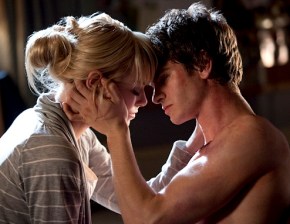
 Andrew Garfield dons the webbed onesie for an unwarranted reboot of the only-one-decade-old Spider-Man film franchise, retelling his origins… but with a twist! Cos, y’know, the last version was only out about 10 minutes ago.
 some of the action sequences are alright. Mercifully, the much-trailed first-person segments are cut down to a minimum; kind of a “we made this so we ought to use it, but we’ve realised everyone was going to hate it”.
 Not that it pays off — instead it just feels like the action scenes were bunged together because, hey, some of the fans want that stuff, right?

 Notorious (to me) for unjustly beating
 Remember
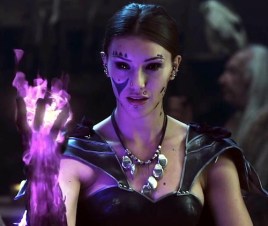 Director Gerry Lively helmed the preceding D&D movie and some stuff you’ve never heard of, as well as serving as DoP on such auspicious-sounding films as
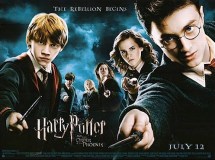
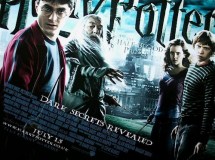


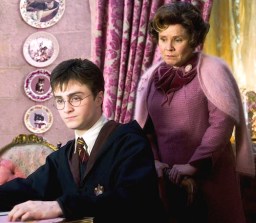 Their main weapon is Dolores Umbridge, perhaps the series’ most despicable villain, because she is so horrendously plausible. She seems to be all sweetness and light, but it masks a dangerous streak that sees her eliminate any fun from the school and, in one of the most sadistic sequences in either the novels or the films, she has Harry write lines with a magic quill that cuts each one into the skin of his left hand. The Potter series actually has its share of nuanced villains, but Umbridge is thoroughly unlikeable. Though she’s defeated and carted off at the end of Phoenix, she resurfaces in
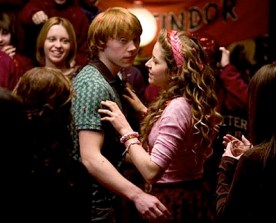 But not so. Yates approached his follow-up with a stated aim of introducing more comedy, believing the three leads to be talented in that area but not having had a chance to show it in his dour first film. So here we get a whole subplot given over to Ron’s attempts to join the Quidditch team, as well as much focus on the trio’s romantic entanglements — teenage love always being a good topic for humour. The film is not without its dark side, but peppered liberally throughout are those comedic subplots and scenes that are liable to see the viewer laugh perhaps more than in any other Potter film. It’s easy to miss this element — the main plot is, as always, getting darker and more serious — but once it’s been highlighted (as the makers do in the film’s special features) I think it becomes very noticeable.
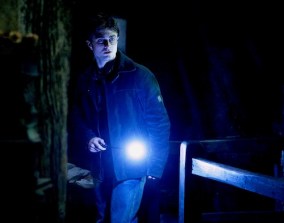 grading the film in perfectly-calibrated conditions so they can really push it to extremes, not considering how most end-users will view it; and, much like fast-cut action scenes, an over-familiarity with the material that means the director/editor/grader can see what’s going on because they’ve watched it dozens (or hundreds) of times, which doesn’t work for a first-time viewer in the middle of the film. As you may be able to guess, I’m not a fan.
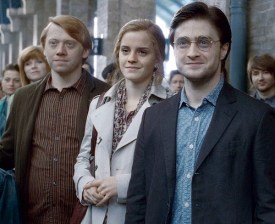 not a sudden smash-cut to a few decades on where we see how some characters’ lives have developed. I know some people complain about
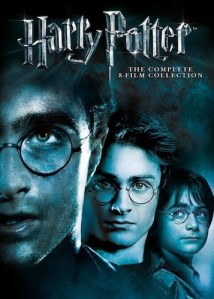 It’s hard to offer a final summary of the Harry Potter series. Some people see them as mediocre and overblown; for others, they are their life. Personally, I think they develop from sometimes-uncertain roots in the early films, to a flourishing series of epic fantasy movies. There are often niggles of one kind or another, be it acting (I forgot to discuss Emma Watson’s eyebrows!), or cartoonish designs, or too-faithful adaptation, or abbreviated adaptation, or what have you — but none of these are ever-present. More importantly, every film offers something to enjoy, and the growing maturity — of not only the cast, but also the filmmaking — means their impact only increases when viewed as an entire eight-film saga.
 September 1881: after admiring their leader for years through cheap magazine stories, 19-year-old Robert Ford manages to hook up with the James Gang. Little does he suspect that, just seven months later, he will be responsible for the murder of his idol, Jesse James. (That’s not a spoiler, it’s in the title.)
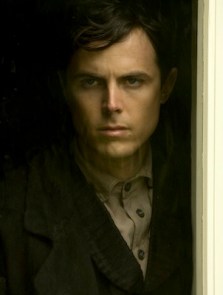 Let’s be clear, though: this is not a film for everyone. This is not an action movie set in the Wild West, which might be what’s expected from a Hollywood studio movie starring Brad Pitt. Apparently director Andrew Dominik intended to make a film with a Terence Malick vibe, so I read after viewing, which chimed with me because “Malick-esque” was one of my foremost thoughts during viewing. This is a slowly-paced two-hours-and-forty-minutes, with more shots of crops blowing gently in the breeze or riders approaching gradually over distant hills as there are flashes of violence. Despite what the studio wanted, this is not a fast-paced action Western, it’s a considered, sometimes meditative, exploration of character and theme.
 Jesse’s mood swings are more obvious than Ford’s, but Pitt makes them no less unlikely. At times charming and a clear leader, at others he is a genuinely tense, frightening presence, without ever needing to resort to the grandstanding horror-movie grotesques offered by (Oscar winners) Daniel Day-Lewis and Javier Bardem in There Will Be Blood and No Country respectively.
 This must also be thanks in part to director Andrew Dominik. Every last shot feels precisely chosen and paced. Of course, every shot in every film has been chosen and placed where it is, but the amount of thought that’s gone into that might vary. Jesse James somehow carries extra weight in this department, with no frame in its not-inconsiderable running time wasted on an unnecessary angle or take that’s allowed to run even a second too long. Somewhat famously, there was a lot of wrangling over the film’s final cut (delaying its release by a year or more), with the aforementioned debate between something faster and something even slower: a four-hour version screened at the Venice Film Festival, to a strong reception. Sadly, the intervening years haven’t seen that cut, or any of its parts, resurface (to my knowledge). That’s an hour and twenty minutes of material and I’d love to know what’s in them.
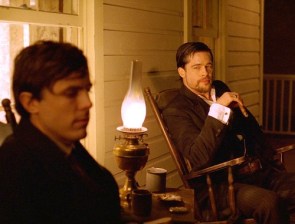 because he’s obsessed with the notoriety of Jesse. Later, once the titular deed is done, he becomes an actor (not without talent, as the narration informs us) and re-performs the act that made him famous hundreds of times. It’s his legacy, however, to not be as well-remembered as his victim; to not be as well-liked, even; not even close. There’s something there about the pursuit of fame for its own sake, if nothing else.

 As Jason Bourne flits around London and New York making trouble for what’s left of Treadstone, a group of shady men go about safeguarding their own secretive activities. When Bourne exposes Treadstone, a series of convoluted join-the-dots links means it could bring them down too, so they set about destroying their risky initiatives, including killing a bunch of medically-enhanced operatives. What they didn’t count on was one surviving…
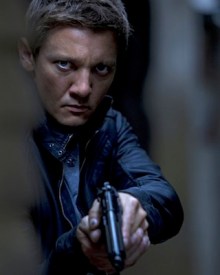 For my money,
 Perhaps also, after four films, he’s too close. Clearly that has advantages for remembering the intricacies of the timeline and continuity, especially with the trilogy’s increasingly complex web of conspiracies and conspirators; but maybe Gilroy has become too deeply embroiled in that. After all, he thinks it’s OK to spend the first half hour of the film connecting up the dots between the previous story and his new plot — who really wants that? That’s for geeky fans to do later.
 At the end, the two films come together, adding a few seconds more story to what we saw at the end of IV, and ready to move on with unified purpose (well, sort of) in
 is wasted staring at monitors; Albert Finney is literally wasted, his one meaningful moment relegated to the Blu-ray’s deleted scenes section; Zeljko Ivanek gets a pivotal character but is underdeveloped and so his talents are wasted; and some actors from previous Bourne movies appear to be credited merely for use of their photos, until they turn up for ten-second cameos near the end that you’d rather weren’t there because it means someone is planning on a Bourne 5.
 #44 The Amazing Spider-Man (2012)
 #48a Harry Potter and the Deathly Hallows: Part 1 (2010)
 The clear victor is the Alfonso Cuarón-helmed franchise-revitalising third film,
 You can’t have a list of great car chases without including at least one Bond. Indeed, I could easily fill this top five with that series alone. TND wins because of two stand-out sequences: Bond driving a BMW saloon around a car park in Germany, which sounds dull as dishwater… except he does it via remote control and the car is stacked with gadgets; and a motorbike vs helicopter chase on the streets — and rooftops — of Saigon.
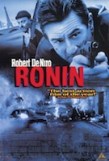 To bring extra swish and excitement, the Fast & Furious films often use CGI in their car chases. Ronin, however, does it all for real — often with the actual actors in the cars. There are several chases in Ronin, but the extended climax through the tunnels of Paris is of course the best. The film used 300 stunt drivers and they wrecked 80 cars, but the exhilaration provided is entirely worth it.
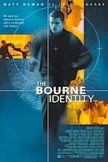 Many times, a great sequence is born out of an idea to innovate or do something different (to go back to Tomorrow Never Dies, the bike chase was a deliberate counterpoint to GoldenEye’s tank chase), and the first Jason Bourne film is no exception: he’s in a Mini! Americans always find small cars striking (see also: Da Vinci Code’s Smart car), but at least it’s put to good use — he drives it down some stairs!
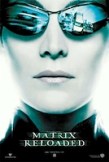 For sheer throw-everything-at-the-screen bombast, you can’t beat the car sequence in the first Matrix sequel — it was so big, they had to build their own stretch of freeway! Of course, it’s as much about the fighting going on in and around the cars as it is the chase, and there are bikes and lorries and stuff involved too — including a spectacular head-on collision — but it’s all road-based, so it counts.
 I wanted to avoid having two Bond films, and I tried, but I couldn’t think of anything significantly better than the opening minutes of 2008’s widely maligned Bond adventure. Cut like lightning, almost intuitive and impressionistic rather than classically clear, and viscerally destructive throughout, it demands your attention — and indicates the kind of pace the rest of the film will move at. Then the reveal at the end makes it all the sweeter.
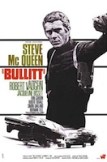 Read most lists of the greatest car chases and one of these will be at the top, usually with the other in second place. They’re iconic for different reasons: there’s The French Connection’s frantic illicitly-filmed chase between Gene Hackman and Brooklyn’s elevated railway; and there’s Bullitt’s eleven-minute pursuit around the streets of San Francisco, with Steve McQueen and co gaining plenty of in-car air-time on those famous stepped hills. So iconic, I know this much without having seen either.
 The first Monty Python theatrical release (four more would follow; five if you count last year’s
 For my money, it becomes a bit tiring watching sketches for so long, even with the attempts made to link them together — it doesn’t form a narrative, so much as a series of casual crossovers that would make re-arrangement in an edit impossible. In and of themselves, however, many of the skits hit their mark.
 Reportedly the Pythons didn’t consider the film a success, hampered by interfering higher-ups and a ludicrously low budget (

