

Roy William Neill | 66 mins | DVD | 4:3 | USA / English | PG
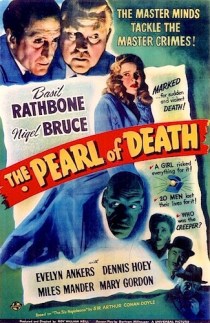 The Pearl of Death is one of the better-regarded films of the Basil Rathbone Sherlock Holmes canon, but somehow it didn’t quite click for me. That doesn’t meant there isn’t a lot to enjoy, however.
The story this time is adapted from Conan Doyle’s The Six Napoleons, and the main mystery seems to be pretty faithful. It’s a rather good one too, involving the hunt for a stolen item — the titular Borgia Pearl — that has been hidden in one of six china busts — the multiple Napoleons of Doyle’s title. It’s dressed up here with some nice touches: Holmes first rescues the priceless Borgia Pearl, but then quite spectacularly loses it. The notion of Holmes being doubted, of having to prove himself to reassert his reputation, is a good one — one recently borrowed by avowed Rathbone fans Moffat & Gatiss for their modern-day Sherlock, in fact. The film attempts to build up villain Giles Conover as a Moriarty-level nemesis, including borrowing some text from The Final Problem to describe him. Unfortunately, Miles Mander doesn’t quite convey the menace to pull it off, but Conover is a fair match for Holmes in places.
 Elsewhere, Nigel Bruce gets to indulge in a slapsticky scene that, as ever, people who dislike this interpretation of Watson would be happy to do without. Also worth noting is the female lead, British actress Evelyn Ankers: she was a regular fixture of Universal’s horror features, terrorised in no less than The Wolf Man, The Ghost of Frankenstein, Son of Dracula, The Mad Ghoul, Captive Wild Woman, Jungle Woman, Weird Woman, The Invisible Man’s Revenge, and The Frozen Ghost! (Plus a previous Holmes film, Voice of Terror, to boot.)
The series’ regular director, Roy William Neill, manages his usual atmospheric and exciting touch in places, but others are a slight let down — both involving characters kept in shadow and their eventual reveal. The opening sequence features a disguised Holmes; supposedly disguised to the audience too, though I imagine many will guess it’s him. He’s mostly kept in shadow, on the edge of frame, or with his back to the camera — it’s quite effective, in fact. Sadly, there’s no commensurate whip-the-disguise-off reveal.
Later in the film, the monstrous Hoxton Creeper is shown in silhouette most of the time, with everyone talking about how disgusting ‘it’ is. Unfortunately, when it comes to finally revealing his hideous visage in the final moments… he just sort of turns around to listen to a moderately interesting conversation. Considering all the points when the Creeper could have been revealed to good effect, 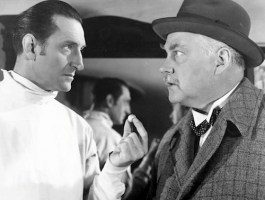 Neill somehow managed to pick one of the least dramatic. Neither of these reveal fudges are ruinous, of course, and are outweighed by the handling of sequences like Holmes setting off the museum’s alarm, the ensuing robbery, the villains stalking round a potential victim’s house, and so on. Still, I was surprised to find them so wanting.
The Pearl of Death won’t find a place amongst my very favourites of the Rathbone Holmes series, but I feel I may have, for some reason, been expecting too much from it. Only niggles and incidental points let it down, rather than anything fundamental, and a future reappraisal may one day bump it up in my estimation. Nonetheless:

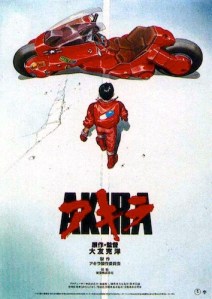 For many Westerners of a certain generation, Akira was their first (conscious) exposure to anime. Not so me: a step or two down,
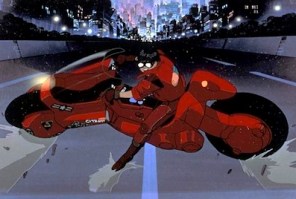 The visuals remain something to be savoured; they’re probably the film’s strongest point, in my opinion. Akira was an expensive production and it pays off on screen. It’s not just the bike chases that I appreciated either, while an extra decade of experience made the ending a bit less freakish! The other strong point is the audio. The BD’s booklet goes on about “hypersonic” sound. I’ve no idea if that worked on my system, but it sounded fantastic regardless.


 Winner of the highest number of Oscars for Best Foreign Language Film (five), the Italian writer-director is “one of the most influential filmmakers of the 20th century”. He’s the only member of TSPDT’s Top 250’s top 10 (at #4) that I’ve not seen anything by. Significant gaps in my viewing include

 One of the founders of the French Nouvelle Vague (alongside the likes of Jean-Luc Godard, who I have seen films by), Truffaut is still probably best known for his first film,
 Though only at #52 on TSPDT’s Top 250 (there are 11 above him I’ve not mentioned), there’s no denying the notoriety of Herzog, the man who once got shot while being interviewed by Mark Kermode, amongst other bizarre anecdotes. Key works include
 The theatrically-inclined Australian scores just 3 on TSPDT’s ranking, their lowest awarded mark. Only five others suffer this ignominy, and the only one I’ve heard of is Ed Wood. According to TSPDT, none of Luhrmann’s films are Highly Recommended, Recommended, or even Worth a Look. The best he can hope for is
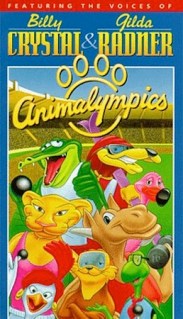 Originally commissioned as a pair of specials for US TV, Animalympics was dropped by the network when the US pulled out of the Moscow Olympics, then repurposed by its makers as a feature film. You might be able to guess the plot from the title: various animals compete in an Animal Olympics. It’s a series of sketches, essentially, although arranged to provide some narratives throughout.
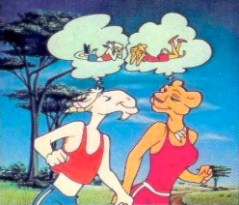 As per anything which is made up of sketches, some bits are funnier than others; and, as American animation, it is primarily aimed at kids, though I thought it was enjoyable enough for grown-ups too. Gouldman’s score is catchy in places, but nothing to rival The Things We Do For Love or Dreadlock Holiday or… I could go on for a few, actually. I’m just going to go listen to some 10cc…
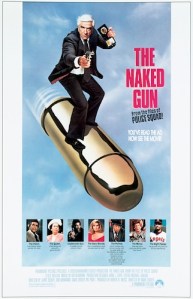 Classic spoof from the makers of
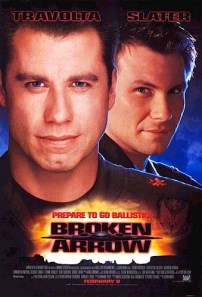 US Air Force pilot Jon Travolta crashes a plane, steals a nuke, and former friend and colleague Christian Slater must stop his dastardly plan in this ever so ’90s actioner.

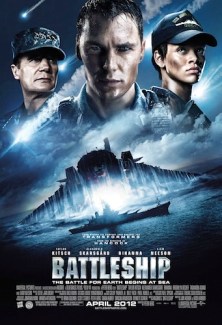 Battleship never sounded like a good idea. An adaptation of a board game that in no plausible way resembles real life? At least
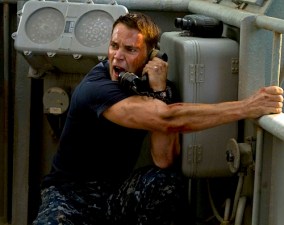 hobbling up a mountain on prosthetics to realise he’s still worth something as he saves the day. America, fuck yeah! And when the main battleship is ruined, our plucky heroes have no choice but to co-opt the museum piece (literally) WWII ship; and because most of their crew is dead, the museum guides — all of them septuagenarian WWII vets — have to man their ship once again. To defeat those invading scum, just like before!

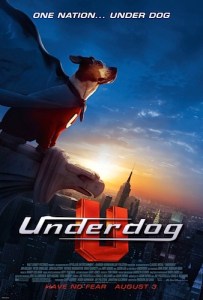 In this big screen live-action version of some old US cartoon, a dog gets superpowers and, naturally, becomes a superhero. That’s pretty much it.

