Downton Abbey (2019)

2019 #128
Michael Engler | 122 mins | cinema | 2.39:1 | UK & USA / English | PG / PG
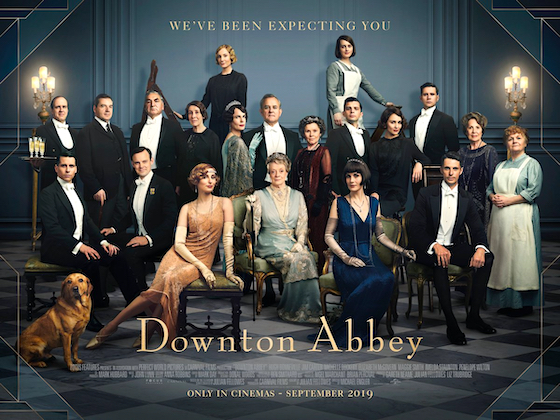
Downton Abbey

As the 2020s loom, with the world in a scary old place for a whole host of reasons, why not retreat to the safety of the 1920s, when posh toffs ran the country because their birthright had put them there rather than because the hoi polloi had actually chosen to vote for them in some act of retrograde nationalism. Downton Abbey does actually feature a subplot where a group of working-class servants secretly plot to overthrow the system… but the system in question is the one about who gets to serve the King and Queen their dinner. The working classes fighting amongst themselves about something fundamentally unimportant while the upper classes carry on serenely above them? It’s almost allegorical, although I suspect not on purpose.

No, like the TV show it’s a sequel to, Downton Abbey is much too busy being a comforting blanket of “it was better in the old days” jollity to bother with social commentary. Creator/screenwriter Julian Fellowes throws in the odd nod to more progressive concerns (republicanism, LGBT rights, the fading fortunes and relevance of the aristocracy), but they’re no more than hat-tips in the general direction of modernity. It’s as if he’s trying to say, “yes, I know this is all terribly outdated,” before adding, “but why don’t we just enjoy it for a bit, eh?” Well, we do all need an escape into fantasy sometimes, and not everyone likes it in the form of a bespandexed private army battling purple aliens.

Certainly, you’ll need to be prepared to engage with the concerns of this rarefied world if you want to find any drama here, where major points of jeopardy include whether there’s enough time to polish all the silver and if they can manage to put some chairs out while it’s raining. Sure, there are subplots including things like an assassination attempt and a police raid on a gay bar, but they’re not treated as being nearly so significant as who cooks dinner.

Polishing the silver. Not a euphemism.

So, yes, it’s mostly puff about pomp and pageantry — if you were after a film to perfectly encapsulate “heritage cinema”, you could hardly do better. But who would’ve expected anything else? Surely we’re all familiar with the TV series, even if you’ve never seen it, and naturally this big-screen version continues in a similar vein. At its core the series was really just a posh soap, and that style of melodrama is recreated here also: the engaged kitchen maid’s eye is caught by a hunky plumber; what’s behind the uncommonly close relationship between the Queen’s lady-in-waiting and her maid; will someone’s new royal appointment force them to miss the birth of their child; and so on.

If it’s beginning to sound like there are a lot of different storylines, well, there are. That’s another legacy of it originally being an ensemble TV show, of course: there’s a big, broad cast and every character must be given their due. Consequently, some reviews have accused the film of having no story, which I think is unfair. The primary plot is simple — literally just “the King and Queen visit Downton Abbey” — but it’s there. And the way the film chooses to depict this story — as a collage of subplots that, as a collective, show how the visit is prepared for and executed from the perspectives of a variety of roles at every level — is hardly an unheard of cinematic format for providing an overview of an event or situation. The reasons for Downton taking this approach are rooted in its televisual origins, but if you wanted to consider it divorced from that context then you’d merely see a structural similarity to something like Nashville, for example.

Of course, the fact that Downton is a sequel to a six-season TV series is something most of us won’t ignore, whether because you’re a dedicated viewer coming to this as the 53rd episode, or you’re a neophyte with a background awareness that anything you don’t understand may be because it was explained in the TV show. I find myself in the slightly unusual position of someone who straddles both these stools: I stopped watching somewhere in the third series, so I know who most of the characters are and where their stories began, but I’m unaware of what went on for them in later years and who some of the later additions are. Fortunately, the highly structured class divide of the setting makes it easy to get a grasp on most things. Characters’ backgrounds are not as clearly explained as you’d expect to find in a truly standalone movie, but I think the fundamentals can be ascertained well enough. That said, I say that as someone who had a leg up from watching some of the series, so a total newcomer may find it more bewildering.

What's the deference?

One thing that’s interesting, returning to this world as someone who skipped a few years of it, is how much the emphasis has changed in places. By which I mean, some characters who once had a major role are now given short shrift. For example, Hugh Bonneville has always been the de facto lead face of the programme, which makes sense as he’s Lord Grantham, head of the Downton household; and he’s still top billed in the opening credits, although I think that may be more a happy accident (I believe it listed the entire returning series cast in alphabetical order) than an indication of status. Either way, he has very little to do here, with other cast members taking centre stage. The real headliner in the series was always Maggie Smith’s acerbic Dowager Countess, and that continues to be the case here, as she snags both the lion’s share of the funny lines and the film’s most genuinely emotional scene. It feels like something of an ode to the venerable actress herself as much as it is a bit of in-universe business, and who could really begrudge such merited reverence? As to the rest of the cast, there are plenty of reviews out there that approach the film in more detail from either a fan or newbie perspective, so if you’re interested in specifics it may be worth seeking those out.

Some might argue this movie could’ve just as well turned up as a TV special, and, story-wise, it’s hard to disagree. Nonetheless, director Michael Engler and DP Ben Smithard have given proceedings a bit of big-screen pizzazz, using a 2.39:1 frame to accentuate grander shot choices and occasional cinematic flourishes, and much of the photography exhibits a warm-sunlight glow that makes you wonder if they somehow shot the whole thing during golden hour. And while too many big-screen re-dos ignore the emotive power of familiar music (see the Spooks movie for one where I specifically complained about it, for instance), here composer David Lunn’s familiar Downton theme is used to striking effect. I must admit that, even as someone who didn’t stick with the series and hasn’t watched it for years, the opening minutes gave me goosebumps.

Is the sun setting on this empire?

Truth be told, that’s not a terrible analogy for my reaction to the movie as a whole. Its near-fetishisation of regressive social modes should be distasteful, and some of its soapy scenes are accompanied by clunky dialogue and stiff acting that make it feel like you’re watching a period-dress episode of Coronation Street; but it can also unleash a sharp wit or well-constructed bit of farce (I laughed often), and there’s a certain majesty to the scenic, pretty-postcard photography that sweeps you up into its less complicated world. If you take it for what it is — a portrait of a time gone by — then it’s a likeable little jaunt.

4 out of 5

Downton Abbey is in cinemas now.

Battle at Big Rock (2019)

2019 #127a
Colin Trevorrow | 9 mins | streaming (HD) | 2.00:1 | USA / English

Battle at Big Rock

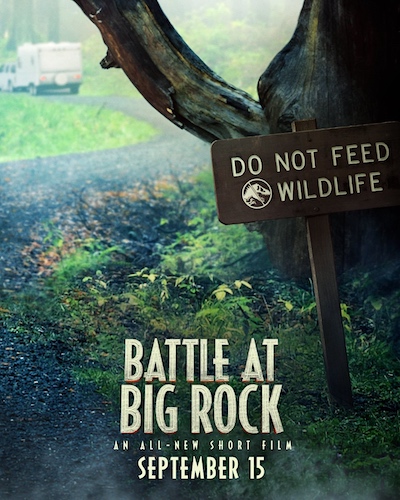
Surprised-announced by co-writer/director Colin Trevorrow on Twitter just a week ago (although, reading about it after the fact, it seems dedicated fans were already aware something was coming thanks to that regular modern blockbuster spoiler source: action figures), Battle at Big Rock is a short film entry in the Jurassic Park/World franchise, which premiered on the US FX channel on Sunday night (early Monday morning for us Brits) and is now on YouTube.

Set one year on from the cliffhanger-ish ending to the last film, Fallen Kingdom, this short presents a vignette in the Jurassic world that will help bridge the gap between the previous feature and 2021’s third/sixth instalment. But aside from that large franchise-minded goal, it’s also a chance to see some different characters have a different kind of encounter within the films’ universe.

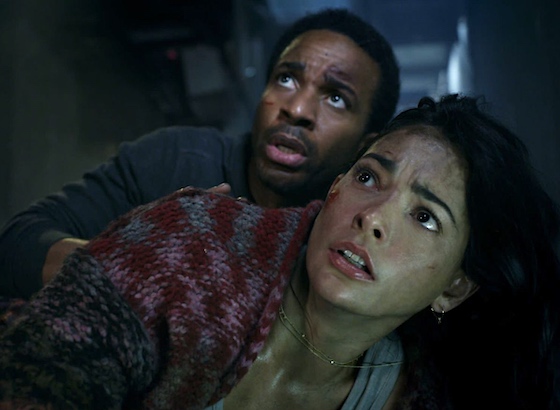
Well, I say “different” — dinosaurs fight dinosaurs until humans are caught in the crosshairs, then a big toothy dinosaur goes after said humans. The real difference is that this happens to just an ordinary family out on an ordinary camping trip in California, not people who’ve chosen to go to a remote island filled with giant prehistoric lizards. Of course, they’ve decided to go camping in a region where it’s known a bunch of the aforementioned giant prehistoric lizards escaped a year ago and might be roaming about, but whatcha gonna do? When you gotta go camping you gotta go camping, I guess. Also, they’re not white, which is a notable characteristic in this franchise, unfortunately. (That lack of representation across five feature-length movies is hardly rectified by one short, but I’m certain it was part of the intention.)

A family-sized snack

What Battle at Big Rock lacks in originality it makes up for with brevity. This is a concise hit of dino action, cramming many of the franchise’s familiar thrills into a sub-nine-minute package. It also looks great for a short film. Yeah, sure, it still has the backing of Universal Studios — this isn’t exactly an indie production — but it’s not got the full weight of a theatrically-released blockbuster behind it, either. Nonetheless, it manages to include two species of dinosaur, one achieved via a mixture of CGI and a genuine animatronic, and adventure-movie set-piece-level action. It all looks mighty pretty too, although the nighttime fire-lit photography is no doubt partially about hiding the budgetary limitations.

Indeed, the film’s production is possibly its most impressive aspect. It was actually shot back in 2018, so they’ve kept it hush-hush for the best part of a year. And it can’t be easy to keep quiet a film shot on location, and outside of moviemaking’s usual stomping grounds, in Ireland, where apparently there’s a grove of trees that look exactly like a North Californian national park. Presumably the real deal was a no-go because they’d’ve been spotted even more easily there; but, equally, you’d think a big American production team rocking up in Ireland would attract attention — especially when they had a giant animatronic dinosaur in tow. Maybe the locals just presumed it was Game of Thrones

Anyway, the end result is a success, both as a little burst of dinosaur action for those of us who enjoy such hijinks, and as a tease for events we’ll see in the franchise’s next major instalment. Rumour has it the short’s budget spiralled beyond the limits Universal originally set, but, considering the ill-will generated by the underwhelming Fallen Kingdom, I’m sure they’ll consider the audience’s re-stoked interest (a sentiment I’ve seen expressed repeatedly across social media today) to have been a worthwhile investment.

4 out of 5

Battle at Big Rock is available on YouTube.

John Wick: Chapter 3 – Parabellum (2019)

2019 #127
Chad Stahelski | 131 mins | Blu-ray (UHD) | 2.39:1 | USA / English* | 15 / R

John Wick: Chapter 3 - Parabellum

The action-man with the second most quotable line about being back is, er, back — again — for the third chapter in the ongoing saga of what happens if you kill a man’s dog. Basically, lots of people die. Quite right too.

Chapter 3 begins exactly where Chapter 2 left off: John Wick (Keanu Reeves) has been made “excommunicado” from the organisation that controls the criminal underworld, the High Table, and he has just an hour’s grace before every assassin in the world will be out to claim his life. He’s just one man, with a $14 million bounty on his head, in a New York City where about 50% of the population seem to be highly trained killers — as Winston (Ian McShane) says, his odds are “about even”.

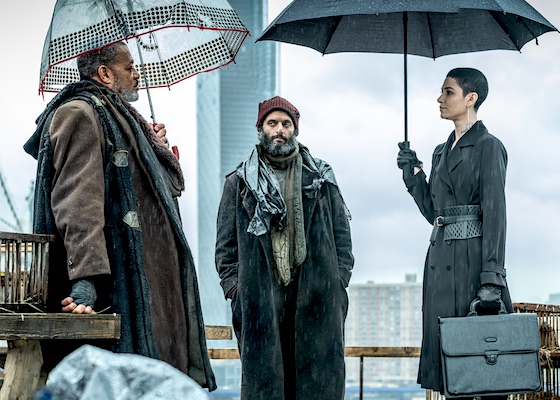
And so the first half-hour is basically nonstop action, first as Wick desperately tries to prepare for the all-out assault coming his way, and then as he faces it. The series’ reputation is built on its lengthy, stylish, inventive action sequences, and Chapter 3 does not disappoint, with some of its best material coming right out the gate. I feel like they could’ve expanded this first half-hour into an entire movie (i.e. John on the run, fighting endless assassins, until he finds some way out of his bind) and I’d’ve been happy with that — it would’ve mirrored the simplicity of the first one. But the previous film’s cliffhanger is not so simply resolved, because what John did to earn his excommunicado status cuts deep into the mythology of this world — oh so very deep — and the fallout of his actions, well, that’s the plot of the movie. And not just for John himself, because a High Table Adjudicator (Asia Kate Dillon) rocks up to decide the fate of any person or organisation who might’ve given John a helping hand when they really shouldn’t, including Winston, the Bowery King (Laurence Fishburne), and the Director (Anjelica Houston).

Adjudgement day

The first John Wick had a bit of fun introducing us to a rule-driven shadow-world of assassins. The first sequel put a lot of stock in extending that mythology. Now, the third chapter thrives on it. The first film’s plot was a straightforward revenge thriller with some extravagant flourishes; for the third, we’re (to borrow a phrase from Reeves’ other major action franchise) right down the rabbit hole. Just like the famed action sequences, if you’re onboard with it then there’s a ton of fun to be had; but if that kind of thing bores you, there’s little respite from it. Extravagant brutal action and gradually-unveiled ever-deepening mythology: these are John Wick’s twin raisons d’être.

Half the fun of how the films present their mythology lies in the way every character seems to be completely aware of all the rules. No one ever needs a symbolic coin or a judgement’s motivation explained to them; they inherently understand its significance or reasoning, the status and power that’s conferred. But we don’t know what any of it means, of course, because this is a fictional world that we’re being inducted into as and when parts of it become relevant to the narrative; and so we’re led along on a magical mystery tour of what these arcane rituals might mean and where they might lead us. As I said, it’s quite a particular kind of storytelling, and if it doesn’t engage you then that’s that, but if you do find it enjoyable then the John Wick films are spinning it into a fine art.

A hundred bad guys with swords? Who sent those goons to their lords? Why, John Wick!

Naturally, nowhere is the film’s sense of artistry more on display than in the fights. For all the mythology, director Chad Stahelski and the small team of screenwriters never forget what really made people love John Wick in the first place: the gonzo action. There’s a lot of competition in that arena (not just its own preceding instalments, but the past decade’s acclaimed imports like The Raid and its sequel, The Villainess, The Night Comes for Us, et al), but Chapter 3 is up to the challenge, boasting continual inventiveness among the slickly choreographed and expertly performed carnage. One innovation includes dogs getting involved in the action — appropriate for a series all about the love of pooches. The mutts in question are commanded by an old acquaintance of Wick’s, played by Halle Berry, who trained with the dogs so she could actually control them during takes. It’s that level of dedication that marks out the action here.

It all looks great as well, with the camerawork boasting precise movement and impressively long takes to celebrate the action and how well it’s been achieved. The actual phototography is fantastic too, the light looking gorgeous whether in the neon glow of New York or the sand-orange Moroccan desert (I watched it in UHD, where it’s a real showcase for why HDR is a bigger benefit than pure resolution; though that’s not to discredit the film’s crispness). It’s complemented further by the design work, in particular a glass-house set where several key scenes take place, which reportedly cost $4 million. On any technical merit you care to name, Chapter 3 is exceptional.

Unleash the dogs of bellum

That said, while there’s fun to be had throughout, by the end I felt like the story was the film’s real problem. Not the tone and style that I praised earlier (though it’s easily the most fantastical of the series so far, which might turn some off), but its significance: it ultimately feels like merely a dot-join between Chapter 2 and the already-announced Chapter 4. The film’s Latin subtitle, Parabellum, translates as “prepare for war”, and that’s apt: this film is a preparation for the next. But maybe I’m being unfair. Maybe, when this series is all said and done, we’ll see that Chapter 3’s contribution to the overarching narrative is equivalent to the other films. However, at first blush, it feels to me like this is either a kind of linking passage, or maybe Chapter 3 Part 1. I guess only time — specifically, the time until after we’ve seen the fourth chapter (currently slated for May 2021) — will tell.

In the meantime, let’s not get too distracted from storyline niggles in a film that’s really about style over substance, in a good way. Chapter 3 certainly knows what boxes it should tick, and it ticks every last one of them with considerable flair. (Can you tick a box with flair? I bet John Wick could. After all, we know how skilled he is with a pencil…)

4 out of 5

John Wick: Chapter 3 – Parabellum is released on DVD and Blu-ray in the UK today.

* The film’s primary language is undoubtedly English, but IMDb also lists seven more. Each only pops up briefly, in short lines or exchanges here and there, which is why I haven’t cluttered the top of this post by listing them. But for the record, they are: Mandarin, Latin, Russian, Japanese, Italian, Arabic, and Indonesian. ^

The Predator (2018)

2019 #28
Shane Black | 107 mins | download (UHD) | 2.39:1 | USA & Canada / English & Spanish | 15 / R

The Predator

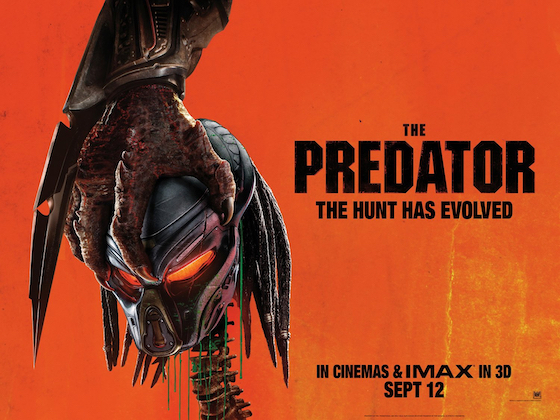
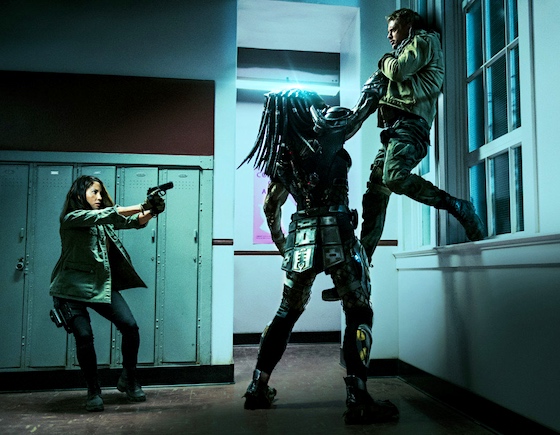
Some films take me a while to review because I just don’t get round to them. Some take time because I need to coalesce my thoughts. Others, I barely have any thoughts in the first place. The trickiest are the ones where I feel like there are many thoughts, but I have little idea how to express them. The Predator is definitely in that final camp. Why? Well, I thought it was quite a poor film… but I also sort of enjoyed it. Not in a Gods of Egypt way (that was kinda “so bad it’s good”; or maybe “so strange it’s good”), nor in a “I can see what they were going for, they just couldn’t quite get there” way, but in a… well, there’s the rub. The film undoubtedly has its problems, but it also has bits I was okay with; liked, even. What it feels like is a decent, middle-of-the-road-ish sci-fi actioner… that they then, for some unfathomable reason, deliberately dicked around with to make it kinda bad.

The reason I put it that way is the film’s sense of narrative, which is really messy. It feels like someone decided the movie was too long and so got the running time down by just pulling out scenes at random. There’s an extensive IMDb Trivia entry here that broadly explains what was changed in the edit and via reshoots, and that suggests it feels like a lot of stuff was chopped out because, well, it was. Other movies have survived such tinkering, but here it feels cack-handed. The end result doesn’t flow. You can follow it, but it’s oddly disjointed.

Other aspects suggest perhaps there were compromises on things like the age certificate. For example, at one point a female character is spared by the Predator because she’s naked. A vital piece of information for later? Um, no, it doesn’t come up again. So it’s gratuitous nudity? Well, not really, because it’s carefully shot so we don’t see anything. The film ended up going for an R, but perhaps they thought they’d have to make it PG-13? Either way, why is that ultimately pointless scene still in the movie?

“I don't care if you point a gun at me, so long as you don't get your tits out again!”

It’s not just the story and logic that’s mangled, there’s a real mishmash of tones as well. Writer-director Shane Black did such excellent work shepherding mixed moods in the superb Kiss Kiss Bang Bang, the perfect Nice Guys, and the best Iron Man film, but here he seems to have lost his handle on how to deliver the required blend of action, horror, and humour. Personally, I quite liked the humour, but sometimes it does just barge in out of nowhere. People who like their alien hunter action movies to be po-faced will not be impressed.

So, it’s an odd case all round. It’s an impossible movie to recommend because it’s certainly not good, but I also didn’t hate it as much as I feel I should’ve. It’s kind of a disaster, but it’s also… fine. Put it this way: one day I expect I’ll rewatch the Predator movies, and while I’ll probably skip AvP Requiem, I’ll include this one. Faint praise, I know.

Nonetheless, I really hope they make another Predator movie… mainly so I can see what they come up with for a title. Okay, sure, it’ll probably just be Predator: Meaningless Subtitle, but I live in hope they’ll continue this trend of adding a little something (pluralisation; the definitive article) and it’ll be called, like, Predatoring or something. (Hire me, Hollywood!)

3 out of 5

The Predator is available on Sky Cinema from today.

Once Upon a Time … in August 2019

After a couple of months that looked like a throwback to the 100 Films of six years ago (i.e. 2013, the last time I had two consecutive months with five films or fewer), August’s tally looks more like the blog’s past few years. I can thank Quentin Tarantino for that: as you may be aware (especially if you’ve been following my review roundups this month), in advance of Once Upon a Time in Hollywood he programmed a series of ten related movies — and I watched all of them, meaning he single-handedly pushed me back up over the ten-film threshold.

More on all that in a moment. As always, we begin with the list of my viewing…


#104 Dumbo (2019)
#105 The Favourite (2018)
#106 Model Shop (1969)
#107 Getting Straight (1970)
#108 Arizona Raiders (1965)
#109 Gunman’s Walk (1958)
#110 Road to Zanzibar (1941)
#111 Miss Pettigrew Lives for a Day (2008)
#112 Hammerhead (1968)
#113 Cactus Flower (1969)
#114 Easy Rider (1969)
#115 The Wrecking Crew (1968)
#116 Battle of the Coral Sea (1959)
#117 Bob & Carol & Ted & Alice (1969)
#118 Zatoichi at Large (1972), aka Zatôichi goyôtabi
#119 Viceroy’s House (2017)
#120 Once Upon a Time in Hollywood (2019)
#121 Rififi (1955), aka Du rififi chez les hommes
#122 Les diaboliques (1955), aka Diabolique
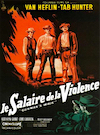
Gunman's Walk

Miss Pettigrew Lives for a Day

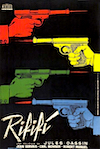
Rififi

.


  • So, I watched 19 new feature films in August.
  • That marks something of a return to normal after a low-totalling June and July. Although, as I said at the start, Quentin Tarantino is mainly to thank for that: if he hadn’t programmed that series of films, this month’s total would be down at nine. (Of course, if I hadn’t been watching those films then I might’ve watched others; but it certainly wouldn’t‘ve been as many.)
  • But 19 it is, and that makes it my best August in over a decade. In fact, you have to go right back to 2007, this blog’s first year, to find one with a higher total.
  • It also provides a boost to all my flagging stats, beating and increasing the averages for August (previously 11.9, now 12.5), 2019 to date (previously 14.7, now 15.25), and the rolling average of the last 12 months (previously 15.9, now 16.3).
  • This month’s viewing also included the 2,000th film listed on my reviews index… but as I haven’t posted 159 of those yet (egads!), I’m actually a long way off genuinely celebrating 2,000 reviews.
  • This month’s Blindspot films were a double-bill of exceptional French crime thrillers from 1955, Rififi and Les diaboliques. Watching two means I’ve caught up after missing one in June
  • …but I chose to watch another Blindspot at the expense of this month’s WDYMYHS film, so now I’m behind on that instead. Give with one hand, take away with the other, etc.
  • From last month’s “failures” I watched Dumbo (which was also an April failure), and that was it.


The 51st Monthly Arbitrary Awards

Favourite Film of the Month

Quite a few really good films this month, some of them expected (The Favourite, Once Upon a Time in Hollywood), others very pleasant surprises (Gunman’s Walk, Miss Pettigrew Lives for a Day), but my pick of the bunch is French crime thriller Rififi. The famous half-hour dialogue-free heist scene lives up to its hype, but the rest of the movie is no slouch either.

Least Favourite Film of the Month

While I was watching and writing about that Tarantino marathon, it all felt a bit underwhelming. Reconsidered with hindsight, I did like most of what he scheduled, but it suffered overall because the lows were pretty darn low while the highs weren’t that high. One was my clear least-favourite, however, and that was The Wrecking Crew. As I wrote in my review, “this is the kind of mediocre imitation that gives you a new appreciation for even the worst Bond movies.”

The Audience Award for Most-Viewed New Post of the Month
It’s Tarantino again! Well, sort of. The four roundups I posted of his movie marathon topped this chart for most of the month, with the opening double-bill and the spy-fi selection duking it out for first place (the former won that local derby, by just one view). But such tussles were rendered meaningless when my 50th TV column came storming in (powered, no doubt, by its review of Peaky Blinders season four) to dominate all other new posts. (Though, in terms of all posts, it didn’t even crack the top 20.)


Ohhh dear — I didn’t rewatch any films again. Having also watched none in June, and only one in July, that makes my average for the last quarter of the year 0.3 when it should be 4.2. Totted up, I’m 12 films behind schedule. There’s still four months of the year left, but if I make my goal of 50 I’ll be surprised — I’ll need to up that average from 0.3 to 7.3, a dizzying 24-fold increase.


Despite redoubling my viewing efforts, I still had plenty of misses this month. On the big screen, major titles included actioners Fast & Furious: Hobbs & Show (to use its marginally-shortened UK title) and Angel Has Fallen. Also of note was a theatrical re-release of Apocalypse Now. Well, as it was the new “Final Cut”, you could argue it’s not technically a re-release. It’s also now out on disc in the US, and it was due in the UK too, but late in the day it was pushed back to next month. Hey-ho.

Talking of discs, I picked up quite a few. New releases included Shazam (previously mentioned in April’s failures) and Indicator’s Marlene Dietrich & Josef von Sternberg at Paramount set, which duplicates the six films contained in Criterion’s similar set from 2018, as well as Avengers: Endgame in 3D (which is out tomorrow but turned up yesterday). Plus, thanks to sales and/or discounts, I’ve now added Black Book, Black Hawk Down (in 4K), The Cooler, and, erm, Iron Sky: The Coming Race to my kevyip. Also, just dropping in at the last minute thanks to a brief price drop on Amazon Italy, the Basil Rathbone Sherlock Holmes films in HD — so that’s another 14 movies. Sometimes I feel I need more restraint (though I’ve had my eye on that Holmes set for ages. Waiting has its benefits).

In fact, actually, there were several title of interest that made it to disc but I didn’t purchase: the new Hellboy (forgot to mention that whenever it was in cinemas!); the new Laika, Missing Link; the latest direct-to-video DC animation, Batman: Hush; and a rather spiffy new edition of In Bruges, which is limited and so I’m itching with worry that it’ll sell out before I allocate funds for it. But it’s looking like an expensive few months to come, with several big, limited, expensive box sets on my radar…

Finally, streaming offered nothing new in the movie department, with the possible exception of The Crystal Calls — the making-of for Netflix’s new Dark Crystal TV series, but it’s feature length and listed as a “Netflix Film”, so why shouldn’t it count as a ‘proper’ movie? In terms of non-exclusive stuff coming onto the streamers, added to my Netflix radar were mother!, 3 Idiots (a Bollywood film that’s on the IMDb Top 250), and Shakespeare in Love (one of only two Best Picture winners from the last 30 years that I’ve not seen), while Amazon offered Lars von Trier’s latest, The House That Jack Built, and a film more noteworthy for its troubled production history than anything else (because apparently it’s not very good) Tulip Fever.

That’s 39 films I’ve just listed, vs the 19 I actually watched. Really, there’s no hope…


Well, I’m away (again!) for the first week, so it’s going to be a slow start. But maybe later I’ll manage to get both Blindspot and WDYMYHS back on track at the same time. That’d be nice.