The Past Month on TV #48

I ended my last (ever so popular and entirely uncontroversial) TV column by asking, “what can possibly follow Game of Thrones?” Well, here’s the answer…

To get specific, this month’s column includes the first two seasons of BBC America’s big success, Killing Eve; the newest work from TV auteur Stephen Poliakoff, Summer of Rockets; the opening episodes of ITV’s new Downton-wannabe, Beecham House; and the latest season of internal affairs thriller Line of Duty. Plus the usual array of bits & bobs, and stuff I meant to watch but haven’t. (No Twilight Zone this month. It’ll be back.)

Killing Eve  Season 1
Killing Eve season 1Adapted (loosely, I understand) from a series of novellas, BBC America’s Killing Eve is a spy thriller with a difference. Quite a few differences, really. That’s no doubt part of why it’s been such a success. Its US ratings aren’t huge, but it seemed to be talked about all over Twitter when it was airing there, and it went on to win some awards. When it finally made it to UK screens some five months after its US premiere, UK viewers went even bigger for it (it gets more than ten times as many viewers here as in the US, according to the figures I found), and it scooped up even more awards.

If you’re not familiar with it, it follows lowly MI5 agent Eve (Sandra Oh), the only person to spot a pattern in a string of unconnected murders. They have indeed been carried out by one person, assassin Villanelle (Doctor Foster’s Jodie Comer), a quirky, fun-loving young woman who brings that same attitude to her skilful kills. When Eve is appointed to lead an MI6 task force hunting Villanelle, the two women become fascinated with each other, and a strange bond grows between them.

The espionage thriller aspect is a mixed bag. There’s an early plot line about a mole that ended with the most obvious “could be a mole” character being ‘unmasked’ as a mole, but then there’s a lot more intrigue to be found in the secretive machinations of Eve’s MI6 supervisor (Fiona Shaw), Villanelle’s handler (The Bridge’s Kim Bodnia), and just who is employing Villanelle and why.

But, as written by Fleabag creator Phoebe Waller-Bridge (who served as showrunner for the first season), it all plays out with offbeat humour and a certain degree of comical groundedness — even as the life of an international assassin is as wildly improbable as, well, it is, Eve’s life is a recognisable world of church hall bridge clubs, wheelie suitcases, and microwaved shepherd’s pie. The comedy that arises from these culture clashes is a big part of the show’s charm.

Killing Eve  Season 2
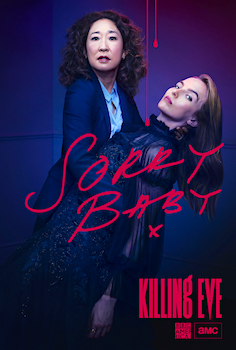
Killing Eve season 2The second season is still airing in the UK (people who didn’t even notice that five-month wait for season one got ever so het up when the US got the second run two months before the UK), so no spoilers here. Season two brings with it a new showrunner, and it does seem to lack some of that special spark in the writing, although to emphasise that as a criticism would be unfair: it’s still a lot of fun, and the cast know how to get the most out of the material. With Villanelle on the back foot and Eve diverted onto another serial killer case (a subplot which peters out long before it’s been used for maximum drama, sadly), there’s a different dynamic to the early part of the season. Later on (in the episodes that’ll air next month over here) things come together in new and surprising ways, which is more rewarding. It lacks the striking freshness of the first season, but it still has its moments. And, of course, it leaves things in an intriguing place for the already-confirmed third season.

Summer of Rockets
Summer of RocketsI’m not sure there are many people like Stephen Poliakoff working in TV nowadays — people who are seemingly given free rein to author standalone miniseries exactly how they want. I’m sure it’s more complicated behind-the-scenes than it looks from the outside, but it appears like Poliakoff’s reputation is solid enough that he’s allowed to write and direct with his own particular voice for entire six-episode stories. Honestly, I’ve skipped his last few, because I haven’t always found his work wholly engaging, but this espionage-tinged series sounded more up my street. Like Killing Eve, it’s an idiosyncratic take on the spy genre; though whereas that’s quirkily comical, Summer of Rockets is more rooted in period family drama.

It stars erstwhile Bond villain (and regular radio Bond) Toby Stephens as Samuel Petrukhin, a Russian-Jewish émigré who’s keen to be thought of as an Englishman but can’t quite escape his background in the highly structured society of the UK, especially as it’s 1958 and the Cold War is at its height. After accidentally befriending a society lady (Keeley Hawes) and her MP husband (Linus Roache), Samuel is approached by MI5 to feed them information about his new friends. But why? And are the men from MI5 actually on the level? Meantime, Petrukhin’s teenage daughter is being forced to attend society parties she has no interest in to help bolster the family’s status, and his son is being sent off to boarding school for the same kind of reasons. Apparently it’s semi-autobiographical — I guess that comes more from the latter subplots than the spying stuff. It all plays out with the pace and air of an auteur drama, making it feel a bit heavy-going and possibly impenetrable in its early episodes, but I warmed to it immensely as it went along. I love traditional, genre-based spy thrillers, but it’s also nice to see something that takes elements of that but plays it with a few different flavours.

Beecham House  Series 1 Episodes 1-2
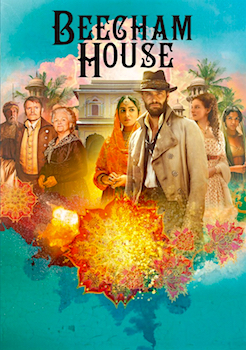
Beecham HouseIt’s been a few years since Downton Abbey ended now, so it makes sense ITV continue to search for a replica of its success. I think Victoria ticked that box for a while, until its ratings sloped off against Poldark… and so now we have Beecham House, which mixes a bit of Poldark into the familiar period soap opera mix. There’s also some pedigree behind the camera: the series is co-created, -written and -directed by Gurinder Chadha of Bend It Like Beckham fame. I think it’s meant to be vaguely educational, too, as it’s set in a period of Indian history a bit earlier than we’re familiar with from other British Raj dramas.

Well, I’m not sure how successfully any of that has translated onto the screen. Most of the main characters are white Englishmen and women, including the lead, John Beecham, a kind of Poldark-y, Indiana Jones-y figure — a former soldier who left the East India Company because he didn’t like their values. He believes India should be ruled by Indians, you see… although the current ruler is set up to be one of the series’ villains, as his suspicion of Beecham is standing in the way of our hero’s business plans. But it’s okay, because the house’s servants are all locals, and they’re a funny bunch so we like them. I guess your mileage will vary on whether the show is outright regressive or just not as progressive as it perhaps ought to be, given how they were talking it up.

But even leaving that aside, the exposition-heavy dialogue is frequently leaden and undramatic, leaving the cast floundering unsuccessfully to breathe some life into their characters. It all looks suitably lavish, thanks to copious location filming and a no-doubt-healthy costume budget, but the lack of polish where it matters will sink the programme unless it can somehow improve quickly. But then again, it is on ITV, so you never know, it might run for years and years at this level…

Line of Duty  Series 5
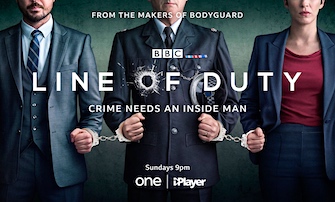
Line of Duty series 5Every series Line of Duty introduces us to a new case of possible police corruption for the dedicated boys and girls of AC-12 to expose, and every series it turns out to tie into the overarching tale of deep-rooted links between organised crime and a never-ending parade of bent coppers. But could they finally be getting to nub of it all? They’ve got a solid lead… and so, it seems, does their newest case: an undercover officer who seems to have gone native, but might actually be onto the top man behind it all. The real problem is, he suspects it’s good ol’ Ted Hastings, the head of AC-12 himself. Well, who better to run police corruption than the guy in charge of investigating corruption? And it forces his underlings to ask: are his borderline-illegal actions just bold moves to get the job done, or is he trying to cover for something?

So never mind “who watches the watchmen,” who watches the watchmen who watch the watchmen? Well, turns out it’s Anna Maxwell Martin, popping in for the last couple of episodes as a very by-the-book copper to interrogate the suspected mole to end all moles. Except she’s so by-the-book, so keen to catch out our one-time (and possibly still) hero, that you may wonder: who watches the watchmen who watch the watchmen who watch the watchmen? If that makes your head spin… well, that’s Line of Duty for you.

Also watched…
  • Deadwood The Movie — A feature-length one-off produced by HBO Films but airing on TV? I figure that’s as much of a film as most of Netflix’s original movies, so I’ve counted it as 2019 #95 and will review it separately later. For now, suffice to say it’s really good.
  • Glastonbury 2019 — Between living in the Westcountry and never really being big into music, Glastonbury is more something that’s liable to cause traffic and travel disruption than be a significant part of my cultural life. Nonetheless, this year I watched the headline sets from the main Pyramid Stage: Stormzy, which, er, wasn’t my kind of thing; and the Killers, which was. So that was nice. There’s tonnes of it still available on iPlayer, if you’re interested.
  • Historical Roasts Season 1 Episodes 1-2 — I’ve long nurtured the theory that British and American standup are different enough that they don’t necessarily translate well to the other audience, and this new Netflix series is doing little to dispel that notion. That said, it’s an entertaining enough concept and the results are amusing enough. Though its low scores on IMDb make me wonder if my pet theory is wrong after all…

    Things to Catch Up On
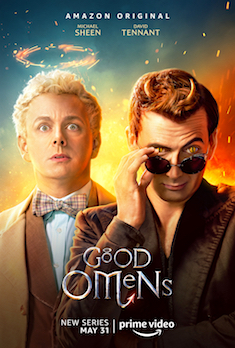
    Good OmensThis month, I have mostly been missing stuff left, right and centre due to my house move. Sorry to bring that up again, but it’s really upended my viewing schedule. Headliners include the Amazon/BBC adaptation of Good Omens — it’s one of my favourite novels, it’s adapted by one of the original authors, and it stars some of my favourite actors, so I’ve been very much looking forward to it; but because of all that I want to be able to sit down and watch it properly, and I’ve just not found the time yet. Another is the final outing for the MCU on Netflix, Jessica Jones season 3, which is perhaps blighted by the fact it’s 13 episodes long — that wasn’t a lot once upon a time, but as things trend down to 10 or 8 or even the good old UK standard of 6, it feels like more of a commitment. Other things that have been similarly afflicted include the feature-length Game of Thrones making-of, The Last Watch; film-to-TV sitcom adaptation What We Do in the Shadows (and I loved the movie, so I must get round to it); the other new sitcom starring Matt Berry, Year of the Rabbit; and Chernobyl, which I was just going to skip (there’s so much “great TV”, no one can watch it all), but the extremity of the praise it’s garnered has changed my mind on that one.

    Next month… Stranger Things 3 is out (in just a few days’ time, in fact), but I’m off on holiday, so it’ll have to wait ’til I get back.

  • Shaft (2000)

    2019 #37
    John Singleton | 99 mins | streaming (HD) | 2.39:1 | USA & Germany / English | 18 / R

    Shaft (2000)

    With there now being another ‘reboot’ for the black private dick who’s a sex machine to all the chicks (released a couple of weeks ago in the US, and available on Netflix today in the rest of the world), I thought it was about time I got round to the first ‘reboot’ (I saw the original yonks ago, long before this blog existed). I’ve put ‘reboot’ in inverted commas both times there because, despite the unadorned titles of both the 2000 and 2019 films, both are actually continuations of the ’70s original: Samuel L. Jackson plays John Shaft II, the nephew of the original Shaft, played by Richard Roundtree, who pops by for a cameo here. Jackson and Roundtree reprise their roles again in Shaft 2019-flavour, alongside Jessie Usher as John Shaft III.

    (Would it’ve been cool if they’d actually called this Shaft 2000? I feel like it would’ve. Maybe by the year 2000 the idea of sticking 2000 on a title to make it cool/futuristic was over, I dunno, but I feel like it would’ve worked. And because they didn’t, we’ve now got three movies called simply Shaft that all exist in the same continuity. Madness.)

    Anyway, back to the first time they rebooted-but-didn’t Shaft. Jackson’s character isn’t actually a private dick, but a proper copper… that is until sleazy rich-kid Walter Wade Jr (a hot-off-American Psycho Christian Bale) literally gets away with murder, prompting Shaft Jr to go freelance to catch his man.

    A black cop frisking a rich white guy? What is this, a sci-fi movie?

    This Shaft is almost 20 years old now (obviously), and yet all the white privilege bullshit that drives its story makes it feel like it could’ve been made yesterday. (Why are you so enable to evolve societally, America?) Other than that apparently-eternal timeliness, it’s a pretty standard kinda thriller, with most of its charm coming via an array of likeable performances. As well as the reliably cool Jackson and reliably psychopathic Bale, there are memorable early-career turns from Jeffrey Wright and Toni Collette, plus Vanessa Williams as Shaft’s cop colleague who lends a hand even after he leaves the force.

    The original Shaft spawned two big-screen sequels and seven more TV movies, but there was no such future for the new incarnation: Jackson’s disappointment with the film, plus a box office performance that was regarded as mediocre (although it opened at #1 and returned over $100 million off its $46 million budget), was enough to scupper a planned follow-up… at least until this year’s reboot-that-isn’t. Reportedly that’s not so great either (with a 31% score on Rotten Tomatoes, a 6th place opening in the US, and of course going directly to Netflix everywhere else), but, given the series’ history, I wouldn’t write Shaft off just yet. After the 29-year gap between Shaft Mk.I and Shaft Mk.II, and then 19 years between Shaft Mk.II and Shaft Mk.III, maybe in 2028 we’ll be treated to a film about child detective John Shaft IV. Naturally, the film itself will just be called Shaft.

    3 out of 5

    Stalker (1979)

    aka Сталкер

    2018 #100
    Andrei Tarkovsky | 162 mins | Blu-ray | 1.37:1 | Soviet Union / Russian | PG

    Stalker

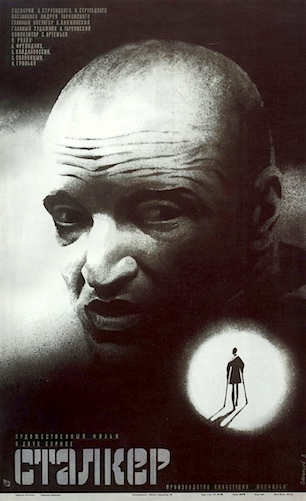
    Described by the blurb on its Criterion Collection Blu-ray release as “a metaphysical journey through an enigmatic post-apocalyptic landscape”, Stalker is… probably that… I guess…?

    Adapted from the novel Roadside Picnic by Arkady and Boris Strugatsky (which, according to critic Mark Le Fanu in Criterion’s booklet, is more hardboiled pulp than artistic thinkpiece), it follows a professional ‘Stalker’ (Alexander Kaidanovsky) — someone who can enter and navigate a mysterious restricted area known only as the Zone — as he guides two latest clients, a depressed writer (Anatoly Solonitsyn) and an inquisitive professor (Nikolai Grinko), into the Zone and to the attraction at its heart: the Room, a place which is rumoured to grant a person’s innermost desires.

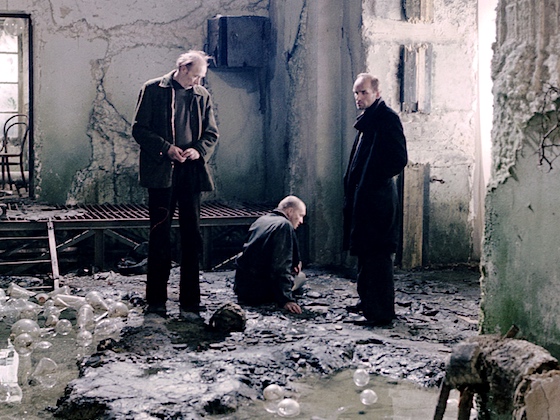
    That’s the plot, anyway. Considering it’s over two-and-a-half hours long and I just summarised most of the story, you know it’s About more than that. But suffice to say I didn’t get it. It’s just some blokes wandering around, being depressed, occasionally philosophising about bugger all; then the ‘stalker’ chap is depressed even more by his clients’ attitude at the end, for some reason; and then we see his kid has telepathic powers because… um… People think director Andrei Tarkovsky’s previous sci-fi film Solaris is slow and obtuse, but it’s pacy and its meaning is crystal-clear compared to Stalker. Indeed, watching this just made me want to watch Solaris again — that was a slow Soviet sci-fi I actually found thought-provoking and interesting. One inspired thought I will credit it with is the notion of what “innermost desire” actually means. We might think we know, but do we? If the Room grants, not what we choose to ask it for, but our true innermost desire, then it reveals the truth of our self to us… and we might not like what we find.

    Some blokes being depressed

    The film “resists definitive interpretation” says Geoff Dyer in a featurette on Criterion’s Blu-ray. It’s “a religious allegory, a reflection of contemporaneous political anxieties, a meditation on film itself […it] envelops the viewer by opening up a multitude of possible meanings,” adds the blurb. Oy. So is it profound or just pretentious? I think the lack of clarity — the lack of definitive interpretation — can be used as evidence for both sides. Its acclaim would suggest most think it profound, so I’m the one missing something. That’s always possible. Also, I’m always wary of calling something “pretentious” — that’s become too much of a catch-all criticism for people who don’t understand an artwork and want to blame the work itself rather than their own intellectual capabilities. So we’ll have to settle on me just not understanding it.

    Some of it does look good, at least… which is handy when long stretches of it are just staring at things in unbroken takes (there’s something like 142 shots, which is about one cut every 88 seconds). Whatever the film is or isn’t trying to say, I feel fairly certain it didn’t need to take so much time to say it.

    Equal parts Annihilation but without the exciting stuff, privileged white male angst, and flicking through a photo album of deserted urban environments at someone else’s too-slow pace — with strange dashes of The Spy Who Came in from the Cold and X-Men Origins: Jean Grey for good measure — Stalker is… definitely something.

    2 out of 5

    Stalker was viewed as part of my What Do You Mean You Haven’t Seen…? 2018 project.

    True Romance (1993)

    2018 #150
    Tony Scott | 121 mins | Blu-ray | 2.40:1 | USA & France / English & Italian | 18

    True Romance

    Directed by Tony Scott from Quentin Tarantino’s first screenplay,* True Romance is pretty much everything you’d expect from an early Quentin Tarantino screenplay directed by Tony Scott. It stars Christian Slater and Patricia Arquette as a pair of Bonnie and Clyde-ish lovers, who accidentally steal a load of cocaine from her pimp and end up on the run from the mob.

    At first blush, I’d say this feels much more like a Tarantino movie than a Scott one. It’s all there in the dialogue, the subject matter, the characters — it’s everything you’d expect from early QT: verbose, funny, littered with pop culture references, violent. It’s well paced, too; not exactly whip-crack fast, but also never slow or draggy. It is shot more like a Scott flick than a QT one, but only somewhat — it lacks both the slick flashiness we associate with Scott’s early work (Top Gun, Beverly Hills Cop II) and the grungy hyper-editing of his later stuff (Man on Fire, Domino). That said, some scenes (like one between Arquette and James Gandolfini’s underboss in a motel room, for example) are shot like Tony Scott to the nines, reiterating my opening point.

    Other observations: There’s one helluva supporting cast — it’s just littered with famous names in roles that only last a scene or two. (I could list them, but that might spoil the fun.) The sweet plinky-plonky score by Hans Zimmer is so unlike either his normal stuff or this genre of movie, which is no bad thing. On its original release the film was cut by about two minutes to get an R rating, with the original cut eventually released “unrated” on home formats, sometimes labelled the “director’s cut”. All the differences are relatively short trims to do with violence (full details here). The “director’s cut” is the only one that’s ever been released on DVD or Blu-ray anywhere, thus making the distinction between “theatrical” or “director’s cut” pretty much moot at this point… or at any point in the last 20 years, frankly.

    Clarence and Alabama go to the movies

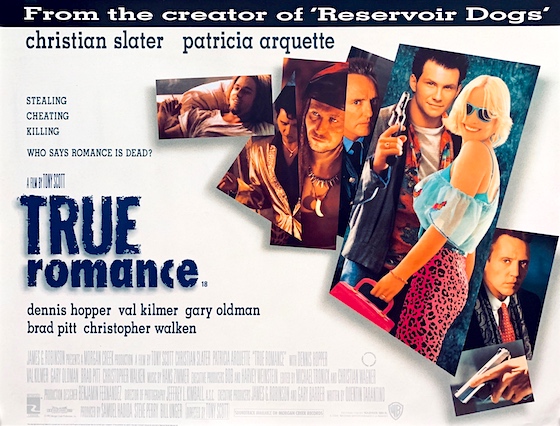
    It’s got a funny old trailer, too: it’s centred around a bunch of made-up numbers that have no basis in the film (“60 cops, 40 agents, 30 mobsters”), it mostly features the film’s climax, and it doesn’t once mention Quentin Tarantino — I guess “from the writer of Reservoir Dogs” wasn’t considered a selling point just the year after it came out. (Though obviously it was in the UK — just see the poster atop this review.)

    Of course, nowadays it’s often regarded as “a Tarantino movie” — the copy I own is part of the Tarantino XX Blu-ray set, for instance. I wonder if that ‘divided authorship’ is why, while the film does have its fans, it’s not widely talked about as much as some of either man’s other work: it’s not wholly a Tony Scott film, but, without QT actually behind the camera, it’s not really a Tarantino one either. Personally, I’m a fan of both men’s work, so of course it was up my alley. I don’t think it’s the best from either of them, but mixing together the distinct styles of two such trend-setting iconoclasts does produce a unique blend.

    4 out of 5

    True Romance was viewed as part of my Blindspot 2018 project.

    * True Romance came out between Reservoir Dogs and Natural Born Killers, but apparently QT wrote this first, then when he failed to get funding for it he wrote NBK, then when he also failed to sell that he wrote Reservoir Dogs. Another version says True Romance and NBK started out as one huge movie, written in Tarantino’s familiar chapter-based non-chronological style, until QT and his friend Roger Avery realised just how long it was and decided to divide it in two. ^

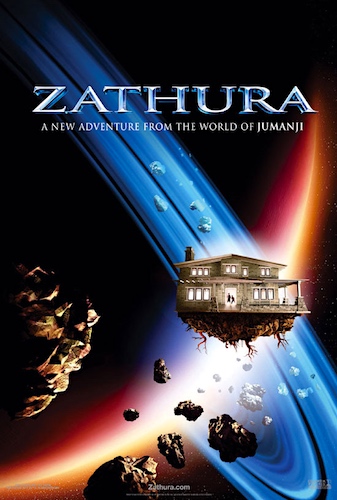
    Zathura: A Space Adventure (2005)

    2018 #67
    Jon Favreau | 97 mins | streaming (HD) | 1.85:1 | USA / English | PG / PG

    Zathura

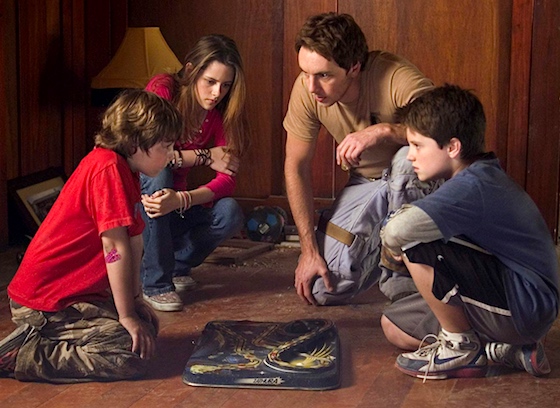
    Before Jumanji: Welcome to the Jungle there was Zathura, which is sort of a sequel to Jumanji… but more of a spin-off, I guess… well, really it’s a completely unrelated movie with the exact same plot. Inspired by another book by the same author, it sees two kids (Jonah Bobo and a very baby-faced Josh Hutcherson) discover an old board game that comes to life with terrifying consequences, and the only way to make it stop is to finish the game. But this game is about space, so it’s completely different, obviously.

    Unsurprisingly, it’s difficult to avoid assessing the film’s quality in comparison it to its predecessor. The thing that struck me most was it feels less consequential than Jumanji, somehow. In the previous film the stakes feel high — you worry they won’t beat the game or make it out alive. Perhaps that’s because of Robin Williams’ character getting trapped in the game at the start, which makes you believe things can go wrong. Whereas here, it just feels like crazy shit will keep happening until they finish. It may also be because you can infer ‘rules’ in Jumanji — we know monkeys are going to be mischievous, tigers might eat you, etc — whereas in Zathura, because it’s sci-fi, it’s all made up. And it feels made up as it goes along, too — because it’s not based on real life or an existing brand, we don’t know the characters, the monsters, etc.

    Similarly, the characters benefit from way too much luck. The kids keep not reacting fast enough to stop or save things, but then something fortunate happens so things go their way. Maybe you could sell this as a deliberate thing — like, the game wants to be finished — but that’s not how it plays out. They just keep getting lucky, in a not-great-screenwriting way. Perhaps I’m projecting problems where there are none in these observations, but it’s just another factor towards not feeling jeopardy like I did in Jumanji. Overall, Zathura was just more… pleasant.

    Play the game

    That said, I had some more specific niggles. For a film that should’ve been trying to avoid accusations of being a rip-off, they invite it further by (spoiler alert!) giving one character a backstory that’s a riff on Robin Williams’ from the first movie. Zathura comes at it from a different angle, at least, but that’s a mixed blessing: it doesn’t have the same emotional effect because we only learn about it belatedly, but at least that means it isn’t ripping off Jumanji’s entire narrative structure, and also allows for a neat twist later on. There’s some time travel stuff that doesn’t wholly hang together, but then does it ever?

    Equally, you can clearly tell they weren’t paying enough attention to every aspect of the screenplay: the older sister (played by a pre-fame Kristen Stewart, by-the-by) gets put in hibernation for five turns, but it takes eight turns before she wakes up. How no one noticed that is baffling — did they not think to just count it in the script? Even if they somehow missed it until post-production, all it would’ve taken is a dubbed line or two. “Five turns” sounds like a lot of gameplay to miss, so maybe they just thought “eight turns” would sound too ridiculous, but did they not think someone would spot it?!

    Plot logic aside, at least the film has some great effects and design work. Jumanji has aged badly in that respect (the CGI is pretty ropey), whereas Zathura still looks great, in part because there’s actually a lot of props and models involved. The performances are pretty decent, too. Director Jon Favreau clearly has a talent for working with kids — the pair here; Mowgli in his Jungle Book; Robert Downey Jr… But in all seriousness, he gets really good performances out of these children.

    Holy meteors!

    Also worth noting is that the UK version was originally cut to get a PG… and remains cut, because the uncut rating wouldn’t just be a 12, it’d be a 15! That’s because of “imitable techniques”, which in this case means using an aerosol as a blowtorch to set fire to a sofa. The main thing I find interesting about this is that presumably the original cut shows the Astronaut setting fire to the sofa, whereas in the UK version it just suddenly cuts to him stood beside a sofa on fire, which is so much funnier. Hurrah for censorship, I guess.

    And so we come to the score. Zathura is one of those films I find a little awkward to rate, because I did enjoy it — in some respects, more than I enjoyed Jumanji when I rewatched that recently — but it also doesn’t feel as polished and complete as its predecessor in terms of story and characters. Even as I had fun, I saw many things I felt could’ve been sharpened up. For that reason, I’ve erred towards a lower rating.

    3 out of 5

    The Happytime Murders (2018)

    2019 #9
    Brian Henson | 91 mins | streaming (HD) | 2.39:1 | USA & China / English | 15 / R

    The Happytime Murders

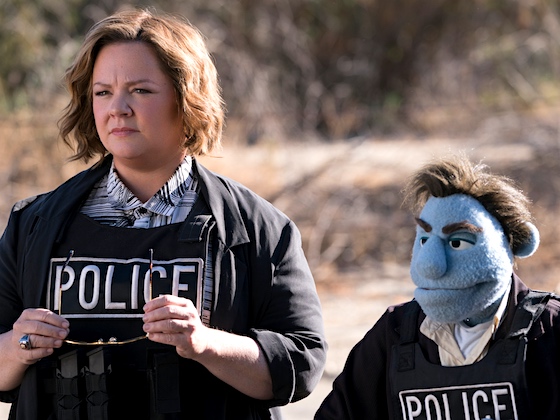
    The Muppets meets Who Framed Roger Rabbit meets an R rating in this black comedy murder mystery from director Brian “son of Jim” Henson. Set in a world where Muppet-esque (but not actual Muppets, because IP rights) puppets co-exist alongside humans, disgraced puppet cop turned private investigator Phil Phillips (performed by Bill Barretta, which, let’s be honest, is a better name for a comedy private eye than the one they’ve actually used) stumbles onto a spate of connected puppet murders, and must reluctantly team up with his former partner, human detective Connie Edwards (Melissa McCarthy), to crack the case.

    The mystery that drives the plot isn’t too bad, including a neat twist/reveal that’s perhaps guessable but not terribly so. It does hew closely to the tropes and clichés of the noir genre, which is a mixed blessing. On the one hand, as it’s not a straight crime movie I don’t think it’s a problem for it to recycle all those things when it has fresh comedy to hang off them, or if it’s somehow riffing off familiar elements but with the puppet stuff, but often it isn’t that clever.

    Women and puppets in blue

    Nonetheless, there are some legitimately funny bits along the way, often found among the riffs on the puppet thing (for example: one of the victims is drowned, and before bagging the body they ring him out). Unfortunately it isn’t funny as often as it should be, too often relying on worn or lacklustre humour. I mean, it tries to run with the old playground favourite “idiots say what?” as a running gag. It also leans on puppets being lewd and crude as the extent of the gag, which simply isn’t that funny in itself, partly because it isn’t as original as the film seems to think it is (cf. Team America, Avenue Q).

    While The Happytime Murders isn’t close to the echelons of quality where you’d find Roger Rabbit or the best of the Muppets, it’s also not a total washout. From behind-the-scenes stuff I’ve read it sounds like a lot of effort was expended on filming it, making sure the puppets could interact with the humans and so on, and those technical aspects are first rate. It’s just a shame the same level of innovation wasn’t poured into screenplay. I didn’t hate it, but it doesn’t live up to its potential either.

    3 out of 5

    The Happytime Murders is available on Netflix UK from today.

    Murder Mystery (2019)

    2019 #96
    Kyle Newacheck | 97 mins | streaming (UHD) | 2.00:1 | USA / English | 12 / PG-13

    Murder Mystery

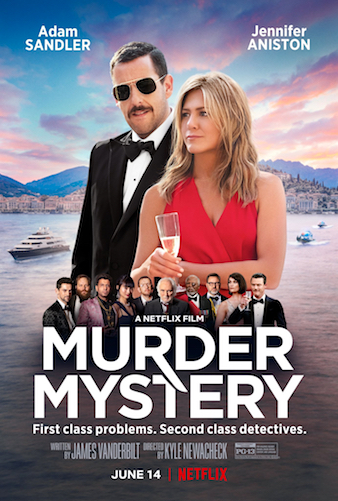
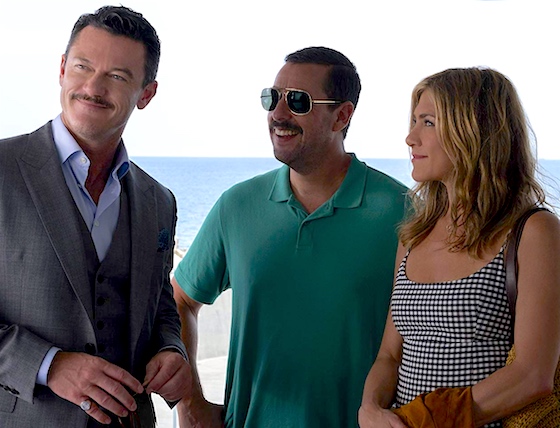
    Murder Mystery is a murder mystery in which there is a murder under mysterious circumstances, and it falls to vacationing NY cop Nick Spitz (Adam Sandler) and his murder-mystery-loving wife Audrey (Jennifer Aniston) to solve these mysterious murders.

    I’m no great fan of Sandler, and he’s probably the least funny person in this film, but I also didn’t find him outright objectionable. His character — an underachieving middle-aged beat cop who pretends to be a detective to his long-suffering wife — seems like the kind of guy who’d think he’s funnier than he is, so Sandler’s attempts at humour mostly come off as in-character. Put another way, it works in spite of itself. Of the two leads, Aniston is definitely the one doing the most work for the film, both in terms of actually being amusing and giving it some kind of emotional character arc.

    Detectives or suspects?

    The actual mystery plot is no great shakes — there are two glaring clues early on that give most of the game away, especially if you’re well-versed in watching murder mysteries and spotting such hints. That’s somewhat beside the point, though, because there’s enough fun to be had along the way to make up for it, and there are still some reasonable red herrings. The fact the cast is staffed by an array of experienced mostly-British thesps, many of whom have no doubt appeared in their share of ‘real’ murder mysteries — the likes of Luke Evans, Gemma Arterton, Adeel Akhtar, David Walliams, and Terence Stamp — definitely helps keep proceedings afloat.

    There are a few of action-y scenes — a shoot-out, some hijinks on a hotel ledge, a decent car chase for the finale — that keep the momentum up too. Plus it mostly looks suitably luxuriant and exotic (the odd bout of iffy green screen aside), matching its high-class backdrop and French Riviera setting. Altogether, it makes for a suitably easy-watching 90-minutes in front of Netflix.

    3 out of 5

    Murder Mystery is available on Netflix everywhere now.

    Finding Dory (2016)

    2018 #122
    Andrew Stanton | 97 mins | Blu-ray (3D) | 1.78:1 | USA / English | U / PG

    Finding Dory

    I was never that big a fan of Finding Nemo. I mean, I like it well enough — it’s a very good movie — but I’ve never loved it. My rewatch last year confirmed that feeling. It was something of a surprise, then, that I mostly really enjoyed this sequel. It’s a weird thing where I wouldn’t necessarily say it’s better than the first film, but I think I like it more.

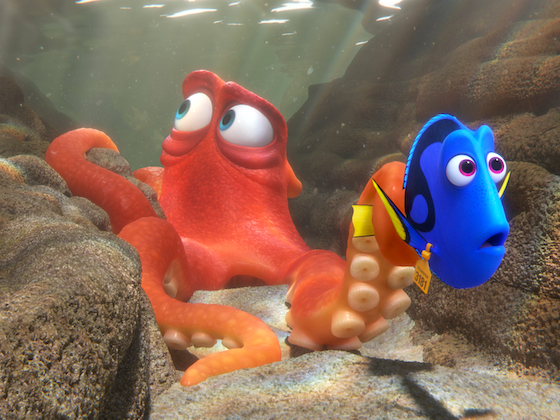
    Made 13 years later but set not too long after the events of the first movie (I don’t know what the lifespans of these fish are in real life, but I imagine considerably less than 13 years), the plot revolves around Nemo comedy sidekick Dory (Ellen DeGeneres) — in the first film her memory loss was a comedy bit, but here it’s front and centre, as Dory goes searching for the family she forgot she had. Accompanied by Nemo (Hayden Rolence) and his dad Marlin (Albert Brooks), she heads to California and the theme park-ish Marine Life Institute.

    Like so many Pixar movies, Nemo didn’t desperately need a sequel, so I was worried this would seem like little more than an excuse to return to these characters. In fact, the plot actually works very well. Far from being a desperate stretch, it actually feels like a worthwhile development and follow-up from the first movie. Alongside the worth of the narrative, it’s also just a lot of fun to watch, even if it gets a bit outlandish in the final act (fish driving cars…?)

    Something fishy going on...

    Another concern I had was that I remember thinking Dory was a bit irritating in the first film, so making her the central character could’ve scuppered it for me (other people seem to find her endearing, so I can see why Pixar went with this concept). But no, she makes for a likeable enough companion. The film does a really good job of handling her memory loss, too. It’s more than just a joke this time round, what with Dory being the central character. The easiest route to take for the filmmakers would’ve been to cop out of it somehow, either by flat-out fixing her memory, or at least not being wholly true to how short-lived it was before. Instead, they’ve put the problems and the scariness of having no memory at the forefront of the film. For example, at one point Dory needs to enter a network of pipes to get somewhere vital within the Institute, but she won’t go in because she knows she’ll forget the directions. A more constant fear is that she’ll forget about her family or friends, the people she loves, which I think is the kind of notion a viewer of any age could empathise with.

    As a Pixar movie, it goes without saying that it looks superb, but I’ll nonetheless take a moment to mention that I thought the 3D aspect was really great too. It seems to be pot luck with this stuff (I found Nemo’s rather underwhelming, and I wasn’t that impressed by Coco’s either, for example). I guess most people don’t care anymore, but there we go.

    Finding Dory was a pleasant surprise all-round. In fact, I’d go so far as to say this is Pixar’s best non-Toy Story sequel. Maybe that’s not saying much (half its competition is Cars movies), but I mean it positively nonetheless.

    4 out of 5

    Pixar’s latest sequel, Toy Story 4, is out in the UK and US next Friday.

    Zatoichi Meets Yojimbo (1970)

    aka Zatôichi to Yôjinbô

    2019 #60
    Kihachi Okamoto | 116 mins | Blu-ray | 2.35:1 | Japan / Japanese | 12

    Zatoichi Meets Yojimbo

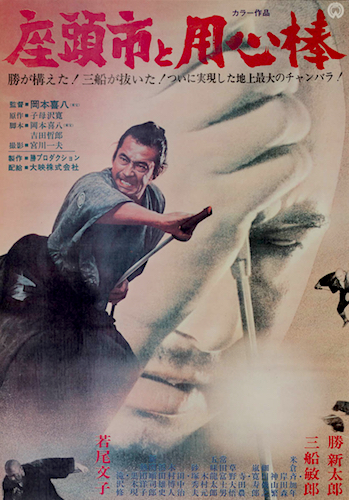
    Having released anything up to four films a year for seven years, the Zatoichi series took 1969 off (apparently producer/star Shintaro Katsu had some other projects to focus on). But when it returned in 1970 it was with a big gun: as the title indicates, the main guest star for this film is the lead character from Akira Kurosawa’s films Yojimbo and Sanjuro, played by the great Toshiro Mifune. I don’t know if that was a deliberate move to mark the series’ 20th movie or if they weren’t even conscious of the milestone, but it certainly feels like it was meant to be a special occasion. “Meant to be” being the operative part of that sentence, because the result is sadly one of the least enjoyable entries in the series so far.

    The film sees Ichi (Katsu) return to his hometown, which has rather gone to the dogs thanks to a local yakuza gang. Never one to just stand back or move along, Ichi ends up embroiled in the arguments between a powerful merchant (Osamu Takizawa) and his two wayward sons, one a yakuza boss (Masakane Yonekura), the other an employee of the government mint (Toshiyuki Hosokawa), who’s up to some kind of shenanigans with the gold that drives the plot… I think. Mifune’s character factors into all this as a ronin who’s been hired by the yakuza son to protect him, or kill his father, or something along those lines.

    As you may have gathered, the plot here is by turns confusing and dull — one of those that loses you so thoroughly you just want to give up on trying to work it out. It has something to do with the people who make gold coins making them less well, and a hidden bar of gold that has something to do with that somehow, and a bunch of spies and stuff who are all looking for the gold bar, and some kind of feud or rivalry or disagreement between the local yakuza and Takizawa’s businessman, which may or may not have nothing to do with all the gold stuff… I think. This wouldn’t be the first Zatoichi film with an underwhelming or unintelligible plot, but it tells it with so little verve, and with so few entertaining distractions (there’s not much action, and even less humour), that there’s nothing to make up for it.

    Katsu vs Mifune

    And to add insult to injury, the titular concept of the movie is a bait and switch: Mifune is not actually playing the character from Kurosawa’s films. “Yojimbo” means “bodyguard”, so it’s not like, say, casting Sean Connery in a film and calling it Meets James Bond only to have him play some unrelated character, but the promise of the title is clear and unfulfilled. It’s not like Mifune is playing an off-brand knock-off, either: he happens to be fulfilling the same job as bodyguard so that everyone can keep calling him yojimbo, but his actual name is Taisaku Sasa (not Sanjuro, as in Kurosawa’s films) and his character is nothing like his role in Kurosawa’s films (he doesn’t even look the same!) Seeing Zatoichi go head-to-head with the ‘real’ Yojimbo, with all his cunning scheming, could’ve been great. Instead, while Sasa is still a skilled swordsman, he’s a bit pathetic — lovelorn and, it would seem, not actually very good at his real job (which, as it turns out, is spying). Some of the scenes between Katsu and Mifune are good, at least. Not all of them, but some is better than none, I suppose. Ultimately, however, it’s one of the biggest disappointments in a film filled with them.

    There’s plenty to be filled, too, because this is by far the longest of the original Zatoichi films: the others average 87 minutes apiece, making Meets Yojimbo a full half-hour longer than normal, and almost 20 minutes longer than even the next longest. There’s quite an extensive supporting cast, bringing with them all the varied subplots that having so many characters entails. Whether that’s what produced the extended running time, or whether an extended running time was desired so they shoved all those extra people in, I don’t know. It’s a bit of a chicken-and-egg situation, because either way the result is a jumble that I don’t think was a good idea. Few of them have an opportunity to leave a mark — there’s too much going on, and we’re all here for Mifune and Katsu anyway.

    Something I could have learned...

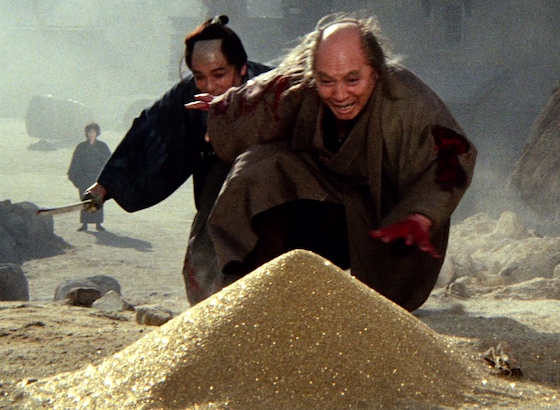
    Eventually the story comes down to a simple, familiar message: “greed is bad”. The much-desired gold bar turns out to be hidden as gold dust, which ends up blowing away in the wind. It’s almost fitting and symbolic… except it only happens once most of the cast are dead or past it anyway, so it doesn’t necessarily symbolise much. I mean, there’s hardly anyone left to notice it happen. And it’s followed by a final scene that, like most of the rest of the plot, left me slightly confused. The town blacksmith tells yojimbo that Ichi isn’t motivated by gold… then we see Ichi realise his pouch of gold dust has been cut and emptied, so he scrabbles around in the dirt searching for the rest (which has blown away), when Mifune joins him. “You too?” “Just like you,” they say. And then they go their separate ways. So… they are motivated by gold? Or… they’re not, because it’s gone and they… aren’t? I don’t know if I’m being dim, or if the film bungled its own message, or if it just doesn’t have anything to say. It could be no deeper than a straight-up samurai adventure movie, of course. It would be better if it were.

    This is the only Zatoichi film for director Kihachi Okamoto, who apparently was a prestige hire. I don’t think he did a particularly good job, to be honest. There’s the muddled plot, as discussed, which unfurls at a slow pace. The action scenes, often such a highlight, aren’t particularly well shot. It’s visually a very dark film, which kinda matches the grim tone, but is arguably taken too far. As Walter Biggins puts it at Quiet Bubble, “murk dominates. People wears blacks and browns. Eyes are cold, haunted, even in daytime[…] Even supposedly well-lit interiors look like homages to Rembrandt. This is a world half-glimpsed, that we squint at”. It was shot by cinematographer Kazuo Miyagawa, who worked on numerous Japanese classics and several other Zatoichi movies — I praised his work on Zatoichi and the Chest of Gold, for example. It’s not that what he’s done here is bad per se — there are certainly some nice individual shots, particularly around the climax — but, well, there were clearly some choices made about lighting and the colour palette.

    Windswept

    I knew going in that Zatoichi Meets Yojimbo isn’t a particularly well regarded film, but I held out hope it was one of those occasions where I’d find the consensus wrong. Unfortunately, it wasn’t. In fact, it’s arguably the worst film in the series. It’s not just that it’s a poor Zatoichi film (which it is), it’s that it should’ve been a great one, showcasing the meeting of two top samurai heroes and the charismatic actors who play them. There may be outright lesser films in the Zatoichi series than this, but none could equal the crushing disappointment it engenders.

    2 out of 5

    For what it’s worth, Katsu and Mifune co-starred in another samurai movie the same year, Machibuse, aka Incident at Blood Pass. I’ve heard it’s a lot better, so I’ll endeavour to review it at a later date.

    Review Roundup

    As foretold in my most recent progress report, June is off to a slow start here at 100 Films. Or a non-start, really, as I’ve yet to watch any films this month and this is my first post since the 1st. Hopefully it won’t stay that way all month (I’ve got my Blindspot and WDYMYHS tasks to get on with, if nothing else).

    For the time being, here a handful of reviews of things I watched over a year ago but have only just written up:

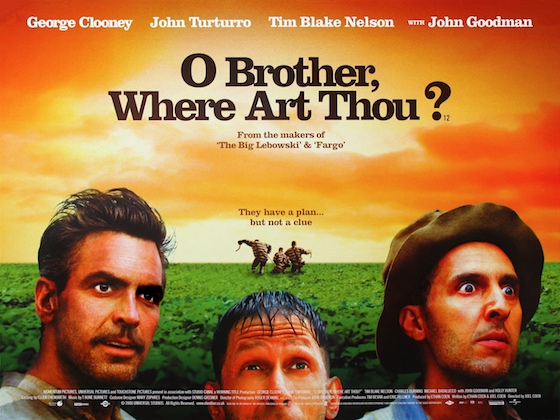
  • O Brother, Where Art Thou? (2000)
  • Allied (2016)
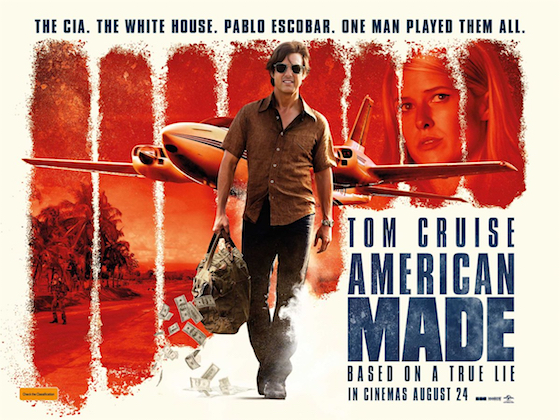
  • American Made (2017)


    O Brother, Where Art Thou?
    (2000)

    2018 #106
    Joel Coen | 103 mins | streaming (HD) | 2.39:1 | UK, France & USA / English | 12 / PG-13

    O Brother, Where Art Thou?

    The eighth movie from the Coen brothers (eighth, and yet they still weren’t being allowed a shared directing credit! No wonder that stupid DGA rule pisses people off) is one of their movies that I found less objectionable. Oh, sure, most of their stuff that I’ve reviewed I’ve given four stars (as well as a couple of threes), but that’s more out of admiration than affection — for whatever reason, their style, so popular with many cineastes, just doesn’t quite work for me; even when I like one of their films there’s often still something about it I find faintly irritating.

    Anyway, for this one they decided to adapt Homer’s Odyssey, but set in the American Deep South during the Great Depression. Apparently neither of the brothers had ever actually read The Odyssey, instead knowing it through cultural osmosis and film adaptations, which is perhaps why the film bears strikingly minimal resemblance to its supposed source text. Rather, this is a story about songs, hitchhiking, and casual animal cruelty, in which the KKK is defeated by the power of old-timey music. Hurrah!

    It’s mostly fairly amusing. If it was all meant to signify something, I don’t know what — it just seemed a pretty fun romp. I thought some of the music was okay. (Other people liked the latter more. Considerably more: the “soundtrack became an unlikely blockbuster, even surpassing the success of the film. By early 2001, it had sold five million copies, spawned a documentary film, three follow-up albums (O Sister and O Sister 2), two concert tours, and won Country Music Awards for Album of the Year and Single of the Year. It also won five Grammys, including Album of the Year, and hit #1 on the Billboard album charts the week of March 15 2002, 63 weeks after its release and over a year after the release of the film.” Jesus…)

    Anyway, that’s why it gets 4 stars. I liked it. Didn’t love it. Laughed a bit. Not a lot. Some of the music was alright. Not all of it. Naturally it’s well made (Roger Deakins!) without being exceptionally anything. Harsher critics might say that amounts to a 3, but I’m a nice guy.

    4 out of 5

    Allied
    (2016)

    2018 #116
    Robert Zemeckis | 119 mins | streaming (HD) | 2.39:1 | USA, UK & China / English & French | 15 / R

    Allied

    Brad Pitt and Marion Cotillard star as a pair of intelligence agents who fall in love in Mr. & Mrs. Smith: WW2 Edition. Settling down together in England, all is lovely for them… until one comes under suspicion of working for the enemy…

    Overall Allied is a very decent spy thriller, let down somewhat by a middle section that’s lacking in the requisite tension and a twee monologue coda. But the first 40 minutes, set in Morocco and depicting the mission where the lovers first meet, are pretty great; there’s plenty of neat little tradecraft touches scattered throughout; and there are some pretty visuals too. There are also some moments that are marred by more CGI than should be necessary for a WW2 drama, but hey-ho, it’s a Robert Zemeckis film.

    That said, Brad Pitt’s performance is a bit… off. He never really seems connected with the material. Perhaps he was trying to play old-fashioned stoic, but too often it comes across as bored. It also constantly looked like he’d been digitally de-aged, but maybe that’s because I was watching a 720p stream; or maybe he had been, though goodness knows why they’d bother.

    Anyway, these are niggles, so how much they bother you will affect your personal enjoyment. I still liked the film a lot nonetheless.

    4 out of 5

    American Made
    (2017)

    2018 #124
    Doug Liman | 109 mins | streaming (HD) | 1.85:1 | USA & Japan / English & Spanish | 15 / R

    American Made

    Described by director Doug Liman as “a fun lie based on a true story,” American Made is the obviously-not-that-truthful-then ‘true story’ of Barry Seal, a pilot who was recruited by the CIA to do some spying and ended up becoming a major cocaine smuggler in the ’80s.

    Starring ever-charismatic Tom Cruise as Seal, the film turns a potentially serious bit of history (as I understand it, the events underpinning this tale fed into the infamous Iran-Contra affair) into an entertaining romp. Indeed, the seriousness of the ending is a bit of a tonal jerk after all the lightness that came before, which I guess is the downside of having to stick to the facts.

    Still, it’s such a fun watch on the whole — a sliver long, perhaps, even though it’s comfortably under two hours, but it does have a lot of story to get through. Parts of that come via some spectacular montages, which convey chunks of story succinctly and are enjoyable in their own right. Liman doesn’t get a whole lot of attention nowadays, I think, but it seems he’s still got it where it counts.

    4 out of 5