Serenity (2019)

2019 #27
Steven Knight | 106 mins | download (HD) | 2.40:1 | USA / English | 15 / R

Serenity

Sorry, Browncoats — this has nothing to do with Joss Whedon’s sci-fi classic. But if you’re instead worried this might supplant that in the general consciousness, never fear: despite coming with the pedigree of a cast headlined by Oscar winners Matthew McConaughey and Anne Hathaway (plus Jason Clarke, Djimon Hounsou, and Diane Lane), and a quality writer-director in Steven Knight (the man behind Locke and Peaky Blinders), this Serenity is a dud of epic proportions. I mean, the fact that, even with those names involved, it’s being dumped in the UK as a Sky Cinema Original should tell you something…

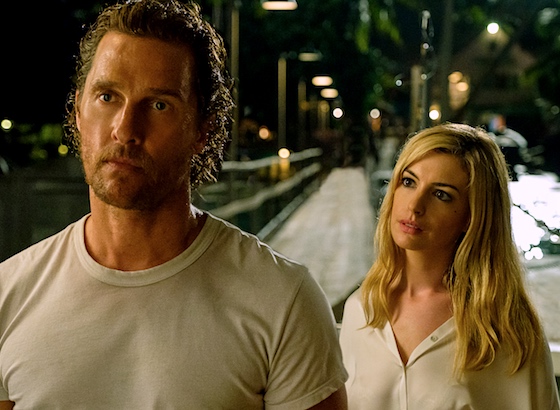
On the remote tropical paradise of Plymouth Island, Baker Dill (McConaughey) is a fisherman mostly taking tourists out on his boat, but eager to catch that one tuna that eludes him (a tuna isn’t quite as romantic a nemesis as a white whale, but I guess we’ll have to go with it). One day, his ex (Hathaway) turns up on the island with a proposition: she’ll pay him $10 million to drop her abusive husband (Clarke) in the ocean for the sharks. She has extra leverage in that hubby is beginning to get abusive towards the son Baker left behind, but who he still cares about. If that wasn’t enough of a moral quandary, there’s more to Plymouth Island than meets the eye, including a fishing equipment company rep who’s desperate to meet with Baker, but keeps just missing him…

An indecent proposal?

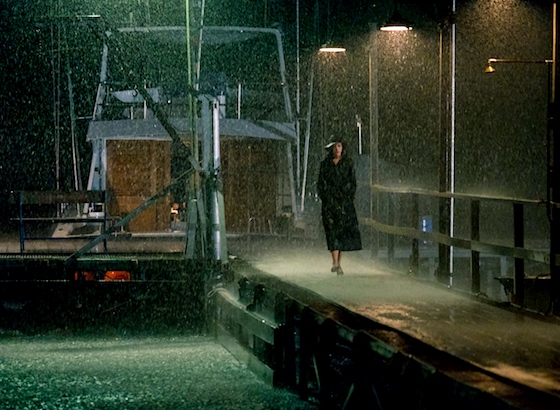
Serenity pitches itself as an island noir, and on the surface it ticks many of the right boxes, especially once Hathaway turns up, looking every inch the part of a classic femme fatale. You can tell she’s hamming it up a little too, playing into the role (with McConaughey, it’s harder to be sure…) It’s also beautifully lensed by DP Jess Hall, capturing both attractive sunny climes and a more overtly noir-ish vibe once a dramatic storm rolls in. But concurrent to that it’s clear some other mystery is going on, and here things get a bit more awkward, the film fumbling not to give too much away too soon. Personally, I think it fails — I guessed the twist pretty early, which I’m pretty sure was not intended, but if you don’t then it’s not cleverly built up to, it’s just muddled.

Once the twist is confirmed — and I say “confirmed” rather than “revealed” because, even though I guessed it, it seemed so loopy that I thought I must be wrong — the whole affair takes on a different light. But it’s not a well thought-through one. It’s the kind of twist that changes your perspective on everything you’ve seen, which is usually a neat development, but here it raises way more questions than it answers. To go into them would be spoilery… so, spoilers follow throughout the next paragraph.

So, we’re supposed to believe this kid has programmed a fishing game starring his dad — not wholly implausible. But it’s one where his dad frequently gets his kit off and shags around for money? I guess we could excuse this as the kid’s been playing too much stuff like Grand Theft Auto and thinks that’s what happens in games, if we’re being kind. But one day he decides to rewrite this game to make it about his dad committing murder, which the character in the game then objects to, and the game turns its own existing rules into an NPC to fight back? What, did this kid accidentally just program a full blown AI? Or several AIs? Or are we going with a Toy Story-esque notion where video game characters are actually sentient? And then somehow his dad actually doing it in-game encourages the kid to murder his real-life stepdad, which we learn thanks to some cheap news voiceover?

So far so noir

Serenity is such a ridiculous mess of a movie that it almost swings back round to being entertaining in its audacity. For me, though, it would need to be better constructed to pull that about-turn off. If it had fully considered the twist and its implications, thought it all through and played by all the necessary rules, some of the people who are laughing at it would still be laughing at it just for the basic concept, but I’d admire it at the very least for committing to its bit. Because it doesn’t, the only reason to consider watching is to marvel at its bizarre eccentricity.

2 out of 5

Serenity will be available on Sky Cinema from midnight tonight, with a limited UK theatrical release from tomorrow.

The Past Month on TV #43

Between trips away and rotten colds, my posting (and viewing) this month has been in rather short supply. That explains both why this TV column is later than normal and why it covers series that the constantly-churning “Netflix new releases” discussion cycle has already moved on from. (Next month: belated commentary on The Umbrella Academy, maybe.)

As well as Netflix shows that came out a while ago, there’s a BBC show that finished a while ago, an Amazon series that isn’t really out yet, and some thoughts on last weekend’s Academy Awards.

The Punisher  Season 2
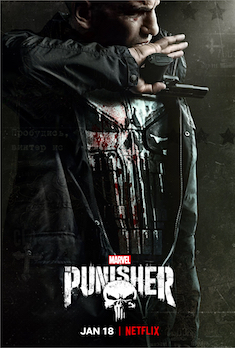
The Punisher season 2Earlier this month the news everyone had been expecting was finally made official: Netflix was cancelling The Punisher and Jessica Jones, thereby bringing to an end the era of the MCU on the streamer. Altogether it will have produced 13 seasons and 161 hours of television, ending with the release of Jessica Jones season three sometime later this year — which will be a more appropriate time to get into this, I guess. For now, there’s just the second — and, as it turned out, final — season of The Punisher.

Picking up a year after the first season, initially it seems like this will be an all-new tale for the eponymous antihero (Jon Bernthal) when he finds himself protecting an ungrateful teenager, Rachel (Giorgia Whigham), from a group of highly-trained assassins who want to kill her for reasons she and they won’t divulge. There’s plenty of mystery around the girl, the villain hunting her (a religious fundamentalist type who goes by the name Pilgrim (Josh Stewart)), what everyone’s motives are, and what the bigger picture might be. At one point our heroes get arrested by small-town sheriffs and the series gives over a whole episode to an Assault on Precinct 13 homage. It’s all good.

But then stuff left hanging from season one begins to creep in. No surprise, really: that first run did the usual Marvel/Netflix thing of introducing us to a character destined to become a more famous character, then spent the whole season getting there. In this case its Punisher nemesis Jigsaw (also the villain of Punisher: War Zone, FYI), aka Billy Russo (Ben Barnes), Frank Castle’s friend-turned-enemy whose face he lacerated in the season one finale. So, they were due a rematch. Unfortunately, here Russo’s storyline plays out with that other regular fault of Marvel/Netflix series: it… takes… ages… to… get… anywhere… And as we keep cutting away from Frank and his new ward to spend time on Russo, it’s slow pace is even more distracting.

Frank and RachelThe two plots do converge somewhat, naturally, with Frank having to deal with the machinations of Russo/Jigsaw at the same time as Pilgrim is coming after him. That means the series has to juggle the two stories as well, and it does that less than effectively, swinging back and forth between which it wants to focus on. For me, the problem remained the same: the new plot is interesting with a lot of potential, while the season one hangovers feel like little more than unfinished business. The latter become stretched out to fill the season, going round in circles, rather than being dealt with succinctly. Conversely, with that stealing so much space, the Pilgrim and Rachel story doesn’t get the screen time it needs or deserves. It seems like there’s a half decent balance at first, but that ultimately goes awry, and the ins and outs of the new storyline (I keep wanting to call it the “main” story, but that’s only true in a couple of early episodes) aren’t as explored as much as they should be. Considering there’s some interesting potential in there (Frank and Rachel have great chemistry, and the plot shapes up as a kind of political thriller, in a 24-esque way), it’s a shame it goes under utilised. It also comes to a great conclusion, showing it’s the real star element of the season. That said, the ending to the Russo story is good too (and so, combined, they make for an exciting finale), it just shouldn’t‘ve taken up so much time.

I wouldn’t go so far as to call The Punisher’s second season a disappointment — there’s a lot to like here for fans of the character and the series — but its lack of focus is a drawback. On the bright side, it wraps things up enough that this is an okay place to leave it. It’s open-ended for more adventures, of course (the across-the-board cancellations came so late in the day that none of the shows had planned for them), but there aren’t direct “what happens next?” questions like in Luke Cage or Iron Fist. Considering the chances of a revival on a Disney-owned platform seem to be 50/50 at best, at least there’s that.

Russian Doll  Season 1
Russian DollYou spend years wondering if anyone could re-do the premise behind Groundhog Day in a different way (well, maybe you don’t, but the thought has crossed my mind), and then several come along… not exactly at once, but in relatively close succession. So, following Happy Death Day, which saw a college student having to repeatedly relive her birthday which was also the day of her murder, now we have Russian Doll, which casts co-creator Natasha Lyonne as a thirtysomething New Yorker having to repeatedly relive her birthday which is also the day she dies. Well, she’s not being murdered, at least. Indeed, the series has a few tweaks and additions to the basic premise up its sleeve, but to say too much would spoil it — although the trailer gives away at least one biggie. Of course, as this is a streaming series, it takes three whole episodes before it reaches that major game-changer.

Fortunately, the show has other things to commend it, primarily the characters. Well, one character, and a bunch of quirky funny types. But hey, this is a comedy, so we can let that slide. And as for that one actually fleshed-out character, Lyonne’s heroine, the series really makes itself about her, her attitude to life, and how the situation affects her. It’s all good stuff. Plus, if you’re here for the plot, although it takes a little while to reveal its unique twists on the formula, once they’re out in the open they build up into an intriguing mystery. And, though it starts out looking like just a comedy in the vein of those other films that have used this concept before, it actually evolves into something more psychological, darker and more complex.

Frankly, one of the main reasons I started watching Russian Doll was because I expected it to be just Groundhog Day / Happy Death Day rehashed as a TV series — that’s what it looked like from the trailers, and I was partly expecting to be able to justifiably complain about that if I’d actually watched it. But, at the same time, I do like both those films, and Russian Doll’s trailer promised at least one new twist on the formula, so I was prepared to give it a fair shout to prove itself. In the end, it deserved the latter. Sure, of course the basic premise is similar to those previous films, but it reimagines it with a dark and foul-mouthed wit that’s distinctly its own, plus it takes the concept down some entirely new avenues. I don’t know how they’d do future seasons (it was originally pitched as three seasons, but it sounds like that evolved during production, so maybe they don’t have as clear an idea as they once did), but I’ll be here for them if they come along.

Hanna  Season 1 Episode 1
Hanna the seriesAmazon are adapting Joe Wright’s 2011 film Hanna into a TV series. Apparently that was commissioned back in 2017, which I don’t recall hearing about, and I feel like I would’ve remembered because I loved the film (never did get round to writing a fuller review, though). Anyway, the first I did hear of it was when they made the first episode available for 24 hours as a preview (the whole first season will be released at the end of March).

Unsurprisingly, the story has been extended to fit its new TV format — this first hour only covers the first act of the film. At this pace, it’s very plausible it’ll take the rest of the season to get through the rest of the movie’s plot (and I’m sure they’ve got some tricks up their sleeve to extended it beyond that). But, surprisingly, it doesn’t feel horrendously slow or artificially drawn-out. This isn’t a mile-a-minute action show, but its pacing is no worse than most other streaming series, here with the added excuse that it’s setting the scene. Indeed, that’s arguably the episode’s biggest problem when viewed in isolation: it feels a bit like the real plot will kick off in episode two, and this is all prologue. On the other hand, in that sense it works all the better when released as tease ahead of the main series. Either way, it grabbed my attention enough that I’ll continue with it when the rest is released.

Les Misérables  Episodes 4-6
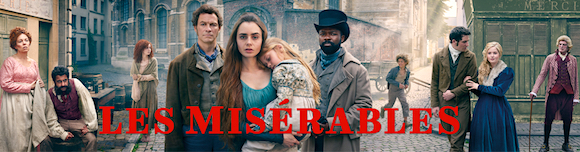
Les Misérables
The second half of the BBC’s new adaptation of Victor Hugo’s novel (gotta be careful to be clear about that, apparently) is all set in the story’s final time period — Cosette is now a young woman, desperate to see the outside world; Marius is now a young man, whose friends seem desperate to die for a revolution; and Javert is still Javert, still desperate to catch Valjean, presumably out of sheer spite and/or pride. All the characters, connected as much by coincidence and chance as by choice or action, come together around the June Rebellion of 1832, and… well, you either know the plot or you don’t want me to spoil it for you. This remains a handsomely mounted production until the last, however, including pulling off the action at the barricades with suitable scale and impact.

That stuff always feels like it should be the climax to me. In a literal sense, it’s the big action set piece, and is the end of the road for several major characters. But no, there’s plenty left after it, for good (the final confrontations between Javert and Valjean) or ill (Thenardier in the sewers; the unearned redemption of Marius’ grandfather). I rewatched the film of the musical when I was exactly halfway through this series, and by comparison most of the movie felt like a long “previously on” montage. The exception is this post-barricade stuff, where the BBC version, conversely, feels drawn-out compared to the economy of the musical’s telling. The final part was almost quarter-of-an-hour longer than the first five, and I couldn’t help but feel a little more streamlining would’ve helped. Still, it’s a relatively minor complaint amidst what has been a typically excellent adaptation by the Beeb.

In the UK, the whole series remains available on iPlayer for the foreseeable future, while in the US it will air on PBS from April 14th.

The 91st Academy Awards
The 91st Academy AwardsThe run-up to this year’s Oscars seemed to be mired in a mix of controversy and disinterest. The former was provoked by a variety of poor decisions by the Academy, including fiascoes around a Best Popular Film award, over who would host (it was Kevin Hart, then it wasn’t, then it was no one), and over the decision to present some awards during the ad breaks (which was scrapped, thankfully). This whole palaver is part of what fed the disinterest, along with a slate of nominees that was regarded to be generally uninspiring. As it turned out, plenty of people still tuned in (US viewing figures were slightly up from last year) and plenty of conversation was sparked. Other people can dig into it in more depth than me (and have, of course, considering the ceremony was days ago), but I will say I was overjoyed for Olivia Colman (definitely the best speech, although a couple of others were quite good too) and Spider-Verse, was quite pleased Black Panther won Best Score (I don’t know if it was actually the best overall, but I really liked it), and its other two victories (costumes and production design) were also welcome, and Spike Lee’s ecstatic win was another top moment. It wasn’t all sunshine and roses, obviously, with Best Picture in particular being an underwhelming result; though I’m not as miffed about Bohemian Rhapsody’s multiple wins as some people (even if its awards for sound editing and mixing were more about “most” than “best”).

The big takeaway from the night should probably be that going host-less worked. Queen’s opening performance was great (because Queen), and the non-monologue monologue from Maya Rudolph, Tina Fey, and Amy Poehler was another highlight of the ceremony. Things still ran smoothly, and there were no stupid asides like bringing normal people into the auditorium or whatever — cutting those time wasters was a much better idea than cutting actual awards. Maybe being host-free is the way forward, though I think they’ll need to continue finding ways to handle the monologue section going forward — the show needs some kind of intro, and a gentle ribbing of the nominees is an appropriate way to do it, I think.

Also watched…
  • The British Academy Film Awards 2019 — The BAFTAs also happened. We gave a better Best Film, but further evidence that maybe a host-less ceremony is a good idea: Joanna Lumley is a national treasure, but her opening monologue was excruciating.
  • Great News Season 2 Episodes 8-13 — The series finale of this cancelled-too-soon newsroom sitcom is titled Early Retirement. So, that’s a nice meta gag to console ourselves with, at least.
  • Mark Kermode’s Oscar Winners A Secrets of Cinema Special — Kermode dissects the formula to make an Oscar winner in this special of his excellent series. It’s available on iPlayer for a few weeks yet.

    Things to Catch Up On
    The Umbrella AcademyThis month, I have mostly been missing The Umbrella Academy, as I mentioned at the start. The trailers look good (love a bit of Hazy Shade of Winter), and it seems like critical and audience reaction has been positive, so it’s definitely on my watchlist. I’m also yet to start the new series of Scottish crime drama Shetland, or The Missing’s much-anticipated spin-off Baptiste. I expect I’ll be saving those up for a little while yet.

    Next month… HBO have set the Deadwood revival/finale movie to air this spring, which is, y’know, soon. I watched season one when it first aired, thought it was great, but when season two came around I found myself thoroughly lost and eventually gave up. I imported the US Blu-ray box set years ago (it’s bursting with special features vs. the UK’s completely bare bones release), and it’s been sat on my shelf waiting ever since, like so many non-pressing TV series nowadays. Well, I guess now is its time…

  • Green Book (2018)

    2019 #26
    Peter Farrelly | 130 mins | download (HD) | 2.00:1 | USA / English, Italian & Russian | 12 / PG-13

    Green Book

    Oscar statue2019 Academy Awards
    5 nominations — 3 wins

    Won: Best Picture, Best Supporting Actor (Mahershala Ali), Best Original Screenplay.
    Nominated: Best Actor (Viggo Mortensen), Best Editing.

    White people tell black people all about racism (again) in this year’s surprise Best Picture victor. Well, a surprise to some people — Roma was considered the frontrunner, but some of those with their finger on the pulse of Hollywood had already predicted Green Book’s success. One such pundit was Deadline’s Pete Hammond, a very pro-Green Book voice, although his post-show analysis seems to suggest it only won because of efforts by some Academy members to rig the vote against Netflix…

    The reaction to Green Book has been an odd one. It was initially well received, winning the People’s Choice Award after its premiere at TIFF, and racking up acclaim from both critics (a Certified Fresh 79% on Rotten Tomatoes) and audiences (8.3 on IMDb, which places it 128th on their Top 250 list). But the more widely it’s been seen and discussed, the more the tide has turned, especially as a more diverse audience has come to it. On its surface, the film is about overcoming racism — it’s the true story of a bigoted Italian American (Viggo Mortensen) serving as a driver for talented African American pianist Dr Don Shirley (Mahershala Ali) as he goes on a concert tour of the Deep South during segregation — but it’s told entirely from the white guy’s perspective.

    Coming at it from the perspective of a white guy also, I can see why people have liked the movie. It’s decently entertaining, with likeable performances from Mortensen and Ali, who have good chemistry. Their chalk-and-cheese relationship is funny without tipping over into outright comedy; and, naturally, the way they come to get along is Heartwarming. But it’s also a completely unchallenging movie. There’s just enough racism that you get to go “ooh, weren’t things unpleasant back then!” and be joyed when the characters overcome it in various ways, but not so much as to convey the actual outrage and horror of the era — or, indeed, the way it continues today. You’d think racism was more or less solved by this pair getting along back in ’62.

    Admire the white guy

    And that is a big part of the problem with the film. If you’d made this 20 or 30 years ago, that level of discussion might be alright — beginning to make old white men face up to what happened by softening it a little, by letting them see themselves in the white guy. Now, it all looks kinda naïve and simplistic. The more you dig into it, the more you realise Green Book has some casually racist elements of its own. I mean, the white guy even helps the black guy to become a better black guy! That’d be offensive in a fiction, but when these were real people it seems distasteful. I guess the counterargument might be that the black guy helps make the white guy better too, improving his ability to write love letters, as if that was some kind of mutual beneficial exchange. But it’s not equal, is it? Plus it’s again all from the white guy’s perspective: he’s fundamentally fine but, hey, a bit of a polish wouldn’t hurt, whereas the black guy needs a character overhaul that apparently only this straight-talking white guy can give him.

    But hey, don’t just take it from this white guy. For instance, check out this piece by Justin Chang at the L.A. Times about the film and its reception in the wake of its big win. It digs into the film’s negatives and controversies better than I ever could.

    A side note regarding the film’s title: it’s taken from The Negro Motorist Green Book, a guidebook to help African Americans travel in the segregated South by listing establishments that would accept them. They do use it in the film… briefly, about three times total. You feel like a movie depicting how and why the volume came into existence might’ve made for a more novel story.

    Write this instead...

    In the end, I find Green Book a little difficult to rate. Coming to it as a white viewer, it’s an enjoyably safe trip into history, with charming characters on enough of a personal journey to give it a story arc, but not so much of one as to ever make it challenging. Similarly, it has a simplistic but not fundamentally negative theme (“racism is bad, yo”). In that mindset, it’s a pleasant, feel-good two hours. But, considering it’s 2019 not 1989, I can certainly see why some are clamouring for more nuanced engagement with these issues. I wouldn’t call it a bad movie, but it is an old fashioned one, and certainly not the best of what 2018 had to offer.

    3 out of 5

    Roma (2018)

    2019 #25
    Alfonso Cuarón | 135 mins | streaming (UHD) | 2.39:1 | Mexico & USA / Spanish & Mixtec | 15 / R

    Roma

    Oscar statue2019 Academy Awards
    10 nominations

    Nominated: Best Picture, Best Foreign Language Film, Best Director, Best Actress (Yalitza Aparicio), Best Supporting Actress (Marina de Tavira), Best Original Screenplay, Best Cinematography, Best Production Design, Best Sound Editing, Best Sound Mixing.

    Drawn from writer-director Alfonso Cuarón’s memories of growing up in the Colonia Roma neighbourhood of Mexico City, Roma is the story of what happens to a middle-class family’s housemaid, Cleo (played by newcomer Yalitza Aparicio), over the course of ten months in 1970 and 1971. It’s also one of the best-reviewed films of the year, winner of BAFTA’s Best Film award (amongst others), and a frontrunner for the same at tonight’s Oscars. No pressure, then.

    Roma has already attracted a reputation for being slow and difficult to engage with for ordinary viewers — the very definition of an arthouse movie; and it’s in black and white with subtitles, just to compound the stereotype. There’s no doubting it has a measured pace, and the viewer needs to be prepared for that. It sets its stall with the opening credits, which fade in and out slowly over a static shot of paved flooring being washed by soapy water that flows across it like waves on a shore — and that’s all we see, for several minutes. From there, much of the move unfurls in wide shots, with slow pans or no movement at all, inviting the viewer to search the frame for details and significance. Note that it’s not nominated for Best Editing…

    Cleo the maid

    At first it’s difficult to see the point of all this, which is where accusations of it being boring stem from. Nothing seems to be happening, just people going about their lives and jobs; a “slice of life” narrative taken to the extreme. What’s missing from that view is context, and as the film goes on we get that — looking back at earlier scenes with the knowledge of what happens later, it’s more possible to see what Cuarón was going for. For example, there are two scenes side-by-side which are barely notable in themselves and certainly have no immediate connection — the father of the family going away on a business trip, and Cleo going to the cinema with the guy she’s been seeing — but when you know what happens later, these scenes are clearly back-to-back for a reason, with a clear connection. One might say juxtaposed, but they’re less being contrasted, more mirrored. There’s quite a lot of that kind of subtle, often exclusively visual mirroring throughout the film — it’s no coincidence the opening shot looks like waves.

    This is a film that rewards perseverance, then. It doesn’t work for everyone, but for some the way it slowly inducts us into this family’s life builds to great emotional payoffs come the events of the final act. After a whole lot of very little, it suddenly gets very dramatic and heart-wrenching. You’d have to be pretty cold not to feel anything for the characters given some of the things that transpire, but how much of a connection is developed between them and the viewer is, I think, very much a matter of personal experience. Based on online comments, some find the finale emotionally cathartic, and end up sobbing their heart out; others find Cleo’s silence to be distancing, making her true character and feelings inaccessible, and by turn neutering the film. I find myself sympathetic to both points of view. The film, and the characters, are certainly understated, but I don’t think they’re wholly shut off. Put another way, I wasn’t in tears by the end, but I felt I understood something of these people and their reactions to what had occurred.

    Departures

    One thing I wasn’t prepared for by anything else I’ve read about the film (which, admittedly, wasn’t much) was how much… slightly odd stuff there was. Not full-blown Lynchian weirdness, just things you don’t really expect to see. A surprising focus on dog shit, for example. A martial arts display with some very, er, jiggly full frontal male nudity. A Norwegian New Year’s Eve song performed in front of a blazing forest fire. Walls of pet dogs’ heads mounted like hunting trophies in a macabre display of affection, but with the sheer disturbingness of that seeming to go uncommented on. Cuarón has said 90% of the movie comes from his own childhood memories, so I guess he had an interesting time of it…

    At the very least, Roma is a technical masterpiece. Shot by Cuarón himself (because Chivo was unavailable), it looks thoroughly gorgeous — crisp, textured, always perfectly lit, be that by the nighttime glow of a city or misty morning air, with some shots that look like molten silver caressing the screen. Cuarón is the frontrunner for the cinematography Oscar, marking the first time it will have gone to a director lensing his own film (assuming he does win, of course), and it seems to be very much deserved (in fairness, I’ve not yet seen any of the other nominees to compare).

    But while everyone talks about the photography, very few people seem to mention the immersive sound design, and I think that’s just as worthy of attention. Roma is also nominated tonight for Sound Mixing and Sound Editing, categories that are often dominated by blockbuster-type films due to their energetic soundscapes — its competitors include the likes of Black Panther, Bohemian Rhapsody, First Man, and (somewhat ironically) A Quiet Place. I doubt Roma will overcome their bombast, but in its own way it’s just as effective, generating a world around you with its enveloping audio. I guess this is partly the problem of it going direct to Netflix, though — most people who see the film will listen to it through TV speakers, or, at best, a stereo sound bar. However, it’s proof that surround sound isn’t just for action movies, and that it’s worth having a system in your home, if you can.

    Journeys

    On the whole, Roma exudes the feel of a quality piece of Art, with a capital ‘A’ — it’s beautiful to look at, slow and heavy and opaque in its storytelling, with (perhaps) some deep message about human experience that’s left for the viewer to discern. Is it the best picture of 2018? Well, I mean, if you like that kind of thing… Should it win tonight? That depends what you think the Oscars should be rewarding, I guess. It’s not an unworthy champion in an artistic sense, but is something else — something artistic in a different way, and also more accessible — even more deserving of being crowned The Best? That’s always the tug-of-war when it comes to Best Picture, I suppose. It’s certainly not my favourite movie from last year (and I wouldn’t necessarily expect it to make 2019’s list either), but I still admire much of it.

    5 out of 5

    The 91st Academy Awards are handed out this evening. In the UK, they’re on Sky Cinema Oscars from 12:30am, with highlights on Sky One tomorrow at 9pm.

    Ocean’s Eight (2018)

    2019 #23
    Gary Ross | 110 mins | download (HD) | 2.39:1 | USA / English, German, French & Hindi | 12 / PG-13

    Ocean's Eight

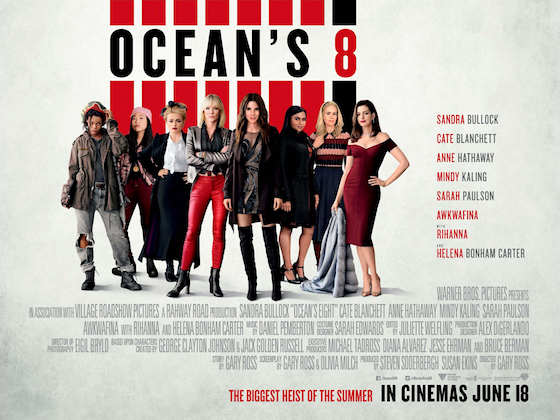
    This somewhat belated spin-off from the Ocean’s trilogy of all-star heist movies (it came eleven years after the last one) introduces us to Debbie Ocean (Sandra Bullock), the sister of George Clooney’s eponymous character from the trilogy, and also an experienced con artist. Recently released from prison, she sets about assembling a crew for an audacious heist: to lift a near-priceless necklace during the prestigious Met Gala.

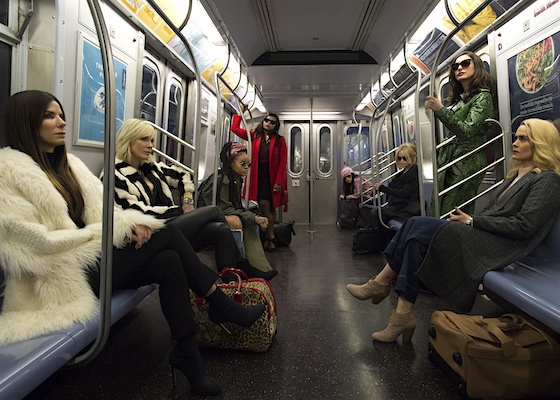
    Said crew is all female — well, the crews in the previous trilogy were almost exclusively male, so why not? And just as those casts were full of big-name stars, so too is this. If Bullock’s in the Clooney role then Cate Blanchett takes over the part of Brad Pitt: the cool, in-control ‘sidekick’ who really makes Ocean’s grand plan happen. Fortunately, the film doesn’t slavishly map everyone else onto roles from the previous movies. One of the key parts is a fashion designer, played by Helena Bonham Carter — not a job that’s normally required for a heist, I don’t think. Here, it’s their way to access the mark who’ll be wearing the necklace, played by Anne Hathaway. The rest of the titular crew is rounded out by names of varying degrees of famousness, depending on your exposure to their previous work: Rihanna, Sarah Paulson, Mindy Kaling, and Awkwafina.

    As a gang, they’re quite likeable, fun to hang around with, and the cast seem to be having a good time. They’re somewhat hampered by a screenplay that rarely gives them the sparky material the previous bunch had to work with, though, so I’d suggest if there’s a Nine they get someone to punch up the dialogue and give this lot the text they deserve.

    One, two, three, four, five, six, seven... yep, eight. There's eight of them.

    Having said it doesn’t wholly map onto the previous movies, Eight massively lifts one plot thread from Eleven, which is that Debbie’s plan is secretly a way to get back at an ex boyfriend (Richard Armitage). Okay, in Eleven Danny Ocean is trying to win back his old lover and/or punish her new boyfriend, whereas here those characters are kinda combined as Debbie Ocean is trying to punish her old lover, but, well, the basic conceit is the same, right? The film does nothing to acknowledge that fact, just leaving it hanging there — awkwardly, if you’re au fait with the first movie. Conversely, whereas Danny was obsessed with his revenge to the point it risked derailing the main heist, for Debbie it seems to be a side benefit.

    That isn’t necessarily better, mind: it lowers the stakes of both the subplot (because she doesn’t seem that bothered) and the main plot (because she’s not in danger of getting sidetracked), so why include something so familiar? Indeed, the whole plot is relatively light on stakes, with the team carrying off everything with nary a hitch — barely any need to improvise or change the plan here, they’ve just got it covered. The one potential problem that does arrive is solved instantly, even before the heist begins, with such a straightforward fix that they don’t even need to modify the plan to incorporate it. It’s not even fake jeopardy, it’s just non-jeopardy.

    The whole film veers dangerously close to blandness in this fashion. Director Gary Ross may be a friend and colleague of Steven Soderbergh, but he doesn’t seem to have picked up the trilogy director’s inventiveness. There’s some mildly flashy editing scattered about, and maybe one creative shot / bit of sound design (when the camera follows the necklace underwater, the non-diegetic music gets muffled like, you know, we’re underwater), but it lacks the sophistication and verve Soderbergh brings. It feels like it needs a kick up the arse, basically.

    “Could you just give it a bit of a kick up the arse?”

    I even began to worry it was going to end with no attempt at genuine twists or surprises whatsoever, aside from a few minor but not terribly exciting reveals, which is not good for a heist movie — part of the point, surely, is that they also pull off a kind of narrative heist on the viewer. Fortunately, Eight does have a trick up its sleeve, which is quite fun. But even then, the big plan is still a pretty simple heist, which the film tries to pretend is complicated by showing Heist 101 stuff in excruciating detail (there’s a whole scene devoted to Rihanna slightly changing the position of two security cameras, one… click… at… a… time…)

    Yet for these faults, Eight still works as breezy entertainment. It’s not as perfectly slick and polished as Eleven — but then, that would’ve been asking a lot (as pure-entertainment capers go, Eleven is virtually flawless). It’s not as boundary-pushing as Twelve (a seemingly muddled film that gets interesting the more you think/read about it), but nor is it as aimless and derivative as I found Thirteen. It lacks the creative spark behind the scenes (either in the screenplay or directing departments) that could’ve elevated it, but it’s an easy way to spend a diverting couple of hours.

    3 out of 5

    Ocean’s Eight is available on Sky Cinema from today.

    Attack the Block (2011)

    2018 #231
    Joe Cornish | 88 mins | Blu-ray | 2.40:1 | UK & France / English | 15 / R

    Attack the Block

    The directorial debut of comedian Joe Cornish seemed to become an instant cult classic on its release back in 2011 — I distinctly remember US geek websites urging people to see it and even arranging screenings, leaning hard into the kind of word-of-mouth promotion that is often how these small but dedicated fan bases are born. It has the kind of online scores that back up that status: as much as everyone who talks about it seems to love it, it only rates 6.6 on IMDb. I guess you’re either in a cult or you’re not. While I did enjoy it on the whole, I couldn’t quite see what all the fuss was about.

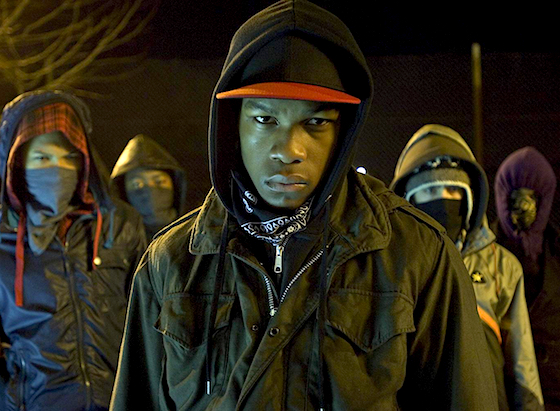
    The film centres on a gang of teenage lads, led by John Boyega in what it turns out was a star-making performance. They roam their inner city London tower block and its surrounding streets, and we first meet them mugging a young nurse (Jodie Whittaker); and, when an alien creature falls from the sky, they savagely beat it to death. Hardly E.T., is it? Of course, murdering the little thing turns out to have been a bad idea, because soon more of the bastards are falling from the sky, and they seem to be particularly targeting our “heroes”.

    I’ve bunged heroes in quotation marks there because this gaggle of protagonists are a right bunch of little so-and-sos (to be polite about it). The film sets itself a hurdle by making them so initially unlikeable, and then struggles to overcome it — frankly, I was cheering on the aliens to give the little chavs what for. You could certainly make a movie where the protagonists are unlikeable and the thrill comes from waiting for them to be slaughtered by the ostensible villains (I feel like someone has, probably something incredibly high-profile, but I can’t remember what it is right now), but I don’t think that was Cornish’s aim.

    Thugs'r'us

    On the brighter side, the boys eventually come across Whittaker’s nurse again, because she lives in the same block as them, and so we have her to root for. Her earlier experience makes her as non-disposed to the gang as I was, and it’s her connecting with them somewhat that comes to rehabilitate them. There’s also Luke Treadaway (that’s the one from Clash of the Titans and A Street Cat Named Bob and Ordeal by Innocence and so on, not to be confused with his brother Harry, who’s appeared in The Lone Ranger and Cockneys vs Zombies and Penny Dreadful and so on; although they’re twins, so, y’know, good luck) as a posh kid trying to score some drugs, and Nick Frost as the dealer he’s trying to get them off, to bring some comic relief. Not that the rest of the film is super serious (it’s about teenage chavs battling ferocious alien bears, c’mon), but their more direct humour is welcome too.

    Despite my reservations about the characters, the film is a great calling card for writer-director Joe Cornish. Although tonal similarities between the movies invite comparisons to what Shaun of the Dead did for Edgar Wright (especially as he’s friends with Cornish and an executive producer here), I feel like Wright’s breakout film was even more assured. Instead I think of something like Guy Ritchie and Lock Stock: an imperfect film in itself, but which suggests a lot of potential from the man behind the camera. Quite why it’s taken eight years for Cornish’s second feature to come around is a mystery.

    4 out of 5

    Attack the Block was viewed as part of my Blindspot 2018 project.

    Joe Cornish’s second feature, The Kid Who Would Be King, is in UK cinemas from tomorrow.

    Hereditary (2018)

    2019 #19
    Ari Aster | 127 mins | streaming (HD) | 2.00:1 | USA / English | 15 / R

    Hereditary

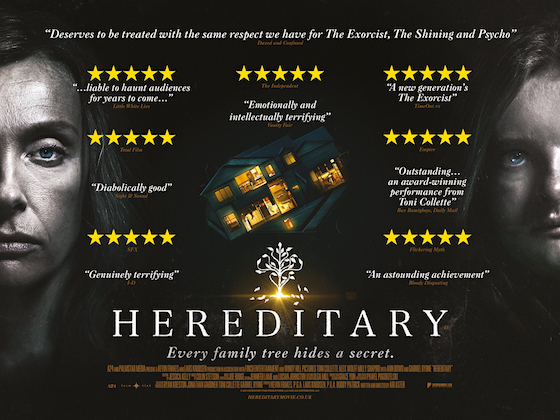
    Unless I’m forgetting something, I think Hereditary was the most-discussed, most must-see horror movie of 2018, so if, like me, you’re only watching it now, you’re late to the party. Still, as with most horror films, the less you know the better for its effectiveness (not to mention there are so significant unexpected developments in the story, which even the marketing managed to hide for a change), so I’ll keep this review spoiler-free.

    The film centres around a family living in a remote-looking part of Utah: mother Annie (Toni Collette), her husband Steve (Gabriel Byrne), her 16-year-old son Peter (Alex Wolff), and 13-year-old daughter Charlie (Milly Shapiro). After Annie’s sometimes-estranged mother dies, various family members begin to see and experience odd things, and… well, like I said, the less you know the better. Hereditary is the kind of horror movie that relies on the mood it builds up to unnerve you, so if you have too much of a head-start on the plot it’s like crippling the film’s ability to suck you in.

    I do think it’s perhaps important to understand what kind of movie this is, though, because many of the negative reactions I’ve read seem to stem from misaligned expectations. Hereditary plays almost more like a family drama than a horror movie for a good while, albeit one with some scary moments and a general air of unease; of something about to go very wrong. You’ve likely heard how good Collette is in the film, how many people wanted her to get an Oscar nom, and this is really why. The storyline gives her a plausible character in a state of extreme emotional strain, and she plays this conflicted, broken woman with just the right balance of subtlety and explosive emotion. Credit, too, to the rest of the lead cast, who are more understated, but in a way that brings necessary balance. They may be less showy, but their contribution is vital. First-time writer-director Ari Aster has been hailed as a great new voice in horror filmmaking, but I’d wager if he went on to do straight dramas we’d be just as fortunate.

    Toni Collette

    As things go on, naturally the background creepiness increasingly edges into the foreground. There are even jump scares that got me, and I can’t remember the last time a horror movie managed to get me with a jump scare — and one of them was purely auditory. This movie made me begin to hate my surround sound system. If you watch without one, you are losing some of the impact, frankly. But even worse than the jumps are the things you see coming, or gradually come to notice are there; the stuff you see but then have to wait for what’s going to happen. There are situations and images here that will haunt your memories after viewing. It’s this overall unsettling atmosphere that will keep you on the edge of your seat for much of the runtime; more like, say, The Shining than a blood-and-guts fairground ghost ride.

    If there’s one place it missteps, it’s perhaps the final act. Some people have accused it of a tonal shift here, or even of being “goofy”. I agree that it spirals quite quickly from “family drama with a bit of the supernatural” to bringing everything to a head, and many of the most outright “horror” bits are in this final act, but it still kept me uncomfortably on edge. (I know I said I’d keep this spoiler free, but, fair warning, I’m going to allude to the ending now. Jump to the final paragraph to avoid all that.) The only time that tension dissipated was in the very last scene, which I don’t think was the intention — it’s not meant to come as a relief, but by finally answering some questions and putting some things out in the light, it kind of lets you come to terms with them. It’s also a little, for want of a better word, daft; or, as that other person said, goofy. Most of Hereditary is truly unsettling, even when it’s not being outright scary, so it’s kind of a shame it didn’t have a final moment that maintained that unease.

    Milly Shapiro

    I say it “answers some questions”, but it’s not an exposition-fest that explains everything that’s been going on. That may well lead you to start interrogating the plot afterwards to fill in some of the gaps, and I’m not sure it all hangs together. I’m all for films that leave audiences to use their imagination and intelligent thought to fill in holes themselves (and by “holes” I don’t mean “plot holes”, just things the film hasn’t explicitly explained), but when you start trying to plug gaps and find it doesn’t add up, maybe the film should’ve explained something more. Or maybe it’s a movie about the unknowable and so, of course, we can’t know it all. An individual’s own taste will vary on how much this matters: some people won’t spend any time turning the story over after the film ends, in which case it’s conclusive enough as it is; others can write it off as, as I said, the unknowableness of the supernatural; others still might find the apparent gaps undermine the whole experience. I sit somewhere between the latter two stools, because I don’t think you notice the gaps until you begin to think back over the logic of what must’ve occurred, and I don’t think the lingering questions retrospectively undermine the potency of the movie-watching experience, but it is a shame it doesn’t seem to all add up.

    It’s these questions that were going to hold me back from giving Hereditary full marks, but I’m not sure that’s fair. Sometimes the journey is more important than the destination. Even then Hereditary’s destination isn’t bad, it’s just not perfect. And the journey to get there… As a horror movie, it’s one of the most genuinely unsettling I’ve seen for some time, with imagery that makes my hair stand on end just remembering it. It’s all the more effective for the way it grounds itself in real-life tragedy, with a powerhouse performance from Collette that, yes, if it were in a straightforward indie drama would surely be a frontrunner this awards season.

    5 out of 5

    Hereditary is available on Amazon Prime Video in the UK from today.

    It placed 13th on my list of The 15 Best Films I Saw For the First Time in 2019.

    Zatoichi Challenged (1967)

    aka Zatôichi chikemurikaidô

    2019 #10
    Kenji Misumi | 87 mins | Blu-ray | 2.35:1 | Japan / Japanese

    Zatoichi Challenged

    The seventeenth film in the Zatoichi series is rated the second best according to IMDb users. As with so many opinions, that’s not one shared by Letterboxd users (who’ve placed it 15th), and it’s not shared by me, either. While I wouldn’t call it bad (every Zatoichi film has things to commend it, even the de facto worst), it’s definitely towards the lower end of my ranking.

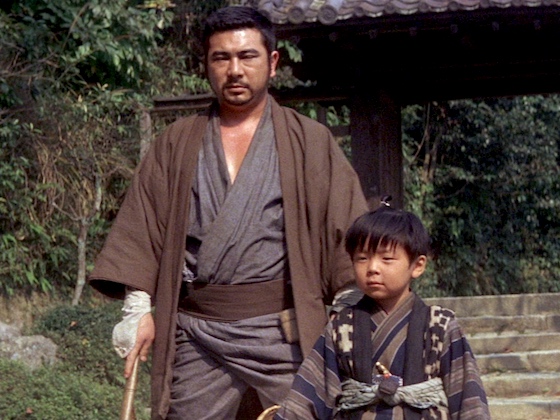
    The basic plot is a semi-rehash of one of the series’ crowning glories, Fight, Zatoichi, Fight, with Ichi (Shintaro Katsu) agreeing to reunite a young boy with this father after the child’s mother dies. They first fall in with a group of travelling performers, which seems to be an excuse to squeeze in an incongruous ’60s pop song and a bit of a love interest for Ichi. After wasting half-an-hour on that, Ichi and the kid rock up in the town where the dad, Shokichi (Takao Ito), is being held captive by a gang of… pottery makers. It’s slightly more exciting than it sounds, because their scheme is all about making plates and jugs featuring erotic imagery, which was illegal at the time, and Shokichi is a skilled artist. Now, of course, Ichi must free him to unite him with his son. Along the way, Ichi strikes up a respectful acquaintance with a travelling ronin, Tajuro Akazuka (Jûshirô Konoe), which you know isn’t going to end well because, well, that’s how these films always go.

    Zatoichi and son... just not his son

    There’s nothing particularly wrong with being a formulaic Zatoichi film — many of them are, and I enjoy them just the same — but here it all feels rather slow and uneventful. The stuff with the travelling performers is a dead end, a total aside from the main story; and that plot, such as it is, just never catches light. The final 25 minutes are fairly action-packed at least, both in terms of fighting and with the plot finally getting somewhere; but it also makes you realise how much time has been wasted going nowhere — the villains are little more than introduced before it’s time for Ichi to cut them down. It doesn’t help anything that the kid’s annoying. He comes to care for Ichi, but Ichi doesn’t really seem to care for him that much, meaning their relationship lacks the emotional resonance found in Fight, Zatoichi, Fight.

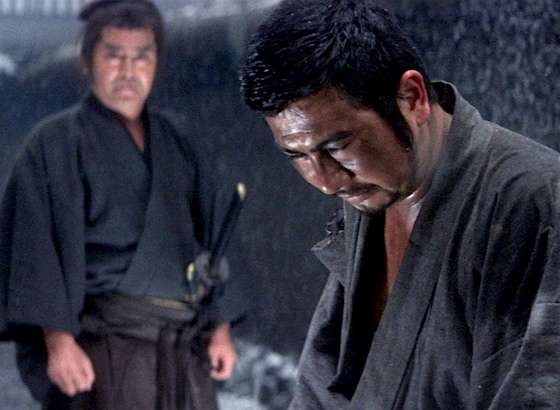
    The one part of the film that does work is Akazuka. As I alluded to before, it’s a story arc that’s played out in many Zatoichi films before (and I’m sure it’ll come up again), but Zatoichi Challenged executes it as well as any. At first it just seems like Akazuka is a wanderer who Ichi happens to keep bumping into, including a memorable encounter where Akazuka attempts to overpay for a massage, but honourable Ichi refuses his charity. Eventually, of course, it turns out he has a secret mission which is at odds with Ichi’s own goals and values, and so, inevitably, they must duel. Their climactic confrontation is by far the best bit of the film. It’s a battle of words at first, as Ichi pleads with Akazuka to be reasonable and have mercy. He won’t, of course, and so a sword fight ensues. It doesn’t pan out how you might expect. The whole sequence is beautifully shot through falling snow by cinematographer Chikashi Makiura (quite why it’s suddenly snowing I’ve no idea, but it looks good). It’s an absolutely fantastic sequence; one of the series’ very best duels.

    Snow fight

    The finale aside, perhaps the most interesting thing about Zatoichi Challenged (certainly the most uncommon) is that it was remade in America, forming the basis for 1989 actioner Blind Fury, starring Rutger Hauer and directed by Phillip Noyce (Patriot Games, The Bone Collector, Salt, et al). I’ve not seen it, but other reviewers describe it as “a total turd that captures none of the charm and humanity of Zatoichi” (Lard Biscuit Enterprises), noting that it “begs the viewer to overlook too much that is idiotic [about a blind swordsman], whereas the original convinces the viewer it isn’t idiotic at all” (Weird Wild Realm). Suffice to say… I’ll still watch it someday.

    Quite why this Zatoichi film in particular was tapped for a US remake, goodness only knows. It’s a kinda boring Ichi adventure on the whole, with a thin, recycled plot and a first half-hour that’s almost a total aside from the actual story. It’s saved by the climax, one of the best sequences in any Zatoichi film, which single-handedly makes the movie worth a watch.

    3 out of 5

    High Flying Bird (2019)

    2019 #14
    Steven Soderbergh | 90 mins | streaming (UHD) | 2.35:1 | USA / English | 15

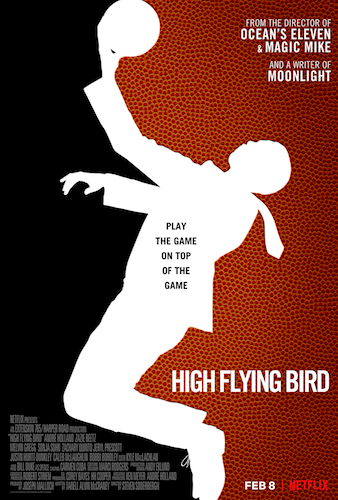
    High Flying Bird

    Steven Soderbergh’s ‘retirement’ continues with another shot-on-iPhone movie (following last year’s psychological thriller Unsane), this time going direct to Netflix. Whereas Unsane made a virtue of its iPhone cinematography to heighten a disquieting, untrustworthy atmosphere, High Flying Bird forges ahead with no such baked-in excuse for its visual quality. However, similarly to Unsane, the fact it was shot on an iPhone is almost incidental, noteworthy mainly just because it’s unusual. But more on that later.

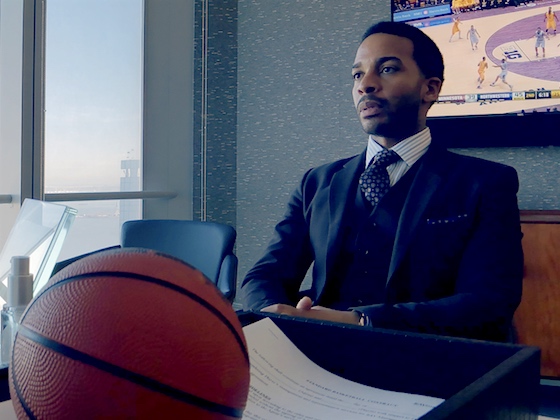
    The movie is about Ray (André Holland), a basketball agent struggling to keep his players in check during a lockout… and already you’ve lost me, movie: I had to look up what a lockout is. I’m not much of a sports person, and I’m pretty sure we don’t have lockouts in British sports. Basically, best I can tell, it’s some kind of disagreement between the players (through their union) and the team owners, which results in games not being played when they should be, and people not being paid because nothing’s happening. So, it’s a bad thing, and it’s putting Ray in a bad situation — so he sets about trying to launch an “intriguing and controversial business opportunity”, to quote an IMDb plot summary.

    Something like that, anyway. Frankly, it took less than two minutes for High Flying Bird to leave me feeling lost and confused, as it dives into an “inside baseball” (as the saying goes) depiction of basketball right from the off. It felt like watching a French movie without subtitles, except here the language isn’t French, it’s basketball. In fairness, I did eventually get a handle on what the overall plot was, but mostly with hindsight and not ’til quite far in — my analogy still stands for what the viewing experience was like until that point.

    Lost and confused

    For fans of basketball, or at least those with some kind of knowledge of the workings of the business side of American sport, it might all be more palatable. I think there’s some good stuff in the plot and characters, but I can only say “think” because I made such a lousy fist of following what was meant to be going on half the time. The story culminates in a final twist/reveal about Ray’s actual plan. Fortunately, by that point I’d worked out (more or less) what events had happened, so I followed it — indeed, I got there ahead of it. Well, that’s because before viewing I read a comment which implied this was a heist movie (like Soderbergh’s previous work on the Oceans films or Logan Lucky), so I’d already been on the lookout for what the real con was. Nonetheless, I’m torn between whether the reveal was quite clever, or the film thinks it’s cleverer than it actually is. If I hadn’t had that heads up, maybe I would’ve been as mind-blowingly impressed as Ray’s boss seems to be when Ray reveals the real plan to him. Or maybe I wouldn’t’ve, who can say.

    Unsane suggested you couldn’t make a good-looking film on an iPhone. High Flying Bird says, actually, you can. It doesn’t all look great (especially when, for example, the shot literally wobbles from something as simple as someone putting a drinks bottle down on a table), but there are some beautiful shots in here too. Unsane almost had to make a virtue of its odd look, the weirdass visuals chiming with the story of a possibly unstable mind. High Flying Bird has no such excuses, and most of the time it doesn’t need them; though some parts do still look like a first-effort student film, which is very odd coming from a director as experienced as Soderbergh (this is the 56-year-old’s 29th feature, not to mention his 39 episodes of TV).

    Looking to the future

    While researching the film’s production I came across this interesting article at The Ringer, which uses High Flying Bird as a jumping off point to examine the history, increase, and future of using iPhones for professional projects. It basically contends that phone-shot films are the future for everything, and makes that sound reasonable. It’s reminiscent of the emergence of digital photography for movies: it was a big story back when Soderbergh shot Che with digital cameras (Criterion’s Blu-ray release has a half-hour documentary dedicated to it), but it was only a couple of years later that became standard for all major movies, and a few years after that it’s now noteworthy when something is actually shot on film. It seems inconceivable that one day they’ll be shooting an Avengers movie on a phone, but then it once seemed inconceivable you’d shoot a movie that big on digital video…

    It’s quite hard for me to give a concise opinion of High Flying Bird. I struggled through much of it, which made for an unpleasant viewing experience. But I acknowledge some of that lies with me knowing less about basketball than the film does. But then again, is it the film’s responsibility to explain to me the things I don’t know? I did get a handle on events by the end, and if I watched the film again I expect I’d follow it better, but I also don’t feel there’s much luring me back for a second viewing.

    3 out of 5

    High Flying Bird is available on Netflix now.

    Where the Wild Things Are (2009)

    2018 #42
    Spike Jonze | 97 mins | streaming (HD) | 16:9 | USA, Germany & Australia / English | PG / PG

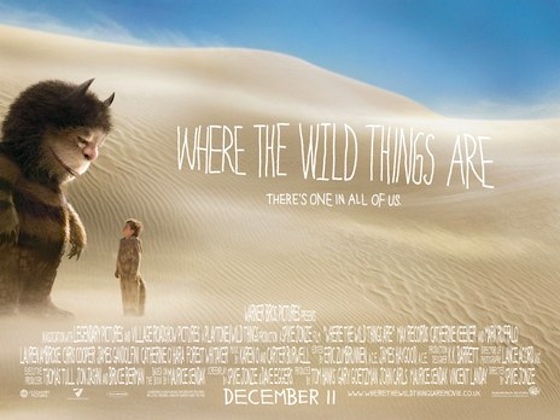
    Where the Wild Things Are

    Lonely and over-imaginative child Max (Max Records) runs away from home one night, finds a small boat at the edge of a pond, which becomes an ocean as he sails across it, and winds up on a remote island. There he encounters a group of maladjusted and mostly unlikeable large monster-like creatures, the Wild Things, and ends up having to deal with their tumultuous interpersonal relationships. But it’s a fun kids’ movie, honest!

    Except it isn’t. Not really. Despite being adapted from a kids’ picture book, and resolutely rated PG, it didn’t strike me as a kids’ movie at all. It’s glum, depressing, and surely only understandable when filtered through an adult perspective. By which I mean, the film depicts a child’s imaginary adventure, and if you take it as just that it’s no fun whatsoever. Give it an adult reading and I think the adventure actually reveals Max’s subconscious, with the monsters being an externalisation of his personal issues… I guess. I mean, I’m not sure what personifying his issues achieves, or what the film is saying with them.

    If I felt it came to some kind of interesting point by the ending, maybe I’d be more on board with it. But Max basically decides he’s had enough of the monsters (he certainly doesn’t seem to solve all their problems) and heads home. I guess he’s realised his home life isn’t so bad after all, but… well, is that it? In the course of one night (which he’s imagined is a longer stretch of time, but still, one night), the kid’s had a complete change of personality and heart? I don’t buy it.

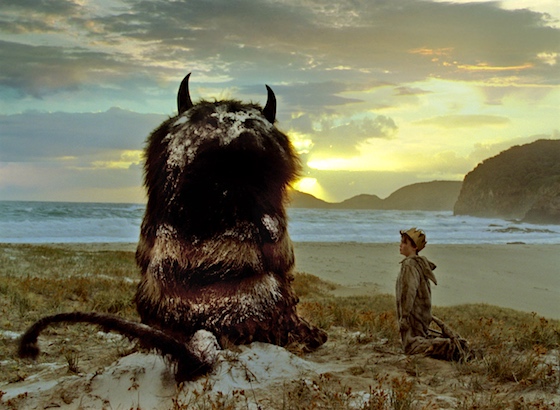
    Mournful monsters

    Apparently director Spike Jonze has said he intended “to make a movie about childhood” rather than a literal children’s movie, so it would seem my interpretation isn’t too wide of the mark. I’m not sure he told the Warner Bros executives that, though, because they were reportedly so unhappy when they saw Jonze’s initial final cut that they considered reshooting the entire movie — which, with its $75 million price tag, wouldn’t’ve been a small ask. In the end they pushed the release back almost 18 months, giving Jonze more time and money to make a movie that satisfied both himself and the studio; though even after that they still spent 70% of the promotional budget targeting adult viewers, advising parents to “exercise their own discretion”.

    Maybe it was that compromise that kicked the meaning out of the film. Maybe it was never there. Maybe I missed something. On the bright side, technical merits are strong: Lance Acord’s cinematography is beautifully golden, and the monster effects (a mix of Jim Henson-made suits and CGI, which replaced animatronic heads that weighed too much) look perfect. But that’s not enough to save a thin and tedious story.

    2 out of 5