Oops

Aside

If you’ve arrived here because you got notified of a post called “the end of 100 Films”, then fear not, gentle reader — I made an elementary error. 100 Films is going nowhere.

(By-the-way, if you read a bit of the text that was included automatically in an email, a fourth thing happened — namely, I cocked up.)

Unsane (2018)

2018 #219
Steven Soderbergh | 98 mins | streaming (HD) | 1.56:1 | USA / English | 15 / R

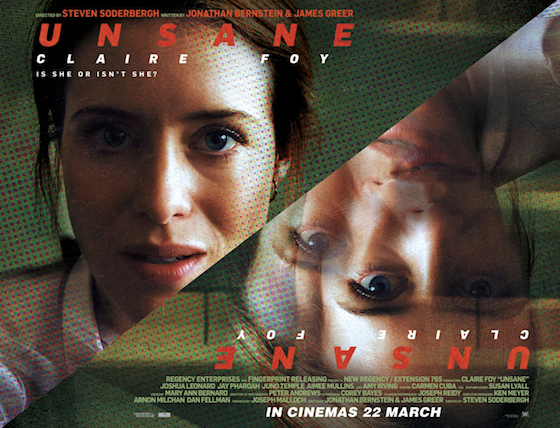
Unsane

Probably the best-known thing about Unsane is that Steven Soderbergh shot it on an iPhone. Well, he’s not the first person to shoot a feature on a phone, nor will he be the last, but I guess he must’ve been the most high-profile. It’s a shame that’s all people seemed to talk about, though, because the content of the film is worth a look too.

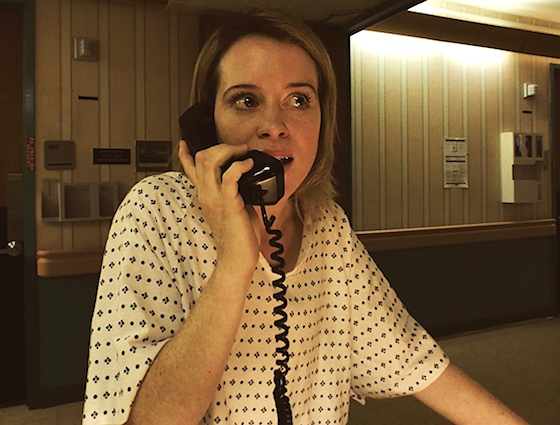
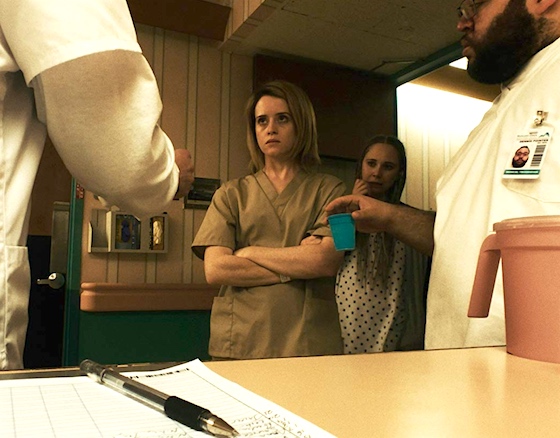
It’s a psychological horror-thriller starring Claire Foy as Sawyer, a young professional woman struggling with a past trauma, who tries to simply get an appointment with a counsellor but ends up accidentally committing herself to a mental hospital. Although initially only in for a 24-hour assessment, her attempts to get out are only seen as further proof she has problems, and her ‘voluntary’ stay is extended against her will.

This early part of the film plays more like a drama than a horror movie, in that it’s fairly grounded in plausible reality — it doesn’t seem to be some nefarious scheme that gets Foy incarcerated, but rather bureaucracy and misunderstanding. Later the film takes a swing into outright horror territory, and I’ll discuss that in a moment, but it’s the first act that is most genuinely frightening. Events move inexorably forward in such a way that you can imagine yourself in Sawyer’s shoes, imagine yourself making the same unwitting mistakes that she does, imagine what you might try in that situation to get out of it, and imagine how you’d fail just as badly as she does. The film doesn’t gloss over any “if only she’d done this it would’ve been fine” moments — she tries everything rational, and it still goes wrong.

Hello, Domino's?

But, as I said, later things change a bit: Sawyer claims that one of the men working at the hospital is actually her stalker. Obviously this just contributes to the staff thinking she’s deranged, because of course a mental health institution wouldn’t employ a convicted stalker, but it makes us wonder: is it the stress of the situation getting to Sawyer, making her see things? It would certainly be ironic — the place that’s meant to ‘make’ her sane actually driving her insane. Or maybe the staff are right, and Sawyer is an unreliable narrator?

From there the film only becomes further immersed in genre-ness. It loses that “what would you do?” aspect, but I was engaged enough by then to just go with the story; others have found the tonal shift jarring, however. It definitely keeps you guessing — even after a mid-way reveal, you’re still unsure what further twists it may or may not pull. But it’s a funny old movie, in a way, because the shift from believable real-life horrors to inhabiting a more overt Horror mode means it sits at a hitherto unimagined crossroads between schlocky madhouse B-thriller and arthouse psychological drama. Well, I guess that’s the kind of thing we should expect from Soderbergh by now: a genre movie reimagined with auteurist sensibilities. Even when it takes the shape of a B-movie thrill-ride, there remains some psychological truth to the trauma Sawyer’s suffered and how it affects her. It’s also casually damning of things like the US healthcare/insurance infrastructure, which is, of course, a real-life problem. It’s always nice to sneak a valid real-world point into what is essentially a thrills-and-chills flick.

Just say no

The sense of unease is further emphasised by the shooting style, because it looks… odd. Odd how? It’s hard to say, exactly. It’s partly the aspect ratio, which for some reason is 1.56:1. I’m perfectly used to watching films in 4:3 or 1.66:1, so pillarboxing doesn’t bother me, but it being a nonstandard shape is surprisingly disconcerting. It also seems that Soderbergh hasn’t just used the iPhone camera as-is, but has attached at least one different lens. I suppose some might argue that’s cheating, but it’s normal to add lenses to the basic camera in other modes of filmmaking, so why not? I’m no expert on lenses so can’t quantify what he’s done exactly, but there’s a sort of wide-angle, sometimes even fish-eye, effect that is, again, strange. Combine all that with an even-less-definable quality that seems to wash over the whole image, like it’s lacking resolution or definition or something, and I’m not sure if the film’s visual style is down to the limitations of the tech or if it’s a deliberate emphasis of them. Whatever the reason, it kinda makes me hope no one ever chooses to shoot a film on an iPhone again, because while it can be done, the results aren’t great.

And yet those results really do fit the mood of this film. I kinda hope no one copies that tech choice ever again, but, nonetheless, Soderbergh’s made it work for the story he’s telling. That story — with its ups and downs, its whiplash tonal changes, its very imaginable horrors and its only-in-a-movie ones — means the fact Unsane was shot on an iPhone is probably the least interesting thing about it.

4 out of 5

Unsane is available on Sky Cinema as of yesterday.

Steven Soderbergh’s next film, High Flying Bird, was also shot on an iPhone. It’s released on Netflix on 8th February.

Glass (2019)

2019 #7
M. Night Shyamalan | 129 mins | cinema | 2.39:1 | USA / English | 15 / PG-13

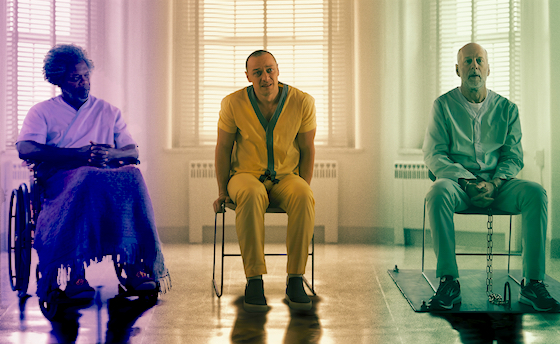
Glass

About 18 years ago, I first watched Unbreakable on DVD. It was the new film from M. Night Shyamalan — a name no one knew a year or two earlier, but the huge success of The Sixth Sense had somehow catapulted him to the top of the zeitgeist, where he was talked about as the new Hitchcock or Spielberg. Maybe no one could spell or pronounce it (I remember a lot of “Shamalamadingdong”s), but for some reason this wasn’t just “The New Film from the Guy Who Directed The Sixth Sense“, it was “The New Film from M. Night Shyamalan”. Anyway, it had met a mixed reception, but for some people it worked, and I joined their ranks. From there, it seems to have developed something of a cult following — it has many ardent fans, but others still don’t get it.

In interviews, Shyamalan mentioned that Unbreakable’s plot had originally been just the first act of the film, until he decided to expand it to the whole movie, and so he had ideas that acts two and three might become two further movies and form a trilogy. There began a long wait for the film’s fans, ever hoping that one day Shyamalan — whose reputation went steadily and increasingly downhill with every film he made from that point — would come back round and continue what he’d started. I can’t speak for everyone, obviously, but I’d begun to give up hope: in December 2016, I added Unbreakable to my 100 Favourites series, and in that post I wrote, “16 years on, I guess hopes of a continuation are long dead.”

Six-and-a-half weeks later, Split was released. You probably know the rest.

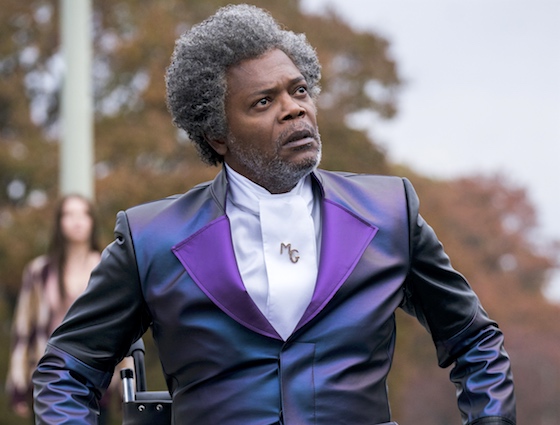
Mr Glass, the Horde, and the Overseer

…but in case you don’t: Split was a stealth sequel to Unbreakable, only revealed in its very last scene when Bruce Willis suddenly appeared and name-checked Samuel L. Jackson’s character. I say “only” revealed — I found out on Twitter, the first day after the film went on general release. Damn you, internet! But anyway, the point is: suddenly the hope was back alive. And it was confirmed to be so shortly afterwards, when Shyamalan announced that a sequel to Unbreakable and Split had been officially greenlit.

Now, I’ve devoted a massive chunk of this review to that history lesson for one reason: to make it clear just how much I was anticipating this movie. I’m certainly not alone in that; but if you’re not someone who saw Unbreakable almost two decades ago and have been hoping for a sequel ever since, I hope the last few paragraphs gave you some perspective of how those of us who did feel about Glass finally being here. This is my most anticipated superhero movie in a year that also includes an Avengers that will tackle the fallout from a humungous cliffhanger, a new X-Men (a series I also love), a new Spider-Man (which I think looks great), and more (the most superhero movies in one year ever, apparently). So, for some of us, this has a lot of expectation to live up to.

And I think expectations — whether they come from the previous films, the trailers, critics’ reviews, or what have you — are going to have a big effect on people’s reaction to Glass. Expecting a Marvel-style superhero throw-down? It was never going to be that, you fool. Don’t like movies where most confrontations come through dialogue? Okay, but did you actually watch Unbreakable and Split? (Those are both criticisms I feel I’ve seen in other reviews I’ve read.) Want to see Bruce Willis and Samuel L. Jackson face off again in a film that’s fundamentally Unbreakable 2? That’s not an unreasonable hope, but Glass is as much a sequel to Split as it is to Unbreakable, perhaps even more so. Certainly in tone, Glass has more in common with the slightly-pulpy, almost-B-movie style of Split than it does with the quiet, characterful mode Unbreakable operated in. That first film was a Drama, all about believable people coping with their personal issues, whereas the two follow-ups are much more genre movies. That said, they’re still genre movies that have been filtered through the unique mindset of this particular writer-director — don’t expect a great deal of easy satisfaction here.

Confounded?

Do expect twists. Of course there are twists — it’s a Shyamalan movie! Indeed, it’s almost the most Shyamalany of Shyamalan movies, because Glass has more than one surprise reveal to pull out during its final stretch. Some are almost obvious, especially if you’re aware of fan theories from the previous films. Some are entertaining, the kind of rug-pulls you’d expect in the last act of a movie whose villain is a genius. Some are… more startling. Some people will appreciate the boldness; others will feel it undermines what came before, or what they wanted to see here. I don’t think anything is an outright “that doesn’t make sense” betrayal of the world Shyamalan has created in this trilogy, but some people will be displeased about the directions he chooses to go.

Talking of which, one of the big complaints I’ve read (and, fair warning, kinda-spoilers follow for the rest of this paragraph) is that the middle of the film wastes time trying to convince us these characters’ powers aren’t real, when we’ve already seen that they are. I think that’s a somewhat unfair criticism; one that comes from not properly investing in what we’re watching. Dr Staple is trying to convince the characters of reality, that they can’t have powers; and, as I saw it, the point of those scenes is to make us doubt it too. Yes, we’ve seen them do extraordinary things, but as Dr Staple lays out, can those things not just be explained by science and/or personal delusion? They’ve shown special skills, but are they really superhuman abilities? Several characters are swayed by her argument… so was I, to a point… except then I remembered the critics who’d said this was “a waste of time”, and therefore I guessed Shyamalan couldn’t be building to a reveal that these characters didn’t have powers after all, because if he were then it wouldn’t be a waste of time. So thanks for that, whichever Negative Nelly’s review I read that spoiled it.

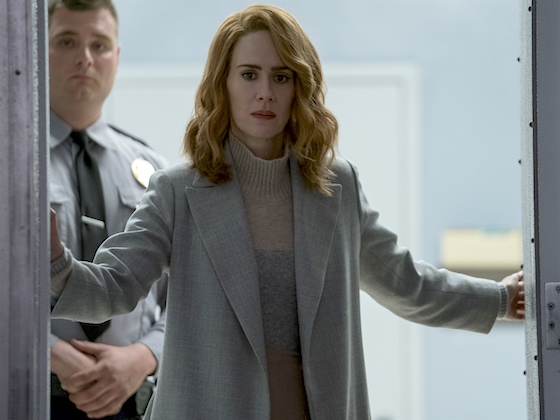
Is Dr Staple stable?

As Dr Staple, Sarah Paulson is the main new addition to the cast for this finale. Her character’s a bit of a blank slate — we don’t really get to know her, why she’s doing this job, why she believes their powers can’t be real (other than the sheer implausibility of it, anyway). She exists to challenge the leads and their beliefs, not really to be a character herself. Or is that blankness just a facade, and that’s its point? I’ll say no more both out of an awareness of spoilers and because I’m not sure myself. It’ll be interesting to rewatch the film and see what, if anything, else presents itself about her on a closer rewatch.

Despite having the title role, Samuel L. Jackson is mainly reserved for the third act, but when he comes to life he revels in the part so much that I didn’t mind having to wait. James McAvoy gets to show off like he did in Split, only this time with an even greater number of distinct personalities. Some people think he’s overacting; I think it’s impressive. Split was more of a showcase for his skill, because here he has to share screen time with so much else that’s going on, but Shyamalan helps him out by actually giving different alters their own separate character arcs. In places that’s done quite subtly, so I think some might miss just how much McAvoy has to do.

While McAvoy gets to negotiate multiple arcs, the last of the three headliners, Bruce Willis, barely has one. Some have said he phones in his performance here, but I think that’s unfair. Shyamalan hasn’t actually given him that much to work with, which is a shame — some people will feel like they’ve waited almost two decades to get more of David Dunn and been shortchanged. Well, David was always a quiet, introspective character anyway, so in some respects it’s fitting. In the two or three scenes where he was allowed to really do something, I felt like Willis had recaptured the part.

(Anya Taylor-)Joy to the world

It’s not just those four who have a significant role to play, either. For me, Anya Taylor-Joy actually has one of the film’s best parts, and gives one of its best performances. Here, again, is where Glass is at least as much a sequel to Split as to Unbreakable, in the way it devotes time to the development of her character and to her relationship with McAvoy’s. Also returning is Spencer Treat Clark as Joseph, David’s son. I wasn’t sure if this was a case of managing to lure back a child actor who’d drifted off, or if the guy had continued to work since. Well, having IMDb’d him, it turns out he’s been working virtually nonstop since Unbreakable, but it just happens I haven’t seen anything he’s been in (well, except he was in one episode of Mad Men, apparently). His is a somewhat less complex supporting role, but he’s particularly good at conveying Joseph’s thoughts in a few key dialogue-less moments.

But the biggest returnee of all is behind the camera: writer-director M. Night Shyamalan. (Who is also in front of the camera, actually, with a cameo that exists largely to reconcile his cameos in the two previous films. It’s an amusing bit of fan service.) Shyamalan has, I think, always been a good director. He shows a good eye for strong and rich visuals, be they simple face-on close-ups or more innovative shot choices, but without being needlessly flashy. The film incorporates flashbacks using deleted scenes from Unbreakable, which at least one reviewer took to prove Shyamalan has deteriorated as a director in the past 20 years, but I thought they integrated seamlessly. His weakness has always been more as a writer, and your mileage will vary on how much that’s a problem here — as I discussed earlier, it’s quite a talky film, with the characters confined to a limited set of locations, and that likely won’t please some viewers. There’s also some thuddingly terrible dialogue (you may’ve read about the “showdown” line), but he’s been responsible for worse.

Mastermind

Reading other reviews and audience reactions, it’s clear that Glass is going to be divisive to some degree. In some ways it seems to deliberately confound expectations, which will frustrate some viewers even as it delights others. It’s not interested in being a typical comic book movie, or even really in deconstructing the genre, another thing I think some viewers were expecting it to do. Instead, comic books are a launchpad for its own mythology, and Shyamalan’s own ideas about what’s important from them. In that respect it’s very much his movie, and I think that’s a good thing. It’s not a stone-cold classic like Unbreakable — it lacks the subtle feel for real-life human emotion that makes that film so powerful — but I enjoyed it a lot. I’d certainly rather have something that tries to be fresh, to do something different, to push at boundaries, than an attempt at empty repetition for the sake of easy results.

4 out of 5

Glass is in cinemas now.

The Past Month on TV #42

“Month” is a bit of a stretch, as it’s only 2½ weeks since my Christmas roundup, but let’s go with it and get things back on schedule.

A Series of Unfortunate Events  Season 3
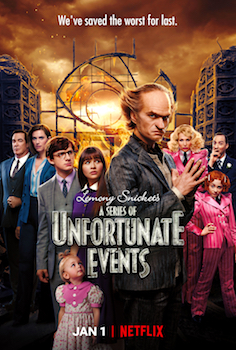
A Series of Unfortunate Events season 3The third and final season of Netflix’s adaptation of Daniel Handler’s Lemony Snicket’s 13-volume series of children’s novels arrived on New Year’s Day. “Final” because they have now reached the end of book 13, and therefore the end of the tale. And that means the whole story — running just under 20 hours total, across 25 episodes — is now sat there on Netflix, available for any future viewer to watch as a complete work. We live in an era where there are far too many quality films and TV series and other entertainments vying for our precious time, but even though I’ve already seen it all (obviously), “watching it as a complete work” is something I definitely intend to do someday in the future, because it’s bloody marvellous.

But, for the time being, back to this final batch of episodes. They begin exactly where the last lot left off — which only makes sense, because that was a cliffhanger. It’s quickly enough resolved, naturally, and we’re off into the series’ final stretch. That’s a funny one, actually: there are seven whole episodes here — an entire run for many UK dramas, for example — but it feels like we’re right at the tail of the, er, tale. So, for example, when we’re introduced to a new pair of major villains, it feels a bit late in the day for that kind of thing — surely there’s not enough time left to explore their importance? Indeed, the series basically doesn’t. It’s part of why the opening two-parter, The Slippery Slope, felt a bit something-or-nothing to me. But perhaps that’s unfair — perhaps I was just itching to reach the impending denouement, with all its long-promised answers — so perhaps they’ll fare better on a rewatch. Things pick up in The Grim Grotto, which is set mostly aboard a pair of submarines, a nice showcase for the series’ always-impressive production design. There are some neat surprises and revelations here, which turn out to be vitally important later on.

But things really get good in the penultimate tale, the appropriately-named The Penultimate Peril. Well, I say “appropriately” — in some respects this two-parter actually feels like the show’s big finale, with many much-anticipated meetings and events taking place, plus a healthy dose of long-awaited reveals and answers. It’s all wrapped up in a tale that is gorgeously constructed, the screenplay and editing revelling in a temporally-twisted structure that helps underscore some of the series’ biggest and best messages. I thought it was absolutely stunning, especially the first half; a phenomenal finale that brings so much together while also being clever in itself.

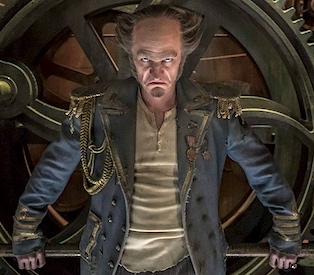
Is Olaf so awful?After that, we come to The End — that’s not emphasis, it’s the title of the actual finale. Every other novel in Snicket’s 13-volume series has been treated to a two-part adaptation, but The End is the longest book of them all, so it gets… one episode. A regular-length one, at that. Well, I’ve never read the books (I will someday…), so I can’t comment on why this should be, or if the programme-makers have done it a disservice, but I’m sure they had their reasons. That said, it’s even more intriguing given that the TV series manages to wrap up almost every on-going plot line and mystery, something the book series is notorious for not doing — you’d think they’d need more screen-time for that, not less.

As an episode, The End isn’t quite as impressive as The Penultimate Peril. It’s a weird cross between an epilogue and an essential final piece of the puzzle. One thing I think the final three episodes do get right is they explain almost all of the complicated, mysterious backstory in Penultimate Peril, then bring the focus back onto the Baudelaire orphans for the finale. There’s been so much of that backstory to get into that it’s sometimes threatened to overwhelm the main plot; to make the programme all about the kids’ parents and what went on in the past. To get that explaining out of the way, then swing round to “where do the kids go from here?”, is a good move. And having just said how much the series explains and wraps up, it’s actually very open-ended, especially considering it’s explicitly designed to be a definite end. But (spoilers!) it is an end to what was explicitly the story of the series (Olaf’s attempts to get the Baudelaire fortune, plus the mysteries of VFD); it’s just that Violet, Klaus and Sunny’s lives will continue to be adventurous after that story is over. Though it does make one wonder if Handler will ever be tempted to write a sequel series someday…

That open-ended-ness is just one of many big, potentially challenging ideas the series has presented its younger audience with. In amongst all the quirky whimsy and kids’ picture book aesthetics, the series has ultimately engaged with important and mature themes — about bad people not being purely evil and good people not being purely good; about how ‘good’ and ‘bad’ can be subjective and personal anyway; about not blindly respecting authority, or expecting it to deliver what’s right or fair… This maturity is one (of many, I think) reasons the series also works for adult viewers.

Bye bye, BaudelairesBack at the start, it took me a couple of episodes to warm up to A Series of Unfortunate Events. I’m worried the same thing will have put other viewers off. That’s a shame. Okay, sure, some people are never going to be on board with its particular style — it’s like something by Wes Anderson or Tim Burton or someone in that respect; stylised and mannered in a way some people just don’t get on with — but I think more people need to give it a fair shot; to stick with it, knowing the early stuff is sometimes about establishing a tone and a status quo for later episodes to peel away as a facade. I’m not saying it’s perfect — there are ups and downs along the way — but, for me, I think the series taken as a whole borders on being a masterpiece. I love it, and I’m going to miss it, and that’s just one reason I’ll watch it again. So much for looking away.

Also watched…
  • Island of Dreams — This was a proper oddity: a one-off comedy set on Sir Richard Branson’s private island, where he hosts guests including J.K. Rowling, Daniel Radcliffe, Daniel Craig, Adele, Greg Wallace, Professor Brian Cox, and Elon Musk — all played by comedians, obviously. It was… kinda funny, I guess? Apparently it’s a pilot, so maybe there’ll be more.
  • Les Misérables Episodes 2-3 — When this series started there was apparently much discussion on social media about how it was “weird without the songs”. Other than Look Down popping into my head when it first cut to the prison ships, that hasn’t bothered me too much. What I have found kinda odd, though, is seeing a familiar story told in such a different way. I don’t know why that’s weird — it’s not as if I haven’t seen a remake before, and I’ve only seen the musical three or four times (in several different versions, too). I think it’s something to do with seeing a story I only know as a musical being told as a straight-up drama, and an expanded one too, with events occurring in slightly different ways, and with whole other characters and subplots and stuff mixed in. It makes it quite hard for me to judge as a drama in its own right, though. Well, I’ll try in next month’s TV roundup, by when it’ll be finished.

    Things to Catch Up On
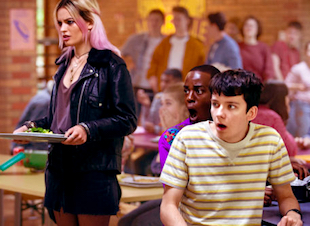
    The cast of Sex Education are shocked by my opinion, clearly.This month, I have mostly been missing Sex Education, Netflix’s comedy-drama about a sex therapist’s son who begins offering what expertise he’s picked up second-hand to his classmates. It attracted a bit of hype before release and has been much-discussed on social media, but I thought something looked kinda off about it… and then I saw this, which has hit the nail on the head for me. I always hate it when British programmes or films behave like UK secondary school is anything like US high school, and by the sounds of things Sex Ed has gone all-in on that ludicrous fallacy. If I do end up watching it, I feel like that’s just gonna bug the hell out of me.

    Next month… the Punisher returns for (what will presumably be) the penultimate season of the MCU on Netflix.

  • Godzilla: The Planet Eater (2018)

    aka Gojira: Hoshi o Kuu Mono

    2019 #3
    Hiroyuki Seshita & Kôbun Shizuno | 91 mins | streaming (HD) | 16:9 | Japan / English | 12

    Godzilla: The Planet Eater

    Picking up where the previous film left off, this concluding instalment in the anime Godzilla trilogy (which also doubles as the 32nd official Godzilla movie) sees the eponymous kaiju lying dormant while plans swing into action to bring Ghidorah, a being from another dimension who’s worshipped as a god by some, into our dimension, where it will eat Godzilla and then Earth itself.

    Yeeeaaah.

    But before we get to the headline monster mash, there’s an attempt at a plot. By the end of the last film, the alliance between humans and a couple of alien races who’d helped us out was looking a bit shaky. What once looked like it might make for a Battlestar Galactica/Babylon 5-style conflict has turned out to be nothing so developed, and in this final film it noodles along, driven by minor supporting characters we have zero attachment to; a something-and-nothing plot line that kills time until it’s summarily wiped away. Meanwhile, down on Earth, we’re treated to dozens of scenes in which the trilogy’s equally unmemorable lead characters wander around waffling Religious Studies 101-level stuff about religion as propaganda and a manipulation tool. At one point a character talks about soup as an analogy for, like, society or something, coming to the observation that “unlike the soup, we have free will.” It’s a deep philosophical movie, man. About as deep as a bowl of soup.

    All the while, we’re made to wait for the guy we came to see to wake up. Yes, Godzilla literally sleeps through the first half of the movie. Well, I can’t say I blame him.

    Godzilla vs Ghidorah

    On the bright side, it does eventually get to some good bits (that’s more than I’d say about the preceding instalment). There’s a sequence where the alien death cult religion summons Ghidorah, who initially manifests as some kind of shadow-demon that begins massacring everyone in the room, which is all quite creepy. It’s followed by a large-scale sequence where Ghidorah’s glowing energy snake-dragon form emerges from a space-time singularity and destroys the humans’ spaceship in some kind of temporally-messed-up way, which is also quite striking. You have to appreciate these individual sequences almost in isolation, because the plot they’re part of is a load of muddly claptrap.

    Then there’s the climax, in which we get to witness a mountain-sized dinosaur-ish monster with atomic breath (Godzilla) battle an interdimensional three-headed dragon-snake apparently made of glowing yellow light (the trilogy’s take on Ghidorah). It has its moments, but it’s overlong and mixes in a bunch of the cod-scientific wannabe-philosophical gubbins too, which takes the wind out of its sails somewhat.

    There have been some interesting ideas tucked away in this trilogy, both in how it reimagined the kaiju and their mythologies, and in the brand-new stuff it attempted to introduce with the alien races and their beliefs. Unfortunately, that promise has been lost under unengaging characters, poorly defined relationships, and the kind of philosophising you might expect from a Sixth Form student. It was bold to try to take the Godzilla franchise in a new direction, but that boldness feels squandered.

    2 out of 5

    Godzilla: The Planet Eater is available on Netflix now.

    Blindspot Review Roundup

    Of the 22 Blindspot/WDYMYHS films I watched in 2018, I still haven’t posted reviews for 18 of them. (Jesus, really?! Ugh.) So, here are three to get that ball rolling.

  • The 400 Blows (1959)
  • Big Fish (2003)
  • Strangers on a Train (1951)


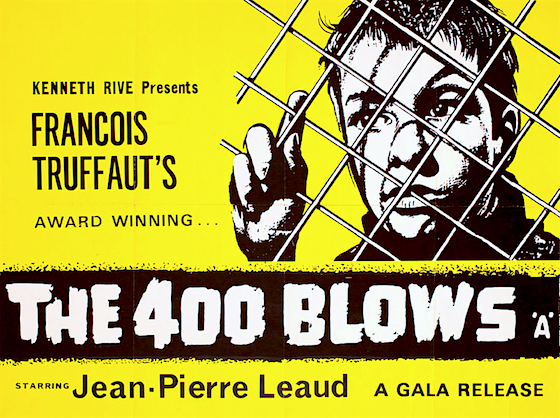
    The 400 Blows
    (1959)

    aka Les Quatre Cents Coups

    2018 #4
    François Truffaut | 100 mins | streaming (HD) | 2.35:1 | France / French | PG

    The 400 Blows

    One of the first films to bring global attention to La Nouvelle Vague, François Truffaut’s semi-autobiographical drama introduces us to Antoine Doinel (Jean-Pierre Léaud), a schoolboy in ’50s Paris who plays havoc both at home and at school, which naturally winds up getting him in trouble. The film is both a portrait of misunderstood youth (Antoine isn’t so much bad as bored) and indictment of its treatment (neither his school nor parents make much effort to understand him, eventually throwing him away to a centre for juvenile delinquents).

    The film barely contains one blow, never mind 400, which is because the English title isn’t really accurate: it’s a literal translation of the original, which is derived from the French idiom “faire les quatre cents coups“, the equivalent meaning of which would be something like “to raise hell”. Imagine the film was called Raising Hell and it suddenly makes a lot more sense.

    Anyway, that’s beside the point. As befits a film at the forefront of a new movement, The 400 Blows feels edgy and fresh, that aspect only somewhat blunted by its 60-year age. I was thinking how it was thematically ahead of its time, but I suppose Rebel Without a Cause was also about disaffected youth and that came out a few years earlier, so I guess it’s more in the how than the what that 400 Blows innovated.

    Either way, it’s an engaging depiction of rebellious youth, that remains more accessible than you might expect from a film with its art house reputation.

    5 out of 5

    Big Fish
    (2003)

    2018 #32
    Tim Burton | 125 mins | streaming (HD) | 1.85:1 | USA / English & Cantonese | PG / PG-13

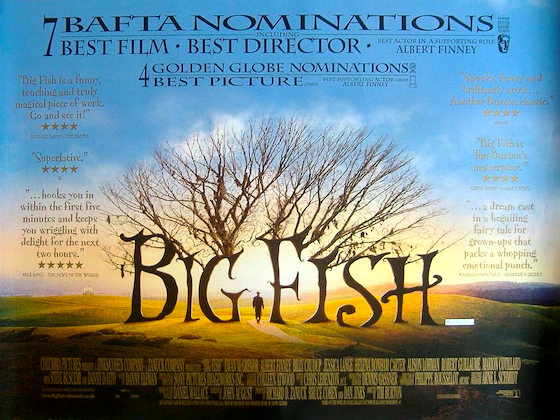
    Big Fish

    After getting distracted into the mess that was his version of Planet of the Apes, Tim Burton returned to the whimsical just-outside-reality kind of fantasy that had made his name. Based on a novel by Daniel Wallace, it’s about the tall tales of a dying man (played by Albert Finney on his deathbed and Ewan McGregor in his adventurous prime), and his adult son (Billy Crudup) who wants to learn the truth behind those fantastical stories.

    Most of Big Fish is fun. It exists at the perfect juncture between Burton’s sense of whimsy and a more realistic approach to storytelling — he’s reined in compared to some of the almost self-parodic works he’d go onto shortly afterwards made since, but it doesn’t seem like he’s constrained, just restrained. With a mix of many funny moments, some clever ones, and occasional somewhat emotional ones, it ticks along being being all very good.

    But then the ending comes along, and it hits like a freight train of feeling, clarifying and condensing everything that the whole movie has been about into a powerful gut-punch of emotion. It’s that which elevates the film to full marks, for me.

    5 out of 5

    Strangers on a Train
    (1951)

    2018 #176
    Alfred Hitchcock | 101 mins | Blu-ray | 1.37:1 | USA / English | PG / PG

    Strangers on a Train

    Alfred Hitchcock’s adaptation of Patricia Highsmith’s thriller novel, in which two men get chatting on a train and agree to commit a murder for each other — as you do. In fact, one of the men — tennis star Guy Haines (Farley Granger) — was just making polite conversation and doesn’t want to be involved; but the other — good-for-nothing rich-kid (and, as it turns out, psychopath) Bruno Antony (Robert Walker) — really meant it, and sets about executing the plan.

    Strangers on a Train is, I think, most famous for that premise about two strangers agreeing to commit each other’s murder; so it’s almost weird seeing the rest of the movie play out beyond that point — I had no idea where the story was actually going to go with it. It’s a truly great starting point — the kind of “what if” conversation you can imagine really having — and fortunately it isn’t squandered by what follows — the “what if” scenario spun out into “what if you actually followed through?” Naturally, I won’t spoil where it goes, especially as you can rely on Hitch to wring every ounce of suspense and tension out of the premise.

    Aside from Hitch’s skill, the standout turn comes from Walker, who makes Bruno a delicious mix of charming and scheming, confident and pathetic, and brings out the homosexual subtext without rubbing it in your face (well, it was the ’50s).

    5 out of 5

    The 400 Blows, Big Fish, and Strangers on a Train were all viewed as part of Blindspot 2018, which you can read more about here.

  • Zatoichi’s Cane Sword (1967)

    aka Zatôichi tekka-tabi

    2018 #241
    Kimiyoshi Yasuda | 93 mins | Blu-ray | 2.35:1 | Japan / Japanese

    Zatoichi's Cane Sword

    The 15th Zatoichi movie is another that’s regarded as one of the very best: Letterboxd users rank it in the series’ top ten; IMDb voters have tied it for first place (with the first and 17th films); while The Digital Bits reckon it’s the best of them all, the only film in the series they gave an A+ rating. Well, I wouldn’t go that far, but it’s another fine instalment in this series that consistently delivers.

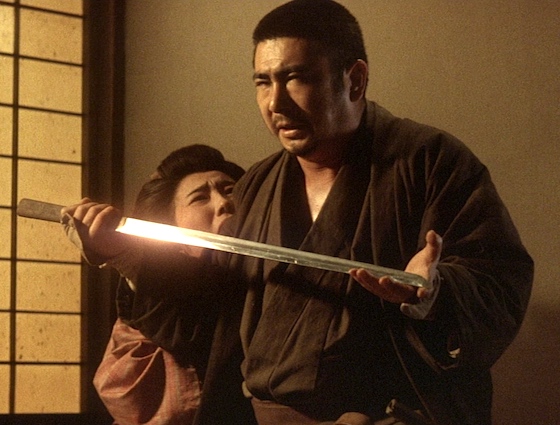
    Ichi’s sword skills attract the attention of an old blacksmith, a former sword maker, who it turns out was the protégé of the man who forged Ichi’s blade. Upon examining it, the blacksmith informs Ichi of a sad fact: the sword has an invisible crack — it’s good for one more strike, but that strike will break it. Giving the weapon to the blacksmith as a memento, Ichi quits his roaming ways and finds work as the live-in masseur at a nearby inn. There he stumbles into familial intrigue involving a dead boss’ children, the schemes of a cheating gang from the next town over, and the machinations of a corrupt official.

    Zatoichi’s Cane Sword comes with a great setup — Ichi giving up his sword and, with it, renouncing his wandering, battling lifestyle; trying to get by without falling back on his old combative skills — but, actually, I’m not sure how much our hero’s new status quo really changes things. I mean, you know Ichi’s going to end up with a sword in hand slashing down his foes eventually; and until we reach that point, the rest of the plot is pretty standard Zatoichi stuff. It’s solid, but not the most interesting the series has offered, despite some promising building blocks. For example, there’s a revelation about a supporting character’s parentage that feels like it could and should go somewhere interesting, but instead it just turns out they already knew. Later, Ichi tells Boss Iwagoro that he’s met many evil men, but Iwagoro is the worst. Well, that’s patently not true — we’ve seen much worse than him over the course of the series.

    Zatoichi and his sword

    I don’t want to sound too down on the film, though, because while it’s not in the absolute top tier of the series, it’s surely at the upper end. Even if the way events play out didn’t dig into their promise as much as I’d hoped, it still leads to numerous engaging or entertaining moments — the quietly emotional scene where Ichi decides to completely change his life, for example; or, by complete contrast, a fun and silly scene where Ichi abuses the respect/fear of a snivelling boss by pretending to be drunk and pouring sake all over the chap. There’s also a nightmare sequence, which makes this the second Zatoichi film in a row to feature a dream scene, fact fans. Whereas the last one was a bit… odd, this one is a memorable insight into Ichi’s fears. Finally, the inevitable climactic mass slaughter is set in falling snow, which gives it a nice bit of visual beauty to stand out, seeing as the rest of the film’s fight choreography is pretty standard stuff for the series — which of course means that, considered in isolation, it’s as impressive as ever.

    Anyone who watches and enjoys the Zatoichi series is bound to end up with their own particular favourites, for whatever reason. Clearly Cane Sword particularly clicked for the writers at The Digital Bits; for me, it’s been other films — I’m reminded of Adventures of Zatoichi, which seems to score lowly with most people but was one of my favourites. Either way, Cane Sword is another very good entry in a series which is, fortunately, full of them.

    4 out of 5

    Blindspot 2019

    I already waffled on a lot at the start of my 2019 WDYMYHS list, so if you’ve not read that then do check it out for a full introduction to what this is all about.

    The relevant part, though, is that this is a list of 12 films I should’ve seen but haven’t that I must watch this year — and, because I’m doing both WDYMYHS and Blindspot, that’s 24 films I must watch. Whereas the WDYMYHS selection contains 12 films chosen by consulting lists of great movies to find what the consensus feels I should’ve seen, these Blindspot choices are simply personally selected from my DVD/Blu-ray collection. Nonetheless, I do try to add a bit of variety to the mix, with different countries, genres, and eras represented.

    Anyway, here’s what I picked out this year, in alphabetical order…


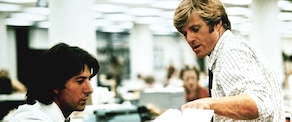
    All the President’s Men
    All the President's Men


    The Breakfast Club
    The Breakfast Club


    Les diaboliques
    Les diaboliques


    Dr. Mabuse, der Spieler
    Dr. Mabuse, der Spieler


    Dracula
    Dracula


    The Ipcress File
    The Ipcress File


    The Killer
    The Killer


    The Player
    The Player


    Rififi
    Rififi


    Rope
    Rope


    Scott Pilgrim
    vs. the World
    Scott Pilgrim vs. the World


    Starship Troopers
    Starship Troopers

    Dr. Mabuse, der Spieler is actually a two-part film (why so many online sources insist on listing it only as one movie when it seems to have been originally released as two, I don’t know), so you could argue I’ve given myself 25 films to watch for these challenges this year. Have I bitten off more than I can chew? Only time will tell…

    What Do You Mean You Haven’t Seen…? 2019

    A new year, a new challenge… or, rather, an old challenge with new components.

    Yes, for a seventh year I’m setting myself the goal of watching 12 specific films I really should have seen but haven’t.

    And, because I’m a crazy madman, I’m doing it twice — i.e. 24 films.

    I’ve been doing two of these lists since 2017 (separated as “Blindspot”, which you may’ve seen on other blogs, and my own version, “What Do You Mean You Haven’t Seen…?” (aka WDYMYHS), which is the same thing by a different name), but previously only put ten films on the second list. Well, I got into such a rhythm of watching these films during 2018 that it felt weird in November and December after the WDYMYHS list had run out. So, I thought for 2019 I’d go all-in and do two full lists of 12.

    “Why do you have two lists of 12 rather than one list of 24?”, you may ask. Fortunately for you (or unfortunately, if you don’t care), I’m happy to answer. I started doing WDYMYHS as a 12-film challenge before Blindspot came along, but for my 10th anniversary in 2017 I decided to do ‘both’ — the regular 12-film challenge, plus a ten-film one, marking my blog’s 10th anniversary by selecting one film I really should’ve seen from each of the previous ten years. That went well, so I repeated it in 2018; and that went well too, so I’m making it that little bit trickier this year (9.09% trickier, to be precise).

    The exact difference between the lists is that Blindspot is a ‘free choice’ of 12 films I personally feel I should’ve seen, whereas WDYMYHS is selected by analysing lists of great and/or popular movies to try to determine a consensus view of what I’m a fool to have missed. I vary which lists I consult, and how much value I put in them, year by year (to some extent, anyway). This year, the formula to calculate these picks was based on the three Top 250 lists that are tracked on iCheckMovies — the ones from IMDb, Reddit, and FOK! — plus They Shoot Pictures, Don’t They?’s 1,000 Greatest Films. These lists were factored with various weightings to give the films a score. Then I applied a couple of rules: films had to appear on at least two of those lists, including at least one out of IMDb and TSPDT; I had to already have access to them (either on DVD, Blu-ray, or if they’re currently streaming on Netflix/Amazon/etc); and, as usual, no repeat directors. That led to a load of high-scoring films being passed over (I had to go as far down as #32 for my 12th pick).

    After all that, this is what I ended up with, in the order they finally scored (from highest to lowest)…


    Ikiru
    Ikiru


    Untouchable
    Untouchable


    The Gold Rush
    The Gold Rush


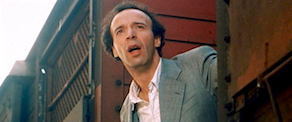
    Life is Beautiful
    Life is Beautiful


    All About Eve
    All About Eve


    Sherlock, Jr.
    Sherlock, Jr.


    The Thin Red Line
    The Thin Red Line


    Eyes Wide Shut
    Eyes Wide Shut


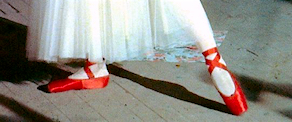
    The Red Shoes
    The Red Shoes


    Cool Hand Luke
    Cool Hand Luke


    The Royal Tenenbaums
    The Royal Tenenbaums


    Memories of Murder
    Memories of Murder

    Some noteworthy exclusions…

    • To Kill a Mockingbird actually made the list (in 6th), but it was on my list in 2015. I once had the rule that a film only had to sit out one year before being available for reinclusion, but, I dunno, I like mixing it up. But if I don’t watch it anyway during 2019, I might let it back in for 2020.
    • If I hadn’t ruled out films I don’t own, the “true top 12” (i.e. based on score alone) would’ve included In the Mood for Love, , Cinema Paradiso, Andrei Rublev, Come and See, and A Separation.
    • If I didn’t rule out repeat directors, Charlie Chaplin’s The Kid would’ve been in 8th place.
    • If I’d kept the “must own/have access to it” rule but allowed films that were only on one list, it would’ve included Dangal, Taare Zameen Par, Ordet, Ugetsu Monogatari, and Fanny & Alexander.
    • Finally, if I’d had to own it and have it on multiple lists, but it didn’t have to be on IMDb’s or TSPDT’s, then Scott Pilgrim vs. the World would’ve been the 12th film.

    Of course, just because something got cut out of my WDYMYHS, doesn’t mean I couldn’t choose to include it in my Blindspot picks…

    The Best & Worst of 2018

    Later than planned, here it is: my picks of the best (and worst) films I saw in 2018! Plus, as usual, a list of some major titles I missed, thus explaining why they’re not on my top list (i.e. because I haven’t seen them).

    I’d hoped to have this up by Sunday morning, but life increasingly got in the way, not helped by it being a more mammoth task than usual. You’d think picking a top 26 would be easier than picking a top 10 (there are more slots!), but you end up with the same dilemmas, just further down the scale. And, of course, a longer list means there are more films to sort into order — I mean, how do you decide which is ‘better’ between a dystopian sci-fi parable, an excoriating relationship drama, and a groundbreaking action movie when you love them all? And that’s just one example…

    Anyway, this is what I ended up with. And just a final reminder before we get going: these films are selected from all 261 movies I saw for the first time in 2018, not just new releases.


    The Five Worst Films I Saw For the First Time in 2018

    This year I watched some films so bad that The Snowman hasn’t made the cut. Perhaps The Snowman is worse than some of these films, and certainly everyone involved in it should’ve done better; but it seems something went wrong during its production (15% of the screenplay wasn’t even shot!), so I feel like those involved can’t be wholly to blame. However, the following five films are (to the best of my knowledge) just bad. So, in alphabetical order…
    The Cloverfield Paradox
    The third film in J.J. Abrams’ sci-fi anthology series was dumped on Netflix at short notice, presumably in the hope people would watch it before hearing how terrible it was. Its sci-fi concepts are internally inconsistent, while the Cloverfield connections were clearly retrofitted with reshoots. [Full review.]

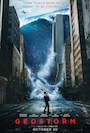
    Geostorm
    Talking of nonsensical sci-fi, this is even worse — not only is the science stuff implausibly done, it can’t create plausible character logic either. Big dumb popcorn fun shouldn’t be this dumb, because it stops it being fun. [Full review.]

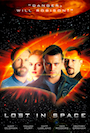
    Lost in Space
    I avoided this movie for two decades because I heard how bad it was, but then caved when the Netflix reboot came along. Sadly, its reputation is fully deserved — it’s bad in every way you’d care to consider. Even Gary Oldman’s no good in it. And, 20 years on, it also looks incredibly dated. [Full review.]

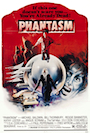
    Phantasm
    This is a cult favourite with some people (known as “Phans”, I believe), but I thought it was awful. None of it makes any sense, from the mythology to the way characters behave, and it’s not very well made, either. [Full review.]

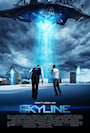
    Skyline
    Another sci-fi movie! I clearly made some poor genre viewing choices in 2018. Anyway, even his is Cloverfield meets Independence Day filtered through the minds of the directorial brothers behind Aliens vs Predator: Requiem, and is every inch as terrible as that sounds. [Full review.]


    The 26 Best Films I Saw For the First Time in 2018

    Rather than end the year with a good ol’ top ten, since 2016 I’ve been doing a “top 10%”. This year’s record-obliterating tally was 261, so it’s my biggest top “ten” ever too, with 26 films. Think that’s too many? Feel free to scroll down and start wherever you like.

    As I said at the start, all the movies I watched for the first time in 2018 are eligible for this ranking, not just new releases. However, I did watch 50 films that made their UK debut in 2018, and nine of them made it into my top 10%, so I’ve noted their ‘2018 rank’ too.

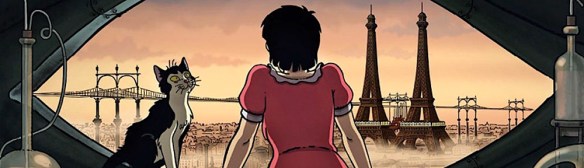
    This French steampunk adventure features gorgeous animation to render a creative alternate history. A sharp turn into pulp sci-fi almost lost me, but it’s too wildly imaginative not to enjoy. [Full review.]

    Probably the most iconic Bollywood movie of all time, Sholay’s 3½-hour running time has something for everyone: it’s an action adventure comedy romance musical thriller! [Full review.]

    This German Cold War tale is tense and thrilling like a spy movie, but emotionally and politically loaded like an art house drama. [Full review.]

    2018 #9 The year’s best fourth-wall-breaking superhero comedy. It’s a kid-friendly cartoon, but there are plenty of jokes aimed at adult superhero fans too. [Full review.]

    A rounded portrait of life and combat beneath the waves, with one of the most effective surround sound mixes I’ve ever heard. [Full review.]

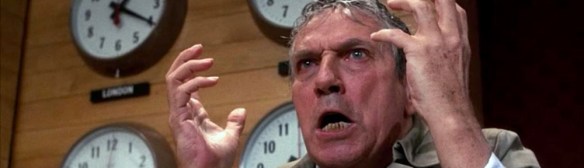
    A newsroom satire so insightful and timelessly pertinent, you could remake it virtually word-for-word set today. [Full review.]

    The blind masseur-cum-swordsman turns babysitter in this atypical but excellent instalment of the long-running series. [Full review.]

    Rocky returns to train his dead friend’s son in this spin-off that honours the series’ legacy to emotive effect. [Full review.]

    The kind of movie that makes me nostalgic for a time I never experienced (and, to be honest, wouldn’t necessarily actually enjoy). [Full review.]

    Our felty friends take to the high seas for one of their best movies, packed with swashing buckles and superb musical numbers. [Full review.]

    Dario Argento’s seminal shocker was remade this year, which led me to finally see the original. It’s a masterpiece of uneasy atmosphere, with striking colours and music. [Full review.]

    2018 #8 Hilariously funny, with some of the best line deliveries of the year (or ever), and cleverer than it has any right to be, this is so good it makes up for the bait-and-switch of the cute dog being prominent on the poster but not in the film. [Full review.]

    2018 #7 Fantastic performances colour in all the shades of grey for some complicated characters in this dark (but, at times, surprisingly funny) drama. [Full review.]

    Once eyed by Tarantino for a remake, this instalment sees Ichi attempting to atone for all his killing… only to get drawn into protecting a village from a vicious gang boss. [Full review.]

    2018 #6 The Marvel formula, now available in black. But there’s more than that to this film, which plays like an Afrofuturist Bond movie. [Full review.]

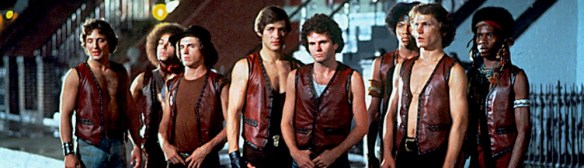
    A gang must fight their way home across a city out to get them in Walter Hill’s actioner, which is thrilling thanks to an almost-mythological simplicity and directness. [Full review.]

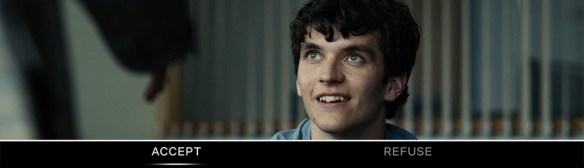
    2018 #5 Netflix attracted a lot of attention by suddenly announcing and releasing this “choose your own adventure” movie at the end of December. Unlike when they pulled that stunt in February (see my worst movies list, above), Bandersnatch merited the hype. It could’ve been a gimmick, but, in the hands of Charlie Brooker and the Black Mirror team, content mirrors form, and we’re treated to a paranoid sci-fi story that couldn’t’ve been told as well any other way. [Full review.]

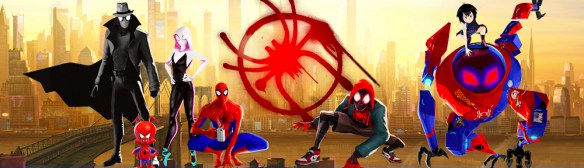
    2018 #4 Spider-Men other than Peter Parker have been a fixture of comic books for yonks now, but here they make it to the big screen, accompanied by a powerful message about who can be a hero. Realised with startlingly inventive animation, it’s destined to be a genre classic. [Full review.]

    Stanley Kubrick’s Vietnam movie is best known for its bootcamp first half, with the abusive drill instructor played by R. Lee Ermey, who brought his experience of having done the job for real. Nonetheless, I was impressed to find the second half (set in Vietnam itself) was equally affecting. [Full review.]

    2018 #3 I’d rather gone off the work of Paul Thomas Anderson in recent years, and a drama about a London fashion house in the ’50s didn’t particularly appeal either… but blow me down with a feather, the combination has produced this work of exquisite beauty. Maybe not “beauty” in the traditional sense, but as a character study of two very particular souls, with more than a touch of Gothic melodrama about its style and story, it’s my kind of beauty. [Full review.]

    2018 #2 This year, the superhero movie went full comic book, with both Spider-Verse and this bringing the storytelling style of a team-up event series to the big screen. In the case of Infinity War, it was the (beginning of a) culmination of ten years’ work that has revolutionised the blockbuster movie business. But even leaving that aside, what Marvel produced here is a film with a scope, scale, and narrative style not quite like any other. [Full review.]

    The darkness that’s barely concealed beneath the pleasant veneer of American high schools is exposed in this pitch-black comedy, which mixes violent teen wish fulfilment with a certain degree of societal satire to boundary-pushing effect. It’s not as transgressively shocking 30 years on as it might’ve been back in the ’80s, but it’s still so very.

    Yes, I only got round to seeing La La Land this year. The Best Picture winner that wasn’t, you can certainly see why everyone thought the tradition-led Academy Awards would pick this as their winner — it is, in part, a love letter to classic Hollywood musicals. But the songs are better than just pastiches, there’s a realism to the storytelling and performances that’s more modern, and the whole film sings with the joy of moviemakers dedicated to producing something beautiful. [Full review.]

    If La La Land is about beauty, Snowpiercer is about human ugliness. Its setup may stretch credulity (following an apocalyptic event, the remnants of humanity all live on one long train that constantly circles the globe), but just go with it and you’re treated to an insightful commentary/allegory about class divides and interdependence, wrapped up in a pulse-pounding action thriller with the relentless forward motion of… well, you know what. [Full review.]

    The third film in Richard Linklater’s Before trilogy catches up with Celine and Jesse in middle age, after years of togetherness, with two kids (plus his kid from a previous relationship) and a host of problems bubbling under the surface. Midnight is notably different from the lovey-dovey-ness of Sunrise and Sunset, but it’s a powerful examination of the tension in a long-term relationship, and all the more so because we’ve connected with these characters on and off in real-time. The first two leave you feeling warm and fuzzy; this is more like being punched in the gut. And yet, together, they are one of the greatest trilogies ever made. (I really hope they do a fourth one, though.) [Full review.]

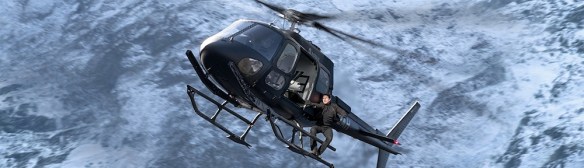
    2018 #1 I have the whole history of cinema to choose from, but, once again, a new release tops my top ten. Sometimes, with hindsight, I wonder about my picks for #1; other times, I’m pleased to see I was right many years later, as my top film stands the test of time. I suspect this will be one of the latter, because the lengths to which writer-director Christopher McQuarrie and, especially, star Tom Cruise have gone to show us something we’ve never seen done before, and to entertain us with cleverly conceived and astoundingly executed action sequences, is really above and beyond the call of duty. It’s resulted in one of the best action movies ever made. As the first film I felt compelled to see twice on the big screen for nearly a decade, not to mention that I listened to over six hours of podcast interviews with McQuarrie as he dissected it every which way, there couldn’t really be any other pick for my film of the year. [Full review.]


    As ever, there were lots of films I liked a lot that there simple wasn’t room for (my original long list, which I add to throughout the year, had 93 films on it). If I just listed a bunch more films I liked that would be kinda cheating (why not just do a longer list?), but, nonetheless, there are a few I’d like to highlight for specific reasons.

    While compiling my top 10%, I hit on two kinds of movie that I felt should be eliminated from consideration but that I still really wanted to mention in some way. In other years, any or all of these films might’ve made the “best” list, but it was a tough year and something had to go! Well, that’s exactly what “honourable mentions” are for, right?

    The first are movies that were not traditionally “good”, but I still got a lot of enjoyment out of them; what some people might call “guilty pleasures”, I guess. In particular I’m thinking about Gods of Egypt (my review explains all about that) and the 1975 Zorro, which was an entertainingly chaotic romp. Also Happy Death Day, which I really enjoyed as a tonal throwback to turn-of-the-millennium teen horror movies, and Benji, which is a young kids’ film through and through, but with a loveable doggy star to ‘aww’ over.

    The latter crosses over somewhat into the second category: films that were only fairly good overall, but I bloody loved one element of them — so, Benji in Benji, for example. Also: Winnie the Pooh in Christopher Robin, the Live Aid sequence in Bohemian Rhapsody, and all the action sequences in The Villainess. If I did lists like characters or scenes of the year, they’re the kind of the thing that would be right near the top.

    Now, let’s recap the 12 films that won Favourite Film of the Month at the Arbies, all of which have already been mentioned in this post, one way or another. In chronological order (with links to the relevant monthly update): La La Land, Black Panther, Happy Death Day, Avengers: Infinity War, The Warriors, Sanjuro, Mission: Impossible – Fallout, Christopher Robin, Heathers, Suspiria, Creed, and Snowpiercer.

    Finally, I never end this without mentioning all the films that earned 5-star ratings in the year. There were 39 in total during 2018, including 22 that made it into my top 26. Those were Avengers: Infinity War, Before Midnight, Black Mirror: Bandersnatch, Black Panther, Das Boot: The Director’s Cut, Call Me by Your Name, Creed, Fight, Zatoichi, Fight, Full Metal Jacket, Heathers, La La Land, The Lives of Others, Mission: Impossible – Fallout, Network, Phantom Thread, Sholay, Snowpiercer, Spider-Man: Into the Spider-Verse, Suspiria, Three Billboards Outside Ebbing, Missouri, The Warriors, and Zatoichi’s Pilgrimage. The remaining 17 were The 400 Blows, Big Fish, Compulsion, The Director and the Jedi, The Elephant Man, The Hunt, Laura, Paper Moon, Princess Mononoke, Ran, Sanjuro, Scarface, The Shape of Water, Strangers on a Train, Terminator 2: Judgment Day 3D, They Shall Not Grow Old, and The Treasure of the Sierra Madre. Plus I also gave full marks when I wrote about rewatches of Blade Runner 2049 (in 3D) and Superman: The Movie.


    I watched 39 films from 2018 during 2018, which leaves a considerable number of notable releases that I’ve not yet seen. Therefore, as is my tradition, here’s an alphabetical list of 50 films that I’ve not seen which are listed as 2018 on IMDb. That means some of these ‘missed’ films are awards-y movies that aren’t actually out in the UK yet, but that’s the way this goes. (I have included one film that’s listed as 2017, because it only had a handful of festival screenings that year. But there was another that I was going to put here which was actually released in several countries at the end of 2017, so I decided it shouldn’t be allowed. That was, ironically, You Were Never Really Here. Oh how I laughed at the accidental pun. Now you can too, readers.)
    As always, the films in this list have been selected for a variety of reasons, from box office success to critical acclaim via simple notoriety. There are many more I want to see that I could have included, but I always make some attempt to include a spread of styles, genres, successes, and failures.

    Aquaman
    Creed II
    First Man
    Mary Poppins Returns
    Sicario 2: Soldado
    Suspiria
    BlacKkKlansman
    Early Man
    Isle of Dogs
    The Predator
    Skyscraper
    Venom
    Aquaman
    Bad Times at the El Royale
    Bird Box
    BlacKkKlansman
    Bumblebee
    Cold War
    Crazy Rich Asians
    Creed II
    Early Man
    Eighth Grade
    Fantastic Beasts: The Crimes of Grindelwald
    The Favourite
    First Man
    First Reformed
    The Girl in the Spider’s Web
    Green Book
    The Grinch
    Halloween
    The Happytime Murders
    Hereditary
    Holmes & Watson
    If Beale Street Could Talk
    Isle of Dogs
    Johnny English Strikes Again
    Leave No Trace
    Love, Simon
    Mamma Mia! Here We Go Again
    Mandy
    Mary Poppins Returns
    The Meg
    Ocean’s 8
    Pacific Rim: Uprising
    Peter Rabbit
    The Predator
    Ralph Breaks the Internet
    Rampage
    Roma
    Searching
    Sicario 2: Soldado
    A Simple Favour
    Skyscraper
    A Star is Born
    Suspiria
    To All the Boys I’ve Loved Before
    Tomb Raider
    Upgrade
    Venom
    Vice
    Widows
    A Wrinkle in Time


    Whew! That’s that over for another year. (Well, aside from the insane number of reviews I still have left to post…)