T2 Trainspotting (2017)

2017 #124
Danny Boyle | 117 mins | streaming (HD) | 1.85:1 | UK / English & Bulgarian | 18 / R

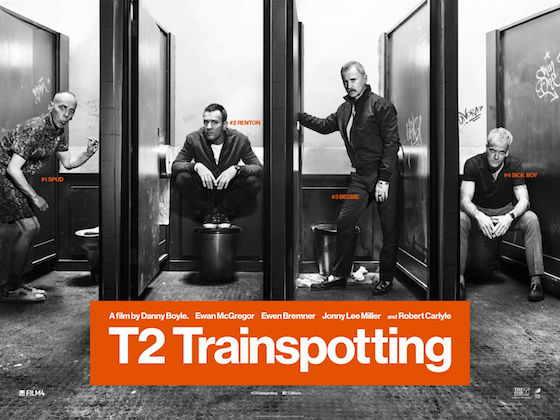
T2 Trainspotting

At one point during T2, a younger character accuses some of the returning characters of living in the past; that it’s all they talk about. It’s true of the characters, and it’s kinda true of the film itself too: this belated sequel to the era-defining original feels try-hard, like it wants to recapture the verve and inventiveness of its predecessor, but everyone’s now too grown up to do it properly.

Set 20 years on, it reunites the first film’s main characters… and, really, that’s the plot. Obviously other things happen, and the details are important, but that seems to be why the film exists: to get the gang back together for another couple of hours. Is that reason enough to make a movie? I guess everyone will have their own answer to that question. For me, it wasn’t reason enough to justify T2.

(Trivia aside that, frankly, I find more interesting then the film itself: reportedly director Danny Boyle wanted to call it simply T2, if James Cameron would let him — they thought they needed that permission because of Terminator 2 being commonly marketed as T2. But then it turned out that Terminator 2 was never officially called T2, so they were free to do as they pleased. But then internet searches for “T2” were found to still mainly turn up the Terminator sequel (unsurprisingly, let’s be honest), so they settled on T2 Trainspotting so people would know what it was. You have to wonder why at that point they didn’t just call it Trainspotting 2…)

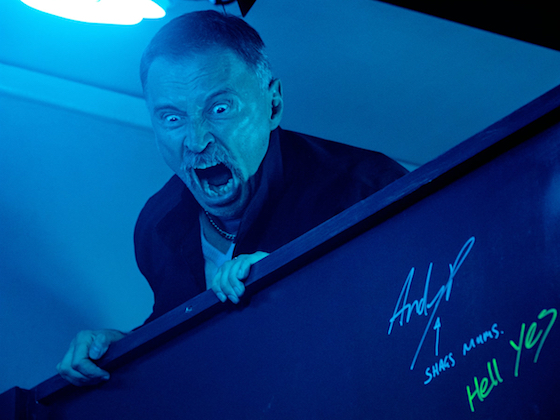
Looking as bored as I felt

Anyway, back to this T2. The meandering plot, such as it is, lacks the grit and realism of the first movie. For example, that ended with a simple betrayal — a guy stealing money while his mates were sleeping — while this ends with a knock-down drag-out fight in a construction site like something out of a low-budget thriller. Visually, too, it’s so clean and pristine. There are some properly beautiful shots, especially of the scenery outside Edinburgh, but I’m not sure that’s in-keeping with the Trainspotting aesthetic. Boyle does at points try to reheat the visual tricks of the first movie, but I didn’t feel it worked. The original’s many stylistic flourishes are now much imitated, but they were fresh back in the day and somehow that freshness still comes across when watched now. By trying to ape ape them, T2 just joins the long line of copycats.

Another key element of Trainspotting was the soundtrack. I don’t know what they were thinking with the music here — it isn’t even close to being as memorable or iconic as the original. Maybe that was the point, to not try the same trick again; but there are still plenty of jukeboxed tracks that attempt to draw attention to themselves, but… don’t.

I felt like this, too

Trainspotting had energy, dynamism, exuberance; it pulsed with life and youth. Its sequel is more sedate, more… middle-aged. Well, so are the characters, so that could work; but they don’t behave like they’re middle-aged — they’re too busy trying to recapture their youth, reliving past glories and past conflicts. The film is doing the same. You could perhaps argue that it’s form mirroring content, but the form lacks the wink at the audience to say “this is deliberate.” Like the characters, it seems unaware of the sad state it’s in. Ultimately, it feels like a slightly unfocused, thematically inconclusive, largely unnecessary postscript.

3 out of 5

Making of the Living Dead

To mark the UK release of Criterion’s remastered, definitive Blu-ray edition of George A. Romero’s seminal subgenre-starting zombie classic Night of the Living Dead, I finally got round to watching two related feature-length documentaries that, er, aren’t included on that release. Never mind, eh?

Anyway, here are my thoughts on One for the Fire and Birth of the Living Dead.


One for the Fire:
The Legacy of “Night of the Living Dead”

(2008)

2018 #29
Robert L. Lucas & Chris Roe | 84 mins | Blu-ray (SD) | 16:9 | USA / English

One for the Fire Italian DVD

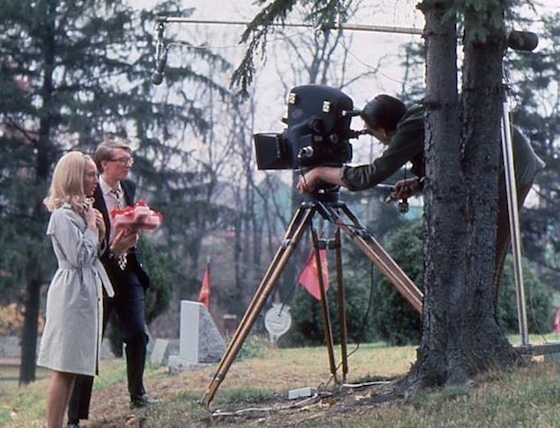
Made to mark the film’s 40th anniversary, this documentary interviews many of the surviving creators of Night of the Living Dead to tell the full story of the project’s genesis, making, release, and legacy.

After an opening segment that imitates Night’s own beginning and interviews the graveyard scene’s stars, One for the Fire goes for a chronological telling of events. It starts with Romero’s college days, when he met most of the gang who would eventually create Night. There are some great tales of him as a flamboyant student, swishing around in a cape or dressing up as a Mexican bandit for no particular reason — if you put it in a biopic it’d look like an OTT sitcom-ish affectation. After that they set up a production company, The Latent Image, making local TV ads. The expertise (and equipment) gained there would eventually embolden them to make a feature film, choosing the horror genre because it would be a relatively easy sell.

“We were just a bunch of guys out to make a movie,” says Romero, which kind of sums up the whole shoot — they basically winged it, making up the process of moviemaking as they went along. Any one of them could’ve done each other’s jobs because they all knew about as much as each other did; if someone knew slightly more about something, they were assigned that role. Everyone mucked in, doing what was necessary, be that zombie make-up or running to the shop for lunch. But they were canny, reaching out to local TV personalities, police, and helicopter pilots to lend a sense of scale to some sequences, or popping to Washington D.C. on a quiet Sunday to shoot a scene guerrilla-style, all to make it look like the film had some budget.

Making Night of the Living Dead

Interestingly, Romero says that Night is not only his scariest film, it’s in fact his only scary film. Not what you expect from a renowned horror director. But he says a specific part of the impetus while making Night was to try to scare the viewer, which hasn’t been his goal on any film he’s made since, despite the genre.

The documentary’s general narrative is interspersed with short asides that focus on minor-seeming individuals and the contributions they made to the film, which is a nice way of giving people credit. One who merits a longer discussion is Duane Jones, the actor who played the heroic role of Ben. He died in 1988 and they all pay quite moving tribute to him — he was clearly very well liked; admired, even. His part was written as colourless… well, so they say — I’m sure they assumed he’d be white. But they were young, hip guys, and so they happily cast Jones because he was the best actor they knew. They proudly didn’t change a single thing about the script to accommodate the race change. Romero thought they were being hip, treating him exactly the same as if he were white, but Jones disagreed, arguing they should acknowledge his race at least a bit. Speaking now, Romero thinks Jones was right — they were so busy being cool about it that they didn’t really understand that, in those days, it really was different him being black.

One for the Fire doesn’t get too far into that kind of analysis, mind. It’s really an oral history of how the film was made, by many of the people who were there doing it. How much that interests you will dictate how much this film does. Movie buffs may prefer the next documentary…

3 out of 5

Birth of the Living Dead
(2013)

2018 #30
Rob Kuhns | 76 mins | Blu-ray | 1.78:1 | USA / English | 15

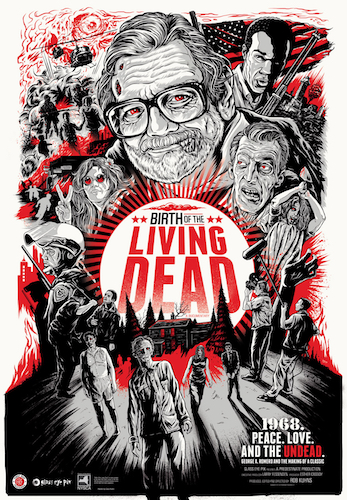
Birth of the Living Dead

As Birth of the Living Dead got underway, I was worried I’d made a mistake watching it so soon after One for the Fire: it seemed to be telling the same making-of story (though starting later: it jumps straight to the Latent Image days), but with only one interviewee who was there (at least that interviewee is Romero himself) and some slick animations to illustrate events. However, it moves very quickly on to commenting on and analysing the film’s construction, effect, and influence, and puts both the finished film itself and its production methods into wider social and historical contexts.

There are some familiar stories and anecdotes here, unsurprisingly, but there’s actually not that much overlap with One for the Fire, and Romero even tells some new behind-the-scenes stories. Much more of the film is about commentary from knowledgeable individuals — other people in the industry, journalists, movie experts, and so on. What the film lacks in not having other voices from the production, it makes up for with this outside analysis. This is all good stuff for those interested in the movie’s effect more than its production. Some of the discussion is obvious or reiterates well-known perspectives, but there’s a good variety of voices. It’s the kind of commentary that can enhance your appreciation of the film itself.

George Romero interviewed in Birth of the Living Dead

The only seemingly pointless thread follows a school teacher as he shows Night to a bunch of elementary school kids. No, that’s not a typo — they’re surely far too young for it! But they seem to delight in it. Nonetheless, it seems like a needless addition to the film, until quite late on. When the documentary gets on to discussing Night’s release, it talks about how horror had become a genre mainly marketed to kids — it was seen as colourful campy fun, with only the occasional hint of slight scariness. But then it was that audience that saw Night of the Living Dead, and they were fucking terrified (see: Roger Ebert’s contemporary article about watching it with an audience of children). I thought the documentary wouldn’t dare to revisit the modern teacher after that, but it does — and they still seem to love it. I don’t know what that says about our society now, if anything.

Aside from traumatising small children, Night of the Living Dead was initially dismissed by American critics as trash; but when it was re-released the next year, it was seen by a writer for Andy Warhol’s magazine, who called it art and said it should be playing in art houses. When it reached Europe in 1970, the French had a similar reaction. That fed back to the US: the Museum of Modern Art played it to a standing-room-only crowd. I guess that’s how we get to where we are today, with it acknowledged as a solid classic.

Now THAT's a triple bill

As I said earlier, when I decided to watch these two documentaries basically back to back I thought it would probably turn out to be a stupid idea. Fortunately, the overlap is minimal, meaning they actually compliment each other pretty well. Fans would surely benefit from seeing both. Alternatively, the fact that they offer distinctly different things means a viewer could pick the topic that particularly interests them. In that regard, I’d err towards recommending Birth of the Living Dead, for its critical appreciation and historical analysis that furnishes viewers with wider perspectives with which to appreciate one of the most significant horror movies — arguably, one of the most significant movies full stop — ever made.

4 out of 5

One for the Fire is available as a special feature on certain releases of Night of the Living Dead: the Australian and US 40th anniversary DVDs, the Japanese 40th anniversary Blu-ray, and Optimum’s UK Blu-ray (not the one released by Network). It seems it’s also available on an Italian DVD and Blu-ray, which provided the cover art above.

Birth of the Living Dead is available by itself on DVD in the US and on Blu-ray in the UK, as well as bundled with Network’s UK Blu-ray of Night. It’s also streaming free to Amazon Prime members in the US, and I’m sure available to rent and/or purchase from other digital providers.

Mute (2018)

2018 #31
Duncan Jones | 126 mins | streaming (UHD) | 2.00:1 | UK & Germany / English & German | 15

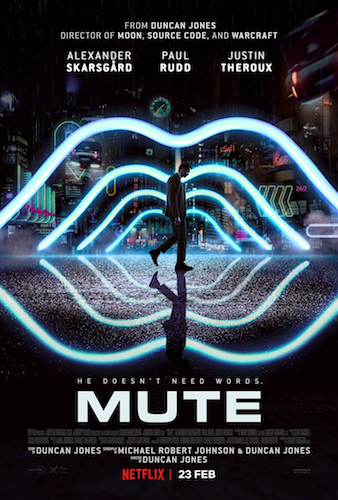
Mute

For those in the know, Mute was probably one of the most anticipated movies of 2018. The new film from writer-director Duncan Jones, who made waves with his excellent debut, the low-key sci-fi mystery/drama Moon, and backed it up with the strong sci-fi thriller Source Code, this was his return to that genre after an ultimately futile aside into studio blockbuster-making with Warcraft. More than that, it’s a passion project that’s been gestating for 16 years, rejected by everyone else and now only made possible by Netflix. Greatness was expected. Unfortunately, instead it’s been met with critical derision (11% on Rotten Tomatoes) and audience apathy (5.4 out of 10 and dropping on IMDb; 2.2 out of 5 on Letterboxd and heading in the same direction). Empire’s review perhaps summed it up best: “a crushing disappointment… sadly, almost tragically, not worth the wait.”

Set in near-future Berlin, the setting is probably the best part of the film. It’s extrapolated from the present to give a very convincing world, where technology has advanced in ways that already feel just around the corner. The production design also owes a huge debt to Blade Runner, though clearly on a lower budget. That doesn’t mean it isn’t effective, just familiar. It’s not quite as nihilistic as Blade Runner, though — again, this is our world a few years hence, and there are still malls and diners and libraries and other such mundanities.

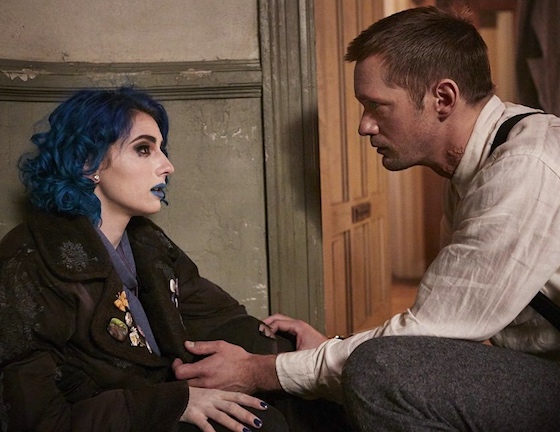
Leo's looking

The protagonist is Leo (Alexander Skarsgård), a bartender getting by in a world not built for him: he’s Amish, meaning he avoids using most technology, and he’s mute, thanks to a childhood accident. As the story unfurls he has to engage with a bunch of tech for the first time, and when he comes up against devices that are only voice-controlled then he’s got a problem. I’m not sure if this is designed as a social commentary on how some people struggle now and it’ll be even worse in the world to come, or if it’s just a convenient way to put more obstacles in Leo’s path. I’m tempted towards the latter, but that’s okay. It seems his muteness is a barrier to some viewers, with critics describing him as a blank canvas, either unknowable or personality-free. I think that’s a bit harsh, but Leo does fall into the familiar bracket of the “strong, silent type”. He can’t express himself vocally, obviously, but rather than that leading to him letting his emotion out in other ways he seems to have repressed it. I got the impression that he was now having to deal with certain feelings, and how they’re expressed, for the very first time.

That’d be because Leo is now in love, with Naadirah (Seyneb Saleh), a blue-haired waitress at the club he works in. Naadirah clearly has secrets, both from Leo and from us, and when she goes missing Leo has to venture into the seedy underworld of future-Berlin as he tries to track her down. If the overt Blade Runner stylings hadn’t already clued you in, this is very much a noir detective movie, full to the brim with dark people and dark deeds. It gets grim indeed at times, more thematically than visually (though there are a couple of scenes of surgery, if that’s your particular bête noire), and this is where one begins to wonder if Jones has full control over his film’s tone.

Gone girl

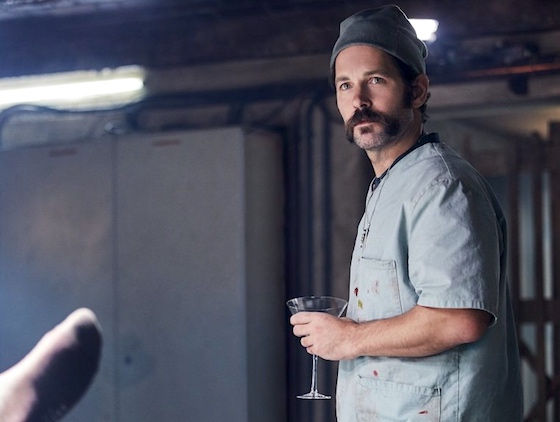
That’s not much of a problem in Leo’s storyline — I’d wager you could recut Mute to focus on him entirely and create a more straightforward future-noir tale — but rather in the concurrently-told B-plot. This side of the film focuses on Cactus Bill (Paul Rudd), an army surgeon who deserted and now plies his trade for gangsters, hoping to afford passage back to the US for himself and his daughter. Bill works alongside his best mate Duck (Justin Theroux), and much of their half of the film plays more like a hang-out movie, just spending time with the characters as they go about their business. As they mooch around sharing comical buddy banter, it’s a definite tonal counterpoint to Leo’s story. That’s not necessarily a problem unless you want a straight-up serious noir, but later Bill and Duck’s thread diverges into some heavy territory; stuff that some viewers would find distasteful no matter what, but which is made more so as their chirpy-funsters act is allowed to roll through it.

For this reason I thought Mute was more effective in its first hour-or-so than in its second. Others disagree, calling it either slow or disjointed, because the links between Leo’s and Cactus Bill’s storylines are not immediately evident. I didn’t think the pace was a problem: it’s gradually drawing you into this world, setting out the mystery and then peeling back more layers as Leo begins his hunt. It’s not as dreamily atmospheric as Blade Runner 2049 in this regard, but it’s closer to that than to an action-thriller, which makes me tempted to say pace issues are a viewer problem rather than a film one. In the first half, at least, because by the second it does seem to go on a bit. As for the disconnect between the storylines, it didn’t bother me at all. Links are actually established early on, and you know these two halves are going to come together eventually — that’s how narrative structure works.

After surgery drinks

The idea some reviews are peddling that “maybe everyone else rejected the Mute screenplay for a reason” is disingenuous. If a decent exec wanted to make this kind of movie (i.e. a mid-budget sci-fi noir) then they definitely could have seen its potential. But few studios are interested in that kind of work anymore, for reasons that barely make sense, and so the film ended up passed to Netflix. One wonders if their hands-off approach is part of the problem. People complain about studio interference, and clearly that can scupper projects, especially ones with unique voices, but execs who are good at their jobs do improve movies. Jones has said that, after Netflix bought the project, they just gave him the money and let him make whatever; and they gave him final cut too, so when the finished film came in and they weren’t sure about it, they just went ahead and released it as-was. Maybe if someone had helped him develop the project better, had helped him even out the tone, or tighten up the pacing, we’d be looking at a great movie right now.

Instead, I don’t think the Mute we’ve got is anything like as unremittingly terrible as some reviews would have you believe, but it is a tonally strange film. I’m not sure it works as a whole, but bits really do. I wouldn’t dismiss the idea of it becoming a cult classic, and maybe in a couple of years we’ll all be reevaluating it. Before its release Jones did say it would be a Marmite film — that some people would love it and others would absolutely hate it. Broad reception is undoubtedly hewing to the latter end of the spectrum; and while I’d love to be the former instead, there are too many inconsistent oddities for me to embrace it. I think it may someday be worth a revisit though, which is not something you can say about a genuinely bad film.

3 out of 5

Mute is available exclusively on Netflix now and forever.

The Past Month on TV #30

So, this TV overview is a little later than normal — a full nine days, in fact — but I guess no one notices that but me, so let’s get on with the shows:

Strike  Series 1
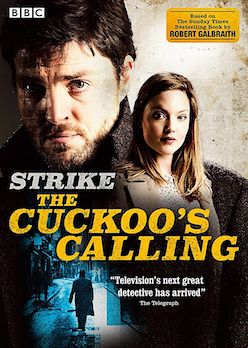
Strike: The Cuckoo's CallingAdapted from the series of novels by Robert Galbraith — the mystery-writing pseudonym of one J.K. Rowling — you might’ve assumed this would’ve followed in the footsteps of the author’s other literary series and have Hollywood come a-knocking. Maybe they did, but TV is a more natural home for the material: it’s a decent low-key murder mystery with appealing lead characters, which is the sort of stuff that can generate TV ratings but doesn’t spell box office nowadays (well, unless it’s Murder on the Orient Express, with its $350 million worldwide gross, but that’s a different kettle of fish). While the general shape of the drama is familiar from, well, every other TV detective show, Rowling’s well-known interest in social issues regularly comes through — not least in its two main characters, one of whom is a war veteran living with the realities of an amputation, the other a talented woman finding equality in the workplace. I suppose that’s all very timely.
The series’ biggest challenge is not whether it’s original or not (that’s clearly not a problem), but may be whether it can keep itself going long-term. Rowling isn’t the type to let other writers dream up new stories for her characters (the path that ends up fuelling most initially-book-based detective shows), but she’s not exactly pumping the novels out either: this first series adapted the initial two books; an adaptation of number three starts tomorrow; and… that’s all she’s published, for now (there are reportedly plans for ten more books). Will Strike end up with a Sherlock-esque production schedule? Or will it just quietly disappear when viewers and/or the cast lose interest after a couple more adaptations? Only time will tell…

The Good Place  Season 2
The Good Place season 2Having blown the doors off its own enjoyable premise with a clever twist at the end of season one, I was worried The Good Place had left itself with nowhere to go in the future. Fortunately, that isn’t the case. A cleverly-structured double-length opener burns through what I thought would be the entire second season’s plot, and then the second episode burns through even more ideas at a rate of knots. Where most sitcoms find an idea and milk it for all it’s worth (that’s the “situation” part, after all), The Good Place is restlessly inventive.
That said, it does begin to settle into a new status quo, and at that point it goes off the boil a little. It’s still funny, but not so much as the first season was, and by standing relatively still it’s not as exciting. But then, a little over halfway through, it begins to tear it all apart again, and we’re off on a wild ride where you don’t quite know where things are going to end up — there are several episodes that most other shows would’ve been more than happy to make their finale, but The Good Place just keeps up the “and what happens after that?” barminess. But it does have to end eventually, of course. It doesn’t have a massive twist to rival the end of season one, but then trying to top that would be a fool’s errand. No, instead it sends the show spiralling off in a whole new direction. Superb.

Absentia  Season 1 Episodes 1-6
AbsentiaStana “Beckett from Castle” Katic stars in this mystery-thriller, an Amazon exclusive in the US and UK (and everywhere else there’s Amazon Video, I presume). She plays FBI agent Emily Byrne, who was declared dead in absentia after she disappeared while on the hunt for a serial killer. Six years later, she turns up alive, apparently having been held captive all that time — even though the main suspect was convicted of her murder and has been in prison. Events quickly take a turn where her former colleagues wonder if Emily was in on it too, meaning she has to go on the run to prove her innocence. Of course, none of those people ever stop to wonder what she’s actually been up to for six years (it’s not like the killings continued), or why she’d decide to fake her comeback now, or… all sorts of other things. A subplot with her kid — who was too young to remember her, and now has a new real mom because his dad remarried — has emotional potential, but goes a bit too swimmingly at first and then is soon abandoned in favour of shoot outs, and unearthed skeletons (both figuratively and literally), and all that mystery-thriller stuff. So this isn’t one to think about too much, in any respect, but it’s passably entertaining as a pulp thriller. I’m going to stick with it until the end, at least, but I kinda hope it doesn’t try to end on a cliffhanger — I’m not sure I want a whole other season (or two, or three, or more).
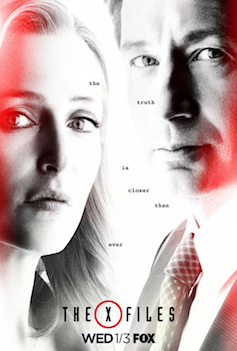
The X Files  Season 11 Episode 1
The X Files season 11The second season of The X Files since its revival only recently started airing in the UK, but we’ve caught up as far as episode three now. Well, the broadcasts have — I’ve only watched the first episode, and it was so goddamn terrible I’ve not had the heart to continue. (I will, I’ve just not mustered the motivation yet.) Said opener was My Struggle III, continuing the series’ never-ending mythology arc plot, which last season (two years ago now!) was covered in My Struggle I and My Struggle II. Well, at least the mythology episodes are clearly marked these days — there’s a My Struggle IV later in the season, for our sins.
Anyway, the problems with My Struggle III are manifold, but the key one is that it’s confusing. Partly that’s because it plays heavily off what happened in Part 2 — which, as I say, was two years ago now — and partly because it all builds on the entire history of the series’ overarching storyline, which is long and complex and I haven’t even seen all of. (Someday I need to sit down and properly watch the entire show, all 218 episodes of it. Goodness knows when.) But even allowing for that, this was a bad hour of television — poorly made, with strange stylistic choices (what was with all that random voiceover from Mulder?) Ugh. But hey, I guess most of the season will be standalone monster-of-the-week episodes; and while that as a format has fallen out of favour in the past couple of decades (everybody loves serialisation now), I think it’s what The X Files has always done best.

The Man from U.N.C.L.E.  Season 1 Episodes 1-4
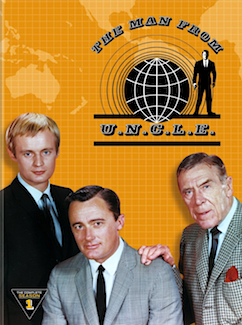
The Man from U.N.C.L.E. season 1I’ve had this knocking around waiting to be watched for yonks after I picked up the complete series DVD set on offer. (“For yonks” being “since 2015” in this case.) I remember seeing some episodes as a child and enjoying them, though I don’t remember any specifics. I guess they were from the show’s later, crazier, full-colour years, because these early black-and-white adventures don’t quite chime with that vague sense-memory of what the show should be. That said, although they start out almost serious (as ’60s spy-fi goes, anyway), by just a couple of episodes in there’s already a kookier side on display. Anyhow, I expect the best is yet to come.
Murder on the Blackpool Express
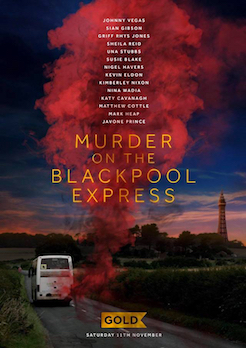
Murder on the Blackpool ExpressThis one-off feature-length comedy aired at the end of last year, presumably timed to tie-in with the theatrical release of Kenneth Branagh’s Murder on the Orient Express — as the spoofing poster highlights, of course. (Who thought I’d wind up referencing that film twice in a TV column nearly four months after it came out? I really ought to get on with reviewing it…) Truthfully, that poster is probably the best thing about this. There’s a large cast, all recognisable from a host of British sitcoms, but half of them go underused. Those that do have a part to play get material that’s fairly amusing, amid a plot that’s somewhere between predictable and too mad to be guessable. It was funny enough on balance, but it didn’t live up to its full potential.
Also watched…
  • The Brokenwood Mysteries Series 3 Episode 1 — Murder with a Kiwi accent.
  • Castle Season 8 Episodes 16-22 — Murder with an American accent.
  • Death in Paradise Series 7 Episodes 3-7 — Murder with a Caribbean accent.
  • Vera Series 8 Episodes 2-4 — Murder with a Northumberland accent.

    Things to Catch Up On
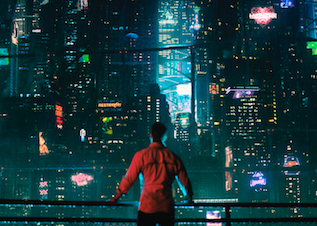
    Altered CarbonThis month, I have mostly been missing Altered Carbon, Netflix’s cyberpunk murder mystery. Reviews looked to be mixed, so I haven’t actually decided whether to bother with it or not. Two series I will definitely (intend to) get round to, but I’m saving up to binge once they’re done, are: BBC Two’s starry political thriller Collateral (led by Carey Mulligan, John Simm, Billie Piper, and no doubt some actors who haven’t had significant roles in Doctor Who. FYI, it’s coming to other counties as a Netflix “Original” next month); and the latest run of Scottish detective drama Shetland (the last series of which was covered in the early days of this column).
    Next month… the MCU returns to Netflix in the unique shape of Jessica Jones.

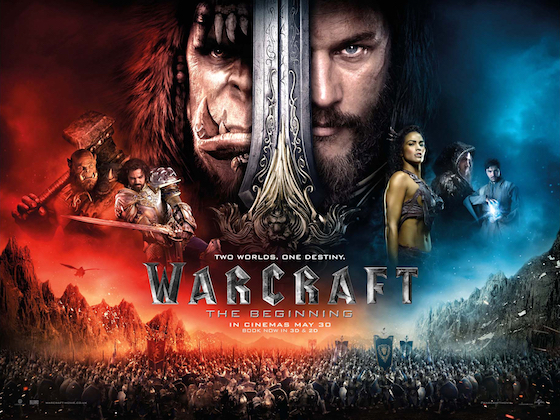
  • Warcraft: The Beginning (2016)

    aka Warcraft

    2017 #38
    Duncan Jones | 118 mins | streaming (HD) | 2.35:1 | USA, China, Canada & Japan / English | 12 / PG-13

    Warcraft: The Beginning

    Produced by Legendary — one of the companies behind the Dark Knight trilogy, Jurassic World, Godzilla, and many other massive hits — the only thing that’s “legendary” about the Warcraft movie is how terrible it is.

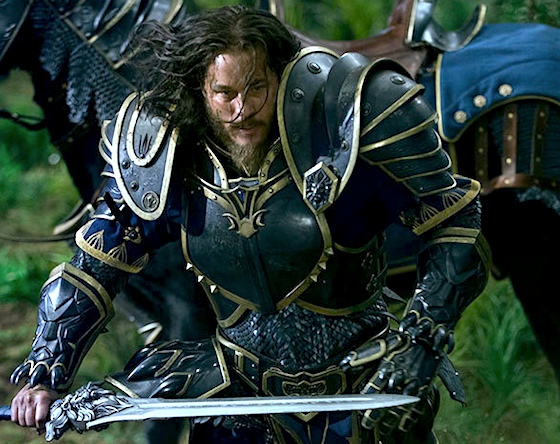
    Based on the long-running video game franchise, Warcraft (optimistically retitled Warcraft: The Beginning in many territories) is, based on what I’ve read, less an adaptation of the game (which has many different incarnations anyhow) and more an expansion of its universe. Rather than take the game itself and try to mush it into the shape of a movie, as most video game adaptations are forced to do, Warcraft depicts some of the game-world’s backstory, taking care to keep events canonical. I’m sure this is brilliant for fans and players, but I wonder if it’s part of why the film feels muddled and tacky to those of us who are uninitiated. Of course, at its best such efforts can make newcomers want to learn more; but at its worst it leaves you feeling confused and shut out. Warcraft is definitely a case of the latter.

    It plays like a $160 million fan film. It doesn’t bother with world-building, just throwing the viewer in at the deep end. That can work, but it needs to be carefully managed. Warcraft just ploughs ahead, going deeper and deeper. It’s been made for people who know this world, its places, its people, its concepts, its rules. The film is a prequel to something that doesn’t exist — or, rather, something that doesn’t exist as a movie. And yet, for all co-writer/director Duncan Jones’ efforts to remain faithful, apparently it’s not faithful enough for some of the hardcore. It seems the movie has wound up in a place where it’s not stuck to the backstory enough to please initiated fans, but not opened itself up enough to be accessible to newcomers either.

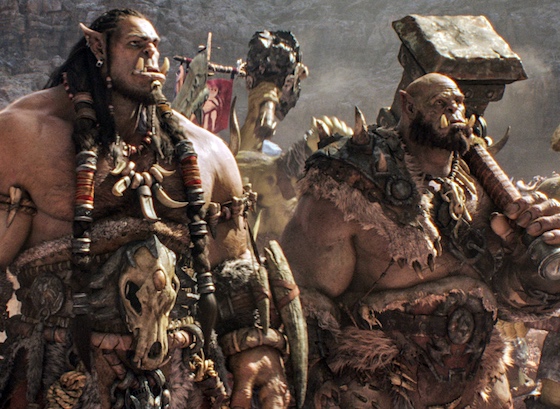
    This could get orcward

    Unfortunately, the problems don’t stop there. Characters’ personalities change from one scene to the next, with no sense of development or connection. Many of the performances are stilted or clumsy, with a good deal of the actors feeling miscast. Scenes exist in isolation, with little sense they should follow what was before or precede what comes after. It feels like it was heavily messed around in post — not just stuff chopped out (reportedly Jones’ director’s cut was 40 minutes longer), but things moved around within the story — but then something will happen that suggests those scenes were always meant to be where they are. Whatever the cause, it makes it even harder to follow a story that already feels like it’s shutting out newcomers.

    The biggest shame is that you can see glimmers of potential — mainly in the world itself, which is clearly quite thoroughly realised (presumably thanks to having been developed over many, many years of the games’ existence). But then, the story that takes place within that world isn’t an especially original or interesting one. Or, rather, I don’t think it is. I mean, it’s hard to tell what precisely is going on half the time.

    A lot of the technical merits are strong, too. Almost every shot is loaded with CGI, but the vast majority of it looks pretty incredible. It’s no wonder some bits come up short, however, because the sheer volume of different locations, creatures, and spell effects is mind-boggling. Obviously some parts are going to suffer when you bite off more than you can chew. If there’s a problem here it might be that the design work is quite “high fantasy” — it’s all exaggerated and almost cartoony, as opposed to the more realistic take of something like Peter Jackson’s Lord of the Rings. That’s not to everyone’s taste; indeed, it might be part of why such fantasy tales used to be (and, often, still are) such a niche market.

    Totally realistic costumes

    Talking of the market, reports say Warcraft needed to gross $450m just to break even. In the US, it took $47.4m. No, I didn’t put the decimal in the wrong place. And that’s not opening weekend, that’s in total. It was a big hit in China, but that wasn’t enough: worldwide it managed just shy of $434m (which, fact fans, makes it one of only two American movies to gross over $400m without making $100m in the US (the other was Terminator Genisys)). Jones had plans for sequels (he’s shared them on Twitter, which naturally got turned into news articles, if you’re interested), but, yeah, they’re not happening. Thank goodness the Chinese didn’t give it another few million, because this project already feels like a waste of five years of the director’s promising career. You could see Jones as currently being on a similar path to that previously trodden by the likes of M. Night Shyamalan and Neill Blomkamp: a hugely successful debut followed by increasingly poor, eventually terrible films. Hopefully his next movie, Mute (available exclusively on Netflix from today), will rectify that.

    2 out of 5

    Warcraft: The Beginning featured on my list of The Five Worst Films I Saw For the First Time in 2017, which can be read in full here.

    The Duellists (1977)

    2018 #26
    Ridley Scott | 96 mins | DVD | 1.78:1 | UK / English | PG / PG

    The Duellists

    It’s 40 years this month since Ridley Scott’s debut feature appeared in British cinemas, which perhaps makes now the most appropriate time to have awarded him the BAFTA Fellowship (as he was this past weekend, of course).

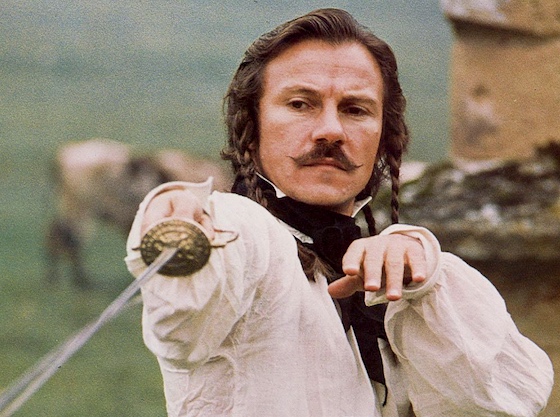
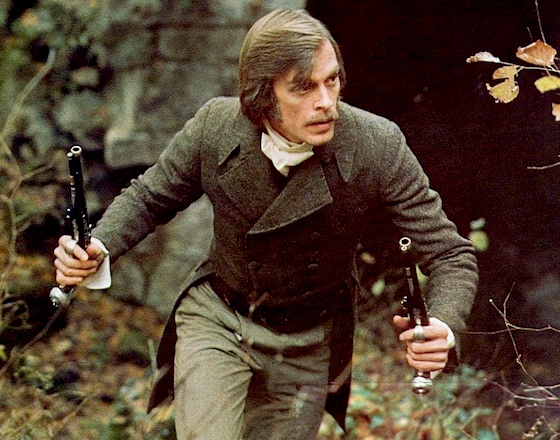
    Adapted from a short story by Joseph Conrad, which was itself inspired by a true story, The Duellists stars Keith Carradine and Harvey Keitel as a pair of soldiers in Napoleon’s army who, for reasons only properly known to one of them, end up fighting a series of duels — or, really, one duel constantly reignited — over the better part of two decades. They become renowned for it (Conrad discovered the story through a newspaper article noting the death (by natural causes) of one of the real-life pair), to the chagrin of Carradine’s reluctant duellist. He dreads every potential encounter, aware of the fight’s futility and danger, but honour keeps drawing him back.

    Ultimately, honour and the futility of fighting are what The Duellists is most about, if it’s about anything — if you like, you can enjoy it as merely a series of well-staged combats between two men, each stubborn in their own different way. They also each have slightly different ideas of honour, it would seem, but they’re compatible enough that it keeps drawing them back to the fight. “Acting with honour is all well and good,” the film seems to be saying, “but look where it gets them.” It doesn’t completely ruin their lives, but it does take a serious toll. A bit of common sense goes a long way, and acting with so-called honour, which might seem to be the moral course, doesn’t actually involve a great deal of common sense.

    The bad duellist

    Scott also intended the pointless, never-ending fight to represent a microcosm of war. Speaking to Empire magazine, Scott described Conrad’s story as “a very nice pocket edition of the Napoleonic Wars” because it “somehow encapsulated the craziness of an argument and how at the end of a 20-year period one of them forgot the reason why they were fighting. Isn’t that familiar?” Fighting for fighting’s sake; not wanting to be the one to back down… it seems it’s human nature, just as much in a conflict between two men as in between two nations. A bit of common sense would go a long way…

    The other aspect of the film most worthy of comment is its photography. Reportedly Scott set out to imitate Stanley Kubrick’s Barry Lyndon, released just a couple of years earlier. It’s an appropriate inspiration: both tales are set in the same era, and Lyndon looks incredible. Scott undoubtedly succeeds in his goals — both that of copying Kubirck’s visuals and that of such copying being a good idea: much of The Duellists looks gorgeous, particularly wide scenery shots. Although the cinematography is credited to Frank Tidy, Scott says he operated the camera himself for the entire shoot, so who’s to know where exactly the credit for that achievement lies.

    The good duellist

    Resemblances to Barry Lyndon extend beyond just the visuals, mind. As noted, it’s set in the same era, so various visual trappings are similar, from costumes to some of the locations — if not direct copies, they certainly evoke Kubrick’s film more than once. There’s also the story itself: a tale focused on just one or two characters but spanning decades, and during a particularly tumultuous and eventful period in history. As Tim Pelan puts it (in this piece at Cinephelia & Beyond), “while Barry Lyndon advances with the forward momentum of one of Napoleon’s columns in its telling of a fool’s misfortune and slow glide towards the destruction of all he worked for and holds dear, The Duellists dashes pell-mell between the very different clashes of the antagonists.” Scott’s film feels like it thinks it is, or wants to be, an epic, just like Lyndon, even though it only lasts a little over 90 minutes.

    Comparisons to such a lofty cinematic success would damn a lesser film, but The Duellists is a very fine work in its own right. Despite the similarities I’ve highlighted, it’s really a very different film: Barry Lyndon has a kind of leisurely elegance, whereas The Duellists is more economical and straightforward. It’s certainly not Scott’s greatest film (his next two immediately put paid to that), but it’s perhaps his most under-appreciated one.

    4 out of 5

    Big Game (2014)

    2017 #45
    Jalmari Helander | 91 mins | streaming (HD) | 2.35:1 | Finland, Germany & UK / English & Finnish | 15*

    Big Game

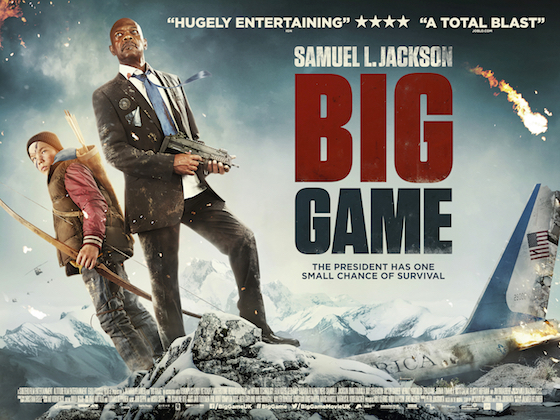
    Air Force One Has Fallen meets Hunt for the Wilderpresident in this deliberately daft action movie, which sees terrorists down Air Force One in remote Finnish forests, forcing the President (Samuel L. Jackson) to rely on the help of a local teenager (Onni Tommila) as they’re hunted by the bad guys.

    I’ve read some complaints that, given the daft premise, Big Game is not a comedy. I don’t know what movie they were watching, but I thought it was pretty fun. It’s not an out-and-out parody, but surely no one involved thought they were making a serious action flick? Or maybe I’m wrong, I dunno — but whether it was me or them, one of us has misread the intended tone.

    That said, as well as the OTT ’80s-throwback action antics, there’s some solid drama to be found. Primarily that’s between the kid and his father — how the state of their relationship is revealed and changes throughout the film is neatly done, which is all the more impressive considering the dad’s only in it for a few minutes. There’s also some almost touching stuff between the kid and the President. Is this material too ‘serious’ for a movie that is otherwise pretty lightweight? Perhaps the action side should take itself more seriously to buoy up the characters’ relationship further? Or maybe the characters’ relationship should be less life-lesson-y to allow for the silly spectacle of the action?

    If you go down to the woods today you're in for a big surprise...

    Maybe either way would work, but Big Game choosing to straddle the middle ground is what leads to those complaints. Personally, I enjoyed both facets, however at odds they may seem. Indeed, it’s the kind of movie I might once have given 4 stars, because I certainly enjoyed it; but I guess that the more of these lightweight-but-fun action movies you see, the more you feel like they are good fun but 3 stars is fine.

    3 out of 5

    * In the US there’s a PG-13 theatrical cut (running 87 minutes) and an unrated extended cut (91 minutes), i.e. this one. The BBFC classified it 12A for cinemas and 15 for home, with the former merely having a “partially obscured” use of a rude word to get the lower certificate. ^

    Zatoichi on the Road (1963)

    aka Zatôichi kenka-tabi / Zatoichi’s Fighting Journey

    2018 #11
    Kimiyoshi Yasuda | 88 mins | Blu-ray | 2.35:1 | Japan / Japanese

    Zatoichi on the Road

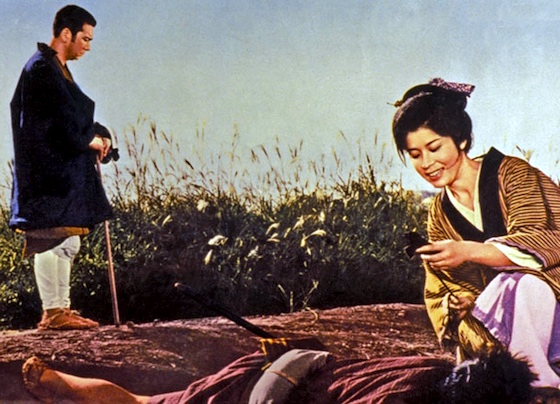
    In his notes that accompany Criterion’s Blu-ray release of the Zatoichi series, Chris D. comments that, “despite the specificity of the English title, it should be stressed that Zatoichi is always on the road.” Indeed, titling this fifth movie Zatoichi on the Road is pretty much the equivalent of calling it Just Another Zatoichi Movie. At least the literal translation, Zatoichi’s Fighting Journey, is a little more dramatic.

    So is On the Road “just another Zatoichi movie”? Critics disagree with each other. The Digital Bits’ comprehensive overview of the series describes it as “easily the best entry in the series to this point”, and Weird Wild Realm’s review goes even further, calling it “one of the strongest feature film episodes about the hero of a thousand slayings”. Conversely, the Images journal considers that it “doesn’t sustain the previous entry’s brilliant mood or pacing”, and, in direct opposition to The Digital Bits, Letterboxd users rank it clearly the lowest of the first five films. Where DVD Talk reckons it has “a fantastic, layered plot”, even Chris D. says “it has a somewhat overdeveloped, convoluted story line”.

    I’m definitely in the latter camp. “Easily one of the best entries in the series”? Nope. The “action starts red hot and keeps getting hotter”? Don’t be silly. That was The Digital Bits again, and they go on to describe the climax as “one of the greatest climactic battle scenes depicted on screen since Kurosawa’s Seven Samurai,” which is just laughable. As Images counters, “when the action does rear its battle-weary head it’s good. It’s just not great. And after the sword-dizzy hysterics of the last film, greatness is what we hunger for.”

    Zatoichi fights

    As for the plot… Overdeveloped? Yes. Convoluted? Undoubtedly. And needlessly so — previous entry Zatoichi the Fugitive was hard to follow, but it felt worth it in the end. On the Road, I’m not so sure. The plot never really came together for me, leaving oh so many questions. Like, who was the old man who died at the start? Why did he care about Omitsu so much? Who was the lord who was after her? How did she end up with him and so far from her (apparently very rich and important) father? Why do that lord’s minions just disappear from the plot? Why was there that scene where one of them seems to regret their mission, only for Zatoichi to murder him in a split second right afterwards?

    The whole thing winds up a lot of back-and-forthing for little reason, too often driven by coincidence (how come villainous Ohisa and Jingoro keep ending up in the same inns / eateries / etc as Zatoichi and Omitsu?) And I think it was meaning to imply that Ichi and Omitsu had a strong connection, almost like she wanted to marry him (as women have done in previous films — Ichi’s understanding of and/or attraction for women is certainly a recurrent theme). And he seems to care for her as much too (as seen in the ending where he caresses her trinket that he’s kept, for instance). But where was such deep a bond supposed to come from? It’s barely developed or explained.

    Zatoichi on a road, literally

    The film isn’t a total write-off, mind, with some exceptionally good individual scenes — when Ichi confronts transportation boss Tomegoro in order to rescue Omitsu; when Ichi and Omitsu connect while eating rice balls; Ichi’s cunning manipulations of two opposing gangs at the climax. The key link there is Ichi, of course, which is thanks to another strong performance by leading man Shintaro Katsu.

    On the whole On the Road is enjoyable enough as a middle-of-the-road Zatoichi adventure, with the less thrilling aspects counterbalanced by the really good bits I just mentioned. I’ve mostly focused on the negative here because I bridled at the idea, espoused by some I’ve quoted, that this is definitively a great instalment in the series. It’s not.

    3 out of 5

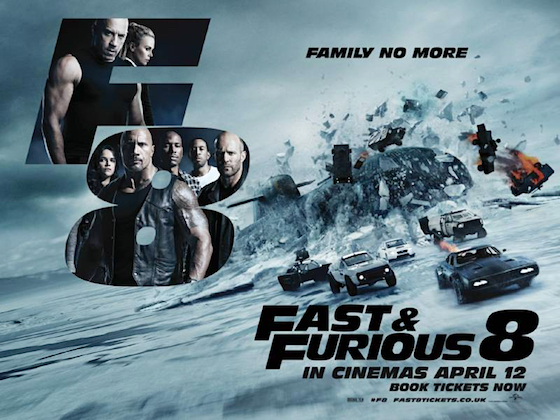
    Fast & Furious 8 (2017)

    aka The Fate of the Furious

    2018 #21
    F. Gary Gray | 136 mins | streaming (HD) | 2.39:1 | USA, China & Japan / English & Russian | 12 / PG-13

    Fast & Furious 8

    Anyone who’s watched a Fast & Furious movie will know that the most important thing to our heroes is not fast cars but family. Family, family, family — they don’t half go on about it. But what might make one of the team betray their all-important figurative family? Well, that’s what the series’ eighth instalment sets out to ask, as patriarch Dom (Vin Diesel) is forcibly recruited by terrorist Cipher (Charlize Theron), and government agent Mr Nobody (Kurt Russell) counter-recruits Dom’s family to track him down and stop Cipher’s evil plan.

    You may remember that, once upon a time, these films were about street racers who occasionally carried out on-the-road heists, all the better to keep the focus on the cars. Those days are long gone, despite an opening sequence here that tries to pretend that’s still part of the game. No, nowadays we’re in the “international spy actioner” genre, and our former street racers have somehow become highly capable agents… whose primary tools/weapons are still vehicles. It’s utterly ridiculous… but, thank goodness, everyone involved seems to know that.

    Well, most people do. I reckon Vin Diesel might think it’s a serious movie about the emotional turmoil of being kidnapped by a global cyberterrorist who lives on a plane and can remotely hijack a city-load of cars and is threatening your family unless you help her steal a nuclear submarine. I mean, we’ve all been there, right?

    A lot of men would betray their family for Charlize Theron, to be fair

    So, yeah, the story is thoroughly daft. But it exists primarily to connect up action sequences, and in a movie like this I’m fine with that — I’m here to watch people do cool shit in cars, hopefully with some funny bits around that action, not to be wowed by an intricate plot or ponder meaningful character development. On the things I expect, then, FF8 more or less delivers. I mean, the series has always been renowned for using CGI to augment its car chases, which is less thrilling than doing stunts for real, but it really blurs the line nowadays: you might think dozens of cars falling from a multi-storey car park is all CGI, but you’d be wrong.

    Any time almost anyone besides Hobbs (Dwayne Johnson) or Deckard (Jason Statham) has their mouth open, FF8 is pretty dumb; but when those two are talking, especially when they’re bickering with each other, it’s often pretty funny (they’re definitely in on the joke). And when the action’s a-go-go, the film’s either solidly pulse-racing or, actually, being kinda witty — there’s a prison riot, for example, that is, appropriately enough, a riot. Though it’s as nothing to Statham engaging in a protracted gunfight-cum-punch-up against a bunch of goons while carrying a baby.

    Bromance

    Fast & Furious 8 isn’t strictly a comedy, but a sense of humour is required to enjoy it. There’s no way to take this palaver seriously, and fortunately the filmmakers have embraced that. It’s deliberately OTT, dedicated to being entertaining for almost every minute of its running time. Taken as just that, it’s a lot of fun. Also, probably the series’ best instalment since the fifth.

    4 out of 5

    Fast & Furious 8 is available on Sky Cinema from today.

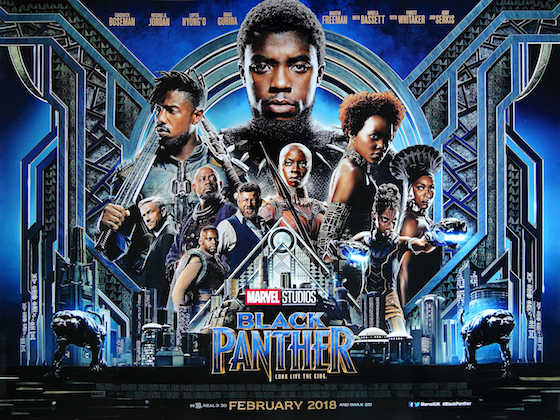
    Black Panther (2018)

    2018 #23
    Ryan Coogler | 134 mins | cinema | 2.39:1 | USA / English, Xhosa & Korean | 12A / PG-13

    Black Panther

    Black Panther is not the first superhero movie to star a person of colour in the leading role — not by a long, long shot. But it does look set to be the most successful. In part that’s down to its association with the MCU (the last time one of their movies grossed under $500 million was the first Captain America, 13 movies ago), but it’s also due to a general underrepresentation of non-white heroes right now — Black Panther may not be the first, but it may be the most mainstream. It also won’t hurt that it’s a very good action-adventure movie in its own right, and one that feels especially fresh thanks to tapping into an under-utilised cultural milieu.

    Picking up shortly after the events that brought the title character into the MCU (as seen in Captain America: Civil War), the film begins with T’Challa, aka Black Panther (Chadwick Boseman), returning home to be crowned king of his country, Wakanda. A scientifically advanced African nation, with incredible technology fuelled by its deep reserves of the extraordinary metal vibranium, Wakanda has kept its abilities hidden from the rest of the world, who believe it’s a third world country of farmers. However, T’Challa must face forces from within and without who think Wakanda should play a greater role on the global stage — in particular long-time enemy of the state Ulysses Klaue (Andy Serkis) and his new partner in crime Erik Stevens (Michael B. Jordan), who wants to rule Wakanda and then the world.

    The name's Panther. Black Panther.

    A villain who wants to rule the world? Black Panther doesn’t spell out his goal quite that bluntly, I don’t think, but that’s what it is. It’s just one of several clues that this is, in many ways, a James Bond movie… only one where James Bond is a black African king with superpowers. The film’s whole structure is more Bond than Marvel, though: most obvious is the gadget-explaining Q scene, but then it becomes a globetrotting adventure (the film sets significant sequences in California, Nigeria, London, and Busan (though they don’t get there by train, thankfully)), complete with undercover operatives, a casino, car chases, and a plot with significant geopolitical elements. I’m not claiming you can map this one-for-one onto the Bond template, but the inspiration (consciously or not on the part of the filmmakers) is certainly there. One Letterboxd user described it as “The Lion King meets Skyfall”, which might sound pithy but is also surprisingly accurate — and Skyfall in particular, not just any old Bond film; but there we’d be getting into spoiler territory, so I’ll leave that for you to think about yourself after you’ve seen the movie.

    An even more significant influence, for numerous reasons, is African culture. Much has been made of the film having a predominantly black cast (aside from (to use an already well-worn joke) a couple of ‘Tolkien’ white guys), but it fully embraces that too. It isn’t nominally set in Africa with faces that happen to be of a different colour to the blockbuster norm — African traditions, designs, and ways of life have been woven throughout the film. Are they real ones the filmmakers co-opted or were they just inspired by the iconography of the continent? I don’t know. Does it matter? I don’t think so. It’s a different flavour on the blockbuster stage, and that adds freshness to just about everything.

    African culture, real or imagined

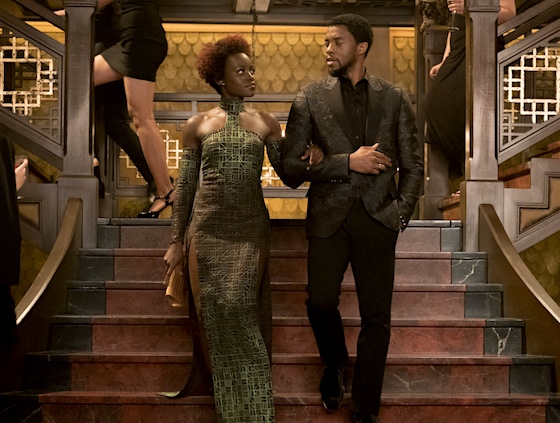
    For one, it helps the film to look beautiful. It’s colourful without being cartoonish, the vibrant palette coming through via costumes and locations in a very real way. Design is naturally a big part of this — make-up; costumes; however the production design department breaks down across locations, sets, props, etc, etc. They were obviously able to cut loose, finding inspiration from different places to usual (i.e. Africa) and imagining a whole alternate world, similar to ours but a bit more Sci-Fi.

    There’s the light, too — this is frequently a gorgeously shot film. Not just the quality captured by DP Rachel Morrison (who made headlines recently when she was Oscar nominated for Mudbound), but also the shot choices and editing — it’s filmic, whereas too many Marvel movies look like TV but with a humungous effects budget. Director Ryan Coogler stages the action well too. Across the board, the visuals don’t feel so generically “Marvel”, while also not forcing themselves so far outside the house style that it doesn’t feel like A Marvel Movie. Put another way, it’s probably not that radical, but it is fine-tuned.

    The music is oftentimes striking as well, with Ludwig Göransson’s score and various songs* mixing different styles for a heady but effective blend. In fact, the music occasionally achieves a feel or atmosphere that I don’t think Marvel’s usually-generic soundtracks have reached before, and not necessarily ones you’d expect.

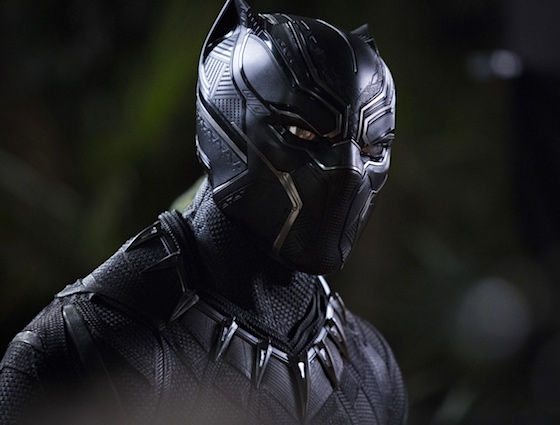
    Suited up

    The film is rich and fresh in plenty of other ways too. The story is loaded with varied thematic concerns: there’s politics, both on the world stage and internal; the battle between tradition vs modernity; the pros and cons of both isolationism and being open to the world; issues of colonialism and its aftereffects (and the morality of a possible reversal thereof)… Obviously race is a factor as well, but in specific ways rather than some kind of generic “hey, look, black people can do this too!” I feel like there are many different things to read into and out of this film — numerous facets that could be focused on either singularly or in various combinations — and that, actually, the film would reward such a close reading, rather than falling apart when put under a microscope.

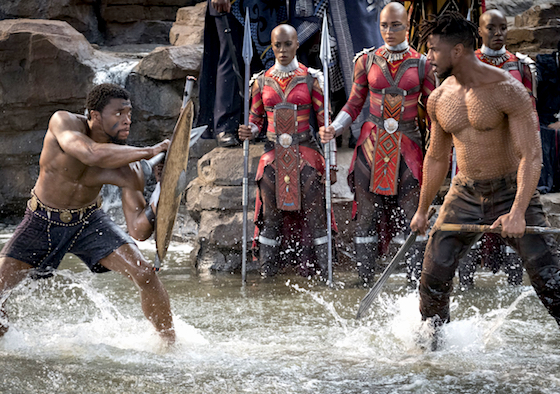
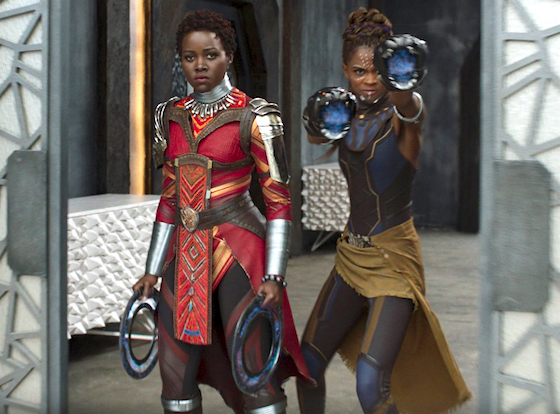
    Yet another thing it juggles well in this mix are the characters and the performances behind them. There are a lot of people to get to know here, but they’re all so effectively sketched that most are interesting, likeable, or memorable (or all three) within just a few moments. The film may be called Black Panther and he may be the central hero, but he’s not the only strong, capable, heroic figure here — far from it. Indeed, another aspect that will surely generate plenty of discussion is the film’s strong female roles. The Q figure, currently at the forefront of all Wakanda’s incredible technology, is T’Challa’s younger sister (Letitia Wright); the army (or security service? I’ll confess to not being 100% on Wakanda’s military structure) is made up of women, led (of course) by a female general (Danai Gurira); their best spy is also a woman (Lupita Nyong’o); and the Queen Mother (Angela Bassett) is a powerful figurehead who gives strong advice.

    Sisters, doing it for themselves

    The film doesn’t make a big to-do about all this — it doesn’t boast about how well these women are doing, or have people try to “put them in their place” only for them to overcome it — it just gets on with them being awesome. Obviously the race aspect is going to be the most talked about thing here, at least initially, but I’d wager Black Panther is second only to Wonder Woman in its foregrounding of exceptionally capable female characters in the superhero genre… and, considering how many of them there are in this, one might argue it surpasses even that. Although the lead’s still a bloke, so…

    Said bloke is an interesting lead character. He’s often quite quiet and thoughtful, very different to the wisecracking action men who typically lead Marvel movies. I’d guess he’s going to get on well with Captain America come Infinity War because they both have that stoic intelligence. It means that Chadwick Boseman doesn’t have the easy likeability of jokes to fall back on, as has so benefited… well, all those other Marvel leading men. But quiet strength is its own reward, if slightly slower burning, and T’Challa is ultimately a very engaging hero. On the other side of the equation, Michael B. Jordan’s villain is one of Marvel’s rare strong ones — in fairness, something they seem to have been improving since everyone pointed it out. While Erik is unquestionably a bad guy doing bad things, he has an understandable motivation, and Jordan even makes you feel for him a bit by the end.

    He just can't wait to be king

    Marvel Studios have often talked about trying to mix other genres into each of their movies, to try to add some much-needed variety to the familiar superhero movie formula. On the whole I’d say the effect is minimal — I’m always minded of Captain America: The Winter Soldier, which they tried to push as a ’70s-style political thriller, but which I thought was still very much a superhero movie with a dash of political thriller in the mix. Although maybe that’s enough. Anyway, Black Panther is once again undoubtedly a superhero movie in more than just the literal sense that it’s adapted from a comic book about a superhero, but this particular mix of varied influences — some familiar (it’s not the first movie to imitate Bond), others less so (African culture in an action-adventure blockbuster) — does make it feel genuinely different to the norm.

    I know some people say this every time the studio releases a new movie, but it probably is Marvel’s best film to date. Nonetheless, I was going to give it 4 stars again; but the more I think about it, the more I feel like it’s time to break my duck and make this the first Marvel movie I’ve given:

    5 out of 5

    Black Panther is in cinemas pretty much everywhere now.

    It placed 12th on my list of The 26 Best Films I Saw For the First Time in 2018.

    * I’m sure there was a “songs by” credit, but I can’t remember the name and it doesn’t seem to be in any of the credits lists online. ^