2017 #14
Babak Najafi | 99 mins | streaming (HD) | 2.35:1 | UK, USA & Bulgaria / English, Italian, French & Japanese | 15 / R
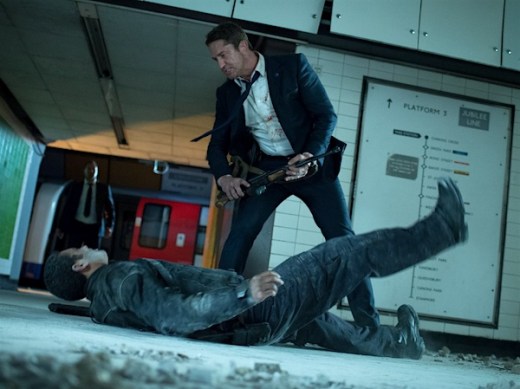
The unwanted sequel to the less-good of 2013’s “Die Hard in the White House” double bill sets its rip-off sights lower: the entire plot feels rehashed from a weak season of 24. It may as well begin with a gravelly-toned voiceover informing us that “the following takes place between 9AM and 9PM Greenwich Mean Time.” Fortunately, events don’t occur in real time.
Those events take place in the wake of the British Prime Minister’s unexpected death. Granted a state funeral, the American President (Aaron Eckhart) is naturally in attendance, along with 39 other world leaders — most of whom are suddenly wiped out in a series of terrorist attacks. POTUS’s Secret Service chum (Gerard Butler) must get him out of the embattled capital, away from an enemy who seems to have foreseen their every move.
From there, the film is a relentless assault on the notion of good filmmaking. The narrative is so poorly structured that it doesn’t feel like there’s a climax — it’s only apparent with hindsight that what seemed like the back-half of Act 2 is actually meant to be the big finale. The main villain is only dealt with in a tacked-on coda; so too is the obligatory mole, whose presence appears to be solely motivated by a futile attempt to plug plot holes.
The dialogue is horrendous (“You should have let us kill him quickly, because now… we’re going to kill him slowly”) and the CGI is ceaselessly cheap — shots of the various terrorist attacks wouldn’t look out of place in a Sharknado movie. A single-take action sequence feels like it should be exciting filmmaking, but is actually more like watching someone else play a video game.
Even with that, London Has Fallen does just about pass muster as a brains-off actioner, in the truest sense of the term: you’ll need to switch your brain off to endure the rampant xenophobia and American flag-waving.
God, I bet Trump loves this movie.
London Has Fallen featured on my list of The Five Worst Films I Saw For the First Time in 2017, which can be read in full here.
2017 #11
Adam Randall | 90 mins | streaming (HD) | 2.35:1 | UK / English | 15
When it comes to TV, Netflix are dominating the cultural landscape with much-discussed original series like Stranger Things, Making a Murderer, Orange is the New Black, the Gilmore Girls revival, their cadre of Marvelshows… I could go on. But when it comes to their original movies — the eponymous “flix” — well, it’s a bit different. Their Crouching Tiger Hidden Dragon sequel went down like a lead balloon; Beasts of No Nation was well reviewed but couldn’t translate that into the awards buzz that was clearly hoped for; and their Adam Sandler movies… well, those are apparently very popular with viewers, at least.
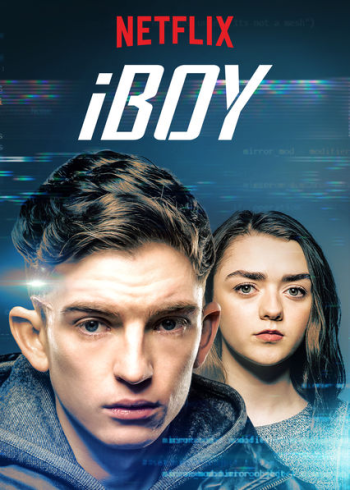
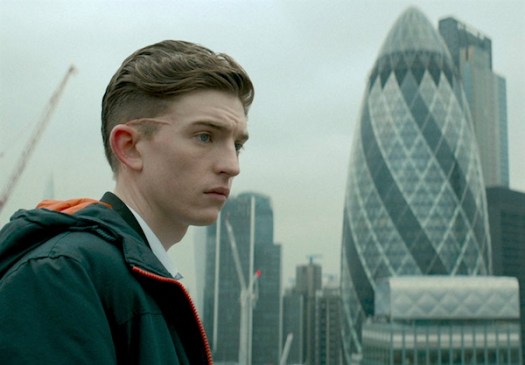
Their latest effort, iBoy, is based on a young adult novel about a teenager who fights against bad people — so that’s pretty zeitgeisty at least. It’s not set in a dystopian future, though, but why bother when our own days are so bleak? So iBoy sets its stall in present-day London, where Tom (Bill “the sweet one from Son of Rambow” Milner, looking completely different) is just a normal teen — going to school by day, blocking out the sounds of violence around his tower block by night. When the girl he fancies (Maisie Williams) invites him round to study one evening, he turns up at her flat to find her being, to not put too fine a point on it, gang raped. He runs, trying to phone the police, but the gang give chase and shoot him in the head. When he wakes up, parts of his phone have been inoperably embedded in his brain, which he soon comes to realise has given him the ability to interact with technology using his mind.
So, yeah — scientifically, it’s a thoroughly dubious premise. But is it any worse than having abilities bestowed by a radioactive spider-bite or spilled toxic goo? In respect to Tom’s newfound powers and how he chooses to use them — as a vigilante seeking revenge on the gang that have been terrorising his estate — iBoy is more in line with superhero narratives than other young adult adaptations. Where it comes unstuck is the tone. How many superhero films are going to feature gang rape? Well, somewhat appropriately, I guess the Netflix ones might. But the disjunct between iBoy’s daft premise and the grim world of inner city gangs (there are more acts of shocking violence) is a difficult one to negotiate.
To its credit, iBoy doesn’t use the assault as a starting incident and then discard its aftereffects — the presence of Maisie Williams, who’s been quite outspoken about the treatment of female characters in media, should give an indication that it’s not so thoughtless. But nor does a 90-minute movie that’s fundamentally about a superpowered vigilante have much time to dig into it properly. Nonetheless, Williams essays the role with some subtlety, aided by a screenplay that keeps things appropriately unverbalised. Perhaps the most effective part is when, home alone, she has to venture outside for some milk.
Unfortunately, the screenplay doesn’t pay the same amount of attention to the hows-and-whys of its hero and his abilities. Apparently hacking someone else’s phone involves watching a progress bar; he can learn how to fight while watching a couple of YouTube videos during the ten seconds he’s walking towards an assailant; and so on. A little more effort would’ve sold the premise more and could’ve removed these niggles (at least have him download a phone-hacking app or something; maybe the YouTube videos could be downloaded into his brain, but his unpracticed muscles struggle to perform the moves). Problem is, the notion of phone fragments getting stuck in your brain and giving you superpowers is pretty silly, so even if you provide better internal consistency, it’s still a struggle to parse that implausibility being mashed up against the ultra-real-world stylings of the rest of the story. Films like Super and Kick-Ass do the “real-life superhero” thing by making their hero a bit inept. Maybe iBoy isn’t shooting for “real-life superhero”, but then why are the threats he faces so serious?
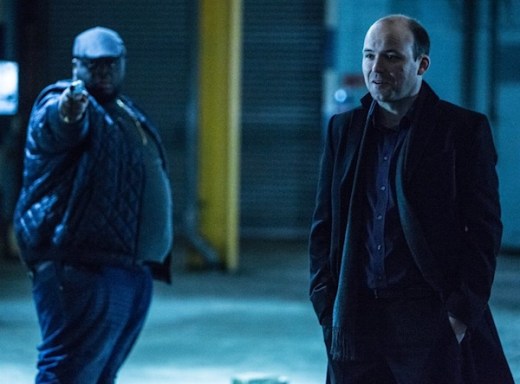
Talking of the threats, Rory Kinnear turns up near the end as the Big Bad, and lifts the film considerably. I suppose there’s not a whole lot of originality in a politely-spoken but actually horrendous villain, but Kinnear sells the part effortlessly. You kind of want to see that character (or at least that performance) turn up in something bigger and better. Elsewhere, Miranda Richardson brings some much-needed lightness as Tom’s grandma, who serves as an Aunt May figure. If nothing else, you can rely on British productions to have quality acting, eh?
For all this criticism, on the whole I didn’t dislike iBoy while it played out, it just doesn’t stand up to scrutiny. As Netflix’s first genuine original movie from the UK, it’s a shame it can’t demonstrate to the rest of the Netflix-viewing world what British film could be capable of if encouraged, but maybe that would be too big a weight to put on its little shoulders anyhow.
iBoy is available on Netflix everywhere (I presume).
2016 #193
Hayao Miyazaki | 114 mins | DVD | 1.85:1 | Japan / English | U / PG
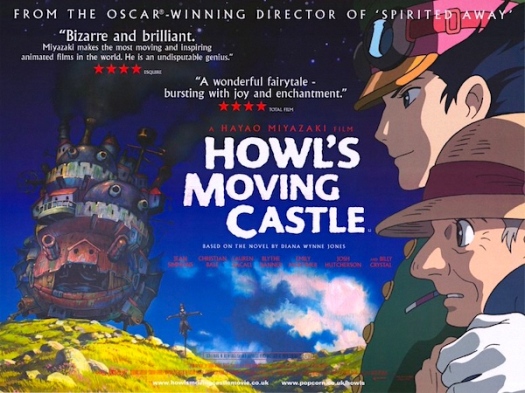
Director Hayao Miyazaki’s first film after he won the Oscar for Spirited Away, Howl’s Moving Castle is another fantasy adventure about a young girl encountering a magical world. Well, I’m bending that similarity a bit — the heroine is considerably older than the one in Spirited Away (a young woman rather than a girl) and she already lives in a world where magic exists (but she doesn’t seem to have encountered much of it).
Adapted from a novel by British author Diana Wynne Jones, Howl’s Moving Castle concerns Sophie Hatter (voiced in the English version by Emily Mortimer), who works in her family’s hat shop in a fictional Mitteleuropean country in a steampunk-y past (anime really gets away with launching you into these subgenre-mash-up worlds in a way no Western work ever dares, doesn’t it?) After a brief chance encounter with famed wizard Howl (Christian Bale), Sophie is attacked by the wicked Witch of the Waste (Lauren Bacall) and transformed into an old woman (now voiced by Jean Simmons). She goes hunting for Howl’s titular abode/transportation, wherein she meets sentient fire Calcifer (Billy Crystal), Howl’s young assistant Markl (Josh Hutcherson), and alongside them gets swept into a brewing war with a neighbouring country.
Frankly, the plot is a bit messy, flitting from one situation to another in a way that feels in need of some streamlining. The climax is particularly hurried, underpowered, and under-explained. For example, there’s a missing prince who suddenly turns up to resolve the whole war storyline — a prince who was only mentioned in passing in some background dialogue nearly two hours earlier.
However, much of the film is enjoyable in a moment-to-moment sense. The affable characters are quite delightful to get to know even as they’re getting to know each other, and there are some magical sequences. Plus it’s all beautifully designed and animated, as you’d expect from Studio Ghibli, though we should never take such achievements for granted. The English dub is pretty good too, benefitting from Disney picking it up and getting a starry cast, and no doubt the direction of Pete “Monsters Inc / Up / Inside Out” Docter and Rick Dempsey. No disrespect to the professional voice actors who work in anime day-in day-out, but they often perform with a certain stylisation that isn’t always naturalistic.
Apparently Howl’s Moving Castle is Miyazaki’s favourite from his own work, probably because some of its themes (anti-war sentiment, a positive depiction of old age, the value of compassion) are close to his heart. While those are worthwhile topics, they sit alongside the aspects mentioned above as good parts that aren’t wrapped up into a whole that equals their sum. But even if it’s not Ghibli’s finest work, it’s still a likeable fantasy adventure.
Studio Ghibli’s first TV series, Ronja, The Robber’s Daughter, is available on Amazon Prime in the UK and USA (and presumably elsewhere too) from today.
2016 #175
Roman Polanski | 143 mins | streaming (HD) | 1.85:1 | France, Poland, Germany & UK / English, German & Russian | 15 / R
Roman Polanski’s semi-autobiographical biopic of Wladyslaw Szpilman (Adrien Brody), who survived the Warsaw ghetto in World War 2 primarily through luck and good fortune, is a subtly powerful work. It may not poke at your emotions quite so readily as, say, Schindler’s List, but that’s because Polanski and screenwriter Ronald Harwood dodge histrionics or an operatic envisioning of events. Instead this feels like a grounded relation of the facts, with everyday heroism (and cruelty) the order of the day — but, of course, there’s nothing “everyday” about it.
If this were fiction it would seem improbable; because it’s true, it’s extraordinary.
2016 #81
Andrea Arnold | 129 mins | streaming (HD) | 1.33:1 | UK / English | 15
A world away from heritage adaptations of classic literature (or, indeed, that Kate Bush song), Andrea Arnold’s earthy, plausible take on Emily Brontë’s beloved novel (the first half of it, anyway) won’t be to all tastes — particularly anyone after an epic romance feel — but its sparse dialogue, Malickian attention to nature, and oppressive mood make for a benumbing work of cinematic art.
The claustrophobic 4:3 framing and mist-shrouded photography lock us into an isolated world, where rough people treat each other roughly and misery begets misery, from which neither we nor the characters can escape. It’s grim up north, indeed.
2017 #7
Sean Penn | 148 mins | streaming (HD) | 2.35:1 | USA / English & Danish | 15 / R
The true story of Christopher McCandless, who abandoned regular life after college to go hitchhiking and become one with nature or something, then accidentally killed himself by being a pretentious wanker.
The filmmaking is driven by this same youthful pomposity, which when you consider it was “screenplay and directed by” (to quote the awkward credits) a 47-year-old Sean Penn makes it feel both inauthentic and also, frankly, a little pathetic.
At least there’s some stunning scenery; and Hal Holbrook’s performance as a lonely old man, whose outward cheerfulness masks inner sorrow and a need reengage with life, is suitably affecting.
2016 #172
Paul Feig | 125 mins | streaming (HD) | 2.35:1 | USA / English | 15 / R
Bridesmaids opens on a shot of the outside of a house, but we can hear the people inside. It sounds like they’re having sex. “I’m so glad you could come over,” one says. Cut to a view of the closed bedroom door. Still sounds like sex. “Cup my balls,” says the male voice. Our assumption is still sex. Cut to inside the bedroom, where it looks like he’s on his back and she’s on top of him — you know, having sex. And it’s maybe at this point that you realise that, yes, they are just having sex — there is no clever, funny twist coming.
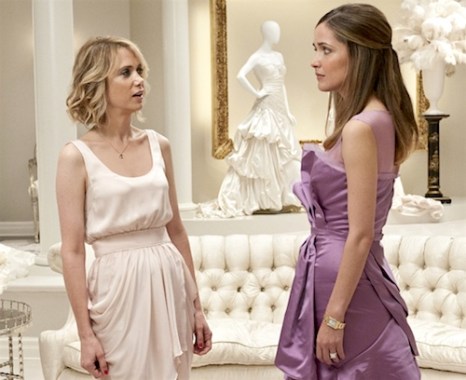
Thankfully this unimaginative sequence is not indicative of Bridesmaids’ overall quality. The female participant in that first scene is Annie (co-writer Kristen Wiig), a down-on-her-luck baker who’s struggling with life since her cake store went bust. When her best friend Lillian (Maya Rudolph) announces her engagement, she asks Annie to be her maid of honour. But Annie soon clashes with fellow bridesmaid Helen (Rose Byrne), the wealthy and glamorous wife of Lillian’s fiancé’s boss, who’s keen to replace Annie in Lillian’s affections. Wedding preparations and hilarity ensue.
Despite the rough start, there are some very, very funny parts later on; but, unexpectedly, it also works pretty well in more character-focused sections. You’re not going to mistake this for an emotional drama, but there’s more investment in the characters than you might anticipate given the cast and crew’s pedigree. I guess this is the on-screen result of a telling behind-the-scenes titbit: reportedly, producer Judd Apatow pushed hard for wild, physical comedy, while writers Wiig and Annie Mumolo preferred to go for subtler material. The film’s most notorious sequence — the diarrhoea scene — was largely at the insistence of Apatow and director Paul Feig. I feel like that probably explains a lot about how the film can be restrained and emotionally intelligent at times, and then ludicrously crude at others.
Maybe it also explains how it ended up being too long. The ideal length of a comedy movie is about 90 minutes, so crossing the two-hour mark feels needless. At the very least it could do with just a tighten — trimming some scenes, or even individual shots, would make a pleasant difference. And to think, there’s an extended cut!
Even more baffling is the fact that this earnt Melissa McCarthy an Oscar nomination, which is just… daft. I mean, she’s not bad, and it’s a bit of an excursion from the kind of roles I’ve seen her play otherwise — and doing something different to your norm is the kind of thing that attracts awards attention — but an Oscar? For this? No. That’s just silly.
I guess that was due in some part to the mass of praise Bridesmaids received on its release, after which there was (of course) a massive backlash. Until I read online comments before writing, I’d forgotten just how hyped it was, and how much people turned against that. With several years’ distance things have calmed down, which probably works in the film’s favour: freed from that pressure, it entertains as a largely funny, surprisingly emotionally astute female-driven comedy.
Paul Feig is a guest panellist on tonight’s episode of Insert Name Here, which is… random.
When I started this TV coverage almost a year ago I promised short reviews, but with three major releases falling under its purview this month — plus a big crossover and the best thing that was on TV this Christmas (and sundry other bits to mention too) — I find myself with quite a bit to say…
A Series of Unfortunate Events(Season 1) I’ve never read A Series of Unfortunate Events, the 13-book cycle of faux-gothic novels by Lemony Snicket that recount the terrible lives of the Baudelaire orphans as they are stalked by the scheming Count Olaf. I am, however, a verified fan / defender of the 2004 movie adaptation (I even included it in my 100 Favourites series last year) — one of few, it seemed, because the movie wasn’t a huge hit and, though it only adapted the first three of the books, no sequels were forthcoming. So I was most excited when it was announced Netflix were re-adapting the books for the small screen — and, fortunately, the new version turns out to be (aside from a few wobbles) a veritably fine drama.
The biggest of those wobbles is getting started. The series has a very particular tone and style, and that does take some getting used to. Indeed, some people will never click with it. You may well have already heard it described as “a cross between Wes Anderson and Tim Burton”, a summation which I’m afraid can’t be improved upon or reasonably substituted with another because that is precisely what it is like. If you do decide to sample the programme (assuming you haven’t already, because if you already have then any advice about what you should consider doing if you do watch it would be inherently pointless because you already have), I would recommend treating the first two episodes as a feature-length double-bill. Although delightfully structured to serve as individual segments (there’s a nice surprise at the end of episode one, even if you’re familiar with the story from other media, and a cleverly staged recap/flashback at the top of episode two), I feel like it might take the full opening story to completely settle into the tone and style the show is shooting for and — I think, on balance — hitting.
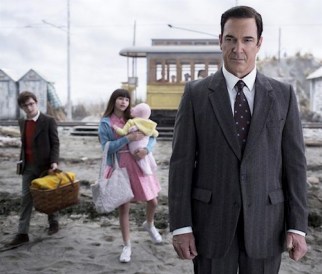
One of the big points in its favour are the scripts, which are infused with wit — not just gags in the dialogue, but at times the very structure and construction of the piece.* It also makes good repeated use of one of my favourite comedic techniques, unnecessary repetition, as well as making good comedic use of one of my repeated favourite techniques, unnecessary repetition. I suppose one might describe the style as arch, and that will not be to all tastes, but it was to mine. A lengthy sequence in episode two dedicated to explaining the difference in meaning between “literally” and “figuratively” certainly helped sway me. It’s delivered by Snicket himself, who, in the form of Patrick Warburton, regularly appears on screen to elucidate and comment upon events. I wasn’t sure of Warburton’s casting at first, but he leaves behind the kind of likeable dullards he usually plays to nail Snicket’s verbose, florid declarations and keen intelligence.
As Olaf, Neil Patrick Harris has the difficult task of being both comically inept and genuinely menacing, as well as appearing in any number of disguises (well, four). Opinion seems divided on whether he manages this better than Jim Carrey in the film, but, well, that’s opinions for you. Personally, I thought he was very good. The extra screen time here (what was done in 108 minutes of film is granted 299 minutes of TV) means he has to work at a different level and pace to Carrey, and I think there are multiple moments where he nails it. Similarly, some may think the child actors are guilty of vigorously flat delivery of their lines, but I think this is just another aspect of the Wes Anderson-esque style — as the viewer (and, possibly, the cast) become more accustomed to the material, so the quality of the performances (and/or the perception thereof) improves.
Another thing I want to mention is its pacing as a TV series. Netflix’s usual all-at-once release strategy encourages binge-watching, this we know, but it also encourages what I’m going to call “binge storytelling” — that is, series that are designed to be viewed in their entirety, like very long movies. Maybe it shouldn’t be surprising that Unfortunate Events breaks this mould (it’s adapted from four novels, so not being one long story is inherent), but a viewer might naturally expect the season’s eight episodes to consequently play like four movies split into halves. Not so. Rather, it plays like a series made up of two-parters. That’s a very fine distinction, perhaps, but there is a difference. To try to explain what I’m getting at from another angle: it isn’t structured as four movies that have had to be split in two to fit the format, but as eight one-hours where each pair present a change in location and guest cast, even as several narrative threads flow across them all. See? Well, don’t worry if not. Instead, just enjoy the theme song — which changes slightly every episode, therefore encouraging that episodic viewing. I’ve found it to be a total earworm. Look away! Looook awaaay!
I think most would’ve thought A Series of Unfortunate Events was dead on screen after the film, but this series (and the reaction to it) suggests Netflix have been vindicated for deciding to revive the property. Let’s hope they have the common sense to do the right thing and commission the two more seasons needed to complete this sorry tale. In the meantime, I’m very favourably disposed to read all the books…
* Incidentally, fun game on social media / comment sections: spot the people who are utterly baffled why both screen adaptations of Unfortunate Events have treated it so comically. Seems some people didn’t get the joke when they were kids.^
Sherlock(Series 4) Sherlock comes to an end (for now) with another variable and divisive series. That’s actually the way it’s been received ever since the start (for all the people who think it only lost its way in the third run, there were plenty who slated various parts of it during the first and second series too), so I don’t think we should be so surprised. For my part, I enjoyed it on the whole.
Opener The Six Thatchers seems to be widely despised, though for the life of me I can’t work out why. Okay, there’s the death at the end, but that was a somewhat inevitable eventuality and it’s fairly well handled. If you’re going to write off something just because it kills off a character you like… well, you need to grow up, frankly. I’m sure that’s not the only reason there are people who dislike the episode, though. Personally I enjoyed all the espionage action stuff. Sherlock has always been about adventures rather than cases and this is surely in-keeping. Anyway, it’s not a perfect episode, but it’s certainly not worse than, say, series one’s The Blind Banker.
The Lying Detective also has its detractors, but on the whole was much better received (seems to be people who hated Six Thatchers enjoyed Lying Detective and vice versa, as a rule). Between Toby Jones’ excellent, creepy performance, the riffs and reflections of certain real news stories, and the well-done adaptation of a memorable Conan Doyle original, plus the series’ visual and narrative tricks being executed just about as well as ever, I’d actually argue it’s one of the programme’s very best episodes.
But then we come to the finale, The Final Problem, which is (if you’ll excuse the pun) a problematic tale. Bits of it work magnificently, like Moriarty’s arrival and the Molly scene, but other sections are severely lacking in logic (even allowing for the heightened world of the show) or are inert — ironically so: Sherlock, John, and Mycroft spend the middle of the episode moving, but as they’re just being led from game to game it comes to very little end. It feels like it needed a good script editor to give it a going-over and give it a clearer impetus. And as for the finale, with the magically-timed arrival of another DVD from Mary… ugh. The idea behind the final montage is nice, but why not have, say, Mrs Hudson narrate it?
Sherlock’s commitment to being a fast-paced, audience-challenging adventure drama that strives to be constantly engaging and entertaining is definitely commendable, and a welcome contrast to much of the slow, dour TV drama we tend to produce over here — even if the end result is sometimes messy or unpopular. With events in-show leaving our heroes reset to a more familiar Holmesian situation, here’s hoping the big-name cast can be tempted back for a few more adventures in a couple of years.
Gilmore Girls: A Year in the Life Nine years on and Gilmore Girls graduates from being considered a twee comedy-drama on disparaged network The WB to a major cultural event, thanks to it being produced for the arbiter of all modern televisual culture, Netflix. Instead of 22 42-minute episodes of network TV we get four feature-length instalments, though it’s still very much a series: the pros and cons are shared across the board.
Pros: at its best it’s still funny, quick-witted, kooky, and sometimes even emotional. It’s a nostalgic visit to old friends, with a nice line in surprise cameos from old characters (even if you know they’re in it, most of them suddenly appear in a scene, hence “surprise”). Cons: at its worst its hero characters aren’t wholly supportable and its narrative choices come overburdened with thematic tin-eared-ness. I’ve always liked that the characters aren’t as perfect as they think they are, but I’m not sure the show knows the characters aren’t as perfect as it thinks they are. It’s hard to know exactly how deep the delusion goes: character-deep, which is kinda clever and maybe even more sophisticated than some people give the show credit for; or writer-deep, which is a little… sad? Unfortunately, there’s plenty of evidence it’s the latter (we’re constantly told of Rory’s prior success but see little evidence to suggest she’s actually capable of it).
Still, what the show sometimes lacks in realism (be that social or psychological) it makes up for with its fast-paced pop culture banter (not always as on display here as normal, I must say) and delightful kookiness. In the latter camp, an extended selection of songs from Stars Hollow: The Musical seems to get a lot of flack, but I thought it was a consistently amusing highlight. Yes, it’s an over-long aside from the main action, but that’s the kind of thing you can do when you’re given double-length episodes and creative freedom. Conversely, the finale goes overboard with this increased liberty.
Bizarrest of all is the problematic ending. Thematically, A Year in the Life begins to look like it might be about moving on, new horizons, that kind of thing — indeed, I kind of expected it to end with Lorelei moving out of Stars Hollow. But the climax — the infamous final four words… well, you could see the development as a signal of a fresh start (very literally, new life), but it doesn’t play that way. Given Rory’s personal story (her career and relationships falling apart) and situation (single, living at home), it’s less a new path forward and more a depressingly regressive loop. If you’re interested in a fuller dissection of these issues, allow me to recommend this review and, in particular, this discussion at The Verge, which both have a pretty good handle on it in my opinion. And if you want a way to reconcile the early cute perfectness with the divergent behaviour of characters as the series rolls on, this fan theory from Cracked is imperfect but fun.
A Year in the Life is never Gilmore Girls at its best (there are highs, but most work thanks to “it’s fun to have them back” nostalgia), but it does reflect the show at its worst. Flawed characters are great for drama, but only if the show is aware of their flaws. Lost amongst all its zany fun, I’m not convinced Gilmore Girls actually understands its protagonists as well as it thinks it does.
Peter Pan Goes Wrong
Christmas seems so long ago now, doesn’t it, but it’s okay: the best thing that was on TV during the festive season isn’t all that Christmassy, and if you missed it and you’re in the UK it’s still available on iPlayer for a little while yet. If you’re outside the UK, I don’t know if there’s anywhere you can see it (legally), but it’s worth seeking out. Based on the stage show, it does what it says on the tin: it’s about an amateur production of Peter Pan that goes wrong. Farcically, hilariously wrong. It’s the kind of thing that’s far, far funnier than you feel it should be — and I know I’m not alone in saying this because it went down a storm on Twitter too. And the theatre company that originated it have several other shows — here’s hoping the BBC make them a Christmas fixture.
The Flash / Arrow / Legends of TomorrowInvasion!
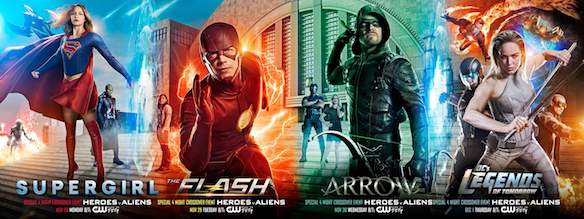
The Arrowverse’s three-night crossover masquerading as a four-night crossover (Supergirl had one scene, which they repeated in Flash anyway) was certainly a hit for The CW in terms of ratings. Quality-wise… well, it was about on a par with the individual series as a whole, which is to be expected I suppose. It was quite neat that the episodes of Flash and Arrow managed to feel like instalments of their own show as well as part of the crossover — especially Arrow, which was also marking its 100th episode — though that was to the detriment of the overarching story: the alien threat that drove the piece was occasionally sidelined, then hurriedly wrapped-up in a frantic final episode. That last part was ostensibly an instalment of the less-popular Legends of Tomorrow, but their regulars only had a little something to do before being shoved aside in favour of characters from the more popular shows. As I don’t watch Legends anymore I can’t say it bothered me, but I almost felt bad for them. I presume there’ll be another such crossover next season, but hopefully next time they’ll fully embrace it: focus on giving adequate time to the story that brings them all together, rather than trying to concurrently maintain the series’ individuality.
Also watched…
ElementarySeason 5 Episodes 1-3 — you can never have enough Sherlock Holmes.
Outnumbered2016 Christmas Special — another contender for the best comedy of the season. I liked that it wasn’t a big-fuss return, just another vignette from the lives of the Brockmans.
ViciousSeries Finale — conversely, this was as odd and kind-of-funny / kind-of-terrible as it always has been. A fitting way to end, then, I guess.
Things to Catch Up On This month, I have mostly been missing Taboo, the BBC’s dark new period drama starring Tom Hardy and written by Steven Knight. I’m sure I’ll get round to it soon, but then I’ve been saying that about Peaky Blinders (you know, the BBC’s dark period drama written by Steven Knight and sometimes starring Tom Hardy) for years and still haven’t even started it. Its scheduling on BBC One on Saturday nights feels thoroughly at odds with how it looks (surely midweek BBC Two?), but putting a proper drama on our highest-profile channel on its highest-profile night seems to have been a popular move, so what do I know?
120 days until new Twin Peaks…
Next month… Studio Ghibli’s first TV series comes to Amazon Prime… but it’s quite long and it doesn’t look that good, so I’m not sure I’ll bother.
2017 #6
Jeremy Konner | 50 mins | streaming (HD) | 16:9 | USA / English
Almost a year ago, Donald Trump was still just a Republican candidate that half of the US and most of the rest of the world laughed at, waiting for something to come along and make him go away. And at that time, this was released: a feature-length(-ish) spoof from sketch comedy website Funny or Die, with a (sort-of-)starry cast, that no one knew was coming. That surprise factor — “a website that does short sketches has made a whole movie and it stars famous people and we didn’t know about it but it’s out now!” — is, frankly, the most memorable thing about it.
Introduced by Ron Howard, who supposedly discovered a VHS copy at a yard sale or something, the film poses as a lost ’80s TV movie produced by Trump himself as an adaptation of his best-selling book of the same name. Trump is played by Johnny Depp, under a pile of prosthetics and doing a passable version of that distinctive voice, who comes across a kid and relates some exploits from his life. There are cameo appearances by quite famous people like Alfred Molina, Henry Winkler, Stephen Merchant, Patton Oswalt, Robert Morse, Room’s Jacob Tremblay (looking vacantly amused), and Christopher Lloyd doing what most of his career has consisted of these past few years: playing Doc Brown in a Back to the Future joke/reference. There are some other people who get billed above some of those people, so maybe they’re also famous in America, I don’t know.
Considering its pedigree, it should come as no surprise that The Art of the Deal: The Movie plays like a very long, out of control sketch. Just like all sketch comedy, some jokes land better than others, and just like most sketch comedy, it begins to outstay its welcome by the end. It gets a lot of passes because Trump is so ridiculous that anyone taking the piss out of him is always welcome, and as such it ticks over with a level of slight amusement rather than outright hilarity.
Bits that do land include the ever-so-’80s title song by Kenny Loggins; the ethnicity of the kid suddenly changing every time Trump notices it; a bit about him paying tramps to piss in a building that (accidentally) has added resonance now; some of the comedy end credits; and a post-credit bookend with Howard, who declares that “we should probably just pretend that this film, and in fact Donald Trump, never even existed.”
2016 #164
Joel Coen | 94 mins | streaming (HD) | 1.85:1 | USA / English | 12 / PG-13
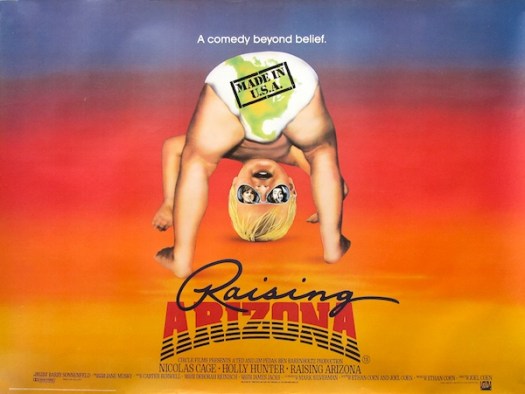
Once upon a time I did a Media Studies A level, and (for reasons I can’t remember) our teacher showed us the pre-titles sequence of Raising Arizona because it was noteworthy for being the longest pre-titles sequence ever. As it happened our teacher was wrong, because The World Is Not Enough had already exceeded it a couple of years earlier.* And now it’s completely meaningless because most blockbusters don’t bother to show any credits until the end of the film, technically rendering the entire movie as the pre-titles “sequence”.
My point here is twofold. One: I miss the structure of all films having title sequences somewhere near the start. Two: before now all I could have told you about Raising Arizona is that “it has the longest pre-titles ever (except it doesn’t)”. Well, that and it stars Nic Cage and was directed by the Coen brothers. But now I’ve watched it and, three months after the fact, …that’s still almost all I can tell you. I also remember there was a kinda-cool semi-fantastical thing going on with, like, a demon biker or something. Oh, and it’s quite funny. Not very funny, but quite.
I have an awkward relationship with the Coen brothers. I always feel like I should be enjoying their movies more than I actually do, and I think some of their stuff is downright overrated. Unfortunately, Raising Arizona has done little to change this situation.
* For what it’s worth, the length of TWINE’s pre-titles wasn’t intended. It was originally supposed to be just the stuff in Spain, with the MI6 explosion and subsequent Thames boat chase coming after the titles, but it was decided that didn’t make for a strong enough opening and it was recut. It runs about 17 minutes vs Raising Arizona’s 11.^







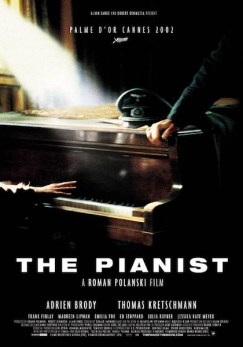 Roman Polanski’s semi-autobiographical biopic of Wladyslaw Szpilman (Adrien Brody), who survived the Warsaw ghetto in World War 2 primarily through luck and good fortune, is a subtly powerful work. It may not poke at your emotions quite so readily as, say,

 The true story of Christopher McCandless, who abandoned regular life after college to go hitchhiking and become one with nature or something, then accidentally killed himself by being a pretentious wanker.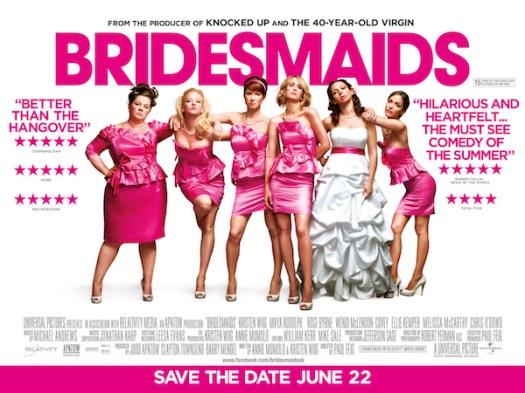

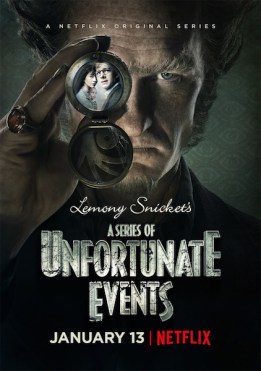 I’ve never read A Series of Unfortunate Events, the 13-book cycle of faux-gothic novels by Lemony Snicket that recount the terrible lives of the Baudelaire orphans as they are stalked by the scheming Count Olaf. I am, however, a verified fan / defender of the 2004 movie adaptation (I even
  As Olaf, Neil Patrick Harris has the difficult task of being both comically inept and genuinely menacing, as well as appearing in any number of disguises (well, four). Opinion seems divided on whether he manages this better than Jim Carrey in the film, but, well, that’s opinions for you. Personally, I thought he was very good. The extra screen time here (what was done in 108 minutes of film is granted 299 minutes of TV) means he has to work at a different level and pace to Carrey, and I think there are multiple moments where he nails it. Similarly, some may think the child actors are guilty of vigorously flat delivery of their lines, but I think this is just another aspect of the Wes Anderson-esque style — as the viewer (and, possibly, the cast) become more accustomed to the material, so the quality of the performances (and/or the perception thereof) improves.
 I think most would’ve thought A Series of Unfortunate Events was dead on screen after the film, but this series (and the reaction to it) suggests Netflix have been vindicated for deciding to revive the property. Let’s hope they have the common sense to do the right thing and commission the two more seasons needed to complete this sorry tale. In the meantime, I’m very favourably disposed to read all the books…
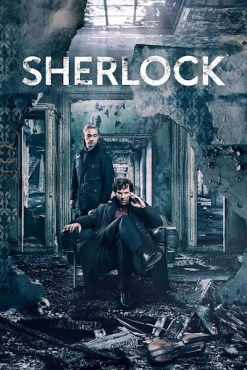 Sherlock comes to an end (for now) with another variable and divisive series. That’s actually the way it’s been received ever since the start (for all the people who think it only lost its way in the third run, there were plenty who slated various parts of it during the first and second series too), so I don’t think we should be so surprised. For my part, I enjoyed it on the whole.
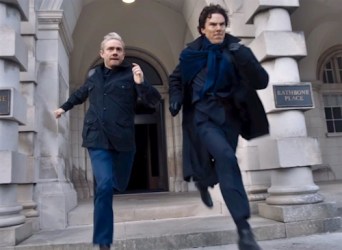 Sherlock’s commitment to being a fast-paced, audience-challenging adventure drama that strives to be constantly engaging and entertaining is definitely commendable, and a welcome contrast to much of the slow, dour TV drama we tend to produce over here — even if the end result is sometimes messy or unpopular. With events in-show leaving our heroes reset to a more familiar Holmesian situation, here’s hoping the big-name cast can be tempted back for a few more adventures in a couple of years.
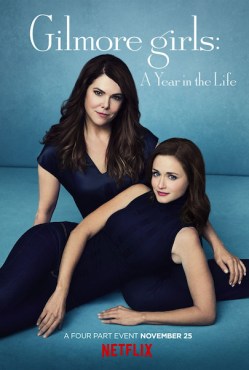 Nine years on and Gilmore Girls graduates from being considered a twee comedy-drama on disparaged network The WB to a major cultural event, thanks to it being produced for the arbiter of all modern televisual culture, Netflix. Instead of 22 42-minute episodes of network TV we get four feature-length instalments, though it’s still very much a series: the pros and cons are shared across the board.
 Bizarrest of all is the problematic ending. Thematically, A Year in the Life begins to look like it might be about moving on, new horizons, that kind of thing — indeed, I kind of expected it to end with Lorelei moving out of Stars Hollow. But the climax — the infamous final four words… well, you could see the development as a signal of a fresh start (very literally, new life), but it doesn’t play that way. Given Rory’s personal story (her career and relationships falling apart) and situation (single, living at home), it’s less a new path forward and more a depressingly regressive loop. If you’re interested in a fuller dissection of these issues, allow me to recommend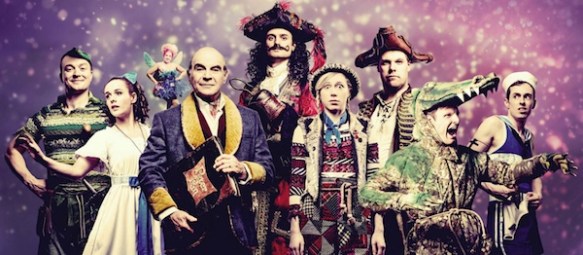
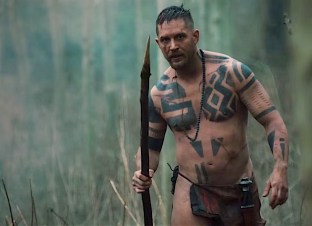 This month, I have mostly been missing Taboo, the BBC’s dark new period drama starring Tom Hardy and written by Steven Knight. I’m sure I’ll get round to it soon, but then I’ve been saying that about Peaky Blinders (you know, the BBC’s dark period drama written by Steven Knight and sometimes starring Tom Hardy) for years and still haven’t even started it. Its scheduling on BBC One on Saturday nights feels thoroughly at odds with how it looks (surely midweek BBC Two?), but putting a proper drama on our highest-profile channel on its highest-profile night seems to have been a popular move, so what do I know?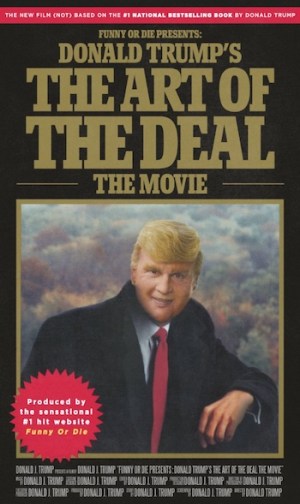

 100Films.co.uk