
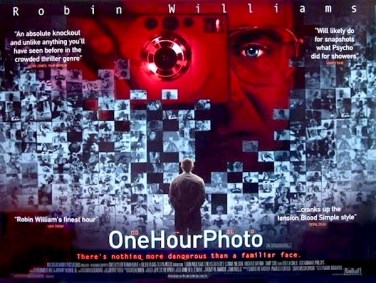
than a familiar face.
Country: USA
Language: English
Runtime: 96 minutes
BBFC: 15
MPAA: R

Original Release: 21st August 2002 (USA)
UK Release: 4th October 2002
First Seen: DVD, c.2003
Stars
Robin Williams (Mrs. Doubtfire, Jumanji)
Connie Nielsen (Gladiator, Basic)
Michael Vartan (Never Been Kissed, Colombiana)
Gary Cole (Office Space, Talladega Nights: The Ballad of Ricky Bobby)
Director
Mark Romanek (Never Let Me Go, a lot of music videos)
Screenwriter
Mark Romanek (Static, Inside Out IV)
The Story
Sy Parrish is the lead technician at SavMart’s one-hour photo developing clinic. A lonely guy, he invests all his energy in doing a great job for his customers. He’s particular fond of the Yorkins, a young family whose seemingly perfect life has become his obsession. When Sy loses his job at the same time as discovering a secret about one of the Yorkins, his quiet obsession threatens to become something darker…
Our Hero
Sy Parrish, the socially awkward but fundamentally nice department store photo technician.
Our Villain
Sy Parrish, when he snaps — though from his point of view, it’s the member of the Yorkin family that shatters his illusions of their perfect life.
Best Supporting Character
Although the film is very much focused on Robin Williams’ tour de force performance as Sy (more on that later), the cast is filled out by good turns in smaller roles. Ones that have always particularly stuck in my mind include Eriq La Salle as a detective who becomes involved as Sy goes off the rails, and Dylan Smith as the Yorkins’ sympathetic young son, who identifies Sy’s lonely sadness before anyone else. Not so hot on his Evangelion, though.
Memorable Quote
“Family photos depict smiling faces… births, weddings, holidays, children’s birthday parties. People take pictures of the happy moments in their lives. Someone looking through our photo album would conclude that we had led a joyous, leisurely existence free of tragedy. No one ever takes a photograph of something they want to forget.” — Sy Parrish
Memorable Scene
When the Yorkins are out, Sy wanders around their home, admiring the photos on the fridge, including one of himself, using the facilities, having a beer, hanging out with their dog watching TV. Then, suddenly, they come home… but it’s okay because he’s their friend. And this is all in Sy’s imagination.
Technical Wizardry
Writer-director Mark Romanek’s background is as a very successful music video director, and, as you might expect from someone with that history, his first proper feature is visually assured. In particular Sy’s workplace, SavMart, created by production designer Tom Foden as a consumerist heaven-cum-hell: a huge, white, slick place, but ultimately sterile, cold, and colourless, especially under glaring fluorescent light in the typically skilful cinematography of David Fincher’s frequent DP, Jeff Cronenweth.
Making of
In keeping with the film’s photographic theme, many of the characters are named after real-life photographers. These include: Sy’s assistant, Yoshi Araki (Nobuyoshi Araki); Sy’s boss, Bill Owens (Bill Owens); detectives Van Der Zee (James Van Der Zee) and Outerbridge (Paul Outerbridge); Officer Dan Lyon (Danny Lyon); Maya Burson (Nancy Burson); customers Mrs. von Unwerth (Ellen von Unwerth) and Mr. Siskind (Aaron Siskind); and the hotel at the end, the Edgerton (Harold Eugene Edgerton).
Awards
1 Saturn Award (Actor (Robin Williams))
4 Saturn nominations (Action/Adventure/Thriller Film, Supporting Actress (Connie Nielsen), Writing, Music)
1 Fangoria Chainsaw Award (Actor (Robin Williams) — it’s not that kind of film, is it?)
What the Critics Said
“It’s a credit to Romanek and Williams that Sy commands much sympathy; for most of the film he’s convincingly played and treated as being odd and quirky but not necessarily threatening. That Williams has come to develop a warm-‘n-fuzzy screen persona over the years works wonders for the character; not only does it make his loneliness palpable and relatable, it makes his inevitable eruption all the more shocking to behold. What makes the turn all the more disturbing, however, is no matter how unhinged he becomes, Sy never becomes nor comes off as a completely despicable character. His actions may veer off into a negative direction, but the motivation comes from a genuinely good place, though to a selfishly obsessive extreme.” — Michael Dequina, TheMovieReport.com
 Score:
 81%
81%What the Public Say
“It’s a film that over the years I’ve come to appreciate far more than my initial viewing due to the brilliant, unforgettable effort by Robin Williams who gives one of his most haunting performances. […] It’s a testament to Williams’ talent that you can be both repulsed and sympathetic to Sy. He unnerves you with his calculated obsession and creepy smile, yet it’s hard not to feel bad for a guy who simply just wants a friend or a family to call his own as he enters the twilight of his life.” — Jeffrey Lyles, Lyles Movie Files

Part psychological thriller, part character study, One Hour Photo has some interesting things to say about how we record our memories — or how we used to, considering that digital photography and social media have since transformed that aspect of our lives. Whether or not that element of the film is past it, Robin Williams’ performance endures. It wasn’t the first time he’d played a non-comedic role, of course, but he’s so throughly subsumed in the role of the awkward, creepy Sy Parrish that it’s possible to forget it’s Williams at all. It may well be the finest acting performance from an extraordinary talent.

In #69… a ringing phone has to be answered.
 15 years before flop comedy


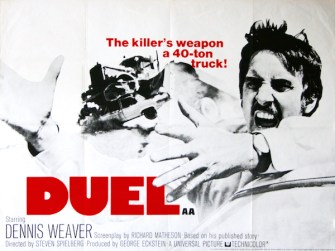 As far as Americans are concerned, Steven Spielberg’s debut feature film was
  (the one time he disembarks from his cab, we only see his boots as he paces on the far side of his vehicle). Never revealing the trucker’s face was Matheson’s idea, but Spielberg leapt on it wholeheartedly, because the scariest monsters are the ones you never see. Couple that with a specially-chosen truck (of the seven Spielberg ‘auditioned’, it was the one whose front most resembled a face) and you have a genuinely threatening presence.
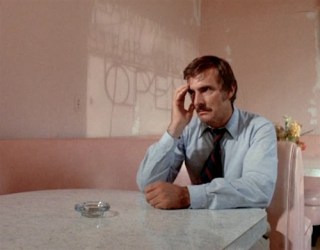 Weaver is excellent, plausibly charting a course from bland normality to apologetic paranoia, on to hopeless despair, ending in desperate lunacy. At one point he pauses at a roadside cafe to get a breather, but has reason to suspect one of his fellow patrons is his tormenter. As he tries to subtly surveil them, attempting to figure out what he can do to defuse the situation, Mann’s thoughts are narrated on the soundtrack; but we barely need it, because Weaver physically conveys all of his uncertainty, his fear, his wannabe-bravado. Sequences like this also demonstrate how Spielberg was already a master of camerawork and editing, guiding us as to where Mann is looking, shifting angles high and low, the constant changes in perspective not disorientating our sense of space but nonetheless keeping it off kilter.
 Speaking of which, why has no one ever done a “TV work of Steven Spielberg” box set? There’s a short featurette on the Duel DVD (and Blu-ray) about the other TV productions he directed, and while I’m sure it can’t be his greatest work, he’s clearly not totally ashamed of it, and the clips shown suggest it’d be worth a watch. For one thing, being able to see the original TV edit of Duel would be interesting, for two reasons. First, it would solve the aspect ratio dilemma. The DVD is presented in 4:3, as it was originally shot for TV, even though it’s the movie cut. The more recent Blu-ray follows the cinematic framing of 1.85:1; however, it’s not just cropped and it’s not just widened: when they reviewed the footage to create the movie version, Spielberg discovered he could see himself sat in the back seat giving direction — so the final print is both widened slightly and cropped slightly. I guess which is ‘right’ is now a matter of personal preference, though the Blu-ray undoubtedly looks tonnes better in every other respect.
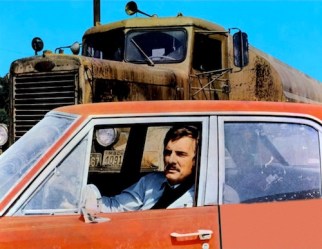 Nitpicks and “what if”s aside, Duel is a fantastic calling card from a director who has gone on to become arguably the most significant and influential filmmaker of the ensuing 45 years. To say it stands in contention to still be regarded among his finest films does no disservice to the body of work he’s produced since, but rather indicates just how assuredly he hit the ground running.
 2014 Academy Awards
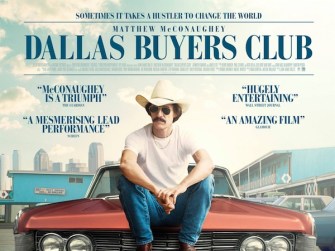 Every time I see a trailer for Dallas Buyers Club at the start of another Blu-ray I think, “that looks really good; I should watch it”. Then every time I get near watching it I think, “that sounds quite worthy and/or grim; maybe not right now”. So I guess kudos is due to Amazon UK for removing it from Prime Video
 That’s just some of what’s going on, anyway, because there’s also Ron’s growing acceptance of the community he finds himself a part of, especially after he’s ostracised from his former friends who assume he’s gay; there’s his business partner, trans woman Rayon (an also-Oscar-winning Jared Leto), who has drugs and familial problems of her own; and the doctor (Jennifer Garner) who battles her conscience over the drug trials and Ron’s less-than-scientific but effective methods. If this makes Dallas Buyers Club sound unfocused, it’s more that it’s got a lot of different aspects to examine. It’s not just about narrating what really happened, either, because Leto and Garner’s characters are fictional.
 McConaughey is very good as Ron, though I’d wager he won the Oscar as much for his extreme weight loss as his actual acting. He was up the same year as Chiwetel Ejiofor for
 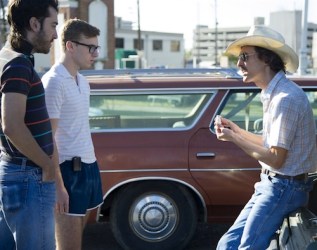 For all the heaviness of the topics it touches on, the film isn’t without the humour that made its trailer so attractive. That said, if you’ve seen the trailer you’ve seen most of that material, and in a more condensed and highlighted form, too. It almost makes it look like a heist movie — how this clever chappy pulled the wool over the authorities’ eyes with his vicar costumes and amusing way of filling out forms — but that’s just a small part of the film; and, actually, those tricks often go wrong or flat out don’t work, which is not the heist movie way.
 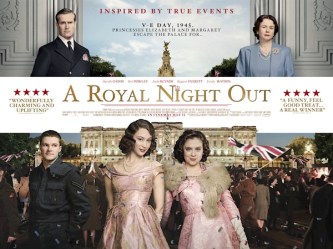 A somewhat remarkable true story gets romanticised in this likeable comedy about
 Letting the Side Down
 One of the most praised animated films of all time, this Studio Ghibli feature tackles grim subject matter: it’s the story of Seita and his little sister Setsuko, a pair of Japanese children who are orphaned and eventually left to fend for themselves in the closing months of World War 2. It begins with Seita dying of starvation and joining the spirit of his dead sister, so you know it’s not going to end well. A Disney movie this is not.
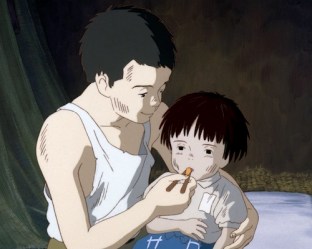 Another thing is that the film is often cited as a powerful anti-war movie, because it depicts the ravaging effects on innocents. However, director Isao Takahata insists it isn’t, saying it’s about “the brother and sister living a failed life due to isolation from society”. I’m inclined to believe him, because, from what we actually see on screen, these two kids are the only ones to be so badly affected! Okay, we do see people have died, and we’re told that food is running out… but there’s a gaggle of kids who seem to be having a fun day out when they stumble across the siblings’ makeshift shelter; or, right at the end, people who merrily arrive home and pop their music on. The film doesn’t try to claim that only these two kids suffered, but — aside from a few other destitutes at the start, and the bodies we see after the first bombing (later bombings don’t make any casualties explicit) — we don’t really see anyone else suffering. I’m not arguing that Takahata is saying no one else suffered, nor that these observations make it pro-war (I mean, any children dying, even if others are surviving, is not a good thing), but I didn’t get an anti-war message that was as powerful or as overwhelming as other viewers seem to have.
 and, really, this story shouldn’t be “bearable”. That’s not to say you can’t feel an emotional connection to animated characters, but, as a medium, animation regularly deals in fantastical subjects, so with material this gruelling it does make it seem less real.
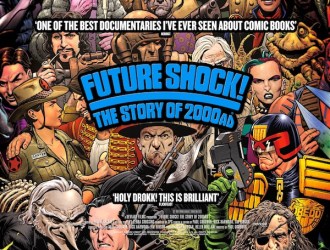 Talking heads documentary about the galaxy’s greatest comic,


 100Films.co.uk