
Adam Wingard | 100 mins | Blu-ray | 2.40:1 | USA & UK / English | 15 / R
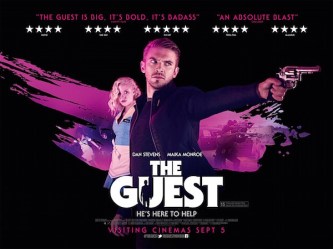 The writing-directing team behind You’re Next turn their attention to a different genre with this ’80s-throwback thriller that’s made of awesome.
One morning in New Mexico, David (Dan Stevens) turns up on the doorstep of the Peterson family. A former soldier, he tells them he was with their son Caleb when he was killed in action, and he asked David to visit his family. Mum Laura (Sheila Kelley) welcomes him with open arms and insists he stays for a few days; suspicious dad Spencer (Leland Orser) is soon won round; socially-awkward teenage son Luke (Brendan Meyer) is quick to see the benefits of an older ‘brother’ who can handle himself; twenty-year-old daughter Anna (Maika Monroe) is initially skeptical, then convinced of his merits… but then… Well, I could say more, but who wants it spoiled?
That said, if you’ve seen any of the trailers or other promotion, you’ll have some inkling of where The Guest is going. Maybe not entirely, because they didn’t blow everything in the trailer, but still: this is (in part) an action movie, and Stevens’ ex-soldier does get to show off the skills he learned in active service. Suffice to say, there’s another reason he’s visiting his army buddy’s family in the back of beyond, and it has a lot to do with shady Lance Reddick and his awesome voice. Ok, it has nothing to do with Lance Reddick’s voice, but that is awesome. Lance Reddick’s voice should be in more stuff.
 The days of chubby Matthew Crawley long since banished, a buff Dan Stevens (there’s a reason his topless scene was also all over the marketing) is entirely convincing as the seemingly-nice-but-possibly-creepy army man who inveigles his way into the Petersons’ lives with pure charm before gradually revealing, both to them and (especially) us, that there’s a lot more to him than a nice guy who happened to kill people in the Middle East. For my money, he’s the best anti-hero in a long time. Occasional flashes of dry humour — a line here, a look there — make him likeable to the audience, more than the charm that persuades the other characters does, so that by the final act we’re still pretty much on his side, whatever else happens.
Maika Monroe makes an equally appealing co-lead, and something of an audience cipher as she digs into David’s backstory. Wingard and screenwriter Simon Barrett wisely reveal just enough of this to keep us informed but don’t info-dump the whole shebang (apparently they shot and test-screened scenes that explained it all in detail, and the test audience agreed that it was too much unnecessary information. Well done, test audience). Some have taken issue with the “kids discover everything” angle the film unrolls in its second half, but it’s part of the ’80s-ness. I can’t even think of what films to cite, but it feels like something you see in quite a few ’80s genre flicks.
That rather goes for the film as a whole, in fact. It’s definitely set now, and there are more modern precedents for some of it (a review quote on the Blu-ray cover mentions The Bourne Identity — there are some plot similarities, but don’t make the mistake of thinking it’s the same kind of film), but a feeling of ’80s-ness persists as well — but without easy reference to other specific movies. Maybe that’s my knowledge coming up short, 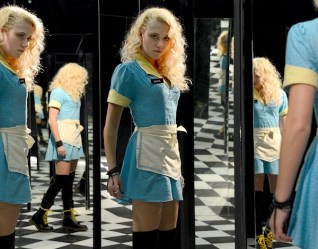 but I know I’m not the only reviewer to feel it. Wingard evokes that era and the feel of those movies, without slipping into parody and without merely ripping-off familiar flicks. I think this especially comes to the fore in the final act — it’s arguably even most distilled in the very final scene — but, again, it’s a feeling, a sensation, a familiarity, not a blatant, I dunno, “look, now we’re in the ’80s!”-ness.
This is underscored by the amazing soundtrack. I think it’s a mix of original score and sourced songs, but the effect is seamless. Apparently it was composed on the same type of synths used for Halloween III, which may or may not give you a sense of where it’s going, but — much like Wingard’s direction and Barrett’s story choices — it’s an ’80s vibe with a modern twang. I get the impression the songs included are recent cuts, not jukebox throwbacks, which I guess is some subculture of modern music. Or possibly mainstream, I dunno. Whatever, it’s all cool. I must get my hands on a full soundtrack (a quick look at Amazon reveals a digital-only release that doesn’t look particularly thorough. Must investigate more…)
In case it’s not yet obvious, allow me to state it bluntly: I loved The Guest. I loved Dan Stevens’ character and his performance. I loved each and every one of the perfectly-placed supporting cast. I loved the wit and the action scenes. I loved the ’80s-inspired plotting. I loved the score. Indeed, I loved pretty much everything about it.  Not everyone loves it — some people outright hate it, even. I suppose it’s a little bit idiosyncratic, in a similar way to something like Hanna… which I also adored, of course. They’d make a fun double bill.
No guarantees, then, but naturally I wholeheartedly recommend you invite The Guest in. To your life, I mean. As in, watch it.

The Guest is available on Netflix UK as of yesterday.
It placed 3rd on my list of The Ten Best Films I Saw For the First Time in 2015, which can be read in full here.
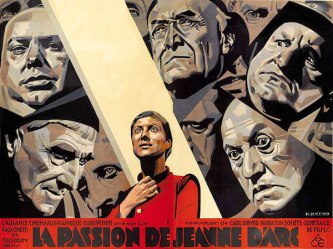 Widely regarded as one of the greatest movies of all time (look at
  Dreyer based his telling on the written records of Joan’s trial. Although that’s grand for claims of historical accuracy, it’s hard to deny that silent cinema is ill-suited to thoroughly portraying something dialogue-heavy. There are many things silent film can — and, in this case, does — do very well indeed, but representing extensive verbal debate isn’t one of them. Bits where the judges argue amongst themselves — in silence, as far as the viewer is concerned — leave you longing to know what it is they’re so het up about. Sometimes it becomes clear from how events transpire; other times, not so much.
 neutral costumes on sparsely-decorated sets, and are almost entirely shot in close-ups — all elements that avoid the usual grandiosity of historical movies, both in the silent era and since. What we perceive as being ‘grand’ changes over time (things that were once “epic” can become small scale in the face of increasing budgets, for instance); pure simplicity, however, does not age much.
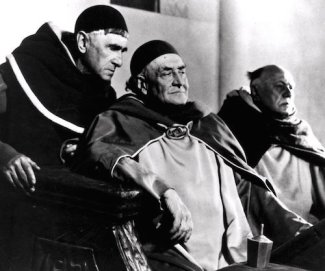 The actors playing the judges may be less individually memorable than Joan, but it’s their conflict — the personal battle between Joan and these men, as Dreyer saw it — that drives the film. Dreyer believed the judges felt genuine sympathy for Joan; that they did what they did not because of politics (they represented England, and she had led several successful campaigns against the Brits) but because of their devout belief in religious dogma. Dreyer says he tried to show this in the film, though it strikes me the judges still aren’t portrayed too kindly: they regularly seem contemptuous of Joan, and are outright duplicitous at times. Maybe that’s just religion for you.
 however, so I have no opinion. Instead, they offer two alternatives. On the correct-speed 20fps version, there’s a piano score by silent film composer Mie Yanashita. Apparently this is the only existing score set to 20fps, and Masters of Cinema spent so much restoring the picture that there was no money left to commission an original score. Personally, I don’t think they needed to. Yanashita’s is classically styled, which works best for the style of the film, and it heightens the mood of some sequences without being overly intrusive, by and large. Compared to Dreyer’s preferred viewing method, of course it affects the viewing experience — how could it not, when it marks out scenes (with pauses or a change of tone) and emphasises the feel of sequences (with changes in tempo, for instance). That’s what film music is for, really, so obviously that’s what it does. Would the film be purer in silence? Maybe. Better? That’s a matter of taste. This particular score is very good, though.
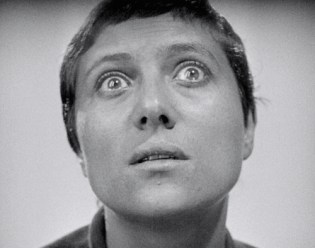 Some viewers describe how they’ve found The Passion of Joan of Arc to be moving, affecting, or life-changing on a par with a religious experience. I wouldn’t go that far, but then I’m not religious so perhaps not so easily swayed. As a dramatic, emotional, film-viewing experience, however, it is highly effective. As Dreyer wrote in 1950, “my film on Joan of Arc has incorrectly been called an avant-garde film, and it absolutely is not. It is not a film just for theoreticians of film, but a film of general interest for everyone and with a message for every open-minded human being.” A feat of visual storytelling unique to cinema, it struck me as an incredible movie, surprisingly accessible, and, nearly 90 years after it was made, timeless.



 Six months on from all the kerfuffle, the storm-in-a-teacup (as it turned out) controversy of The Interview’s initial release has been consigned to the (film-)history books, leaving us with a movie to be judged on its own merits… albeit a movie being judged by a lot of people who probably wouldn’t’ve bothered with it otherwise, just because of the aforementioned controversy.
 no, really, he’s definitely as evil as everyone thought. On the bright side, co-writer/directors Rogen and Evan Goldberg also pull off a surprisingly well-constructed through-line about honeypotting/honeydicking, even if it doesn’t wholly hang together if you think about it too much (if Kim was just honeydicking Dave, would those things really make him cry?)
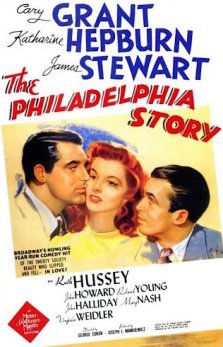 Katharine Hepburn is the
 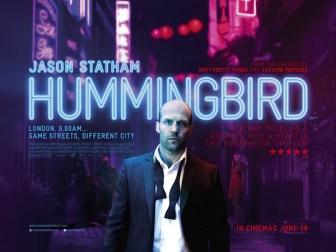 Steven Knight, the writer of
  The film’s problem, perhaps, is that it slips a little between two stools. It’s certainly not action-packed enough to appeal to a good deal of Statham’s fanbase — the one or two instances of him kicking ass are very much asides. On the flipside, it may not commit to the character drama fully enough to satiate the needs of that kind of viewer. However, for anyone at peace with those two apparently-disparate styles — like, well, me — Hummingbird will be a more satisfying experience.
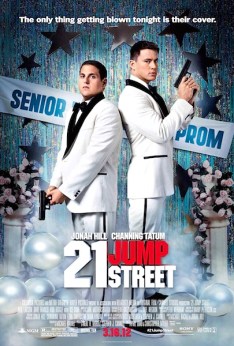 Having turned the unlikely-to-be-any-good story of a machine that makes it rain food into
 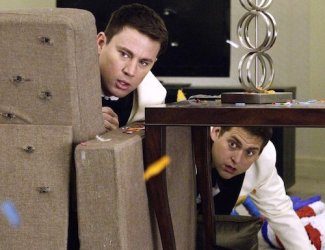 this leaves Hill hanging out with the cool kids — and being lured down the path of parties and their shallower friendship — while Tatum falls in with a gang of ultra-nerdy nerds and starts actually learning stuff. Distilled like that makes it sound pat, but in the film it works; in part because they don’t overplay the clichéd “friends fall out irretrievably… until it’s retrieved for the final act” story arc.
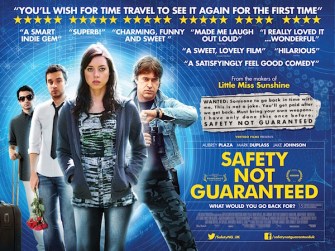 The debut feature from the director of all-conquering box office behemoth
  Maybe I’m missing something, I don’t know, but where other directors currently making a similar transition (Gareth Edwards, Josh Trank, Duncan Jones) showed some signs of a reason for the upgrade in their debut and/or sophomore features, I can’t fathom what singled Trevorrow out. He seems to have done alright with it though, so never mind.
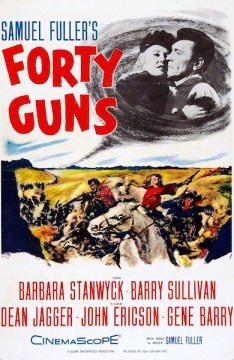 Western with Barbara Stanwyck as a powerful landowner, and commander of the titular posse, whose bullying brother, Brockie, is consequently allowed to run riot over the town. Enter lawman Griff (Barry Sullivan) and his two brothers, whose moves to bring Brockie in line kickstart a chain of ruinous events.
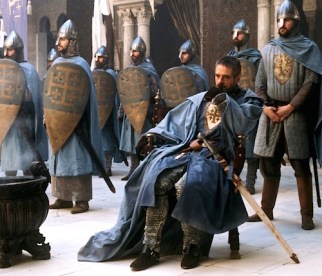
 Ridley Scott’s Crusades epic is probably best known as one of the foremost examples of the power of director’s cuts: after Scott was forced to make massive edits by a studio wanting a shorter runtime, the film’s summer theatrical release was so critically panned that an extended Director’s Cut appeared in LA cinemas before the end of the year, reaching the wider world with its DVD release the following May. The extended version adds 45 minutes to the film (and a further 4½ in music in the Roadshow Version), enough to completely rehabilitate its critical standing.
 A strong cast bolsters the human drama that sometimes gets lost in such grand stories. Bloom is a perfectly adequate if unexceptional lead, but around him we have the likes of Michael Sheen, David Thewlis, Alexander Siddig, Brendan Gleeson, and Edward Norton (well done if you can spot him…) There are even more names if you look to supporting roles. Most notable, however, are the co-leads: both Liam Neeson, as the knight who recruits Balian, and Jeremy Irons, as the wise advisor when he gets to Jerusalem, bring class to proceedings, while Eva Green provides mystery and heart as the love interest. Of everyone, she’s best served by the Director’s Cut, gaining a whole, vital subplot about her child that was entirely excised theatrically. It’s the kind of thing you can’t imagine not being there, and Scott agreed: it seems the chance to restore it was one of his main motivators for putting together a release of the longer version.
 (I’d wager
  100Films.co.uk