La Antena (2007)

aka The Aerial

2009 #10
Esteban Sapir | 95 mins | TV | PG

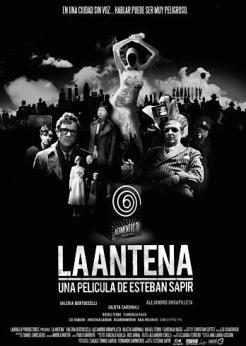
La AntenaLa Antena is a Silent Film. And by that I mean there is no dialogue, though there is music, and it’s in black and white with low-budget (looking, at least) effects, though it was made in the 21st Century — but it is entirely in the style of those films made in the era before sound was technically possible. It could sit comfortably alongside ‘real’ silent films to the extent that the uninitiated might reasonably be fooled into believing it was one.

In some respects this is neither here nor there, though it will undoubtedly put some viewers off. For those with a more open mind or who are fans of silent movies, however, it’s a joy. This is mainly because it’s incredibly imaginative, especially with its visuals, which are often pleasantly barmy. The setting is a dystopian future (or alternate reality) where people can no longer speak (thus justifying the silent film styling), and this world is wonderfully realised without a hint of realism or awkward attempts to explain why things are the way they are. These days it’s a rare filmmaker who doesn’t feel the need to explain everything and make it fit in relation to our world, but Sapir is one of the few who trusts us to accept what’s going on — much as the great silent film directors did.

Sadly it isn’t flawless. Some elements of the plot get forgotten as things roll on (what happened to Mr TV’s son, for example?), perhaps a victim of the 50 minutes of cuts they chose to make for pace. Most of the symbolism is also fairly heavy handed, though one could argue that’s in keeping with the style, and at least means it’s all nicely noticeable. Even then a few bits are unavoidably leaden — particularly, the use of the swastika and Star of David felt uncomfortably irreverent to me.

Ratings-wise, La Antena is borderline — the sort of film I give four stars to now but then beats most five-star films to a high place on my year-end top ten (like The Prestige or Hellboy II or the five others that have done it). In which case it seems only fair to run the risk of awarding it full marks.

5 out of 5

Oscar-winning modern silent movie The Artist is on BBC Two tonight, Saturday 24th January 2015, at 10pm, and is reviewed here.

Commentary! The Musical (2008)

2009 26a
Jed Whedon & Joss Whedon | 42 mins | DVD

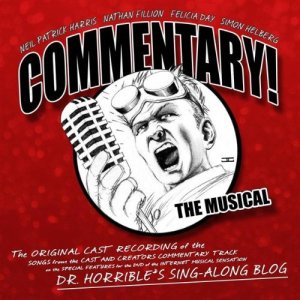
Commentary! The MusicalCommentary! The Musical falls somewhere between DVD extra, TV episode and short film. Whatever it should be classed as, it’s utter genius.

You’ve surely heard of Dr. Horrible’s Sing-Along Blog, the project Joss Whedon created during the infamous US Writers’ Strike. (That in itself you could debate the status of. Three-part miniseries? Short film? Feature film? (At 42 minutes it’s over the Academy’s boundary.) And endlessly on.) Well, on the Dr. Horrible DVD can be found this — an alternate audio track, on which the cast and crew discuss the making of the feature… except it’s all scripted and the majority is sung. Not your traditional audio commentary then.

As an audio commentary, it does little to illuminate the production of Dr Horrible — though, surprisingly, it does do some — but instead focuses its energy on spoofing commentary tracks, DVD extras, and the American film and TV industry in general. Specific targets include the Writers’ Strike and its lack of success, rivalry between lead actors, the importance of ensemble cast members, Asians in US TV and film, the dissection of art by DVD extras, and many more. It’s almost all incredibly funny — inevitably there are a few duff gags and dull songs, although they are uncommonly rare — and it moves at a rate of knots, meaning it rewards multiple listens to pick up every gag. Having already re-listened to a couple of tracks, I can attest to noticing funny lines that I was too busy laughing through before. In a spot of technical impressiveness, the commentary is often surprisingly scene-specific, sometimes even shot-specific. When you consider the effort that must’ve been involved to script and time both songs and spoken dialogue to make this happen, it’s even more impressive.

It’s this careful scripting and the sure-handed attentiveness to theme that marks Commentary! The Musical out as a fictional work in its own right, rather than ‘merely’ a DVD extra, in much the same way that Mystery Science Theater 3000 or the short-lived (and easily forgotten) Rob Brydon series Director’s Commentary are original works. With its well-targeted thematically-appropriate comedy and plentiful gags, it’s pure delight for fans of DVDs, or anyone else with a mind open to the concept.

5 out of 5

Flash Gordon (1980)

2009 #27a
Mike Hodges | 107 mins | DVD | PG / PG

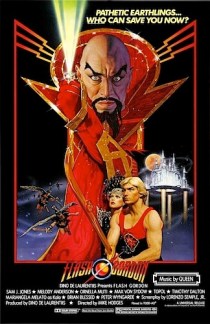
Flash GordonI hadn’t been intending to review Flash Gordon — it’s not as if I don’t have enough new films to review — but though I have seen it before it was a long time ago and I was very young, so watching it again now I wasn’t quite prepared for just how good it is.

Flash often seems to be dismissed as an unintentionally campy load of nonsense, perhaps with some ironic appeal. What this assessment misses is how knowing it is. Yes, it’s ridiculously camp, the dialogue is cheesy, the performances equally so, and it’s brighter and more colourful than any under-5s TV show ever produced. But it knows it is, and because it does it with nary a nod nor a wink I think that passes some viewers by.

The sheer volume of things there are to love in this film makes them hard to list without watching it and pointing them out as they appear, but I’m sure I can manage a few. For one, there’s the design work — the sets, the costumes, the spaceships — all huge, vibrant, retro and often ridiculous, and all wonderful for it. The special effects are truly special, creating skies full of swirling rainbow colours, rainbow clouds for the spaceships to float through, platforms that tilt over a rainbow vortex… Do some of them look primitive? Well, a bit — but they have more charm than CGI ever will, and they don’t get in the way either.

The plot is ludicrous, built from B-movie elements and predicated on cliffhangers — which is exactly as it should be. The dialogue is packed with quotable lines, many so patently ridiculous that it can only have been deliberate. There’s not a single bad performance — everyone’s either in on the joke or playing the straight man to it. Of particular note are Max von Sydow’s properly villainous villain (who, to be quite honest, still has more depth than too many nemeses we see today); Peter Wyngarde as his scheming right-hand-man, granted a fantastic death; Mariangela Melato as his right-hand-woman, granted some of the very best ‘bad’ lines; Topol as a somewhat loopy Dr Zarkov; and, of course, Brian Blessed — no more need be said.

The fights and assorted other action scenes are exciting, frequently epic, and tinged — like so much of the film — with a perfectly judged level of humour. Arguably the best is a harem-set tussle between between Dale Arden and Princess Aura, watched by sniggering servants as they wrestle on a giant bed. It’s beyond knowingly handled by Hodges, the brief cutaways to the servants indicating the deliberate commentary on such voyeuristic lesbian-lite wrestling matches in other films.

Then there’s the score by Queen. As with Brian Blessed, what more needs to be said? (Incidentally, I got a big laugh when Blessed screams, “who wants to live forever anyway?”, forgetting that Highlander was still six years off when this was made.)

So, in all that, what’s wrong with Flash Gordon? When I noticed how much I was enjoying it — about five minutes in — I began keeping my eyes open for flaws, any niggling thing that detracted from the experience Hodges created. I couldn’t find a single thing. Not one.

Which means I can now become known far and wide as the blog that only awarded Star Wars four stars, but gave Flash Gordon a perfect

5 out of 5

Predator (1987)

2009 #16a
John McTiernan | 102 mins | DVD | 18 / R

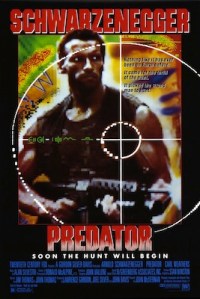
PredatorLet’s not pretend here: although the series have become intrinsically linked, Predator is Alien’s poorer cousin. Not that it’s a bad film — it’s an entertaining war flick that turns into a sci-fi/action/horror skirmish thingy — but it doesn’t have the same finesse that imbues Alien and its sequel.

In the lead role, Arnie does his usual macho posturing. Around him, a crack team of special-operations soldiers are characterised enough to be distinguishable but little more. There’s a girl because there should be a girl, not that she does much. Mainly, there are a couple of big fights and one seriously ugly alien.

The main reason for Predator’s success may well be the Predator itself. It’s a fantastic bit of design and animatronics that easily stands up today, its disgusting mouth perhaps not as iconic as the Alien’s phallic extra one but arguably more gruesome to look at. It works differently too: a solo intelligent hunter that is picking off our human heroes and is always one step ahead. Much of the same could be said of Alien’s Alien, but that was like a beast stalking its prey, while the Predator is more like a man hunting some rats. Where Aliens felt like a natural evolution of the former franchise’s concept — more of them! — Predators seems like a rather ill-conceived idea.

Still, there’s plenty of visceral enjoyment to be had from Predator’s straightforward approach, which is more than can be said for its sequel

4 out of 5

Alien: The Director’s Cut (1979/2003)

2009 #13a
Ridley Scott | 111 mins | DVD | 15 / R

Famously, Ridley Scott’s 2003 Director’s Cut re-release of Alien came in slightly shorter than the original version, an unusual state of affairs. This disparity isn’t just because Scott lopped a bit out (though, he did) — he also removed scenes and put others back, in the process creating a cut of the film as edited by an older version of the same filmmaker. Or, alternatively, creating a different version to help shift some extra tickets — it depends which quotes you want to believe.

Having only seen the original version once, and several years ago, I can’t offer any meaningful analysis of how Scott’s myriad nips and tucks impact on pace. It certainly doesn’t feel faster on the whole, still exhibiting the same slow-build tension that’s as reminiscent of 2001 as any other horror films. Coupling this with a very realist style of dialogue and action — minimal, overlapping, mundane, light on exposition — makes the film feel positively indie-like today. There’s no way a major effects-filled blockbuster would progress so slowly now, though recently Sunshine came close. In these respects, Alien: The Director’s Cut isn’t all that different from the Alien so many know and love — no surprises there — and all but the most die hard of die hard fans are unlikely to notice such minor changes.

However, Scott also reinserted four deleted scenes, which even I managed to spot. Only one makes a notable difference: during the climax, Ripley discovers Dallas and Brett in alien cocoons and burns them. The Aliens’ cocooning is intrinsic to the plot of later films in the franchise, in which respect it works well to see it first crop up here; taking the film on its own merits though, such an addition in the middle of the climax serves to slow it down and feel like an unnecessary aside, tidying up a loose end that most audience members wouldn’t even think was a loose end (I know I didn’t). Of course, this just goes to show that it was a sensible cut to make back in ’79.

These small moments aside, Alien feels unchanged. It’s been said many times before but, first and foremost, it’s a horror movie — it just happens to be one set in space with plenty of sci-fi trappings. Move it to an oil tanker in the middle of the ocean and a great deal of it would function just as well. Whatever effect Scott’s trims may have had, they haven’t made it any less effective in this regard, though second time round all the jump-scares failed on me, but that’s the nature of such a shock rather than a flaw of Alien in particular. Trying to look at it objectively, we all know that Ripley’s the only survivor and the franchise heroine now, but the film gives you no/few reason/s to presume she’s any more significant than any other character: she’s third in command, Weaver’s only second in the credits, and she doesn’t even go out on the initial mission. It’s an effective step in keeping the audience guessing who might survive.

Some of the effects look rather dated now, especially the ship’s computers, but that’s not really problematic. The design work on the ship is still exemplary, and of course often copied. It’s so grimy, industrial and (for want of a better word) ‘real’ that one wouldn’t even need to reshoot much to claim it was set on that oil tanker. The Alien is still the main consideration in design and effects terms, and it’s still barely seen. This was always a very sensible move, hiding any shortcomings in the design (most of the time at least) and also helping create menace — because it’s never seen in full, and only brief glimpses are snatched in the shadows, we always believe it could be anywhere. This all builds to the great escape pod ending, which cleverly uses a calm-after-the-storm feeling and the distraction of Ripley’s semi-strip to lull the viewer into a state of total unawareness. Even on re-watching when you know it’s coming, this sequence contains arguably the film’s most effective jump.

Alien is 30 this year and the Director’s Cut is now six years old, meaning most seriously interested viewers will have seen it by now. How different this version is from the original cut should be indicated by the fact I didn’t feel justified in giving this a new number, even with my poor memory. I can only imagine that to fans intimately familiar with the film the number of trims (there are rather a lot apparently) and new scenes (just four) make a huge difference, but for a more casual viewer they don’t significantly change how it feels as a whole. That said, even with my vague memory, I’d call the original as the superior cut.

5 out of 5

Alien vs Predator – Part 1

If you happen to keep an eye on my coming soon page or have been following me on Twitter, you may’ve noticed that I recently watched all eight films in the Alien, Predator and Alien vs Predator franchises, the majority of them for the first time.

As I’m sure you know, I normally only review films I’ve not seen before. In the interests of being thorough, however (and following in the footsteps of Casino Royale, Cube, and the first three… well, really, all the Star Wars films), I’ve also reviewed the only two I’d seen before — perhaps unsurprisingly, Alien and Predator themselves.

2009 #13a
Alien: The Director’s Cut

Alien feels unchanged. It’s been said many times before but, first and foremost, it’s a horror movie — it just happens to be one set in space with plenty of sci-fi trappings… Whatever effect Scott’s trims may have had, they haven’t made it any less effective in this regard” Read more…

2009 #16a
Predator

“it’s an entertaining war flick that turns into a sci-fi/action/horror skirmish thingy — but it doesn’t have the same finesse that imbues Alien and its sequel.” Read more…


Reviews for the remaining six films won’t be too far behind.

Marnie (1964)

2009 #6
Alfred Hitchcock | 125 mins | DVD | 15 / PG

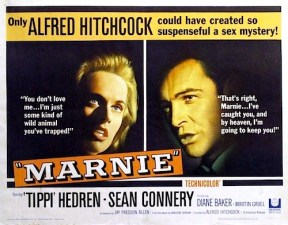
MarnieMarnie is a film grounded in the field of psychoanalysis, though that word is never used and none of the characters are a therapist. Instead, it just concerns itself with a main character suffering under the strain of repressed childhood memories, though this isn’t revealed until the end. Unfortunately, psychoanalysis was only an emerging area at the time of production, and the price Marnie pays for being ahead of the pack in the mid ’60s is that it looks dated and inaccurate now.

For one thing, it’s slow paced. Not necessarily a bad thing, and here it does serve to gradually build some elements, but at times you wonder where it’s all going. Part of the problem is that much of the story’s first half is just a distraction from the main point, in which case I suppose it’s Hitchcock’s famous MacGuffin; but the changes between elements of crime, romance, family drama and internal struggle come across not as a measured part of a considered whole, but as a mishmash of genres. One might consider this a good thing, adding variety and complexity to the film, but as it merrily switches back and fore it doesn’t seem to fulfill any genre to its full potential.

That isn’t to say Marnie is meritless. Plot-wise, the central mystery does get more intriguing as it goes on and the whole film gets better with it. It’s not just that it becomes a more interesting story, but almost every scene is more engaging, better written, acted and directed. Also, without a single frame of grinding, moaning, kicking or screaming, it contains one of the most sinister (suggested) sex scenes in the movies, thanks to the combined skills of Hitchcock and his two stars.

In the title role, a lot is asked of Tippi Hedren — a lot more than she had to manage in The Birds the year before — but she rises to the occasion, most of the time. It’s through no fault of hers that Marnie’s aversion to red is overplayed, especially as it’s the picture constantly fading through red that almost pushes it to the point of amusement. This is again a problem of being one of the first to try to film an entirely internal struggle. In the other lead role is Sean Connery, just two years after he created James Bond on screen, and here he plays a smooth playboy-esque character with a fondness for women and a tendency to violent outbursts. Not straying too far afield then, but he fits the role like a glove.

In this DVD age, I’d also like to point out that the film’s trailer is truly fantastic. Narrated by Hitchcock, he merrily takes the mick out of his own movie for several minutes. It’s a slice of joyous irreverence that makes you wish he’d brought some of it to the actual film, and wonder what would happen if a film was advertised with such a tonally incongruous trail today.

Trailer aside, Marnie is sub-par Hitchcock, but even then his considerable skill coaxes it to greater heights than many — perhaps any — other director could have achieved with the basic material.

3 out of 5

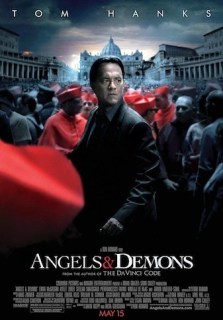
Angels & Demons (2009)

2009 #25
Ron Howard | 138 mins | cinema | 12A / PG-13

This review contains minor spoilers.

Three years ago, I found myself at a packed midnight first-screening of The Da Vinci Code, the Tom Hanks-starring Ron Howard-directed adaptation of the Dan Brown-written novel that’s probably only second-most-read to The Bible by now. I liked the book — its prose is a long way from great, that’s true, but the storytelling is fantastic, helped in no small part by its undermining of the Christian church so thoroughly and consistently that it can only be described as wish fulfillment (well, it fulfilled my wishes). I liked the film too — again, it’s not great, but it was an entertaining adaptation.

Despite this, I’ve never read another Dan Brown book. Not even Angels & Demons, which also stars Robert Langdon (that’s Hanks’ character, in case you’ve somehow missed this entire phenomenon) but was written first. Rather than being yet another prequel, however, Howard and co. have chosen to make it as a sequel — entirely logical in the past, though these days it almost makes them seem behind trend. In spite of my unfamiliarity with the source, I once again found myself at the film’s first screening here — though it says something about how well The Da Vinci Code was received (i.e. not very) that Angels & Demons made its bow on a damp Thursday afternoon in a barely-attended screening.

It may come as a surprise that Angels & Demons has a subtly different feel to its predecessor. It still concerns itself with Hanks’ Langdon dashing about trying to solve insanely cryptic clues in a limited timeframe, surrounded by irritating policeman, suspicious friendly characters, and a girl who is almost pointless. However, it’s a lot less talky — there are few grand theories to be explained, and while there are still a few exposition-dense monologues they aren’t the focus in the same way. Instead, with just an hour to solve each set of puzzles, our intrepid symbologist hares around Rome, desperately trying to save lives. Unfortunately, the trail he’s following doesn’t seem as well thought out as the previous tale’s mysteries, and the speed at which they must be solved seems designed to gloss over this — there’s no time for the viewer to consider everything Langdon’s telling us, we just have to accept it.

If that wasn’t enough, the film comes with a moderately hefty sci-fi element — yes, really — which makes a huge change tonally. While The Da Vinci Code is patently not based in much truth, both Brown’s novel and the adaptation mixed in enough facts, half-truths and very plausible lies to give it a real-world believability. The abundance of tie-in books and documentaries proving or disproving its theories show that people bought it. There’ll be no such thing here though: from the beginning the use of CERN and the Large Hadron Collider (y’know, the thing that’s going to end the world) and a theoretical bomb adds a science fiction feel, and while it’s really no more than “a very big bomb” for most of the film the damage is already done. To cap it off, the CGI-decked finale — which is further bogged down with feats of logic and physics that require at least a little suspension of disbelief — brings the film more in line with science fiction blockbusters than thriller blockbusters.

All this does nothing for the central villains either. When judged independently, the Illuminati are actually more believable than the Priory of Sion — they’re certainly more based in fact — but they come across as less so because no one’s bothered to construct that web of facts required to sell the half-truths, and in turn to sell the lies. Nonetheless, the film does a good job of hiding the Secret Villain’s identity. Well, sort of. Those not paying any attention may guess it relatively early and turn out to be right; those following it only slightly more closely may be lured astray by a couple of clear red herrings; while those indulging in an intelligent game of guess-the-twist will flip around a bit more as various characters show slight ambitions or potential motivations that suggest they may be the subject of a Shocking Twist. That it eventually comes back round to where you always thought it would is not necessarily a bad thing, but neither is it as surprising as the makers wished we thought.

Howard does his best to ring tension and excitement out of all this, but the problem is fundamentally the screenplay — as with The Da Vinci Code, adapted by an overpaid Akiva Goldsman, this time with David Koepp credited too. Of course, they’re lumbered with Brown’s novel, but that doesn’t excuse some truly clunking dialogue. It’s also their fault that the cast are so underused. Ayelet Zurer has perhaps the most thankless part as Token Female with minimal relation to the plot, though one of the screenplay’s wisest decisions is in modifying her backstory — based on summaries I’ve read, in the novel it’s near identical to that of Sophie’s from Da Vinci Code. (That’s Audrey Tautou’s character. Yes, I’d forgotten her name too.)

Despite being the lead, Tom Hanks has little more to do than look concerned and explain the reasons for all the running around. On the positive side, as silly hairstyles are only allowed if you’re Australian this Summer, at least Langdon’s ludicrous lengthy locks have been lopped off. Few among the rest of the cast fare any better, with Stellan Skarsgard being particularly underused — his primary function seems to be Quite Famous so we’ll consider him a decent contender to be the Secret Villain. The other star name, Ewan McGregor, does the best he can with perhaps the film’s best character — his Irish Camerlengo is more interestingly conflicted than the film deserves or can manage, and as such is underwritten. That said, he’s stuck with an Irish accent that comes and goes and is still lumbered with at least one dire speech. Only Armin Mueller-Stahl emerges with much dignity left, in the medium-sized role of fellow Secret Villain possibility Cardinal Strauss.

In another misstep, Angels & Demons exhibits an overuse of special effects. It may not seem like the sort of film that would need them, but the sci-fi side of things brings plenty of CGI along whenever it rears its head. These include some elements at the climax that may have been literally copy-and-pasted from Watchmen’s graphics department, though to say much more would spoil the sheer lunacy of how the film finishes. Suffice to say, most will absolutely hate it; I almost do, but at the same time almost respect it for being so bonkers. On top of this, that the crew were denied permission to film in many of Rome’s famous locales means there’s an abundance of computer-aided locations. They probably look perfectly real to your average movie goer, but for me they all had that slight indefinable oddness that’s present too often these days — think Quantum of Solace’s Siena chase and bell-tower-to-art-gallery tumble for an example of what I mean.

Angels & Demons makes for an occasionally entertaining run around, though there’s less meat on its bones than The Da Vinci Code, and the comparative lack of believability makes for less fun than its predecessor’s “well, maybe…” plot. Those who disliked the first film may prefer this for being less talky, more pacey, and, perhaps, being aware of its own silliness. Those who actually liked the first film may disagree.

3 out of 5

My review of the extended version of Angels & Demons can now be read here.

Star Trek (2009)

2009 #24
J.J. Abrams | 127 mins | cinema | 12A / PG-13
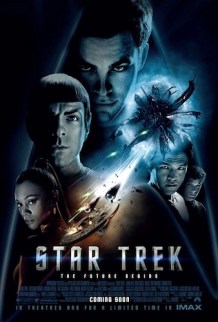
It’s Star Trek, Jim, but not as we know it.

Sorry, but as someone who isn’t actually much of a Trek fan I couldn’t resist that. I’ll try not to include any more. In which case, it’s set phasers to thrill (sorry) as the crew of the Starship Enterprise boldly go (sorry) back to the big screen, hoping to relaunch the ailing franchise to live longer and prosper (sorry). The crew look younger than ever and there’s a heavier dose of action to boot — why, it sounds like it might almost be fun! In which case, beam me up Scotty! (Done now.)

“Fun” is certainly the buzz-word for this incarnation of Trek: it’s all action, special effects and spectacle, without a single scene of uniformed elderly people sat debating ethics. Though some ethical issues circle the plot, they provide character motivation (or excuse) rather than any kind of debate. While the average blockbuster crowd won’t mind this — and nor will critics, apparently — the universal praise this reboot has received may become somewhat baffling. Clearly claims that it’s “great science fiction” are misattributed — it’s great action-adventure in a sci-fi setting. Perhaps an easy confusion to make, but an irritating one nonetheless.

But I digress. The emphasis is very much on spectacle throughout, with wide shots of future cities, starships, alien planets and battles, all shining and designed to be as awe-inspiring as possible. No element of the film remains untouched by this desire: the Good Guys and Bad Guys are clearly delineated — no shades of grey in this gleaming white Universe; the jokes are all entirely upfront, almost to the point of slapstick; everyone’s very young and pretty; and the majority of female characters (there aren’t many) are gratuitously in their underwear at some point too. It all makes for a huge contrast to the dark-as-we-can blockbusters that have been doing the rounds for the last few years (and will be as much as ever this summer) — it makes Iron Man look serious. This is completely appropriate for Trek as originally conceived: the original series was Kennedy-era optimism, all about equality, exploration and peace; perhaps then this is the first film of Obama-era optimism — lots of young people defeating overwhelming terrorist odds.

With all its bright, optimistic youthfulness, it has the feel of a PG-rated family-friendly blockbuster, which might lead one to wonder about the meaningfulness of the “12” certificate now that it has an “A” attached. The answer undoubtedly lies in the action sequences (not the underwear — there’s nothing worse than Princess Leia’s bikini, and that’s rated U. Not that it would be today.) It’s unfortunate that the opening U.S.S. Kelvin sequence is the film’s best, though the rest don’t suffer by comparison. While nothing else is as individually memorable — though parachuting onto the drill tries very hard to be — it’s all of a good enough quality and, crucially, moves by fast enough that you likely won’t notice.

There’s a plot too, believe it or not. It’s actually quite complex, but is pushed along in big chunks of exposition and those breezy action scenes, meaning most won’t notice the strain writers Roberto Orci and Alex Kurtzman are under to make it all work. Sadly they didn’t quite pull it off: there are some glaring plot holes, the worst being a huge blob of coincidence fuelled by convenience halfway through that barely makes any sense. This icy planet — or The Planet of Convenience, as I feel it should be called — features the giant red monster seen so prominently in the trailer. It will come as no surprise that it’s designed by the bloke who came up with Cloverfield’s beasty, not only because it looks almost as foul but because Abrams resolutely keeps the same crew around him at every level. But it’s an irritant to those looking for a cohesive story, starring in an unnecessary action sequence that stinks of both “oh, and a big nasty monster would be cool” and “no one will buy this coincidence, let’s hide it in an action sequence with a distractingly ugly monster!”

The plot does impress in one regard however: it is incredibly entrenched in the intricacies of Star Trek continuity and history, yet all this manages to slip by amiably and accessibly. It’s so at pains to explain why this new-look Trek is completely different from canon yet absolutely a part of it that it runs round the houses tying things together and explaining away inconsistencies that only knowledgeable Trekkies will care about. This is impressive because, in spite of it, it feels like a Fresh New Trek. Perhaps this is why the fans have embraced a film that looks like a multiplex-pleasing reboot: they feel catered for with Spock Prime (as the credits would have it), the complexities of time travel and the references back to the other Trek universe, offering up a whole load of new things to integrate into already-bursting continuity manuals, meaning the lighter action-adventure stuff is permissible too.

Technically speaking, the film is a mixed bag. The design work, for example, is great. While the Romulan ship is your typical Big Bad Semi-Organic Alien Vessel, seen a lot in every space opera TV series of the ’90s, the Enterprise is clean and bright and rather different. After years of Alien-inspired grime throughout sci-fi — even attempted in Star Trek with the submarine-like vessel at the heart of prequel series Enterprise — the new-look USS Enterprise is all bright white and vibrant colours. It’s custom made for plastic toy playsets in fact; or, to be slightly nicer, “these are the voyages of the Apple iEnterprise.”

On the other hand, the cinematography is frequently irritating. While many of the CG shots present a graceful view of the space spectacle, most of the time they need to put the damn camera down. It doesn’t need to be jiggling about all over the place during dialogue scenes — Kirk and Pike in the bar post-fight is an especially irritating example — and it would be nice to see what’s going on in the action scenes. Of course, they manage to provide a nice clear shot when the ladies are in their undies. Cynical? Never. DoP Daniel Mindel has confessed that he tried to get in as many lens flares as possible, and you can tell — it comes across like it was shot by someone who’s only ever worked on digital, then upon switching to film accidentally created a lens flare, thought it was pretty, and decided the film would be better if there was one at literally every opportunity. It wouldn’t.
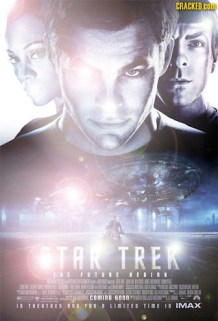
The cast and handling of multiple characters are both less problematic. The way the young crew is brought together is more than a tad contrived, but with seven major characters to compile in a Very Young Crew origin story it’s not an easy task. Certainly, this way is much more exciting than if they were simply assigned the job at an appropriate age and bonded on their first mission — which would undoubtedly have been the plot of Old Trek’s origin movie. The focus is clearly on Kirk and Spock; mainly the former, but his character arc is little more than a standard genius-rebel-comes-good one, whereas Spock’s battle between two cultures and within himself allows Zachary Quinto a lot more to do. Chris Pine makes a good Dashing Hero, balancing the heroic action and broad humour with aplomb, but it’s Quinto whose acting chops come the closest to getting a test. Wisely, neither chooses to copy their original counterpart, which allows them to breathe as characters rather than impersonations.

Most of the leads follow the same strategy to good effect; while Anton Yelchin (as Chekov) and Karl Urban (as Dr ‘Bones’ McCoy) come closer to doing impressions than anyone else, they still make good their own versions. Winona Ryder is a piece of odd casting though, aging up for a tiny role as Spock’s mother. At least Jennifer Morrison’s equally tiny mothering role can be put down to the fact that, while she’s very recognisable to any House fans, she’s playing her own age and isn’t a movie star. Ryder is. Or, perhaps, was.

Unsurprisingly, Simon Pegg’s incarnation of Scotty is an awful a lot of fun. There’s nothing like enough of him, and a sequel will only benefit from an increased Scotty presence from the very start. Though Pegg gets the lion’s share of the best comedic bits — possibly due to his experience and talent in the field — he only turns up to add lightness at the point everyone else begins to get Very Serious About The Plot. Before that there are plenty of jokes flying around, including several that actually require memory — a rare thing in a film focused on spectacle — paying off earlier gags you didn’t expect would receive a payoff. The level to which the film is internally referential and interconnected is again to Orci and Kurtzman’s credit. As noted, the humour brings a nice lightness to proceedings, something missing from the darker-than-dark treatment most franchises offer these days.

The final scene is a bit of a cheesy moment, one of those “aww look the whole gang’s together and they’re all friends” bits — for an American film that relies on optimism, it’s something that they managed to have only one. But it does hold the promise of more adventures to come, and based on the critical and box office success of this outing we’re sure to get them. The need to introduce so many characters here both drives the plot forward and restrains it — the former provides a lot of material, including all the stuff tying it to main Trek continuity, while the latter means any independent narrative is primarily a facilitator for the rest. Hopefully a sequel will suggest the latter is true and it’s not a reliance on the former that has provided this entry’s quality. Or, to put it plainly, “next time they better come up with a good plot”.

For an independent viewer, the over-zealous critical reception is Star Trek’s biggest problem: while it is certainly satisfying in some areas it’s also lacking in others, but it seems most of the world’s critics are closet Trekkies, able to seize upon an above-average film and hail it as the Second Coming. It will come as no surprise when I say it isn’t. I’ve never really got on with Star Trek and its solar system of spin-offs — which, I admit, may be Doctor Who-fan bloody-mindedness — but this I enjoyed, a little in spite of myself and the disproportionate adulation it’s received elsewhere. Rebooting a franchise in a way that appeases fans and pulls in new viewers is no easy task, but it seems safe to say that Abrams has done almost as good a job as Russell T Davies, even if only one of them remembered to hide some brains among the entertainment.

This new incarnation of Trek is bright, light and fun in the face of insurmountable odds — both from the threat in the film and from public perception. Despite the claims, it is not the Second Coming, but it is very good at what it does. In all these respects, it really is just like Obama-era optimism. Does it mean Abrams can relaunch the ailing Trek franchise? Why, yes he CAAAAAAAAAAAAN.

(Really done now.)

4 out of 5

Star Trek placed 7th on my list of The Ten Best Films I Saw For the First Time in 2009, which can be read in full here.

Airplane! (1980)

2009 #21
Jim Abrahams, David Zucker & Jerry Zucker | 84 mins | DVD | PG / PG

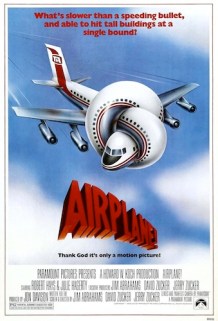
Airplane! is not… well, many things. But what it is is a comedy, and, as I’ve said before, if a comedy makes me laugh that’s good enough — it’s its job and, unless there’s more advertised, there’s no good reason to expect or desire more. So is it funny? Yes. But…

The main problem with watching Airplane! for the first time now is that it occasionally suffers from its own popularity. Many jokes are too well known to seem original in context, and while some retain their humour others look tired. The ungenerous would mark it down for this, but that seems unfair considering it’s only the film’s fault in the sense that it was so good everyone’s copied it. However, age is a problem in other ways: cultural references always date, and some jokes here depend on those; some depend on being American too, meaning they passed by with an uncomfortable awareness that I was watching a joke but had no idea why it should make me laugh.

Airplane! combats these almost-faults in two ways: one, it is irrepressibly silly, which in this case is a very good thing; and two, it has an incredibly high joke rate. Combined, these mean it can coast over some of the problems. Even when it slows for a minute or two while running through a gag you don’t get, there’s an overriding silliness that can raise a chuckle and an awareness that there’ll be another along promptly enough.

There’s a good mix of gags too. As well as visual and out-there humour there’s a pleasing use of moderately intelligent wordplay — you’d be hard pushed to find that in a modern populist comedy film. Considering the BBFC’s PG rating there’s also a surprising number of gags that are adults (or, really, teenagers+) only. Even more surprising is that a film with jokes about blow jobs, suicide and cocaine, and which briefly features a pair of bare breasts, only received a PG from the MPAA.

This model of comedy — the silly spoof, as it were — is still in use today in the depressingly endless series of …Movie movies (like this weak example). But where they’re just crude, Airplane! is witty; where they’re just random, Airplane! is irreverent; and where they’re just derivative, Airplane! was original. It may have aged a little, but it’s still funny, and that’s good enough.

4 out of 5