
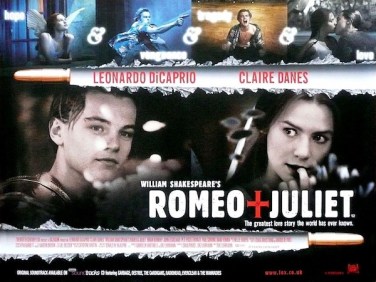
Tragedy & love.
Romeo & Juliet.
Full Title: William Shakespeare’s Romeo + Juliet

Country: USA
Language: English
Runtime: 120 minutes
BBFC: 12
MPAA: PG-13
Original Release: 1st November 1996 (USA)
UK Release: 28th March 1997
First Seen: VHS, c.1998
Stars
Leonardo DiCaprio (Titanic, The Wolf of Wall Street)
Claire Danes (Terminator 3: Rise of the Machines, Stardust)
Director
Baz Luhrmann (Strictly Ballroom, Moulin Rogue!)
Screenwriters
Craig Pearce (Strictly Ballroom, Moulin Rogue!)
Baz Luhrmann (Australia, The Great Gatsby)
William Shakespeare (My Own Private Idaho, 10 Things I Hate About You)
Based on
Some play, apparently.
The Story
Two households, both alike in dignity, in fair Verona, where we lay our scene. From ancient grudge break to new mutiny, where civil blood makes civil hands unclean. From forth the fatal loins of these two foes, a pair of star-crossed lovers take their life, whose misadventured piteous overthrows doth with their death bury their parents’ strife. The fearful passage of their death-marked love and the continuance of their parents’ rage, which, but their children’s end, naught could remove, is now the two hours’ traffic of our stage.
Our Heroes
Romeo Montague and Juliet Capulet, kids from feuding families who fall in love despite that conflict.
Our Villains
The rest of their families, whose animosity to one another, and thereby opposition to the coupling, results in tragedy.
Best Supporting Character
Romeo’s best friend, Mercutio, brought to flamboyant life by Harold Perrineau.
Memorable Quote
“Oh, what’s in a name? That which we call a rose by any other word would smell as sweet” — Juliet
Quote Most Likely To Be Used in Everyday Conversation
“O Romeo, Romeo, wherefore art thou Romeo?” — Juliet (rarely misquoted, regularly misunderstood)
Memorable Scene
The prologue, which sets out the film’s stylistic stall with a fast-cut and dramatically-scored montage of ultra-modern imagery to visualise the play’s prologue, as delivered by a TV news anchorwoman. It’s especially effective when paired with the first full scene, where the young men of the Capulet and Montague families clash at a gas station, which is similarly front-loaded with the film’s modern design, fast dialogue, and hyper-editing.
Memorable Music
The other films in the Red Curtain Trilogy (see Next Time) of course have a prominent role for music — one is about dancing, the other is a musical. While you’d think a Shakespeare adaptation would be all about the dialogue, the soundtrack plays a key role in Luhrmann’s vision, and certainly connected with viewers. They even once released a dedicated Music Edition on DVD. There is a score (memorable not least for its variation on O Fortuna, the much-reused O Verona), but it’s the songs by contemporary musicians — the kind of things the characters would listen to, I suppose — that have the greatest effect. Most recognisable is Des’ree’s Kissing You, which plays when the eponymous lovers first meet.
Technical Wizardry
The film is well known for its exuberant camerawork and editing. Obviously much of that is done in post-production, but it required on-set ingenuity as well. For the scene where Romeo and Juliet first kiss in a cramped elevator, the set walls were made in sections which could be raised to let the camera in. In the finished shot the camera circles the pair at speed, meaning the crew had to hurriedly raise the walls to let the camera past but speedily replace them to maintain the illusion.
Making of
Famously, the film modernises the characters’ use of swords and daggers by turning them into the brand names of guns. Shakespeare described Tybalt’s swordsmanship as “showy”, so to retain this for the film actor John Leguizamo worked with a choreographer, John O’Connell, to create a style of gunplay inspired by flamenco dancing.
Previously on…
Romeo + Juliet is the middle film in director Baz Luhrmann’s thematically-linked Red Curtain Trilogy. The first is dancing drama Strictly Ballroom.
Next time…
The Red Curtain Trilogy concluded with Moulin Rouge. There are also plenty of other modern-styled Shakespeare adaptations that you could argue owe this a debt.
Awards
1 Oscar nomination (Art Direction-Set Decoration)
4 BAFTAs (Director, Adapted Screenplay, Music, Production Design)
3 BAFTA nominations (Cinematography, Editing, Sound)
1 Saturn nomination (Costumes)
1 MTV Movie Award (Female Performance (Claire Danes))
5 MTV Movie Awards nominations (including Best Kiss — it lost to Independence Day!)
What the Critics Said
“While Shakespeare might well have applauded Aussie filmmaker Baz Luhrmann’s souped-up version of Romeo and Juliet, traditionalists [including many critics, if you check out Rotten Tomatoes] are sure to despise the psychedelic tunes and the flashy sets of this audacious adaptation. Not to mention Mercutio as drag queen. For all of its departures, Luhrmann’s largely successful reinterpretation is far from irreverent. He takes liberties with the world, but never the words of this achingly beautiful love story. […] Luhrmann, who pitted youthful brio against conventional wisdom in Strictly Ballroom, clearly enjoys thumbing his nose at authority. Perhaps he’s an eternal teenager, or merely a bit mad. In any case, his excesses only prove Shakespeare’s profundity and the timelessness of his themes.” — Rita Kempley, The Washington Post
 Score:
 72%
72%What the Public Say
“in the play, and almost every adaptation, Romeo visits Juliet’s tomb, poisons himself and dies, and then Juliet wakes up, sees Romeo dead, and stabs herself to death. In this version, however, Juliet wakes up just as Romeo downs the poison, so she watches him die in her arms. Seeing her slowly start to wake as Romeo prepares to kill himself is almost unbearable. Especially the way the dialogue is manipulated; all the lines remain the same, but are just said at slightly different times (when Juliet laments the fact that Romeo didn’t leave any poison for her, she’s talking to him directly this time). And when Romeo dies, Juliet is left without her monologue, because she’s said everything to Romeo already. So instead, she cries and then wordlessly shoots herself in the head. It’s pretty gut-wrenching.” — Elizabeth, Chris and Elizabeth Watch Movies

Shakespeare got a do-over for the MTV generation in this textually faithful re-imagining of arguably the Bard’s most famous work. Above, I alluded to critics’ dismissal of this adaptation — here are some choice quotes: “the kind of violent swank-trash music video that may make you feel like reaching for the remote”; “a classic play thrown in the path of a subway train”; “destined for the trash heap of Shakespeare adaptations”; “a monumental disaster.” I’d argue its subsequent, and largely enduring, success has put those old fuddy-duddies on the wrong side of history. Certainly, the fact it starred heartthrob du jour Leonardo DiCaprio ensured it reached an audience that otherwise would’ve had no interest. Oh, and it won BAFTAs — the film awards of Shakespeare’s homeland — for direction and screenplay. Shows what you know, yankees. Cultural impact aside, it’s a wildly inventive, daring work, which keeps it fresh and exciting even when its mid-’90s antics should by all rights have dated it into oblivion.

#78 will… kick it Jesus-style!



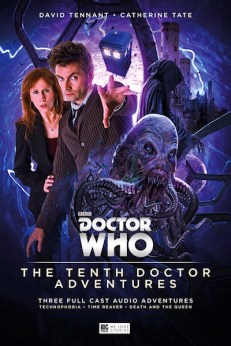 One of Doctor Who’s most popular eras is revived this week, as David Tennant returns to the headline role for the first time since
  The first is Technophobia by Matt Fitton, which is set in our recent past (and therefore Donna’s near-future) when the new M-Pad tablet computer seems to be causing the populace to forget how to use technology. Tennant and Tate hit the ground running — it’s a cliché, but it really does sound like they’ve never been away. Their sprightly performances contain little of the stilted “I’m reading this script aloud for the first time” acting that sometimes plagues audio drama. Fitton captures the style and tone of their single TV season to a tee — if they’d done a second year together, you can well believe this as its first episode. Even Howard Carter’s incidental music is a mostly-fitting substitute for Murray Gold’s iconic work.
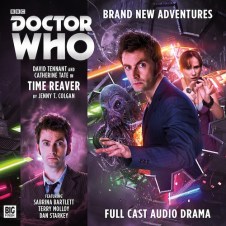 The middle tale is sci-fi adventure Time Reaver by Jenny T. Colgan, a best-selling romantic novelist who’s turned her hand to multiple Who projects (including a 10th Doctor and Donna novel published last week to tie-in with these dramas). For me, this was the weak link of the trilogy, though it’s by no means bad. There are some fantastic ideas, but at times their inspirations show through too clearly, and the execution is sometimes lacking. This was Colgan’s first audio drama, and dare I say it shows. Sequences like an action-packed barroom brawl are a little too ambitious to convey in an audio-only medium, and the dialogue is regularly forced to describe what’s going on. On the bright side, Mr Carter offers more magnificent sound design — the noises made by cephalopod villain Gully are immensely evocative.
 The final episode is the group’s historical outing, Death and the Queen by James Goss, and it may be the best of the lot. Our intrepid duo find themselves in the kingdom of Goritania in 1780, when it comes under siege from a destructive cloud that contains Death himself. Goss mixes comedy with peril in just the right quantities to create a story that is an entertaining romp but also manages to expose different facets of the Doctor and Donna’s relationship. If Fitton has bottled the essence of RTD, here Goss evokes Steven Moffat, with a time-jumping opening ten minutes that you can well imagine on TV, but which also work perfectly in audio. Things slow a bit later on, with the dialogue sometimes going in circles — a fault of all three of these plays, actually. They could’ve benefited from a trim to fit within the TV series’ 45-minute slot, rather than allowing the freedom of not having to conform to a schedule let them to slide to 55-ish.
 Ah, love a bit of Eurovision, even if the songs weren’t as good this year. Ok, you might say they never are, but there’s often one or two half-decent ones (I still listen to Conchita Wurst’s Rise Like a Phoenix sometimes, mainly because it’s the best Bond theme released in the last decade). Even then, the winner wasn’t the best of that middling bunch, though it probably had the best message. In fact, the best song of the night was the Swedish hosts’ half-time number, Eurovision-spoofing Love Love Peace Peace (watch it
 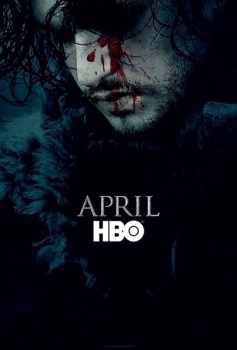 Good luck to you if you’re not watching Game of Thrones but still trying to avoid spoilers this year, with the huge and widely-covered news that [REDACTED] was [REDACTED], or that [REDACTED] killed [REDACTED], or when [REDACTED] and [REDACTED] were [REDACTED] for the first time since [REDACTED], or when [REDACTED] was [REDACTED] but [REDACTED] the [REDACTED] and [REDACTED] of [REDACTED] in the process — even if more people seemed interested in discussing her [REDACTED]s.
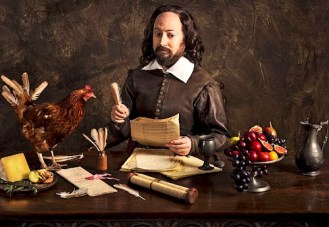 I can’t remember the last time I saw a new multi-camera sitcom that wasn’t either, a) a bit meta (like Miranda or Mrs Brown’s Boys), or b) a revival (like Red Dwarf X). I don’t know if that says more about the current TV landscape or the kind of things I watch, but either way it surprised me when that was the form Upstart Crow took. It’s just one element that gives it the feel of Blackadder, which I don’t mean as a criticism. Even if it feels a little dated in its execution, there are plenty of laughs — some easy, some clever — and, really, what more do you want from a comedy than to laugh? It may not be up to Blackadder’s highest highs (yet — there’s still time; you never know), but I’d wager it stands fair comparison to the classic’s comparatively-lesser instalments… which I mean to be a less critical assessment than it sounds.
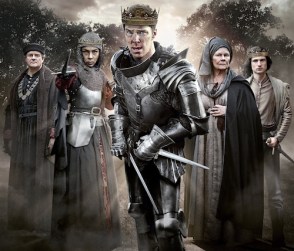 This month, I have mostly been missing the second run of The Hollow Crown, the BBC’s all-star adaptation of Shakespeare’s War of the Roses plays… though as I still haven’t got round to watching the first run from 2012, that’s no real surprise. In fact, Upstart Crow aside, I’ve not yet watched any of their still-running
  Macbeth is my favourite Shakespeare play. Not that I’m a great scholar of the Bard, but I’ve seen and/or read enough to have a favourite. I also think it’s one of his most accessible works: its story and characters are relatively straightforward without being devoid of complexity; it’s got some immensely effective imagery and dialogue, including a solid compliment of famous lines; and it’s not excessively long either (it’s Shakespeare’s shortest tragedy, in fact). I also studied it twice over in secondary school, so I know it fairly well. Now, this doesn’t mean I have exacting standards when it comes to film adaptations (Shakespeare is plenty open to interpretation), but it does mean I have my expectations up, especially as there isn’t a film version of Macbeth that could reasonably be described as “definitive” (though I know
  What I mean, more specifically, is that he’s visualised parts of the text; applied the old rule of “show don’t tell”. So rather than a messenger giving the King a full account of Macbeth being awesome in battle, we see some of the combat; Banquo has hardly any lines early on, but we still understand his friendship with Macbeth just from the way they look at one another and go into battle together.
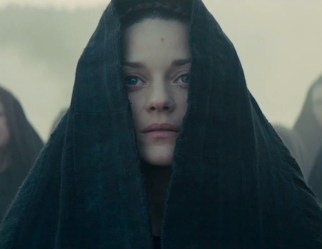 Cotillard is fantastic in all of this, and certainly worked hard for it: the way the French language applies emphasis is not suited to delivering iambic pentameter, apparently, so she worked hard with a dialect coach to nail her delivery. Her accent clearly marks Lady Macbeth as the only non-Scottish character here, which becomes another layer added to this interpretation.
 a good film based on a computer game.
 It doesn’t seem like 18 months since the RSC brought Hamlet to the stage with British TV’s biggest star actor (probably) as the titular Dane, but it is (more or less). Thanks to sold-out performances and largely positive reviews (theatre critics seem even less keen to agree on anything than film ones), we’re now treated to this film adaptation, shown on BBC Two on Boxing Day and released on DVD (but not Blu-ray, boo
 Following his success with
  “Everything’s free in America,” goes the famous line; but this film is probably more accurately summed up in its following line: “For a small fee in America”.
 100Films.co.uk