Adam Wingard | 100 mins | streaming (UHD) | 2.35:1 | USA / English | 18
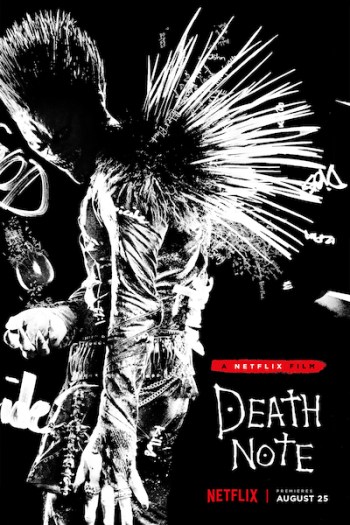
Something of a global phenomenon in the ’00s, Death Note started life as a manga, is perhaps best known for its anime adaptation, was adapted into a series of live-action films (I reviewed the first two last week), adapted again as a live-action TV series, and was even turned into a musical. Although it’s taken a while, finally the inevitable is here: an American remake. After passing through several studios, it’s wound up with Netflix, under the helmsmanship of Adam Wingard. Thus, I was hoping for the new film from the director of The Guest. Instead, I got the new film from the director of Blair Witch. And much like Blair Witch, this is a ham-fisted reimagining of a once-popular franchise.
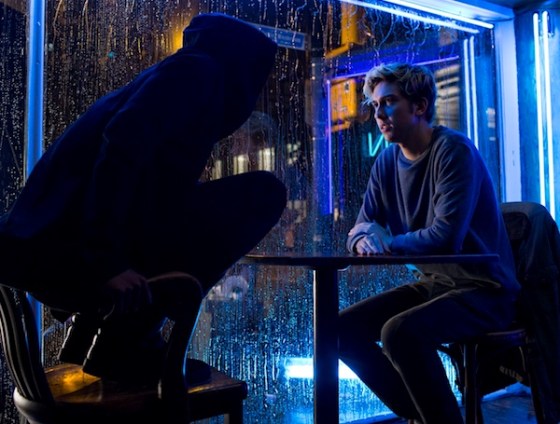
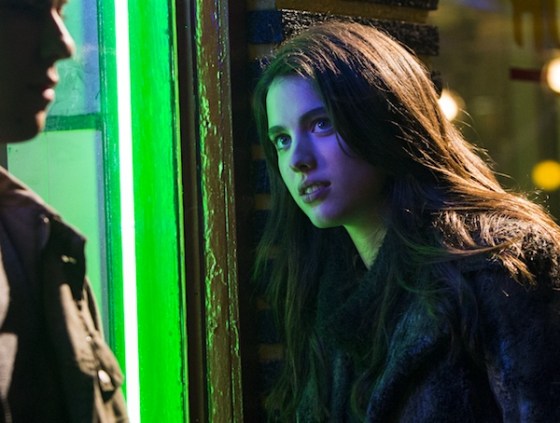
This incarnation of the story concerns Light Turner (Nat Wolff), a Seattle high school student who one day discovers the mysterious Death Note, a notebook with the power to kill just by writing someone’s name in it. Goaded into using it by the demonic death-god Ryuk (voiced by Willem Dafoe), Light soon teams up with his crush Mia (Margaret Qualley) and they set about murdering criminals. Their actions become famous under the alias Kira, which they hope to use to establish a new world order. But hot on the case is a mysterious super detective known only as L (Lakeith Stanfield), who engages Kira in a battle of wits.
As with so many things nowadays, the US version of Death Note has been dogged by accusations of whitewashing. As seems to be the case at least half the time, these accusations are largely unfounded. If this had kept the Japanese settings and character names but given them white faces, fair enough, but it hasn’t — it’s relocated to America, with American characters. It’s no different to all the other new-country remakes that have always happened (and also goes on the other way, with US movies remade in Bollywood and Asia, we just don’t hear about them very often here).
Unfortunately, Death Note: America has genuine problems to contend with. Despite that reimagining status, it’s still understandably shackled to the broad shape of the original work. Consequently, it glosses over some of the more interesting implications of the premise in its rush to make Kira famous and introduce L. Partly that’s what happens when you condense so much story into just 100 minutes, but it’s also because it’s beholden to bringing in L and starting his cat-and-mouse game with Light. When I reviewed the Japanese live-action movies, I didn’t think Light and L’s battle of wits was as clever as the films clearly thought they were, and it’s even worse here.
There would seem to be more fertile and interesting ground for exploration in why Light and Mia are trying to establish a new world order — what exactly they think that means; what motivates them to do it; and how they intend to achieve it. On the whole, the film doesn’t seem to be making time to dig into the psyche of its characters — why they’re doing what they’re doing, how it changes them — instead just going through the motions of a thriller plot. It feels like it’s had 20 minutes of character stuff cut out that would grease the wheels of the plot. The worst offender is the climax: there’s no weight to the big finale because we’ve been given no time to care about these characters or their relationships with each other.

For all the faults of the way the other version I’ve seen executed Light and L’s chess-like interactions, at least they consistently involved Light using the Death Note and its rules to try to trick L. Here, after the eponymous book and its abilities have been established, it’s basically just used to control other people to make them forward the plot, only returning to its real purpose come the climax. This is another reason the focus on Light and L’s duelling doesn’t work here: at least the original thought they were both geniuses and behaved as thus; each of them was motivated by proving they were cleverer than the other, everything and everyone else be damned. Here, L is still some kind of savant, whereas Light seems a pretty normal teenager, motivated by… well…
So, in the original, Light does his utmost to keep the Death Note secret from everyone to protect his identity as its user. Here, almost as soon as he’s got it he blabs about it to the girl he fancies. Why? Same reason most guys try to show off to girls: because he thinks it’ll impress her. It’s a change of motivation, but okay, why not? But he’s given very little indication that such a thing would impress her. What if she’d been appalled and gone running to the police? She doesn’t, of course, because this is a geek’s fantasy, so she a) loves it, and b) within minutes is shagging him. (Presumably. This may be an 18 for gore, but sexy times are implied by no more than a little light clothing removal. Perhaps they just sat around in their undies while murdering people with their magic book, I dunno.)
Believe it or not, Death Note is not a total washout. Indeed, the best things about the film are easily identified. Firstly, there’s Willem Dafoe’s voice performance as Ryuk. If you need a manipulative death-god, he’s a perfect choice. Secondly, the visual realisation of said death-god, a mix of strong CG and keeping him in the shadows. It’s light years more effective than the ’00s movies. On the downside, Ryuk’s role amounts to little more than a glorified cameo: after an initial appearance to explain the rules, he just pops up briefly to remind us he’s still a bother.
Thirdly, then, there’s the death sequences that occur on the first couple of occassions Light uses the Death Note. This film skips the “they just die of a heart attack” phase and goes straight for the “you can dictate how they die” jugular. In this version, that means a Final Destination-a-like chain of random events occur that make the deaths fairly amusing. Also, graphically violent — enough for that 18 in the eyes of the BBFC. These go AWOL again as the film has to get busy with its plot, which is a shame. Basically, someone should’ve tapped Wingard to make Final Destination 6.
Fourthly, and finally, the score is very likeable. It’s full of the ’80s horror movie synths you’d expect from the director of The Guest, though it’s undercut somewhat by a few bizarre song choices, mostly during the climax.

Having read a few reactions to the film online, it strikes me that on one hand you’ve got fans criticising it for not being faithful enough, while on the other you’ve got critics picking on it for things that I’d argue are inherent in the source narrative (at least based on what I’ve seen before). That doesn’t excuse this adaptation entirely — they’ve changed so much that fixing logic issues could definitely have happened too — but it’s an amusing juxtaposition of reasons for displeasure: it’s a film scuppered both by being faithful and by not being faithful. Unfortunately that means that, whether you’re comparing it to a previous version or not, it fails to be a coherent experience.

Death Note is available worldwide on Netflix now.
 Scorsese tells the story of Jesus in this controversial epic adapted from Nikos Kazantzakis’ novel. I have no idea how much is actually rooted in scripture — a disclaimer is keen to establish the film isn’t based on the Gospels, but obviously that’s just to appease the devout.
 Most of mankind have become vampires, but the blood supply is running out and without it people mutate into monsters. Ethan Hawke’s scientist is developing a substitute, but when he encounters human resistance fighters he learns there may actually be a cure…
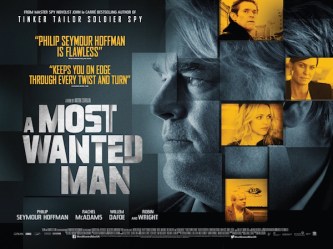 John le Carré adaptation starring Philip Seymour Hoffman as a German secret intelligence operative who must battle internal politicking while tracking a political refugee who may actually be a terrorist.
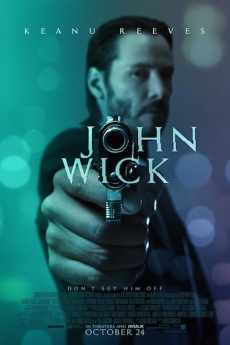 Keanu Reeves is John Wick, a nice guy whose wife sadly died. Now he lives alone with a puppy. Then he accidentally annoys a thug (
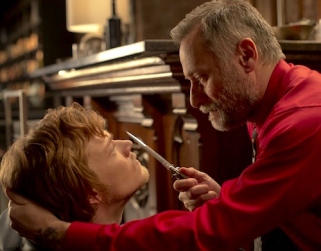 A decade and a half on from
 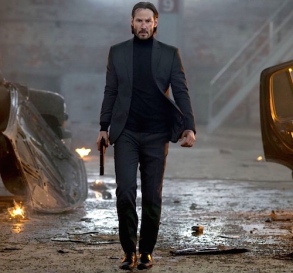 Combine that with the exciting, innovative, technically faultless action sequences and you have a distinctive, memorable movie. It seems to have gone down a storm with action movie fans, anyhow, and so those hoped-for sequels and/or spin-offs are most definitely in development. It’ll be interesting to see if it does what-I-call “a Bourne”, spiralling from a well-liked almost-sleeper-hit first film into an everyone-knows-it major franchise, or, well, not.
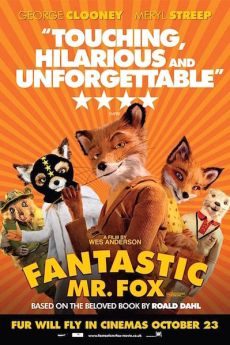 Quirky cult-y director Wes Anderson tries his hand at stop motion animation with this Roald Dahl adaptation, in which an all-star cast voice the tribulations of a gaggle of talking animals — led by the eponymous vulpine — who come into conflict with three vicious farmers.
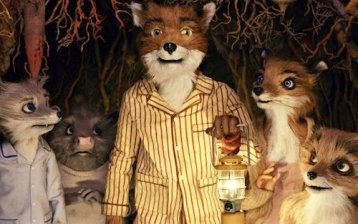 Compositionally, I thought I’d get sick of the squared-off 2D style, but Anderson’s cleverer than that. It might look flat and lacking in dimension at first, but that’s the starting point for variation, including some great bits of depth (farmer Bean trashing a caravan is a particular highlight of this), and when it breaks form (like a rabid dog chase) it’s all the more effective. There’s also a fantastic score by Alexandre Desplat. Not your usual plinky-plonky Quirky Kids’ Movie music (though there are instances of that), but something more raucous. Nice spaghetti Western riffs, too.
 Fantastic Mr. Fox is the kind of film I feel I may enjoy more on a re-watch. Indeed, some comments on film social networking sites (e.g.
 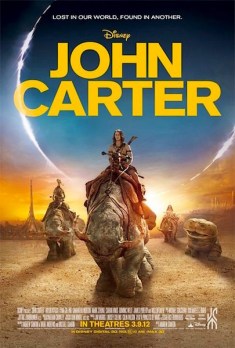 A box office flop (it made a once-astonishing $284 million worldwide, but that was off a $250 million production budget and a ginormous bungled marketing campaign), John Carter has gained something of a following among those who did enjoy it or caught it later — see
  not because it’s so famous (among Normal People, I don’t think it is), but because its influence means its imagery and concepts have already been plundered (
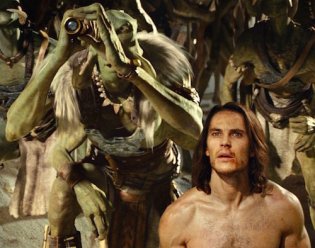 It doesn’t help that the film is structurally muddled at the offset. It begins on Mars, a voiceover detailing the conflict — an instant bombardment of names and concepts. I don’t mind things that challenge you to keep up, but it still feels a bit much. Then we jump to New York in the 1880s, where Carter is running away from someone in the streets. Then to his house, where his nephew has just turned up to be told he’s dead. You what? We just saw him in the telegraph office! And then we jump back to the 1860s, where he’s searching for gold and getting arrested (or something) by Bryan Cranston in a wig as some form of army officer. Then it gets a bit more straightforward. If being transported to Mars and meeting four-armed CG aliens who speak in subtitles is what you call “straightforward”, anyway.
 It feels a bit facile to criticise the quality of CGI these days, but that doesn’t stop John Carter from being over-ambitious in this regard. In fact, it’s not really the sometimes-half-assed green screen or occasional plastic-ness that’s the problem, but the design: those four-armed aliens are just a little too cartoony. Perhaps it’s a hangover from Stanton’s Pixar days, perhaps something just went a little awry during the process, but their design doesn’t look quite ‘real’ enough; a little like someone’s taken a real-life creature and then lightly caricatured it. I think it’s the eyes, which are perhaps a little too big and round and ‘cute’, but there’s something else indefinable there, or not there. These aliens aren’t just set dressing but proper motion-captured characters, played by the likes of Samantha Morton, Willem Dafoe, Thomas Haden Church and Polly Walker, so the lack of connection is regrettable.
 I was expecting, or perhaps hoping, to like it; to find a misunderstood old-style adventure full of entertainment value. It may be an old-style adventure, but that’s beside the point, because whatever it is, I just felt it wasn’t particularly well made: poorly constructed, weakly performed, lazily (and wrongly) assumptive of the audience’s familiarity with the material. Disappointing.
 I don’t know if it says more about me or the two Harrison Ford-starring Jack Ryan movies that I wrote 250 words of this review before I realised I was actually talking about
  It’ll come as no surprise that Ryan ends up exposing the nasty conspiracy — which goes as high as the President! But what does a good American patriot do when he finds out the practically-holy President has committed such a sin?! The novel ends with Ryan confronting him… and then deciding not to expose his secret war. Presumably this is thanks to Clancy’s obviously-Conservative political views. “Liberal” Hollywood, on the other hand, has given us a more just — and more satisfying — conclusion. Thank goodness for that.
 “What if
  100Films.co.uk