
There’s all sorts of stuff I thought I’d’ve got round to for this TV column — Cobra Kai season 2; more of The Twilight Zone; Netflix miniseries The Queen’s Gambit; finally starting The bloody Mandalorian — but I haven’t seen any of them. So, rather than keep pushing this post back and back, here’s what little I have watched that’s worth commenting on in the almost-two-months-now since my last TV review.

Young Wallander Season 1
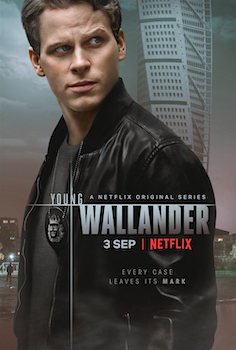 I think that Swedish detective Kurt Wallander’s USP, if he has one, was that he wasn’t some young hotshot maverick genius, like so many fictional detectives, but rather a middle-aged, somewhat disillusioned, almost workaday cop who got the job done. So a series about his younger days already seems like it might be missing half the point. But it’s worked for other TV detectives (most notably Morse in the acclaimed Endeavour), so why not? After all, seeing what police work in 1970s Sweden was like might be interesting — it’s certainly a different setting, anyway.
Well, that’s Young Wallander‘s first misstep: this isn’t about the young life of canonical Wallander, it’s a modern-day reboot. So, you’ve removed the obvious character traits and you’ve changed when it’s set — what makes this Wallander as opposed to Generic Swedish Cop? That was the question I had after watching the trailer and, sadly, I still wondered it after watching the series in full. At least the storyline is Wallander-ish, all about nationalism and refugees and how they’re treated. That may sound very timely, given what’s been going on politically over the last five to ten years, and it is; but it’s also the kind of thing Wallander’s original creator, Henning Mankell, often wrote about before that. But that makes it a mixed blessing: yes, it’s the kind of story you can imagine a ‘real’ Wallander text tackling, but it’s also such a present-day issue that that doesn’t matter; it’s the kind of plot any drama might choose to take on right now.
The production itself is a strange international hybrid: made by Swedish production company Yellow Bird (though actually shot elsewhere in Europe, I believe), but with a British writer and mostly British cast speaking English, while thankfully not trying to emulate the accent. That’s except for Wallander himself, who’s played by a Swede, who has kind of retained his accent. In a story all about national identity, it’s kind of ironic that Wallander sounds like the only Swedish man in Sweden.
I can see why the Wallander rights-holders would want the brand to continue, because it’s been very popular in various incarnations, in particular the Swedish series starring Krister Henriksson and the British series starring Kenneth Branagh. But between those, and the previous series of Swedish TV movies starring Rolf Lassgård, every one of Mankell’s original novels has been adapted twice, plus the invention of about 30 original-for-TV stories — so, if you want to continue the character, a new direction does feel called for. Unfortunately, this isn’t it. It’s too generic, lacking any uniqueness that makes you feel this is a story that could only be told — or even should be told — using the Wallander brand. Even leaving that aside — if you had no previous attachment to the character and so just approached this as an original cop drama — the series is less than great. It’s not outright bad, just thoroughly middling, with an underwhelming finale that leaves plot threads dangling; and it’s not clear if it’s meant to be a realistic “not everything gets tied up” ending, or if they’re hoping to pick up on them in a second season.
The only good thing to come out of all this, for me, was that it’s reminded me I still have a bunch of adaptations starring Lassgård that I’ve never watched, so it’ll be nice to go visit those. And then revisit the Henriksson series at some point, because it was excellent; and maybe the Branagh one too, because that was also really good. But if Young Wallander manages to bag itself a recommission, I’m not sure I’ll bother with it.
Jonathan Creek Series 5 Episodes 2-3 + 2016 Christmas Special
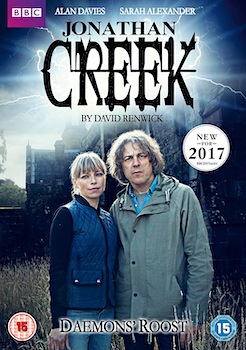 I noted last time that Jonathan Creek seems to be ending with a whimper rather than a bang. It was a huge hit when it first aired in the ’90s, and a revival in 2009 was a big ratings success too, but the sporadic specials made since then have seen it drift further and further from the spark that once made it special. The nadir was the premiere episode of series 5, which didn’t even function properly as an episode of the show. The remaining two instalments of that short run are better, but still nowhere near the series’ early-day highs. The third one, The Curse of the Bronze Lamp, includes an array of terrible subplots that make you wish it was considerably shorter (it’s only an hour long but feels like two), but its mystery is still the nearest these latter-day Creeks have come to its heyday.
A saving grace comes in the last (for now) episode, 2016 Christmas special Daemons’ Roost. Is it the last-ever episode? Many online listings treat it as such, but the four years since it aired means if another episode popped up it wouldn’t be the longest gap in the series’ history. But if it is the last time we ever get to see the character, it’s actually not a bad one to go out on; in fact, thought it was a real return to form. As with many later episodes, it struggles to get Jonathan involved in the case — daft, really, because, after he had the same problem right back in series 1, writer David Renwick came up with a way to just throw Jonathan and Maddy into the case every episode… then undid that after series 4, since when we’ve once again been subjected to long-winded reasonings for Jonathan to get involved. So, once again, it takes a while to get going (Jonathan doesn’t get properly involved until 40 minutes in), but once it ramps up there are some neat mysteries and bags of Gothic atmosphere. I always feel Creek is at its best when it’s invoking that almost Hammer Horror vibe. There are also some nice nods to the series’ history, which is the main reason it feels like it could serve fittingly as a “finale” if needs must.
Though, personally, I’d love to see Jonathan reunited with Maddy for one final case; and I’m happy to wait for a one-off special when Renwick’s got a good idea, because we’ve seen how wrong it goes when he forces it.
Things to Catch Up On
 This month, I have mostly been missing His Dark Materials, the second series of the BBC/HBO adaptation of Philip Pullman’s acclaimed trilogy. Of course, I’ve been missing lots of stuff (that was kind of the theme of my introduction, remember?), but that’s one of the most pressing to me personally. You might argue The Mandalorian, also on its second season, is even more pertinent, what with it regularly being thoroughly discussed online, but I’ve not even started that yet. His Dark Materials, on the other hand, I do expect to watch soon.
Next month… His Dark Materials season 2, probably. What else, only time will tell.
 The first of this month’s quartet of trips to Westeros, Stormborn, demonstrated better than
 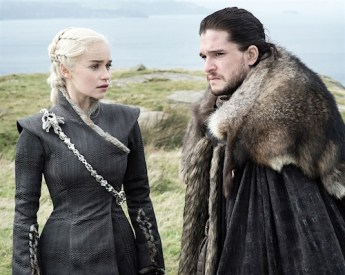 The most epic so far came in The Spoils of War. Apparently it’s been dubbed the Field of Fire — if there’s one thing Game of Thrones is consistently good at, it’s giving its big events cool monikers. (The “Field of Fire” is also an event from the series’ backstory, I believe, so maybe some of the reviews I read just got confused.) But it’s not just cool shots of fiery destruction that make this episode so satisfying: it’s the way that changes the game. Not to mention characters coming together after so long apart, both on the battlefield and not. That two girls talking in a crypt can be as thrilling as a dragon blowing shit up is… well, how character investment works, I guess. Some reckon this is the series’ best-ever episode. I wouldn’t go that far, but it is right near the top.
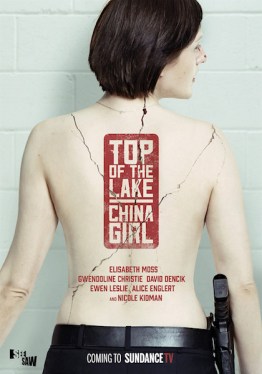 Elisabeth Moss, star of both Mad Men, a series partly about the sexual politics of the ’60s workplace, and The Handmaid’s Tale, a series about the sexual politics of a world where women are baby-making slaves, returns as Det. Robin Griffin for a second run of Top of the Lake, which is now a series about the sexual politics of present-day Australia.
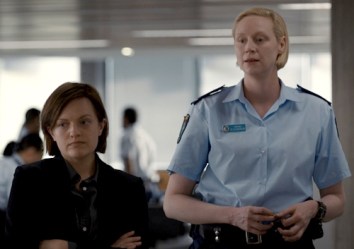 There are some great performances in there too, mainly from the female characters — no surprise, really, considering creator and co-writer/co-director Jane Campion is clearly interested in exploring women’s place in the world. Moss carries things, with Robin competent but combative at work (she needs to be, as the Australian police force seems stuck in the ’70s with its gender politics) even as her personal life is a tumultuous mess. Nicole Kidman gets to play it kooky as the adoptive mother of Robin’s child, who’s gone all spiritual and lesbian recently. The most entertaining is Gwendoline Christie as an enthusiastic constable who latches on to Robin, eager to be her protégé. She brings the bulk of the humour, with great lines and moments aplenty, but also brings emotional depth when needed.
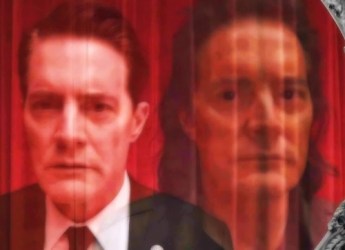 I must be honest with you, dear readers: the longer this Twin Peaks revival goes on, the less I feel I’m enjoying it. It works best when Lynch is trying to out-Lynch himself. Those episodes are crazy and borderline nonsensical and insanely challenging to what constitutes filmed entertainment, but at least they’re interesting; and if you don’t get it you can dismiss it as “it’s Lynch, innit”. It’s actually the ‘normal’ stuff — the investigations and machinations in South Dakota, Las Vegas, and Twin Peaks itself — that are beginning to get on my wick. Again, at times there are moments of clarity or inspired weirdness, but in between sits a morass of sludgy plotting and wilfully obscure characterisation. It’s starting to nudge the series from “revelatory experiment” into “noble failure” territory, for me.
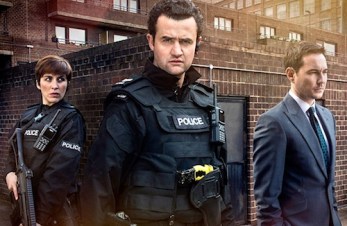 As I noted
 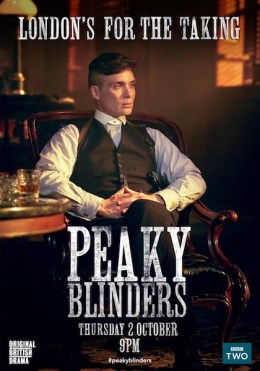 The second series of BBC Two’s period crime drama jumps forward two years to find everyone’s favourite Brummie criminals running such a successful business that they intend to expand their operations to London, by sticking their oar into a turf war between the Jews (led by Tom Hardy) and the Italians (led by Noah Taylor). Meanwhile, Sam Neill’s copper is back with a vengeance, teaming up with the Irish to blackmail Blinders kingpin Cillian Murphy into performing an off-the-books assassination for the crown.
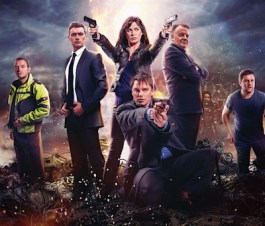 This month, I have mostly been missing Torchwood: Aliens Among Us. Although ‘just’ an audio drama from Big Finish, it’s being marketed as the series’ official fifth season, picking up after the events of 2011’s (disappointing) Miracle Day. A full 12-episode run, it’s coming out in three box sets — although part two isn’t out until October and part three until February, part one came out last week. Obviously, I’ve not listened to it yet. Hopefully next time…
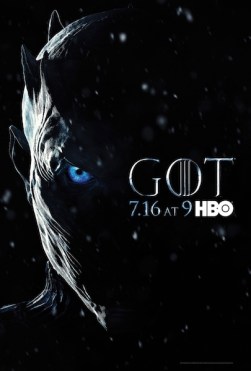 Season premieres of Thrones are typically concerned with re-establishing where all the major characters are, and maybe moving their stories on a few baby steps to indicate where they’ll be headed this season. Dragonstone is no exception. So where Arya had arrived in Westeros to kill the Starks’ enemies, now she’s slaughtering them by the hallful; where Bran and Meera were headed for the Wall, now they’re passing through it; where Jon and Sansa were taking charge in the North to be ready for war, now they’re preparing for war; where Sam had headed to the Citadel to research important stuff, now he’s in the Citadel researching important stuff; where Cersei had taken the Iron Throne and Jamie had his doubts, now Cersei’s preparing to defend her kingdoms and Jamie has his doubts; and where Dany was sailing for Westeros with her hodgepodge military, now she’s landed in Westeros. The wonder of Thrones is that it can take such scene-setting and turn it into riveting television.
 In fact, the only thing letting the side down was the well-publicised cameo by Ed Sheeran. If you have no idea who Mr Sheeran is then perhaps his appearance was fine — his acting was no worse than dozens of other bit players they’ve had on the series before now. But if you do know who the singer-songwriter is, his appearance was like being served a cheese board accompanied by cheese crackers with a glass of melted cheese and extra cheese on the side. After devoting what felt like a significant chunk of time (but was probably mere seconds) to him singing a song, Arya trots over to him and goes, “I don’t know that one,” and he says, “it’s a new one,” which he may as well have followed up with, “which you can hear in full on my new album, available now everywhere music is sold.” I have no idea if he has a new album out, or if that song would be on it if he did, but that’s how it felt.
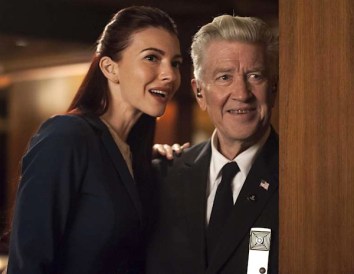 Slowly, very slowly, the disparate strands of Twin Peaks Mk.III seem to be coalescing into a coherent, connected story… which is almost more frustrating, in its own way. By that I mean: when it was wilfully obscure, you just kind of went with it — it was Lynch being Lynch, and you had to let it wash over you and allow your feelings to do the deduction about what it was supposed to signify. Now that the plot is beginning to crystallise into something your rational brain can make sense of, it feels a mite slow in getting there. I mean, while Dougie Jones is less annoying than he used to be (helped in no small part by the brilliance of Naomi Watts), I still miss real Coop, and we’re running out of episodes to spend time with him again. Was MacLachlan just feeding us a red herring when he said he’d “almost forgotten how to play him”? Because he hasn’t played him yet! Ach, we’ll see. It remains defiantly its own thing, and at least we can trust Lynch is going somewhere with it — even if we may never be able to work out precisely where that somewhere was…
 Based on a webcomic from the creators of Penny Arcade and funded through Kickstarter (so far it’s only available to backers), this miniseries-cum-pilot (the five short episodes total 58 minutes) takes place in an alternate Prohibition-era America, where “Prohibition” instead refers to the ban on production of automatons — sentient robots. Ex-copper Sam Regal (Basil Harris) and his partner Carl (voiced by Doug Jones), an automaton, now make ends meet as PIs, doing the usual PI thing: photographing cheating spouses. Only this time the run-of-the-mill case leads them into a murderous web that encompasses speakeasies, robo-gigolos*, underground automaton-hating gangs, and a twist ending (natch).
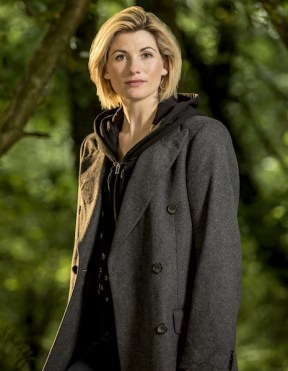 The biggest TV news this fortnight was undoubtedly the BBC’s announcement of the 13th actor to take the title role in Doctor Who. (Well, the 14th. Well, the… oh, let’s not get into that.) As you surely can’t have missed, it was Jodie Whittaker, who is a woman! Gasp! Naturally, there was some outrage. After all, it makes no sense whatsoever that an alien being who can travel in time and changes his whole body every time one gets worn out could possibly, during that change, switch from being a man to a woman, even if it’s been established multiple times within the series itself that such a change is possible. It’s just not plausible, is it?
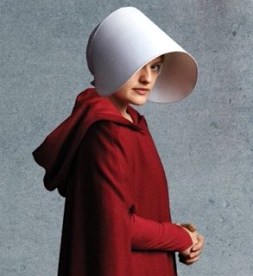 This month, I have mostly been missing The Handmaid’s Tale. It belatedly started airing on this side of the pond at the end of May, but it slipped my mind so much that I didn’t even mention it in
  100Films.co.uk