
Justin Lin | 137 mins | digital (HD) | 2.39:1 | USA / English | 12 / PG-13
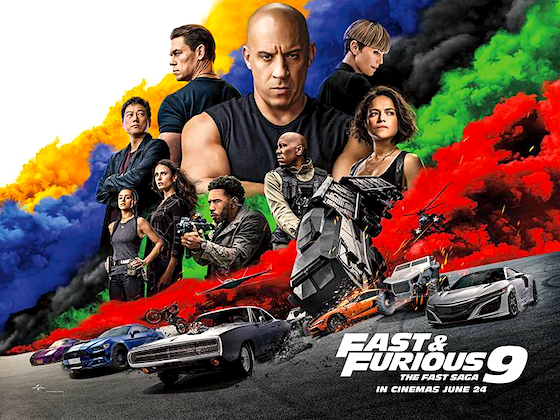
Between spinoffs and Covid-related delays, it’s been four years since the preceding film in what we’re apparently now meant to call “The Fast Saga”. As the series’ storyline has become increasingly serialised, I’m sure I can’t be alone in wishing they’d begin with some kind of “previously on”. That might sound a bit much for a series whose rep is, not undeservedly, “dumb action with cars”; but while that action was revving up, I was left digging around in my memory for where we’d left these characters and why some things were the way they were.
But, let’s be honest, it doesn’t matter all that much, because before long they were racing around (literally) after one Macguffin or another, plus all the requisite shooting stuff and blowing stuff up and performing physics-defying CGI-aided stunts that have become The Fast Saga’s hallmarks. If that makes it sound a bit tired — just “more of the same” — well, remember, we’ve reached film #9. Now, in fairness, if there’s any franchise that bucks its numbering system, it’s The Fast Saga: it tried on different lead characters and various underlying formulae throughout its first four movies, only settling on one that sang in the fifth film. Nonetheless, that means we’re now on the fifth instalment that’s driven by said formula — sixth, if you count the Hobbs & Shaw spinoff, which we should — and it’s beginning to wear thin.
Since landing on that magic formula, the series has walked a couple of tightropes: with its action, being outrageous and ridiculous but still exciting and fun; and with its mythology, being unnecessarily complicated but still followable. F9 is where, for me, it finally stumbles, and perhaps even falls off. Who can still remember the ins and outs of what went on with Han and when? Not me! And… rocketing a car into space? Seriously? Well, Top Gear almost did it for real once, so maybe it’s not entirely implausible. But that’s far from the only so-ridiculous-it’s-ridiculous stunt in the film. Fast’s stunts have never carried the same thrill as, say, Tom Cruise’s in the Mission: Impossibles because they’re unquestionably not being done for real. We’re not impressed by what they managed to physically pull off, more amused by what they dreamt up and rendered in a computer. Most of them are implausible. But here, it reaches the tipping point where I went from laughing along with it to just finding it silly.
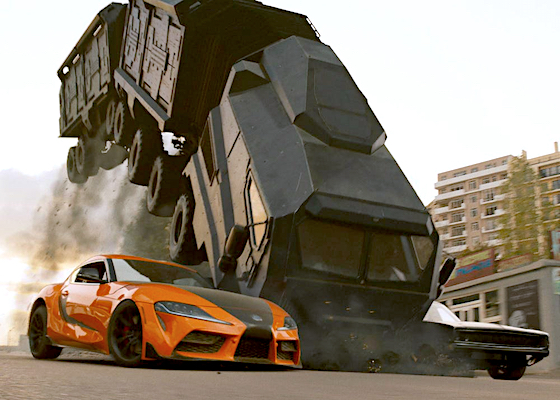
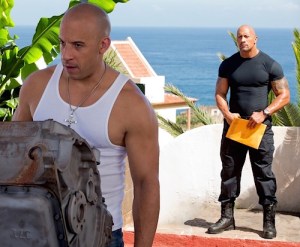
What changed? Well, missing from the cast are Jason Statham and The Rock, perhaps the only two actors in the franchise who knew precisely where to pitch their performances to reassure us the filmmakers knew it was all ludicrous but it was ok. But they were only supporting players — does removing them from the equation answer every misstep? Surely not. Perhaps the director? But that’s Justin Lin, the man who saved the franchise in the aforementioned fifth film, continuing the style into the sixth; so he’s only sat out #7 and #8. But perhaps his taste or touch for the material has gone — he did recently abandon production of the series’ forthcoming two-part finale, after all.
Whatever the root cause, I found F9 lacked the fun of the last four films (five, counting the spinoff). Looking at it another way, five entertaining movies is a good run — they were overdue another dud. As that, it’s certainly not the weakest film the series has to offer.




 The franchise that can never make up its mind about what each instalment’s called continues with its most outrageously ludicrous entry yet.
 Despite that, the series is beginning to feel increasingly “fans only”. That’s the way of all things these days, I suppose. Long gone are the days when movie series aimed at accessibility, each entry fundamentally a standalone adventure for a popular hero. Serialisation is the new discreteness, and it pays dividends for Marvel and, indeed, for Fast & Furious: in the same year as
  while we’ve seen computers being used to generate a performance for a deceased actor for over 15 years now (I believe
  But hey, what does it matter? The point is the big dumb fun of the action sequences, be they well-choreographed and -shot fisticuffs, excellent stunt driving, or computer-generated ridiculousness. Is it okay to just give a movie’s plot a free pass like that? Sometimes, I think it is. Furious 7 is an action movie, in a fairly pure sense of the term, and action it delivers.
 Adapted (loosely) from Ted Hughes’ children’s novel The Iron Man, the feature debut of director Brad Bird (
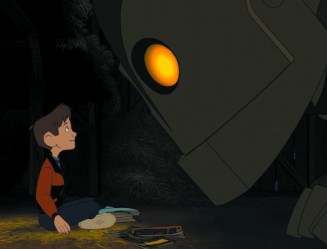 The story, as reconstructed by Bird and screenwriter Tim McCanlies, integrates influences from ’50s B-movies (very apt for a giant robot ‘monster’) and Cold War/Space Race paranoia for a potent storyline that has a different emphasis from the novel’s “world peace” finale, but nonetheless is promoting understanding of alien/foreign powers and, y’know, deep stuff like that. Alternatively — or, rather, concurrently — it’s an
  reputation it has gradually amassed — and which only continues to grow, I think. Last year saw the release of an extended Signature Edition, with a couple of short scenes added, which comes to US Blu-ray (alongside the original version) later this year. Just from reading about those new scenes, I’m not convinced they’ll improve the experience, but it’ll certainly be worth finding out.
 Marvel Studios takes its boldest step yet, moving away from the present-day superhero milieu of its previous movies to a galaxy far, far away for a space opera epic. Its success, both critically and commercially, has cemented the Marvel Cinematic Universe as an infallible force in the current movie world. But, really, how good is it?
 The worst offender is the pod chase through Knowhere, a several-minutes-long sequence that registers as little more than a blur. There’s a shocking lack of clarity to its images, even by today’s standards. Maybe it’s better in 3D, when I guess the backgrounds would sink into the distance and important elements would be foregrounded; but in 2D, you can’t see what’s meant to be going on for all the fast-moving colour and split-second cuts. Almost as bad, though for different reasons, is the climax. It takes up an overlong chunk of the movie and at times feels repetitive of too many other Marvel climaxes — oh look, a giant spaceship crashing into a city! If anything, the film gets ‘worse’ as it goes on. Perhaps not in a very literal sense, but as the blustering action climax takes over, it moves further away from the stuff that makes it unique and interesting.
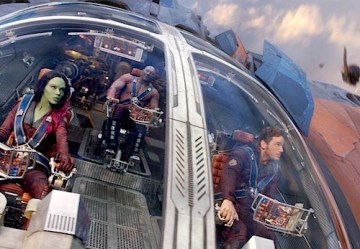 It isn’t even called Nova City, but I don’t have the foggiest what it is called because the film didn’t make me feel I should be learning it. Some more effort making sure we knew why that place mattered, even if it was just a clearer depiction of all the planning for its defence, might have sold the entire climax better.
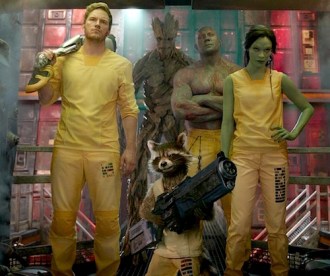 especially the overlong climax. Joss Whedon commented of his own Avengers film (as I quoted in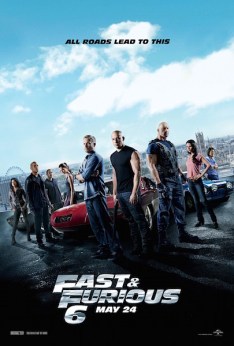
 For all the intent of this being “Part 2 of 2”, there’s a post-credits tease which sets up
 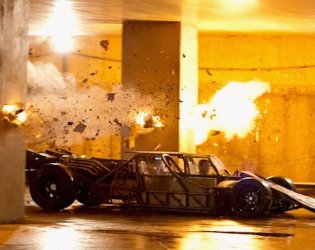 There’s plenty of backstreet, underground, grim-and-gritty bits on display here — entirely appropriate given the characters’ street-racing roots and criminal know-how. Still, these are little more than cosmetic bonuses.
 100Films.co.uk