
We’re a whole month in — 2020 is properly underway!
The less said about yesterday’s biggest news the better, so I’m just gonna plow on into some films…

#2 Evil Under the Sun (1982)
#3 Rocketman (2019)
#4 Little Women (2019)
#5 Dial M for Murder 3D (1954)
#6 1917 (2019)
#7 The Dead Don’t Die (2019)
#8 Dolemite Is My Name (2019)
#8a What Did Jack Do? (2017)
#9 Bait (2019)
#10 Ad Astra (2019)
#11 8½ (1963)
#12 Laputa: Castle in the Sky (1986), aka Tenkû no shiro Rapyuta



- As should be self-evident, I watched 12 new feature films in January.
- I watched my first film on New Year’s Day — the first time that’s happened since 2016.
- I watched my second film on January 2nd — the first time that’s happened since 2012.
- I watched my third film on January 3rd — the first time that’s ever happened.
- I watched my fourth film on January 8th — which doesn’t sound as remarkable, but it’s earlier than I watched last year’s #1.
- By #8, I was ahead of every previous year. By #12, I was ahead of just 54% of them.
- In terms of averages, 12 slightly beats the January average (previously 11.42, now 11.46), but is slightly behind the average for 2019 (12.6).
- Dial M for Murder is the first 3D film I’ve watched since last May, eight months ago.
- This month’s Blindspot film was Federico Fellini’s semi-autobiographical search engine / hashtag nightmare of a title, 8½.
- From last month’s “failures” I watched just Little Women.

The 56th Monthly Arbitrary Awards
 Favourite Film of the Month
I’m always wary of picking the last film I watched as my favourite of the month — I worry it’s just recency bias giving it a boost. And there are certainly other films I liked a lot this month — when I’ve settled on my final ratings, up to 50% of them will be getting full marks. But, eh, it’s just an opinion. So, for now, this month’s victor is a Miyazaki classic (of which there are so many!), Laputa: Castle in the Sky.
Least Favourite Film of the Month
This is a very straightforward choice, though. I’d heard only terrible things about The Dead Don’t Die, but the trailer had looked such fun that I went ahead and rented it anyway. Sadly, it was the word of mouth that was accurate — it’s a dud.
Most Quotable Film of the Month
You might not expect a black-and-white hand-developed art-house-y drama about the plight of locals in a Cornish fishing village to be full of zingers, but there are loads of such memorable bits in Bait. My favourite? A barmaid watching a local bloke chat up a bit of posh totty from out of town: “He’s wasting his time with her… ‘ow’s she gonna suck his dick with that plum in ‘er mouth?”
Least Hashtag-Friendly Film of the Month
Continuing the theme of “recycling stuff I already put on Instagram”, you try and come up with a workable hashtag for 8½.
The Audience Award for Most-Viewed New Post of the Month
This month’s winner slayed all before it to become, not just my most-read new post, but my most read post overall for last month (that happens quite rarely — just thrice last year, or 25% of the time). The post in question was my Christmas TV review. It received more than double the number of views as the post in second place (which was the previous TV review), a lot of that powered by referrals from IMDb for people wanting to read about Dracula. I hope I switched them on to The Goes Wrong Show while they were here… (The highest new film-related post was my review of The Personal History of David Copperfield.)




Last year’s Rewatchathon limped to an ignominious end (only just over half of my 50-film goal), but 2020’s is off to a solid start…
#1 Zatoichi at Large (1972)
#2 The Hound of the Baskervilles (1939)
#3 The Adventures of Sherlock Holmes (1939)
#4 Monty Python’s Life of Brian (1979)
#5 Twin Peaks (1990), aka Twin Peaks: Pilot
Starting at the end, Twin Peaks — the original pilot, which I watched in UHD courtesy of the From Z to A box set. I was counting it as a film as part of a long-term setup for eventually including it on a list of my favourite films (oops, given the game away!)… but I feel less sure after watching it again. Not of its greatness — I still reckon it’s one of the very best episodes of TV ever made, with at least one sequence that’s among my favourites in the entire history of visual storytelling — but it’s so obviously a pilot; so made to set wheels in motion for a series to run with them over many more hours. Yeah, there’s the close-ended International Version, but that’s a bit of a mess. This is something I’ll continue to ponder on.
As for the picture quality of this UHD version, it’s unfortunately a mixed bag. Lynch chose not to use HDR here, apparently… though I don’t know if that’s been confirmed or if it’s accepted wisdom from the disc not playing with HDR. I say that because when I turned Dolby Vision on, it kicked in. So is the disc encoded for Dolby Vision but not normal HDR? Is that possible? Or was my player ‘faking it’? I don’t know enough about how HDR/DV works to answer that. Normally I have Dolby Vision switched off because I don’t like it (I don’t know if I just consider it inaccurate or if it’s my TV’s fault, not displaying it properly for some reason), and Twin Peaks did nothing to convince me I should change that. Mainly it just seemed to make things too dark, erasing detail in the shadows (I tried fiddling with my settings in case I’d set it up poorly, but that didn’t help). With or without DV, the pilot doesn’t look right. The resolution is good, with improved fine detail compared to the Blu-ray, so that’s nice; but the colours look far too pale. Considering classic Twin Peaks is renowned for its warm look, this is especially jarring. Some scenes — outdoor ones, mainly, where the colours are cooler anyway — look just fine, but others look thoroughly wrong. What’s really baffling is that Lynch supposedly supervised this new version, so it should be bang on; but I’m pretty sure he supervised the previous one too, so what’s gone awry? Whenever I next watch the pilot, I’m going to have a difficult choice on my hands: 4K for the base-level image quality, or 1080p for (what I think is) the correct colour balance. Argh!
As anyone au fait with the news has likely guessed, I watched Life of Brian in honour of Terry Jones. Plus, I’d been meaning to rewatch it ever since I watched Holy Grail last September. Like that film, it’s now down to get the “Guide To” treatment at some point.
Rather than regurgitate comments about my other rewatches, I’ll point you towards Letterboxd for my thoughts on The Hound of the Baskervilles, The Adventures of Sherlock Holmes, and why I rewatched Zatoichi at Large when there are still several original Zatoichi films I’ve not seen.

2020 got off to a solid start, but there were still plenty of things I failed to see. On the big screen, I saw most of the stuff I really intended to — I’m happy to leave both Guy Ritchie’s latest, The Gentlemen, and belated trilogy-maker Bad Boys for Life until they reach rental. Speaking of which, I’ve got both Jennifer Kent’s The Nightingale and Danny Boyle’s Yesterday sitting on my Amazon Prime Video account with the days ticking down — definites for next month, those.
In terms of new disc acquisitions, I watched a few as soon as they landed on my mat, but I went on a bit of a spending spree this month — a mix of new releases, random bargains, and having some vouchers to use up. In the former camp, the BFI’s new Blu-ray of Judgment at Nuremberg rubs shoulders with Arrow’s release of Black Angel, a film noir directed by Roy William “director of 11 Basil Rathbone Sherlock Holmes films” Neill (which was recommended to me almost eight years ago by an esteemed fellow blogger, so it’s about time I got round to it).
The random bargains pile, meanwhile, is mostly made up of horror: the 101 Films Black Label edition of David Cronenberg’s Rabid; 88 Films’ box set of Hollow Man and Hollow Man II; and an import of Dario Argento’s Dracula 3D, which is meant to be absolutely terrible but, eh, I’m curious (it’s also only available in the UK on DVD or digital, neither of which are 3D, so I got the German one. The extras aren’t English-friendly, but I don’t reckon I’m ever likely to watch an hour-long making-of on this particular film). And in the “I had a voucher” camp, Don’t Look Now in its 4K limited edition form. Frankly, I’d’ve snaffled that up even without the voucher — it’s sold out online and so the price is beginning to rise on eBay and the like, but I happened across a single copy in a branch of HMV, where they were still charging the original price. The voucher comes into play because I wouldn’t even have been looking were it not for having an HMV voucher that expired the next day. So, that was nice.
And finally, the ever-burgeoning ranks of what’s available on streaming. Headliners this past month include In the Mood for Love cropping up on Prime Video — it’s one of the most acclaimed films of this century, but it never seems to be available in the UK, apart from an old DVD. It’s on my Blindspot list this year too, but I’d already got hold of it by, er, other means for that purpose. Other additions that drew my attention on Prime included Booksmart (particularly as I previously rented it but accidentally let the clock run out), Samuel Fuller’s The Naked Kiss, The Boondock Saints (one of those films I’ve heard of but don’t know much more about), and Jason Statham vehicle Wild Card — it’s been a while since I watched a run-of-the-mill Stath flick, so I feel overdue. Also overdue is a rewatch for Brokeback Mountain, which is also now on Prime here. Back in 2006 I was one of that rare breed who thought Crash was better. I didn’t hate Brokeback, but I didn’t like it much either. So, it’s long overdue that I revisit it and form a new opinion, now that I’m older and wiser.
Over on Netflix, the biggest hitter is probably Uncut Gems, which is one of this year’s many “should’ve had Oscar noms” films. But that only came out yesterday, so it’s not much of a “failure”… yet. Also catching my eye were Won’t You Be My Neighbor? (not to be confused with A Beautiful Day in the Neighborhood, which is only just reaching UK cinemas) and Zhang Yimou’s Shadow. Plus they now have Phantom Thread, which I personally don’t intend to rewatch in anything less than 4K, but I mention its presence nonetheless because I highly recommend it.

Ghibli comes to Netflix! Well, not if you’re in North America, but for the rest of us: hooray!
…although I own Blu-rays of most of the ones I’m interested in seeing, I’ve just not got round to watching them yet, so their presence on Netflix isn’t likely to affect my viewing much at all. Hey-ho.

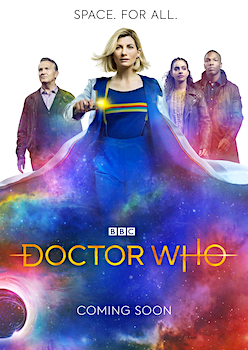 Well, it certainly has been an eventful first half to this series of Doctor Who! Never mind bringing back the Master and destroying Gallifrey (again) in
 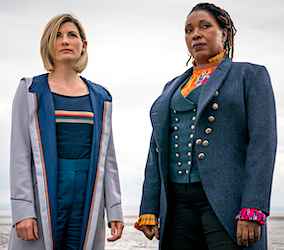 Social media and fan forums and whatnot have debated and analysed that revelation to death, so I won’t bother digging too much into all the possibilities of what it means — only time can tell. I will stake out this opinion, though: I am not a fan of the theory that she’s a pre-Hartnell version of the Doctor. The idea there were incarnations before the one we know as the first has always seemed disrespectful to me, somehow. Yeah, the Daleks ‘made’ Doctor Who, but Hartnell gave it his all too — without him week to week, and the effort he put into public appearances and the like, would the series have survived those early years? He’s not the only thing responsible for its success, and certainly not for its longevity, but he was The First — leave that be, thanks.
 The Star Trek series boldly goes where it’s never gone before: into the Prestige TV market. (Despite initial appearances, based on things like the reviews I’ve read and variably-sized season orders, I’m not sure Discovery was really “prestige TV” in the end.) Is it up to competing with the big boys of this peak TV era?
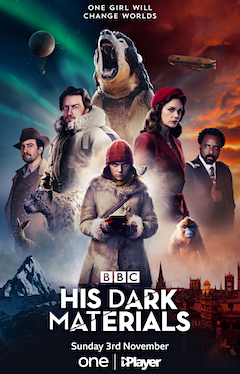 I reviewed the first three episodes of His Dark Materials in
  It’s been
 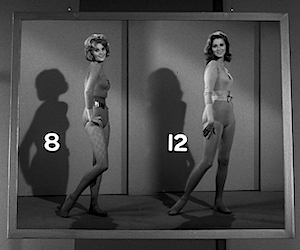 Moving beyond the top ten to complete the top 10% (i.e. the 16 best episodes), next is Number 12 Looks Just Like You (which, by-the-by, comes 10th on Thrillist). This is what some people might call “proper sci-fi” — an idea of the future spun out of what’s possible in the present, using it to present an analogy for the times we live in. And what is the analogy? In this case, there’s a few things you can read into it: mental health; conformism; the transition from childhood to adulthood; maybe all of the above; maybe something else. The only real downside is the episode hints at a wider world that isn’t explored. It’s mentioned in passing that the writing of Shakespeare, Keats, and others has been banned. Why? By whom? And while a bunch of middle-class white people are choosing which generic model they want to look like, what about other races? Class is less of an immediate issue because it seems this is a government-backed thing that everyone must undergo — but then, why do the lower classes get to look just the same as their ‘betters’? Surely there’d be different models depending on your social station? Never mind a 25-minute episode, someone could spin an entire series out of this… Still, having so much to ponder is one mark of a very good episode.
 Finally for now, the last episode in the top 16 (and the only one of today’s episodes not in anyone’s top ten), Nothing in the Dark. Probably best known for staring a young Robert Redford, it’s about an old woman who’s paranoid and agoraphobic due to her fear of meeting Death; but when Redford’s cop is shot right outside her door, she has to let him in to save his life. It’s a nice idea for a story, but (to loop back to what I was saying about The Masks) it feels a little slight in the execution. Half of the second act is taken up in a diversion with a demolition guy which is just that, a diversion. Still, there are very good performances from the two leads, and it comes with a well-meant little message by the end.
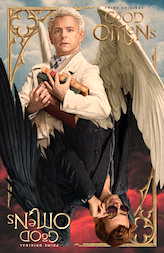 This month, I have mostly been missing Good Omens… again! I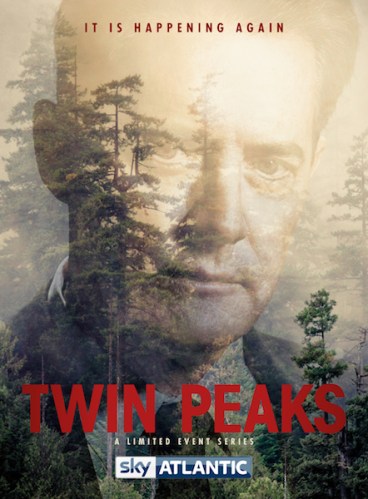
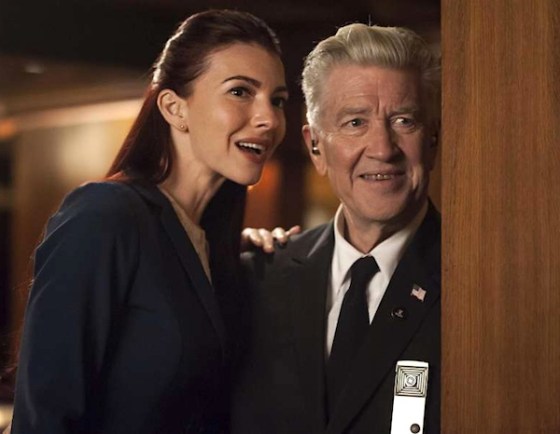
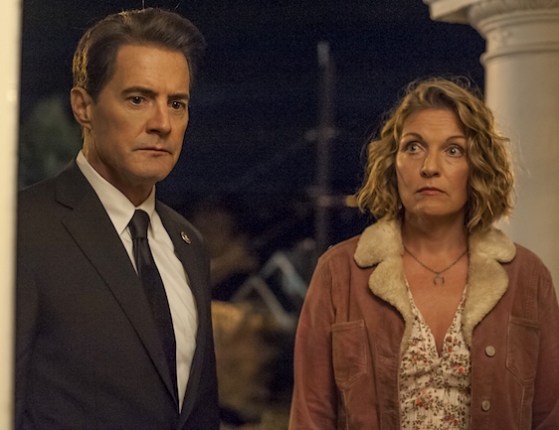









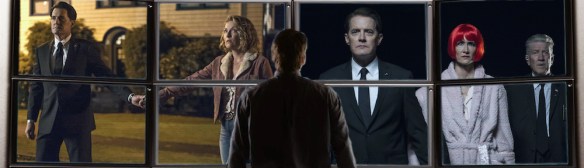


 The entirety of The Return has been a very divisive piece of television. For all the praise it’s received from certain critics and cinephiles, there are other viewers and reviewers who think it’s a case of Emperor’s New Clothes. The finale — which looks likely to also be the finale to the entire Twin Peaks universe, unless something changes — is all of that in a microcosm, with some hailing it as a perfect capstone on a masterpiece, while others berate it for being inconclusive and overly ambiguous rather than a true ending.
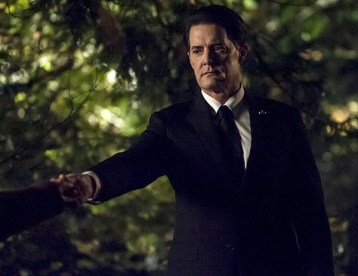 Part 17 saw most of the series’ central characters converge on the Twin Peaks Sheriff Station for a showdown with, first, the evil Mr. C, and then BOB, now in the form of a floating ball with a face. In most shows none of this would make a blind bit of sense, but in Twin Peaks it’s what amounts to clarity. Indeed, I’ve even seen some people criticise it for being too pat and obvious. Everyone’s entitled to their opinion, right? But anyone who wanted a full-blown reunion between their favourite characters was in for disappointment, because almost as soon as Agent Cooper was back among both his Twin Peaks and FBI friends, he was off again — transported into the past, into the events of
  As the episode went on, most of it seemingly filled with people driving together in silence, it became increasingly clear that we weren’t going to find out many of the things we’d been wondering about (first among them for many fans: what was going on with Audrey?), nor did it look likely we’d be getting a nice button on the main plot line of the show. That turned out to be the case, with a mysterious final scene that, as I said earlier, felt more like a cliffhanger than an ending. That
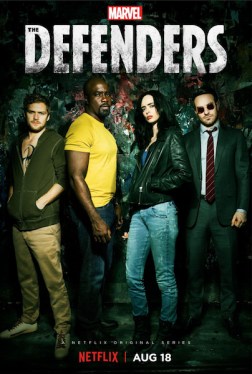 After years of build-up, and a grand total of 65 episodes of lead-in shows (yes, that many, really), we’re finally here: the culmination of Phase One in the Netflix arm of the Marvel Cinematic Universe. Like Phase One of the movie side, said culmination is a big ol’ team-up of every hero we’ve been introduced to so far, working together to stop a threat that’s been building across some of their individual series.
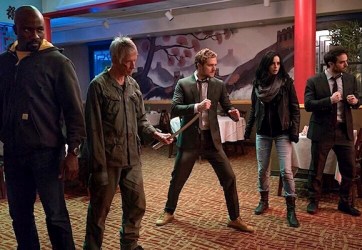 With the team introduced to one another, Royal Dragon is almost a bottle episode — the gang hole up in a Chinese restaurant to hide from the Hand and make a plan. It works neatly to let our heroes settle their differences and agree to actually team up. There’s some fun sparky dialogue in their interactions, too. For my money it’s the best instalment of the series. The downside: having said that episode three is the end of act one, episode four really feels that way, with the team finally united — but we’re halfway through the series.
 Overall, the relative brevity and speed of the story here does make it feel like an event miniseries, more than the sprawling and novelistic styles of the four contributing series. Maybe it’s just because it’s how I chose to watch it, but I reckon it plays better as four feature-length episodes than eight normal-length ones. As this is Netflix and you can watch at your own pace, maybe that doesn’t matter; but if you were watching this weekly, I think it’d be immensely frustrating that it took three whole weeks to get to the actual team-up. In a
  Picking up where
  So ignoring those somewhat facile complaints, we can get back to looking at the end of the episode as pure spectacle. Other people (people not complaining about the timelines) hailed this as the series’ most incredible visual display yet. Well, some people always do that. It was great to see the dragons in action against the army of the dead, the exploding ice indeed looked spectacular, but as a battle it wasn’t equal to what we saw in Hardhome, Battle of the Bastards, or this season’s The Spoils of War. Coming fourth(-ish) to those is still a mean feat.
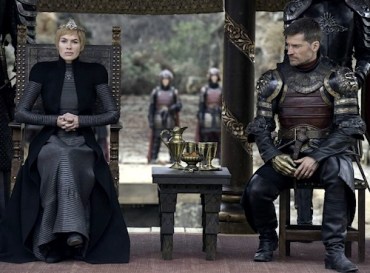 Some people were blown away by the twists and revelations in the finale. I guess it’s the fault of the internet age, but it felt like an awful lot of stuff that had just been a long time coming to me. The Night King using his dragon to melt the wall should probably have been mind-blowing, but it felt like it was just a matter of time (him actually getting a dragon the week before, however, was as effective as it was meant to be). The reveal about Jon Snow? We’ve already had enough breadcrumbs to put it together. It’s not really worth mentioning until Jon hears it for himself. On the other hand, the revelation that Bran doesn’t know everything — he has the option to see anything ever, but he has to go looking for specifics — is potentially important. How? Well, we’ll see.
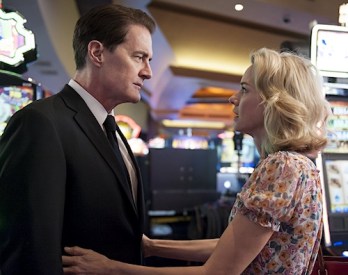 As we reach the penultimate week of the Twin Peaks revival, the one-armed man speaks for us all: “You are awake… Finally.”
 While signed up to Netflix for The Defenders, I also started watching this Netflix “Original” (it’s on ABC in the US, but Netflix have global rights, hence it gets their “we made this, honest” branding over here). Its setup has intrigued me since it launched last year, but its traditional release model (21 episodes across nine months) didn’t fit with my “subscribe for a month now and then” usage of Netflix until after the season had finished, i.e. now.
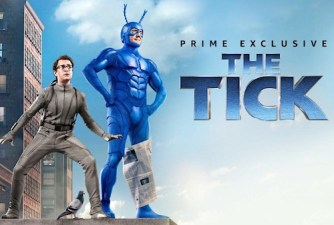 This month, I have mostly been missing Amazon’s new version of The Tick, the first half of the first season of which debuted last week, a full year after the pilot was made available. I wasn’t too impressed by that episode (my review is
  The first of this month’s quartet of trips to Westeros, Stormborn, demonstrated better than
 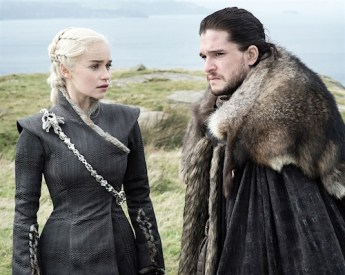 The most epic so far came in The Spoils of War. Apparently it’s been dubbed the Field of Fire — if there’s one thing Game of Thrones is consistently good at, it’s giving its big events cool monikers. (The “Field of Fire” is also an event from the series’ backstory, I believe, so maybe some of the reviews I read just got confused.) But it’s not just cool shots of fiery destruction that make this episode so satisfying: it’s the way that changes the game. Not to mention characters coming together after so long apart, both on the battlefield and not. That two girls talking in a crypt can be as thrilling as a dragon blowing shit up is… well, how character investment works, I guess. Some reckon this is the series’ best-ever episode. I wouldn’t go that far, but it is right near the top.
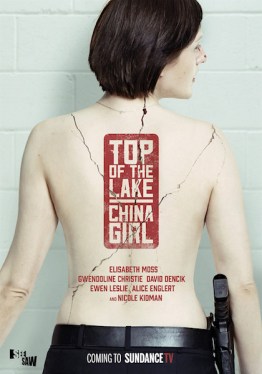 Elisabeth Moss, star of both Mad Men, a series partly about the sexual politics of the ’60s workplace, and The Handmaid’s Tale, a series about the sexual politics of a world where women are baby-making slaves, returns as Det. Robin Griffin for a second run of Top of the Lake, which is now a series about the sexual politics of present-day Australia.
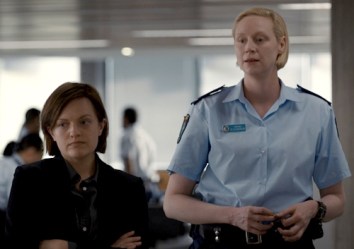 There are some great performances in there too, mainly from the female characters — no surprise, really, considering creator and co-writer/co-director Jane Campion is clearly interested in exploring women’s place in the world. Moss carries things, with Robin competent but combative at work (she needs to be, as the Australian police force seems stuck in the ’70s with its gender politics) even as her personal life is a tumultuous mess. Nicole Kidman gets to play it kooky as the adoptive mother of Robin’s child, who’s gone all spiritual and lesbian recently. The most entertaining is Gwendoline Christie as an enthusiastic constable who latches on to Robin, eager to be her protégé. She brings the bulk of the humour, with great lines and moments aplenty, but also brings emotional depth when needed.
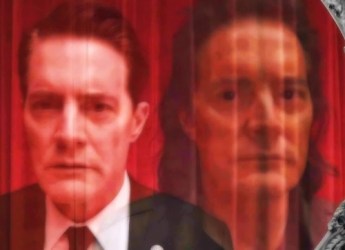 I must be honest with you, dear readers: the longer this Twin Peaks revival goes on, the less I feel I’m enjoying it. It works best when Lynch is trying to out-Lynch himself. Those episodes are crazy and borderline nonsensical and insanely challenging to what constitutes filmed entertainment, but at least they’re interesting; and if you don’t get it you can dismiss it as “it’s Lynch, innit”. It’s actually the ‘normal’ stuff — the investigations and machinations in South Dakota, Las Vegas, and Twin Peaks itself — that are beginning to get on my wick. Again, at times there are moments of clarity or inspired weirdness, but in between sits a morass of sludgy plotting and wilfully obscure characterisation. It’s starting to nudge the series from “revelatory experiment” into “noble failure” territory, for me.
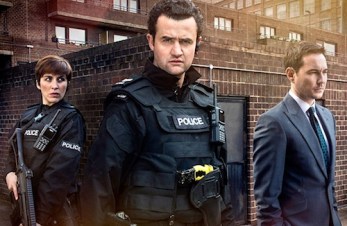 As I noted
 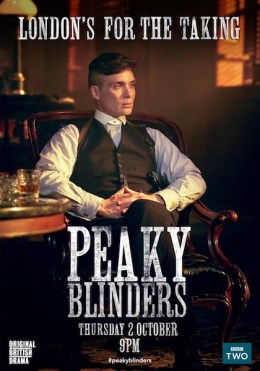 The second series of BBC Two’s period crime drama jumps forward two years to find everyone’s favourite Brummie criminals running such a successful business that they intend to expand their operations to London, by sticking their oar into a turf war between the Jews (led by Tom Hardy) and the Italians (led by Noah Taylor). Meanwhile, Sam Neill’s copper is back with a vengeance, teaming up with the Irish to blackmail Blinders kingpin Cillian Murphy into performing an off-the-books assassination for the crown.
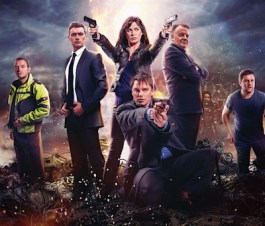 This month, I have mostly been missing Torchwood: Aliens Among Us. Although ‘just’ an audio drama from Big Finish, it’s being marketed as the series’ official fifth season, picking up after the events of 2011’s (disappointing) Miracle Day. A full 12-episode run, it’s coming out in three box sets — although part two isn’t out until October and part three until February, part one came out last week. Obviously, I’ve not listened to it yet. Hopefully next time…
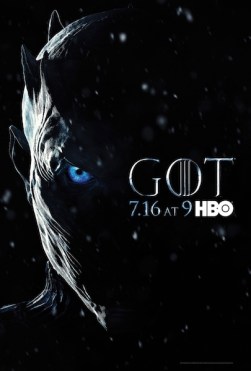 Season premieres of Thrones are typically concerned with re-establishing where all the major characters are, and maybe moving their stories on a few baby steps to indicate where they’ll be headed this season. Dragonstone is no exception. So where Arya had arrived in Westeros to kill the Starks’ enemies, now she’s slaughtering them by the hallful; where Bran and Meera were headed for the Wall, now they’re passing through it; where Jon and Sansa were taking charge in the North to be ready for war, now they’re preparing for war; where Sam had headed to the Citadel to research important stuff, now he’s in the Citadel researching important stuff; where Cersei had taken the Iron Throne and Jamie had his doubts, now Cersei’s preparing to defend her kingdoms and Jamie has his doubts; and where Dany was sailing for Westeros with her hodgepodge military, now she’s landed in Westeros. The wonder of Thrones is that it can take such scene-setting and turn it into riveting television.
 In fact, the only thing letting the side down was the well-publicised cameo by Ed Sheeran. If you have no idea who Mr Sheeran is then perhaps his appearance was fine — his acting was no worse than dozens of other bit players they’ve had on the series before now. But if you do know who the singer-songwriter is, his appearance was like being served a cheese board accompanied by cheese crackers with a glass of melted cheese and extra cheese on the side. After devoting what felt like a significant chunk of time (but was probably mere seconds) to him singing a song, Arya trots over to him and goes, “I don’t know that one,” and he says, “it’s a new one,” which he may as well have followed up with, “which you can hear in full on my new album, available now everywhere music is sold.” I have no idea if he has a new album out, or if that song would be on it if he did, but that’s how it felt.
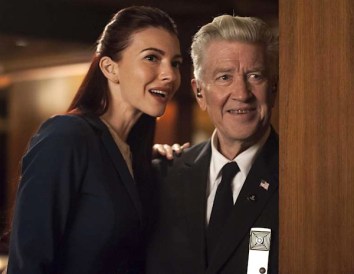 Slowly, very slowly, the disparate strands of Twin Peaks Mk.III seem to be coalescing into a coherent, connected story… which is almost more frustrating, in its own way. By that I mean: when it was wilfully obscure, you just kind of went with it — it was Lynch being Lynch, and you had to let it wash over you and allow your feelings to do the deduction about what it was supposed to signify. Now that the plot is beginning to crystallise into something your rational brain can make sense of, it feels a mite slow in getting there. I mean, while Dougie Jones is less annoying than he used to be (helped in no small part by the brilliance of Naomi Watts), I still miss real Coop, and we’re running out of episodes to spend time with him again. Was MacLachlan just feeding us a red herring when he said he’d “almost forgotten how to play him”? Because he hasn’t played him yet! Ach, we’ll see. It remains defiantly its own thing, and at least we can trust Lynch is going somewhere with it — even if we may never be able to work out precisely where that somewhere was…
 Based on a webcomic from the creators of Penny Arcade and funded through Kickstarter (so far it’s only available to backers), this miniseries-cum-pilot (the five short episodes total 58 minutes) takes place in an alternate Prohibition-era America, where “Prohibition” instead refers to the ban on production of automatons — sentient robots. Ex-copper Sam Regal (Basil Harris) and his partner Carl (voiced by Doug Jones), an automaton, now make ends meet as PIs, doing the usual PI thing: photographing cheating spouses. Only this time the run-of-the-mill case leads them into a murderous web that encompasses speakeasies, robo-gigolos*, underground automaton-hating gangs, and a twist ending (natch).
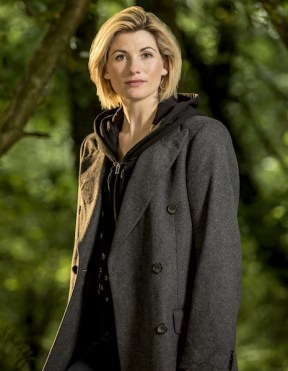 The biggest TV news this fortnight was undoubtedly the BBC’s announcement of the 13th actor to take the title role in Doctor Who. (Well, the 14th. Well, the… oh, let’s not get into that.) As you surely can’t have missed, it was Jodie Whittaker, who is a woman! Gasp! Naturally, there was some outrage. After all, it makes no sense whatsoever that an alien being who can travel in time and changes his whole body every time one gets worn out could possibly, during that change, switch from being a man to a woman, even if it’s been established multiple times within the series itself that such a change is possible. It’s just not plausible, is it?
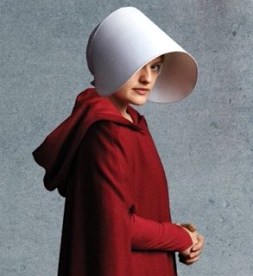 This month, I have mostly been missing The Handmaid’s Tale. It belatedly started airing on this side of the pond at the end of May, but it slipped my mind so much that I didn’t even mention it in
  History was made left, right and centre in the last three episodes of Doctor Who’s 36th-ever season. For starters, The Eaters of Light marked the first time someone who wrote for the classic series has written for the revived one. Rona Munro penned the last story of old Who, Survival, a personal favourite of mine and one that, stylistically and tonally, connects remarkably well with the first episode of nuWho, Rose, which is quite the coincidence. Anyway, The Eaters of Light was a solid episode with some very likeable parts, but it didn’t seem to quite gel entirely in the final mix. That’s been a recurring theme for the middle of this season, I feel, with every episode since Knock Knock featuring quality ideas and/or characters and/or scenes that aren’t fully developed into a final whole. Nonetheless, I’d certainly welcome Munro returning again in the future, but who knows what Chris Chibnall has planned.
 I put “unknowingly” in inverted commas there because that’s the episode’s biggest problem: thanks to the show’s own promotion, we knew the Cybermen were coming back, and we knew John Simm was returning as the Master. In truth, the former isn’t a problem. Sure, the existence of the Cybermen is played as something of a reveal at the end, but it also works as ‘just’ the reveal that Bill has been converted, and there’s dramatic irony in the viewer knowing what those cloth-headed patients are destined to become. The Master spoiler is more of a problem. The prosthetics turning Simm into Razor are impressive, and even fooled some people who knew he was back… for a bit. I’m sure most people must’ve guessed before the episode ended. It therefore becomes a distraction: what’s his plan? When will he reveal himself? And when the big reveal does come, it’s played as a twist, which it isn’t because we were told about Simm three months ago. Moffat has said before that it was entirely his decision to put Simm in the trailer, and it’s clear it was a misstep. Not a fatal one — World Enough and Time is strong enough to withstand it — but a shame. Can you imagine the reaction if we hadn’t known?
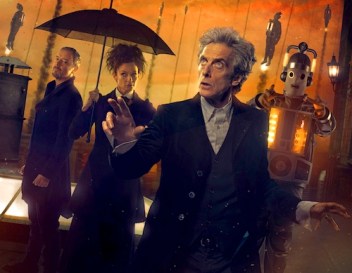 As for the other current Capaldi companion, there was an almost touching exit for Nardole, a character Matt Lucas has managed to imbue with much more likability than was promised in his initial appearance a couple of Christmases back. Finally, Peter Capaldi was in as fine fettle as ever, getting to deliver a few more of his iconic speeches, before going out with a heroic last stand.
 “
“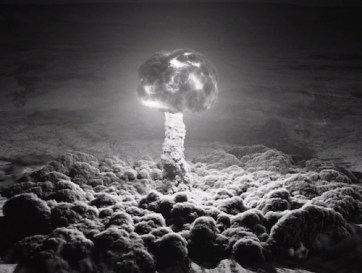 I don’t know if it was the reaction across the board, but on Twitter the reception the 8th episode received was adulatory to the nth degree. Having given us massive developments and beloved characters just one episode before, suddenly we were in a different era, in black and white, with mostly unknown characters, and a narrative conveyed through Lynchian visions rather than traditional storytelling. It made some kind of sense… some of it… in the end… but you certainly had to stick with it. Some of it was incredible — the tracking shot into the mushroom cloud is, somehow, almost inexplicably, one of the greatest shots of all time; an instant classic. But other bits… they did go on rather. I’m not one of those people who wishes the new Twin Peaks was a pure nostalgia fest, all repetition of famous lines and quirky goings on in the Double R over cherry pie and coffee, but I also think Lynch’s indulgence has run a little too rampant. Much of his surrealist imagery works if you’re prepared to engage with it, but I also think much of it doesn’t need to go on for as long as it does. There’s a difference between a slow pace and no pace.
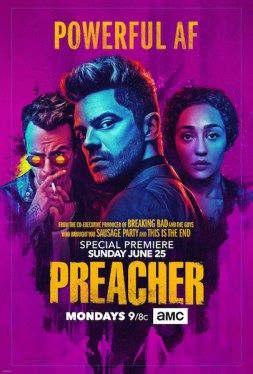 After a sometimes uncertain but ultimately promising first season that was, really, all prologue to the main story, Preacher returns with a confident bang, filled with unstoppable cowboys, exploding SUVs, Maced testicles, intestinal fuel syphons, baby foreskins, and Come On Eileen — and that was just the opening ten minutes. Shows like Legion, American Gods, and, especially, Twin Peaks may have been duking it out for the title of craziest series on television these past few months, but there’s nothing quite like Preacher.
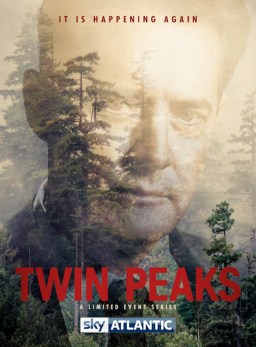 When the return of Twin Peaks was announced with the tagline “it is happening again”, I think everyone assumed it was, at worst, just an echo of one of the series’ famous lines which happened to work well for a revival; or, at best, an indicator to the plot — that the strange, sometimes otherworldly events of the original series were about to reoccur. As it’s turned out, perhaps what the tagline is most applicable to is the series’ effect: 27 years ago, Twin Peaks pushed new boundaries for what could be done on television, and the medium as a whole spent a couple of decades catching up. Now, rather than merely return to what he did all those years ago, as most revivals do, co-writer/director David Lynch is once again pushing at the boundaries of what’s possible or acceptable on mainstream(-ish) television. If “it” is “David Lynch being way beyond everybody else”, then it is indeed happening again. If you were after a comforting pile of references, callbacks, reflections, and imitations of the original series, you’re going to be disappointed — as one or two critics have been. If you were after something new in the weird world of Twin Peaks, well, step on up.
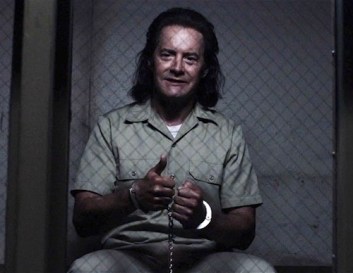 It’s also been widely reported that Lynch and co-creator Mark Frost wrote a single 400- or 500-page screenplay, shot it all, then chopped it up into 18 episodes in the edit. This I can very much believe. Individual episodes are almost shapeless as hours of television, and plot threads disappear for several episodes at a time, only to crop back up as if we’d never been away. While many series these days boast they are “actually an X-hour movie”, they still often function as individual episodes — they may not be completely standalone, but the shape of each hour, the way they’re paced and build to a cliffhanger, and so on, is episodic. Twin Peaks, however, feels like it means it — no doubt the legacy of Lynch’s production methodology.
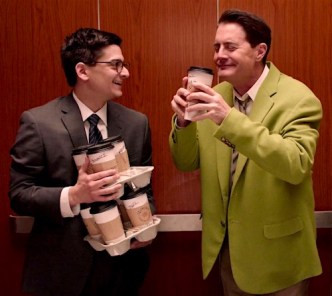 Some five-and-a-half hours into this 18-hour movie, Dougie hands his boss a stack of files. The boss slowly looks through them one by one, baffled by the seemingly senseless doodles Dougie has scrawled all over the pages. But after a while he begins to see a pattern, and comes to understand something. In the end he thanks Dougie. Dougie, as ever, looks blank, before doing a failed imitation of being a normal human being. Is Lynch deliberately setting out to say that he is Dougie and we are Dougie’s boss? That all of us are taking a long, slow look at Lynch’s indecipherable doodlings until we eventually discern some meaning. Or is it just a scene in Lynch’s world that we can coincidentally project that interpretation on to? As ever with David Lynch, I’m not quite sure.
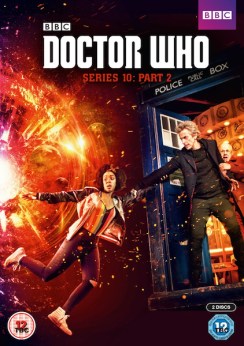 Well, I suppose it was too much to hope it would last. The most consistently great season of Doctor Who in over half a decade threw it all away with a frustratingly variable trilogy of stories (note: not a three-parter — this pedantic old-school Who fan insists we observe the difference). It all began with Extremis, which starts strong with a decent mystery (there’s a book in the Vatican library that causes anyone who reads it to commit suicide) and some good humour (Bill’s interrupted date), but increasingly becomes a lot of running around to delay the reveal. It’s a non-story pretending to be a story, basically. I don’t even care that it basically has an “and it was all a dream” ending. In fact, writer Steven Moffat found a way to make “and it was all a dream” work, which is a rare and miraculous thing. But the episode that leads to that ending doesn’t do enough heavy lifting to support it. A waste.
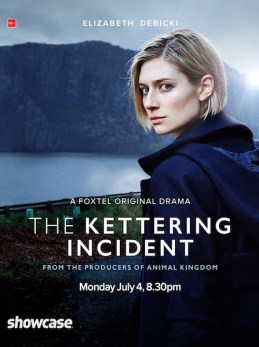 In a remote small logging town where everybody knows everybody else, a teenage girl, who’s secretly into drugs and partying and is the daughter of a prominent local man, goes missing under mysterious circumstances in the creepy woods, which have a history of possibly-supernatural strangeness… Yes, this is the Australian answer to Twin Peaks — a comparison I have perhaps unfairly amped up with that description. It’s more about Anna Macy (
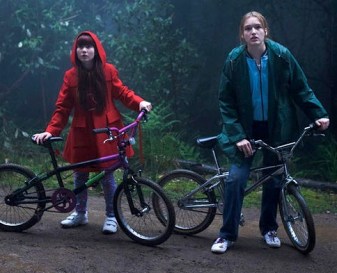 Personally, I want to know what the hell is meant to be going on, but the finale felt a lot like weak sci-fi to me and I’m not sure the answers will be worth it. I have that same hot/cold feel about the series as a whole: whenever it’s actually in front of my eyes I become engrossed, invested, and enamoured; but within hours of it finishing I feel a kind of indifference creep in. I can’t really explain why. It’s probably not a fair reaction.
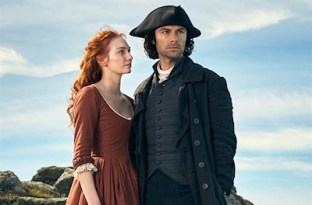 This month, I have mostly been missing the start of the third series of Poldark. Well, I’ve not even watched series two yet. I also
  100Films.co.uk