2015 #112
100 Films in a Year #1000
Mark Cousins | 915 mins | DVD | 1.78:1 | UK / English | 15
 Written, directed, and narrated by film journalist/historian/fan Mark Cousins, The Story of Film: An Odyssey is an epic 15-hour account of innovation throughout the history of moviemaking, which began its premiere broadcast five years ago today. It’s an acclaimed work, to be sure, but one that also attracts its fair share of controversy — about films and filmmakers that Cousins chose to leave out, in some cases about those he chose to include, and about how the documentary itself was made: the oddly framed interviews, the artistic shots of baubles, Cousins’ accent and vocal inflections. (Also, in the context of counting it as part of 100 Films, you may think it’s a TV series. Well, I went over that here.)
In the booklet that accompanies the series’ film’s UK DVD release, Cousins explains how and why the project came about:
There have been histories of the movie genres before, star histories, continental histories, histories of popular cinema, Godard’s essayistic history, etc. But no-one had tried to do a history of innovation in the movies. […] I was angry, too, that movie history is often so parochial, so provincial. We remember Garbo but not the great Chinese actress Ruan Lingyu, we worship Pixar but not the great Iranian kids’ films of Mohammed Ali-Talebi. This is blatantly unfair. The playing field is not level. The bullies with massive marketing budgets force their movies on us, whether they’re good or not, thus restricting our choice.
Part of the point of The Story of Film, then, is to widen Western audiences’ understanding of film and its history — a position also not without controversy, but I’ll come back to that.
The original concept was to tell this story over a handful of 90-minute episodes — “three chunky Saturday nights on BBC2 or C4”, as producer John Archer describes it in the DVD’s booklet. Unfortunately, the BBC declared the project was “too big”, which is ironic considering how it ended up. As Cousins describes in this making-of article, to help pitch the series they set out to produce a 10-minute test. When that clocked in at 50 minutes, they realised the final piece would have to be considerably longer than expected.  By the time More4 got involved to buy the UK TV rights, the expected running time was 12 hours. It continued to grow, eventually looking like it would finish at 18 hours. Cousins decided this could be honed “to 15 hours but any less and — I told my producer and Tabitha Jackson our Exec Producer at More4 — we’d have to cut out Woody Allen, Robert Altman, people like that… So they gave me 15 hours.”
Those final 15 hours represent tens of thousands of hours of work. Cousins estimates the work needed to prepare and finish the clips from other films (of which there are about 1,000) totalled 20,000 man hours, most of it completed by just Cousins and Archer, working 90-hour weeks on four hours sleep a night, with festival and broadcast deadlines looming. Before that, they spent six years travelling the world — “across China and LA, to Tokyo and the streets of Mumbai, to the urban canyons of New York, the film schools of Paris, to Eisenstein’s Moscow and Bergman’s Sweden” — recording interviews and scene-setting footage. It’s an epic undertaking, whichever way you cut it. As film programmer Thom Powers described it in the TIFF catalogue, “by taking a DIY approach, Cousins preserves an editorial independence that normally gets lost with a bigger budget and committee decision-making. […] After experiencing this history from such a distinctive viewpoint, you may crave similar treatments for music, literature, politics or whatever compels you.”
The end result is indeed a magnificent viewing experience. Cousins’ chosen remit is so wide, and his knowledge so deep, that even the most seasoned cinephile is sure to learn something new at some point. It’s like attending a film course with an immensely well-read lecturer who’s keen to share his accumulated wisdom with you. Indeed, to quote from the man himself again, “in the era of DVD, Blu-ray, streaming and VOD, hundreds of thousands of movies are available, often a click away. At times of such plenitude, it’s easy to get bewildered — what should I watch next? The Story of Film: An Odyssey is […] our passionate suggestions of what to watch next.” Those suggestions encompass the whole history and world of cinema, in a very literal way. 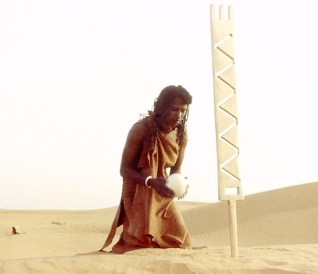 This manifestly isn’t just the story of Hollywood and European arthouse — Cousins is also keen to cover the emergent cinema of South America, Africa, and others. Including them isn’t a sop; a case of “everyone gets a prize!” It’s a case of films of genuine import or interest that have been overlooked, for various reasons, and Cousins makes a strong case not only for why these wrongs should be righted, but for why you’d want them to be, too.
Nonetheless, some have criticised the series for its lack of focus on American/Western cinema, which is to spectacularly miss (part of) the point. One of Cousins’ goals is to shake us out of our inward-looking learnt-by-rote Hollywood-centric history of the movies. He’s not seeking to ignore Hollywood, but to share what was going on elsewhere in the world — stuff that, sometimes, Hollywood later appropriated for its own. And besides, I don’t need him to tell me of the rise and fall of the studio system, of the arrival of the film school auteurs, of the birth and growth of the blockbuster, of the indie explosion and near-death, of the rise of a new studio system and the near-dominance of the blockbuster. Some people seem to want a documentary that tells the history of cinema as they already know it; a documentary that does so little to challenge their existing knowledge that they probably could’ve knocked it out themselves given an hour or two. Isn’t it better to have something challenging? Something that says, “you think you know the history of cinema, but are you sure?” Something that shows us something new.
Cousins specifically outlines pretty much all of this in his eight-minute introduction right at the start of the series. He outright says the accepted history of cinema is wrong and needs rewriting. Now, that doesn’t mean you have to accept that he’s right to say that — and whether or not you feel his story adequately makes the case for it will be the deciding factor in whether you should believe him or not — but to expect anything different is to not be paying attention. He also makes clear that it’s the story of innovation in film. Does that make it comprehensive?  No, of course not — there are surely many films that aren’t innovative in and of themselves but that are significant and immensely influential. That doesn’t make Cousins wrong to omit them, because that’s not exactly the story he’s telling. But it also validates the argument that this is “a” story of film rather than a catch-all definitive telling of everything important.
The other main complaint about the series seems to concern Cousins’ voice, in particular citing a tendency towards AQI. This might sound like a witless niggle, but when you’re essentially listening to that voice talk for 15 hours, it isn’t a small issue. Personally, I find AQI intensely irritating and so think I’m quite sensitive to it, but I barely heard it at all. In fact, on the whole, I found Cousins’ narration to be uncommonly pleasant, especially as it so often comes with the benefit of some nice, crisp diction. Besides, that upward inflection “is also a feature of several UK dialects, especially in mid-Ulster and Belfast” — guess which city Mr Cousins hails from.

Although The Story of Film works as one (very long) film, it’s also possible to see where the divisions into 15 TV-friendly parts occurred. Here are some of my thoughts on each section, using the titles as found in the DVD booklet (because not everyone agrees on those).
Part One: Birth of the Cinema (1895-1920)
Beginning at the beginning, the opening hour is like a “basics of film” class — it covers all the innovations of framing (close-ups), editing (parallel cutting; the 180 rule), and more. It teaches how films are built to this day from how those rules were discovered and established. When it moves on to things like the birth of the movie star, of special effects, of Hollywood, you realise that so much of what still defines the world of movies was set out back in its very earliest days.
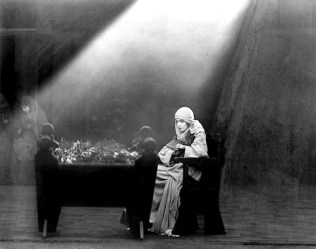 As an opening instalment, it also gives you a sense of Cousins’ stylistic goals for the series. For instance, although this is an artistic history of film (of its concepts, ideas, and meanings), it’s one that’s cognisant of how external real-world forces played a part in that — for example, the American studios being located in Hollywood because of people wanting to avoid the copyrights and patents placed on filmmaking on the East Coast. It also tells the story across the ages at all times. The broad sweep of the narrative structure moves chronologically, but Cousins is unafraid to make connections to films made many decades later to help illustrate a point or to show how ideas or techniques have endured. It’s more effective and informative than remaining slavishly chronological.
Part Two: The Hollywood Dream (1920s)
Sticking with the silent era (more on the significance of that in a minute), this hour covers grand fantasies and romances, like The Thief of Bagdad; the innovations and influence of silent comedians like Keaton, Lloyd and, primarily, Chaplin; and the birth of documentary, not as mere observed non-fiction, but as storytelling in its own right. Cousins asserts that documentary is seen by most as being plainly factual, but it is actually one of the most innovative of all genres. Certainly, there’s more to the construction of documentaries than some people realise.
Even this early in the series, there are so many films of which we get fascinating glimpses — it’s sure to leave you with a massive list of things you want to see. Similarly, it’s so dense with information and analysis that it feels wrong to watch too much at once. It’s like eating too much rich food: you still enjoy it, but you can’t separate it out in your mind, can’t appreciate or process it properly. But then binge watching is all the rage nowadays, so maybe that’s just me. (Or maybe people aren’t appreciating things fully, but that’s a debate for another time.)
Part Three: Expressionism, Impressionism, Surrealism (1920s)
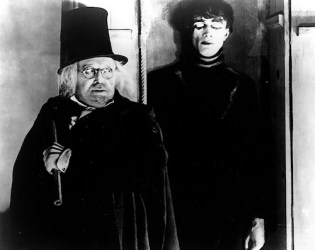 The third hour explicitly concerns the people and movements Cousins sees as alternatives or rebels to ’20s and ’30s cinema, both what they did that was different and how it fed back into the mainstream. We’re talking the likes of impressionism (Abel Gance), expressionism (Caligari), surrealism (Buñuel), the Russians (Eisenstein), the Japanese (Ozu), the Chinese (Ruan Lingyu), and more. All innovated in different ways — ways that were either integrated into common filmmaking, or remain striking and boundary-pushing to this day, almost 100 years later.
Some people write off the silent era as “that funny little bit at the beginning before sound came along”, dismissing a 35-year chunk of culture in a single swipe. That’s like ignoring every film made between 1981 and today (which, in fairness, I suppose some people do). Naturally, Cousins is not so foolhardy: it’s over three hours before he reaches the arrival of sound. When he ends this hour by foreshadowing the coming of sound, it’s constructed like a cliffhanger; not only that, but the narration disappears and is replaced by intertitles, to emphasise the point. This isn’t classical documentary making, but playful, individualistic, and clearly iconoclastic. It’s a personal visual lecture, rather than a glossy, polished, manufactured ‘product’.
Part Four: The Arrival of Sound (1930s)
Sound is obviously an important aspect of movies nowadays, but at first it was almost more of a burden. Cousins argues that its arrival standardised American cinema into only six genres: horror, Western, gangster, comedy, musical, and animation. It’s an interesting contention — I suppose his broader point is that Hollywood atrophied, to an extent; its camerawork certainly did, at least at first — but it doesn’t sound quite extensive enough. I mean, surely they made romances?
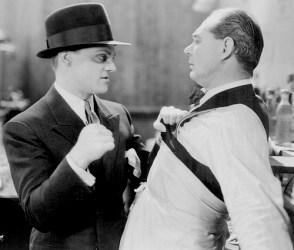 Still, it’s easy to let such things slide when Cousins is busy drawing fascinating links elsewhere. Here, he discusses the contrast between the white light of Westerns (films about an idealistic age when laws were made) and the dirty light of gangster pictures (films about a dying world where lawbreakers are the heroes of a cynical age, when the making of the laws is long forgotten). These two genres co-exist, yet don’t consciously interact — except in the mind of the filmgoer, when we see both types of picture and can draw such links; links that none of the filmmakers involved ever intended, but which are unquestionably there. Cousins draws out these connections beautifully.
Finally, Cousins paints the ’30s as being about the American genres vs. innovation in European cinema, before taking us to London to meet a man who was both a great genre filmmaker and great innovator: Alfred Hitchcock. Britain bridging the gap between Europe and the US? Twas ever thus.
Part Five: Post-War Cinema (1940s)
Hitchcock said cinema is life with the boring bits cut out; the neo-realists said cinema is the boring bits. That probably explains why I’ve yet to enjoy anything neo-realist. Aside from that, Cousins gives us a nice big chunk on film noir and how it combined multiple influences, and covers the importance of Welles, Stagecoach, and The Third Man, which Cousins thinks encapsulates all of ’40s cinema. As you can see, this is not a documentary maker who’s ignoring established and well-known texts, but is perhaps more selective about which merit inclusion.
From a filmmaking perspective, between the film clips the series is what you might call “artistically shot” — there are very few talking heads; it’s all narrated by Cousins; and there’s lots of metaphorical imagery, some blatant (to represent the bauble of Hollywood we have… a bauble on a tree near Hollywood), others more ephemeral.  However, at this point in the series we begin to see more taking heads, because we’re reaching eras where people (or people-who-knew-people) are still alive. It feels like a consequence of that is more close readings of specific films and/or filmmakers, with the series moving away from the “film theory” feel of earlier episodes a little bit, more into the territory of being the story of what occurred.
Part Six: Sex & Melodrama (1950s)
Talking of filmmaking technique, Cousins chooses to frame every interview differently. You might think it amateurism, not knowing how to frame interviewees consistently, but it was a conscious choice. He was, presumably, trying to convey something with how he framed them. Whether that was a worthwhile exercise or not is another matter. It certainly comes across as highly idiosyncratic at times.
At this point, the story of film is really increasingly global: there are great films in America, Britain, Europe, and Japan, as you might expect, but also Egypt, India, and Latin America. On the surface, the different films of these different countries are completely different. Underneath, Cousins demonstrates, they’re linked by trying to come to terms with a new, changing world, repressed emotions bursting forth, and sex. Lots of sex.
Part Seven: European New Wave (1960s)
Cousins begins by tackling the new waves led by four European directors: Bergman, Fellini, Bresson, Tati. There are a couple of significant directors missing from what one typically thinks of as “new wave” there, but this isn’t Cousins being deliberately controversial: after talking about the innovations of those four, he says the directors of the French New Wave came along and “carpet bombed” their revolutions, describing Godard as “the greatest movie terrorist”.
 Here, Baz Luhrmann (believe it or not) makes a nice point about changing styles: the Nouvelle Vague wasn’t “real life”, it was an artifice, but an artifice that rejected the big costumes, pretty shots, vibrant colours, and romanticism of mainstream American cinema; and eventually that artifice came back in to fashion, and eventually it will be rejected again. Everything is cyclical, which is practically a philosophy for all life. Luhrmann compares it to language: the words change but the message remains the same; people always say “I love you” or “I want to kill you”, but how they say it is just fashion.
Part Eight: New Directors, New Form (1960s)
As the ’60s continue, new waves and revolutions are everywhere. There’s the Eastern Bloc and the cinema of protest (“rebels with a cause”, as Cousins puts it) and even more new, radical filmmakers in Japan, Africa, Iran, even the UK: Saturday Night and Sunday Morning, Kes, A Hard Day’s Night. It’s interesting to see very familiar films of British cinema put into this context — Ken Loach discusses the influence of Czech film on Kes, for instance.
Not even America is exempt. In a world where JFK, Malcolm X, and a million civilians in Vietnam protests were all murdered, and where cinema attendance was falling as people stayed home with TV, there were radical filmmakers Stateside too — including Hitchcock! Psycho, for instance, which eschews Hollywood gloss with its plain costumes, plain locations, and plain black & white photography, which Cousins aligns with documentary-influenced independent cinema. More obviously, there was Easy Rider. It was innovative, throwing all kinds of techniques at the screen, and appealed to young people who were fed up with conservative mainstream cinema and wanted something groundbreaking, forward-thinking, revolutionary — and it was a box office hit. The series gets you in the mindset to go beyond the connections Cousins draws and begin to make links yourself.  Like, if this is how film as a medium, and society as a whole, seems always to have moved forward, then what thrilling revolutions can we see young people flocking to in the modern day? Disney superhero movies. Belated sequels to childhood favourites. Adaptations of socially conservative novels aimed at teenagers. Oh. Such contrast between then and now is a bit depressing, really.
Cousins concludes by saying this era of innovativeness wasn’t permanent — the ’70s would bring old-fashioned romantic entertaining cinema. As per Luhrmann’s theory, “what goes around comes around”, essentially. To be more positive about modern movies, I suppose this is an era we’re in now. I guess you could conflate the indie boom of the ’90s with the ’60s, or the auteur side of the ’70s; while the post-millennial special effects blockbusters are the latest incarnation of the Star Wars/Jaws/etc-driven ’80s. But then again, blockbusters also existed in the ’90s, and popular indie movies exist now — so how do you decide what’s the dominant form of an era? Is that purely the job of history — what gets remembered best. But what about when they all get remembered, as with the ’90s? I’ve diverged wildly into my own half-conceived theories here, but as if to back up my point about a time being more than one thing, the ’70s are about to get three whole episodes…
Part Nine: American Cinema of the 70s
In the first part on the ’70s, Cousins identifies three types of American auteurs/arthouse: mockery/satire (Buck Henry), dissident films that challenged conventional style (Charles Burnett), and assimilationist movies that told studio genre-style stories with new techniques (Robert Towne). Flying in the face of that criticism about Cousins ignoring US/Western films, in most eras he comes back to America, its story and innovations, after he’s done everywhere else. The exceptions are the birth of Hollywood in the ’20s and the radical ’70s, when he starts with America. Does Cousins want to get these famed  and fêted eras in the US out of the way before he moves on to elsewhere, to avoid the nagging “but what about [major US film / director / movement]” question that many viewers would be troubled about otherwise? I doubt he’s so concerned with what you or I are pondering. Rather, these are the times when American cinema was most genuinely innovative (at least in Cousins’ opinion).
Part Ten: Movies to Change the World (1970s)
In the second part of the ’70s, Cousins has a particularly bold assertion: “Performance was not only the greatest ’70s film about identity. If any movie in the whole story of film should be compulsory viewing for filmmakers, maybe this is it.” I’ve not seen it, so I couldn’t say whether I agree or not, but it’s an unusual claim.
Cousins rattles round the globe here (Germany, Japan, Italy, Australia), but the most interesting part comes in Burkina Faso. Today, tens of thousands of people there attend the opening of a film festival. Local director Gaston Kaboré argues that consuming film from other countries is interesting, but if that’s all you do then your lose your uniqueness, your own way of seeing and thinking, your identity. This is exactly what continues to happen in countries that primarily consume American movies — they are increasingly Americanised. I don’t think it would be unreasonable to argue that Britain is one of the worst hit by this. Unlike other countries, we have governments with no serious interest in supporting a national cinema, and the lack of a language barrier between us and the US (only aided by the internet, both in terms of global conversation and media piracy) has created an ever-strengthening supply-and-demand culture across both TV and film. Of course, it can go both ways: look at all the British TV series that have had relatively large US success in the past few years. Somehow I think it’s had more of an impact on our little island, though.
Part Eleven: The Arrival of Multiplexes and Asian Mainstream (1970s)
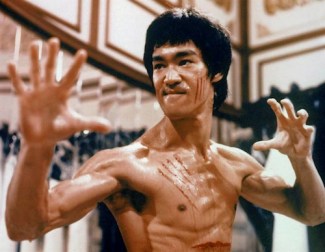 As Cousins closes out his three-hour overview of the ’70s, we (or I) find ourselves in much more familiar territory: first Hong Kong, for the Shaw Brothers, Bruce Lee, John Woo, Tsui Hark, A Better Tomorrow, Once Upon a Time in China, Dragon Inn, Iron Monkey… then India, for Bollywood and Sholay… then the Middle East, with films about Mohammad and recent events… and then, most recognisable of all to Western audiences, and most influential of all to the world, Hollywood — Jaws, The Exorcist… Star Wars. In all instances, this is cinema that moved away from intellectual thought and hard-hitting realism, and more towards feeling, sensation, emotion, fantasy. These things come and go (Luhrmann’s point about the cyclical nature of it all being perhaps the most pertinent observation of the entire series), but it’s hard to argue against the developments of the ’70s still being an influence today.
Part Twelve: Fight the Power: Protest in Film (1980s)
Much of this series is about things that are important within the world of film, but here we find movies that literally changed the world — like A Short Film About Killing, which contributed to the abolition of the death penalty in Poland. Elsewhere, director John Sayles and his producer/partner Maggie Renzi give birth to the methodology of what we now know as American independent cinema. Renzi says that Hollywood doesn’t even do what Hollywood does very well anymore — that it takes nine writers to produce a screenplay no better than the first draft — and she’s probably right.
While the list of “films that look worth seeing” continues to grow, sometimes the speed at which they pass by makes it tricky to know how worth seeing they are. For example, in this hour Cousins discusses Yeelen, describing it as “one of cinema’s most complex works of art”. Based on a Malian legend, telling of a heroic quest featuring magic and precognition, it sounds interesting, but it’s also hard to infer if it’s complex in a good, interesting way or in a frustrating, pretentious way.
Part Thirteen: New Boundaries: World Cinema in Africa, Asia, Latin America (1990s)
 With only a couple of hours left(!), Cousins reaches modern concerns — here, it’s the last hurrah of celluloid and realism, before digital and fakery took over. Part of Cousins’ thesis seems to be that world cinema filmmakers were reacting to fantasy cinema by trying to show the real world, but that became a last gasp before fantasy cinema took over. It’s almost like a battle for the fate of cinema, between realism and fantasy; and fantasy won. So we have Dogme 95 and La Haine, but also Iranian filmmakers who played with form and reality, like making fictional versions of true stories using the real people; or Abbas Kiarostami, who made a film, then made a film about searching for the actors from that film, then made a film about an incident from the making of the second film. And fantasy and reality collide in places, like Michael Haneke and Funny Games, where the evil youths wink at the camera and rewind life like we rewind videos. That was groundbreaking, and obviously only possible in the home video era when rewinding, y’know, existed.
Part Fourteen: New American Independents & The Digital Revolution (1990s)
As we get closer to today, you find more and more references to the past. Is film coming full circle? Or at least becoming more self-aware; referencing itself more often. We’re talking Tarantino’s post-modern screenplays, the Coen brother’s re-appropriation of classic genres and imagery, Gus Van Sant’s film-history-aware visuals, the satire of Paul Verhoeven, Baz Luhrmann’s flamboyant romanticisation of real life, and so on. It makes you think: is this the absolutely perfect time to be making a major “history of film” documentary?
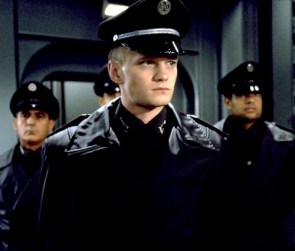 It also reminds you that style or genre do not have to negate substance. Starship Troopers was born out of Verhoeven’s desire to make a film about young men coming into the prime of their lives at an exciting time for their country when everything was developing — that time and country being Germany in 1935, and the men being excited by Nazism. No Hollywood studio would ever make that movie, of course, but take those themes and do them as science fiction…
Part Fifteen: Cinema Today and the Future (2000s)
Unsurprisingly, the concluding hour feels somewhat less clear about what was particularly innovative and what exactly was going on that was most significant — it’s coming up to the present day and looking to the future, which is too recent to get a proper handle on. Nonetheless, Cousins does find genuine innovation, like the single-take Russian Ark. It’s not a film I liked, and even the analysis here incidentally alludes to why: you need to know what you’re seeing, and the context of what came next (in history) to get the point. If your knowledge of Russian history isn’t on the money, if you don’t know what you’re seeing depicted and what came after it, the film offers you no succour, and feels aimless. But innovative? Yes. Indeed, it’s a filmmaking feat that has only recently been emulated.
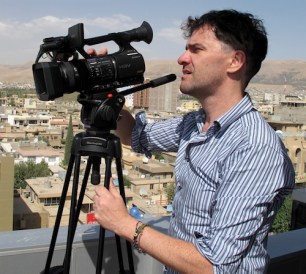 Talking of emulation, it seems unlikely anyone else will make a documentary as comprehensive and insightful as what Cousins has achieved here. For anyone serious about a love of film, it is a must-see. That doesn’t mean you’ll always agree with it, or accept it as the definitive telling of the story of motion pictures, but it is nonetheless a wide-reaching and thoroughly educational overview of what is arguably modern times’ most significant artform.

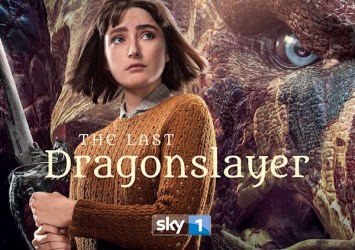 I’m not sure whether to commend or condemn Sky1 for having the balls to schedule a light family-friendly fantasy drama against Doctor Who on Christmas Day — that seems like damning yourself to low ratings. But then Sky never exactly stands at the pinnacle of the charts, and, in the catch-up-driven landscape of modern TV, does it even matter? I mean, as if to show their disregard for schedules, the premiere broadcast was actually at 3am the night before.
 About now you’re probably thinking The Last Dragonslayer is completely derivative of every other major young-adult fantasy franchise of the last… well, forever. It’s hard to deny that the plot is, at least in its broadest thematic strokes, a pretty familiar affair. What makes the enterprise worthwhile is its humorous execution. This isn’t a spoof of the genre, more a satirical mash-up of familiar fantasy building blocks and modern life. So, for example, the king’s chief knight is also a pop star, followed around by a gaggle of adoring female fans; when Jennifer finds herself in need of money, her dragonslaying assistant signs a sponsorship deal with soft drink brand Fizzipop that requires her to film an advert, make at least two promotional appearances, and wear a branded T-shirt until the dragon is slain. It’s this whimsical slant on our world that is arguably Dragonslayer’s most successful aspect.
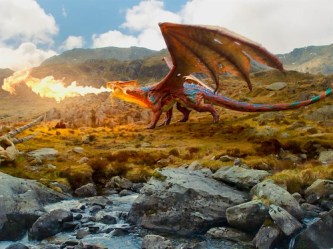 I guess The Last Dragonslayer’s irreverent, sometimes silly tone won’t be to all tastes, but I enjoyed it very much. Unsurprisingly (all things considered) the book is the first in a series, and so not everything is fully resolved by the film’s end. Let’s hope that, in spite of their scheduling, it’s done well enough for Sky that sequels are forthcoming.
 The controversial Steven Moffat era of nuWho is headed towards its end, but before his final full series next year there’s this penultimate Christmas special. There have been 12 of them now and they’re always divisive: some people think they’re too Christmassy, some that they’re not Christmassy enough; some like that they’re standalone adventures suited to a broader audience, but other times they’re not standalone enough… Each year presents a different mix of these elements, pleasing some and alienating others.
 “Proper Bake Off” came to an end with what felt a little like a joyous celebration of the series’ unique charms, as well as its highs and lows. Considering the two festive episodes were shot before the controversial move to Channel 4 took place, that’s almost impressive. It’s hard to imagine GBBO without the alchemical mix of Mel, Sue, Paul and Mary, and these episodes showed the format on fine form. And then the BBC went and snuck in that
  The problem with Christmas specials of on-going shows is you’re sometimes left with on-going plots that must be acknowledged, and Grantchester has a particularly major one with its hero’s life-long love leaving her husband while pregnant. If you don’t watch, it’s set in the ’50s, so this kind of behaviour is the greatest scandal known to man. The special leaps into this without even the by-your-leave of a “previously on”, so I pity any non-regular viewers made to sit down in front of it on Christmas Eve. But it’s an immensely popular show with big ratings, apparently, so who can blame ITV for wanting it in their always-underpowered Christmas schedule? I imagine it fared better than Maigret did the next night…
 The team behind previous Christmas specials
  I thought And Then There Were None was one of the highlights of last year’s Christmas schedule, turning Agatha Christie’s most popular novel into a dark, slasher-movie-esque thriller, the first English-language adaptation to remain faithful to the original’s glum ending. I don’t know if this year’s Christie is faithful to her original short story, but it isn’t to the play adaptation (at least as I know it from
 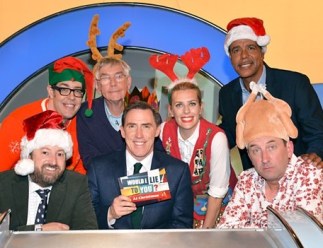 There’s always a lot of special episodes of comedy shows on over Christmas, with varying degrees of success. I thought this year’s Live at the Apollo was woeful, with Romesh Ranganathan the only truly bright spot in 45 minutes of flat observations and unfunny daftness. Conversely, Would I Lie To You? proved to be as good value as it always is, thanks to the quick wit of the regulars plus Tom Courtenay’s affected (I presume) dodderiness. Mock the Week’s clip show format was perhaps improved by the fact I didn’t watch the most recent series, while the imperfect Insert Name Here makes a nonetheless welcome return. In the comedy gameshow sub-genre, Alan Carr’s 12 Stars of Christmas was the kind of trash I’d never watch at any other time of year yet stuck with for all five hours and kind of enjoyed (helped by watching on catch-up and fast-forwarding the really repetitious bits), while the David Walliams-fronted Blankety Blank revival provided as much charm as the format ever has. And normally it wouldn’t count as comedy, but this year’s run of Celebrity Mastermind began with CBBC puppet Hacker T. Dog as a contestant. At least he didn’t win.
 My list of Christmas TV to get round to remains pretty extensive. There are all those regular series that insert a seasonal episode — The Grand Tour (that’d be the episode with Richard Hammond’s ice cream comments that you might’ve heard about), Paul O’Grady: For the Love of Dogs, Yonderland (not that I’ve watched any of the latest series), QI, Inside No.9 (which I’ve never watched before, but the special sounds good)… And there are series coming back for one-offs too, like Outnumbered and Jonathan Creek (which I loved during its original run but have been surprisingly lax about watching in the last few years). I’ve also not yet caught a couple of this year’s animated adaptations, Michael Rosen’s We’re Going on a Bear Hunt and Raymond Briggs’ Ethel & Ernest (which I figure will count as a film). Documentaries like Lego’s Big Christmas and West Side Stories also sit on my list, likely to get forgotten. There’s Sky1’s big Christmas Day drama, The Last Dragonslayer (which I wager I’ll also count as a film); Eric Idle’s comedy musical science thing, The Entire Universe; and Charlie Brooker’s 2016 Wipe, which apparently manages to make 2016 funny (I’ll believe it when I see it). Finally, I always save Channel 4’s The Big Fat Quiz of the Year for either New Year’s Eve or New Year’s Day, because that just seems more appropriate.
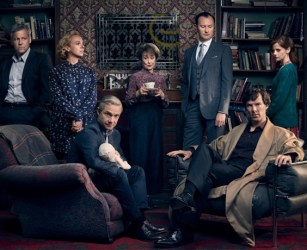 Things are beginning to wind down now… but as far as TV schedulers are concerned “Christmas” lasts until at least January 1st, so there are a couple of big hitters left. The biggest of all is a new, potentially final, run of Sherlock. No idea what the quality will be like, but expect lots of handwringing on social media and huge ratings either way. On New Year’s Eve there’s stage adaptation Peter Pan Goes Wrong, which I’ve heard such good stuff about it’s probably going to be a disappointment, and a Winnie-the-Pooh documentary that I’m going to watch even though it’s presented by Alan Titchmarsh. Next week (which you could argue is still part of Christmas if you have very forgiving holiday leave) sees lots of police shows kicking off, if that’s your thing: Death in Paradise, Endeavour, Midsomer Murders, No Offence, Silent Witness, Unforgotten… even Brooklyn Nine-Nine. And in the sphere of movies on TV, tonight you can choose between the network premiere of
 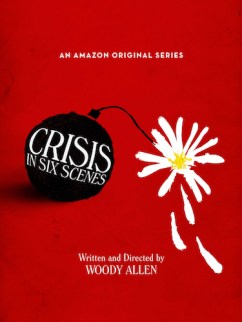 When Amazon started making a serious effort to challenge Netflix in the field of streaming original series, one of their early moves was the headline-grabbing signing of Woody Allen to create his first TV series. As has since become clear, Allen didn’t know what he was letting himself in for. To summarise his comments from various interviews (and read between the lines a little), it seems he had a view of TV that’s about 20 years out of date, and thought he’d be able to dash off something suitable between two of his annual movies. At some point he obviously realised how much more sophisticated TV has become, and coopted a movie idea he’d had on the back-burner to expand into a short TV season. Allen’s been vocal about how miserable he found this process, but I’m not sure if he’s aware that he made a rod for his own back: he essentially made three movies in two years instead of his usual two. It probably would’ve been wise to swap out one of the films for the TV series, but you get the sense that, despite having been shown TV’s burgeoned respectability, Allen’s still something of a film snob. Rather than the potential of TV coming as a revelation to him, he’s declared he won’t be making any more.
 But enough of the form — what of the content? This is not prime Allen, that’s for sure. At times it makes for uncomfortable viewing, when it’s hard to tell if it’s half improvised or if half the cast are just a bit doddery (and I suspect it’s the latter). Other bits do work, though, and while it isn’t massively rewarding it is amusing at times. Even less assured are some broadly political points that it seems like Allen is trying to tap into, or maybe it’s just incidental. He appears to be using the series’ 1960s setting as a mirror of the present: the plot concerns a twenty-something anti-government protestor, and there’s lots of talk about unnecessary wars, campus demonstrations, young people staging protests, rights for women and black people, etc, etc. At first blush these parallels are all well and good, but I’m not sure they develop into much more than wry observations. The best I can take from it is a result of the particularly farcical last episode, where it may be that he’s trying to say people in general should be more aware and active, like the young are — to walk the walk of political change rather than just talking the talk.
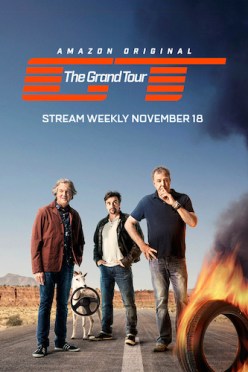 Another big gun in Amazon’s streaming mission, their £160 million “Not Top Gear, Honest” original series kicked off last month to widespread positive reviews and, apparently, big ratings (relatively speaking). I’m not really a ‘car person’, but like millions of others I wound up watching Top Gear during the height of the Clarkson / Hammond / May era for all the other hijinks. I thought it was going off the boil a bit even before their semi-enforced departure — I didn’t even get round to watching their last series. They come to Amazon after a short break (a long break for us, but it takes time to film these things, so, short break), and I think reinvigorated — possibly by the rest, possibly by the change of management, possibly by the huge budget.
 The Doctor Who spin-off that
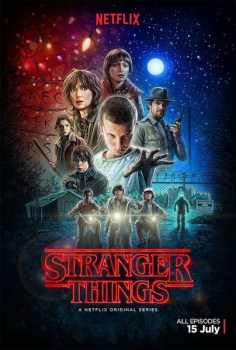 Hype — it’s a funny old business. It’s hard to have avoided hearing something about Stranger Things, Netflix’s summer hit that went down like gangbusters, its ’80s nostalgia perfectly calibrated to target the kind of people who run entertainment news websites these days — just to be cynical about it. Or truthful. Then there came the backlash, which attested there was nothing more to the show than those callbacks and tributes; a hollow experience of copying and “hey, remember this? That was good, wasn’t it?”
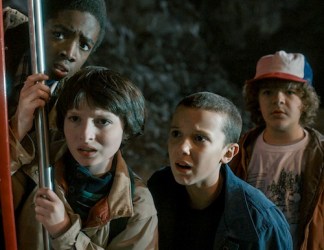 Without wanting to get into spoiler territory (despite what the media would have you believe, not everyone has Netflix all the time and not everyone watches every new zeitgeisty series immediately. Apologies if you write for an entertainment site and I’ve just given you palpitations), everything comes together nicely for a barnstorming pair of climactic episodes. For my money, the penultimate chapter is the best one: with a bunch of revelations out of the way (some of them easily guessed but finally confirmed), the series kicks off a run of long-awaited fan-pleasing events (as in many a drama, it takes this long for everyone to finally start talking to each other; also, the bit with the van!) The finale is less accomplished, with some characters wandering around for a bit in a way that feels designed to pad the running time. Still, it’s a satisfying conclusion… to season one, anyway.
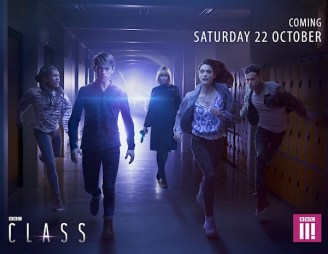 Ten years to the very day since the launch of the original dark, sexy BBC Three Doctor Who spin-off,
  The CW’s raft of superhero shows restarted on UK TV this month. I’ve given up on Legends of Tomorrow and am still not joining Supergirl (though I got hold of the opening episodes, co-starring Superman, to maybe make time for at some point); but, five seasons in, Arrow has me suckered for the long-haul, and The Flash tempted me back with the intrigue of adapting Flashpoint. I’ve never got on the bandwagon with Flash, which attracted a lot of praise during its first season that I simply didn’t agree with, leading it to outshine Arrow in ratings and people’s affections. Arrow has long been off the boil, and season five certainly hasn’t got it back up to temperature so far, but The Flash had plenty of issues of its own. It’s not problem free now, but I actually really liked the first couple of episodes of the new season. It’s still a long way from the top tier of TV superheroes (Netflix have that sewn up), but it’s likeable.
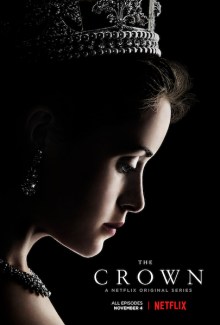 This month, I have mostly been missing the most expensive TV show ever made*, Netflix’s much-discussed The Crown. I don’t know if they’ve been pushing it as much in the rest of the world as they did in the UK, but it certainly felt like it was everywhere… for about a week, as is usually the way with Netflix series. Also missed: the equally-discussed Netflix-exclusive new run of Black Mirror. Both of these are because I don’t keep up a permanent Netflix subscription, but between them, the forthcoming Gilmore Girls revival, and the Series of Unfortunate Events remake in January, I will be signing up again late in December (using the free month voucher they had in the Radio Times, hurrah!)
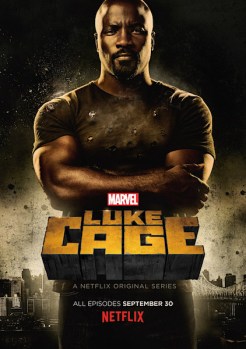 The third series in the Marvel/Netflix stable wins points for boldness, much as Jessica Jones did this time last year. Where Daredevil is a well-done but ‘standard’ superhero show, leading to it being somewhat demeaned by the Cool Kids of the critical world (but much higher-rated by us plebs on the likes of IMDb), Jessica pushed into dark psychological territory, and now Luke Cage brings black culture and life into the fold.
 It feels like only yesterday I was writing here about season four (it was, in fact,
  Well, it’s only taken me 3½ years to get round to this (seriously, where does time go?!) This bunch really represents the series’ highs and lows. On the one hand, Be Right Back — in which Hayley Atwell signs up for a company who create a virtual version of her deceased partner using his contributions to social media — is an exploration of broadly-plausible near-future-tech with a focus on its potential emotional effect. That’s what Black Mirror does best, I’d argue: look at stuff that may, perhaps, be in the pipeline, and how that would actually play out for us. On the other, there’s The Waldo Moment, which is also sickeningly plausible — as Charlie Brooker himself has said, it’s more or less come true, though with the likes of Boris Johnson and Donald Trump instead of a blue cartoon bear — but as an episode it doesn’t quite seem to know where to go with its concept or what it might ultimately signify. The episode just stops rather than ends, until a flash-forward coda that’s a bit silly in its extremity. Even Brooker, while doing press for the third season (released tomorrow), has said he’d go back and re-do that episode if he could. Still, full marks for effort.
 This latest series of Red Dwarf (which airs its fifth episode tonight, with the sixth available on demand from tomorrow) seems to have gone down rather well, with some reviews even hailing it as a “return to form” — that form being “the good old days” of Red Dwarf VI (or thereabouts), over 20 years ago. Personally, I didn’t dislike Red Dwarf VII or Back to Earth, and I even have a soft spot for Red Dwarf VIII, so what do I know? Nonetheless, I would concur that this Dwarf represents a fine vintage, hitting the series’ unique mix of accessible mainstream-ish comedy and proper science-fiction concepts. Red Dwarf XII is already in the can for 2017, and I wouldn’t be surprised to see Dave commission more episodes beyond that.
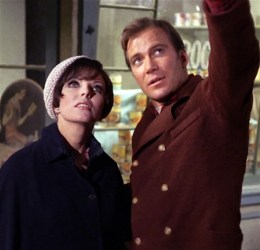 The entirety of TV Star Trek is available on Netflix, so I took the chance to watch the most acclaimed episodes of both The Original Series and The Animated Series — which happen to be connected, something I didn’t realise until afterwards. Er, I mean, which I totally planned. Both are pretty fine uses of science-fiction to explore relatable issues. Well, not many of us have to deal with disruptions to reality caused by time travel, or knowledge of the future creating dilemmas about what we do next, but they work the relatable stuff in around the surface plots. And they both still seem pretty bold for network TV episodes even today, almost half a century later, as (spoilers!) Kirk lets a good woman die to retain the correct timeline, and a kids’ cartoon deals with the subject of euthanasia.
 This month, I have mostly been missing loads of stuff. Probably the most talked about is HBO’s adaptation of Westworld, which has apparently pulled in even bigger ratings than Game of Thrones. Over here there’s the second series of The Missing, which if it’s half as good as the first will be a real must-see. Then there’s Woody Allen’s first (and last) TV series for Amazon, Crisis in Six Scenes. Reviews have been mixed to poor but I still intend to get round to it. And finally Hooten & the Lady, which may be the worst title for anything in the history of ever, but a globetrotting adventure series inspired by the likes of Indiana Jones and Romancing the Stone sounds right up my alley.
 The “event miniseries” short-lived revival of a once-popular TV series is all the rage these days, with 24, Heroes, and The X-Files all trying it out in the past couple of years, Gilmore Girls doing essentially the same thing on Netflix in a couple of months, and Twin Peaks at it sometime next year. The thing that seems to have defined these revivals so far is that time has made no difference: none of them have come back radically new or changed, but have just been “more of the same” as the series they’re resuming, for good or ill. 24: Live Another Day is absolutely an example of this. It may be four years on, set in London, and only 12 episodes long, but if you didn’t know the circumstances behind production you’d be unlikely to think this was anything other than season 9 — after all, the show has always had years-long in-universe time jumps between seasons, and the last few have varied the location also (after seasons 1-6 were set in LA, season 7 was relocated to Washington, DC, and season 8 to New York). On top of that, the way the storyline drags back old characters who hadn’t been in the series for years cements the assumption that it’s a for-the-fans bonus run rather than a fresh-start relaunch attempt (which I guess next year’s spin-off, 24: Legacy, is hoping to be). All of this means that it has its good points, especially the action scenes, but some of the storytelling is overfamiliar, the dialogue at times terribly clunky, and there’s a continued half-arsed application of the real-time concept (which has been a bugbear of mine since season four or five). The fact it ends without really resolving the on-going story of Jack Bauer also feels like a daft mistake.
 Finally got round to this popular series (from a year ago! Time, where do you go?). I was pleasantly surprised by the plot. The setup was sold as a woman (the titular GP) becoming suspicious her husband was cheating on her — is he, or is she imagining things? For whatever reason I’d presumed that would be the mystery of the entire series, and it would inevitably turn out he was cheating because there’s not much story otherwise. But actually, that’s kind of dealt with in the first episode, and then it spins off in various twists and turns. It’s exciting and unpredictable without quite descending into the easy trap of having characters make completely ridiculous decisions or take extreme actions. It’s a pretty finite story, though, so quite where the commissioned second series is going is anyone’s guess.
 A new miniseries (it only finished on Tuesday — get me, watching something when it’s actually on!) from writers Harry and Jack Williams, who penned 2014’s excellent James Nesbitt drama The Missing (which, like Doctor Foster, has an unexpected second series in production). This is a slighter affair: essentially a murder mystery, but with a few well-executed twists along the way. It starts with the murder of a young couple whose families are neighbours on isolated farms in Scotland. When the suspected murderer turns up injured at those farms on the storm-afflicted night after the murder, they lock him in the barn while they await an ambulance… and then one of them murders him. Whodunnit? And what will they tell the police? And why the hell did he kill the couple, anyway? It’s funny to think of a four-hour drama as slight — imagine thinking a four-hour film was a bit short and lacking incident — but at least it’s not slow with it, somehow. A subplot about the investigating officer’s home life has no relevance to the main story and could’ve been cut, and the final revelations are somewhat farfetched, but other than that it’s a decent little thriller.
 I’ve never read any Tick comics, nor seen the
 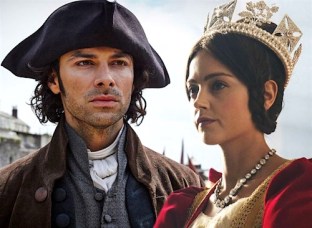 This month, I have mostly been missing Poldark and Victoria, respectively the BBC’s big period drama hit and ITV’s big period drama hope, which are currently going head-to-head on Sunday nights. For some reason I find myself not caring one iota about the latter (has it gone down well, or not? I don’t even know), but will get round to Poldark eventually.
 As much as I love Game of Thrones, and think
 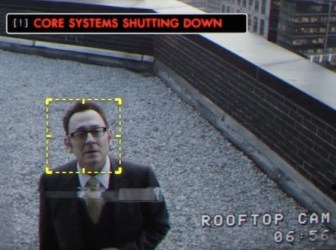 Watching this, it’s difficult to imagine anyone involved really believed they would get a sixth season — which is good, because (a) they stood very little chance, and (b) that means it wraps everything up to a nice, proper ending. My feelings on Jonah “brother of Christopher” Nolan’s cyber-thriller have oscillated over the years, and I’m a long way from agreeing with those who assert it’s actually one of the best sci-fi series ever; but for a show that started out as a fairly standard CBS procedural thriller, it did ultimately manage to play with and work around the network’s expectations to produce something superior. It’s a shame they clearly had to rush the final arc (marred further by having to hit a quota of ‘case of the week’ episodes, for some reason), but it still got to a good place. If you’ve not watched it but are interested, consider finding one of those “episodes you should definitely watch” guides (like
 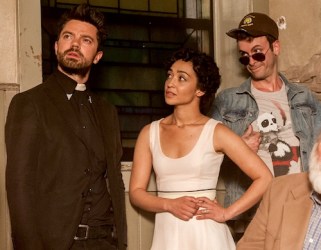 In the end, this turned out to be less of a TV prequel to the comic book series than an expanded and rejigged adaptation of the comic’s opening four-issue story arc (with some stuff from later thrown in for added fuel). As Seth Rogen explained on the post-finale chat show Talking Preacher, the books throw an awful lot of quite comic-book-y ideas at you very quickly, and TV viewers maybe needed a little longer to digest all of that. Plus extra space to develop and examine the characters, of course. It’ll be interesting to see how future seasons handle the issue of adaptation. By the end of season one, the characters are in a place to launch into something closer to the rest of the comic; but, at the same time, budget issues have already forced some reimagining, so what else will it be forced to compromise or reinvent? I think the bold, fearless barminess of the TV series has earned it the right to our attention, whether it goes further off piste or hews closer still to its roots.
 This month, I have mostly been missing… not that much, really. With the Olympics dominating the good TV channels and much of US drama on its summer hols, there doesn’t seem to have been much on. I haven’t gone crazy for Rio 2016 like I did for London 2012 (much to my surprise at the time, that was), though we’ve caught bits and pieces, not least Max Whitlock’s double gold (along with
 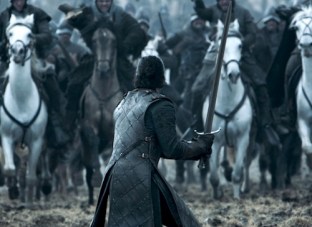 GoT produced two of its greatest-ever episodes to conclude this season. Actually, that’s arguably an understatement: based on IMDb votes, if nothing else, Thrones produced two of the best episodes of TV ever made. But what do IMDb voters know? Well, more than some people give them credit for. Obviously everyone has different tastes, but for the genres Thrones operates in — and, in some instances, even transcending those — these are incredible hours of TV. Episode 9, Battle of the Bastards, is surely one of the most thoroughly-realised medieval-style battles ever depicted on screen: the scale is epic, the strategy is clear, the feeling of what it’s like to be in the thick of that environment is palpable. How it turns out may have been predictable, but something being predictable is not the same as it being bad — not everything needs to be a twist.
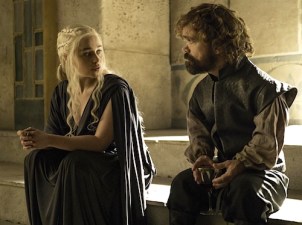 As for the forthcoming seventh season, it’s pretty clear we’re now entering the show’s endgame — though we’re going to have to wait even longer for it, with the next season set to have a later-than-normal premiere and the final end not coming until the season after that. It’s going to be an excruciating wait, but if they can maintain the form displayed throughout season six, it’ll be worth it.
 This is done and dusted Stateside now, but goodness knows when Channel 5 will choose to ‘officially’ air it over here, so I’m just getting on with it. I used to despise most of PoI’s arc plots and often wished it would stick to being just a pretty cool vigilante procedural; but at this point, it’s so invested in the epic Super-AI vs. Super-AI sci-fi storyline that any attempts at case-of-the-week episodes feel like a waste of time — especially when this truncated season is fast approaching the show’s final end. I really hope it comes to a proper conclusion, because there’s too much going on here to let it end forever on a cliffhanger. (Obviously that answer’s now out there, but naturally I’m avoiding spoilers.)
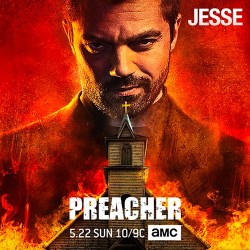 I’m a bit behind on this at the minute (the latest episode was the eighth), but, as of the halfway point, it’s definitely settled into its own skin — or maybe it was always settled there, but it’s taken time for viewers (or this viewer) to get past the expectations brought as a reader of the comic books. It’s still far from being a literally faithful adaptation, carving out its own path from some of the comic’s building blocks, which makes it an odd and hard-to-judge work if you have read any of the original. Still, it’s an entertaining series, and people involved keep talking about this season being something of a prequel to what we saw in the comic, so maybe the already-commissioned season two will feel more recognisable.
 This month, I have mostly been missing stuff I don’t even know I’m missing. By which I mean, I haven’t been paying enough attention to the TV schedules to know what I’ve missed. The BBC’s supernatural drama The Living and the Dead sounds kind of interesting; I know Mr Robot is back, not that I ever got round to season one; plus The Musketeers continues (though I hear it’s gone off the rails this season); and I keep hearing vaguely good things about Netflix’s new series, Stranger Things, like that it’s a cross between Steven Spielberg and Stephen King, or The Goonies mixed with The X Files… which just reminds me that I need to get round to seeing The Goonies someday.
 Finally done with most of these (still need to find time for the last two Legends of Tomorrows). One shouldn’t have that attitude to something one is choosing to watch, should one? I have a certain loyalty to Arrow, because they did a good job for seasons one and two, even if it’s waxed and waned since; but I’ve never really got on board with the adulation The Flash has received, and Legends of Tomorrow is mediocre to poor with regularity… though now and then they all exhibit flashes of worthwhileness. I rarely make the conscious choice to give up on a series (do it all the time by accident, though), but I’d consider abandoning a couple of these before the start of their next seasons… were it not for the ‘promise’ that they’re all about to be completely interconnected, at least for one almighty four-way crossover (with moving-to-the-same-network Supergirl).
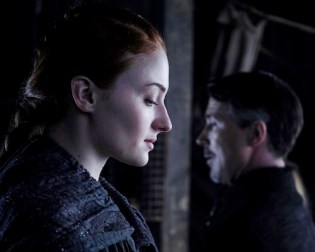 First up: The Door, surely one of Thrones’ best-ever episodes. That ending rather overshadows everything else (because wow, in so many ways), but before that there was Sansa being badass, proper development of Arya’s storyline, the hilarious play-within-a-play, a marvellous scene between Dany and Jorah, and a great moment for Varys, too. The week after’s Blood of My Blood was more about setting things up the second half of the season, which is an important role to fulfil but less dramatic in itself. A couple of surprise returns, though, including a big reveal for book readers (maybe).
 Sometimes it’s hard to separate what one might count as story development versus mere place-setting in Thrones, but at its best they can be one and the same, and episode seven managed that. Finally for now, No One did actually bring some storylines to a head, including some very long-awaited developments, particularly in Braavos. Throw in an equally-long-awaited reunion and a couple more unexpected returns, and you have a pretty satisfying episode.
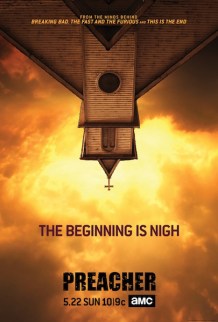 Sam Catlin of Breaking Bad and Seth Rogen & Evan Goldberg of… all those films Seth Rogen & Evan Goldberg have made (you know
  This month, I have mostly been missing anything I watch with my other half. It’s prime tennis season — eight weeks that starts with Geneva and flows through the French Open, Stuttgart, Nottingham, Birmingham, Queen’s, Eastbourne, and ends with the crowning jewel of all tennisdom, Wimbledon; all with near wall-to-wall coverage thanks to Eurosport, ITV4, and the BBC. It largely takes over the time we normally spend watching stuff together, so no room yet for the final seasons of Wallander or The Musketeers (not that we’ve watched season two yet, actually — oops), nor the just-finished fourth season of The Most Underrated Show On Television™, The Americans. Apparently it ended with “the Best Episode of TV So Far This Year”, according to one review’s headline (which obviously I can’t read because spoilers). Maybe in July.
 100Films.co.uk