
One-third of it has happened again…

Twin Peaks (Season 3 Episodes 1-6)
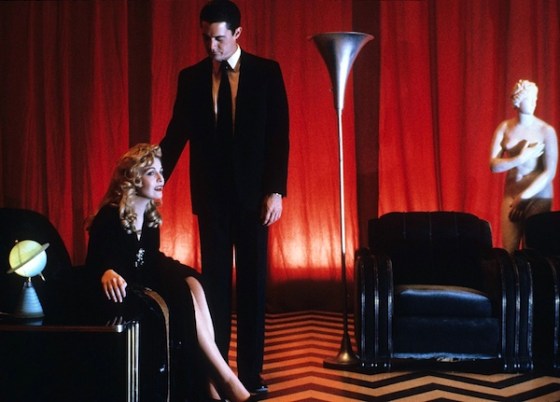
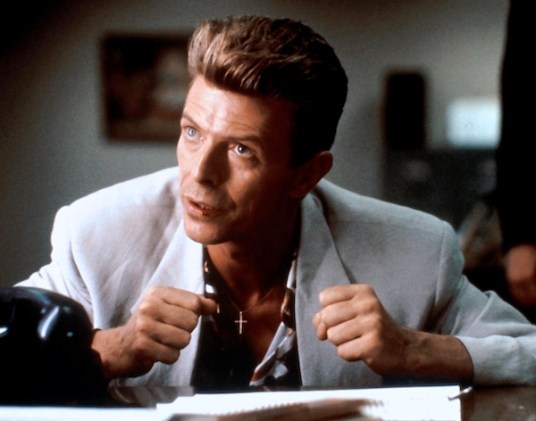
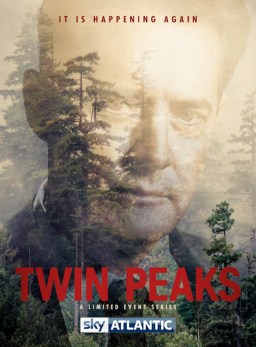 When the return of Twin Peaks was announced with the tagline “it is happening again”, I think everyone assumed it was, at worst, just an echo of one of the series’ famous lines which happened to work well for a revival; or, at best, an indicator to the plot — that the strange, sometimes otherworldly events of the original series were about to reoccur. As it’s turned out, perhaps what the tagline is most applicable to is the series’ effect: 27 years ago, Twin Peaks pushed new boundaries for what could be done on television, and the medium as a whole spent a couple of decades catching up. Now, rather than merely return to what he did all those years ago, as most revivals do, co-writer/director David Lynch is once again pushing at the boundaries of what’s possible or acceptable on mainstream(-ish) television. If “it” is “David Lynch being way beyond everybody else”, then it is indeed happening again. If you were after a comforting pile of references, callbacks, reflections, and imitations of the original series, you’re going to be disappointed — as one or two critics have been. If you were after something new in the weird world of Twin Peaks, well, step on up.
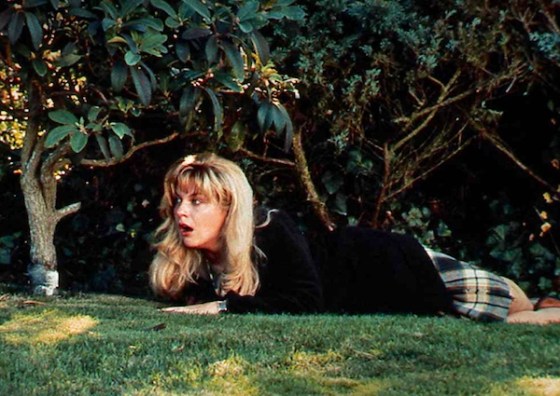
Before the series aired, Lynch said that prequel movie Fire Walk with Me would be important to understanding what’s going on. As much as it’s possible to understand what’s going on in the new Twin Peaks, that’s very true — there’s a ton of stuff touched on that wasn’t part of the series. Tonally, too, this is much more aligned with the movie: there’s a brand-new murder investigation; it’s set largely outside of Twin Peaks itself; and some of the biggest moments are based more around emotional resonance than strict storytelling necessity. It’s also sometimes reminiscent of The Missing Pieces, or what Fire Walk with Me would’ve been if they had remained included, as it shoots off on scene-long tangents that don’t seem to connect up to anything else. Some people are assuming it will all make sense and come together eventually, but based on how many of those Missing Pieces went nowhere, I’m not convinced it will.
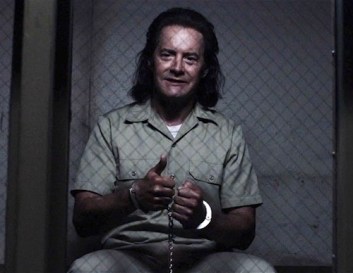 It’s also been widely reported that Lynch and co-creator Mark Frost wrote a single 400- or 500-page screenplay, shot it all, then chopped it up into 18 episodes in the edit. This I can very much believe. Individual episodes are almost shapeless as hours of television, and plot threads disappear for several episodes at a time, only to crop back up as if we’d never been away. While many series these days boast they are “actually an X-hour movie”, they still often function as individual episodes — they may not be completely standalone, but the shape of each hour, the way they’re paced and build to a cliffhanger, and so on, is episodic. Twin Peaks, however, feels like it means it — no doubt the legacy of Lynch’s production methodology.
Because of this, it feels tailor-made for binge-watching, except Lynch himself requested that it be released weekly, reportedly because he didn’t want to spend three years making something only for people to polish it off in a weekend. I can understand that position, but given the pace of the series, I can’t help but feel it would be better binged. When it’s over, a lot of viewers are going to remember the Dougie Jones material as a long, slow trudge, possibly putting it on a par with some of the worse plotlines from the middle of season two, and that would be ameliorated slightly if it could be consumed across a few consecutive hours rather than several weeks (or, possibly, months). Of course, I’m not sure Lynch cares about that. He may be planning something different altogether. What that plan is, maybe we’ll never even know.
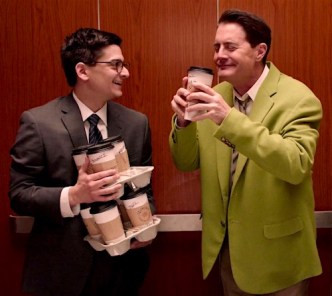 Some five-and-a-half hours into this 18-hour movie, Dougie hands his boss a stack of files. The boss slowly looks through them one by one, baffled by the seemingly senseless doodles Dougie has scrawled all over the pages. But after a while he begins to see a pattern, and comes to understand something. In the end he thanks Dougie. Dougie, as ever, looks blank, before doing a failed imitation of being a normal human being. Is Lynch deliberately setting out to say that he is Dougie and we are Dougie’s boss? That all of us are taking a long, slow look at Lynch’s indecipherable doodlings until we eventually discern some meaning. Or is it just a scene in Lynch’s world that we can coincidentally project that interpretation on to? As ever with David Lynch, I’m not quite sure.
Doctor Who (Series 10 Episodes 6-9)
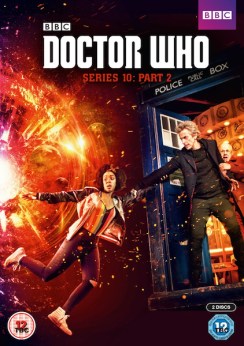 Well, I suppose it was too much to hope it would last. The most consistently great season of Doctor Who in over half a decade threw it all away with a frustratingly variable trilogy of stories (note: not a three-parter — this pedantic old-school Who fan insists we observe the difference). It all began with Extremis, which starts strong with a decent mystery (there’s a book in the Vatican library that causes anyone who reads it to commit suicide) and some good humour (Bill’s interrupted date), but increasingly becomes a lot of running around to delay the reveal. It’s a non-story pretending to be a story, basically. I don’t even care that it basically has an “and it was all a dream” ending. In fact, writer Steven Moffat found a way to make “and it was all a dream” work, which is a rare and miraculous thing. But the episode that leads to that ending doesn’t do enough heavy lifting to support it. A waste.
That leads, sort of, into The Pyramid at the End of the World, where the Monks — who were technically the villains in Extremis — actually commence their invasion of Earth. This is where the trilogy is most clearly a trilogy rather than a three-parter: Extremis is a prologue to Pyramid, not a vital component of it. Again, it’s a frustratingly imperfect episode, with some ideas landing very well and others feeling hurried or ill thought through. Like, it’s neat that the Doctor’s hubris in hiding his blindness ultimately becomes his (and everyone else’s) downfall, but the hoops the show has to jump through to make this work get in the way.
That leads to The Lie of the Land, which could justifiably be classed as part two of a two-parter — Pyramid ends with a direct cliffhanger, Lie deals with it, albeit in an atypical way because it’s now months later and there’s a new set of problems. It suffers from the same problems as the first two instalments, however, in that it’s regularly disingenuous. The opening act, with Bill and Nardole attempting to rescue the Doctor, who’s working with the Monks, feels like a massive sequence designed to provide some shocking moments for the trailer — again, the internal logic is not completely wrong, but is slightly off. Same with the “love conquers all” ending. It’s a potentially powerful message, but the episode doesn’t invest enough in making it work. It also squanders the successful invasion / 1984-esque dystopian world it sets up, which is a pity because I don’t imagine Who will re-attempt the same milieu anytime soon.
So, it’s a run of three almost-there episodes, which sadly undercuts the quality displayed in the first five episodes. They’re not bad per se, but they’re wasteful. Though, that said, I’ve developed a strong dislike for Extremis after some people went head-over-heels for it. No. It’s not good.
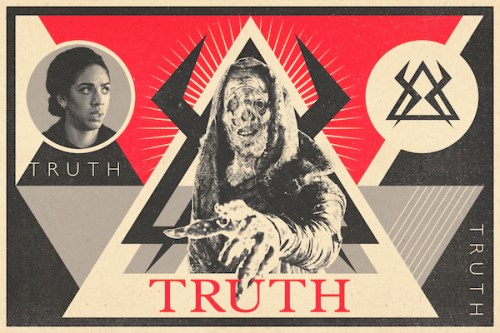
Finally this month, Mark Gatiss writes for the series for the ninth (and possibly final — we’ll see) time in Empress of Mars. I like the Ice Warriors; I don’t dislike Gatiss’ episodes in the way some people seem to — I’d say he’s more-or-less 50/50 on really good ones / not very good ones. Empress basically straddles that divide. There’s strong imagery with the Victorian soldiers on Mars, and the seeds of some nice thematic material in issues of honour and cowardice, and what actually characterises either. Unfortunately they’re not allowed to grow properly, the episode wasting time on silly business like the TARDIS flying off for no reason when it should be developing the Victorian soldiers beyond shallow archetypes. Like the three episodes before it, it feels like the necessary time wasn’t devoted to polishing these episodes; to making all the decent ideas they exhibit coalesce in the most effective way possible. It’s a shame.
Still, the season isn’t a write-off yet. These four episodes may have underwhelmed, but there are promising ideas to come in the remaining three instalments.
The Kettering Incident (Season 1)
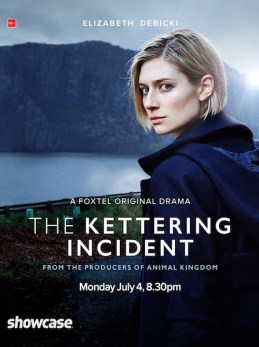 In a remote small logging town where everybody knows everybody else, a teenage girl, who’s secretly into drugs and partying and is the daughter of a prominent local man, goes missing under mysterious circumstances in the creepy woods, which have a history of possibly-supernatural strangeness… Yes, this is the Australian answer to Twin Peaks — a comparison I have perhaps unfairly amped up with that description. It’s more about Anna Macy (The Night Manager’s Elizabeth Debicki), a London doctor who has been getting strange black outs since she was a child, when she lived in Kettering and her best friend disappeared after they saw mysterious lights in the woods — the “incident” of the title, in which some believe the other girl was abducted by aliens. Now she’s returned home and, as one character literally says (as a deliberate or accidental homage to Peaks, I’m not sure), “it’s happening again.”
Sadly, The Kettering Incident lacks the quirky charm of classic Twin Peaks, but neither does it have the balls to be as bold as the new one. (I’m not sure anyone bar David Lynch has those balls, so perhaps that’s an unfair comparison too.) It’s more like The X Files crossed with Top of the Lake — both series I enjoyed, but not on the same level as Peaks. (Well, maybe X Files was in its prime. I need to watch it more thoroughly, to be honest.) Where Peaks started out looking like a small-town murder mystery and gradually mixed in undeniably fantastical elements, Kettering has them in from the start, with the UFO stuff. Will that be explained away by something normal and earthly? Well… that’d spoil it. Though it’s worth noting that, despite looking like a miniseries, Kettering is nothing of the sort: it ends with some answers, but even more questions, and it’s clear a further season (or, according to some sources, two) is needed to actually explain everything.
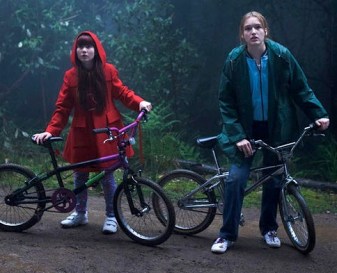 Personally, I want to know what the hell is meant to be going on, but the finale felt a lot like weak sci-fi to me and I’m not sure the answers will be worth it. I have that same hot/cold feel about the series as a whole: whenever it’s actually in front of my eyes I become engrossed, invested, and enamoured; but within hours of it finishing I feel a kind of indifference creep in. I can’t really explain why. It’s probably not a fair reaction.
Not a glowing recommendation, then. However, if you’re looking for something else that plays in Twin Peaks’ tonal ballpark, although it’s surely just a pretender to the throne, there are certainly worse.
(As a side note, it’s brought to my attention that Tasmanian Gothic is a thing. Colour me intrigued.)
Things to Catch Up On
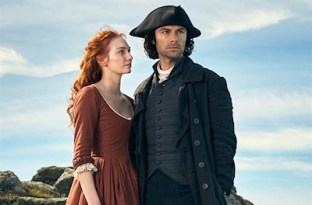 This month, I have mostly been missing the start of the third series of Poldark. Well, I’ve not even watched series two yet. I also still haven’t started American Gods, the finale of which is here on Monday. I guess that can go on the finished-and-ready-to-binge pile beside Westworld and Legion (and goodness knows what else), then.
Next month… as if TV wasn’t crazy enough right now, Preacher’s back. Plus: The Americans season five.






 This is shaping up to be a top-quality run of Who. You have to go back a good few years to find a similar-length run of consecutive episodes with the consistency this season is boasting. Obviously there are some divided opinions out there (as I’ve noted before, there is literally no pleasing all of Doctor Who fandom), but the consensus seems to be pretty positive.
 The fourth episode, Knock Knock, by
  In the wake of the network-enforced resolution of the Laura Palmer storyline, Twin Peaks flounders. The writers clearly took a while to find a new footing, not helped by behind-the-scenes kerfuffles that led them to have to scrap entire prominent storylines (primarily, Kyle MacLachlan vetoed a Cooper-Audrey romance, reportedly because his then-girlfriend Lara Flynn Boyle was jealous of co-star Sherilyn Fenn). Utter phrases like “Super Nadine”, “Ben Horne wins the Civil War”, or (especially) “James Hurley on the road” to a Twin Peaks fan and you’re liable to give them a chill up the spine — and not the good kind.
 A dancing gorilla! A man singing a duet with himself! A rap/yodelling mash-up! A Moldovan trio who could apparently only dance with their right legs! A guy up a stepladder wearing a horse’s head in a slate-walled room covered with chalk-scrawled words that looked like it was straight out of a horror movie asylum! Måns Zelmerlöw again! All accompanied by Graham Norton on fine form with his biting, sassy commentary (“All her family play the fiddle. In fact, her brother will be fiddling with her on stage later.”) Oh Eurovision, never change.
 The 36th run of Doctor Who kicked off with an episode titled The Pilot — no coincidence, that. This is the most newcomer-friendly episode of Who for 12 years, an episode finely calibrated to establish everything for a first-timer but also function for regular viewers too. A lot of that effectiveness can be attributed to Pearl Mackie as Bill, the new companion to Peter Capaldi’s Doctor. After a run of oh-so-special companions running back years, Bill is just an ordinary young woman; but of course she’s extraordinary in her own way: ready to learn, eager to help, full of both inquisitiveness and caring. This is surely the birth of both a fan-favourite companion in Bill and a star in Mackie.
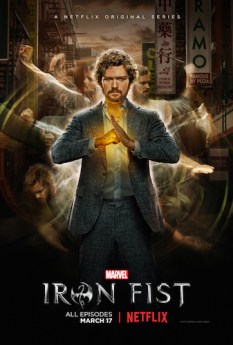 The last of the Marvel/Netflix series before the Defenders team-up, Iron Fist has certainly divided critics and viewers. It doesn’t begin well: the opening episode is possibly the worst thing yet released as part of the MCU, and I only say “possibly” because I never bothered with Agents of SHIELD after the poor reaction to season one. It’s needlessly slow, repetitive, the characters behave implausibly, and the fights are terrible, looking like a first rehearsal filmed with one take. Things do improve — there are more engaging characters, some interestingly developed arcs, and better realised fights — but it still doesn’t come together as well as it could. For one thing, it makes the running of Rand Enterprises a major element, but has a very vague-seeming understanding of how business actually works. It’s just too simplistic.
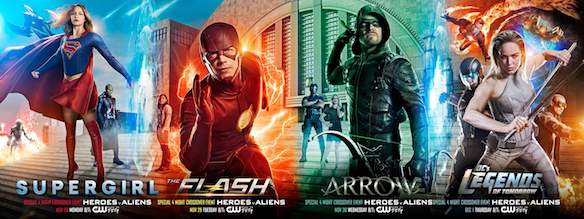
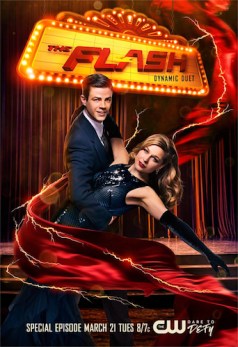 Amongst the eight Arrowverse episodes I watched this month was this: the much-anticipated musical crossover between The Flash and Supergirl, which star Glee alumni Grant Gustin and Melissa Benoist respectively — hence why (some) people called for a musical episode, which caused the producers to decide to do one. Somewhat ironic, then, that it seemed to go down well with critics (at least per
 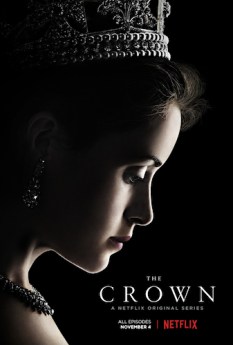 The most expensive TV programme ever made (or not, whatever) certainly has its budget plastered all over the screen, which hopefully didn’t distract most viewers in the way it did me. It shouldn’t, really, because this is a good drama about the humanity behind the public faces. Its adherence to fact is apparently variable, which I imagine is very irritating to historians of the period, but it works for the fiction. There are great performances all round, with John Lithgow in particular disappearing into Churchill to the point that I forgot I was watching an actor more than once. There’s an interesting plot thread early on about the position of Philip (Matt Smith) relative to Elizabeth — how his role as a husband is challenged by her position as Queen, etc — which goes a bit awry as the series goes on and has other plots to focus on. It’s left quite open-ended, so hopefully it’ll be completed in the second season.
 I devoted just 32 words to Line of Duty series one when I finally got round to watching it
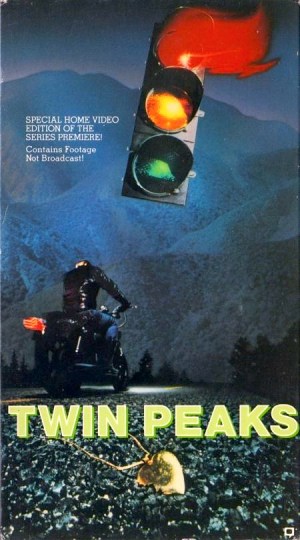
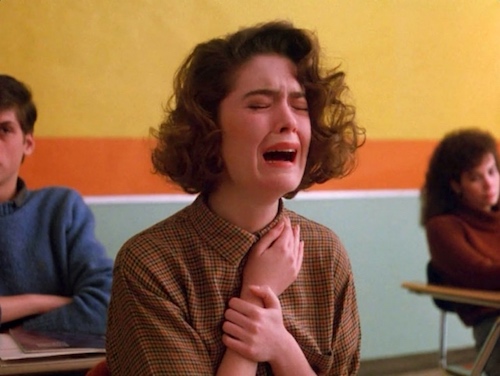
 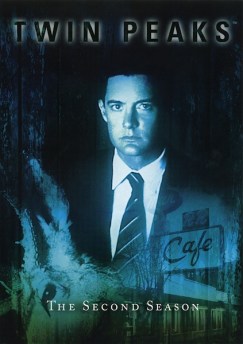 I first saw the debut season of Twin Peaks many years ago during a repeat run (it was a ‘classic series’ even then, though with hindsight it can’t’ve been a decade old at the time), then watched it again when the DVD came out, but this is my first time watching season two (legal complications delayed its DVD release for what felt like forever, and by the time it finally came out I just never got round to it). The second season is infamous for representing a steep decline in quality, though that isn’t yet evident from this batch of episodes, which covers up to the revelation of who killed Laura Palmer and their capture. I’d say it lacks the pure concentrated genius of the first season, having ramped up the quirkiness quotient and, at the behest of the network, rushing the resolution of the Laura Palmer mystery, but it ain’t bad by any means. There’s certainly much to like in the off-kilter characters, the folksy mysticism, and some fantastic performances — Kyle MacLachlan is a constant delight as Agent Cooper, but Ray Wise is frequently incredible as the grieving Leland Palmer. But I guess it’s mostly downhill from here…
 This month, I have mostly been missing series two of Peter Kay’s Car Share, which is a couple of episodes in on the telly or
  Previously on Twenny-Four… There may be no Jack Bauer, the new font for the clock may be bizarrely wrong, and the on-screen text may have abandoned the familiar golden yellow for a soft blue, but everything else about Legacy is same old, same old. If you remember it from
 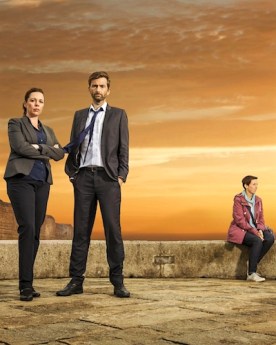 DI David Tennant and DS Olivia Colman (or whatever their characters are called) return after the much-criticised second series for a third run that represents a blazing return to form. Nearly every police drama on TV is always about murder, but here our committed coppers are faced with something that seems harder to prove, and all the more distressing and divisive for those involved: a sexual assault. The series was apparently put together with extensive advice from expert organisations, which means on occasion it almost tips a little too far into factual territory, like a “this is how it’s done in real life” dramatisation. Fortunately screenwriter Chris Chibnall is better than that, quickly focusing on how it affects the characters, and on building the mysteries that will fuel eight whole episodes. Suspicion abounds, but if Broadchurch’s first series proved anything it was that everyone can guess the culprit before the end without it undermining the effectiveness of the drama. I think we’re a ways from that point yet, though…
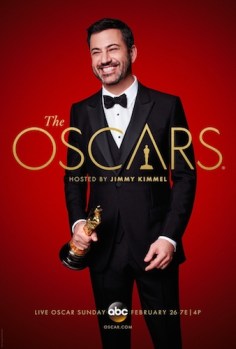 Best. Oscars. Ever! Oh, I bet it was horrendous actually being there having to deal with that ending, but my goodness, as a viewer it was fantastic. It couldn’t’ve been more dramatic if you’d scripted it. Imagine how terrible it could have been, though — if Moonlight had been forced to cede the win to La La Land, for instance (that would’ve sent #OscarSoWhite into overdrive), or if it had been in a category with a sole winner, who in the middle of their no-doubt-tearful acceptance speech was informed they hadn’t won after all and had to embarrassedly hand the statuette over to someone else… But no, it turned out OK. Well, not so for the La La Land guys, but for everyone else, yeah. And the rest of the ceremony wasn’t half bad either. Jimmy Kimmel was the most confident and capable host for bloody ages (and I say that as someone who enjoyed the likes of Neil Patrick Harris and Hugh Jackman) — if the show’s producers know what’s good for them, he’ll be the new regular host.
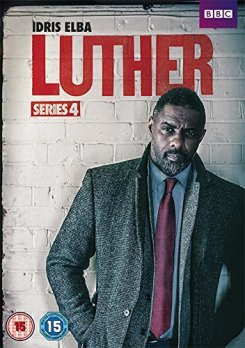 The recent news that Fox have scrapped plans for a US remake of Luther (because they couldn’t find a lead actor good enough to replace Idris Elba) reminded me that I never got round to watching the original version’s last series, this two-parter that aired back in December 2015. I can see why feeling unable to cast anyone as engaging as Elba would lead them to abandon their remake, because there’s not all that much special about Luther outside of its lead. Some people talk about it as if it’s among the forefront of the Quality TV era that we’re currently blessed with, but that’s just a bit daft — much like the programme itself. It doesn’t know it’s daft — it’s all very serious — but it is daft, really. Sure it’s dark, and sometimes kinda scary, and certainly grim, but its realism quotient is way low. It has much more in common with the overblown heightened world of, say,
 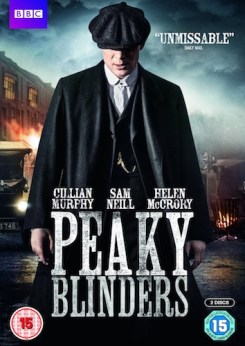 I’ve been meaning to get round to this since it first aired back in 2013, and for whatever reason now was the time (partly it was brought to mind by writer Steven Knight’s new dark period drama,
 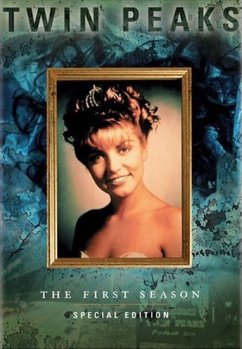 “She’s dead… wrapped in plastic!” With those immortal words (not the first lines, but never mind) a TV phenomenon was born, and a whole new era of television slowly began.
  This month, I have mostly been missing the penultimate season of The Americans, which is two episodes in Stateside (no idea if there’s still a UK broadcaster; at this point I’m not sure it matters). Long-time readers may recall I like to save up The Americans and watch it binge-ish-ly once the season ends, which is a very rewarding way to watch such an intricately-constructed programme. The downside is that means I’m still a couple of months away from getting to find out what happens this year in “

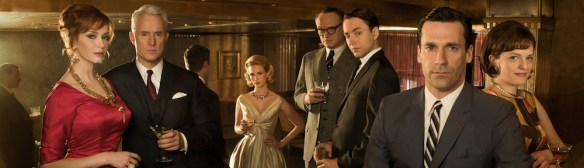
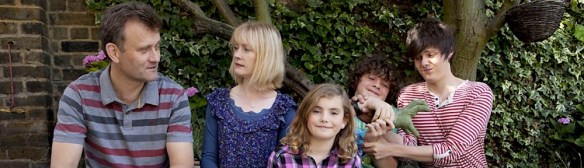
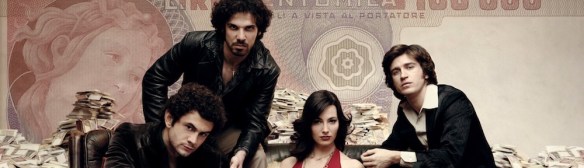


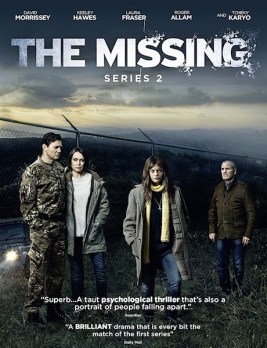 While everybody’s busy fawning over Happy Valley (never watched it) and Line of Duty (series one was quite good; I need to catch up), I reckon The Missing is one of the best dramas British TV has produced in a good long while. The second series (which aired towards the end of last year over here and, coincidentally, started last Sunday in the US) is every bit the equal of the first, and possibly even better — and considering how good the first was, that really is an achievement.
 aka the BAFTAs, obv. I have to say, I thought it was a pretty dull show this year. For starters, Cirque du Soleil — impressive, but what’s it got to do with the last year in film? Why did no one write Stephen Fry some good material for his opening monologue? Then there were the awards themselves. Short on surprises — the big prizes went where expected, the smaller ones erred British. None of the American winners are committed to giving a decent speech here because they’re saving it all for the Oscars. Well, apart from the
  It must be a slow time for TV — I don’t even feel like I’ve been missing all that much. Well, X-Men spin-off Legion recently started and I haven’t got round to that yet, and 24 spin-off / sequel / continuation 24: Legacy started in the UK last night, so I’ve barely had a chance to watch it (I’ll have something to say about that next month, then). So I really have no excuse for not watching Westworld yet. Oh, and I need to get on with starting my long-planned re-watch of Twin Peaks, because there are only…
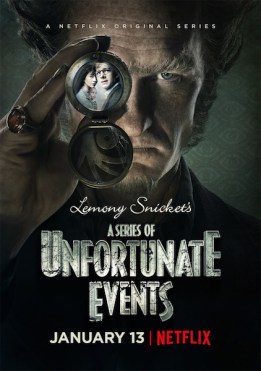 I’ve never read A Series of Unfortunate Events, the 13-book cycle of faux-gothic novels by Lemony Snicket that recount the terrible lives of the Baudelaire orphans as they are stalked by the scheming Count Olaf. I am, however, a verified fan / defender of the 2004 movie adaptation (I even
  As Olaf, Neil Patrick Harris has the difficult task of being both comically inept and genuinely menacing, as well as appearing in any number of disguises (well, four). Opinion seems divided on whether he manages this better than Jim Carrey in the film, but, well, that’s opinions for you. Personally, I thought he was very good. The extra screen time here (what was done in 108 minutes of film is granted 299 minutes of TV) means he has to work at a different level and pace to Carrey, and I think there are multiple moments where he nails it. Similarly, some may think the child actors are guilty of vigorously flat delivery of their lines, but I think this is just another aspect of the Wes Anderson-esque style — as the viewer (and, possibly, the cast) become more accustomed to the material, so the quality of the performances (and/or the perception thereof) improves.
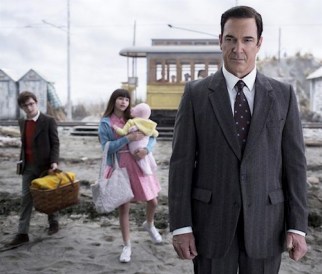 I think most would’ve thought A Series of Unfortunate Events was dead on screen after the film, but this series (and the reaction to it) suggests Netflix have been vindicated for deciding to revive the property. Let’s hope they have the common sense to do the right thing and commission the two more seasons needed to complete this sorry tale. In the meantime, I’m very favourably disposed to read all the books…
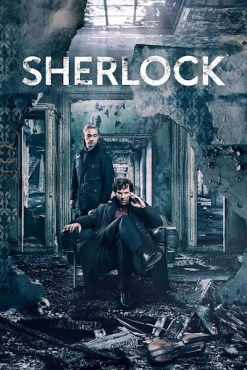 Sherlock comes to an end (for now) with another variable and divisive series. That’s actually the way it’s been received ever since the start (for all the people who think it only lost its way in the third run, there were plenty who slated various parts of it during the first and second series too), so I don’t think we should be so surprised. For my part, I enjoyed it on the whole.
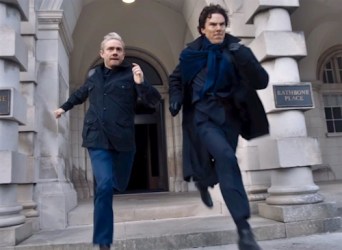 Sherlock’s commitment to being a fast-paced, audience-challenging adventure drama that strives to be constantly engaging and entertaining is definitely commendable, and a welcome contrast to much of the slow, dour TV drama we tend to produce over here — even if the end result is sometimes messy or unpopular. With events in-show leaving our heroes reset to a more familiar Holmesian situation, here’s hoping the big-name cast can be tempted back for a few more adventures in a couple of years.
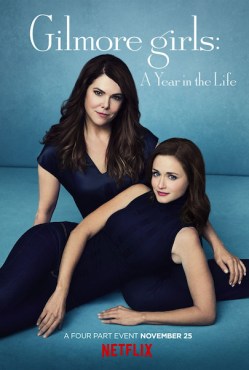 Nine years on and Gilmore Girls graduates from being considered a twee comedy-drama on disparaged network The WB to a major cultural event, thanks to it being produced for the arbiter of all modern televisual culture, Netflix. Instead of 22 42-minute episodes of network TV we get four feature-length instalments, though it’s still very much a series: the pros and cons are shared across the board.
 Bizarrest of all is the problematic ending. Thematically, A Year in the Life begins to look like it might be about moving on, new horizons, that kind of thing — indeed, I kind of expected it to end with Lorelei moving out of Stars Hollow. But the climax — the infamous final four words… well, you could see the development as a signal of a fresh start (very literally, new life), but it doesn’t play that way. Given Rory’s personal story (her career and relationships falling apart) and situation (single, living at home), it’s less a new path forward and more a depressingly regressive loop. If you’re interested in a fuller dissection of these issues, allow me to recommend
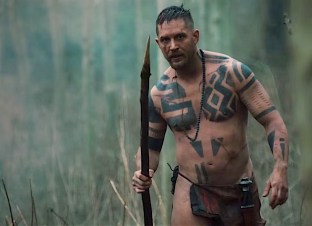 This month, I have mostly been missing Taboo, the BBC’s dark new period drama starring Tom Hardy and written by Steven Knight. I’m sure I’ll get round to it soon, but then I’ve been saying that about Peaky Blinders (you know, the BBC’s dark period drama written by Steven Knight and sometimes starring Tom Hardy) for years and still haven’t even started it. Its scheduling on BBC One on Saturday nights feels thoroughly at odds with how it looks (surely midweek BBC Two?), but putting a proper drama on our highest-profile channel on its highest-profile night seems to have been a popular move, so what do I know?
 100Films.co.uk