
We’re a whole month in — 2020 is properly underway!
The less said about yesterday’s biggest news the better, so I’m just gonna plow on into some films…

#2 Evil Under the Sun (1982)
#3 Rocketman (2019)
#4 Little Women (2019)
#5 Dial M for Murder 3D (1954)
#6 1917 (2019)
#7 The Dead Don’t Die (2019)
#8 Dolemite Is My Name (2019)
#8a What Did Jack Do? (2017)
#9 Bait (2019)
#10 Ad Astra (2019)
#11 8½ (1963)
#12 Laputa: Castle in the Sky (1986), aka Tenkû no shiro Rapyuta



- As should be self-evident, I watched 12 new feature films in January.
- I watched my first film on New Year’s Day — the first time that’s happened since 2016.
- I watched my second film on January 2nd — the first time that’s happened since 2012.
- I watched my third film on January 3rd — the first time that’s ever happened.
- I watched my fourth film on January 8th — which doesn’t sound as remarkable, but it’s earlier than I watched last year’s #1.
- By #8, I was ahead of every previous year. By #12, I was ahead of just 54% of them.
- In terms of averages, 12 slightly beats the January average (previously 11.42, now 11.46), but is slightly behind the average for 2019 (12.6).
- Dial M for Murder is the first 3D film I’ve watched since last May, eight months ago.
- This month’s Blindspot film was Federico Fellini’s semi-autobiographical search engine / hashtag nightmare of a title, 8½.
- From last month’s “failures” I watched just Little Women.

The 56th Monthly Arbitrary Awards
 Favourite Film of the Month
I’m always wary of picking the last film I watched as my favourite of the month — I worry it’s just recency bias giving it a boost. And there are certainly other films I liked a lot this month — when I’ve settled on my final ratings, up to 50% of them will be getting full marks. But, eh, it’s just an opinion. So, for now, this month’s victor is a Miyazaki classic (of which there are so many!), Laputa: Castle in the Sky.
Least Favourite Film of the Month
This is a very straightforward choice, though. I’d heard only terrible things about The Dead Don’t Die, but the trailer had looked such fun that I went ahead and rented it anyway. Sadly, it was the word of mouth that was accurate — it’s a dud.
Most Quotable Film of the Month
You might not expect a black-and-white hand-developed art-house-y drama about the plight of locals in a Cornish fishing village to be full of zingers, but there are loads of such memorable bits in Bait. My favourite? A barmaid watching a local bloke chat up a bit of posh totty from out of town: “He’s wasting his time with her… ‘ow’s she gonna suck his dick with that plum in ‘er mouth?”
Least Hashtag-Friendly Film of the Month
Continuing the theme of “recycling stuff I already put on Instagram”, you try and come up with a workable hashtag for 8½.
The Audience Award for Most-Viewed New Post of the Month
This month’s winner slayed all before it to become, not just my most-read new post, but my most read post overall for last month (that happens quite rarely — just thrice last year, or 25% of the time). The post in question was my Christmas TV review. It received more than double the number of views as the post in second place (which was the previous TV review), a lot of that powered by referrals from IMDb for people wanting to read about Dracula. I hope I switched them on to The Goes Wrong Show while they were here… (The highest new film-related post was my review of The Personal History of David Copperfield.)



Last year’s Rewatchathon limped to an ignominious end (only just over half of my 50-film goal), but 2020’s is off to a solid start…
#1 Zatoichi at Large (1972)
#2 The Hound of the Baskervilles (1939)
#3 The Adventures of Sherlock Holmes (1939)
#4 Monty Python’s Life of Brian (1979)
#5 Twin Peaks (1990), aka Twin Peaks: Pilot
Starting at the end, Twin Peaks — the original pilot, which I watched in UHD courtesy of the From Z to A box set. I was counting it as a film as part of a long-term setup for eventually including it on a list of my favourite films (oops, given the game away!)… but I feel less sure after watching it again. Not of its greatness — I still reckon it’s one of the very best episodes of TV ever made, with at least one sequence that’s among my favourites in the entire history of visual storytelling — but it’s so obviously a pilot; so made to set wheels in motion for a series to run with them over many more hours. Yeah, there’s the close-ended International Version, but that’s a bit of a mess. This is something I’ll continue to ponder on.
As for the picture quality of this UHD version, it’s unfortunately a mixed bag. Lynch chose not to use HDR here, apparently… though I don’t know if that’s been confirmed or if it’s accepted wisdom from the disc not playing with HDR. I say that because when I turned Dolby Vision on, it kicked in. So is the disc encoded for Dolby Vision but not normal HDR? Is that possible? Or was my player ‘faking it’? I don’t know enough about how HDR/DV works to answer that. Normally I have Dolby Vision switched off because I don’t like it (I don’t know if I just consider it inaccurate or if it’s my TV’s fault, not displaying it properly for some reason), and Twin Peaks did nothing to convince me I should change that. Mainly it just seemed to make things too dark, erasing detail in the shadows (I tried fiddling with my settings in case I’d set it up poorly, but that didn’t help). With or without DV, the pilot doesn’t look right. The resolution is good, with improved fine detail compared to the Blu-ray, so that’s nice; but the colours look far too pale. Considering classic Twin Peaks is renowned for its warm look, this is especially jarring. Some scenes — outdoor ones, mainly, where the colours are cooler anyway — look just fine, but others look thoroughly wrong. What’s really baffling is that Lynch supposedly supervised this new version, so it should be bang on; but I’m pretty sure he supervised the previous one too, so what’s gone awry? Whenever I next watch the pilot, I’m going to have a difficult choice on my hands: 4K for the base-level image quality, or 1080p for (what I think is) the correct colour balance. Argh!
As anyone au fait with the news has likely guessed, I watched Life of Brian in honour of Terry Jones. Plus, I’d been meaning to rewatch it ever since I watched Holy Grail last September. Like that film, it’s now down to get the “Guide To” treatment at some point.
Rather than regurgitate comments about my other rewatches, I’ll point you towards Letterboxd for my thoughts on The Hound of the Baskervilles, The Adventures of Sherlock Holmes, and why I rewatched Zatoichi at Large when there are still several original Zatoichi films I’ve not seen.

2020 got off to a solid start, but there were still plenty of things I failed to see. On the big screen, I saw most of the stuff I really intended to — I’m happy to leave both Guy Ritchie’s latest, The Gentlemen, and belated trilogy-maker Bad Boys for Life until they reach rental. Speaking of which, I’ve got both Jennifer Kent’s The Nightingale and Danny Boyle’s Yesterday sitting on my Amazon Prime Video account with the days ticking down — definites for next month, those.
In terms of new disc acquisitions, I watched a few as soon as they landed on my mat, but I went on a bit of a spending spree this month — a mix of new releases, random bargains, and having some vouchers to use up. In the former camp, the BFI’s new Blu-ray of Judgment at Nuremberg rubs shoulders with Arrow’s release of Black Angel, a film noir directed by Roy William “director of 11 Basil Rathbone Sherlock Holmes films” Neill (which was recommended to me almost eight years ago by an esteemed fellow blogger, so it’s about time I got round to it).
The random bargains pile, meanwhile, is mostly made up of horror: the 101 Films Black Label edition of David Cronenberg’s Rabid; 88 Films’ box set of Hollow Man and Hollow Man II; and an import of Dario Argento’s Dracula 3D, which is meant to be absolutely terrible but, eh, I’m curious (it’s also only available in the UK on DVD or digital, neither of which are 3D, so I got the German one. The extras aren’t English-friendly, but I don’t reckon I’m ever likely to watch an hour-long making-of on this particular film). And in the “I had a voucher” camp, Don’t Look Now in its 4K limited edition form. Frankly, I’d’ve snaffled that up even without the voucher — it’s sold out online and so the price is beginning to rise on eBay and the like, but I happened across a single copy in a branch of HMV, where they were still charging the original price. The voucher comes into play because I wouldn’t even have been looking were it not for having an HMV voucher that expired the next day. So, that was nice.
And finally, the ever-burgeoning ranks of what’s available on streaming. Headliners this past month include In the Mood for Love cropping up on Prime Video — it’s one of the most acclaimed films of this century, but it never seems to be available in the UK, apart from an old DVD. It’s on my Blindspot list this year too, but I’d already got hold of it by, er, other means for that purpose. Other additions that drew my attention on Prime included Booksmart (particularly as I previously rented it but accidentally let the clock run out), Samuel Fuller’s The Naked Kiss, The Boondock Saints (one of those films I’ve heard of but don’t know much more about), and Jason Statham vehicle Wild Card — it’s been a while since I watched a run-of-the-mill Stath flick, so I feel overdue. Also overdue is a rewatch for Brokeback Mountain, which is also now on Prime here. Back in 2006 I was one of that rare breed who thought Crash was better. I didn’t hate Brokeback, but I didn’t like it much either. So, it’s long overdue that I revisit it and form a new opinion, now that I’m older and wiser.
Over on Netflix, the biggest hitter is probably Uncut Gems, which is one of this year’s many “should’ve had Oscar noms” films. But that only came out yesterday, so it’s not much of a “failure”… yet. Also catching my eye were Won’t You Be My Neighbor? (not to be confused with A Beautiful Day in the Neighborhood, which is only just reaching UK cinemas) and Zhang Yimou’s Shadow. Plus they now have Phantom Thread, which I personally don’t intend to rewatch in anything less than 4K, but I mention its presence nonetheless because I highly recommend it.

Ghibli comes to Netflix! Well, not if you’re in North America, but for the rest of us: hooray!
…although I own Blu-rays of most of the ones I’m interested in seeing, I’ve just not got round to watching them yet, so their presence on Netflix isn’t likely to affect my viewing much at all. Hey-ho.

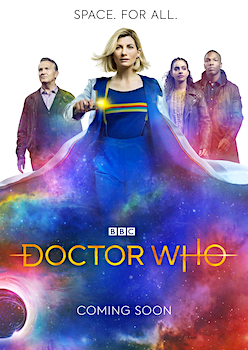 Well, it certainly has been an eventful first half to this series of Doctor Who! Never mind bringing back the Master and destroying Gallifrey (again) in
 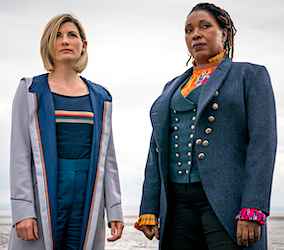 Social media and fan forums and whatnot have debated and analysed that revelation to death, so I won’t bother digging too much into all the possibilities of what it means — only time can tell. I will stake out this opinion, though: I am not a fan of the theory that she’s a pre-Hartnell version of the Doctor. The idea there were incarnations before the one we know as the first has always seemed disrespectful to me, somehow. Yeah, the Daleks ‘made’ Doctor Who, but Hartnell gave it his all too — without him week to week, and the effort he put into public appearances and the like, would the series have survived those early years? He’s not the only thing responsible for its success, and certainly not for its longevity, but he was The First — leave that be, thanks.
 The Star Trek series boldly goes where it’s never gone before: into the Prestige TV market. (Despite initial appearances, based on things like the reviews I’ve read and variably-sized season orders, I’m not sure Discovery was really “prestige TV” in the end.) Is it up to competing with the big boys of this peak TV era?
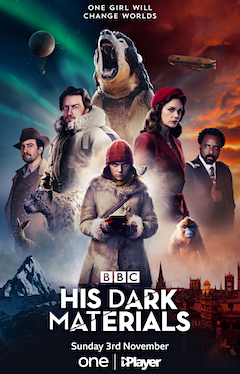 I reviewed the first three episodes of His Dark Materials in
  It’s been
 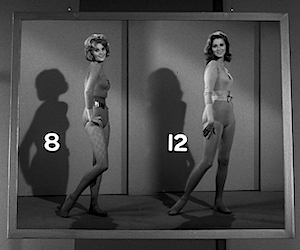 Moving beyond the top ten to complete the top 10% (i.e. the 16 best episodes), next is Number 12 Looks Just Like You (which, by-the-by, comes 10th on Thrillist). This is what some people might call “proper sci-fi” — an idea of the future spun out of what’s possible in the present, using it to present an analogy for the times we live in. And what is the analogy? In this case, there’s a few things you can read into it: mental health; conformism; the transition from childhood to adulthood; maybe all of the above; maybe something else. The only real downside is the episode hints at a wider world that isn’t explored. It’s mentioned in passing that the writing of Shakespeare, Keats, and others has been banned. Why? By whom? And while a bunch of middle-class white people are choosing which generic model they want to look like, what about other races? Class is less of an immediate issue because it seems this is a government-backed thing that everyone must undergo — but then, why do the lower classes get to look just the same as their ‘betters’? Surely there’d be different models depending on your social station? Never mind a 25-minute episode, someone could spin an entire series out of this… Still, having so much to ponder is one mark of a very good episode.
 Finally for now, the last episode in the top 16 (and the only one of today’s episodes not in anyone’s top ten), Nothing in the Dark. Probably best known for staring a young Robert Redford, it’s about an old woman who’s paranoid and agoraphobic due to her fear of meeting Death; but when Redford’s cop is shot right outside her door, she has to let him in to save his life. It’s a nice idea for a story, but (to loop back to what I was saying about The Masks) it feels a little slight in the execution. Half of the second act is taken up in a diversion with a demolition guy which is just that, a diversion. Still, there are very good performances from the two leads, and it comes with a well-meant little message by the end.
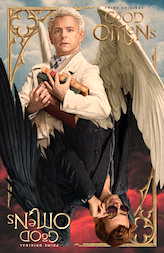 This month, I have mostly been missing Good Omens… again! I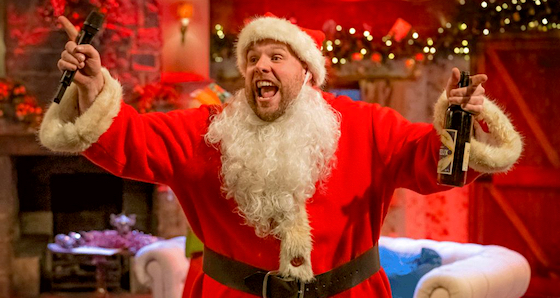
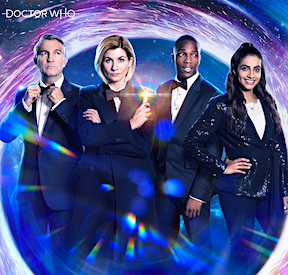 For the first time in 14 years, since the series returned, there was no Doctor Who Christmas/New Year special. Gasp! At least we got the first episodes of a new series, though — two slightly-longer-than-normal instalments (at 60 minutes each, which doesn’t feel that special when regular episodes are 50 minutes now). And a two-parter, too — the first of those since 2017. And a big two-parter at that, with big-name guest stars and big action sequences and big overseas locations.
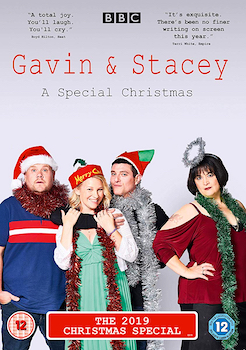 I won’t recap Gavin & Stacey’s ratings success (what with already having mentioned it at the start), nor will I touch on the controversy around its use of Fairytale of New York (I kind of get why people complained, but also, the song is the song). As for the episode itself, well, I thought it was masterful. It may be nine years since the last episode, but it was like they hadn’t been away. Not that they tried to ignore the passage of time — clearly, the best part of a decade had passed in the characters’ lives, and naturally changes had come with that — but the characters and performances felt true to their old selves, as if they’d never stopped playing them, with the rhythms and comedic style of the show fully intact. Some decade-later revivals feel like new shows — the writers have forgotten how to write it properly; the cast have forgotten how to play it right — but not this one. This was bang on what it should be. Tidy.
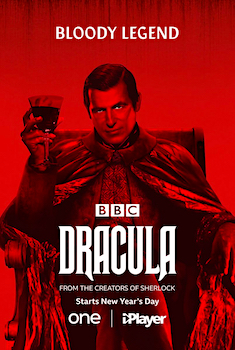 “From the makers of Sherlock”, declared the publicity for this new adaptation of the Victorian novel — so you’d be forgiven for thinking it was a present-day reimagining. But it wasn’t. Well, until it was.
 Oh my, what a treat! Regular readers will remember how much I loved
 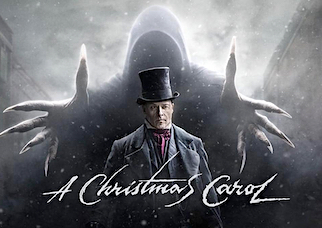 This month, I have mostly been missing the BBC’s new adaptation of A Christmas Carol, written by Peaky Blinders creator Steven Knight. I know it went down with some degree of controversy, but its revisionist, horror-tinged style looked right up my alley. Unfortunately, it was stripped over three nights, and because I knew I was going to be away for the third evening I didn’t start it. By the point I had enough time to make room for it, it was so long after Christmas that I wasn’t sure it was appropriate. Now, it’s January 12th and it’s definitely too late. Guess I’ll have to try to remember to watch it next year, then.




















 When I reviewed the premiere episode of this
 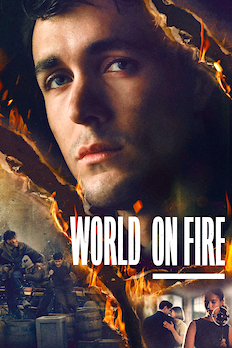 This is good enough that it probably would’ve been A Major Series if it had been made 15 to 20 years ago; heck, maybe even 10 years ago. Today… well, as my previous comment implies, it just doesn’t feel slick enough in the modern TV landscape. It has its plus points (the recreation of Dunkirk was suitably epic, at least compared to the low-key-ish earlier episodes, and Lesley Manville is always magnificent), and it’s done well enough to get recommissioned (thank goodness, because the finale left a tonne of stuff dangling as if it was a midseason episode), but I’ll be surprised if it ends up in the zeitgeist in the manner of, say, Downton Abbey. (Brief thoughts on episodes 1 and 2
  This ITV-produced BBC-aired crime drama is so popular that they recently recommissioned it for both a sixth and seventh series. Originally it took the form of two-parters adapted from novels, but for the past few series they’ve done original season-long six-episode storylines. For this run, the gang find themselves up against human traffickers, using Shetland as a waypoint to get slaves into the UK. Overall it’s not as engrossing or remarkable a story as the ones told in the
 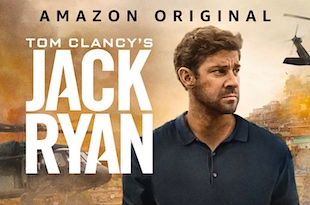 This month, I have mostly been missing Jack Ryan season 2 — perhaps not the most high-profile show I could mention here (it’s on Amazon Prime, which never gets the same buzz as Netflix, however hard they try), but I enjoyed

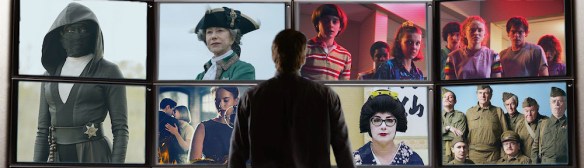

 On what you might unkindly call a superficial level, the third season of Netflix’s signature series was thoroughly entertaining — it’s frequently funny and exciting, with cool moments aplenty (especially in the last couple of episodes), and many enjoyable callbacks to both ’80s pop culture and within the show itself. But dig any deeper and it begins to seem less surefooted, with what felt to me like muddled themes and character arcs, and a sense that the mythology was treading water. I don’t particularly object to the way any characters were treated, nor the destinations any of them reached (especially as a fourth season was inevitable, so wherever this run finished up was only ever temporary), but I didn’t feel like they were being guided anywhere with any real purpose. There’s something to be said for storylines like that, but when you’re trying to play some kind of redemption arc, or a coming-of-age tale about burgeoning independence (or whatever), I feel like you need to be a bit clearer-eyed. But hey, I still enjoyed it a lot — it’s a fun watch, and I imagine even more so if you have nostalgic memories of an ’80s childhood — I just think there’s still some room for finessing.
 Alan Moore and Dave Gibbons’s graphic novel Watchmen is a seminal work of the form — I’m sure you don’t need me to tell you about that at this point. Over the past decade it’s been
 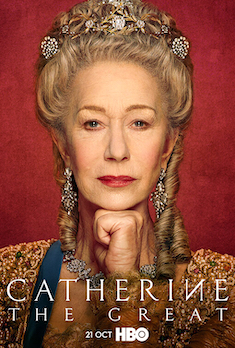 HBO and Sky Atlantic have teamed up for this lavish four-parter about the life of the famous Russian ruler, conceived by and starring Helen Mirren. The big bucks those broadcasters are known for are all over the screen here — it looks suitable sumptuous, with grand locations that positively shine, especially in UHD. Unfortunately, nothing else about the production is up to scratch. The writing is thoroughly mediocre — it most reminded me of The Tudors, although that seemed to know it was a bit of trashy fun, whereas I think Catherine the Great wants to be taken very seriously. But the dialogue is uninspiring, the characters uninteresting and underdeveloped (we’re told the relationship between Catherine and Potemkin is some great love affair, but they strop around like moody, jealous teenagers), and the flat performances do nothing to elevate any of it — and despite her general acclaim, Mirren is probably the weakest of the lot. Pretty, then, but vacant.
 The BBC’s 1970s policy of junking programmes because they supposedly no longer had commercial value is a familiar topic for Doctor Who fans, who’ve spent decades hoping and hunting for copies of missing episodes. But it was an organisation-wide policy, so Who was far from the only show that suffered — Dad’s Army was another. It’s a perennially popular sitcom here (even today repeats land among the most-watched programmes of the week), so you can see why it made commercial sense to invest in recreations of the missing episodes — especially as there’s only three of them.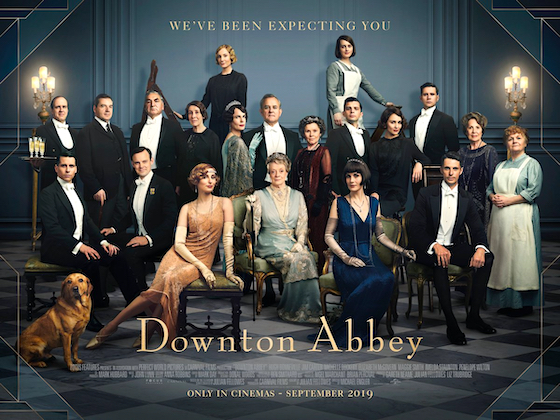



 The writer most popularly known for reviving Doctor Who, Russell T Davies, returns to science fiction for the first time in almost a decade with this acclaimed miniseries. This is a very different kind of sci-fi, though — no space invaders or malicious AI or mad scientists here. No, this story begins in 2019 as we know it and then moves across the next 15 years to explore just where we’re headed, in a realistic and grounded way. It focuses on a normal family from Manchester — four siblings, their grandmother, and assorted spouses and children — and how the changes in society and technology affect them. It’s a story of the ordinary people; the folks who don’t shape history, history happens around and to them.
 Birmingham’s premier gangsters return with a storyline that forces them to reckon with their past actions. So it’s unfortunate that this is a show that can’t be doing with recaps at the start of episodes. I spent most of the first instalment trying to remember the events of previous series and how they’d led to where things were, which is an unwelcome distraction that could be easily solved with a simple “previously on” at the opening. I don’t know why Netflix hate them so much (well, I do — it’s the assumption you’ll just binge-watch everything, and if you don’t then they want you to feel you have to; and we’re all just buying into what we’re told to do, which is half the problem (funnily enough, that’s a lot of what Years & Years was all about…)
 Where the other shows reviewed this month are big, brassy productions told on a mythic scale, Unforgotten is almost the opposite, and yet it tackles themes no less grand. But it’s a quiet, understated drama, as London detectives Nicola Walker and Sanjeev Bhaskar (along with their team) investigate a cold-case murder, in the process having to tackle the fallout that time has wrought on the victims left behind.
 This month, I have mostly been missing Wu Assassins on Netflix, starring Iko “The Raid” Uwais. The trailers look perhaps a bit cheesy, but also promise regular doses of Uwais’ incredible combat skills, so that’ll do me. Elsewhere, Preacher has embarked on its fourth and final season. Considering I’ve not seen most of season two and none of season three, that’s a bigger catchup project. And talking of stuff I’ve not seen, I never got round to Mindhunter season one, even though David Fincher directed some of it, and now there’s a second season, which he’s also partly directed. Considering it’s been five years since
  100Films.co.uk