
With the series finale of The Americans on UK TV tonight (at 12:05am on ITV4), I thought I’d bring my monthly TV review forward a bit and share my thoughts on the final season of a series that, for those of us who found it, will be sorely missed.
Plus! The latest episodes of Westworld — much more widely discussed than The Americans, but does it deserve the attention? And quick thoughts on the end of Archer Vice and another series finale, that of Peter Kay’s Car Share.

The Americans Season 6
“It’s the end of the world as we know it, and I feel fine.”
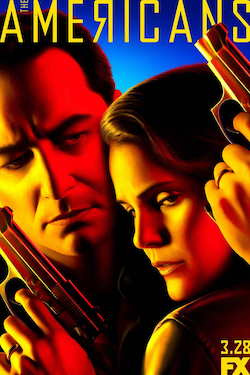 That song was released in 1987, the same year as the final season of The Americans is set. The show has typically avoided featuring well-known music in favour of cult favourites and obscurities, but R.E.M.’s classic would’ve been an appropriate number to hear during one of the series’ trademark music montages in the finale. (That said, it did contain both Dire Straits and U2, so they weren’t above using big hits.) Maybe it would’ve been a bit on the nose, but it certainly was applicable: it was the end of the world as the characters knew it, and so too for fans, as six incredible seasons came to a final end. But do we feel fine? That depends how you define “fine”. The show will be missed terribly, but goddamn if it didn’t stick the landing to cement itself as one of the greatest TV series ever made.
It all began with a good setup for a concluding season: finally, after years of disagreements about their jobs and their personal lives and how both should be handled, the world conspired to pit the Jennings directly — and secretly — against each other. The Americans isn’t usually so overt in its plotting, so it’s no surprise that the scenario doesn’t play out as a straightforward spy-vs-spy battle. But it certainly tests the lead characters both professionally and personally, and to an extent they haven’t been before, forcing them to question every one of their loyalties: to their employers, to their country, to their friends, to their family, and to each other. To say too much about how it unfolds would be a spoiler, obviously, but it has some clever ways of challenging even the characters’ most deeply-held beliefs.
Most spy-based TV shows ratchet up the scale or stakes season after season — I’m thinking of Spooks, where in season two they spent a whole episode debating the ethics of performing an assassination, but a couple of years later that was just routine first-act stuff; or 24, where season one was just about someone trying to assassinate a presidential candidate, but by season four it was about multiple coordinated attacks including bombing trains, kidnappings, melting nuclear power stations, shooting down Air Force One, a nuclear missile strike… The Americans has, if anything, gone in the opposite direction: there’s still spy stuff there, of course, and it’s as grounded as ever, but it’s increasingly taken a backseat to the characters’ relationships. Maybe this is just a matter of perspective, but I felt that in earlier seasons the spy stuff was the focus, 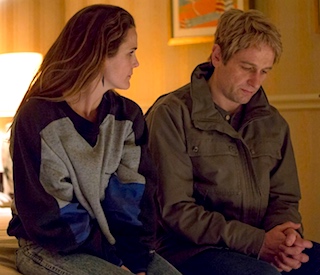 given texture or sometimes affected by the relationships, whereas by this point the relative importance and impact seems reversed. I guess you could still enjoy it as “just a spy show”, but I don’t think you’d want to — the stuff you’re invested in has shifted. That was always the programme’s genius, of course: it’s not about spies who happen to be married, it’s about marriage through the prism of people who are spies.
For a while it almost doesn’t feel like the end (the season opener even begins with a montage set to Don’t Dream It’s Over), but then comes episode five, The Great Patriotic War, and suddenly years of stuff is brought to a head: the status quo and people’s values are flipped, then re-flipped; there are massive changes and developments — but all managed with The Americans’ usual understated believability. As the fallout begins in episode six, Rififi, you can’t tell where it’s going to go. It keeps the focus squarely on Elizabeth and Philip’s relationship, as if we could ever forget the show is, at heart, all about that, not the big spy stuff. The season isn’t just engrossing on a thriller-ish “will they get caught?” level, but also on an emotional “will they stay together?” one. A big part of this is the performances by Keri Russell and Matthew Rhys, both of whom are so, so good — the subtleties and nuances of their performances, and the way the series trusts them to convey what’s needed with just silence at times, is phenomenal. That they haven’t received more recognition for their work here is a crime against television.
The penultimate episode, Jennings, Elizabeth, is where things really begin to come to a head, and Jesus, the tension! It’s hair-raising. It’s intense. It leaves your nerves shattered, not just during the programme but after it too. I’m glad I saved the season up to watch on consecutive days, because I don’t know how I’d’ve spent a week with that hanging over me. And as for the finale, somewhat ironically titled START… I’ve been worried about how they’d end the show basically since it started. I spent that last hour covered in goosebumps and with my heart in my throat, and it was kinda perfect. It didn’t give me everything I wanted, but perhaps it gave me all that I needed. 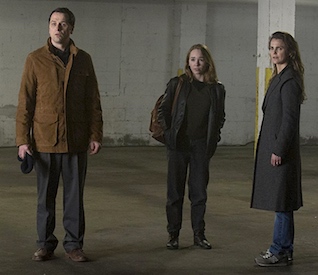 As a commenter on the A.V. Club’s review put it, “I have to say it is of greatest compliment that the show both wrapped up the story and left me wanting more. It felt equal measure satisfying and gut wrenching.” That’s exactly how I felt. Also, it contained what I have no qualms about calling one of the greatest scenes in TV history: just a handful of characters talking in a garage, and it was absolutely stunning, the true culmination of the entirety of the show.
If you haven’t been watching The Americans (and viewing figures suggest you probably weren’t) then do yourself a favour and rectify that at some point — a 75-episode masterpiece awaits. Without doubt, one of the greatest TV series ever made.
Westworld Season 2 Episodes 5-7
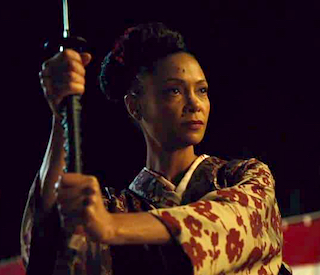 I wrote last time about how Westworld season one took a few episodes to warm up but eventually got me completely hooked. Season two is so far failing to pull the same trick — over half the season has felt like it’s still just getting underway to me. And then, in the blink of an eye, episode seven, Les Écorchés, catapults us from “just getting started” to “endgame” over the course of an hour. I’m not sure how I feel about all that. There’s some exciting and interesting ideas in the mix here, but what also feels like a bit of flailing around. Maybe it’s all in aid of a Big Surprise? Season one certainly had a few of those in its final episodes — they were the most talked-about part of the show in the end, I’d wager — so I assume they’re going to end up shooting for the same.
One thing they’ve definitely copied from that freshman run is the multiple timelines. Back then it was a secret, and it ultimately paid off, but now it’s out in the open, and I’m not sure what it’s for. I mean, there are some very basic uses in play — “how does Character X get from that situation in the past to this situation in the present?”, “where have half the cast gone between the past and now?” — but that seems a bit… facile. As I say, I hope they’ve got some surprise to pull out of their sleeve — something to do with how the hosts struggle to differentiate between memories and current events, perhaps — but it’s a long time coming…
Things to Catch Up On
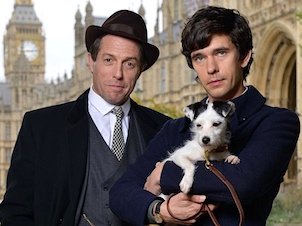 This month, I have mostly been missing A Very English Scandal, the Russell T Davies-penned drama about the real-life case of a ’60s politician and his secret homosexual lover. It seems to have gone down exceptionally well, and anything by RTD is always worth watching. Other than that, it feels like there’s a bunch of stuff on streaming I’ve been meaning to get round to and still haven’t. That list would keep us here all day, though.
Next month… the MCU’s other black superhero returns to Netflix.
 History was made left, right and centre in the last three episodes of Doctor Who’s 36th-ever season. For starters, The Eaters of Light marked the first time someone who wrote for the classic series has written for the revived one. Rona Munro penned the last story of old Who, Survival, a personal favourite of mine and one that, stylistically and tonally, connects remarkably well with the first episode of nuWho, Rose, which is quite the coincidence. Anyway, The Eaters of Light was a solid episode with some very likeable parts, but it didn’t seem to quite gel entirely in the final mix. That’s been a recurring theme for the middle of this season, I feel, with every episode since Knock Knock featuring quality ideas and/or characters and/or scenes that aren’t fully developed into a final whole. Nonetheless, I’d certainly welcome Munro returning again in the future, but who knows what Chris Chibnall has planned.
 I put “unknowingly” in inverted commas there because that’s the episode’s biggest problem: thanks to the show’s own promotion, we knew the Cybermen were coming back, and we knew John Simm was returning as the Master. In truth, the former isn’t a problem. Sure, the existence of the Cybermen is played as something of a reveal at the end, but it also works as ‘just’ the reveal that Bill has been converted, and there’s dramatic irony in the viewer knowing what those cloth-headed patients are destined to become. The Master spoiler is more of a problem. The prosthetics turning Simm into Razor are impressive, and even fooled some people who knew he was back… for a bit. I’m sure most people must’ve guessed before the episode ended. It therefore becomes a distraction: what’s his plan? When will he reveal himself? And when the big reveal does come, it’s played as a twist, which it isn’t because we were told about Simm three months ago. Moffat has said before that it was entirely his decision to put Simm in the trailer, and it’s clear it was a misstep. Not a fatal one — World Enough and Time is strong enough to withstand it — but a shame. Can you imagine the reaction if we hadn’t known?
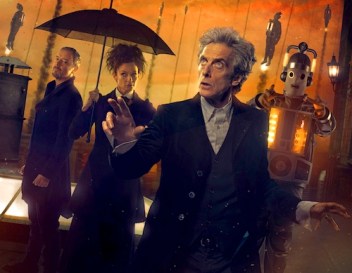 As for the other current Capaldi companion, there was an almost touching exit for Nardole, a character Matt Lucas has managed to imbue with much more likability than was promised in his initial appearance a couple of Christmases back. Finally, Peter Capaldi was in as fine fettle as ever, getting to deliver a few more of his iconic speeches, before going out with a heroic last stand.
 “
“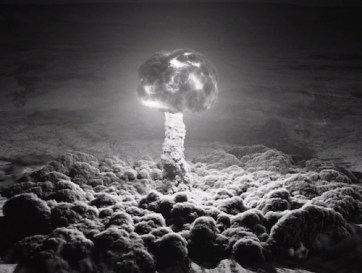 I don’t know if it was the reaction across the board, but on Twitter the reception the 8th episode received was adulatory to the nth degree. Having given us massive developments and beloved characters just one episode before, suddenly we were in a different era, in black and white, with mostly unknown characters, and a narrative conveyed through Lynchian visions rather than traditional storytelling. It made some kind of sense… some of it… in the end… but you certainly had to stick with it. Some of it was incredible — the tracking shot into the mushroom cloud is, somehow, almost inexplicably, one of the greatest shots of all time; an instant classic. But other bits… they did go on rather. I’m not one of those people who wishes the new Twin Peaks was a pure nostalgia fest, all repetition of famous lines and quirky goings on in the Double R over cherry pie and coffee, but I also think Lynch’s indulgence has run a little too rampant. Much of his surrealist imagery works if you’re prepared to engage with it, but I also think much of it doesn’t need to go on for as long as it does. There’s a difference between a slow pace and no pace.
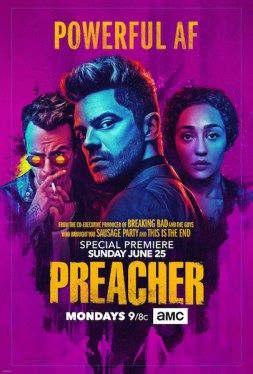 After a sometimes uncertain but ultimately promising first season that was, really, all prologue to the main story, Preacher returns with a confident bang, filled with unstoppable cowboys, exploding SUVs, Maced testicles, intestinal fuel syphons, baby foreskins, and Come On Eileen — and that was just the opening ten minutes. Shows like Legion, American Gods, and, especially, Twin Peaks may have been duking it out for the title of craziest series on television these past few months, but there’s nothing quite like Preacher.
 100Films.co.uk