
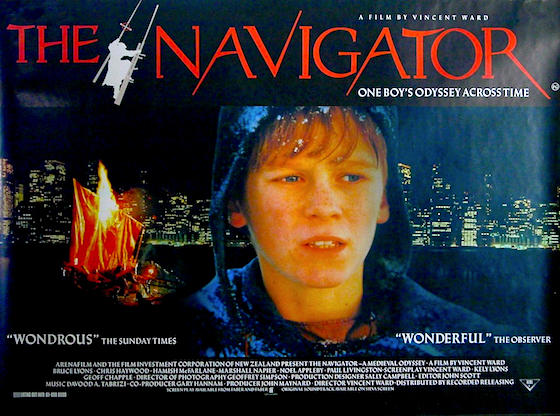
1348: the Black Death is sweeping across Europe. A remote mining village in Cumbria is yet to be afflicted, but they fear the disease is close at hand. When young Griffin (Hamish McFarlane) reveals he’s been having visions of a quest to a great cathedral, they decide this is their best hope for salvation: a band of brave men will follow Griffin’s vision and make an offering to God so he will protect the village. The journey begins by travelling down a pit so deep it’s rumoured to lead to the other side of the world. As they emerge, they’ve unwittingly travelled not only across the world, but also forward in time some 640 years, to New Zealand, 1988.
If that sounds like an adventure movie but also a bit, well, weird, then you’ve probably got a handle on The Navigator already. It’s a men-on-a-mission time travel adventure quest filtered through an arthouse sensibility — writer-director Vincent Ward trained at a school of fine art, intending to become a sculptor and painter, before getting sidetracked into moviemaking; and he’d previously helmed the first New Zealand film to screen in competition at Cannes, Vigil. (I didn’t realise until after viewing that he’d gone on to direct What Dreams May Come and also did a lot of development on Alien³ (the “wooden planet populated by monks” version), but once you know that, the aesthetic similarities seem obvious.) The Navigator has thus been likened to the work of Werner Herzog and Terrence Malick, but also Terry Gilliam.
So, on the one hand, it can play as a straightforward heroic quest, but the sometimes slow pace and occasional presence of symbolism suggest, on the other, a film with greater depths. Primarily, I think, this is the way the villagers’ fear of the plague is reflected by our modern-day fears — or, as the film’s press book rather nicely puts it, in the present day the adventurers are “surrounded by echoes of the fear which haunted medieval England”. So, for example, their journey is disrupted by the rise of a monolithic submarine, presumably a nuclear one; the issue of nuclear deterrence is also brought up on a TV broadcast; and that’s followed by a famous Australian AIDS commercial, perhaps the most obvious mirror of the plague there could be for an ’80s movie.

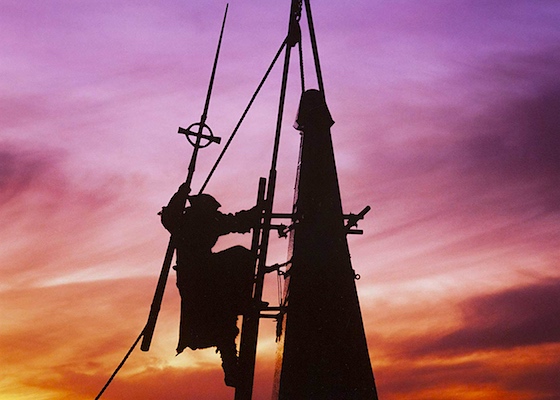
It’s also a somewhat spiritual film, though not in a heavy-handed, pro-religion kind of way. After all, the men are on a quest to seek protection from God, and the climax revolves around placing a spire atop a church. Naturally, the reliance of medieval folk on their belief in God is counterposed with the modern world’s disregard for such values — though, again, the comparison isn’t made in too forceful a manner. For example, when they first arrive in the present they look out over the city to find the cathedral, because a church is always the tallest building, but, to their confusion, they can’t see it because of all the skyscrapers. The point is subtly put: we worship different gods today.
But aside from all these nods to philosophising, the film does work as an adventure movie, with certain sequences relying on the gang overcoming obstacles rather than musing on the state of the world. Standout set pieces include crossing a four-lane motorway (it was Ward trying to do exactly that in Germany that first gave him the idea for the film!), and the climax atop the church, which — between John Scott’s superb editing and Griffin’s premonition that one of them will die there — is as suspenseful a finale as you could ask for. Scott’s editing also shines in the sequences depicting Griffin’s visions, which become cleverly sprinkled in so that at times you’re wrong-footed about whether what you’re seeing is happening or another premonition. Although the film never chooses to play this for a big twist, it keeps things dynamic.
The real star from the crew, however, is probably cinematographer Geoff Simpson. The entire movie is gorgeously shot in a couple of styles: the medieval stuff is presented in high-contrast black & white, which combines with the snowbound setting to create a stark, gritty beauty; then the present day stuff is in colour, mostly lit in rich oranges and blues so that it feels almost opulent, with the choice of colours drawing inspiration from medieval art. Ward’s reasoning for this delineation was to emphasise how striking the modern world would feel to someone coming from the grimness of the plague years, and it works. A word too for composer Davood A. Tabrizi, an Iranian émigré here charged with writing Celtic-esque music. Inspiration was taken from genuine ethnic music that was specially researched in Britain, Italy, New Zealand, and Australia, and the score was performed entirely with traditional instruments. The resulting folksy sound is wholly fitting and very atmospheric.
The film doesn’t devote much time to fleshing out the characters of its band of heroes, but they’re succinctly delineated nonetheless. Standouts include Bruce Lyons as Connor, Griffin’s admired older brother, an experienced adventurer, but that also leaves him prone to thinking he knows best; and Marshall Napier as Searle, a likeable but pragmatic and sceptical man, with a tragic backstory. Young Hamish McFarlane also acquits himself well as Griffin, a young lad whose unexplained gift leaves him with the weight of the world on his shoulders, but a determination to live up to what’s needed of him. (Incidentally, although he did act a couple more times, during filming of The Navigator McFarlane apparently became fascinated by the process of filmmaking, and he’s gone on to have a career behind the scenes — his most recent credits as first AD include episodes of Ash vs Evil Dead, Supergirl, and forthcoming giant shark movie The Meg).
All of the above mixes together to create a film that both has familiar elements, but also feels strangely unique. It’s at once a straightforward heroic quest, with sequences of adventure, tension, and humour, and also a thoughtful, spiritual, philosophical musing on communal fears, how we deal with them, and how they resurface. Or, you know, something. It’s a marvellously idiosyncratic film in that regard, and while I wouldn’t say I loved it, it’s an experience I’d definitely take again.

The Navigator is released on Blu-ray this week by Arrow Video in both the UK and US.
* It used to be rated PG in the UK too, until Arrow had it reclassified for the Blu-ray. The higher certificate is due to a man stuck on a speeding train, a boy climbing a church spire, and the “unsettling” psychic visions. Frankly, it strikes me as needlessly excessive — the PG was fine. ^



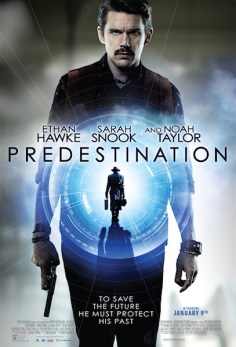 A man walks into a bar in ’70s New York. The bartender strikes up a conversation, which leads to a wager: if the man’s story is the most incredible the bartender has ever heard, he’ll give him a free bottle of whiskey. It had better be pretty good, because what we know that the man doesn’t is that the bartender, played by Ethan Hawke, is an agent for the Temporal Agency, travelling through time to stop crime before it happens; and he’s just had his face burnt off and completely rebuilt while failing to stop a notorious terrorist known as the Fizzle Bomber. Beat that.
 I don’t know how many people will remember, but the pair got a bit of attention back in the early ’00s with their debut feature


 Score:







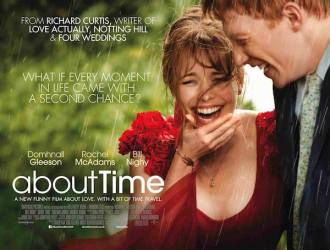 After Tim (Domhnall Gleeson) learns he can time travel back through his own life, his father (Bill Nighy) cautions him not to attempt anything too drastic — so he sets about finding love.
 I liked
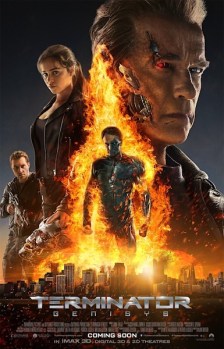
  Now, a good idea doesn’t guarantee a good execution, and here is where we begin to encounter Genisys’ problems. Time travel is a tricksy thing to engage with in fiction, and is highly prone to creating plot holes — something blockbusters regularly struggle with anyway. Genisys has at least one glaring one. Then there’s the general level of quality — the screenplay, acting, effects, and so on. In this regard, I suspect the reason so many people reacted so badly to it is that it follows, and riffs off of, two of the greatest sci-fi/action movies ever made. In and of itself, Genisys is no worse than any of the other half-dozen-or-so middle-of-the-road $150-million-plus-budgeted blockbusters we’re routinely served every year now. If you instead compare it to its iconic forebears, however, it comes up much shorter.
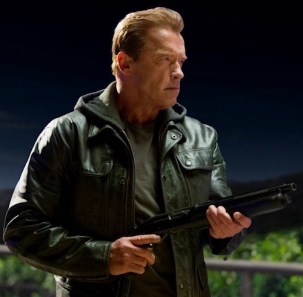 And yet the man who was responsible for those remarkable pictures, James Cameron, was impressed by it. He’s interviewed among the film’s special features, where he explains, “can I guarantee that you’ll enjoy it? No. I just know that I enjoyed the film, you know. But I strongly suspect that… you’re gonna love this movie.” Well, he was way wrong there! You almost feel a bit sorry for everyone in those special features, actually. They’re all so confident that Genisys is a great, well-made movie that everyone’s going to love, and they have big plans for a trilogy which they keep talking up. I would love to see their reactions after the reviews and box office figures came in…
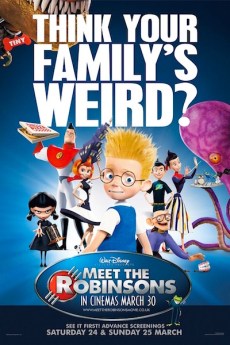 Disney’s 47th Animated Classic comes from their weak ’00s period, after the end of the so-called Renaissance and before what’s apparently been dubbed the neo-Renaissance (presumably no one could think of a synonym). This hails from the tail end of that lamentable era, though, so there are signs of recovery: Meet the Robinsons isn’t bad, just mediocre.
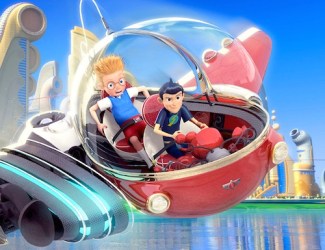 The time travel element of the plot is weakly thought-through. It’s not the point of the film, which is more about family ‘n’ stuff, but it’s central enough that it robs the already-underpowered climax of much weight — you’re too busy thinking “wait, does that make sense?” to be invested in events. Finally, the animation style has aged badly, now looking plain and under-detailed.
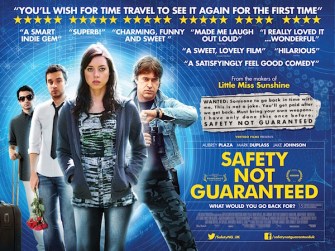 The debut feature from the director of all-conquering box office behemoth
  Maybe I’m missing something, I don’t know, but where other directors currently making a similar transition (Gareth Edwards, Josh Trank, Duncan Jones) showed some signs of a reason for the upgrade in their debut and/or sophomore features, I can’t fathom what singled Trevorrow out. He seems to have done alright with it though, so never mind.
 100Films.co.uk