
Christmas is on the horizon, with the usual glut of seasonal specials and high-profile miniseries/one-offs crammed into a couple of weeks. But that’s for my next TV column — this time, here’s a bit more of the usual stuff.

Doctor Who Series 11 Episodes 8-10
 The most recent season of Doctor Who went out, not with a bang, but with a whimper, in perhaps the most underwhelming “finale” the show has ever done. It wasn’t really a dramatic and exciting culmination of this year’s run of episodes, which is what a true “finale” is. Rather, it was just the last episode shown before the season… stopped. Fortunately, before that were two more episodes that proved this new era’s best stuff comes from its guest writers rather than its showrunner.
The Witchfinders saw the TARDIS Team head into the past for the third time this season, and once again brought up a heavy theme: after racism in Rosa and religious division in Demons of the Punjab, now it’s the misogyny of 17th century witch hunts. Fortunately it wore this somewhat more lightly than the previous two episodes, which meant it lacked their emotional weight. Instead, it was a fun adventure, revolving around an alien race reanimating the dead, and a broad, camp, but occasionally nuanced performance from Alan Cumming as King James I. I thought he was a lot of fun.
It Takes You Away set its scene as a “monster lurking near a remote cottage” tale, but pulled off a couple of twists to reveal something entirely different. It was an episode rich in science-fiction ideas — almost too rich, arguably, as the emotional impact they led to was powerful but perhaps not given enough screen time to be fully processed. But with some typically Doctor Who quirkiness thrown in, this was one of my favourite episodes of the season. Even if the execution sometimes faltered, I admired its ambition.
Which brings us back round to the finale, the stupidly titled The Battle of Ranskoor Av Kolos. It’s such a dumb, unpronounceable title that I don’t think I was alone in suspecting it was a cover for something else (in the same way the classic series used to hide the return of the Master by crediting the actor by an acronym in the Radio Times, for instance). But no, that sadly was the title. Even worse, it had barely anything to do with the episode itself — the titular conflict is over, with the Doctor and co arriving to help the few remaining survivors defeat the big bad. Or, rather, get a bunch of exposition from the survivor (with a few hoops jumped through to make sure that exposition is gradually doled out rather than received all at once), then virtually ignore him while they set about some other storyline.
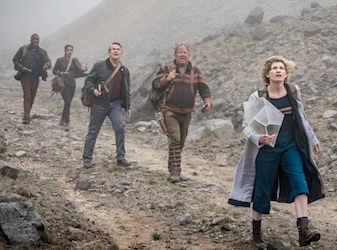 Typically for showrunner Chris Chibnall, it was a half-thought-through tale, with regular logic gaps and narrative dead ends, and none of the impact you expect from a season-ender. Kinder viewers may say that’s because there’s a New Year’s Day special imminent which is the real finale, but I think that’s just being optimistic. Certainly, the BBC haven’t seen fit to include the special in the season box set (even though it’s released a fortnight after the special airs), which I’m sure is partly a shameless cash grab, but also indicates its separate status.
With that in mind, we can already take an overview of the season as a whole. It’s been a mixed one for me, with a lot of stuff I really liked, but frequently undercut by dodgy execution. I’m not at all convinced Chibnall has the necessary skills to be in charge of the show — even the best scripts exhibit a lack of polish that Russell T Davies or Steven Moffat would’ve brought. And considering there are niggling faults across the board (the direction is rarely terrible, but pretty much every episode has some odd shot or editing choices), the blame must surely lie at his door. The next season won’t materialise until sometime in 2020 — hopefully that’ll be long enough to get things more in order. But with pretty strong ratings and praise in some quarters, I’m not convinced the production team will see where they need to improve.
Crisis on Earth-X
I ended up finally quitting all Arrowverse shows just before this crossover event aired last November, though I’d intended to make it through these episodes first (I fell behind and just never picked them back up). The crossover itself seemed to go down well, and with a new one having recently aired that I also intend to watch (to see how they’ve handled Batwoman), I thought I’d first catch up on last year’s.
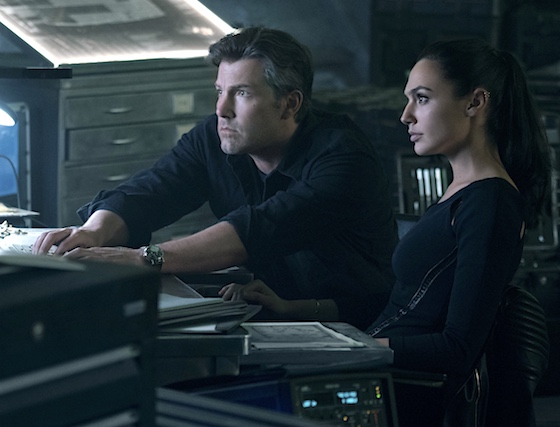
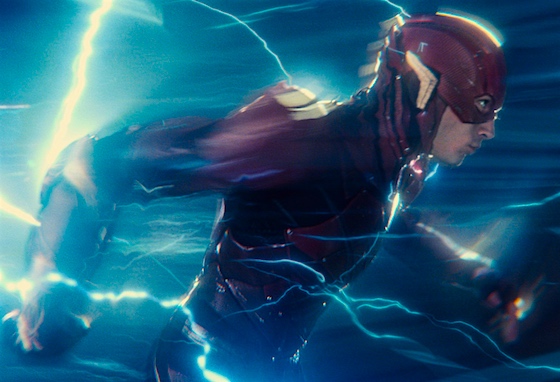
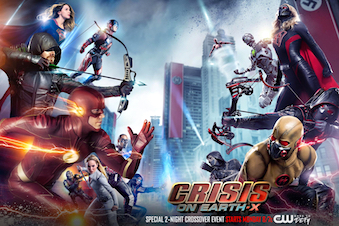 Whereas the previous four-show crossover failed to really coalesce into a successful single narrative, Crisis on Earth-X manages to lose the sense of hopping about across different series to play more like a single four-part story. I suppose that’s not the only way to do a crossover, but for someone tuning in just for the event who isn’t interested in the ongoing storylines of each individual series, it’s more entertaining this way. That said, it’s not as if those elements go away: the story is kicked off by everyone coming together for the wedding of Barry Allen (aka the Flash) to his longtime love Iris West. The nuptials are eventually interrupted by Nazi doppelgängers from another dimension (I do love how outright comic booky these shows can be), but it takes most of the opening episode to get there — I’d forgotten how much time these shows spend on soapy stuff like weddings and relationship woes. In that regard, they’ve certainly been designed to fit their US network (The CW, more associated with teen-girl content until these series came along). From there it goes full superhero show, with large-scale action sequences and dimension hopping antics. It may not transcend its genre roots to be objectively high-quality premium TV, but it’s pretty fun.
Agatha Christie’s Poirot Series 2 Episodes 4-6
 One day I’m going to watch all of Poirot from the start, but I happened to see these few episodes this month. They’re from the series’ early days (obviously), when episodes were an hour long and based on short stories (as opposed to the feature-length novel adaptations they did later). What’s remarkable is how different they are, structurally and tonally, from those later episodes, with which I’m more familiar. The feature-length ones each feel like a standalone movie, whereas these early episodes do feel like a TV series, with “case of the week” plots. For example, there’s a regular recurring cast (alongside the titular detective there’s his sidekick Captain Hastings, his housekeeper Miss Lemon, and trusty Inspector Japp), who all appear every week and each get some kind of subplot, even if it’s not tied to the main storyline — in one episode, while the other three are away solving a jewel theft, Miss Lemon has to hunt for her missing keys. And that’s another thing: there’s not always a murder. And there’s not always a pile of suspects, either — none of these episodes feature the famous “gather all the suspects in one room and explain what happened”-style finale, so synonymous with the series. So, in many ways it feels quite strange, but still entertaining.
Things to Catch Up On
 This month, I have mostly been missing Death by Magic — not a high-profile show, maybe, but a new Netflix thing that seems up my street. Other than that, I’ve been conspicuously failing to get around to a bunch of “box sets” (I hate calling digital collections “box sets” — there’s no “box” involved) that I’ve been meaning to get to for varying amounts of time: The Little Drummer Girl, Killing Eve, The Haunting of Hill House, Lost in Space, the Netflix years of Black Mirror, Ash vs Evil Dead, Chilling Adventures of Sabrina (which even added a new Christmas episode), Riverdale, Mindhunter, Inside No.9… Not to mention everything that’s on my long-term back-burner, like Breaking Bad, The Wire, The Sopranos, The Shield, The X Files, things that don’t begin with a definitive article… There’s no doubt many more that are currently slipping my mind, anyway. With an abundance of Christmas specials incoming, I guess whichever series I dive into next will have to wait until January.
Next month… is January, but expect an overview of Christmas telly before that.
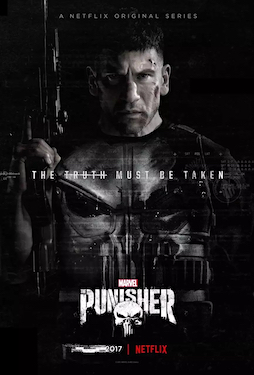 The fourth live-action iteration of Frank Castle, Marvel’s murderous anti-hero (and people moan about Spider-Man reboots), debuted in
 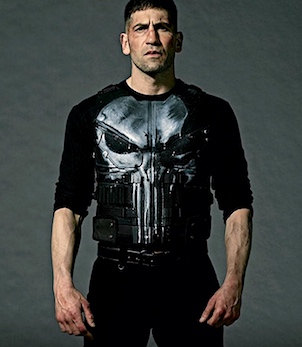 In the title role, Jon Bernthal is fantastic. You can absolutely believe him as a revenge-driven psychopath capable of killing anyone and everyone, but also as a kind-of-charming strong-but-silent type with a heart and moral code who will definitely do the right thing. I’ve seen some critics and viewers opine that now is the wrong time for a series about a hero who just murders indiscriminately. I say those people definitely haven’t watched this Punisher. Although the plot is a conspiracy thriller, the series invests a lot of time in the emotional world of Frank Castle, making him human and moral rather than just a single-minded murder-machine. Bernthal makes what could be a very one-note role into a plausible human being; one who you believe might be able to find redemption and leave someday. And maybe that makes him even more tragic — he could find it; it’s possible… but likely? There’s the rub. As it’s also trying to engage with issues facing combat veterans once they return home, it makes for a clearly different, more serious flavour for an MCU production. How successfully it explores these weighty issues is more debatable.
 The third and final series of BBC Four’s sitcom about a couple of mates whose hobby is metal detecting was every bit the equal of the first two runs, which saw the show place on my list of
 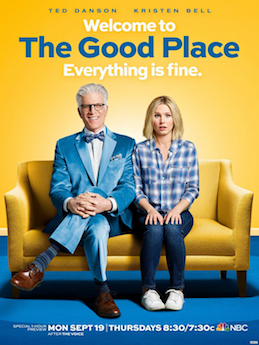 I only heard about this after its Big Twist was much-discussed online, so starting it was an exercise in knowing there was a big reveal awaiting. Fortunately, that knowledge doesn’t overshadow everything that comes before it. For those who still aren’t aware of it (especially as it’s only on Netflix on this side of the pond), it’s about a woman (Kristen Bell) who dies and goes to Heaven only due to an admin error, so she tries to better herself so that she’s deserving of her place. Other complications emerge as the season goes on, but that’s the premise. There’s a lot of plot for a sitcom — although it’s not necessarily immediately obvious, it tells a 13-episode story; this makes Netflix quite a natural home for it, actually, as it’s not your typical “every episode is fundamentally standalone” sitcom. But it’s also very funny in amongst all that, mining not only the characters and their foibles, but also the uncommon situation they’ve found themselves in. The shocker in the finale is just the icing on the cake. I hear season two has gone off the boil somewhat, but I’ll find out for myself once it’s all wrapped up.
 This month, I have been missing so much stuff. There’s been the fourth series of Peaky Blinders on BBC Two (which concludes this week, so we’ll whizz through it sometime in the new year); the second season of The Crown on Netflix (also waiting for the new year now); the same streamer’s first ever miniseries, Godless; the immensely acclaimed Blue Planet II (now available in UHD on iPlayer, too!); and I’m behind on Arrow and The Flash so haven’t reached the four-show Arrowverse crossover. And those are just the ones I can remember right now.




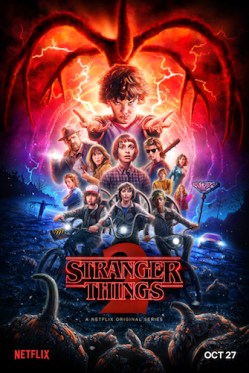 Netflix’s most talked about show (well, unless you count House of Cards for all the wrong reasons) returns wth a second season that isn’t just a continuation, it’s a sequel — note how it’s officially called Stranger Things 2 (which
 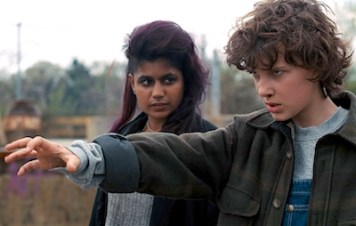 Now, you can’t discuss Stranger Things 2 without mentioning the infamous Chapter Seven. If you’ve missed the internet’s collective exclamation of disappointment and/or annoyance, IMDb has it in a nutshell: on there, the user ratings of all the other episodes (from both seasons) range from 8.5 to 9.5, a spread of 1.0 (obviously), but Chapter Seven has 6.2, a full 2.3 marks below the next lowest score. Ouch. It’s not great, but I didn’t think it was that bad. It’s a total aside from the main action, and placed where it is seems designed just to delay the pay-off to Chapter Six’s cliffhanger for another 45 minutes (in a regular programme it’d be two weeks, but this is Netflix). I don’t really hold with that being an actual problem, though — that’s just taste. No, the real problem is that it rushes through a character arc for Eleven that would’ve been better presented over multiple episodes. Considering before that she’s spent several episodes just sat around watching TV, there were surely better ways to structure her role this season.
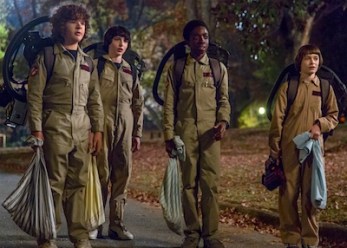 Even though it has all the big action stuff you’d expect, Chapter Nine still devotes a serious chunk of time to a character-focussed epilogue; reminding you that, as with most loved shows, the heart of it is the characters and their relationships. Indeed, although the season as a whole didn’t have the same effectiveness as the first, I thought the finale was a better climax. In fact, it would be a perfectly valid place to leave the entire series… but there are (at least) two more seasons to go. It might be nice if season three opened up the timeline a bit, because so far Hawkins seems to be a place where Crazy Terrible Shit happens over a couple of days and then everything’s fine for a whole year.
 I had nice things to say about the first half of Red Dwarf XII in
 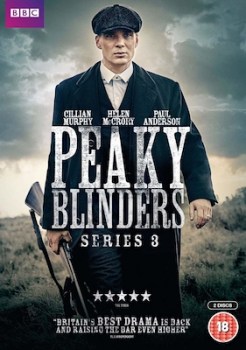 Beginning with a significant time-jump and monumental change in circumstance worthy of a Mad Men season premiere, the third series of Peaky Blinders soon sees everyone’s favourite Brummie gangsters embroiled in espionage and counter-espionage as they’re enlisted to help exiled Russian aristocracy launch a bid to reclaim their country. There’s so much more going on than that, but I won’t get into it here because we’ll be here all day — Peaky Blinders is a complexly plotted series; right up the final episode, which contains revelations that turn the previous six hours on their head. Even with all that narrative to get through, it still finds plenty of time to give most of its large-ish ensemble cast some strong character arcs. There are a few streaming series that could learn a thing or two from that…
 I confess: I started watching Rick and Morty fully expecting to hate it. I’d always thought it looked and sounded annoying, so I paid it no heed… but then it seemed to keep coming up — people referring to it in excited tones, and it ranking 7th on
 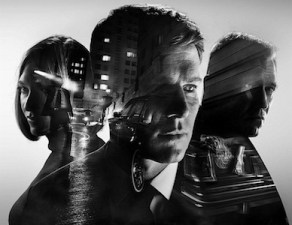 This month, I have mostly been missing Mindhunter, David Fincher’s new Netflix series about the early days of criminal psychology and criminal profiling at the FBI. It was actually released before my last TV post, but I didn’t have Netflix at the time so I didn’t bother to mention it. I would watch it next, but The Punisher is out tomorrow. Maybe after that…
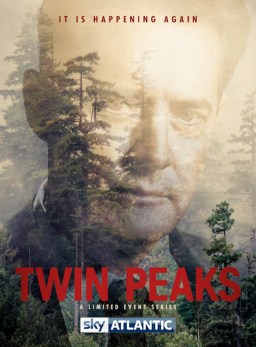 When the return of Twin Peaks was announced with the tagline “it is happening again”, I think everyone assumed it was, at worst, just an echo of one of the series’ famous lines which happened to work well for a revival; or, at best, an indicator to the plot — that the strange, sometimes otherworldly events of the original series were about to reoccur. As it’s turned out, perhaps what the tagline is most applicable to is the series’ effect: 27 years ago, Twin Peaks pushed new boundaries for what could be done on television, and the medium as a whole spent a couple of decades catching up. Now, rather than merely return to what he did all those years ago, as most revivals do, co-writer/director David Lynch is once again pushing at the boundaries of what’s possible or acceptable on mainstream(-ish) television. If “it” is “David Lynch being way beyond everybody else”, then it is indeed happening again. If you were after a comforting pile of references, callbacks, reflections, and imitations of the original series, you’re going to be disappointed — as one or two critics have been. If you were after something new in the weird world of Twin Peaks, well, step on up.
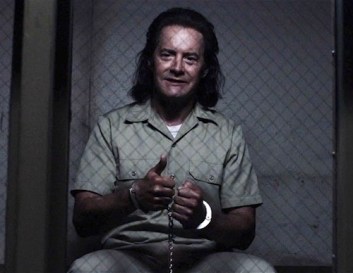 It’s also been widely reported that Lynch and co-creator Mark Frost wrote a single 400- or 500-page screenplay, shot it all, then chopped it up into 18 episodes in the edit. This I can very much believe. Individual episodes are almost shapeless as hours of television, and plot threads disappear for several episodes at a time, only to crop back up as if we’d never been away. While many series these days boast they are “actually an X-hour movie”, they still often function as individual episodes — they may not be completely standalone, but the shape of each hour, the way they’re paced and build to a cliffhanger, and so on, is episodic. Twin Peaks, however, feels like it means it — no doubt the legacy of Lynch’s production methodology.
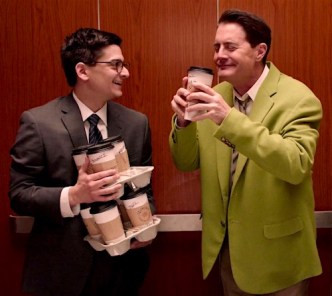 Some five-and-a-half hours into this 18-hour movie, Dougie hands his boss a stack of files. The boss slowly looks through them one by one, baffled by the seemingly senseless doodles Dougie has scrawled all over the pages. But after a while he begins to see a pattern, and comes to understand something. In the end he thanks Dougie. Dougie, as ever, looks blank, before doing a failed imitation of being a normal human being. Is Lynch deliberately setting out to say that he is Dougie and we are Dougie’s boss? That all of us are taking a long, slow look at Lynch’s indecipherable doodlings until we eventually discern some meaning. Or is it just a scene in Lynch’s world that we can coincidentally project that interpretation on to? As ever with David Lynch, I’m not quite sure.
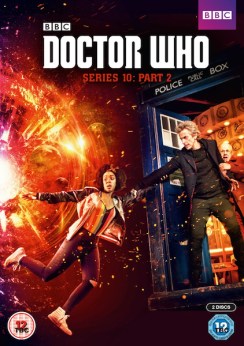 Well, I suppose it was too much to hope it would last. The most consistently great season of Doctor Who in over half a decade threw it all away with a frustratingly variable trilogy of stories (note: not a three-parter — this pedantic old-school Who fan insists we observe the difference). It all began with Extremis, which starts strong with a decent mystery (there’s a book in the Vatican library that causes anyone who reads it to commit suicide) and some good humour (Bill’s interrupted date), but increasingly becomes a lot of running around to delay the reveal. It’s a non-story pretending to be a story, basically. I don’t even care that it basically has an “and it was all a dream” ending. In fact, writer Steven Moffat found a way to make “and it was all a dream” work, which is a rare and miraculous thing. But the episode that leads to that ending doesn’t do enough heavy lifting to support it. A waste.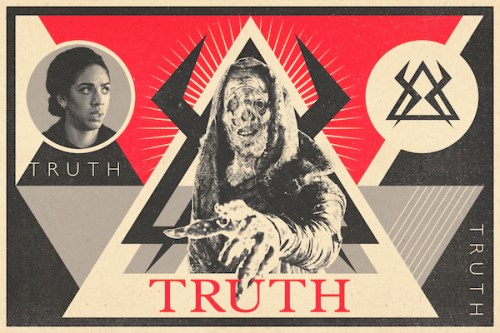
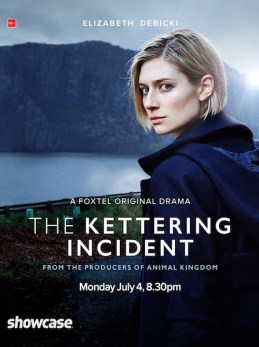 In a remote small logging town where everybody knows everybody else, a teenage girl, who’s secretly into drugs and partying and is the daughter of a prominent local man, goes missing under mysterious circumstances in the creepy woods, which have a history of possibly-supernatural strangeness… Yes, this is the Australian answer to Twin Peaks — a comparison I have perhaps unfairly amped up with that description. It’s more about Anna Macy (
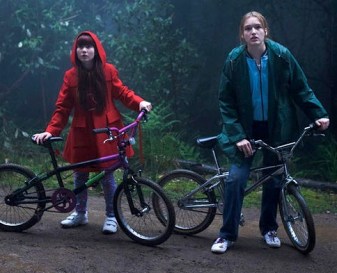 Personally, I want to know what the hell is meant to be going on, but the finale felt a lot like weak sci-fi to me and I’m not sure the answers will be worth it. I have that same hot/cold feel about the series as a whole: whenever it’s actually in front of my eyes I become engrossed, invested, and enamoured; but within hours of it finishing I feel a kind of indifference creep in. I can’t really explain why. It’s probably not a fair reaction.
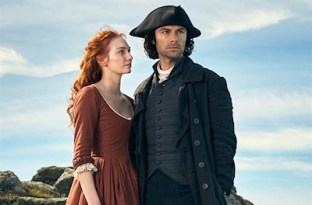 This month, I have mostly been missing the start of the third series of Poldark. Well, I’ve not even watched series two yet. I also
  The 36th run of Doctor Who kicked off with an episode titled The Pilot — no coincidence, that. This is the most newcomer-friendly episode of Who for 12 years, an episode finely calibrated to establish everything for a first-timer but also function for regular viewers too. A lot of that effectiveness can be attributed to Pearl Mackie as Bill, the new companion to Peter Capaldi’s Doctor. After a run of oh-so-special companions running back years, Bill is just an ordinary young woman; but of course she’s extraordinary in her own way: ready to learn, eager to help, full of both inquisitiveness and caring. This is surely the birth of both a fan-favourite companion in Bill and a star in Mackie.
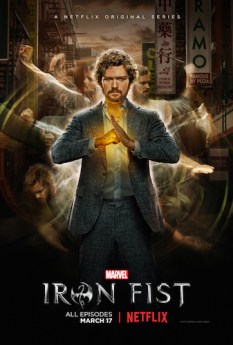 The last of the Marvel/Netflix series before the Defenders team-up, Iron Fist has certainly divided critics and viewers. It doesn’t begin well: the opening episode is possibly the worst thing yet released as part of the MCU, and I only say “possibly” because I never bothered with Agents of SHIELD after the poor reaction to season one. It’s needlessly slow, repetitive, the characters behave implausibly, and the fights are terrible, looking like a first rehearsal filmed with one take. Things do improve — there are more engaging characters, some interestingly developed arcs, and better realised fights — but it still doesn’t come together as well as it could. For one thing, it makes the running of Rand Enterprises a major element, but has a very vague-seeming understanding of how business actually works. It’s just too simplistic.
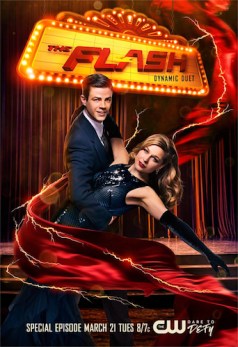 Amongst the eight Arrowverse episodes I watched this month was this: the much-anticipated musical crossover between The Flash and Supergirl, which star Glee alumni Grant Gustin and Melissa Benoist respectively — hence why (some) people called for a musical episode, which caused the producers to decide to do one. Somewhat ironic, then, that it seemed to go down well with critics (at least per
 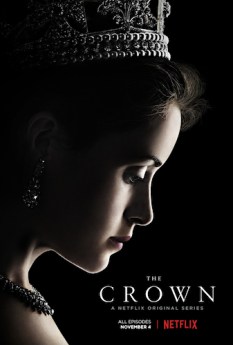 The most expensive TV programme ever made (or not, whatever) certainly has its budget plastered all over the screen, which hopefully didn’t distract most viewers in the way it did me. It shouldn’t, really, because this is a good drama about the humanity behind the public faces. Its adherence to fact is apparently variable, which I imagine is very irritating to historians of the period, but it works for the fiction. There are great performances all round, with John Lithgow in particular disappearing into Churchill to the point that I forgot I was watching an actor more than once. There’s an interesting plot thread early on about the position of Philip (Matt Smith) relative to Elizabeth — how his role as a husband is challenged by her position as Queen, etc — which goes a bit awry as the series goes on and has other plots to focus on. It’s left quite open-ended, so hopefully it’ll be completed in the second season.
 I devoted just 32 words to Line of Duty series one when I finally got round to watching it
 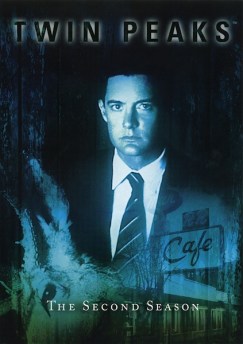 I first saw the debut season of Twin Peaks many years ago during a repeat run (it was a ‘classic series’ even then, though with hindsight it can’t’ve been a decade old at the time), then watched it again when the DVD came out, but this is my first time watching season two (legal complications delayed its DVD release for what felt like forever, and by the time it finally came out I just never got round to it). The second season is infamous for representing a steep decline in quality, though that isn’t yet evident from this batch of episodes, which covers up to the revelation of who killed Laura Palmer and their capture. I’d say it lacks the pure concentrated genius of the first season, having ramped up the quirkiness quotient and, at the behest of the network, rushing the resolution of the Laura Palmer mystery, but it ain’t bad by any means. There’s certainly much to like in the off-kilter characters, the folksy mysticism, and some fantastic performances — Kyle MacLachlan is a constant delight as Agent Cooper, but Ray Wise is frequently incredible as the grieving Leland Palmer. But I guess it’s mostly downhill from here…
 This month, I have mostly been missing series two of Peter Kay’s Car Share, which is a couple of episodes in on the telly or
 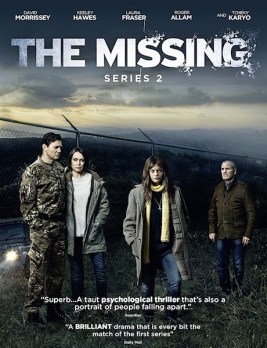 While everybody’s busy fawning over Happy Valley (never watched it) and Line of Duty (series one was quite good; I need to catch up), I reckon The Missing is one of the best dramas British TV has produced in a good long while. The second series (which aired towards the end of last year over here and, coincidentally, started last Sunday in the US) is every bit the equal of the first, and possibly even better — and considering how good the first was, that really is an achievement.
 aka the BAFTAs, obv. I have to say, I thought it was a pretty dull show this year. For starters, Cirque du Soleil — impressive, but what’s it got to do with the last year in film? Why did no one write Stephen Fry some good material for his opening monologue? Then there were the awards themselves. Short on surprises — the big prizes went where expected, the smaller ones erred British. None of the American winners are committed to giving a decent speech here because they’re saving it all for the Oscars. Well, apart from the
  It must be a slow time for TV — I don’t even feel like I’ve been missing all that much. Well, X-Men spin-off Legion recently started and I haven’t got round to that yet, and 24 spin-off / sequel / continuation 24: Legacy started in the UK last night, so I’ve barely had a chance to watch it (I’ll have something to say about that next month, then). So I really have no excuse for not watching Westworld yet. Oh, and I need to get on with starting my long-planned re-watch of Twin Peaks, because there are only…
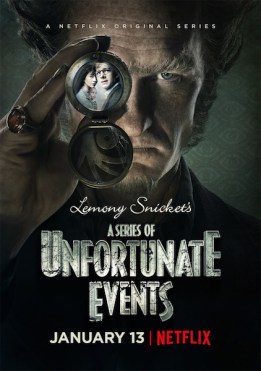 I’ve never read A Series of Unfortunate Events, the 13-book cycle of faux-gothic novels by Lemony Snicket that recount the terrible lives of the Baudelaire orphans as they are stalked by the scheming Count Olaf. I am, however, a verified fan / defender of the 2004 movie adaptation (I even
  As Olaf, Neil Patrick Harris has the difficult task of being both comically inept and genuinely menacing, as well as appearing in any number of disguises (well, four). Opinion seems divided on whether he manages this better than Jim Carrey in the film, but, well, that’s opinions for you. Personally, I thought he was very good. The extra screen time here (what was done in 108 minutes of film is granted 299 minutes of TV) means he has to work at a different level and pace to Carrey, and I think there are multiple moments where he nails it. Similarly, some may think the child actors are guilty of vigorously flat delivery of their lines, but I think this is just another aspect of the Wes Anderson-esque style — as the viewer (and, possibly, the cast) become more accustomed to the material, so the quality of the performances (and/or the perception thereof) improves.
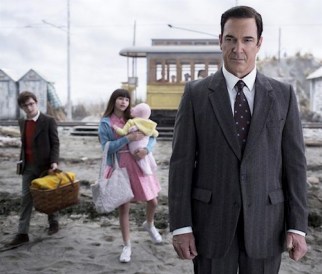 I think most would’ve thought A Series of Unfortunate Events was dead on screen after the film, but this series (and the reaction to it) suggests Netflix have been vindicated for deciding to revive the property. Let’s hope they have the common sense to do the right thing and commission the two more seasons needed to complete this sorry tale. In the meantime, I’m very favourably disposed to read all the books…
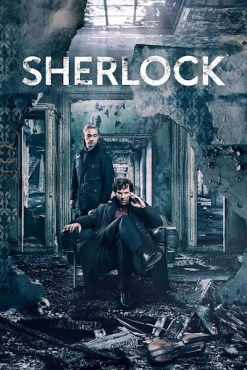 Sherlock comes to an end (for now) with another variable and divisive series. That’s actually the way it’s been received ever since the start (for all the people who think it only lost its way in the third run, there were plenty who slated various parts of it during the first and second series too), so I don’t think we should be so surprised. For my part, I enjoyed it on the whole.
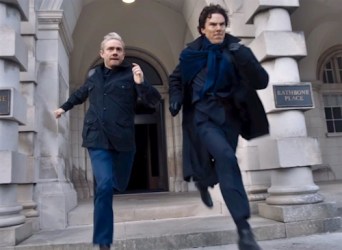 Sherlock’s commitment to being a fast-paced, audience-challenging adventure drama that strives to be constantly engaging and entertaining is definitely commendable, and a welcome contrast to much of the slow, dour TV drama we tend to produce over here — even if the end result is sometimes messy or unpopular. With events in-show leaving our heroes reset to a more familiar Holmesian situation, here’s hoping the big-name cast can be tempted back for a few more adventures in a couple of years.
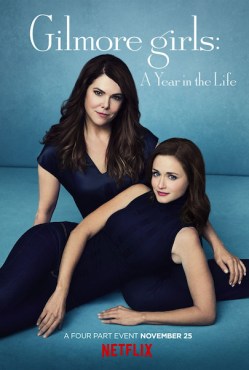 Nine years on and Gilmore Girls graduates from being considered a twee comedy-drama on disparaged network The WB to a major cultural event, thanks to it being produced for the arbiter of all modern televisual culture, Netflix. Instead of 22 42-minute episodes of network TV we get four feature-length instalments, though it’s still very much a series: the pros and cons are shared across the board.
 Bizarrest of all is the problematic ending. Thematically, A Year in the Life begins to look like it might be about moving on, new horizons, that kind of thing — indeed, I kind of expected it to end with Lorelei moving out of Stars Hollow. But the climax — the infamous final four words… well, you could see the development as a signal of a fresh start (very literally, new life), but it doesn’t play that way. Given Rory’s personal story (her career and relationships falling apart) and situation (single, living at home), it’s less a new path forward and more a depressingly regressive loop. If you’re interested in a fuller dissection of these issues, allow me to recommend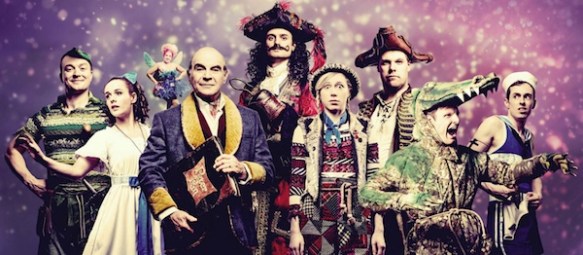
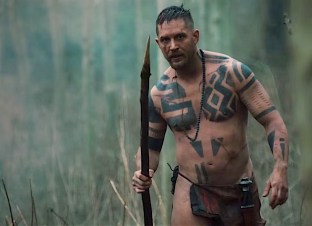 This month, I have mostly been missing Taboo, the BBC’s dark new period drama starring Tom Hardy and written by Steven Knight. I’m sure I’ll get round to it soon, but then I’ve been saying that about Peaky Blinders (you know, the BBC’s dark period drama written by Steven Knight and sometimes starring Tom Hardy) for years and still haven’t even started it. Its scheduling on BBC One on Saturday nights feels thoroughly at odds with how it looks (surely midweek BBC Two?), but putting a proper drama on our highest-profile channel on its highest-profile night seems to have been a popular move, so what do I know?
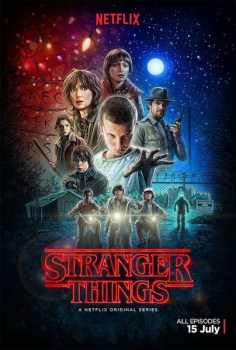 Hype — it’s a funny old business. It’s hard to have avoided hearing something about Stranger Things, Netflix’s summer hit that went down like gangbusters, its ’80s nostalgia perfectly calibrated to target the kind of people who run entertainment news websites these days — just to be cynical about it. Or truthful. Then there came the backlash, which attested there was nothing more to the show than those callbacks and tributes; a hollow experience of copying and “hey, remember this? That was good, wasn’t it?”
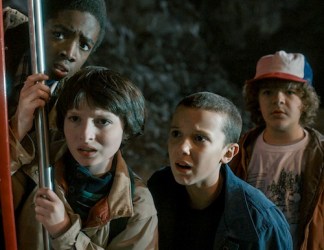 Without wanting to get into spoiler territory (despite what the media would have you believe, not everyone has Netflix all the time and not everyone watches every new zeitgeisty series immediately. Apologies if you write for an entertainment site and I’ve just given you palpitations), everything comes together nicely for a barnstorming pair of climactic episodes. For my money, the penultimate chapter is the best one: with a bunch of revelations out of the way (some of them easily guessed but finally confirmed), the series kicks off a run of long-awaited fan-pleasing events (as in many a drama, it takes this long for everyone to finally start talking to each other; also, the bit with the van!) The finale is less accomplished, with some characters wandering around for a bit in a way that feels designed to pad the running time. Still, it’s a satisfying conclusion… to season one, anyway.
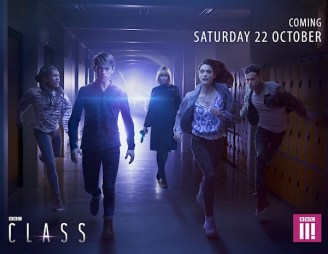 Ten years to the very day since the launch of the original dark, sexy BBC Three Doctor Who spin-off,
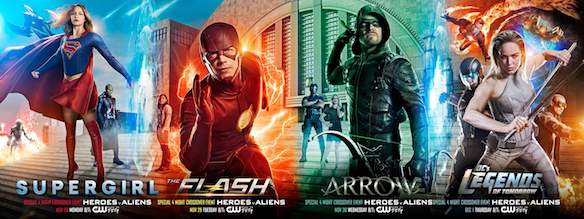
  The CW’s raft of superhero shows restarted on UK TV this month. I’ve given up on Legends of Tomorrow and am still not joining Supergirl (though I got hold of the opening episodes, co-starring Superman, to maybe make time for at some point); but, five seasons in, Arrow has me suckered for the long-haul, and The Flash tempted me back with the intrigue of adapting Flashpoint. I’ve never got on the bandwagon with Flash, which attracted a lot of praise during its first season that I simply didn’t agree with, leading it to outshine Arrow in ratings and people’s affections. Arrow has long been off the boil, and season five certainly hasn’t got it back up to temperature so far, but The Flash had plenty of issues of its own. It’s not problem free now, but I actually really liked the first couple of episodes of the new season. It’s still a long way from the top tier of TV superheroes (Netflix have that sewn up), but it’s likeable.
 This month, I have mostly been missing the most expensive TV show ever made*, Netflix’s much-discussed The Crown. I don’t know if they’ve been pushing it as much in the rest of the world as they did in the UK, but it certainly felt like it was everywhere… for about a week, as is usually the way with Netflix series. Also missed: the equally-discussed Netflix-exclusive new run of Black Mirror. Both of these are because I don’t keep up a permanent Netflix subscription, but between them, the forthcoming Gilmore Girls revival, and the Series of Unfortunate Events remake in January, I will be signing up again late in December (using the free month voucher they had in the Radio Times, hurrah!)
 Finally done with most of these (still need to find time for the last two Legends of Tomorrows). One shouldn’t have that attitude to something one is choosing to watch, should one? I have a certain loyalty to Arrow, because they did a good job for seasons one and two, even if it’s waxed and waned since; but I’ve never really got on board with the adulation The Flash has received, and Legends of Tomorrow is mediocre to poor with regularity… though now and then they all exhibit flashes of worthwhileness. I rarely make the conscious choice to give up on a series (do it all the time by accident, though), but I’d consider abandoning a couple of these before the start of their next seasons… were it not for the ‘promise’ that they’re all about to be completely interconnected, at least for one almighty four-way crossover (with moving-to-the-same-network Supergirl).
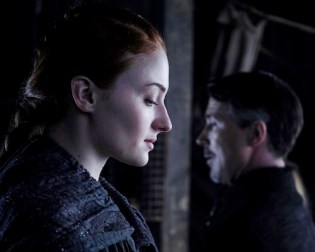 First up: The Door, surely one of Thrones’ best-ever episodes. That ending rather overshadows everything else (because wow, in so many ways), but before that there was Sansa being badass, proper development of Arya’s storyline, the hilarious play-within-a-play, a marvellous scene between Dany and Jorah, and a great moment for Varys, too. The week after’s Blood of My Blood was more about setting things up the second half of the season, which is an important role to fulfil but less dramatic in itself. A couple of surprise returns, though, including a big reveal for book readers (maybe).
 Sometimes it’s hard to separate what one might count as story development versus mere place-setting in Thrones, but at its best they can be one and the same, and episode seven managed that. Finally for now, No One did actually bring some storylines to a head, including some very long-awaited developments, particularly in Braavos. Throw in an equally-long-awaited reunion and a couple more unexpected returns, and you have a pretty satisfying episode.
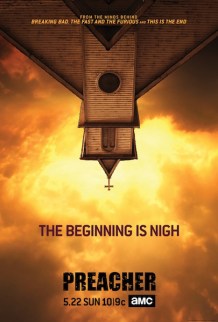 Sam Catlin of Breaking Bad and Seth Rogen & Evan Goldberg of… all those films Seth Rogen & Evan Goldberg have made (you know
  This month, I have mostly been missing anything I watch with my other half. It’s prime tennis season — eight weeks that starts with Geneva and flows through the French Open, Stuttgart, Nottingham, Birmingham, Queen’s, Eastbourne, and ends with the crowning jewel of all tennisdom, Wimbledon; all with near wall-to-wall coverage thanks to Eurosport, ITV4, and the BBC. It largely takes over the time we normally spend watching stuff together, so no room yet for the final seasons of Wallander or The Musketeers (not that we’ve watched season two yet, actually — oops), nor the just-finished fourth season of The Most Underrated Show On Television™, The Americans. Apparently it ended with “the Best Episode of TV So Far This Year”, according to one review’s headline (which obviously I can’t read because spoilers). Maybe in July.
 100Films.co.uk