
When I mentioned in September’s monthly review that I hadn’t posted a TV column that month, I was intending to get one up within a few days. As it turned out, for various fundamentally unimportant reasons, it’s taken until now — so, really, this one covers two months.
Much like my film viewing, my TV watching hasn’t been as prolific as normal, including some regulars falling by the wayside (no Twilight Zone again). But there are still a few things worth talking about.

Stranger Things 3
 On what you might unkindly call a superficial level, the third season of Netflix’s signature series was thoroughly entertaining — it’s frequently funny and exciting, with cool moments aplenty (especially in the last couple of episodes), and many enjoyable callbacks to both ’80s pop culture and within the show itself. But dig any deeper and it begins to seem less surefooted, with what felt to me like muddled themes and character arcs, and a sense that the mythology was treading water. I don’t particularly object to the way any characters were treated, nor the destinations any of them reached (especially as a fourth season was inevitable, so wherever this run finished up was only ever temporary), but I didn’t feel like they were being guided anywhere with any real purpose. There’s something to be said for storylines like that, but when you’re trying to play some kind of redemption arc, or a coming-of-age tale about burgeoning independence (or whatever), I feel like you need to be a bit clearer-eyed. But hey, I still enjoyed it a lot — it’s a fun watch, and I imagine even more so if you have nostalgic memories of an ’80s childhood — I just think there’s still some room for finessing.
Watchmen Season 1 Episode 1
 Alan Moore and Dave Gibbons’s graphic novel Watchmen is a seminal work of the form — I’m sure you don’t need me to tell you about that at this point. Over the past decade it’s been adapted into a film, and both prequelised and sequelised (I think? I dunno, I stopped paying attention) in comic books, to varying degrees of success and controversy. So when HBO announced they were bringing it to TV, there was much trepidation. Early promises that it wasn’t a remake or prequel or sequel, but instead a ‘remix’, just added to the confusion.
Now it’s finally here, it’s clear that such bold reports were perhaps a bit of an exaggeration. Well, I say “clear” — I’ve only watched the first episode (two have aired, out of nine) so there’s plenty of room for things to change, but (so far at least) it seems to be definitively set in the world of the comic book (and not the movie, which made some significant modifications to the climax) and in 2019 (whereas the comic is set in the ’80s). So it is a sequel… but it’s not a direct sequel, because very few of the original characters have a part to play (yet, anyway). So it’s a new story set in the same world… albeit one where the events of the first story have had a massive impact, and some of the same thematic concerns are coming into play — not to mention a load of familiar iconography. Okay, maybe “remix” wasn’t a wholly terribly epithet after all.
Anyway, it’s early days, but there’s a lot of promise and potential here. Reading the original before viewing may not be essential, but it’s going to help a lot (besides which, it’s a damn good book). And if you want to go even further down the rabbit hole, be sure to check out the tie-in Peteypedia website, which provides a lot of extra info to help bridge the gap between book and series.
Catherine the Great
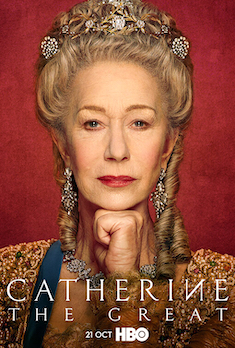 HBO and Sky Atlantic have teamed up for this lavish four-parter about the life of the famous Russian ruler, conceived by and starring Helen Mirren. The big bucks those broadcasters are known for are all over the screen here — it looks suitable sumptuous, with grand locations that positively shine, especially in UHD. Unfortunately, nothing else about the production is up to scratch. The writing is thoroughly mediocre — it most reminded me of The Tudors, although that seemed to know it was a bit of trashy fun, whereas I think Catherine the Great wants to be taken very seriously. But the dialogue is uninspiring, the characters uninteresting and underdeveloped (we’re told the relationship between Catherine and Potemkin is some great love affair, but they strop around like moody, jealous teenagers), and the flat performances do nothing to elevate any of it — and despite her general acclaim, Mirren is probably the weakest of the lot. Pretty, then, but vacant.
Dad’s Army: The Lost Episodes
 The BBC’s 1970s policy of junking programmes because they supposedly no longer had commercial value is a familiar topic for Doctor Who fans, who’ve spent decades hoping and hunting for copies of missing episodes. But it was an organisation-wide policy, so Who was far from the only show that suffered — Dad’s Army was another. It’s a perennially popular sitcom here (even today repeats land among the most-watched programmes of the week), so you can see why it made commercial sense to invest in recreations of the missing episodes — especially as there’s only three of them.
The pre-broadcast press and ads emphasised heavily that these were intended as a tribute (presumably because that attempt at a feature film revival from a couple of years ago went down so badly). The sense of affection for the original seeps off the screen, from the faithfully recreated set to the performances, which ably tread the fine line between flat impersonation and respectful imitation. By that I mean the cast were clearly trying to play the roles as they were originally performed, but without getting stuck in a rut of mere emulation, instead injecting a reasonable amount of their own interpretation of the characters.
So, taking the project as it was intended — as a loving salute to the original programme, which also plugs a gap in its record — The Lost Episodes should be classed as a success.
Next month… the golden compass leads us to the northern lights as His Dark Materials is readapted for TV.
 The first of this month’s quartet of trips to Westeros, Stormborn, demonstrated better than
 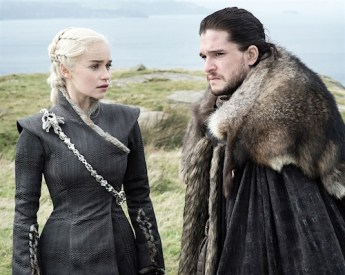 The most epic so far came in The Spoils of War. Apparently it’s been dubbed the Field of Fire — if there’s one thing Game of Thrones is consistently good at, it’s giving its big events cool monikers. (The “Field of Fire” is also an event from the series’ backstory, I believe, so maybe some of the reviews I read just got confused.) But it’s not just cool shots of fiery destruction that make this episode so satisfying: it’s the way that changes the game. Not to mention characters coming together after so long apart, both on the battlefield and not. That two girls talking in a crypt can be as thrilling as a dragon blowing shit up is… well, how character investment works, I guess. Some reckon this is the series’ best-ever episode. I wouldn’t go that far, but it is right near the top.
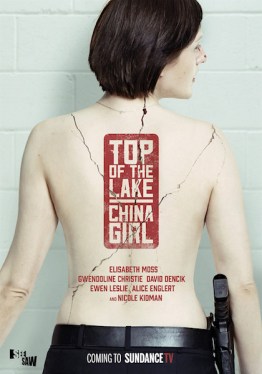 Elisabeth Moss, star of both Mad Men, a series partly about the sexual politics of the ’60s workplace, and The Handmaid’s Tale, a series about the sexual politics of a world where women are baby-making slaves, returns as Det. Robin Griffin for a second run of Top of the Lake, which is now a series about the sexual politics of present-day Australia.
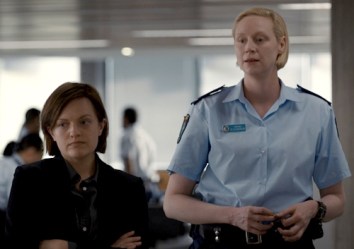 There are some great performances in there too, mainly from the female characters — no surprise, really, considering creator and co-writer/co-director Jane Campion is clearly interested in exploring women’s place in the world. Moss carries things, with Robin competent but combative at work (she needs to be, as the Australian police force seems stuck in the ’70s with its gender politics) even as her personal life is a tumultuous mess. Nicole Kidman gets to play it kooky as the adoptive mother of Robin’s child, who’s gone all spiritual and lesbian recently. The most entertaining is Gwendoline Christie as an enthusiastic constable who latches on to Robin, eager to be her protégé. She brings the bulk of the humour, with great lines and moments aplenty, but also brings emotional depth when needed.
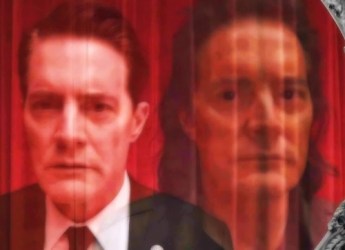 I must be honest with you, dear readers: the longer this Twin Peaks revival goes on, the less I feel I’m enjoying it. It works best when Lynch is trying to out-Lynch himself. Those episodes are crazy and borderline nonsensical and insanely challenging to what constitutes filmed entertainment, but at least they’re interesting; and if you don’t get it you can dismiss it as “it’s Lynch, innit”. It’s actually the ‘normal’ stuff — the investigations and machinations in South Dakota, Las Vegas, and Twin Peaks itself — that are beginning to get on my wick. Again, at times there are moments of clarity or inspired weirdness, but in between sits a morass of sludgy plotting and wilfully obscure characterisation. It’s starting to nudge the series from “revelatory experiment” into “noble failure” territory, for me.
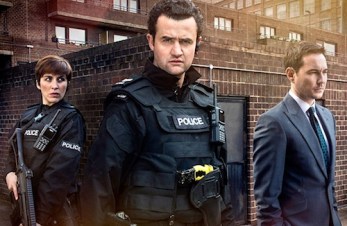 As I noted
 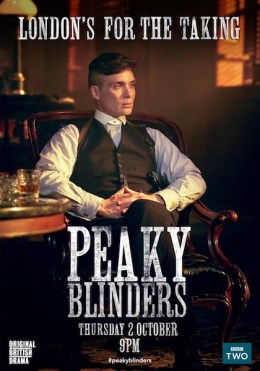 The second series of BBC Two’s period crime drama jumps forward two years to find everyone’s favourite Brummie criminals running such a successful business that they intend to expand their operations to London, by sticking their oar into a turf war between the Jews (led by Tom Hardy) and the Italians (led by Noah Taylor). Meanwhile, Sam Neill’s copper is back with a vengeance, teaming up with the Irish to blackmail Blinders kingpin Cillian Murphy into performing an off-the-books assassination for the crown.
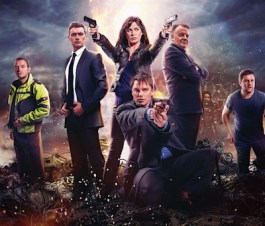 This month, I have mostly been missing Torchwood: Aliens Among Us. Although ‘just’ an audio drama from Big Finish, it’s being marketed as the series’ official fifth season, picking up after the events of 2011’s (disappointing) Miracle Day. A full 12-episode run, it’s coming out in three box sets — although part two isn’t out until October and part three until February, part one came out last week. Obviously, I’ve not listened to it yet. Hopefully next time…
 100Films.co.uk