
James Gunn | 121 mins | Blu-ray | 2.40:1 | USA & UK / English | 12 / PG-13
 Marvel Studios takes its boldest step yet, moving away from the present-day superhero milieu of its previous movies to a galaxy far, far away for a space opera epic. Its success, both critically and commercially, has cemented the Marvel Cinematic Universe as an infallible force in the current movie world. But, really, how good is it?
The film, as I’m sure you know, sees a gang of misfits — Han Solo/Indiana Jones hybrid Peter Quill (Chris Pratt), Gamora (Zoe Saldana, adding “green-skinned alien” to her repertoire), literal-thinking muscleman Drax (Dave Bautista), racoon-like bounty hunter Rocket (voiced by Bradley Cooper) and his pet tree/bodyguard Groot (voiced by Vin Diesel) — come together around a mysterious item of immense power, that’s desired by villain Ronan the Accuser (Lee Pace) so he can do something nasty and destructive. Co-written and directed by James Gunn, of Super fame, Guardians of the Galaxy combines space-blockbuster thrills with irreverent comedy (the supporting cast includes the likes of John C. Reilly and Peter Serafinowicz) and an ironically-cool ’80s pop soundtrack.
Guardians is a massively entertaining movie — when it works. That happens when it’s character-driven, with characters talking and interacting and following the story (what there is of it). There should be nothing wrong with that, but as this is a modern blockbuster, there’s an unwritten rule about how many CGI-driven action sequences there must be. The point of such things is to provide excitement and drive, but they actually kill the film’s momentum rather than buoying it up. Gunn and co have plenty of originality and fun to dole out the rest of the time, but the majority of the action sequences are seen-it-all-before whizzy CGI.
 The worst offender is the pod chase through Knowhere, a several-minutes-long sequence that registers as little more than a blur. There’s a shocking lack of clarity to its images, even by today’s standards. Maybe it’s better in 3D, when I guess the backgrounds would sink into the distance and important elements would be foregrounded; but in 2D, you can’t see what’s meant to be going on for all the fast-moving colour and split-second cuts. Almost as bad, though for different reasons, is the climax. It takes up an overlong chunk of the movie and at times feels repetitive of too many other Marvel climaxes — oh look, a giant spaceship crashing into a city! If anything, the film gets ‘worse’ as it goes on. Perhaps not in a very literal sense, but as the blustering action climax takes over, it moves further away from the stuff that makes it unique and interesting.
Sadly, those feature don’t include the lacklustre villains. Marvel have been rather lacking in this department lately: Ronan the Accuser and his faceless minions are as bad as Christopher Eccleston’s lot from Thor 2, who were already rather like Avengers Assemble’s alien army… Henchwoman Nebula (Karen Gillan) has some potential, but she’s barely used. They make a point of her escaping, though, so maybe next time.
Even if the villains are underworked, the film is so busy establishing its large roster of characters (five heroes, three or more villains, plus an extensive supporting cast) that it doesn’t have time to fully paint the universe, either. We don’t really care when Nova City is being destroyed, because we only saw it briefly earlier on and had no reason to suspect we’d be going back there. 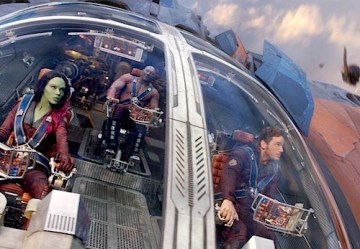 It isn’t even called Nova City, but I don’t have the foggiest what it is called because the film didn’t make me feel I should be learning it. Some more effort making sure we knew why that place mattered, even if it was just a clearer depiction of all the planning for its defence, might have sold the entire climax better.
Most people talk about Guardians in the context of its place in the Marvel Cinematic Universe, but it would probably be more interesting to compare and contrast it with other space opera films — that’s where its heart and style truly lies. These aren’t superheroes, they’re space rogues; to pick on two films from one of Marvel Studios’ top creatives, it’s more Serenity than Avengers. The main connection to the other Marvel films comes in the form of Thanos and his beloved Infinity Gems. It’s questionable if this is a little shoehorned in, and also a little bit Fantasy rather than Sci-Fi. Does forcing that in undermine the film? Or is it only because we know it ties into the Avengers side of the universe that it stands out? If we’re arguing that “it’s more fantasy-y than science-y”, perhaps we should pause to look at the most archetypal cinematic space opera, Star Wars: what’s the Force if not some mystical thingamajig?
Whatever the genre, Guardians leaves you with an instant feeling of having seen a top-quality blockbuster, thanks to its likeable heroes, abundant humour, frequent irreverence, uncommonly colourful visual style, retro-cool soundtrack, and so forth. Unfortunately, once you dig underneath that there’s a little too much that’s rote ‘modern blockbuster’, with the explosive action sequences being the main culprit. Many regarded it as the best movie of last summer; on the evidence I’ve seen, it would certainly seem to be the most fun. The character stuff will likely hold up well to repeat viewings, but the noise and bluster surely gets tiring, 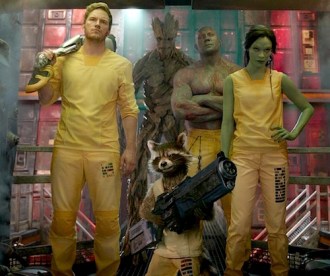 especially the overlong climax. Joss Whedon commented of his own Avengers film (as I quoted in my review) that it wasn’t a great movie but it was a great time, and I think that’s just as true here: when Guardians is firing on all cylinders, it’s difficult to imagine a more entertaining blockbuster space opera; but there’s too many merely-adequate bits that hold it back from joyous perfection.

This review is part of the 100 Films Advent Calendar 2014. Read more here.
For my thoughts on re-watching Guardians of the Galaxy in 3D, look here.
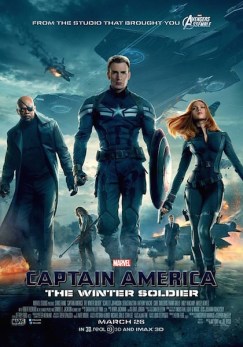 After the
 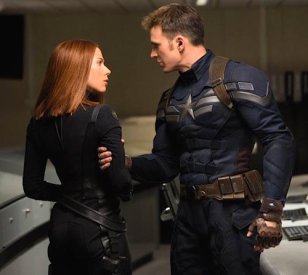 everybody moved on to being more excited about Marvel’s end-of-summer new-franchise-launcher,
 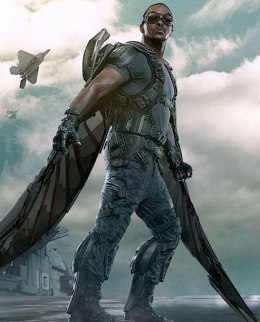 Also introduced is sidekick hero the Falcon (Anthony Mackie), who I have little to say about directly. He’s a sidekick who’s introduced fully-formed — he’s been using his ‘superpower’ for years as just part of the military; it’s not new or exciting to him, which lessens some of its power for the viewer too. “Origin story” may be the most over-used of all the superhero stock stories, but there’s a reason for that. If you skip it then you cut to the chase, that’s true, but does it also lessen the impact of characters to not see how they started? Maybe storytellers just need to come up with fresh ways of giving origins, rather than skipping them altogether.
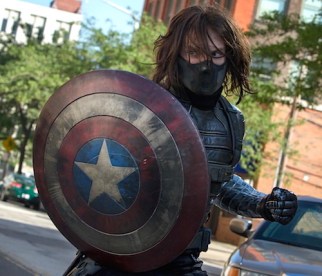 and then it refuses to wrap everything up, putting certain things in place ready for
 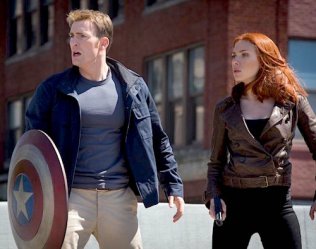 what’s left? There is strong action, albeit undermined by muddled character investment; and there is an interesting thriller/conspiracy story, albeit undermined by a feeling of “once you know it, you know it” — it’s not all that complicated or all that surprising, including the revelation that the one character significant enough to be behind it all is behind it all (gasp!)
 I think I’ve previously discussed my life-long love of the X-Men franchise, so I shan’t go into detail again, but suffice to say Days of Future Past has been one of my most-anticipated movies ever since the title (which is that of a classic and influential story from the comics) was announced. Thank goodness, then, that the final result doesn’t disappoint.
 Beyond that, there’s the characters: the younger versions are having to deal with the fall-out from
  Not everyone gets to shine in a cast this big, although pretty much everyone gets a moment. The future-set cast have the least to do, people like Halle Berry turning up to do little more than show their face, though Stewart and McKellen get a moment or two worthy of their talents. After he was the focus of the last film, Fassbender is slightly shortchanged here; but after McAvoy gave him essential support in First Class, Fassbender plays the same service here, informing Charles’ journey. Of the new additions, Evan Peters as Quicksilver (that’s the one who’ll also be played by Aaron Taylor-Johnson in
  Later, there’s the aforementioned ‘slow-mo’ sequence, and the grand climax, which offers more “fly something big around” antics a la First Class’ submarine, only considerably grander. Yet for all the spectacle, the final moments once again come down to character: what is Magneto prepared to do? What is Mystique prepared to do? Will anyone listen to Charles? And so on. Even the much-vaunted Marvel Studios movies tend to base their climaxes in slabs of ‘epic’ CGI crashing into each other; Days of Future Past does that for a bit, then brings the characters back into focus for the real final beats.
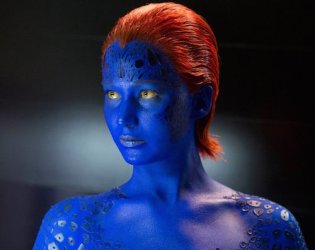 (Jennifer Lawrence being the third pillar of the past triumvirate, as they’ve already focused on Xavier and Magneto). While Days of Future Past does wrap up the majority of its threads (the open-ended ones are answered by previous films, if you want them to be), there’s plenty there to play with in the next film (and, perhaps, ones beyond that) if they want to… which they do.
 Despite the fact that
  Then we have the much-maligned backstory about just what Peter Parker’s parents did all those years ago, before they abandoned him with Uncle Ben and Aunt May. There are pros and cons to this: it’s all new, which at least makes it interesting and unpredictable because it has no forebear in comics or films; but it’s also a pretty stock set of circumstances. Worse still, it robs Spidey of a major defining trait: Peter Parker is bitten by a spider by accident — it could’ve been anyone. In this version, it could only have been him. Boo. Sony clearly want an arc plot they can run across a trilogy (or more), so presumably this thread will rumble on… though whisperings that they’re considering some kind of soft-reboot may see it cut short. I wouldn’t complain.
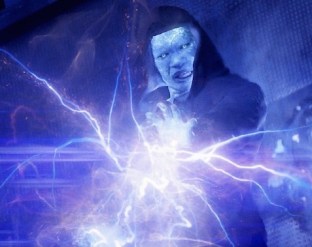 but it’s more textured, at least. Then there’s Electro, who (as mentioned) may have a familiar story, but is nonetheless perfectly pitched by Foxx. His powers lead to some excellent sequences, including but not limited to the aforementioned Times Square duel. He also contributes to the music, in a way, as Electro’s whispered/sung thoughts ‘bleed out’ into the score. It’s creepy, especially as it’s so subtle in the mix — I wondered what the hell was going on at first. I thought it was a fantastic score all round, in fact, bringing in a modern music element that fits the notion of Spidey as a young character perfectly.
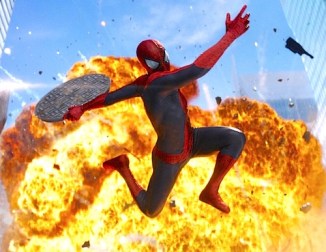 It lacks the confidence, heart and flair that mark out Spider-Man 2, and the bold originality and clarity of purpose that define
  Based on a radio serial that spawned film serials, a famous TV series, and, eventually, comic books, The Green Hornet is a ‘superhero’ saga with a difference. For one thing, technically he’s just a vigilante — no superpowers here — and for another, as noted, it didn’t originate as a comic book. But that’s the milieu the character slots into these days, and so this attempted revival plays in that ballpark.
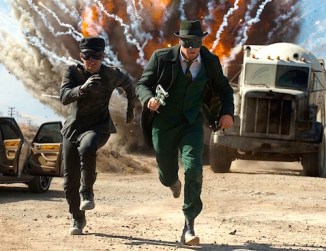 Well, screw them — The Green Hornet is brilliant. If you’re after the po-faced angsty worthiness of
 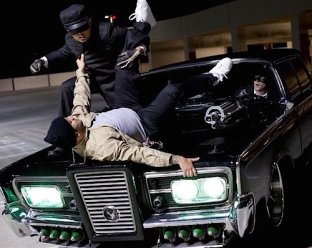 Then there’s Gondry’s direction, which is often as idiosyncratic as you’d expect. He’s at his peak during the action sequences, which explode in an array of effects and slow-motion to create multiple memorably unique fights and chases. Highlights are the first time Kato unveils his martial arts prowess, and the crazy car-driven climax. Chou and the tricked-out car, Black Beauty, are undoubtedly the stars of these bits — indeed, the film has an overall good line in making Kato the brains behind the operation. I imagine this is subverting the depiction of the Asian sidekick from previous versions, considering when they were made, but as I’ve never seen any I can’t comment fairly.
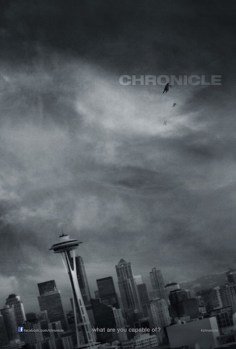 The birth of the “found footage” sub-genre and the resurgence of the superhero movie began around the same time, the former with
 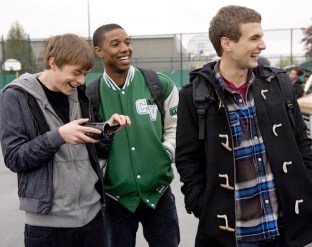 The story sees high school senior Andrew (Dane DeHaan) decide to start filming everything in his life, thanks to his borderline-abusive alcoholic father (Michael Kelly) and terminally ill mother (Bo Petersen). The same day (what a coincidence!), his cousin and only friend, Matt (Alex Russell), takes him to a party where, along with most-popular-kid-in-school Steve (Michael B. Jordan), they discover a hole in the woods with mysteries inside… Days later, all three begin to develop telekinetic powers, which they learn they can levy in various incredible ways — those ways being super, but largely without the heroic…
 This is even more pronounced in the extended version (“extended director’s cut” in the US), which includes over five minutes of extra bits that, in my opinion, make it a superior edit. Some are minor in impact, true, but there are a couple of short sequences with Andrew and Steve that deepen their relationship further, which enriches events at the end of act two. There’s also a moment that subtly prefigures the climax, and an extra bit in said finale that seems nigh-on essential to me. Considering the film still runs (just under) 90 minutes even with these additions, it’s difficult to see why they were cut in the first place. “Pace” is usually the rational for that, but if this is indeed a Director’s Cut then clearly Trank didn’t think they were an issue; equally, I can’t see why Fox would have objected. Still, they’re here to enjoy on Blu-ray…. though not on DVD… and I guess they’re not in TV screenings… Tsk.
 That said, spectacle it has. You wouldn’t expect that from a $12 million found-footage movie, but an epic duel through the streets of Seattle is one of the strongest climaxes to any superhero movie I can remember. It’s kind of like
  In the hands of many a desperate-to-get-noticed filmmaker, a found-footage superhero movie would likely have been a straight-to-DVD affair that could at best be described as “mediocre”. In Chronicle, however, Trank and co have crafted one of the best movies produced in either sub-genre. Most of the people involved — as well as the film they’ve all come from — can be classed as “one to watch”.
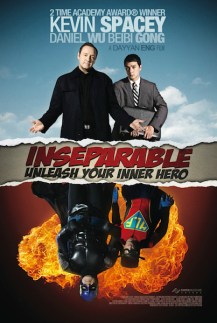 I’m a great advocate of tonally-mismatched films. When others are moaning that there’s too much darkness mixed in with their light fluffy film, I’m the one saying, “um, guys, have you ever lived in, y’know, real life?” Which probably explains why most of the internet reacts with anything between ambivalence and hatred towards Inseparable, whereas I really enjoyed it.
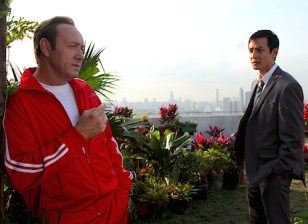 Clearly this will not be to everyone’s taste. Even at just over an hour-and-a-half it’s sometimes a little draggy, and the mishmash of kooky comedy with serious themes — not only suicide, but Li’s faltering marriage and the reasons for that — will turn some off. Anyone who likes their superhero entertainments to be more po-faced won’t be best pleased, either.
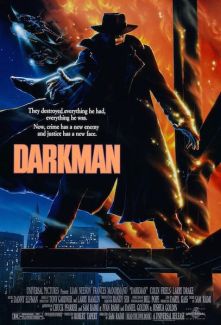 Before he made the insanely successful
  You might not think superheroes lend themselves to the ultra-low-budget indie treatment, but where there’s a will there’s a way, and clearly writer-director Jordan Galland had a will.
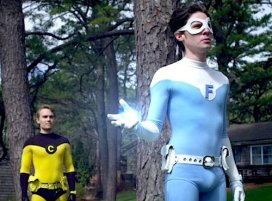 Personally, I rather liked it. It’s a little cheap, talky, and not laugh-out-loud hilarious, but it has some charm, a healthy-enough dose of professional filmmaking (I’ve seen plenty of efforts that are more amateurish), and a brisk running time that makes for a pleasant diversion. If you think you might find yourself in the sweet spot of the aforementioned diagram, it’s worth a go.
 I made sure to see
  It was blurry, the sound was muffly. I saw a clip in a summer movies trailer just a few days later when I saw
  but that’s fine because here they’re just supporting characters. This is the story of two other young men, Xavier and Lehnsherr, aka Professor X and Magneto.
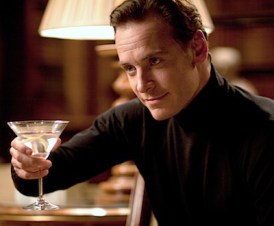 the flipside to the Xavier-Lehnsherr relationship working better, if you will. There’s also Kevin Bacon, playing his second superhero villain in as many years, who does sterling work as a former Nazi seeking world domination — remember the ’60s, when world domination was a valid aim for a villain? There’s more than a little Bond in the mix here.
 than a superhero movie in many ways — and when it tries to introduce an X-Men team made up of second-string leftover characters it loses its way slightly. But balance is everything with ensemble casts like this, and watching the film again gives a better perspective on its pace and its actual balance. First time through these things are distorted because you don’t know how far through the story you are, how long’s left, how long each scene will last, and so on; a second time, with an idea of where it’s going and so forth, you can better appreciate how it’s all actually weighed up, and I think First Class achieves a balance better than most have given it credit for.
 It’s a complete non-issue for non-fans, and the same for any open-minded fans who realise they’re not trying to faithfully bring the X-Men canon to the big screen. Earlier films should already have shattered that illusion anyway.
 After seeing First Class in the cinema I thought to myself that, while I would dearly love to give it a full five stars, in all good conscience I couldn’t; for whatever reason, it didn’t quite come together enough. Watching it again on Blu-ray, however, I’ve completely changed my mind: I wouldn’t change a thing. All my anticipation is more than paid off — I love this movie.
 100Films.co.uk