
I didn’t think I’d watched much TV to cover in this month’s column, and then I came to write it…

Cobra Kai Season 1
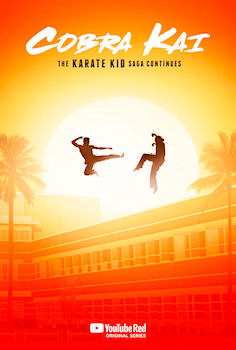 A belated sequel/spin-off to the Karate Kid movies, Cobra Kai was one of the first series to be released when YouTube decided to get in on the Netflix game. It was a hit for them, too, attracting tens of millions of viewers and very strong reviews. And yet it feels like no one talked about it, so where those 90 million people were hiding, who knows. Anyway, with YouTube wrapping up their series production (they were a bit late to a market already saturated by Netflix, Amazon, and a dozen other TV and film studios), existing and future seasons of Cobra Kai have been passed onto Netflix — and now everyone’s talking about it. Are more people watching it, or is the Venn diagram between “people who primarily watch stuff via Netflix” and “people who use social media” just a perfect circle? We’ll never know. I guess I’m one of those people who only started talking about the show after it moved to Netflix. I did mean to get to it sooner, but no way was I paying for YouTube, and I missed the couple of times they made it all available for free.
Anyway, what of the programme itself? As I said, I’d heard it was good, but I didn’t expect it to be this good. Seriously. A belated revival of a half-forgotten oh-so-’80s kids’ sports movie franchise should not be one of the best shows on TV in the 2010s, but, turns out, it kinda is. The writing, the performances, the way it uses the franchise’s legacy but is also it’s own thing… all of that is more or less perfect. One of its strongest features is a nicely nuanced treatment of the returning characters. They haven’t just kept them the same, nor merely inverted it so Johnny’s turned good and Daniel’s gone bad. They both have their heroic and villainous moments; both can be inspiring; both can be embarrassing middle-aged men. There’s a certain lack of vanity on the part of the actors there, acknowledging the real passage of time rather than still trying to be Karate ‘Kids’.
It has what I consider to be the perfect balance of storytelling styles for this streaming era: it’s telling one long story (of course it is), but each episode works as a self-contained unit, with its own plots and subplots. Put another way, it’s ten episodes that together add up to one story, rather than a single long narrative arbitrarily chopped into ten pieces. Because of that, it only gets better as it goes on — you get more invested; the characters develop; stuff pays off… it’s superb. I don’t really do “binge watching” (maybe two episodes in one day, sometimes), but Cobra Kai is so addictive that I ended up watching half the first season in one sitting. It helps that the episodes are short (around 25 minutes each), really feeding the “just one more” feeling. If you’ve only got half-an-hour to spare, you can throw the next episode on and get a satisfying instalment; but if you’ve got nowhere else to be, don’t be surprised if you get suckered in to more, because it does kind of work as “a movie”. (Indeed, watching the first five episodes in one sitting almost felt like watching the first half of a two-part movie, because they reach a particularly suitable break in the overall narrative.)
The move to Netflix was prompted by YouTube informing the production team that they’d air the already-filmed third season, but definitely wouldn’t commission a fourth. The first two seasons have already been such a success for their new home that Netflix have commissioned that fourth season before they’ve even released the third (it’s due early next year). There’s a lot one could analyse about that (considering the first episode already had 90 million views on YouTube, how many more people were there to watch it on Netflix?!), but the important point is: more Cobra Kai, guaranteed! If it keeps up this level of quality, that’s a very good thing.
(The only reason I didn’t race straight on to season 2 was to spread it out a bit, what with the wait ’til season 3. Expect a review next month.)
Strike Lethal White
 A four-part adaptation of the fourth Cormoran Strike novel by
 J.K. Rowling Robert Galbraith, which sees the private detective investigating the blackmail of an MP at the same time as a historical murder comes his way that the may be connected to the same MP. What a coincidence! No, it really is a coincidence; but don’t worry, with four whole hours of story to get through, you’ll probably have forgotten about that by the end. There’s also the ongoing drama of the will-they-won’t-they relationship between Strike and his sidekick, Robin Ellacott. If you thought her getting married to her dick of a fiancé at the end of the last series was going to put a stop to that, you were very wrong. Strike mainly coasts by on the likeability of its two leads — the actual plot isn’t bad, just not anything remarkable. We’ve had four or more decades of this kind of investigative crime drama on British TV, and Strike is one of the ones that happens to currently be on.
Criminal Season 2
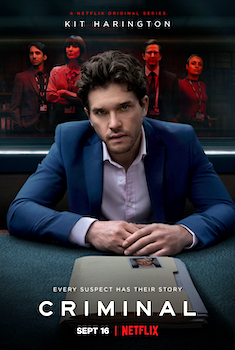 Remember when Netflix first launched Criminal and made a big deal of how it was one format filmed by four different countries? Does no one else remember that? Because I swear it was one of the key USPs, but it’s gone entirely unmentioned in the (surprisingly large amount of) press about the second season — which I presume suits Netflix just fine, because three of the countries have been quietly dropped, so only the UK version remains. (What’s the betting the UK one did better simply because its anglophone cast are more widely known around the world?)
Anyway, it remains a funny old drama — it wants to be grounded and focused (it all takes place in an interview room and the observation room next door), but rather than allow the minutiae of the actors’ skills to shine through (the other USP), it can’t help but indulge in jumping about with narrative bells and whistles. Most questionable is the second episode, in which Kit Harington gives a good performance, but the “falsely accused of rape” storyline feels like it’s failed to read the cultural moment. It’s got a 9.2 rating on IMDb, though, so I guess the men’s rights-type people found it.
Derren Brown: Miracle
 I’d found the last few Derren Brown live shows relatively underwhelming (not to mention his recent TV specials), which is perhaps why I missed this back whenever it first aired on Channel 4 (in 2016) and am only now catching up. Maybe it’s the distance of time, then, but I thought this was a really strong and entertaining set of tricks and set pieces. The only thing I’d like more is if he explained how the faith healing stuff worked. We know it’s a con, a trick, but it still has an effect. He acknowledges part of it (it’s all psychological, “the stories we tell ourselves”), but how does that fix a woman’s eyesight or render a man unable to read? I know magic tricks aren’t ‘meant’ to be explained, but when you’re exposing shysters’ cons, I feel like revealing the methodology is ok.
Netflix Comedy Specials
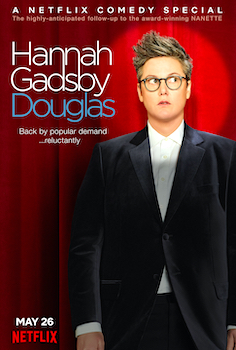 Recently, I’ve been unwinding with some of Netflix’s standup specials. The most noteworthy / widely discussed of those is certainly Hannah Gadsby’s Douglas, her followup show to the massively successful Nanette (which I commented on last month. “Followup” is the right word, because Gadsby begins the set by talking about Nanette’s success and her reaction to it. Then she begins the new show… without beginning the show. Instead, she does a long bit where she lays out the entire structure of the show to come before, almost 15 minutes in, “the show” actually starts. After Nanette was so praised for bending the form of what “standup comedy” could be, I guess she felt the need to do it some more. It’s fairly ingenious and works quite well. As for the material itself, it’s not as emotionally devastating as Nanette, but still appropriately pointed when needed.
Elsewise, I’ve been trying out some American comedians who I hadn’t even heard of before I saw their trailers on Netflix. Demetri Martin’s accurately titled Live (at the Time) indulges in a lot of quick, deadpan humour, including some nice meta jokes. That’s my kind of thing. Also my kind of thing: dark comedy. Apparently Anthony Jeselnik’s Fire in the Maternity Ward is the kind of comedy that some people find offensive, but I struggle to find any comedy “offensive” when it’s clearly being performed with self-awareness that it is wrong, and that’s why it’s funny (as opposed to someone saying something as “just a joke” when it’s their actual word view, i.e. what right wing ‘comics’ tend to do). So, yes, I’m aware some people find Jeselnik’s material beyond the pale, but he hit just the right note for me (i.e. I’ve seen darker, but they probably went too far). Finally (appropriately), Marc Maron’s End Times Fun accepts that the world is fucked and gets on with making gags about it. His bit about how the way hardcore Marvel fans behave is actually the same as religious fanatics is bang on, while his finale — an extended vulgar ‘prophecy’ for the end of days — is hilarious, and quite close to Jeselnik in terms of pushing at offensive-to-some boundaries.
The Twilight Zone ‘Best Of’
 This is my tenth and final selection of the best episodes of the original Twilight Zone, which gets me to the end of the top third of episodes on my consensus ranking (The New Exhibit is ranked 52nd, which is exactly 33.3% through). I think that’s as far as I can reasonably call the “best of”. If you think it sounds quite far through the list to still be calling these “the best”, bear this in mind: a lot of this month’s episodes are well placed in several rankings, but then one or two more negative nellies drag them down. (The Howling Man is the most extreme instance of this: it’s in the top 20 according to voters on Ranker, and placed in the top 30 by ScreenCrush, Paste, and IMDb users, but neither TV Guide nor Thrillist include it in their top 50, and BuzzFeed put it 149th.) My personal opinion of some of these episodes made me wonder if I’d pushed “best of” too far, but there have been episodes in previous “best of” selections that I liked even less, so I think it’s coincidence rather than that TZ has run out of good episodes before I even get halfway through. (And just because I didn’t like them doesn’t mean they’re not well regarded — one of my least favourites here, Stopover in a Quiet Town, has 8.3 on IMDb and is ranked 25th there.)
The first episode this month isn’t a disaster, but doesn’t quite coalesce either. Ring-a-Ding Girl has some very nice ideas, but they’ve not been arranged properly to make a wholly satisfying episode. For one thing, it leaves a whole town full of people aware of the strange thing that’s happened — that doesn’t feel very Twilight Zone, where these things normally only directly affect one or two people, and even they often can’t be sure it actually happened. That’s more a minor point of style than a fundamental flaw, mind. Still, I feel like someone could rewrite this and make it a lot better — heck, it could probably even sustain a feature, if done right. Bit of a shame, then.
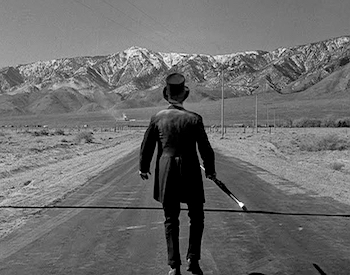 On the other hand, a common feature of The Twilight Zone is “man out of time” stories. The show did a lot of those, and A Hundred Yards Over the Rim is certainly one of them. In 1847, a pioneer at the head of a wagon train heads over a nearby rim to scout for water, and finds himself in 1961. There’s reasonable potential in that, but what follows offers no remarkable features or moral messages. If the pioneer was on the verge of giving up, and seeing that people like him did bring civilisation to those barren places motivated him to carry on, that would be effective. In fact, he’s pretty much the only one in his party who’s already certain they’re on the right path, so all his trip through time represents is a brief obstacle in his path. Similarly, he discovers evidence that his dying son will actually survive and achieve great things, but he didn’t seem to doubt his son’s chances before that, so what did he really gain? Apparently this is JJ Abrams’ favourite episode, which I feel explains a few things…
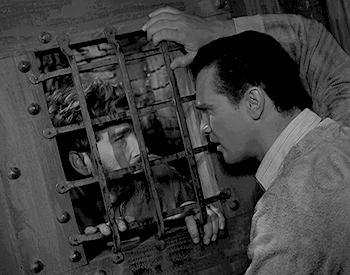
Much better is The Howling Man, a mostly unsettling episode with a “dark and stormy night” feel. that’s a cliche, but Douglas Heyes’ OTT Dutch-angle filled direction emphasises such an overblown atmosphere. It’s fun, if a little campy, especially in its final reveal. It’s the kind of episode that’s so particularly styled that whether you love it or loathe it is entirely down to personal taste, which probably explains those ranking discrepancies I mentioned at the start. As I also mentioned, Stopover in a Quiet Town is one of my least favourite episodes. It’s not that it’s bad per se, but it felt like little more than a remix of a handful of previous episodes; like a workmanlike pastiche rather than a true Twilight Zone instalment. The moral of the story — stated bluntly by Rod Serling in his closing narration — is “if you drink, don’t drive.” Thrillist reckon it’s “the best PSA about drunk driving of all time.” I just think it’s the weirdest.
A man and his dog are the subject of The Hunt, one of TZ’s occasional sweet episodes. When the pair die, you might not think this is going to be a nice one, but we soon follow them into the afterlife — not that they realise it. Yep, as is so often the case with these kinds of TZ episodes, we understand the situation immediately while it takes the characters most of the episode to cotton on. It’s only in the second half that it gets to the real point: arriving at the gates of Heaven, St Peter informs the man that his dog can’t come in. What kind of Heaven would it be without dogs?! Well, this is The Twilight Zone, so… It’s a twee little tale, really. I liked the “dogs are great” side, but was less keen on the sensation it gives of being a Sunday school lesson.
 One for the Angels is another feel-good episode, in which a two-bit street salesman manages to outwit Death… twice! Once for himself, once for a little girl who lives in his block. Ed Wynn embodies the friend-to-children type persona most familiar from his later appearance in Mary Poppins, while Murray Hamilton (also best known for a later film role: the mayor from Jaws) makes for a charmingly besuited Mr Death. That the salesman manages to pitch cheap crap to Death himself for a full quarter of an hour stretches belief. Well, I say “belief” like Mr Death is real, but, even with the rules of fantasy, what does Death need with all that crap? Ah, but it’s all for a good cause, so maybe we can let it slide in the name of feeling happy.
We end on an even rarer beast: a season 4 episode! Out of 71 episodes of The Twilight Zone I’ve watched so far, this is only the 5th from that season — and three of those were in my “worst of” posts. Basically, if you didn’t already know, people don’t like season 4. As one of its better instalments, The New Exhibit is proper horror movie stuff. Indeed, I could see this as the setup for a standalone feature film; which is quite different to season 4’s usual problem, that the double-length episodes led to plots being padded to fill the running time. That said, this isn’t the best execution of the concept. Where it’s going feels inevitable from early on, so it still feels a little long-winded — you could definitely rattle through this tale in 25 minutes. Indeed, as Paste puts it, it “could work as either a very short story, or be expanded into a horror feature. As a 50-minute episode, it takes a long time to get going, then ends abruptly just when it was beginning to get interesting.” Ironically, a feature version would probably get going quicker, then spend more time on the later good stuff — and this episode would’ve benefitted from the same. All of which said, I still found it effectively creepy. Some people say it’s not scary at all, but I guess that depends on whether you find wax figures inherently unsettling or not.
And that concludes what I’m calling “the best of The Twilight Zone“. I’m going to keep working me way through the series and writing about it, though. Hopefully I’ll unearth a few underrated gems among the episodes that fall in the middle of the rankings.
Things to Catch Up On
 This month, I have mostly been missing The Haunting of Bly Manor, the followup to The Haunting of Hill House, which I also never got round to watching. This is the perfect month for that kind of thing, obviously, so I ought to make the effort. Not sure I will, mind. Same goes for Lovecraft Country, which I heard a lot of good things about, and then heard less good things about, and now I’m just not sure. I mean, there’s so much TV to watch nowadays, you gotta be careful not to waste that precious viewing time. And I’m sure there’s been a bunch of other stuff, but God, never mind watching it, I can’t even keep up with remembering it all.
Next month… The Mandalorian is back. (Not watched season one of that yet, either.)
 When the first season of Jessica Jones debuted 28 months ago it was practically a cultural phenomenon. Its fresh, unique take on the superhero genre marked it out as noteworthy even at a time when there are innumerable other films and series in that space. A large part of that was the intelligent and grounded way it engaged with some thorny issues, making it a critical darling and attracting audience admiration too. So I’ve been a little surprised that no one really seems to be talking about season two. Perhaps it’s just me and my little internet bubble, but since the flurry of pre-release reviews I’ve heard nary a whisper. I’m sure there must be reviews and recaps out there, which I wasn’t seeking out so as to avoid spoilers, but I didn’t stumble across any either.
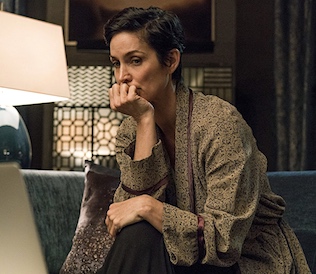 And that’s not to say these series never work in episodic form. For instance, events at the start of episode five, AKA The Octopus, see Jessica begin to force herself to be a better person. It’s one of the season’s strongest episodes, in part because of this burst of character development. Okay, it’s a bit blunt, in that she’s told she needs to improve and we see her consciously trying, but it pays off in a scene where she has to be empathetic to question a mentally-impaired witness. It’s not only Jessica who benefits from development: supporting cast members like Malcolm, Trish, and Jeri get meaty subplots to tuck into. Jeri’s is the best — indeed, her storyline might be the strongest bit of the entire season. There’s a fantastic, nuanced performance from Carrie Anne Moss — it feels like they’ve really worked to make use of her in a storyline that’s far more emotional and nuanced than what she’s had previously in these shows.
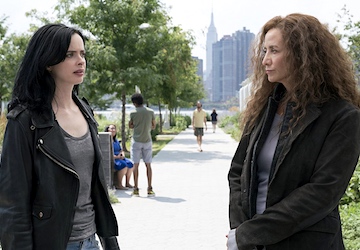 For me, it lost its way a bit again in the final pair of episodes — there are still really good bits, but others feel like a wearisome rehash of plot beats familiar from other superhero/thriller series. Eventually it comes to a good ending — there’s a surprising resolution to the plot, plus an epilogue that lays some intriguing hints for a third season (an inevitability, surely?) — but the faffery of episodes 12 and 13 to get us there… there were more streamlined ways to do this, I think. Or, considering the mandated episode count they have, more interesting ways to have spent the time. So it’s not perfect, but it’s still one of the best of the half-dozen Netflix/Marvel shows.
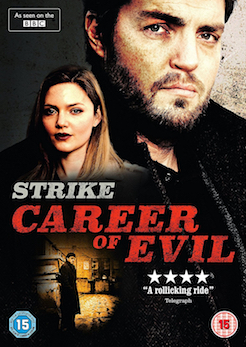 The latest Strike adaptation (and the last for at least a couple of years) was the best so far, I thought — a mysterious, reasonably complicated case, and plenty of character stuff for our likeable pair of heroes, too. The latter is certainly a big part of the series and its appeal, sometimes to the detriment of the actual investigation storyline, I suspect. By which I refer to the fact that some fans of the books have complained that the series isn’t devoting enough time to each adaptation, necessitating big cuts to the plot to fit into just two hours. I’ve not read them myself, and such editing didn’t feel noticeable during
 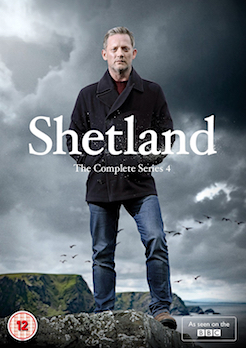 In almost the polar opposite to Strike, Shetland is no longer based on the books that inspired it (even though I believe there are one or two they’ve not adapted), and it takes a whole six episodes to tell its story. Actually, I feel a bit daft calling Strike’s case “complicated” now, because it’s as nothing to this series of Shetland, which sees DI Perez and his team struggling with both a 23-year-old cold case, which has resurfaced because the convicted murderer has just been awarded a mistrial, and a new murder with clear echoes of the first. If that wasn’t enough, the investigation leads them to Norway, where both the suspicious activities of an oil drilling firm and the plotting of a far right nationalist group come into play. Shetland has always had a bit of Scandi Noir about it (must be something to do with the cold northern environs), but it strays even further into that territory by, you know, actually going there.
 Not a reality show about manicurists (that’s what it sounds like, doesn’t it? If I was making a reality show about manicurists I’d be annoyed this took my title), but rather Netflix’s answer to The Great British Bake Off (possibly literally: they were miffed they didn’t get a chance to bid for it when it went to Channel 4). It’s not about super-skilled amateur bakers, though, but rather normal folk who attempt the kind of grand bakes you sometimes see online… and fail miserably. It’s like that bit of An Extra Slice where they look at viewers’ photos, only turned into a whole programme. It’s also very American — brash, loud, fast, unnuanced… It’s also the way it’s shot and edited, very much more like American reality series than British ones, but I shan’t bore you with a Media Studies-esque explanation of that.
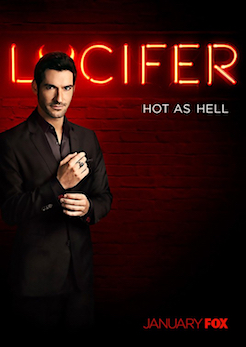 Having finally finished Castle last month, there was a gap in our viewing schedule for a light crime-of-the-week cop show. Lucifer seemed to fit the bill. For one thing, it’s been knocking around for a few years now, meaning there’s a nice backlog of episodes to get through. Loosely inspired by a DC comic, it’s about the actual Devil quitting Hell and setting up a life in Los Angeles, where — for one reason or another — he ends up helping the police investigate murders. Meanwhile, he enters therapy, and there’s an angel knocking around who wants to drag him back to Hell. The series nicely balances the bog-standard US-cop-show case-of-the-week stuff with the ongoing fantastical subplots, powered by a cast of engaging characters with conflicting motives. Best of all is the lead, Tom Ellis, giving a deliciously charming and slightly camp turn as the Prince of Darkness himself as he tries to become a better person. I’m not sure the series has really made any waves (especially on this side of the pond, what with it being an Amazon Prime exclusive here), but it’s really rather good. I mean, it’s not going to be challenging Quality TV for greatest-of-all-time status — it’s still a case-of-the-week buddy show when you boil it down — but it’s done well and a lot of fun.
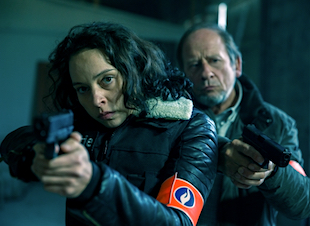 This month, I have mostly been missing The X Files season 11, which finished earlier this week in the US (and comes to the same end here in the UK with a double-bill on Monday). I watched (and reviewed, natch) its first episode
 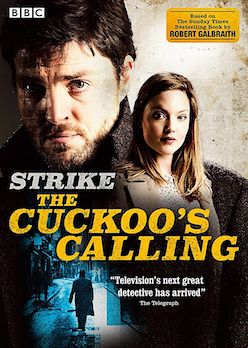 Adapted from the series of novels by Robert Galbraith — the mystery-writing pseudonym of one J.K. Rowling — you might’ve assumed this would’ve followed in the footsteps of the author’s other literary series and have Hollywood come a-knocking. Maybe they did, but TV is a more natural home for the material: it’s a decent low-key murder mystery with appealing lead characters, which is the sort of stuff that can generate TV ratings but doesn’t spell box office nowadays (well, unless it’s Murder on the Orient Express, with its $350 million worldwide gross, but that’s a different kettle of fish). While the general shape of the drama is familiar from, well, every other TV detective show, Rowling’s well-known interest in social issues regularly comes through — not least in its two main characters, one of whom is a war veteran living with the realities of an amputation, the other a talented woman finding equality in the workplace. I suppose that’s all very timely.
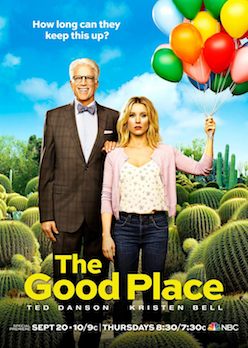 Having blown the doors off its own enjoyable premise with a clever twist at the end of
 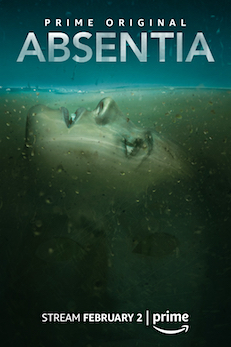 Stana “Beckett from Castle” Katic stars in this mystery-thriller, an Amazon exclusive in the US and UK (and everywhere else there’s Amazon Video, I presume). She plays FBI agent Emily Byrne, who was declared dead in absentia after she disappeared while on the hunt for a serial killer. Six years later, she turns up alive, apparently having been held captive all that time — even though the main suspect was convicted of her murder and has been in prison. Events quickly take a turn where her former colleagues wonder if Emily was in on it too, meaning she has to go on the run to prove her innocence. Of course, none of those people ever stop to wonder what she’s actually been up to for six years (it’s not like the killings continued), or why she’d decide to fake her comeback now, or… all sorts of other things. A subplot with her kid — who was too young to remember her, and now has a new real mom because his dad remarried — has emotional potential, but goes a bit too swimmingly at first and then is soon abandoned in favour of shoot outs, and unearthed skeletons (both figuratively and literally), and all that mystery-thriller stuff. So this isn’t one to think about too much, in any respect, but it’s passably entertaining as a pulp thriller. I’m going to stick with it until the end, at least, but I kinda hope it doesn’t try to end on a cliffhanger — I’m not sure I want a whole other season (or two, or three, or more).
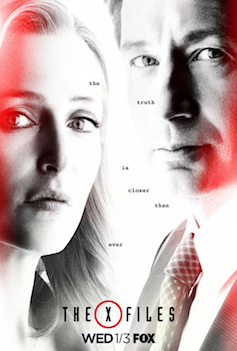 The second season of The X Files since its revival only recently started airing in the UK, but we’ve caught up as far as episode three now. Well, the broadcasts have — I’ve only watched the first episode, and it was so goddamn terrible I’ve not had the heart to continue. (I will, I’ve just not mustered the motivation yet.) Said opener was My Struggle III, continuing the series’ never-ending mythology arc plot, which last season (two years ago now!) was covered in My Struggle I and My Struggle II. Well, at least the mythology episodes are clearly marked these days — there’s a My Struggle IV later in the season, for our sins.
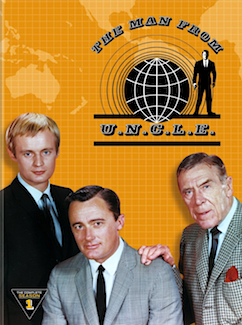 I’ve had this knocking around waiting to be watched for yonks after I picked up the complete series DVD set on offer. (“For yonks” being “since 2015” in this case.) I remember seeing some episodes as a child and enjoying them, though I don’t remember any specifics. I guess they were from the show’s later, crazier, full-colour years, because these early black-and-white adventures don’t quite chime with that vague sense-memory of what the show should be. That said, although they start out almost serious (as ’60s spy-fi goes, anyway), by just a couple of episodes in there’s already a kookier side on display. Anyhow, I expect the best is yet to come.
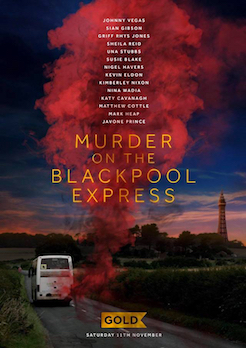 This one-off feature-length comedy aired at the end of last year, presumably timed to tie-in with the theatrical release of Kenneth Branagh’s Murder on the Orient Express — as the spoofing poster highlights, of course. (Who thought I’d wind up referencing that film twice in a TV column nearly four months after it came out? I really ought to get on with reviewing it…) Truthfully, that poster is probably the best thing about this. There’s a large cast, all recognisable from a host of British sitcoms, but half of them go underused. Those that do have a part to play get material that’s fairly amusing, amid a plot that’s somewhere between predictable and too mad to be guessable. It was funny enough on balance, but it didn’t live up to its full potential.
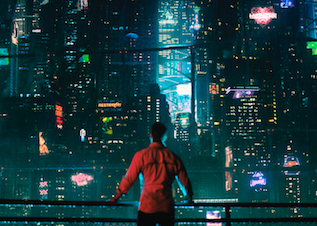 This month, I have mostly been missing Altered Carbon, Netflix’s cyberpunk murder mystery. Reviews looked to be mixed, so I haven’t actually decided whether to bother with it or not. Two series I will definitely (intend to) get round to, but I’m saving up to binge once they’re done, are: BBC Two’s starry political thriller Collateral (led by Carey Mulligan, John Simm, Billie Piper, and no doubt some actors who haven’t had significant roles in Doctor Who. FYI, it’s coming to other counties as a Netflix “Original” next month); and the latest run of Scottish detective drama Shetland (the last series of which was
  100Films.co.uk