
I can’t speak for the whole country, but Avatar: The Way of Water seems to have still been the big title at the cinema here throughout January. By which I mean, my local still had it on their largest screen in most of the prime time-slots. But then, there’s been nothing else truly “blockbustery” to challenge its need for the grandest scale possible. There have been significant releases, sure; and there’s always the “every film should be seen on the biggest screen possible” argument; but nothing else came out in January that’s so expressly about visual spectacle. Any crowdpleasers that have turned up — horror M3GAN; Gerard Butler vehicle Plane; Tom Hanks comedy A Man Called Otto — hardly feel of the same scale.
I use the term “crowdpleasers” to differentiate those films from most of the UK’s January release slate, which is, as usual, dominated by awards season stuff that we’ve had to wait for: Babylon, Empire of Light, The Fabelmans, Tár, Till… Plus, limited releases that caught my eye included the new one from Mark “Bait” Jenkin, Enys Men (out on Blu-ray from the BFI in June), and Iranian thriller Holy Spider (which will be on MUBI in March and Blu-ray in April).
The streamers also seemed to be mainly trading in hangovers from last year, with Netflix releasing starry period mystery-thriller The Pale Blue Eye (reaction seems to have been mixed, but it looks really good), Amazon Prime offering Emma Thompson sex drama Good Luck to You, Leo Grande, Disney+ generating plenty of discourse with The Menu, and even MUBI getting in on the act with awards contender Aftersun. Netflix did premiere a few brand-new things, though I’ve not come across a single mention of Bank of Dave, word has been poor about race/generation-based comedy You People, and the new sci-fi from Train to Busan writer-director Yeon Sang-Ho, JUNG_E, didn’t receive strong notices either. This is why I ended up watching Shotgun Wedding as my new film for January…
There was the usual mass of catalogue additions across all the streamers to bulk out my never-ending watchlists. Particular titles of note included, believe it or not, Rob Zombie’s 2007 remake of Halloween, which I only note because it was on my first-ever list of 50 missed films but, in the intervening decade-and-a-half, I’m not sure I’ve ever seen it on a streaming service before. Maybe it’s a sign I should give it a go. Maybe not. That’s on Netflix, along with The Man with the Iron Fists 2 (I liked the first one enough to put the second my watchlist, but not enough to rush to see it, clearly), Mars One (I’ve actually no idea what this is, but it keeps coming up on my Letterboxd under “popular films you’ve not seen”), and Vesper (a low-budget British young-adult sci-fi that I heard about somewhere and sounded quite good). Moving on to Amazon Prime were Judas and the Black Messiah and Mortal Kombat (the recent one), while I was surprised that Sky Cinema became home to David Cronenberg’s Crimes of the Future. I think I’ll wait for Second Sight’s 4K disc release, thanks.
A couple of the streamers boasted themed seasons this month. MUBI had a run of debuts, featuring filmmakers as diverse as Rainer Werner Fassbinder (Love Is Colder Than Death, an awesome title) and Paul W.S. Anderson (Shopping). All 4 have had a run of Steven Spielberg’s major works, all of which I’ve seen, but it did remind me that I bought his brilliant The Adventures of Tintin in 3D yonks ago and still haven’t got round to watching it. Plus I loved it, so it’s long overdue a rewatch anyway.
Talking of purchases, of course my habit continued unabated throughout January. It began with some hangovers from last year — orders from the US and Australia that took longer than expected to turn up, thanks to postal strikes and general season delays. From Oz, some new Imprint titles, including the second volume of their After Dark: Neo-Noir Cinema series, ’50s post-apocalyptic sci-fi On the Beach, and Akira Kurosawa’s Russian feature, Dersu Uzala. My order from the US was an even more ragtag bunch, starting with a few recent classic 3D releases: The Diamond Wizard and I, the Jury, the latter of which also comes with an apparently-underwhelming 4K copy. Also on 4K were George Miller’s latest, Three Thousand Years of Longing, Kino’s release of The Usual Suspects (which I never bought on Blu, so that’s a healthy upgrade), and, on something of a whim, Shout’s The Company of Wolves. Also in the box were a couple of titles I’ve had on standby for a while ready to bulk out a US order: Criterion’s edition of Harold Lloyd’s The Freshman and Warner Archive’s release of A Night at the Opera. Finally, the US-only “yellow” set from Arrow’s Giallo Essentials range, which includes Strip Nude for Your Killer, Torso, and What Have They Done to Your Daughters?
I was buying that anyway, but after deciding to make gialli a category in my 2023 Challenge, I also picked up a couple more titles that caught my eye while going through lists of the genre; namely, Death Laid an Egg and The Strange Vice of Mrs Wardh. Those were both UK releases; I’ve got my eye on a couple more next time I do a US bulk order. I also upgraded my copy of Arrow’s Phenomena to the 4K version, having noticed that some of their Argento 4K sets are beginning to go out of print (replaced by standard editions, at least) and this one did look like a noticeable upgrade (I didn’t bother with Bird with a Crystal Plumage because it didn’t seem that big a jump from the existing Blu-ray).
There’s normally a trickle of 4K titles in these failure posts, and I’ve already mentioned six, but there were even more this month: Arrow’s recent-ish reissue of Silent Running; Jordan Peele’s Nope on offer; similarly, the Bad Boys trilogy and Ridley Scott’s Robin Hood all in a 2-for-1 type deal; plus nice editions of The Green Mile and Reservoir Dogs (the Steelbook with the slipcover that makes his ear come off. Hilarity). Finally, the second volume of the Alfred Hitchcock Classics Collection, which I’d intended to get at some point anyway, but was on a reasonable offer and includes Shadow of a Doubt, which I’ll be watching sometime this year for WDYMYHS.
All those titles — so, so many titles — and I don’t think I’ve mentioned a single brand-new release yet. Most notable there is my first batch of titles from new label Radiance, all of which are blind-buy punts (well, so is an awful lot of what I buy, to be fair, but I don’t think I’d even heard of any of these before I dived in). They include yakuza classic Big Time Gambling Boss, Palme d’Or-winning social drama The Working Class Goes to Heaven, ‘lost’ ’60s serial killer thriller A Woman Kills, and a crime comedy from the director of the brilliant Grosse Pointe Blank, Miami Blues. They’re all very handsome editions, so hopefully the content lives up to the thoughtful packaging. I’ve already got a few more of their releases on preorder.
Talking of preorders turning up, I spent far too much money in All the Anime’s pre-Christmas preorder announcements/sale, but its finally beginning to bear fruit, with Liz and the Blue Bird and The Deer King both turning up (weeks before their official dates) this month. I didn’t realise the former was a spinoff from the series Sound! Euphonium — I’ve heard of it (and decided to buy it) because it’s a staple of the mid-range on Letterboxd’s official list of the 100 highest-rated feature-length animated films. I was briefly worried (“will I need to have seen other stuff to ‘get’ it?”), until I remembered the Letterbox list explicitly excludes “sequels to shows or anime series […] that need greater context before watching are not included”. Phew!
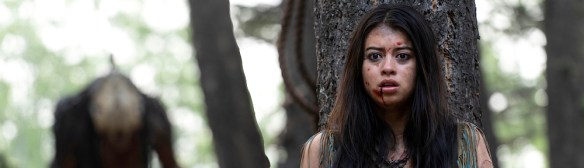
Finally, in the new-new pile we can also find Eureka’s editions of Sergio Sollima Spaghetti Western Run, Man, Run and — last but not least, one of the film’s in this month’s header image — Michelle Yeoh actioner Royal Warriors.



















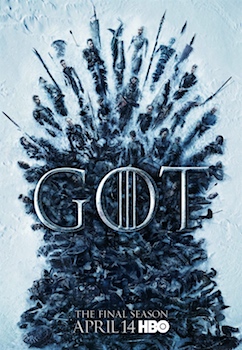 Almost two years ago, just hours after Game of Thrones’ seventh season finale aired,
 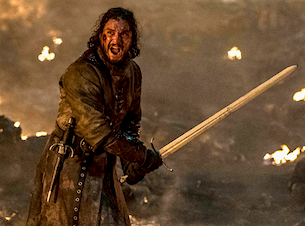 Content-wise, the episode was one long battle — the longest ever in film or TV history, apparently. More isn’t always more, mind. While I didn’t find it boring or drawn-out, it also wasn’t perfect. The battle tactics left a lot to be desired, something spotted by lay-viewers, never mind the “how it should’ve been done” articles by professional military tacticians that followed the broadcast. And the way things played out, a lot more deaths were warranted. Quite a few key characters did fall, and even more faceless masses, but the way it was staged made it a miracle that so many people escaped unscathed. There are three episodes left — you need characters to fuel the story, and major characters left to be sacrificed later too — but that doesn’t mean you have to stage it so everyone effects an improbable escape. There’s a balance to be found between “it looks like they’re all about to die” and “it seems literally impossible everyone would’ve survived those last-minute odds”. But hey, this isn’t the first time the show has succumbed to this, and there was a lot else to like: lots of effective individual sequences within the battle, great callbacks to previous lines and events, some heroic sacrifices, and a perfect ending. (I’m really not going to talk about some dickheads’ reaction to that.)
 It’s frustrating because I liked the tone of the episode overall — as I said, the return to human conflict and schemes; also a lot of the individual scenes between characters and so on. But it needs more room to breathe. It’s especially galling after the exceptionally spacious
 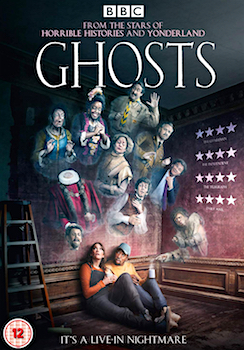 This new sitcom from the writing and performing troupe behind the original TV iteration of Horrible Histories and the Sky One fantasy comedy Yonderland is pitched as a more adult-focused series, but it’s not exactly 18-rated stuff, just a little cheekier than they might’ve done before. Anyway, it’s about a young couple who inherit a crumbling old mansion, which is home to the ghosts of various people who’ve died there down the centuries. As the couple attempt to make a life for themselves and restore the place on a budget of nothing, the ghosts cause various issues, while also having problems of their own — turns out being dead isn’t the end of your emotional woes. I wouldn’t say Ghosts is the most hilarious sitcom you’ve ever seen, but it has a definite charm. It also surprises with genuine emotion, particularly in the third episode, where we learn about the death and family of one of the more recent ghosts.
 I’ve never seen Columbo before, and despite this being the first episode (er, kind of — I believe it was preceded by two other pilots) this isn’t the start of me watching it regularly. No, I watched this for one simple reason: the director was a certain Mr Steven Spielberg, in his pre-movie days when he directed a handful of TV episodes. Unsurprisingly, such an early work contains little about its style that screams “Spielberg”, but it’s still a classily staged production, with a lot more going for its visuals than the point-and-shoot style we associate with old TV. The story’s not a bad one either, about a crime novelist who murders his co-writer following the methodology from an unused plot. He thinks he’s a clever bugger who’s got away with it easily, but Columbo seems to see through him right from the start. Well, I’m not sure dumping the corpse on your own front lawn is the best way to go about claiming “it wasn’t me.”
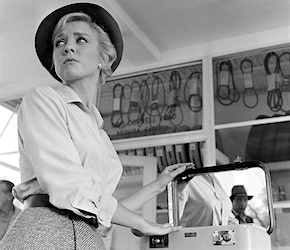 First up, season one’s The Hitch-Hiker is another Twilight Zone tale where we can’t be sure if the protagonist is experiencing paranoia or the supernatural — undoubtedly a recurring theme for the series, almost to the point where it’s less a “theme” more just a fact of its format. Anyway, this particular reiteration is effectively unnerving, with a scenario that’s relatable — you can just imagine how it would feel if you kept seeing the same hitchhiker by the side of the road, always somehow ahead of you, always staring at you with a despondent look… it gives me chills just thinking about it. Director Alvin Ganzer gets good mileage out of that element too, creating some effective shocks. Aside from that the execution isn’t top notch though, with Rod Serling seeming to have taken too much inspiration from the original radio play (by Lucille Fletcher) in his inclusion of some over-explanatory narration. The trademark twist ending is both altogether guessable for the savvy viewer, but also doesn’t really explain a whole lot.
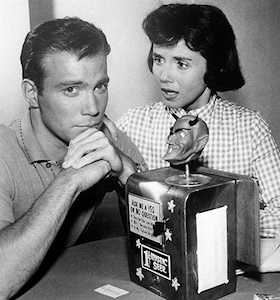 I was more taken with Nick of Time, written by the reliably superb Richard Matheson. Starring William Shatner as a superstitious honeymooner, it’s a neat little tale about a cheap fortune telling machine that might actually predict the future. As well as a genre tale about the perils such a machine might pose, it’s really about superstition and belief in fate vs. self determination — a strong moral life lesson bundled in a quirky supernatural fable. That’s Twilight Zone at its best, really. Similarly, season five’s Living Doll is another of the series’ most genuinely unnerving episodes. Telly Savalas stars as a man whose own insecurities make him paranoid and abusive towards his wife and stepdaughter. When the kid gets a new talking doll, it begins to taunt and threaten him, but only when no one else is around to hear. Again, it’s very creepy, but has a point to make beyond that.
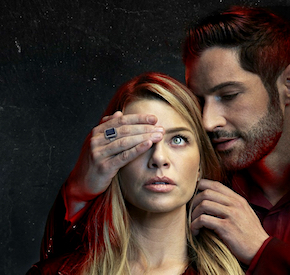 This fortnight, I have mostly been missing the fourth season of Lucifer, which just returned as a Netflix exclusive. I’ve not watched season three yet, though, so that’ll be a little while off. I’ve also successfully managed to avoid any spoilers about Line of Duty’s recently-concluded series (touch wood). I’ve got a plan to binge it in a few weeks’ time (so, not in my next TV roundup, but should be the one after) — hopefully nothing will blow its secrets between now and then!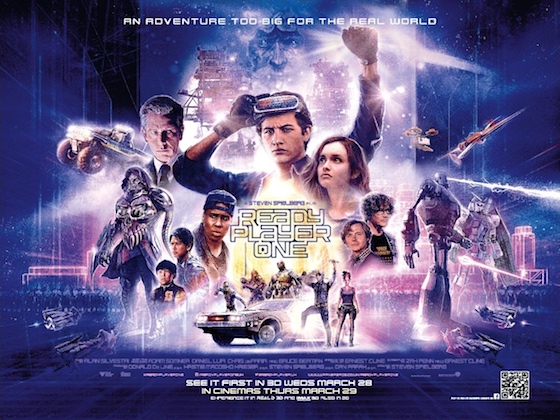





 100Films.co.uk