
Finally, for the last time (not really the last time): what I consider to be the best (or, more accurately, my favourite) films I saw for the first time in 2021 (that bit’s correct).
This year, I tried to make a start on my list early (I began pondering it and pruning my long-list back in November, whereas normally I don’t even start that until January 1st), all so I could post it fairly promptly once we reached the new year. Well, it’s now the 9th, which is one of the latest dates I’ve ever posted my ‘best of’ list, so that didn’t really work, did it?
Anyway…

No, it’s not 21 for ’21 — it’s 10% of whatever my final total is (as it has been since 2016). This year that total was 207, of which the appropriate percentage is 20.7, but I can’t very well include seven-tenths of a film, can I, so it rounds up to 21. (If you think that’s too many for a list like this, feel free to scroll down and start wherever you like.)
As always, all the movies I watched for the first time in 2021 are eligible, not just brand-new releases. However, I did watch 31 films that had their general UK release in 2021, and five of them made it into this list, so I’ve noted their ‘2021 rank’ too.
Holiday Affair
Happiest Season
Anna and the Apocalypse

Reader, I have cheated! After 15 years of sticking to (my own self-imposed set of) The Rules, I have caved and broken the proscribed number of films allowed on this list, and also allowed a tie (I don’t think I’ve allowed a tie before, although one year I did comment that the top 4 were all effectively in first place — but I still sorted them). Why has this happened? As I’ll talk more about in the Honourable Mentions, I got stuck at 32 films for the longest time. I managed to whittle it down to 23, but after days of being stuck there I just gave in. If I could have decided which of these were #22 and #23, they could’ve been taken off the list; but as I can’t, here are all three, tied. At least they’re connected, by being overtly Christmassy films, which is kinda why they’ve all got stuck together — “which of the many Christmassy films I watched this year did I like the most?” Turns out, that’s a three-way tie (unless you also include the one that’s at #9…)

Okay, this one’s quite Christmassy too. Indeed, it’s practically “Holiday Affair but with lesbians”, a comparison I’m sure would’ve come up more if Holiday Affair was better known.
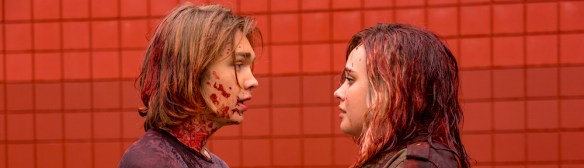

An erotic horror movie — sounds like schlocky trash, but mixed through a European arthouse sensibility it comes out the other side as a dreamy, surreal experience.

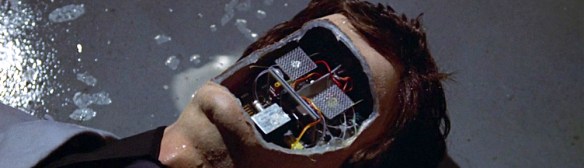
Another ’70s sci-fi thriller that I think deserves better. This widely disparaged sequel to Westworld is very in keeping with other films of its era: it’s a paranoid thriller about a pair of journalists investigating a corporate conspiracy — in this case, Delos’s attempt to rehabilitate their robot theme park after the disaster in the last film.


Another one that confounded my expectations. As Baz Luhrmann’s debut feature, I expected a dry run for where he’d go stylistically in Romeo + Juliet and Moulin Rouge! But to regard Strictly Ballroom as anything less than a fully-fledged member of the Red Curtain Trilogy is to do it a disservice. Its ludicrous, over-the-top treatment of a ludicrous, over-the-top world is both absurdly hilarious and totally captivating.


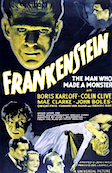
The fourth feature from Universal’s genre- and studio-defining run of horror films in the early 1930s. Dracula and Frankenstein may have become more iconic, but, for my money, this is the best movie from the bunch (and I’d rank The Mummy second). The special effects are more extensive than you might expect for the era, and even hold up pretty well today, while Claude Rains is superb as the cackling villain, James Whale’s direction is highly effective, and there’s a nice vein of humour to balance the darkness.
The Hound of the Baskervilles
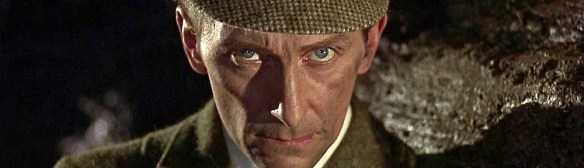
Hammer does Holmes. Peter Cushing is a note-perfect incarnation of Sir Arthur Conan Doyle’s Great Detective in what was, sadly, the famed horror studio’s only attempt at filming Sherlock. Personally, I’ve never thought The Hound of the Baskervilles was a particularly good detective mystery novel — but it is quite a good gothic adventure, which makes Hammer the perfect studio to have brought it to the screen. As that, this version doesn’t disappoint, with Terence Fisher’s direction leaning hard into the appropriate atmosphere, plus a superb cast — alongside Cushing, André Morell is a peerless Watson. I wish they’d done a whole series with the pair.
The Green Knight

2021 #4 Some people seemed surprised when this film delivered exactly what its trailers had promised: an arty-yet-fantastical interpretation of the Arthurian myth. It’s a moody, earthy take on the material, but one that also has room for magical realism, fairytale-esque fantasy, and flights of inexplicable oddness. The measured pace and off-kilter tone (plus the pitch-dark cinematography) was never going to be to everyone’s taste, but for those on its level, it’s intoxicating. And if you think Die Hard counts as a ‘different’ Christmas movie…

2021 #3 I was worried that I’d find Nomadland a bit boring and “not my kind of thing”. It seemed like the kind of film where you hang out with the characters and their landscapes, rather than a piece of clear narrative storytelling. And it is that — but, for once, it worked for me. It’s almost like a TV travelogue, visiting places worth seeing and unusual people worth meeting. You watch to appreciate the scenery, to understand the people, to experience a different way of life. It’s a film to escape with — to get away from ordinary life and spend time in these captivating places. Within and alongside that, it creates a beautiful, deeply humane, quite powerful experience. [Full review.]
Star Trek: The Motion Picture
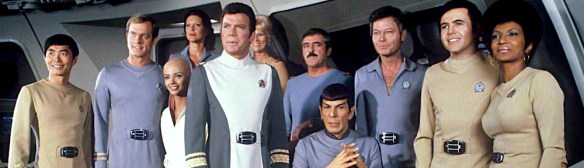
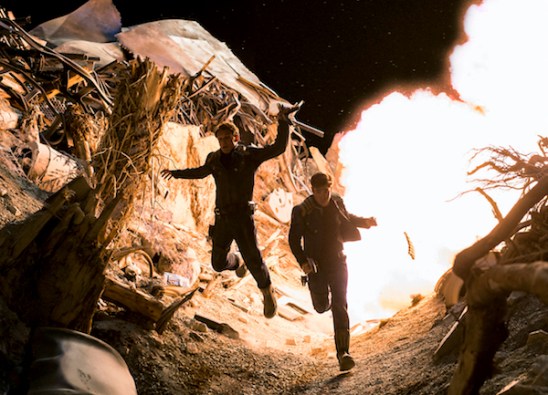
Having grown up reading sci-fi magazines, I’m very aware that, when it comes to Star Trek movies, “even ones good, odd ones bad”. And this first one has a particularly poor rep — “slow” and “boring” seem to be commonly-attached adjectives (which I can’t help but feel stems back to expectations on its original release, which came in the wake of the success of Star Wars, so presumably people expected a fast-paced action-adventure). But as I settled down to begin watching all the Trek movies from the beginning, I found myself in for a very pleasant surprise. It’s not even trying to be a Star Wars-style adventure, but something different entirely; almost more akin to 2001 in its sense of wonder and exploration, digging into an imagining of a genuinely alien lifeform rather than running about blasting rubber suits with laser guns. Engaged with on the right terms, I enjoyed every minute of it.
WolfWalkers
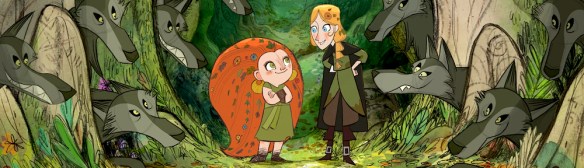
The third film in Irish animation outfit Cartoon Saloon’s Folklore Trilogy — and Wolfwalkers really does feel like an authentically-told folktale, not a Disneyfied modern reimagining. A big part of that is the animation style. Even if you think you’re becoming inured to it from the studio’s previous work, it has surprises in store; moments of additional innovation or beauty. It’s constantly impressive and regularly breathtaking. Combined with the magical story, the result is a simply gorgeous film.

2021 #2 Frank Herbert’s Dune is probably one of my favourite novels, and previous attempts to film it have either been interesting but fundamentally flawed (the 1984 film) or faithful but limited by format (the 2000 miniseries), so when it was announced a new version would be masterminded by Denis Villeneuve — one of only two directors to top my year-end best-of list twice, once with another tricky-to-pull-off re-envisioning of a sci-fi masterpiece — well, my hopes were high. Suffice to say, he delivered, albeit in a film that is ‘very Villeneuve’. That is to say, it’s a rather brutalist take on the material, lacking the fanciful, weird interpretations of Lynch, Jodorowsky, or even (to a lesser extent) the TV version. In some ways that’s a shame, but it’s also true to the filmmaker. That the film has to abandon the story halfway through, forced into a rather low-key cliffhanger, is merely a factor of the length of the material rather than a fault of the filmmaker — some have taken serious issue with it, but, personally, the film ended where I always expected it to. And, as a fan, I’d rather this two-part adaptation, giving the story the necessary screentime, even if that means a limp end to Part One, rather than have the whole book in a rushed three-hour single shot. That said, this might be why it’s at #5 on my list rather than becoming Villeneuve’s third #1. I’m optimistic that, once we get Part Two (and, possibly, a Part Three adapting Herbert’s first sequel), the whole will be even greater. [Full review.]

This is one of those high concepts you wonder why someone hasn’t thought of sooner: what would a ‘kid detective’ (you know, like the Hardy Boys or the Famous Five or whatever) be like grown up? One answer to that would likely fuel a CW-esque YA series, but here we get a more real-world treatment: the detective who was exalted as a kid, a quirky story for the local paper and whatnot, is now a washed-up has-been as he tries to follow the same career as an adult. Like several other films on this year’s list, here was a film that looked like it would tickle a particular itch of mine, and delivered — it was everything I expected it to be and more. It’s both an amusing extrapolation of its central premise and a solid mystery in its own right, with a surprisingly moving conclusion. One part in particular gave me goosebumps, and you’ve got to love anything that can elicit such a physical reaction. [Full review.]
Joint Security Area

Before Oldboy or The Handmaiden, director Park Chan-wook gained international attention for this 2000 military thriller about a shooting in the DMZ between North and South Korea. After a South Korean border guard apparently kills two North Korean soldiers and wounds a third on their side of the border before fleeing back to the South, heightened tensions between the nations rest on an investigation by a neutral investigator. As the Swiss Army major tries to find the truth of what happened amidst conflicting accounts, the obvious point of comparison is A Few Good Men, but JSA also made me think of Paths of Glory in its ultimately-tragic message about the wasteful futility of war. But although these point towards its tone and effect on the viewer, it outshines simple comparisons to be its own magnificent thing.
David Byrne’s American Utopia
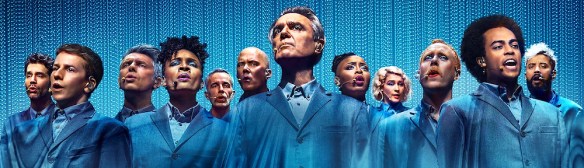
I’m not a music critic — heck, I don’t even listen to all that much music on a regular basis, if I’m honest — and yet what is essentially a concert film has made it almost to the top of my favourite movies this year. What gives? I wish I could explain it properly, but, I confess, I don’t quite understand why I loved American Utopia, all I can say is that I did. It had an almost profound impact on me that I can’t quite account for. Of course that’s mostly down to the music and staging by Byrne and his fellow performers, but Spike Lee’s direction and editing transform the theatrical show into a near-perfect cinema version. My only unfulfilled wish is that this had been made during the world’s 3D phase, because movement in a three-dimensional space is a key part of the show’s staging, and I’d love to be able to watch that in 3D.
The Matrix Resurrections

2021 #1 This belated return to and continuation of the Matrix trilogy has divided critics and audiences alike. You’ll find plenty of people online prepared to slag it off at the slightest prompt. But for others of us, it’s a borderline masterpiece. Personally, it’s not just a film I enjoyed, but something I’ve almost been waiting for — and by “almost” I mean that I never expected to actually get it. This isn’t a by-the-numbers attempt to recreate the adrenaline highs of an enduringly popular action movie. Instead, it’s the kind of wild-swing hyper-meta self-deconstructing take on a popular franchise that I’ve always longed for a legacy sequel to attempt, but no one has been bold enough to try (or, possibly, no one’s ever been able to convince the suits to allow it). Sure, if all you want from a Matrix movie is people looking cool in sunglasses while they engage in precisely-designed epic action sequences, then Resurrections will leave you disappointed. If you appreciate a film that has something pertinent and meaningful to say about our current entertainment culture, there’s a lot to like.

As usual, I’d just like to highlight a few other films.
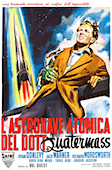
Normally I’m loathe to mention any films that just missed out on the top list — it is what it is, and if I wanted it to be longer I should just find an excuse to make it longer. That said, this year my “top 21” was stuck at 32 films for the longest time — as I mentioned back at #21, you may remember. So, it feels like those 11 almost-rans deserve a mention; except it’s nine almost-rans, because I couldn’t even get it all the way down to 21. I’m not sure these are truly #24–32 (for that distinction, I’d have to properly reconsider some others from my 89-film long list that I’d eliminated earlier), but, nonetheless, there were (in alphabetical order) The Father, Festen, The Mummy (1932), My Fair Lady, My Man Godfrey, Official Secrets, The Pinchcliffe Grand Prix, Psycho Goreman, and The Quatermass Xperiment. In other years, maybe they would’ve been luckier.
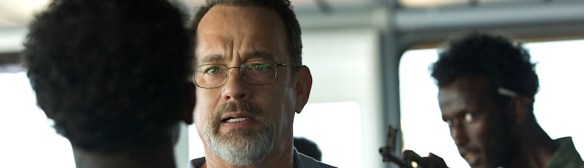
That said, they’re not the only films that might feel aggrieved to have missed out (if films had feelings), because, while there are 4-star films in my top 21 (even in my top ten), there are 5-star films that didn’t make the cut. I awarded 25 films full marks in 2021, and 13 of them made it into my top list — namely Captain Phillips, Carol, David Byrne’s American Utopia, Dune: Part One, The Green Knight, Joint Security Area, The Kid Detective, Love Affair, The Matrix Resurrections, Nomadland, Star Trek: The Motion Picture, Strictly Ballroom, and WolfWalkers. The less fortunate (but still great) ones were The Adventures of Prince Achmed, Cinema Paradiso, The Father, Festen, Kind Hearts and Coronets, My Fair Lady, My Man Godfrey, Official Secrets, Sansho Dayu, A Single Man, When the Wind Blows, and Who’s Afraid of Virginia Woolf? There were also full marks for the original King Kong when I gave it the Guide To treatment.
Additionally, let’s recap the 12 films that won Favourite Film of the Month at the Arbies, some of which have already been mentioned in this post and some of which haven’t. In chronological order (with links to the relevant awards): WolfWalkers, Star Trek: The Motion Picture, David Byrne’s American Utopia, Captain Phillips, Official Secrets, The Invisible Man (1933), Strictly Ballroom, The Kid Detective, The Green Knight, Dune: Part One, Nobody, and The Matrix Resurrections.

This year I watched 31 movies that had their general UK release in 2021, but that means there were a considerable number I missed. So, here’s my annual alphabetical list of 50 films from last year that I’ve not yet seen. In the past I’ve used IMDb’s dating to settle what was eligible for inclusion as “a 2021 film”, but nowadays I’ll allow in something that’s listed as 2020 if it’s only due to festival screenings or (as was the case with one film this year) its own premiere.
The main downside to watching so few big new movies is that there’s not much room here for the stuff that’s smaller but still significant, which is a shame. And where I did make space for those films, some of the year’s big-but-not-huge movies lost out. That said, in some ways it made selection easier: normally I begin with a long-list of something like 120 titles, in which I typically find 20 to 30 ‘must includes’, then I weed through the rest to choose the remainder. This year, the ‘must includes’ numbered 46. I could easily have doubled this list and still been featuring films everyone’s heard about, not least because I did leave out some multiplex fillers in favour of artier-but-acclaimed films. Maybe next year I’ll finally go all-out and make this a list of 100. That would fit the site’s name, after all.
For now, it’s 50 once again. As ever, the included films were chosen for a variety of reasons, from box office success to critical acclaim via simple notoriety, and designed to include a spread of styles and genres, successes and failures.







Belfast
Candyman
Censor
CODA
Cruella
Dear Evan Hansen
Don’t Look Up
Drive My Car
Encanto
Eternals
Fast & Furious 9
Finch
Free Guy
The French Dispatch
Ghostbusters: Afterlife
House of Gucci
In the Heights
Judas and the Black Messiah
King Richard
The King’s Man
The Last Duel
Last Night in Soho
Licorice Pizza
The Lost Daughter
Luca
Malignant
The Many Saints of Newark
The Mitchells vs the Machines
Mortal Kombat
Nightmare Alley
Old
Petite Maman
Pig
The Power of the Dog
A Quiet Place Part II
Raya and the Last Dragon
Shang-Chi and the Legend of the Ten Rings
Shiva Baby
The Sparks Brothers
Spencer
Spider-Man: No Way Home
The Suicide Squad
tick, tick…BOOM!
Titane
The Tragedy of Macbeth
Venom: Let There Be Carnage
West Side Story
The Worst Person in the World
Wrath of Man

And that, ladies and gents, is officially the end of 100 Films in a Year — not just for 2021, but for ever.
Well, you already know that’s not exactly true. But it’s the end of the challenge as I’ve been attempting it for 15 years, replaced by a new take. In 12 months’ time, when a new “best of year” list is due, it won’t be drawing from ‘the challenge’ in the same way… though, that technicality aside, I rather suspect it won’t be too different from this post. And if, once again, I’m so spoilt for choice that I struggle to get it down to whatever number I decide the list should include, well, is that actually such a bad thing?




 Favourite Film of the Month














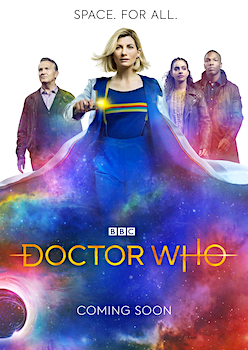 Well, it certainly has been an eventful first half to this series of Doctor Who! Never mind bringing back the Master and destroying Gallifrey (again) in
 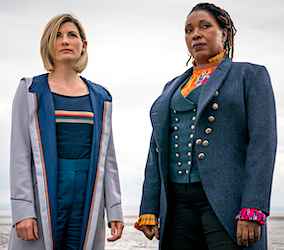 Social media and fan forums and whatnot have debated and analysed that revelation to death, so I won’t bother digging too much into all the possibilities of what it means — only time can tell. I will stake out this opinion, though: I am not a fan of the theory that she’s a pre-Hartnell version of the Doctor. The idea there were incarnations before the one we know as the first has always seemed disrespectful to me, somehow. Yeah, the Daleks ‘made’ Doctor Who, but Hartnell gave it his all too — without him week to week, and the effort he put into public appearances and the like, would the series have survived those early years? He’s not the only thing responsible for its success, and certainly not for its longevity, but he was The First — leave that be, thanks.
 The Star Trek series boldly goes where it’s never gone before: into the Prestige TV market. (Despite initial appearances, based on things like the reviews I’ve read and variably-sized season orders, I’m not sure Discovery was really “prestige TV” in the end.) Is it up to competing with the big boys of this peak TV era?
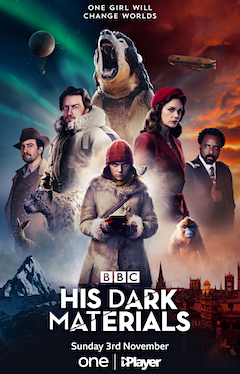 I reviewed the first three episodes of His Dark Materials in
  It’s been
 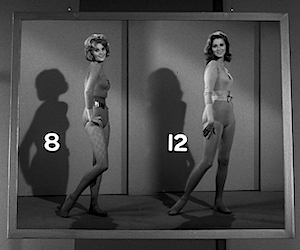 Moving beyond the top ten to complete the top 10% (i.e. the 16 best episodes), next is Number 12 Looks Just Like You (which, by-the-by, comes 10th on Thrillist). This is what some people might call “proper sci-fi” — an idea of the future spun out of what’s possible in the present, using it to present an analogy for the times we live in. And what is the analogy? In this case, there’s a few things you can read into it: mental health; conformism; the transition from childhood to adulthood; maybe all of the above; maybe something else. The only real downside is the episode hints at a wider world that isn’t explored. It’s mentioned in passing that the writing of Shakespeare, Keats, and others has been banned. Why? By whom? And while a bunch of middle-class white people are choosing which generic model they want to look like, what about other races? Class is less of an immediate issue because it seems this is a government-backed thing that everyone must undergo — but then, why do the lower classes get to look just the same as their ‘betters’? Surely there’d be different models depending on your social station? Never mind a 25-minute episode, someone could spin an entire series out of this… Still, having so much to ponder is one mark of a very good episode.
 Finally for now, the last episode in the top 16 (and the only one of today’s episodes not in anyone’s top ten), Nothing in the Dark. Probably best known for staring a young Robert Redford, it’s about an old woman who’s paranoid and agoraphobic due to her fear of meeting Death; but when Redford’s cop is shot right outside her door, she has to let him in to save his life. It’s a nice idea for a story, but (to loop back to what I was saying about The Masks) it feels a little slight in the execution. Half of the second act is taken up in a diversion with a demolition guy which is just that, a diversion. Still, there are very good performances from the two leads, and it comes with a well-meant little message by the end.
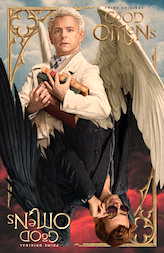 This month, I have mostly been missing Good Omens… again! I



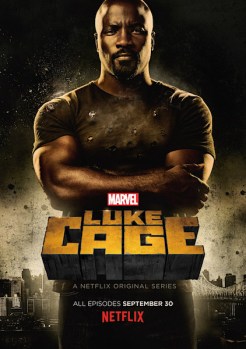 The third series in the Marvel/Netflix stable wins points for boldness, much as Jessica Jones did this time last year. Where Daredevil is a well-done but ‘standard’ superhero show, leading to it being somewhat demeaned by the Cool Kids of the critical world (but much higher-rated by us plebs on the likes of IMDb), Jessica pushed into dark psychological territory, and now Luke Cage brings black culture and life into the fold.
 It feels like only yesterday I was writing here about season four (it was, in fact,
  Well, it’s only taken me 3½ years to get round to this (seriously, where does time go?!) This bunch really represents the series’ highs and lows. On the one hand, Be Right Back — in which Hayley Atwell signs up for a company who create a virtual version of her deceased partner using his contributions to social media — is an exploration of broadly-plausible near-future-tech with a focus on its potential emotional effect. That’s what Black Mirror does best, I’d argue: look at stuff that may, perhaps, be in the pipeline, and how that would actually play out for us. On the other, there’s The Waldo Moment, which is also sickeningly plausible — as Charlie Brooker himself has said, it’s more or less come true, though with the likes of Boris Johnson and Donald Trump instead of a blue cartoon bear — but as an episode it doesn’t quite seem to know where to go with its concept or what it might ultimately signify. The episode just stops rather than ends, until a flash-forward coda that’s a bit silly in its extremity. Even Brooker, while doing press for the third season (released tomorrow), has said he’d go back and re-do that episode if he could. Still, full marks for effort.
 This latest series of Red Dwarf (which airs its fifth episode tonight, with the sixth available on demand from tomorrow) seems to have gone down rather well, with some reviews even hailing it as a “return to form” — that form being “the good old days” of Red Dwarf VI (or thereabouts), over 20 years ago. Personally, I didn’t dislike Red Dwarf VII or Back to Earth, and I even have a soft spot for Red Dwarf VIII, so what do I know? Nonetheless, I would concur that this Dwarf represents a fine vintage, hitting the series’ unique mix of accessible mainstream-ish comedy and proper science-fiction concepts. Red Dwarf XII is already in the can for 2017, and I wouldn’t be surprised to see Dave commission more episodes beyond that.
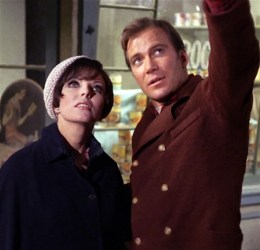 The entirety of TV Star Trek is available on Netflix, so I took the chance to watch the most acclaimed episodes of both The Original Series and The Animated Series — which happen to be connected, something I didn’t realise until afterwards. Er, I mean, which I totally planned. Both are pretty fine uses of science-fiction to explore relatable issues. Well, not many of us have to deal with disruptions to reality caused by time travel, or knowledge of the future creating dilemmas about what we do next, but they work the relatable stuff in around the surface plots. And they both still seem pretty bold for network TV episodes even today, almost half a century later, as (spoilers!) Kirk lets a good woman die to retain the correct timeline, and a kids’ cartoon deals with the subject of euthanasia.
 This month, I have mostly been missing loads of stuff. Probably the most talked about is HBO’s adaptation of Westworld, which has apparently pulled in even bigger ratings than Game of Thrones. Over here there’s the second series of The Missing, which if it’s half as good as the first will be a real must-see. Then there’s Woody Allen’s first (and last) TV series for Amazon, Crisis in Six Scenes. Reviews have been mixed to poor but I still intend to get round to it. And finally Hooten & the Lady, which may be the worst title for anything in the history of ever, but a globetrotting adventure series inspired by the likes of Indiana Jones and Romancing the Stone sounds right up my alley.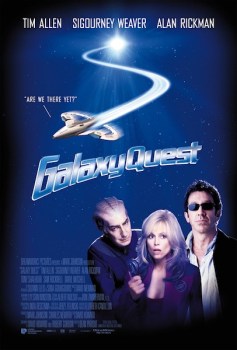
 Score:



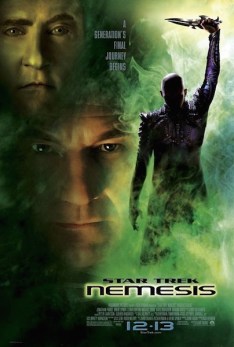 After the widespread disappointment with
  though the knowledge of better things to come means his presence somehow lifts his scenes a notch.
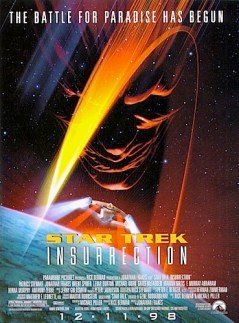 Many years ago, back when both the shows I’m about to mention were still on the air, someone drew a comparison that I felt summed up the whole of ’90s/’00s
  Actually, this is when Insurrection is at its best. Action-adventure undoubtedly has a place in science-fiction, but so do wordier stories — when they’re done right, and when they’re where you expect them to be. You shouldn’t expect them from Star Wars; you should from Star Trek. (That doesn’t make Voyager’s attitude better than Farscape’s, incidentally; not if it was boring or implausibly honourable considering their situation. But that isn’t the matter at hand.) And so the first 45 minutes or so are mostly enjoyable. Critics say even this isn’t as deep as
  There’s a greater array of fan-pleasing nods and winks this time out. As with First Contact, they have to find an excuse to get Worf back on board (at the time, in universe continuity, he was on Deep Space 9 in
 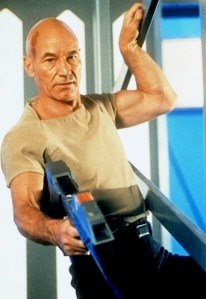 Most negative reviews — so, most reviews — accused the film of being essentially a TV episode (or two, of course), not earning itself a spot on the big screen. They may have a point. The subject matter isn’t at fault — a planet with the ability to make everyone live forever has suitably large potential — but the execution of it is frequently low-key. This isn’t too bad in the first half, which maintains the interest as it unfurls the story, but when it degenerates into action in the second half it falls apart. It’s no longer interesting and, ironically, looks made-for-TV, lacking inspired direction or suitable scope. Perhaps it would’ve been better served as a TV episode; or, as a film, better served by a writer and/or director and/or producer with greater vision.
 100Films.co.uk