
John R. Leonetti | 90 mins | streaming (HD) | 2.35:1 | Germany & USA / English & American Sign Language | 15 / PG-13
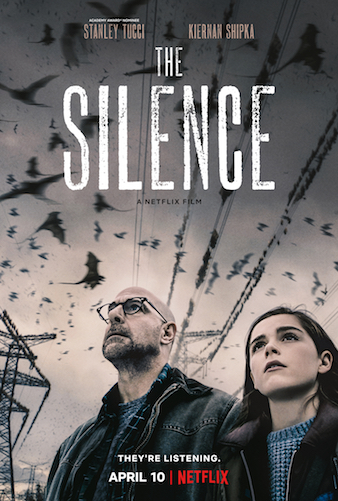
A 15- / PG-13-rated horror movie in which the world is under attack from creatures who hunt and kill via sound, and we follow a family who attempts to survive by hiding in a remote farmhouse, aided by the fact they’ve all learnt sign language to communicate with their deaf teenage daughter.
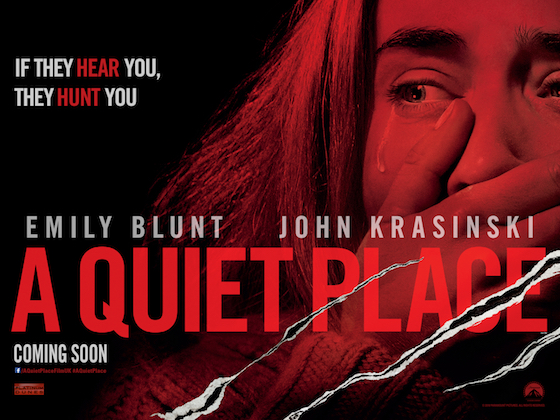
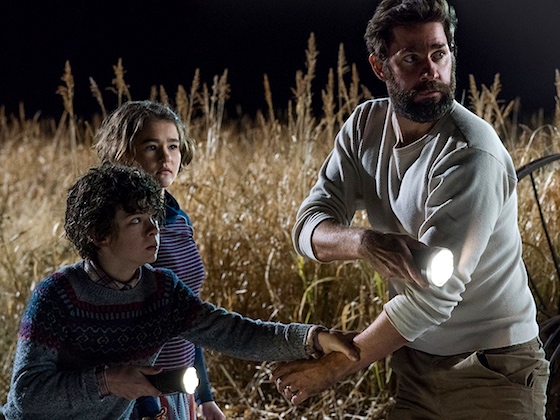
If you’re thinking “wait a minute, that’s a description of A Quiet Place,” you’re right, it is. It’s also a wholly accurate summary of this new direct-to-Netflix film.* Yes, really, they are that similar. At first glance it seems utterly ludicrous that Netflix would release such a blatant rip-off, especially just one year after the previous film; but, as ever, there’s a little more to it than meets the eye: The Silence is based on a novel published in 2015, and filming began back in September 2017. It seems it got unlucky, and is now doomed to be dismissed as no more than a shameless rip-off. But while it’s not The Silence’s fault that A Quiet Place beat it to the punch, it is the film’s own fault that it’s not very good.
The real problem here seems to be the screenplay. John R. Leonetti’s direction is fine, if unremarkable, and there are decent performances, particularly from leads Kiernan Shipka and Stanley Tucci, but they’re all saddled with a poorly rendered narrative. Early on, backstory is dumped via some random teenage-diary-level voiceover narration, making sure to shoehorn in some information that we then never actually need to know. One part of that asserts something along the lines of “everyone has a story of where they were when it happened; this is our story,” and then just minutes later we cut away to an event happening that’s completely unconnected to the main story. To make matters worse, it only does that once. It’s like they could only come up with one other idea for what might be going on during this disaster.
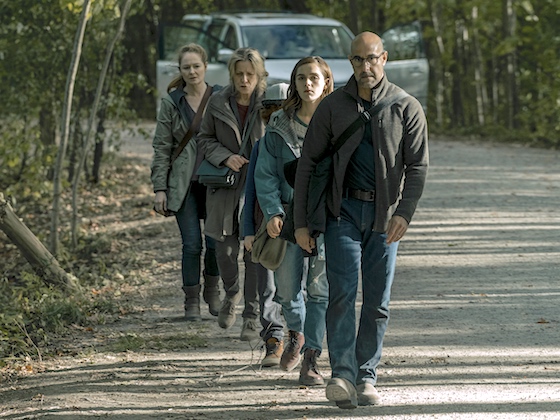
The way The Silence handles its deaf character is another case in point, especially when contrasted with A Quiet Place. The latter embraced its deaf character and the family’s sign language communication (far more of the dialogue was signed than spoken), whereas The Silence sees to be doing its best to avoid or cover for that fact: she only went deaf when she was 13, so she still speaks, and she can lip-read so well people that other people don’t always bother signing to her either. There’s a bunch of little moments that undermine it as well. For example, at one point she has a video call conversation with her boyfriend, when for reasons of both situation (she’s sat in the back of the car with her family) and character (she’s deaf) it would make more sense for them to be texting. But later, the film flips all this on its head: once they full accept they need to stay as quiet as possible, they start mouthing things and signing all over the place, but the film doesn’t bother to subtitle it… although, ironically, if you turn on the hard-of-hearing subtitle track, it is subtitled. What a mess.
Even coming in the wake of A Quiet Place, The Silence had a chance to mark itself out by telling a slightly different story: here the event is just beginning, so we’re witnessing the stuff the other film skipped over. Except A Quiet Place skipped it for good reason: we’ve seen this “the apocalypse begins” rigmarole in many films before. The Silence doesn’t have any significantly new perspectives on it. Eventually it introduces a cult of religious nutters to threaten the family, but it does so with less than half-an-hour of the film left, consequently racing through to a conclusion at breakneck speed. It’s weirdly rushed after the almost methodical hour that preceded it.
It’s not an unmitigated disaster — there are moments that work, and Shipka and Tucci are both very watchable — but the overall concoction is poor, with shortcomings that are only emphasised by how well it was done in A Quiet Place.

The Silence is available on Netflix now.
* Unless you’re in Germany, where it’s instead getting a theatrical release next month. ^

 2018 Academy Awards




 In this atypical espionage thriller, Brit Marling is a private security employee sent to infiltrate an underground activist group who are exposing the illegal activities of mega-corporations. Faced with the group’s honourable intentions vs. her employers’ indifference, will she go native?
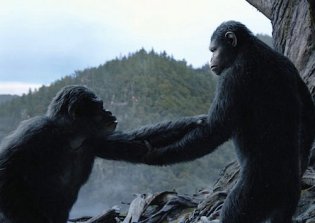 A heady mix of solid writing from Mark Bomback, Rick Jaffa and Amanda Silver, peerless motion-captured performances from the likes of Serkis and Toby Kebbell, and first-rate CG magic from Weta, brings us a set of characters who are compelling and believable. Here is a society trying to define what it wants to be, battling old prejudices in the hope of a peaceful, secure, happy future. If you want to draw analogies to almost any real-world political situation, I’m sure you could.
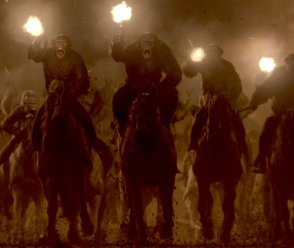 Lest you get the wrong impression, the film isn’t all talk. For various spoiler-y reasons, the fragile relationship between Man and Ape breaks down, and the apes stage an attack on humanity. Here we get perhaps one of the best siege action sequences I can think of, with mankind holed up in a half-constructed skyscraper that sits conveniently at the end of a long street for the apes to charge down. Reeves’ direction is virtuosic here, crafting an epic and exciting sequence even when most of the film’s major players are busy elsewhere. And it’s not even the climax.
 thanks to some surprisingly small-scale narrative choices (the whole thing with the dam doesn’t feel nearly as vital as it should) and Reeves’ direction sometimes being a little straightforward and almost TV-ish. I know I’ve said I hate when people use that as a derogatory comment nowadays, but some repeated locations and shot choices make the film feel cheaper than it was.
 100Films.co.uk