
Ruairí Robinson | 94 mins | streaming (HD) | 2.35:1 | UK & Ireland / English | 15 / R
 The first manned mission to Mars is reaching the end of its six-month tour. As they count down the final hours, battling a dust storm and its attendant power outages and communications blackouts, one of the team secretly discovers bacterial life on the surface. Attempting to recover further samples, a sink hole opens beneath him. When the rest of the crew try to recover his body, it’s not there. Then he arrives back at base… only, he’s not quite himself anymore…
Starting as a sophisticated, plausible vision of what a manned Mars mission might look like in the relatively-near future, The Last Days on Mars attempts an awkward transition into schlocky B-movie horror when Space Zombies turn up about half-an-hour in. Unfortunately, it’s not really trashy enough to work on that level, but equally, it’s not classily written enough to transcend the genre limitations the undead bring. The attempts at a kind of realist sci-fi are to be appreciated, particularly by genre fans who might fancy a change (though in the wake of Gravity, near-future realism may be in vogue), but it doesn’t gel with the often-rote zombie elements. To really succeed it needs a more original threat. These may not be zombies in the “magically brought back to life” sense, but having a semi-scientific explanation for their existence doesn’t negate their storytelling function, which is very trad.
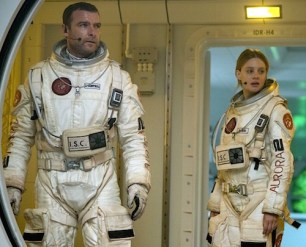 These faults persist despite the best efforts of a quality cast, particularly Romola Garai as (in functional terms) the capable sidekick, and Olivia Williams as the bitch whose heartless practicality becomes an asset when the going gets tough. First-time feature director Ruairí Robinson assembled his cast on the principle of “people who aren’t normally in sci-fi movies”, and that does feed in to the sense of realism. It also looks great, the production, costume and effects designs gelling to create a believable Mars mission, all in spite of a tiny budget (funded by the BFI and the Irish Film Board, it had about a tenth of Gravity’s budget, for example). Credit, too, to cinematographer Robbie Ryan for lensing the Martian surface convincingly (it’s actually the Jordanian desert). The editing may descend into fast-cut blurriness during action scenes — only emphasised by Max Richter’s predictably derivative horror movie score — but during calmer moments the film looks very good.
All things considered, it plays a bit like an R-rated, traditional-zombie-emphasised remake of Doctor Who adventure The Waters of Mars (it’s actually adapted from a 1975 short story, but hey-ho). From the tail end of David Tennant’s time in the role, the award-winning Who episode concerns the first manned mission to Mars battling a previously-undiscovered alien menace that mysteriously turns them into zombie-like creatures and prevents them leaving the planet. And the similarities go further than that, including sequences involving a hydroponic dome, a race down the tunnel that links said dome to the main base, and fears about bringing the deadly virus back to Earth. Thinking through the comparison perhaps enlightens some of where the film goes wrong, as the Who episode had a more effective and original enemy, had more thematic weight to explore (in fairness, concerning Who-specific time travel issues), had characters who were better drawn than the repeated “I’d like to see my kids again” simplicity of the ones here, 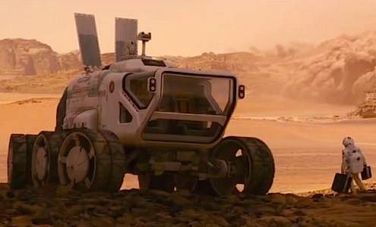 and was more sure of its tone. There may be elements to commend The Last Days of Mars in this comparison (the much bigger budget pays off in the scope of the visuals, of course), but as a story and viewing experience, The Waters of Mars wins hands down.
It’s not just Doctor Who — despite the film’s plus points, most of what The Last Days on Mars has to offer has been done better elsewhere. There are certainly superior zombie thrills to be found. The well-realised plausible Mars mission makes the movie more enticing for sci-fi fans, though your mileage will vary on how much that justifies the investment.

The Last Days on Mars debuts on Sky Movies Premiere today at 10am and 9pm.
 Christopher Nolan’s regular director of photography (he’s lensed seven Nolan films, from
 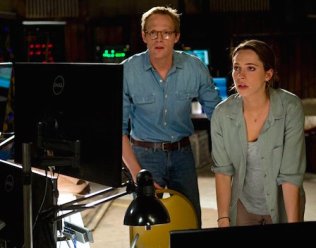 Another element that’s probably too challenging for some is where our allegiances are meant to lie. (Some spoilers follow in this paragraph.) At the start, it’s clear Depp & friends are the heroes and the murderous anti-tech terrorists are the villains. As events unfurl, however, artificial-Will perhaps goes too far, Bettany teams up with the terrorists, and eventually so do the government and Will’s other friends. There is no comeuppance for some characters who are initially begging for it; a good one self-sacrifices somewhat heroically. This doesn’t fit the usual Hollywood mould at all (well, the last bit does, sometimes), no doubt to some’s annoyance. The number of people who clamour for any sliver of originality or texture to their blockbusters, but then are unhappy when they actually get it…
 robbing the entire film of tension and nullifying any sense of surprise, and the movie doesn’t compensate with, say, a feeling of crushing inevitability. The climax in particular becomes a drawn-out exercise in connect the dots: we’ve been shown how this all ends up, now we’re just seeing the minutiae of how it got there. There’s no twist or reveal to speak of, just a wait for it to marry up with what we already know.
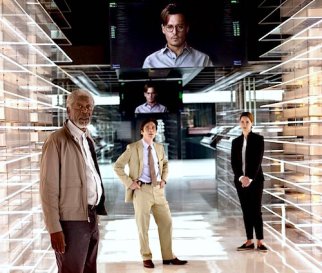 I guess that’s probably the explanation for Transcendence’s poor reception, in the end: it’s too blockbuster-y for viewers who’d like a dramatic exploration of its central moral and scientific issues, but too lacking in action sequences for those who misguidedly expected an SF-action-thriller. I maintain it’s not slow-paced, especially if you think it’s going to be, but nor does it generate doses of adrenaline on a committee-approved schedule. It’s not all it could have been, but if all you’ve heard is the mainstream drubbing, it’s probably better than you expect.
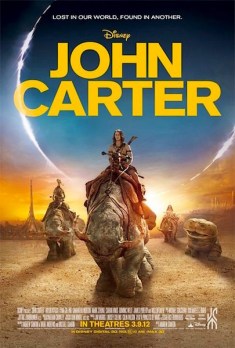 A box office flop (it made a once-astonishing $284 million worldwide, but that was off a $250 million production budget and a ginormous bungled marketing campaign), John Carter has gained something of a following among those who did enjoy it or caught it later — see
  not because it’s so famous (among Normal People, I don’t think it is), but because its influence means its imagery and concepts have already been plundered (
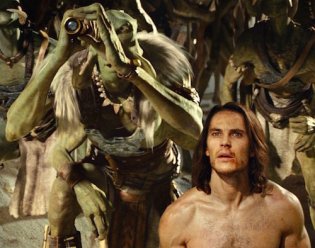 It doesn’t help that the film is structurally muddled at the offset. It begins on Mars, a voiceover detailing the conflict — an instant bombardment of names and concepts. I don’t mind things that challenge you to keep up, but it still feels a bit much. Then we jump to New York in the 1880s, where Carter is running away from someone in the streets. Then to his house, where his nephew has just turned up to be told he’s dead. You what? We just saw him in the telegraph office! And then we jump back to the 1860s, where he’s searching for gold and getting arrested (or something) by Bryan Cranston in a wig as some form of army officer. Then it gets a bit more straightforward. If being transported to Mars and meeting four-armed CG aliens who speak in subtitles is what you call “straightforward”, anyway.
 It feels a bit facile to criticise the quality of CGI these days, but that doesn’t stop John Carter from being over-ambitious in this regard. In fact, it’s not really the sometimes-half-assed green screen or occasional plastic-ness that’s the problem, but the design: those four-armed aliens are just a little too cartoony. Perhaps it’s a hangover from Stanton’s Pixar days, perhaps something just went a little awry during the process, but their design doesn’t look quite ‘real’ enough; a little like someone’s taken a real-life creature and then lightly caricatured it. I think it’s the eyes, which are perhaps a little too big and round and ‘cute’, but there’s something else indefinable there, or not there. These aliens aren’t just set dressing but proper motion-captured characters, played by the likes of Samantha Morton, Willem Dafoe, Thomas Haden Church and Polly Walker, so the lack of connection is regrettable.
 I was expecting, or perhaps hoping, to like it; to find a misunderstood old-style adventure full of entertainment value. It may be an old-style adventure, but that’s beside the point, because whatever it is, I just felt it wasn’t particularly well made: poorly constructed, weakly performed, lazily (and wrongly) assumptive of the audience’s familiarity with the material. Disappointing.
 Marvel Studios takes its boldest step yet, moving away from the present-day superhero milieu of its previous movies to a galaxy far, far away for a space opera epic. Its success, both critically and commercially, has cemented the Marvel Cinematic Universe as an infallible force in the current movie world. But, really, how good is it?
 The worst offender is the pod chase through Knowhere, a several-minutes-long sequence that registers as little more than a blur. There’s a shocking lack of clarity to its images, even by today’s standards. Maybe it’s better in 3D, when I guess the backgrounds would sink into the distance and important elements would be foregrounded; but in 2D, you can’t see what’s meant to be going on for all the fast-moving colour and split-second cuts. Almost as bad, though for different reasons, is the climax. It takes up an overlong chunk of the movie and at times feels repetitive of too many other Marvel climaxes — oh look, a giant spaceship crashing into a city! If anything, the film gets ‘worse’ as it goes on. Perhaps not in a very literal sense, but as the blustering action climax takes over, it moves further away from the stuff that makes it unique and interesting.
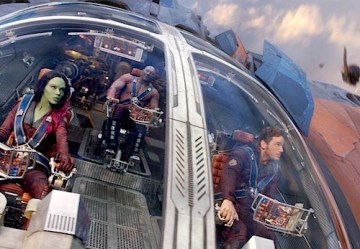 It isn’t even called Nova City, but I don’t have the foggiest what it is called because the film didn’t make me feel I should be learning it. Some more effort making sure we knew why that place mattered, even if it was just a clearer depiction of all the planning for its defence, might have sold the entire climax better.
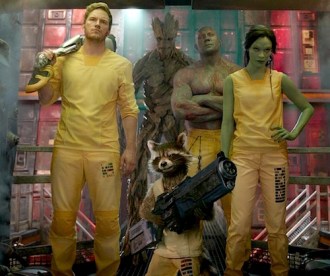 especially the overlong climax. Joss Whedon commented of his own Avengers film (as I quoted in
 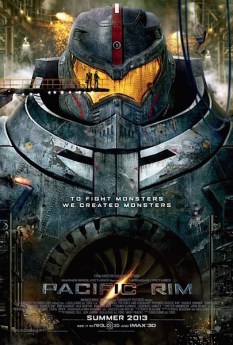 The names writers choose for their characters can sometimes tell you a lot about a movie. Pacific Rim is the kind of film that has characters called Raleigh Becket, Stacker Pentecost, and Hannibal Chau.
 — it was the 3D that added depth and height, and without that (or, as I said, an adjustment of focus to compensate) it’s all a bit… not flat, but not big either. That aside, it is beautifully shot, with excellent lighting.
 Of late there seems to have been a glut of sci-fi films with highly generic, near-meaningless titles —
 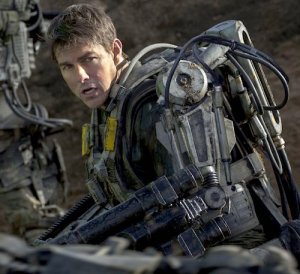 suitably exciting, surprisingly funny, and actually quite clever. It’s also boldly standalone. OK, so it’s an adaptation, but the book is hardly a
  Reflect too heavily and some bits may begin to crumble more but, for me, not too severely.
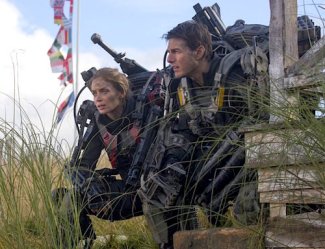 Edge of Tomorrow isn’t an unqualified success, but more than enough of it works to make for a well-above-average modern blockbuster. Excellent action sequences, plenty of amusing asides, and a couple of solid sci-fi concepts to chew on combine to render it quality entertainment. Bonus points for being a true original in a sea of remakes, sequels and spin-offs.
 Jennifer Lawrence (who, depending on your mileage, is either “the most charming young movie star in, like, forever” or “actually kind of a little bit irritating”) returns as the totally-plausibly-named Katniss Everdeen in this super-successful follow-up to the super-successful
 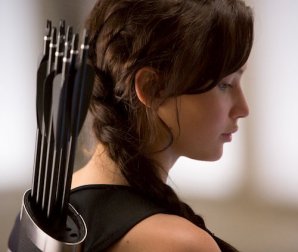 Tonally, however, it’s more similar to
 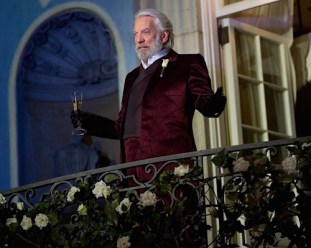 Of course, to an extent the tone of this ending comes from it being an adaptation: the filmmakers haven’t looked at the history of movie cliffhangers and chosen which to emulate, but instead brought someone else’s ending to the screen. Adapting doesn’t mean you have to take the original work faithfully, mind — you could go the
 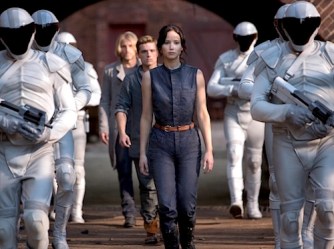 which seems richer, more detailed, despite no genuine increase in resolution. I guess it’s true what they say: if you start with a higher quality source, it filters all the way down. The “bigger screen” effect probably wouldn’t work for a film entirely shot on IMAX — it’d just fill your TV from the start — but, after an hour-or-so of black bars, it really feels like the screen has grown.
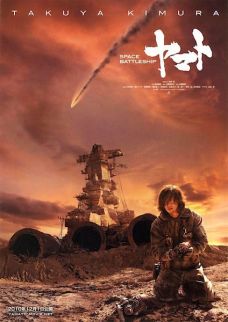 A live-action adaptation of the popular, influential and long-lasting anime franchise, known in the US as Star Blazers (here’s
 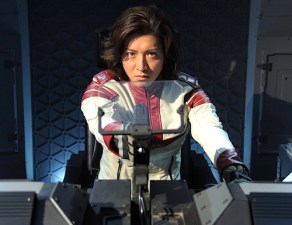 But this isn’t a mega-budget production (
 Conceived by movie star Will Smith primarily as a vehicle for his wannabe-movie-star son, and helmed by auteur-apparently-turned-director-for-hire M. Night Shyamalan, After Earth is a far-future sci-fi actioner about a militaristic father and son who crash land on a long-abandoned Earth, which has evolved into a hostile environment from which they must try to escape, while also being hunted by an alien super-predator.
 I want to spot the neat callbacks and gradual character development for myself, not have the screenplay or direction screaming “look at the subtle thing we did! Wasn’t it subtle!”; I’d also quite like the film to set up some of its developments better, rather than charge ahead with “now he needs to fly — by-the-way, did we mention he can fly? No? Well, now he is.”
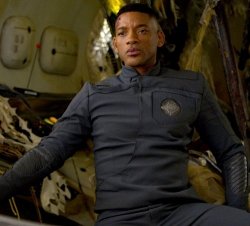 Even with these faults, however, I mostly quite enjoyed After Earth. For all the complaints levelled at it, primarily centred around it being a vanity project for the Smiths, there’s actually good stuff buried here — given more intelligent development and a different cast, perhaps it could even have been a genre classic. It certainly isn’t that, but it’s not as bad as some say. And it’s definitely M. Night Shyamalan’s best film for years. Sadly, that’s not saying much, is it?
 2014 Academy Awards
 On its theatrical release, a commonly-cited recommendation was to see Gravity in 3D on the biggest screen possible. Obviously, I didn’t bother. Some say it isn’t as effective on a small screen in 2D. Maybe it isn’t as effective, but it’s still a damn fine film.
 quick editing has always been a way of creating excitement in that arena), the never-ending shots serve to make you feel closer to events, right alongside Bullock, almost wishing it would stop. Plus there’s skill in being able to show us what we need to see from a single vantage point, without the easy option of being able to cut to a different angle to clarify a detail.
 The most high-profile jobs — the actors, the studio — may be American, but everything else is pretty darn British. Rather than cry “that’s ridiculous! Give it to a proper British film!”, we should be keen to point out that, actually, this surprise global mega-hit wasn’t made in America, but in Britain, by all the talented filmmakers we have here. Rule Britannia, etc etc!
 While I sympathise with the idea that it’s not A Science Fiction Movie, but instead A Thriller (That Happens To Be Set In Space), you can’t really deny its SF-ness. OK, if we’re classing this as SF then so too should be films like
  100Films.co.uk